Tag: Lok Sabha

  • MIB says ISRO upping capacity to facilitate migration from foreign satellites

    MIB says ISRO upping capacity to facilitate migration from foreign satellites

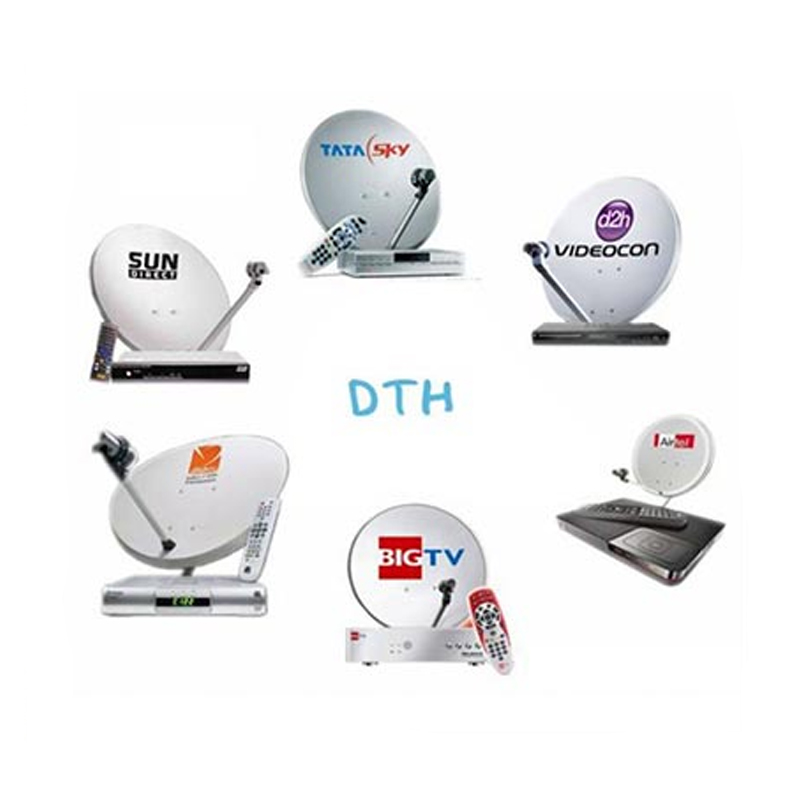
    NEW DELHI: The Indian government has admitted that inadequate capacity on Indian satellites has compelled domestic direct to home (DTH) operators to use a large number of transponders on foreign satellites and that India’s space agency Indian Space Research Organisation (ISRO) is gearing up to meet growing demands owing to proliferation of HD TV channels.

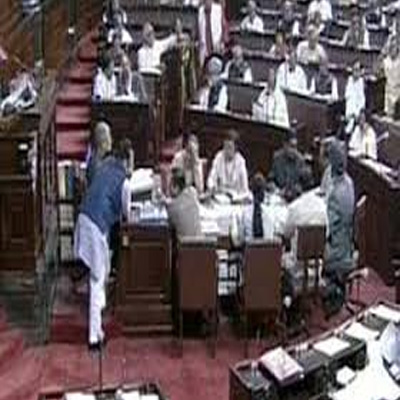
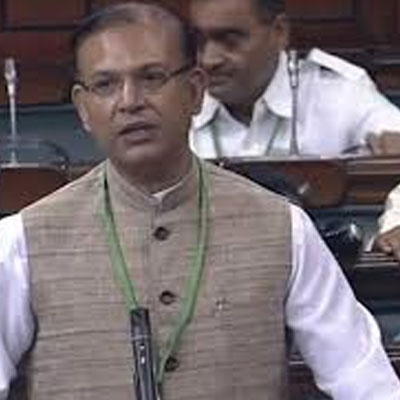
    “Presently DTH services are being supported by 42 transponders on indigenous satellites (INSAT/GSAT) and about 69 transponders on foreign satellites. There is a registered demand of additional about 64 transponders for immediate future,” junior minister at Ministry of Information and Broadcasting (MIB) Rajyavardhan Rathore informed fellow parliamentarians in Lok Sabha or the Lower House of Parliament recently.

    Without stating it in so many words though, Rathore said that as ISRO increases its satellite capacity to be able to meet the demands of Indian DTH operators, a migration from foreign satellites would become a reality — a move that MIB and Department of Space are slowly implementing to nudge users of satellite services, especially TV channels, to move away from non-Indian birds.

    “It is expected that over a period of next three years adequate capacity would be added through Indian satellites to facilitate migration of foreign capacity to Indian [satellite] capacity,” the minister said, adding, according to Telecom Regulatory Authority of India (TRAI) data, there has been a significant growth in the number of high definition (HD) satellite TV channels. The number has grown from three in 2010 to 83 in 2017.

    Dwelling on TRAI’s recommendations on sharing of infrastructure on a voluntary basis, Rathore clarified that till date MIB has not received any proposal from DTH operators for sharing of satellite transponders and earth station facilities with another such player or distribution platforms. “Enabling sharing of infrastructure may address the issue of demand-supply mismatch and reduce capital and operating expenditure of the service provider to an appreciable extent,” he added.

    Meanwhile, addressing another set of queries raised by parliamentarians relating to DTH, the minister said a total number of 1922 complaints/grievances against private DTH service providers were received through monitoring systems of the government and TRAI over the last three years on various issues ranging from technical/financial/policy matters to delay or improper installation, malfunctioning of STBs, issues of interoperability, disruption of signals during bad weather, improper billing, channel packaging, FTA channels, etc. As many as 1811 complaints were addressed by MIB till date.

    As soon as complaints are received, they are brought to the attention of the DTH operator concerned and later a follow-up action too is undertaken to evaluate compliance and whether the problems were resolved or not, the minister explained.

    According to the minister, sector regulator TRAI had issued last year a set of tariff guidelines to boost healthy competition among DTH service providers and bring down the subscription prices for consumers. The guidelines were legally contested by some stakeholders and are awaiting judicial advice, he added.

    ALSO READ:

    MIB admits no DTH infra sharing permission sought

    MIB, DoS nudge TV channel to use Indian satellites

    MIB to collect data on satellite capacity needs, digital chatter

    MIB, TRAI allay industry fears on sat capacity leasing & content regulations


  • MIB says fewer TV channels violating ad, prog norms

    MIB says fewer TV channels violating ad, prog norms

    NEW DELHI: Indian channels seem to be finally toeing the line. The number of TV channels violating codes has been on a decline over the years. As many as 54 private television channels have violated the programme and advertising codes since 2014, though the number has been dipping, the Lok Sabha (Lower House of Parliament) was informed.

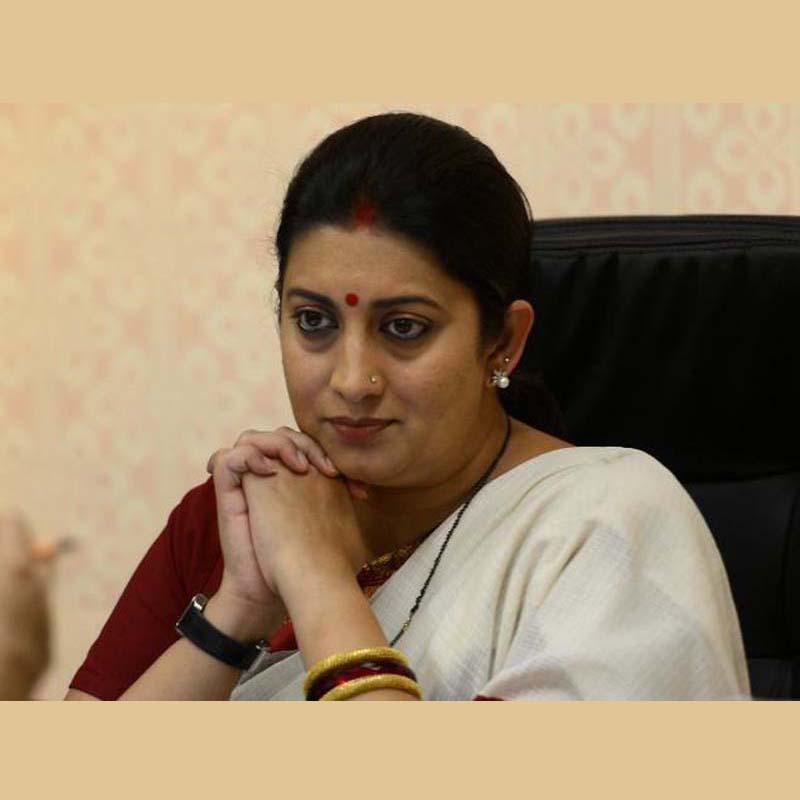
    17 channels each violated the code in 2014 and 2015, while 16 channels in 2016, Minister for Information and Broadcasting Smriti Irani said in a written reply on Thursday to question from a fellow parliamentarian.

    However, there was a sharp dip in 2017 with only four channels found to have violated the code. No violations have been reported yet this year.

    The minister said that all the programmes and advertisements telecast on private satellite TV channels were required to adhere to the Programme and Advertising Codes prescribed under the Cable Television Networks (Regulation) Act, 1995, and Cable Television Network Rules, 1994.

    The minister added that the regulations do not provide for pre-censorship of any programme or advertisement telecast on the channels. However, all programmes and advertisements were required to be in conformity with the relevant codes, which contain a whole range of parameters to regulate programmes and advertisements on TV channels.

    Irani said that action is taken against TV channels as per uplinking and downlinking guidelines whenever any violation of the codes is established.

    Also Read :

    Govt warned 55 violators of programme & ad codes in 3 yrs, says Rathore

    Prog & Advt Code violation: 30 channels faced action in 2015 & 2016

    No proposal to ban junk food ads on TV: Smriti Irani 

    MIB recants, says only explicit condom ads banned during the day

  • Shatrughan stimulates all against counterfeiting and piracy in FICCI ad

    Shatrughan stimulates all against counterfeiting and piracy in FICCI ad

    MUMBAI: Amidst of festival season this year, the veteran actor and MP, Lok Sabha, Shatrughan Sinha has joined hands with FICCI CASCADE (Committee Against Smuggling and Counterfeiting Activities Destroying the Economy) for an awareness campaign against illicit trade. Sinha has released a video message to create responsiveness amongst the Indian citizens to say ‘no’ to counterfeit products.

    Sinha released the ‘Shapat (Oath)’ where he pledges consumers to be genuine and buy genuine products. The video stars Sinha reciting a poem in Hindi where he deeply touches the importance of protecting original brands and raise voice against smuggled and counterfeit products.

    Moreover, this initiative will not only boost Indian economy but will also create a sustainable socio-cultural ecosystem in the country. The video reminds consumers that, on every purchase of a fake product, somehow, they are indirectly encouraging illicit trade — against the law.

  • Copyright Board may become part of Intellectual Property Appellate Board

    NEW DELHI: The Copyright Board may soon be a part of the Intellectual Property Appellate Board (IPAB).

    Though the move was hardly unexpected in view of representations by creative artists, the modus operandi of making this part of the Finance Bill came as a surprise.

    Although Intellectual Property was shifted from Human Resource Development Ministry to the Department of Industrial Policy and Promotion (DIPP) early last year, several stakeholders including writers, software producers and singers and musicians felt that copyright should not be part of one single Ministry or Department.

    The Finance Bill 2017 piloted by the finance minister Arun Jaitley and passed in the Lok Sabha earlier this week has proposed this merger

    The Bill proposes an amendment to the Copyright Act so as to transfer the functions of the Copyright Board to IPAB which as of now deals only with matters relating to trademarks, patents and geographical indications.

    There is also a proposal to amend the rules pertaining to qualifications, appointment and other terms of service of the members of IPAB as provided under the Trade Marks Act. It introduces Section 89A to the Act which leaves these matters to be solely governed by Section 179 of the Finance Act 2017 in respect of members appointed after the commencement of this Act. The Central Government will then make rules in this regard.

    Being a money bill, the Finance Bill had to go the Lok Sabha first and then receive assent of the Rajya Sabha, which is only empowered to make suggestions. It will become law after receiving the Presidential assent.

    The Finance Bill also proposed merger of seven other tribunals (including the Competition Law Appellate Tribunal and the Cyber Appellate Tribunal) with other existing tribunals.

    However, the move of including several non-finance/taxation related amendments in a money bill has not gone unnoticed, and some opposition parties see this as a way of by-passing the Rajya Sabha where the Government would otherwise have difficulty in getting controversial legislation through.

    However, Finance Ministry sources said these amendments are related to government expenditure.

    Meanwhile, the ministry of information and broadcasting confirmed to indiantelevision.com that on the applications of several film bodies, it was working on an alternative for overseeing implementation of IPR laws for the entertainment industry.

  • Ensure ads do not interfere with entertainment, MIB urges channels

    NEW DELHI: The ministry of information and broadcasting has reiterated the provision in the Advertising Code that “all advertisement should be clearly distinguishable from the programme and should not in any manner interfere with the programme.

    The Advertising Code says that this includes “use of lower part of screen to carry captions, static or moving alongside the programme.”

    Information and broadcasting minister M Venkaiah Naidu told the Lok Sabha in a written reply that a fresh advisory in this regard had been issued to all television channels on 10 March 2017.

    This is a provision in Section 7(10) of the Advertising Code which forms part of the Cable TV Networks Acc(Regulation) Act 1995.

    According to the Ministry, several advisories have been issued in the past five years on different issues including coverage of anti-terrorist operations, asking TV channels not to telecast inflammatory news of communal nature, urging non-telecast of a film made on the Nirbhaya rape case, and against showing clippings from films which have not been given the ‘U’ certificate.

  • DD catering to N-E states’ language & culture

    DD catering to N-E states’ language & culture

    NEW DELHI: Aware about the diversity of the states in north-east India, the government has established separate Capital Doordarshan Kendras for each of the states, the Parliament was told.

    Minister of state for information and broadcasting Rajyavardhan Rathore told the Lok Sabha in reply to a question that these kendras were telecasting their local programmes according to the needs of the States from 3 pm to 7 pm daily on terrestrial mode.

    Some states also have one to two other Programme Generation Facilities (PGF), he added.

    Rathore also said that Prasar Bharati was launching a new 24×7 Satellite TV Channel “DD Arunprabha” shortly from Itanagar in addition to the existing North East Channel at Guwahati.

  • DD catering to N-E states’ language & culture

    DD catering to N-E states’ language & culture

    NEW DELHI: Aware about the diversity of the states in north-east India, the government has established separate Capital Doordarshan Kendras for each of the states, the Parliament was told.

    Minister of state for information and broadcasting Rajyavardhan Rathore told the Lok Sabha in reply to a question that these kendras were telecasting their local programmes according to the needs of the States from 3 pm to 7 pm daily on terrestrial mode.

    Some states also have one to two other Programme Generation Facilities (PGF), he added.

    Rathore also said that Prasar Bharati was launching a new 24×7 Satellite TV Channel “DD Arunprabha” shortly from Itanagar in addition to the existing North East Channel at Guwahati.

  • 81 teleports permitted to uplink, downlink TV channels

    81 teleports permitted to uplink, downlink TV channels

    MUMBAI: A total of 892 private satellite TV channels can downlink and/or uplink from 81 teleports in the country, apart from those of Doordarshan which are uplinked directly from Prasar Bharati transmitters.

    The permission to the private channels has been according under the Uplink and Downlink of TV channels policy as last amended on 5 December 2011.

    The Parliament was told recently that while no information regarding Free to Air teleports is available, the Telecom Regulatory Authority of India has said there are 281 pay channels as on 30 September 2016. A list of such pay channels is available on TRAI’s website under the link:www.trai.gov.in/WriteReadData/List-of-pay-chanel-03.03.2015.pdf.

    It was also revealed that payment of annual permission fee 60 days before the due date will by itself be sufficient permission for continuation of a channel for a further period of one year from the due date and broadcasters which hold valid permission for uplinking and/or downlinking they would not require to obtain renewal permission from the ministry. All the TV channels and teleports are likely to benefit from this decision provided the validity of 10-year permission is available.

    The list of permitted private satellite TV channels is available in this ministry’s website i.e.www.mib.nic.in. and the list of permitted teleports as on date is enclosed.

    The channels which are not mentioned in the list may be considered as Free to Air (FTA) channels.

    Questions were raised in the Lok Sabha about details of the channels and teleports functioning in the country; details of the free to air channels and teleports at present; whether the government has completely abolished the process of obtaining an Annual Renewal for TV channels in the current forms; and it were so, the details thereof, along with the aims and objective thereto; and the number of channels and teleports likely to be benefit from the said decision.


    public://AU3598_Page_04.jpg

    public://AU3598_Page_05.jpg

    public://AU3598_Page_06_0.jpg

    public://AU3598_Page_07.jpg

    public://AU3598_Page_08.jpg

    public://AU3598_Page_09.jpg

  • 81 teleports permitted to uplink, downlink TV channels

    81 teleports permitted to uplink, downlink TV channels

    MUMBAI: A total of 892 private satellite TV channels can downlink and/or uplink from 81 teleports in the country, apart from those of Doordarshan which are uplinked directly from Prasar Bharati transmitters.

    The permission to the private channels has been according under the Uplink and Downlink of TV channels policy as last amended on 5 December 2011.

    The Parliament was told recently that while no information regarding Free to Air teleports is available, the Telecom Regulatory Authority of India has said there are 281 pay channels as on 30 September 2016. A list of such pay channels is available on TRAI’s website under the link:www.trai.gov.in/WriteReadData/List-of-pay-chanel-03.03.2015.pdf.

    It was also revealed that payment of annual permission fee 60 days before the due date will by itself be sufficient permission for continuation of a channel for a further period of one year from the due date and broadcasters which hold valid permission for uplinking and/or downlinking they would not require to obtain renewal permission from the ministry. All the TV channels and teleports are likely to benefit from this decision provided the validity of 10-year permission is available.

    The list of permitted private satellite TV channels is available in this ministry’s website i.e.www.mib.nic.in. and the list of permitted teleports as on date is enclosed.

    The channels which are not mentioned in the list may be considered as Free to Air (FTA) channels.

    Questions were raised in the Lok Sabha about details of the channels and teleports functioning in the country; details of the free to air channels and teleports at present; whether the government has completely abolished the process of obtaining an Annual Renewal for TV channels in the current forms; and it were so, the details thereof, along with the aims and objective thereto; and the number of channels and teleports likely to be benefit from the said decision.


    public://AU3598_Page_04.jpg

    public://AU3598_Page_05.jpg

    public://AU3598_Page_06_0.jpg

    public://AU3598_Page_07.jpg

    public://AU3598_Page_08.jpg

    public://AU3598_Page_09.jpg

  • DD notifies tenders for FreeDish MPEG4 STBs

    DD notifies tenders for FreeDish MPEG4 STBs

    NEW DELHI: Tenders submitted for set top boxes suitable for MPEG4 upgradation of the country’s only free-to-air direct-to-home platform DD FreeDish will be opened on 25 October 2016.

    In an announcement, the Indian pubcaster Doordarshan said that original equipment manufacturers filing tenders for this purpose would have to be DD authorized OEMs to sell DD approved Indian conditional access system (iCAS) and firmware/middleware-enabled boxes. 

    Those applying would have to buy the form for Rs 10,000 and then give earnest money for Rs 1 million and deliver the STBs within a period of three months.

    A DD official, who did not want to be named, said it was clear that DD will not be paying any money to those who are found suitable but will only approve their bids in accordance with the parameters set for suitability of the STBs. The earnest money was only aimed at getting genuine manufacturers, he added.

    India is expected to have 173 million paid cable and satellite home in India by the beginning of next year and the official added that the exact number of FreeDish subscribers would be known when the Indian Conditional Access System (iCAS) system becomes fully operational. Since any individual can buy a FreeDish antenna and set it atop his house, it is difficult to indicate the number of subscribers.

    A pre-bid conference would be held on 3 October 2016.

    The application form, including technical and financial details, can be downloaded from website www.tenderwizard.com/PB. E-application notice is also available on Doordarshan website www.ddindia.gov.in using the link tender notice (engineering) or from eprocure.gov.in/cppp.

    Earlier, indiiantelevision.com had reported that FreeDish had plans to add 24 new channels, increasing the number from 80 to 104.

    The platform has space for 80 channels altogether, including its own channels and Lok Sabha and Rajya Sabha TV along with 24 All India Radio channels.

    Sources told indiantelevision.com that FreeDish is being encrypted through iCAS to keep a tab on the number of subscribers, but it would remain free-to-air.

    Also read: Free Dish capacity to go up from 80 to 104 TV channels before year-end