Mumbai: Over 6,000 complaints related to misleading advertisements were registered online by consumers on the government portal GAMA (Grievance Against Misleading Advertisements) in the past three years, said the union minister of I&B Anurag Thakur, responding to a question in the Lok Sabha on Tuesday.
The portal launched by the Department of Consumer Affairs accepted 6,154 complaints between 2019 and 2021, said Thakur. Last year saw 948 grievances being registered, while in 2020 there were 1,790 grievances and 3,416 in 2019.
All advertisements telecast on private satellite TV channels are regulated in accordance with the Advertising Code prescribed under the Cable Television Networks Rules, 1994. The ministry of information and broadcasting issues advisories from time to time to broadcasters for ensuring compliance to the Advertising Code, Thakur said in a written response.
The Department of Consumer Affairs had launched the GAMA portal in 2015 where consumers can lodge complaints relating to misleading advertisements. A Central Consumer Protection Authority (CCPA) was established under Consumer Protection Act, 2019, on 24 July 2020, which inter-alia looks into misleading advertisements either suo-motu or on complaints from the central government, according to the I&B minister.
Mumbai: Since 2018, the ministry of information and broadcasting (MIB) has taken action against 139 cases on content related to obscenity and violence on TV, I&B minister Anurag Thakur told the Parliament on Tuesday during the winter session.
“For Television, all TV Channels are required to adhere to the Programme Code under the Cable Television Networks (Regulation) Act, 1995, including that programmes should not contain anything obscene, defamatory, deliberate, false and suggestive innuendos and half-truths,” said the minister, adding that, “the government takes action in appropriate cases where violation of the codes are found. It also issues advisory from time to time to the media to adhere to the laid down codes.”
For digital news publishers, the government had notified the Information Technology (Intermediary Guidelines and Digital Media Ethics Code) Rules, 2021 under the IT Act, 2000 on 25 February which inter alia provides for a Code of Ethics for adherence by digital news publishers.
Mumbai: Prasar Bharati has entered into an MoU with IIT Kanpur to develop next generation broadcast solution/roadmap for digital terrestrial broadcasting consistent with emerging standards such as 5G broadcast.
“The sanction for the Proof of Concept (PoC) of next generation broadcasting has also been conveyed to IIT Kanpur,” the minister of information and broadcasting Anurag Thakur told the Lok Sabha on Tuesday. “The selection of an appropriate next generation broadcast technology and Digital Terrestrial Transmission (DTT) roadmap of Doordarshan depends upon evaluation of this PoC.”
Speaking at the CII Big Summit last month Prasar Bharti CEO Shashi Shekhar Vempati had also stressed upon the need for convergence across infrastructure and content creation.
He said that if the collaboration with IIT Kanpur is successful it will be possible to directly receive broadcast signals on smartphones in future. “In the event of a high-viewership event like the Indian Premier League (IPL), there is no reason why millions of users need to receive that content on a unicast mode through the internet. If this works, all of the content can be delivered directly on broadcast frequencies to people on their smartphones or smart TVs,” he said.
The public broadcaster is already working on bringing convergence across TV and radio so that a lot of exclusive radio content can be made visually rich and available for TV audiences. PM’s ‘Mann Ki Baat’ was the first such example. Prasar Bharati is following the same format where a camera is put up in the studio all-day long for another show ‘Rangoli’.
New Delhi: The ministry of information and broadcasting (I&B) has analysed and evaluated the recommendations made by the committee led by Prasar Bharti chief executive officer Shashi Shekhar Vempati to review the current guidelines on TV rating agencies in India.
The newly inducted I&B minister Anurag Thakur told the Lok Sabha on Friday, that the recommendations will be incorporated into the existing TV rating guidelines wherever required. “The recommendations have been analysed and evaluated vis-à-vis their being translated, if required, into the existing guidelines where-ever required,” said Thakur while responding to a question on the action-taken report of the said committee.
The union minister said the existing guidelines have provisions like methodology for audience measurement, panel selection, viewing platform secrecy and privacy, data analysis, transparency etc. which are essential for a transparent and accountable rating system in India.
The guidelines, inter-alia, prescribe that the panel homes shall be drawn from the pool of households selected through an establishment survey. The procedure adopted for selection and rotation of the panel homes shall be made transparent. Further, the panel size shall be increased in a graded manner and has to remain representative of all TV households in the country.
The guidelines also prescribe that the rating agency shall publish the detailed methodology on its website. These parameters have been included in the existing guidelines to ensure transparency and representative collection of panel homes.
“Based on the recommendations of the Committee headed by CEO, Prasar Bharati along with recommendations of TRAI, the present guidelines have been analysed / evaluated vis-à-vis strengthening of transparency / panel homes and other parameters,” the minister told the Parliament.
The TV rating system in India came under scanner when in October 2020, the Mumbai police claimed in a press briefing that they had unearthed a case of manipulation of TRPs and found some incriminating evidence. The police said the accused were allegedly bribing households with BARC bar-o-meters installed to keep a particular channel running, leading to several arrests. In light of the controversy, BARC had temporarily suspended publishing of weekly data for news channels.
NEW DELHI: IPL’s electrifying debut aired on 18 April, 2008, and India has been hooked ever since. Every year, more and more people are tuning into the sporting tournament, cheering for their favourite teams and players, and sharing their excitement on social media. The viewership for this ‘grand festival’ of cricket has massively risen and for brands, it’s more like an advertising bonanza. Every year, the latter put their best foot forward to connect with the audience.
In a similar fashion, both the IPL committee and teams have consistently released interesting anthems to fire up fans and increase the recall of both team and tournament to the next level. It involves roping in advertising agencies and production houses to create films that reflect the audiences' craziness and love for the tournament and the team.
This year is no different. Even though Covid2019 appeared as a deterrent in the early days, the relentless will of players, committee and broadcaster got it all together in the end. The franchise released the anthem Aayenge Hum Wapas, which resonated strongly with people for its ‘we shall overcome’ message. It showcased how people eagerly waited for the tournament and featured stalwarts of the game including the likes of Virat Kohli, MS Dhoni, Rohit Sharma, Jasprit Bumra, KL Rahul, and many other players.
Soon after, Mumbai Indians also dropped the latest avatar of its theme song 'Aala Re'.
Interestingly, all these anthems were carefully conceptualised keeping in mind the current Covid2019 situation. Each of them focused on adhering to safety norms, wearing masks, maintaining distance and other precautions.
Right from advertisers to marketers to the audience, the IPL anthem is something that everyone looks forward to, for the a spellbinding video supporting it, and over the years it has managed to leave an imprint on the audience. From ‘Ek Happy India Wala’ to ‘Come on Bulaava Aaya Hain’ to the most famous one ‘Jumping- Japang’ by Farhan Khan has struck chords with the viewers.
With the nation currently in the throes of IPl fever, indiantelevision.com has curated a list of all the anthems and popular campaigns presented by the franchise over the decade.
IPL Season 1 (2008): “Cricket Ka Dharmayudh”
Probably the best of IPL promos, the official song of IPL 2008 remains to be one of the most awesome theme songs of IPL.
IPL Season 2 (2009): “Divided by Nations, United by IPL…
As the tagline says, the IPL brought nations and rival players together. To this day, it comes across as one of the most meaningful IPL ads, the beautifully-shot video depicts how different cultures from around the world are tied by a sporting event. Back in 2009, the IPL was played in South Africa owing to the ongoing Lok Sabha elections in India.
IPL Season 3 (2010): “Saare Jahan Se Acha” & “Lautaaya”
This IPL theme will remind you of Lagaan and Chak De India – two of the most popular sports films in Indian cinema. Also, you’ll be delighted to see how Ayushmann Khurana was shaking a leg to the musical tunes of IPL 2010.
IPL Season 4 (2011): “Dum lagake mara ray”
Dum Laga Ke Mara Re was all about peoples’ craze for IPL and its popularity which cuts across demographics and national boundaries. The video showed IPL fans dancing on the streets, even breaking into some of umpire Billy Bowden’s signature moves, to welcome the new season of the sporting extravaganza.
IPL Season 5 (2012): “Aisa Mauka Aur Kaha Milega”
The official track of IPL 2012 focused on the theme of ‘opportunity’. Composed by Salim Sulaiman, the song’s lyrics underscored how the IPL promotes young domestic players and allows them to make their mark on one of the biggest cricketing platforms in the world.
IPL Season 6 (2013): “Jumping Zapak”
Remember Farah Khan dancing to the tune of Jumping Zapak with people everywhere, be it the station, the office, or any other place? The song had a simple message which was a big hit nonetheless: have fun and enjoy the IPL anywhere.
IPL Season 7 (2014): “Come on Bulava Aaya Hai”
Every year from April to June, the nation descends into IPL madness, with many people sitting glued to their TVs for every single match. The concept behind the seventh season’s theme song was: drop whatever you are doing, because you’re invited! Don’t miss out on watching the IPL!
IPL Season 8 (2015): “India ka Tyohaar”
The IPL is no longer a mere sporting event, but a full-on festival in India. During its eight edition, IPL launched India Ka Tyohar, which is arguably the most appealing anthem ever and still resonates with people.
IPL Season 9 (2016): “Ek India Happywala”
Ek India Happy Wala showed how good elements in the society are what defines a country, and everyone should look for happiness, unity, and harmony instead of negativity.
IPL Season 10 (2017): “Das Saal Aapke Naam”
On This upbeat symphony was dedicated to the tournament’s die-hard fans and viewers, who ensured IPL’s longevity in spite of a host of scandals marring its decade-long run.
IPL Season 11 (2018): “Yeh khel hai sher jawano ka”
Inspired from the iconic song Yeh desh hai veer jawano ka in the Dilip Kumar-starrer sports drama Naya Daur, this video of this anthem plays back thrilling moments from preceding seasons of the IPL.
IPL Season 12 (2019): “Game Banayega Name”
Game Banayega Name shone the light on newcomers taking on star players in the twelfth edition of the IPL. The lyrics humko bhi ek mauka do encapsulates the rookies’ hunger to prove themselves and determination to make it big.
Extra innings! Here’s a round-up of a few popular ad campaigns by IPL over the years.
Bharat Bandh
One of the satirical promos launched by the franchise was the ‘Bharat Bandh’ ad, which humorously portrayed politicians throwing a fit when they heard about the 51-day nationwide shutdown. The reason? IPL, of course!
Tashreef Tokra
Do you still remember Tashreef Tokra? The ad showed a large number of people carrying chairs and making an outdoor stadium in a busy market to watch their favourite game together. The dialogue Aisa mauka aur kaha milega captured the fanaticism of a cricket fan which overshadows everything else.
Sare Jahan se Acha
The second edition of the IPL was held in another country. In order to make their homecoming a moment of reckoning, the third season went big with the Sare Jahan se Acha campaign, which evoked a sense of patriotism among people.
Mumbai: Global content distribution hub One Take Media Co has agreed to offer the popular Jungle Book series for a free run on Doordarshan TV, to keep Indian kids occupied at home during lockdown. This run is in solidarity with Ministry of Information & Broadcastingand Doordarshaninitiative of bringing popular series back to life for the current generation to watch in the days of lockdown.
One Take Media Co founder-CEO Anil Khera said: “We are very happy to be a part of this national movement and contribute our bit to the national entertainment library in such delicate times. Mowgli & Jungle Book have always been a favorite among the audience. We are sure that it will make the older audience nostalgic and at the same time, will connect with the younger audience who will discover the innocence of Mowgli. We support MIB’s and Doordarshan visionary decision in reviving popular content in current times.”
This decision came after Doordarshan announced bringing back historical epics like Mahabharat and Ramayan over the past two weeks for viewers across the country. In a circular, the Ministry of Information and Broadcasting has directed all direct-to-home platforms and cable operators to show all DD channels as well as Lok Sabha and Rajya Sabha channels as per the Cable Television Networks (Regulation) Act.
Prasar Bharati CEO Shashi ShekharVempati said: “We are happy to bring back one more popular series along with our iconic tv series. We are happy that One Take Media has shown its willingness to join us for the national cause to keep children engaged safe at home with their families during the lockdown.”
Data from Broadcast Audience Research Council (BARC) for the week ended 13 March shows that consumption of television content rose by over 40 million minutes’ week-on-week, a number likely to increase further in the coming days. As people stay at home and television broadcasters run out of fresh content, reviving classic shows seems to be a common recourse.
NexBrand’s Brand Vision Summit 2020, powered by Kamdhenu, was held on February 20 in Mumbai. The fifth edition of the event saw top names from India’s corporate and entertainment sectors being felicitated for their work through the year.
This year, Brand Vision Summit had Anurag Thakur, MOS – Finance& Corporate Affairs, Government of India, as the chief guest. He spoke on how the recipients that night were the engines that will ride India’s to the next phase of global prominence. Lok Sabha MP Dr Arvind Kumar Sharma was also present as the Guest of Honour.
Over the past five years, NexBrand’s Brand Vision Summit has honoured India’s top achievers across Corporate, Healthcare, Philanthropy, Education and Entertainment. Past honorees include stellar personalities such as Niranjan Hiranandani, Sonam Kapoor, Sonakshi Sinha, Ayushmann Khurrana, Vidya Balan, Amit Burman, Kiran Mazumdar – Shaw amongst many other renowned names.
Chandrika Maheshwari, Founder – Brand Vision and Jt. Managing Director – NexBrands, said: “The Summit is the culmination of a dream to see India’s top inspirations on the stage of Brand Vision Summit. Each winner tonight has left an indelible ink on India’s growth and path to the future. It is our honor to recognize their work and use the stage to propel the voices farther across the world”
Saurav Dasgupta, Co-Founder- Brand Vision and Jt. Managing Director – NexBrands, said: “We have been using our unique and time-tested 3i model, that evaluates the impact people and businesses make on societies and economies. Each recipient of the title “The Extraordinaire” has not just excelled on these parameters, but also gone above and beyond what the society expects of them. They’re inspirations to an entire generation, and we are so honored they chose to spend time with us tonight"
Brand Vision’s 3i model evaluates brands on the basis of Impact, Innovation and Imagery, to understand the holistic effect they have on Indian eco-system. It avoids the pitfalls of the regular jury-based models that often fall prey to human biases and errors.
Anurag Thakur, MOS – Finance& Corporate Affairs, said: “I applaud NexBrands for your efforts to recognize and honour deserving leaders from across India and congratulate each one of you on your exceptional achievements and excellence. Our incredible country is also a BRAND. Intent, Intensity and Integrity are the three elements that define our Governments vision for a Global India…A BRAND – “NEW INDIA”.
Sunil Agarwal, Whole Time Director, Kamdhenu Group, said: “Platforms like these empower the honorees to take their work wider and deeper and inspire many to keep doing better. Kamdhenu Group is built by amazing people who have put in a lot of hard work to make the group reach envious heights and hence, we understand how much sweat and play it takes for a brand or a personality to be recognized at such a dais.
Brand Vision Summit’s grand red carpet saw stars walk down on it, including Bhumi Pednekar, Yami Gautam, Sunny Leone, Aditya Roy Kapur, Guru Randhawa, Vivek Oberoi, Rakul Preet Singh and many more.
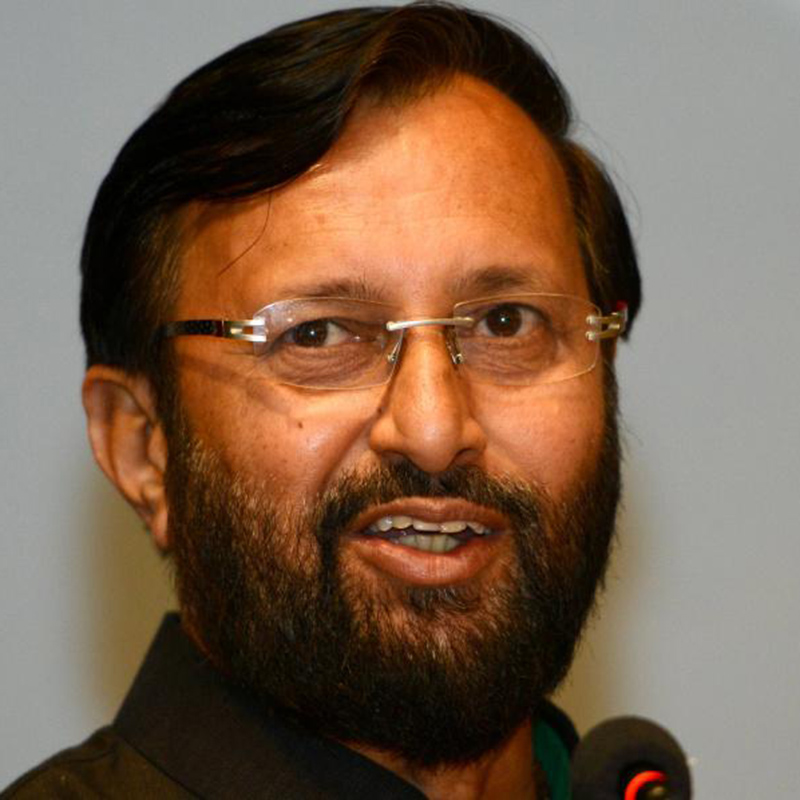
MUMBAI: Replying to a question in the Lok Sabha, the Information and Broadcasting minister Prakash Javadekar said that there are 11.7 crore cable TV subscribers in India as on 30 November 2019. The ministry has accumulated the data through seeding data available from MSOs/LCOs.
However, accurate figures haven't yet emerged since 100 per cent digitisation is yet to be achieved. Javadekar also mentioned that 100 per cent digitisation of cable TV network has been achieved in
Phase-I (4 metro cities), Phase-II (38 cities with population of more
than 10 lacs) and Phase-III (All other urban areas municipal
corporation/ municipalities). In Phase-IV (Rest of India), it is about
more than 90 per cent at present.
The government had adopted an ambitious digitisation plan a few years back to ensure proper flow in the cable TV system that would allow better revenue to be channeled and reduce piracy.
MUMBAI: In 2017, the Confederation of Indian Industry (CII) had set a goal envisioning 30 crore kids playing at least one hour a day. This vision had to battle the mindsets of parents, schools and businesses, the main roadblock that would have come in the way.
A year down the line, the CII Scorecard 2018 forum saw Star India MD Sanjay Gupta praising the thought and vision to make India play. He said, “It has been a year since then, and I cannot express how proud I am of the magnitude of change in just one year.”
Gupta also compared the IPL viewership with the number of people who voted in the 2014 Lok Sabha elections, stating, “Over 70 crore fans came in to enjoy IPL – 70 crore! Compare this to the number of people who voted in the 2014 Lok Sabha elections, the biggest elections that India has even seen, of 55 crore. And they all spent a lot more time, glued to their television sets or mobile screens, enjoying this spectacle. Such a growth in an established sport like cricket is truly remarkable.”
Five years ago, the Indian sports industry only had two domestic leagues, but now there are over 15 leagues across kabaddi, football, wrestling, boxing and badminton.
He believes that the Khelo India school games, launched this year are perhaps the best marker of this shift. For the first time, the spotlight was on a grassroots sports program. 16-year old Nisar Ahmed, who missed breaking the world record in 100-metre sprint by 0.2 seconds, has now been selected as one of the 14 athletes to undergo training by Usain Bolt’s coach in Jamaica. Another athlete is from Tamil Nadu named Sumathira Balakrishnan, who completed the 400 metre, just 1.38 seconds behind the Rio Olympics’ gold winner. With scholarships being given to 734 young and upcoming sports stars in this edition itself, it has provided a template for shaping the future of these boys and girls.
Gupta believes that while there is no contention that sports is good for society, private enterprises have proven that sports is good for business as well. The sports start-up ecosystem is buzzing with activity. Entrepreneurs are building business models across the length and breadth of sports – from eduSports that enables schools to adopt sports education, Anthill Creations that creates cost effective play areas in unused spaces, ‘Sports For All’ to GoSporto that gives people access to playgrounds around them.
“All the startups have resulted in a step change in the sports industry, which has grown from $1.3 billion to $2.7 billion in just a matter of five years. And in my mind, this journey has only begun. Sports is still at 0.1 per cent share of our GDP, while globally the industry is sized at ~0.5 per cent of GDP share. Given where we are, we have the momentum to become a $10 billion industry in the next five to seven years,” Gupta added.
Large corporates have already shown interest and committed their support to CII’s “Making India Play” fund. The companies are Tata Trust, HCL, Ambuja Cement, Bharti Foundation and ACC.
“Overall contribution towards corporate social responsibility is close to $1.8 billion or approximately Rs 12,000 crore every year. Even if we invest half this fund, Rs 6,000 crore towards building this infrastructure and capabilities, we will be able to touch 12 crore kids in the first year itself. Over the next few years, we will be able to reach out to every single kid in the country. It can truly catapult sports to another orbit,” he added.
In the end, Gupta urged all stakeholders present at the event and across the country to invest their CSR fund towards building sports.
MUMBAI: The Law Commission of India, headed by Justice BS Chauhan, has recommended to the Centre that the Board of Control for Cricket in India (BCCI) be classified as a national sports federation and brought under the ambit of the Right to Information Act (RTI).
BCCI CEO Rahul Johri did not respond to an email query when Indiantelevision.com reached out to him for a comment.
The commission, which held its full meeting on Tuesday, has informed Union Minister of Law and Justice Ravi Shankar Prasad that “BCCI exercises ‘state-like’ powers affecting the fundamental rights of the stakeholders,” and that the “board has taken a flight under the radar of public scrutiny.”
It has asked the government to classify the BCCI as “state” under Article 12 of the Constitution so that it is answerable to authorities, including the courts.
In its 124-page report, the commission has stated that the “BCCI exercises ‘state-like’ powers affecting the fundamental rights of the stakeholders, guaranteed under Part III of the Constitution. It is hereby recommended that BCCI be viewed as an agency or instrumentality of State, under Article 12 of the Constitution, thereby making it amenable to the writ jurisdiction of the Supreme Court under Article 32.”
The commission has also noted that since BCCI had a ‘monopolistic’ approach in regulating the game of cricket, it has often escaped public scrutiny that caused malpractices. If the government heeds to the commission’s recommendations and classifies BCCI as a public body or an organisation under the RTI Act, anyone can file PILs in the Supreme Court or high courts questioning the selection of players representing India, states and zones. PILs could also target the agreements signed by the BCCI with other cricket playing nations and the International Cricket Council (ICC).
“Non-consideration of the role played by BCCI as monopolistic in regulation of the game of cricket has resulted in the Board flying under the radar of public scrutiny, encouraged an environment of opacity and non-accountability. In the past, this has probably given an impression in the minds of the general public that corruption and other forms of malpractices are adversely affecting one of the most popular sports played in India human rights are sacrosanct and innately associated with the human personality,” reads the report.
The law panel has also recommended that the government brings the cricket administration under the ambit of RTI, which it has evaded till now.
“As per the statement made in the Lok Sabha, the Central Government has already been regarding BCCI as a National Sports Federation and hence, it is recommended that, for the removal of any doubt, the same be explicitly mentioned in the list of NSFs available on the ministry’s website. This express mention would automatically bring BCCI within the purview of RTI Act,” stated the commission.
“The government in impliedly authorizing BCCI to raise funds/generate resources from numerous other sources, funds and resources, which otherwise could have been directed to the national/state exchequer, also amounts to ‘substantial financing’. It can be asserted that the BCCI has, over the decades, indeed received ‘substantial financing’ from the governments,” said the report.