Tag: Lok Sabha elections

  • The Quint Launches the ‘Me, the Change’ Initiative On First-Time Women Voters

    The Quint Launches the ‘Me, the Change’ Initiative On First-Time Women Voters

    MUMBAI: The Quint is happy to announce ‘Me, the Change’ – an editorial initiative that focuses exclusively on the aspirations of first-time women voters in the 2019 Lok Sabha elections. Facebook has partnered with the initiative as a presenting sponsor.

    ‘Me, the Change’ will showcase the stories of determined young women who have battled adversity to achieve the extraordinary, inspiring and changing the lives of others through their work. The initiative will host an event to felicitate these achievers to spark a discussion on the issues that matter to first-time women voters ahead of the 2019 elections. The Quint will use Facebook as an exclusive platform to amplify the stories covered under this initiative and ensure it reaches as many people as possible.  

    As part of the initiative, The Quint will conduct a nation-wide survey to understand what first-time women voters seek from the new government. Throughout the initiative, we will invite stories from, and of young women achievers. The Quint will also promote a ‘Go Vote’ initiative to educate young women about the power of their vote.  

    The initiative will go on-ground in multiple states and host regional ‘chaupals’ with women voters in the run-up to the Assembly elections in Madhya Pradesh, Chhattisgarh, Rajasthan and Mizoram. 

    Why First-Time Women Voters? 

    The 2019 Lok Sabha elections are touted to be a turning point in India’s history. According to contemporary research and data, the election will be greatly influenced by three factors; the number of first-time voters, their tendency to be politically unaffiliated, and social media's ability to shape political consciousness. 

    In this zoomed-in demographic, first-time women voters are seldom given attention. They are working hard, overcoming extraordinary hurdles, and slowly but steadily changing lives. But what do they want – a good salary? The freedom to marry a partner of their choice? More access to information? Or equal opportunity to make their mark? ‘Me, the Change’ was born out of these questions, and through video stories, on-ground events, a national survey and comprehensive coverage, The Quint will endeavour to highlight the aspirations of young women in India.

    Commenting on the role of the woman voter in India’s political landscape, Ritu Kapur, CEO and co-founder of The Quint said, “There is a quiet but strong emergence of the young Indian woman as a vote bloc. What better way to celebrate democracy then, than to provide a megaphone to this feisty voice that can push women-centric issues to the fore and bring gender parity to electoral politics? Through ‘Me, the Change’, The Quint wants to showcase the aspirations of India’s first-time women voters”.  

    Be it transforming their communities, working on the next big innovation, breaking conventions through music and art, or redefining the rules of business, young women from villages and small cities are achieving the unimaginable. They’re at the forefront of how India will change in the next decade. The question is, are we ready for them? #MeTheChange 

  • CNN-News18 Presents ‘Battle for the States’ for the 5 State Assembly Elections

    CNN-News18 Presents ‘Battle for the States’ for the 5 State Assembly Elections

    MUMBAI: Termed as the decisive contest ahead of the Lok Sabha Elections in 2019, the upcoming Assembly Elections in the key states of Madhya Pradesh, Rajasthan, Chhattisgarh, Telangana and Mizoram are set to witness a fierce political battle between the major political parties. As these states prepare for a crucial election, CNN-News18 has lined up exclusive programming to capture all the latest on-ground developments.

    CNN-News18’s programming line-up ‘Battle For the States’ has travelogues, audience based shows, newsmaker interviews, Poll of Polls, Polling Day and Counting Day coverage to bring the most insightful and comprehensive coverage. ‘Reporters Project’ traverses the length and breadth of poll bound states, focusing on the common man’s issues. ‘Citizens’ Manifesto’, a special audience based show from the 5 capital cities, give a unique platform to voters to interact with their local leaders and voice their concerns and expectations. Keep ahead of the results on Counting Day, and get expert analysis of the implications.  From general news to expert views and critical issues to debates, the channel will delve into all aspects of the state elections, with a 360 degree view of the electoral battle.

    Veteran journalists make up the editorial team – Executive Editor Bhupendra Chaubey, Editor – Output Zakka Jacob, Deputy Executive Editor Anand Narasimhan and Political Editor Marya Shakil. The formidable editorial team will be joined by renowned political experts and commentators, Swapan Dasgupta, Vir Sanghvi and Ajoy Bose.

    The ground reporters of India’s largest news network will bring the fastest and most accurate information for its viewers.  

    From campaigning to polling, counting to government formation – catch all the action around these crucial Assembly Elections on CNN-News18.

  • ABP News releases results of ‘Desh ka Mood’ survey

    ABP News releases results of ‘Desh ka Mood’ survey

    MUMBAI: Desh Ka Mood, leading election programming of ABP news, today releases the survey results done by CVoter, the timeline of the survey was October 2018 with over 15463 respondents spread across Pan India. The survey finding showcased that If the Lok Sabha Elections are held today, the NDA is likely to poll 38% votes followed by UPA with 26% votes at all India level.

    Mr. Avinash Pandey, COO, ABP News Network said, “Riding on the unmatched and innovative programming, ABP news is a leader and the most preferred Hindi news channel when it comes to election. Our endeavor has always been to keep our audiences updated with the current situation on the elections along with a detailed analysis of the latest vote and seat share.”

    He further added, “Staying ahead of the industry, ABP started the very first show of 2019 elections on January 1st, 2018, being the first one to set a benchmark in setting decisive trends in terms of covering and engagement during the elections. 

    Mr. Yashwant Deshmukh, Founder, CVoter, “It the most transparent and elaborate Survey Research exercise taken up by CVoter and ABP together, we are putting across all possible permutations and combinations together for our audience. Our Audience knows the best, and we are given them a detailed analysis on the upcoming elections 2019. #DeshKaMood is not only reading the public perception across the country, but also for the first time in Indian TV history, opening the Public participation in analyzing the Elections 2019, which arguably are going to be the most critical elections contested in recent times. 

    POLITICAL EQUATIONS: AS ON TODAY (Basis Oct 2018 data):

    If the Lok Sabha Elections are held today, as per the CVoter Tracker, the NDA is likely to poll 38% votes followed by UPA with 26% votes. With one single big state of Uttar Pradesh hanging in balance, it could single handedly make or break the national numbers.

    · If the much hyped MGB (Mahagathbandhan) of SP+BSP actually materializes, then this could translate into national tally of 261 seats for NDA and 119 seats for the UPA at the moment. The SP+BSP tie up alone could snatch 44 seats in Uttar Pradesh; bring the current NDA tally to less than majority mark.

    · But if Mayawati walks away from the much talked about MGB, then this would result in another NDA sweep, with BJP winning as many as 70 seats in UP alone taking the probable NDA tally to 300 seats, UPA at 116 and rest all others having a combined tally of 128 seats only. In such a scenario, within the NDA, the BJP is likely to win 270 seats while NDA allies are likely to win 30 seats in total. While in the UPA, the Congress is likely to win 89 seats on its own and 27 seats is the potential tally of UPA allies.

  • Shah predicts bigger majority for Modi in ’19: India TV conclave

    MUMBAI: If the super-charged atmosphere, excitement, interactivity & the supreme participation is to be believed, India TV’s full-day mega conclave Samvaad seems to have again hit the right chord with the audience, even with its second edition.

    The who’s who from the corridors of power were seen participating passionately at the daylong Conclave held to analyse the three years of Narendra Modi’s government. Leading the pack was BJP president Amit Shah, fresh from his poll victories in UP, Uttarakhand, BMC and MCD elections. Shah went on to predict that even if the entire opposition united, the NDA led by Modi will secure a bigger majority in the 2019 Lok Sabha elections.

    Another headline came from Home Minister Rajnath Singh who hinted at the imminent possibility of another ‘surgical strike’. Surface transport minister Nitin Gadkari outlined his ambitious new projects. Textile minister Smriti Irani said that she would love to have a live debate with her Amethi rival Rahul Gandhi, while the law minister Ravi Shankar Prasad spoke of his government’s opinion of ‘triple talaq.’

    The afternoon session delved deep into the controversial issues, including a fiery debate on Ayodhya dispute, featuring MIM chief Asaduddin Owaisi and BJP leader Dr Subramanian Swamy and the Kashmir issue with pro-separatist lawyer Shabnam Lone crossing swords with J&K Deputy CM Nirmal Singh and Congress leader Manish Tewari.

    India TV editor-in-chief Rajat Sharma, along with channel’s leading anchors, grilled the illustrious participants including political heavyweights from the opposition benches.

    In his welcome address, India TV chairman Rajat Sharma outlined the highs & lows of the ruling regime, people’s expectations etc. while also drawing attention towards the charges made by the opposition, as he set the ball rolling for the day.

    MD & CEO Ritu Dhawan on India TV delivering yet another hugely successful Event said, “We are immensely pleasured by the type of unparalleled participation we manage to get for our initiatives.”

    “Not only does an effort like this touches the audiences in the best of the ways, this gets multiplied with the scale of the differentiated sets we specially create. This eventually becomes an intellectual and a visual treat for our audience,” she added.

  • Modi effect: India’s economic confidence upbeat, reports Ipsos

    Modi effect: India’s economic confidence upbeat, reports Ipsos

    MUMBAI: The Lok Sabha elections of 2014 were won on the promise of ‘achhe din aane wale hai’ (good days are going to come).


    And riding on that hope, Indians are very confident that Narendra Modi-led NDA government will carry on making progress on its domestic reforms agenda and encourage investments that will trigger economic growth and create more jobs.
     
    With more than seven in 10 (71 per cent) people expecting that the economy in their local area will be stronger in next six months, makes India the most optimistic country in the world.


    Indians have emerged as the second most confident people about their economy globally by end of 2014. This is on account of falling inflation due to lower oil prices, government’s commitment to contain fiscal deficit, promote investment and economic development, according to a report by global research firm Ipsos.

     
    According to the ‘Ipsos Economic Pulse of the World’ study, India’s economic confidence level has shot up to 81 per cent in December 2014, a very significant rise of 29 points over the past 12 months.

    More than half, 53 per cent Indians believe that the local economy, which impacts their personal finance is good. “The repo interest rate cut by RBI on Thursday from 8 per cent to 7.75 per cent is expected to boost economic confidence and add further momentum to economic growth,” said Ipsos India managing director Amit Adarkar.


    “The decision was primarily guided by dip in inflation, a sharp fall in global crude prices and expectations that the government would be doing enough to keep the fiscal deficit in check,” he added.


    The online Ipsos Economic Pulse of the World survey was conducted in November 2014 among 19,152 people in 24 countries.

     
    The clear winners in economic confidence recovery over the past 12 months in 2014 include India (+29), Great Britain (+19), China (+17), Russia (+12, but with a precipitous slide over the past four months (-18)), Poland (+11), United States (+11), Spain (+10) and Saudi Arabia (+5). The clear losers include Brazil (-11), South Korea (-11), and Argentina (-7).

     
    Those countries with marginal positive movement include Belgium (+2), Italy (+2), Egypt (+1), France (+1), Germany (+1), Hungary (+1) and Mexico (+1). Countries on positive watch include China (although it may have peaked), Great Britain, Poland, Spain and the United States.

     
    Those countries with marginal negative movement include Canada (-1), South Africa (-1), and Turkey (-2). Countries on negative watch include Argentina, Belgium, Brazil and Sweden.


    After showing slight improvement in November 2014, the average global economic assessment of national economies surveyed in 24 countries is down one point as 40 per cent of global citizen’s rate their national economies to be ‘good’.


    Despite two point decline, Saudi Arabia (85 per cent) remains at the top of the national economic assessment in December 2014, followed by India (81 per cent), China (78 per cent), Germany (74 per cent), Canada (67 per cent) and Sweden (67 per cent). At the other end of the assessment, only a small minority rate their national economy as good in France (6 per cent), followed by Italy (8 per cent), Spain (10 per cent), South Korea (11 per cent), Hungary (13 per cent) and Romania (16 per cent).


    Gaining momentum since last sounding, China (63 per cent) takes the lead in the local economy assessment ratings, which impacts people’s personal finance, followed by Saudi Arabia (61 per cent), India (53 per cent), Germany (52 per cent), Canada (47 per cent), Sweden (47 per cent) and Australia (40 per cent). Only one in ten (9 per cent) in Spain agree that the state of the current economy in their local area is ‘good’, followed by Italy (10 per cent), Japan (10 per cent), Romania (10 per cent), France (12 per cent), South Korea (13 per cent) and Hungary (14 per cent).


    Once again, India (71 per cent) holds the lead in the future outlook assessment rating. The rest of the highest-ranking countries are: Brazil (58 per cent), China (53 per cent), Saudi Arabia (50 per cent), Egypt (46 per cent), Argentina (34 per cent) and Mexico (31 per cent). The lowest-ranking country this month is France (4 per cent), followed by Italy (9 per cent), Japan (10 per cent), Belgium (11 per cent), Hungary (11 per cent), South Korea (11 per cent) and Germany (15 per cent).


  • 2014: The year of bold steps

    2014: The year of bold steps

    The year 2014 will go down in history as the year of bold steps.  Whether it was the postponement of digitisation, the introduction of many a forward-thinking and hard-hitting paper and regulation by government regulator Telecom Regulatory Authority of India (TRAI), the industry’s punts at experimenting with big ticket shows, the completion of the acquisition of the Network18 group by Reliance Industries and the departures that followed thereafter, the push by YouTube into creating  a platform that could disrupt audiovisual content viewing, followed by the drive by broadcast networks to build their own independent digital platforms, the increasing importance of social media for television, the introduction of Reference Interconnect Offer (RIO) deals by Star India in a bid to force the industry to speed up digitisation,  big 4K announcements by Videocon and Tata Sky, the rise and rise of Life OK and SabTV, or the slow descent of Sony (once amongst the top two Hindi general entertainment channels -GECs ) to the number sixth spot, the continuing stranglehold of Star Plus over the Hindi GEC viewer,  the industry’s total disillusionment with existing TV rating provider TAM India, and the swing towards the new industry-backed BARC, the news and niche TV channels’ battle with the the government imposed advertising cap of 10+2 in the courts, the launch of three specialised Hindi general entertainment TV channels, a gradual increase in carriage fee payouts to the cable TV sector by smaller channel owners – all these and many were formed the highlights of the television business in 2014.

    To start with, the government took a firm decision to push ahead the analogue cable TV sunset date to 2016, seeing the state of progress by India’s 60,000 cable TV operators and seven-odd so called national multi system operators (MSOs). Of course, digitisation delay led to a lot of carping by many in the trade, but then it was back to business as usual very quickly. For some, no change was more comfortable than having to reinvent thinking, processes, and also business models – which was proving painful. Those who had pressed their foot on digitisation’s accelerator eased off a bit as they had been given some breathing space.

    The new government

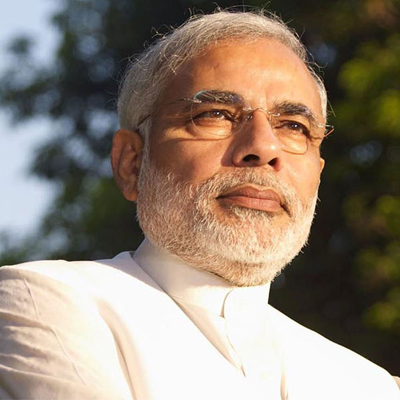
    public://Narendra_D_Modi.jpg2014 was the year of the big change, with the Narendra Modi led Bharatiya Janata Party (BJP) sweeping the ‘election of the century’ and coming to power.  In the new government, the mantle of Information and Broadcasting Ministry was given to Prakash Javadekar, who in his five months tenure made numerous public appearances, making major announcements. Before, the portfolio was passed on to Arun Jaitely in November, Javadekar had made some crucial changes, that of pushing the deadline for digitisation of phase III to December 2015 and of phase IV to December 2016. The move was  done in order to help the indigenous set top box (STB) manufacturers’ boost their businesses as well as allow the MSOs and cable TV operators’ enough time to do it right.

    The year saw the tech savvy Prime Minister announcing his dream of seeing a ‘Digital India’, which was followed by numerous campaigns. It was also the year, when the Media and Entertainment sector envisaged of becoming a $100 billion industry by 2020.


    Cable, DTH and Distribution

    public://222222.jpgIn the cable TV sector, while the tiff between the last mile owners (LMOs) and MSOs over ownership of consumers, billing and revenue share continued like in 2013, some unity could be seen amongst the MSOs with regards to voluntary digitisation after the I&B decided to push digitisation to a later date. The LMOs on the other hand united in several parts of the country to form cooperatives in a bid to get some financial muscle to be able to digitise apart from strengthening their customer base. The year saw not only Hinduja’s headend in the sky (HITS) project taking strides, a new model of distribution: Cable Virtual Network Operator (CVNO) too came up in a few cities like Mumbai and Kolkata.

    Another major development towards the end of the year was the decision of Star India to apply the RIO deal approach with the MSOs. The move while aimed at bringing in addressability and packaging in the DAS markets, saw a number of MSOs coming up with either different packages or putting the network’s channels on a-la-carte.

    With the Average Revenue Per User (ARPU) not showing much signs of improvement, a number of MSOs have started shoring up their broadband offering to customers.  The year also saw Den Networks launching its broadband service in Delhi, with plans of expansion in the coming year.  

    The direct to home (DTH) operators too were seen taking some bold steps with Dish TV launching a sub-brand Zing for the regional markets and Tata Sky and Videocon d2h announcing that they would be introducing 4K set top boxes in India. Not only this, DD Freedish too decided to seed MPEG4 STBs along with MPEG2 boxes in interior areas.

    The icing on the cake was TRAI’s regulation on unbundling, which saw distribution giants, MediaPro and TheOneAlliance parting ways. A lot of other broadcasters too were seen setting up distribution initiatives of their own. 

    Advertising

    public://bjp.JPGThe 16th Lok Sabha elections were not only fought on the ground, but political parties laid siege to the airwaves as well. This general election was the first among many, where media was so extensively (and blatantly) used by political parties.  Far from fighting shy of marketing themselves, the main players – Congress and BJP –spent nearly Rs 400 to Rs 500 crore each on publicity campaigns. An additional Rs 500 to Rs 1,000 crore was spent on related activities such as banners, hoardings, organisation of public meetings and transportation of key campaigners, among others. Not surprisingly, media agencies had estimated around 2 to 2.5 per cent of overall advertisement spends this year to come from elections.

    The year also saw the growth of the e-commerce sector as they intensified their battle. As investments rolled in, the market spends increased to woo customers. And with Finance Minister Arun Jaitley in his maiden budget announcing that manufacturing units will be allowed to sell their products through retail including e-commerce platforms without any additional approval, paving a path for the foreign direct investment (FDI) in the manufacturing sector, the upsurge is expected to continue.

                                                                                                                                                                      News Broadcasters

    public://Mukesh-Ambani-1.jpgThe first half of the year went in covering what seems the country’s biggest election. From exit polls to election result day, one thing was clear that it was a battle of individuals and not parties. And one man leading it all was none other than, BJP’s Narendra Modi.

    The news channels went all out to outdo each other as far as presentation was concerned vis-a-vis live graphics and coverage.  As per industry sources, the channels had earmarked Rs 1 crore to Rs 1.5 crore for the day, but spent a lot more. And with youth stepping out to vote, the channels went all out to social media to gather the pulse of the nation. Channels tied up with Microsoft and Google as well.

    The second big thing, which shook the industry, was when India’s largest company Reliance Industries announced its takeover of India’s largest media companies–Network 18.

    In May, RIL said it would invest about Rs 4,000 crore through Independent Media Trust, of which RIL is the sole beneficiary, to acquire 78 per cent stake in NW18 and about 9 per cent stake in TV18. Founder Raghav Bahl continues to be on the board as a non-executive director.

    The announcement saw senior level exits from the network. The CEO, CFO, COO quit in the days after it. The network’s news channels too saw famous faces like Rajdeep Sardesai moving on.

    The move did make many ask: Is this the death of media independence? But Reliance managers took quick initiative to assuage any such doubts, essentially keeping a hands-off approach from the news network.

    Programming

    public://star.jpgThe television industry saw two major appointments – Uday Shankar taking over as president of Indian Broadcasting Federation (IBF) and NP Singh being elevated as Multi Screen Media (MSM) CEO. Then his predecessor Man Jit Singh was given a US posting and global responsibility in Sony’s home entertainment division.

    As for the programming, the number one channel as per TAM TV ratings, Star Plus intensified its youth turn by launching shows like India’s Raw Star, Airlines and Everest. 

    Zee experimented with content through its new channel, Zindagi, with a slate of programming from across the border – Pakistan . A relief from daily melodramatic soaps got another boost as the country’s first genre-specific Hindi entertainment channel, Epic, finally got a nod from the MIB after more than a year-long wait. MSM too launched two new channels – Max2 and Sony Pal – to add a little more flavour to its pack.

    As industry awaits Broadcast Audience Research Council (BARC) to give out ratings, the body held roadshows across the country to share its updates with all constituents across the entire broadcast value chain, and, equally important, to receive feedback and suggestions.

    Sports

    public://kabbdi.jpgThe year saw India embracing a number of sports leagues apart from cricket, like football, tennis, kabaddi and basketball, that too in different formats. The Pro Kabaddi League, an initiative to revive India’s contact sports was a success and a surprise, not just on television but also at the stadiums, as Indian families cheered  the country’s lost sport. Bud sadly enough, advertisers decided to play a wait and watch game and missed the bus. It was initiated by Mashal Sports and broadcaster Star Sports.

    The Hero India Super League, an IPL styled football domestic tournament was a hit too, on television, social media and fans flocking to the stadiums. Conceptualised by Star Sports, IMG-Reliance and All India Football Federation (AIFF), it garnered a strong advertising support in its maiden year. While bigger brand like Hero, Puma and Amul came on board for the league as title and associate sponsors, individual franchises too drew support from brands.  With advertising and sponsorships stakes high in the Indian Premier league (IPL), these formats have allowed brands with smaller advertising budgets to have a play in the sports television business.

    While the industry did take some bold steps in the year, it hopes to reap the benefits in 2015.
  • Election broadcast must be seen in context of electoral constituencies: NBSA

    Election broadcast must be seen in context of electoral constituencies: NBSA

    MUMBAI: A case had been filed against English news channels CNN-IBN, NDTV, Times Now and Headlines Today regarding a piece of news that was broadcast on 7 April 2014.

    The complaint filed by Vishal  Kudchadkar and  Syed Ali Hussaini claimed that on the particular day, some constituencies in Assam and Tripura went to polls but the above mentioned channels chose to broadcast the BJP manifesto release on the same day. According to the complainants, they have violated the Section 126 (1) of the Representation of People Act, 1951, which prohibits any public display of  election  matter  by means  of cinematography,  television and other  similar apparatus  during  the  period  of 48 hours  prior  to  the end  of  polling.  

    This apart they allege that it also violates the direction of the Election Commission of India and Guideline 12 of the NBA guidelines for election broadcasts.

    The NBSA sought a reply from the ECI in this regard to which it said, “The legal opinion (obtained by EC) on the issue relating to Section 126 of  RP Act was that the said section,  being a penal provision,   had  to be strictly construed; and that the telecasting of an election related event such as release of election manifesto or an election address or a press conference outside the limits of a constituency  going  to   the  poll  would  not  attract  the  penal  provisions  of Section 126; and that the prohibition  regarding the release of  a manifesto or election address or press conference will have to be restricted  to any election matters relating to that constituency and the candidates in that constituency.”

    Guideline 12 of the NBA says, ‘The  broadcasters shall not broadcast any ‘election matter’ that is, any matter intended  or calculated to influence or affect  the result of  an election during the 48 hours ending with the hours fixed for the conclusion of  poll, in violation of  Section 126 (1) (b) of  the Representation of People Act. 1951.’ The EC was proposing to consider the broadcast of the BJP manifesto as a violation of section 126 of RP Act.


    Therefore, the NBSA feels that this falls in the jurisdiction of the criminal courts. It says that it could have considered that the broadcasters had violated the provision of section 126 (1)(b) of the RP Act, had the words ‘in violation of section 126(1)(b) of the Representation of People Act, 1951’.


    The election matter also involves the fact that whether anything was done to disturb or tilt the voting scenario in the area where it is being held rather than throughout the country. Therefore, the NBSA says that the complaints have no merit and can be closed.


  • Law Commission to complete recommendation on paid news soon

    Law Commission to complete recommendation on paid news soon

    NEW DELHI: The Law Commission is expected to complete its recommendations relating to paid news during election soon. It is currently studying the laws related to election laws in entirety.


    Information and Broadcasting Ministry sources tell indiantelevision.com that recommendations for changes in laws relating to the Press Council of India and the Cable TV Networks (Regulation) Act would be taken up after a consultation with the Election Commission.


    Furthermore, based on the recommendations of the standing committee on Information Technology, inclusion of provisions in the ‘Press and Registration of Books and Publications Bill’ to check the incidents of paid news are being examined. 


    The Press Council of India has formulated ‘Norms of Journalistic Conduct’ to be adhered by the media. These norms prescribe that advertisements should be clearly demarcated from news by printing disclaimers. As far as news is concerned, it must always carry a credit line and should be set in a typeface that would distinguish it from advertisements. The council has also drawn up a set of guidelines that are applicable to financial journalism and also on reporting of elections.


    So far as electronic media is concerned, all private satellite TV channels are required to adhere to the Programme & Advertising Codes prescribed under Cable Television Networks (Regulation) Act, 1995 and the rules framed there under. 

  • News Nation UP/Uttarakhand strengthens sales team

    News Nation UP/Uttarakhand strengthens sales team

    MUMBAI: By virtue of its size and population, Uttar Pradesh is an important state not only for politicians but also for news channels.


    So, in February this year, before the Lok Sabha elections took off, News Nation launched its first regional channel, News Nation Uttar Pradesh/Uttarakhand.


    Now that the polls are over, the channel plans to boost its sales team and increase the number of advertisers on board.


    “The Uttar Pradesh market is a priority due to its population. We are looking at hiring about four to five people to deal with UP clients,” says News Nation senior VP head of sales and marketing Abhay Ojha. The appointees will be based out of Kanpur, Noida, Gurgaon, DehraDun and eastern UP.


    Advertisers being targeted include educational institutes, tea companies, small and medium enterprises and hosiery and footwear manufacturers, among others. Apparently, 40 per cent of national advertisers have already decided to be part of the regional channel while the rest would be roped in by the new team expected to be in place within a month’s time.


    “Currently, our focus is on improving content. We adopted the same strategy for the national channel and went without ads for a while to up the ratings,” says Ojha, claiming that the national channel has 85 brands currently.


    Ad rates for prime time in the state fall between Rs 500 and Rs 1200. With big players likes ETV UP/Uttarakhand, Zee Sangam, Sahara Samay Uttar Pradesh, India News UP/Uttarakhand and Samachar Plus UP/Uttarakhand in the fray, it’s going to be a challenging road ahead for News Nation UP/Uttarakhand.

  • Esha Media Research sees upsurge in demand for political content clips

    Esha Media Research sees upsurge in demand for political content clips

    KOLKATA: With the 2014 Lok Sabha elections likely to become a case study for the whole country, Esha Media Research, a media monitoring and research company, has registered an increase in inquiries seeking clips of political content of top political leaders.


    If sources are to be believed, Trinamool Congress’s advertising agency, after the party’s performance in the 16th Lok Sabha polls, has approached Esha Media to conduct a media perception study on the elections as whole.


    According to Esha Media Research managing director RS Iyer, of the 1200 hours of business content they track, 700 hours comes from channels that have negligible proportion of political content. “However, during the election season, we have monitored and tracked political content of 45 hours per month resulting in 2,000 clips every month for the past three months,” informs Iyer.


    “Apart from political parties and leaders soliciting these clips, we are also receiving inquiries from media agencies and business houses tracking the economic content of certain political leaders,” he adds.


    Without revealing the names of the clients and agencies, Iyer informs that some forums are interested in getting the speeches of Prime Minister elect Narendra Modi.


    He also emphasised that the demand for content clips is higher in politics than in business news. “For instance, 100 clips are derived from every 12 hours of business content while in the political content the same number of clips is derived in 2 hours 15 minutes. This indicates that more number of people are chasing the same portion of content in the political segment,” Iyer explains.


    So what is it that is getting viewers attracted to the political content? Answers Iyer, “The oratory skills of the political leaders have attracted the attention of TV channels to go live and reach out to the drawing rooms of the citizens across the country.”