Tag: Local Content

  • Indian content producers see uptick in revenues from online video platforms

    Indian content producers see uptick in revenues from online video platforms

    Mumbai: The production of local originals in India is heating up and giving a boost to the creative economy. Online video platforms are expected to invest heavily into local original content to ensure robust paid subscriber growth.

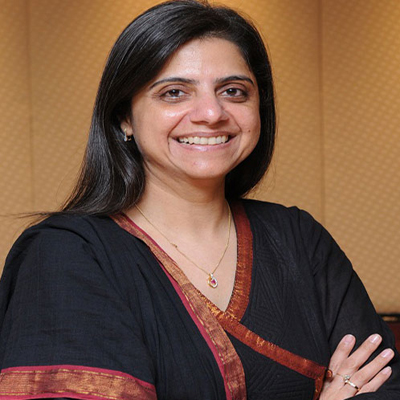
    “The market for digital content has definitely increased,” said Fremantle India managing director Aradhana Bhola. Fremantle India is known for its unscripted TV reality series like “India Idol” and “India’s Got Talent.”

    Fremantle is a global production and distribution company based in the UK that has created hit reality series “Too Hot To Handle” on Netflix and “Hear Me. Love Me.” featuring actor Shilpa Shetty on Prime Video. The Indian arm of the production company has collaborated with YouTube India for two YouTube originals “Hello 2021” followed by “You V YouTube” hosted by actor and cricket presenter Gaurav Kapur.

    “We don’t have a formal partnership in terms of some kind of output deal, however, we are working a lot with them (YouTube),” said Bhola.

    According to Media Partners Asia, investment in online video content reached $1 billion in 2021. Furthermore, the investments in local content increased from 29 per cent in 2020 to 37 per cent in 2021. Licensed/acquired content accounts for 63 per cent share of investments in online video content.

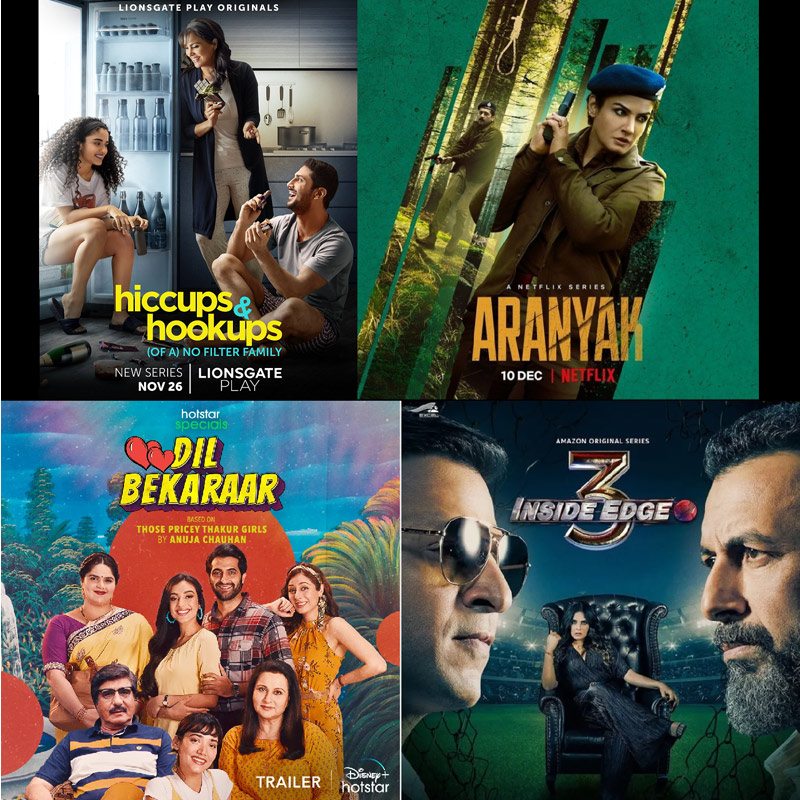
    OTT platform Lionsgate Play, the streaming arm of Lionsgate Entertainment is also launching its first Indian original “Hiccups and Hookups” starring Lara Dutta and Prateik Babbar. Prime Video is releasing the third season of its hit series “Inside Edge.” Disney+ Hotstar is releasing its family drama “Dil Bekaraar.” Netflix is releasing its comedy “Decoupled” that stars R Madhavan and Surveen Chawla. The space for local originals is heating up.

    There is a strong correlation between OTT players who are willing to invest in premium content to service uptake and audience stickiness, according to a study by Boston Consulting Group (BCG). “In the last two-three years, the Indian OTT industry has come of age. The subscription OTT industry is growing at a much faster pace compared to the rest of the industry. This indicates a maturing of the consumer who is now willing to pay for specific content,” said BCG senior partner and managing director Kanchan Samtani.

    Media Partners Asia vice president and head of India Mihir Shah estimates that if OTT players continue to invest in local content at this rate the subscription video on-demand adoption will grow by four times and reach 224 million subscribers and $ 2.1 billion in revenues by 2026.

    The leading OTT players in terms of subscriber share in the SVOD market are Disney+ Hostar (50 per cent), Prime Video (19 per cent) and Netflix (5 per cent). Revenue share of SVOD subscriptions is at 25 per cent for Disney+ Hotstar, 22 per cent for Prime Video, and 29 per cent for Netflix.
  • TV18’s Avinash Kaul on bringing the local Indian flavour to infotainment genre

    TV18’s Avinash Kaul on bringing the local Indian flavour to infotainment genre

    MUMBAI: Capturing viewers’ interest with shows on issues of contemporary, local significance like surgical strikes, national elections, Ganesha festivals, marvels and mysteries of India – that’s how History TV 18 aims to stand out in the niche segment of infotainment channels in India. 

    The channel has traversed the length and breadth of the country to bring season seven of its stand-out show, OMG! Yeh Mera India. Showcasing everything from bizarre foods and strange rituals to unexplained phenomena and rare talents that make this country Incredible India, the show has made a mark on audiences; and the new season is shaping up to be just as fascinating, featuring some more curious and extraordinary true stories from every corner of the nation.

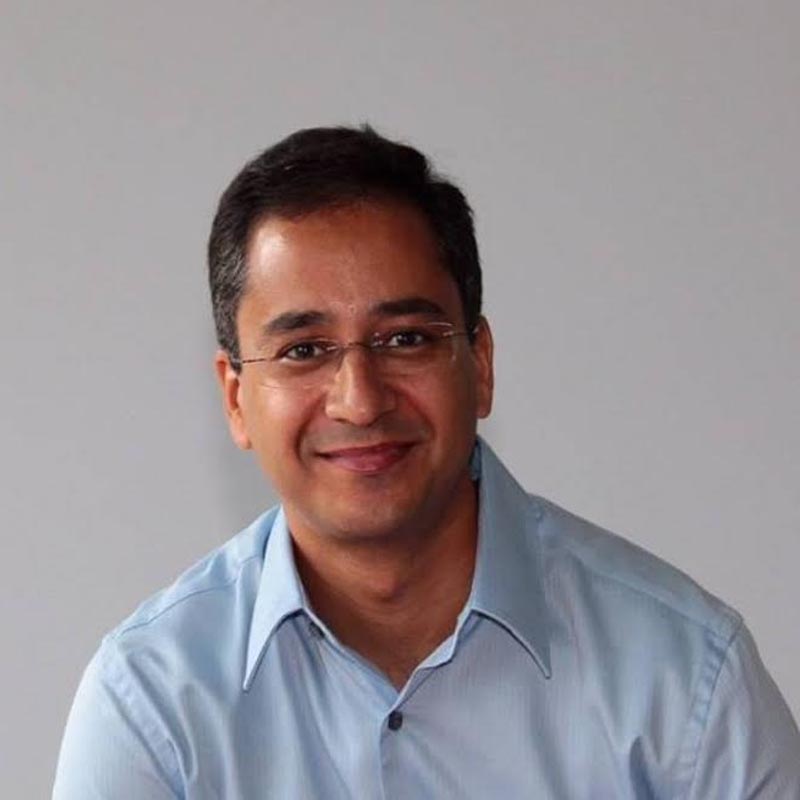
    In freewheeling chat with indiantelevision.com’s Shikha Singh A+E Networks | TV18 MD & Network18 CEO Avinash Kaul shared the success story of OMG! Yeh Mera India, cracking the Indian infotainment space, viewers’ tastes, advertiser interest, and more.

    On what sets OMG! Yeh Mera India season 7 apart.

    The very fact that this is the seventh season, itself narrates its success story. It was a year-long process to shoot OMG! Yeh Mera India. We have travelled across India to curate stories. There is not one state that we have not done a story out of. From a standpoint of a viewer, it is our flagship property which has always delivered good ratings. Over the past five years, 18 crore people have watched this show. The digital impressions are 550 crores, with 84 crore views on digital platforms. These kinds of motivating stories remain on social media all throughout the year. They are regular people who are creating history every day and that is what HistoryTV18 stands for. I believe this is what has made it popular amongst viewers and advertisers.

    On how big the audience for factual entertainment in India is.

    Till about the NTO came in, HistoryTV18 would reach more than 100 million households. Basically this was the footprint that was available on distribution. As measured by BARC, we have 18 crore people who have watched this show on our channel. It is equivalent to what number one or two Hindi news channels would be. Those are the kind of numbers that factual entertainment typically delivers. Of course, the numbers have suffered after the implementation of NTO. But it also lends to the power of subscription, people would need to pay for watching this kind of content. I believe that is where business models eventually will pivot. While you may find a lot of English entertainment on OTT, you won’t find a lot of factual entertainment content. Hence, there is a bigger audience for India originals.

    On audience preferences evolving.

    In today’s time, viewers are exposed to a plethora of content. They have a finite amount of time, and just because 100 channels will be launched does not mean people would spend 100 minutes extra on television. They have a choice of OTT, linear television, social media and more such platforms. As and where our audiences go, we would like to make our content available to them. We are constantly working towards creating India originals and that is what has made us beat our own competition in this space.

    On growth in terms of revenue.

    The year 2020 has been challenging, in terms of revenue. Businesses across the globe have suffered. Ad-volumes have de-grown massively. Especially during the first and the second quarter, there was a huge drop in volumes. Things have started picking up from the third quarter onwards.

    On ad-rates for documentaries of such nature.

    For India originals, there are premiums rates associated with all the shows. So, it doesn’t operate at a normal rate because obviously it is produced locally in India. Our sponsors have supported us with that, and this year was no different, we do have a substantially higher premium than usual for India’s originals.

    BYJU’S is the title sponsor, HAVELLS is the co-presenting sponsor and LIC is the associate sponsor. Advertisersare always very keen to associate with the positive narrative that we as a channel are bringing to the table.

    On competition in this space.

    We compete in a genre where there are quite a few players, we don’t necessarily have survival content in our programming. Our emphasis has always been strategically on India content and we are continuously doing India-based content for the last seven years. Unfortunately, our competitors who have been in the country for more than 30 years haven’t really concentrated on local India production. It would be great having such shows across competition as proper franchises.

    On plans to licence OMG! Yeh Mera India and other originals to OTTs.

    So, far we have been conscious enough to put it out on our own platforms and work with that but going forward we are fairly open to the idea of licensing our shows on other platforms. The challenge is that on streaming platforms the focus is not yet on factual content, it is still on crime, thriller, horror or something which is bold in nature. OTT in India is still in infancy. But if we see international platforms in developed countries, there is a deeper wave of engagement where people look out for this kind of content. I believe in the next few years we will see the maturity of that industry coming in. With the new regulations also in place, we will see more of factual entertainment content as well on OTT. It would be a very welcome move.

  • Locally nuanced shows help to bring in relevance from an Indian context: ZEEL’s Kartik Mahadev

    Locally nuanced shows help to bring in relevance from an Indian context: ZEEL’s Kartik Mahadev

    MUMBAI: Hollywood has always enjoyed a passionate fanbase in India which only grows by leaps and bounds with each passing year. Today, Hollywood movies aren’t just for the English-speaking audiences living in metros as we see movie enthusiasts in Bharat and India with the same level of passion and connectedness as the global fan following. The &flix study, ‘Hollywood is for everyone,’ explores how Hollywood enjoys a universal appeal in India, and gives an insight into the lifestyles and mindsets of movie buffs. 

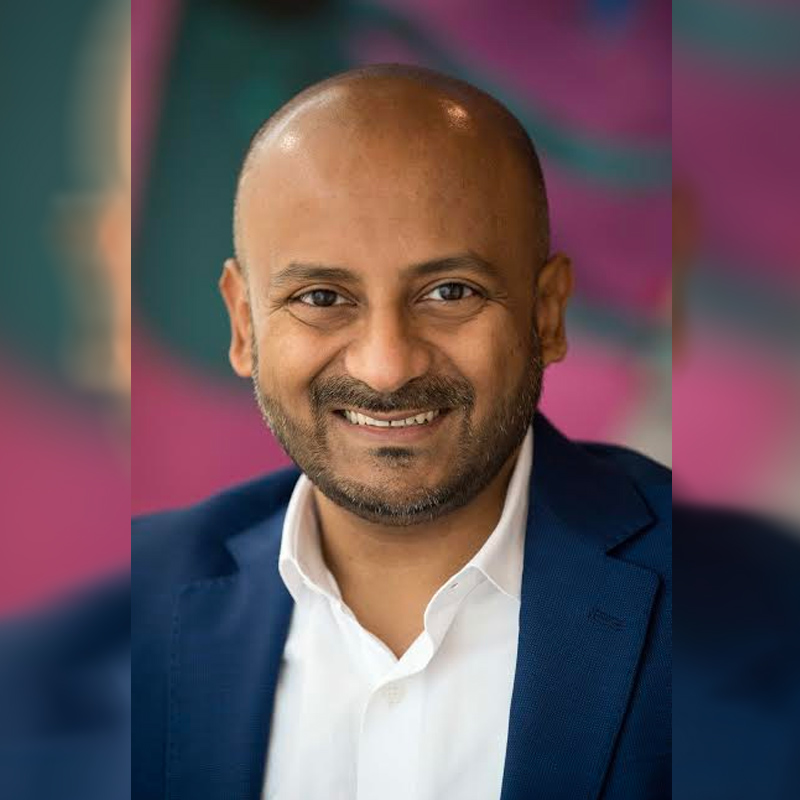
    ZEEL premium channels business head Kartik Mahadev said that the research has helped the channel to curate its offerings like &flix’s fastest to television premieres, which reduce the theatre-to-TV wait time by half, along with the multi-language block ‘Flix for all’.

    The study also disclosed that Hollywood’s entertainment quotient fares better than Bollywood / regional? Does this mean brands indulge more in premium content?

    Mahadev highlighted that Hollywood viewers are brand conscious and in-sync with the latest trends. They seek new experiences and crave adventure. Said he: “For these consumers seeking a badge-value with something aspirational, Hollywood forms the ultimate getaway. With its sophisticated visual effects, unique concepts and aspirational characters, today Hollywood’s fandom in India cuts across languages and cultures and is not just limited to the English-speaking consumers in the metros.”

    The &flix study also revealed that 80 per cent Hollywood enthusiasts admitted that brands placed in the movies / intermittent TV ads influence their purchases. Mahadev revealed that for its customers, English content on television provides youth-focused brands and premium brands the opportunity to associate with a premium subscriber base.

    “Recently, for the premiere of Jumanji: The Next Level on &flix and a simulcast in Hindi on Zee Cinema, we successfully reached a wider audience by providing access through language. Some of the most reputable brands came on board as partner for the property on &flix such as Kia Motors, Ariel, Amazon, Airtel 4G, Xiaomi, Protinex and ITC, along with Bingo Potato chips, Hyundai Creta, Behrouz Biryani, Bharat Matrimony and Cinthol onboard for the Hindi simulcast. The premiere garnered an overwhelming response, taking it to the next level with a whopping 34 million reach, making it one of the biggest premieres in the last 12 months,” he shared.

    Since its launch two years ago, &flix has challenged the English movie genre codes in addressing fan experience on television. According to Mahadev, ‘Ticket to Hollywood’ broadens access to Hollywood movies across the country, bringing movies closer to fans while creating value for brands who want to engage with the ardent audience across regions. The pan-network property will see Hollywood’s latest and top-rated movies dubbed in regional languages premiere across Zee channels like &PrivéHD, Zee Café, &Pictures, Zee Thirai, Zee Cinemalu, Zee Punjabi, Zee Biskope, Zee Talkies, Zee Picchar, Zee Sarthak and Zee Bangla Cinema. In addition, the channel’s flagship property ‘Flix superheroes’ featuring the latest superhero hits will begin airing in November.

    For the launch of ‘Ticket to Hollywood’ the channel has adopted a robust 360-degree campaign approach across platforms like DTH, digital, TV and trade. The network has leveraged social media to drive communication around the premiere of Bloodshot in the essence of the languages across markets. High-impact promo films across Zee movie channels further brought the biggest festive offering on television alive.

    Mahadev added, "We have Colgate onboard as the presenting sponsor for the premiere of Bloodshot across 11 of our ZEE channels. Moreover, with the premiere across Zee English cluster we are thrilled to deliver value to not just our discerning viewers but also our customers and are pleased to have brands like Venky’s Purotein, HUL (Lifeboy), KIA, TVS, Amazon, Sprite and Kelvinator onboard for the premiere.

    English GECs have always faced the ‘acquired’ versus ‘original local content’ dichotomy. It is believed that English GEC channels can earn higher ad revenue from their original programs. But the question arises why the channels have not yet experimented with local content.

    Mahadev opined that original programming with locally nuanced shows does help bring in relevance from an Indian context. While marquee international shows bring the best of the world to its viewers, locally produced content allows the broadcasters to add a new dimension from the Indian point of view. Said he: “Being the pioneers when it comes to original programming with India’s first-ever English fiction show Bombay Talking, Zee Café brought in relevance with content that is locally nuanced for the Indian viewer. What followed was the introduction of successful properties such as Look Who’s Talking with Niranjan, Not Just Supper Stars and Starry Nights that truly added a unique flavour to Zee Café’s wide repertoire of content.”

    He pointed to Zee Café's recently launched first-ever original production Dance With Me featuring celebrity dance experts Shakti Mohan and Mukti Mohan. The show adds to the merriment of the festive season coupled with a unique and interactive format via exciting weekly hook step challenges. The series is co-powered by Loreal Paris extraordinary oil serum & Jeevansaathi.com, cosmetic partner Dazzler Eterna with special partners Yamaha Fascino 125 Fi and Only Natural Diamonds.

  • Netflix Q3 result: Continues to grow strong in APAC, much work to do in India

    Netflix Q3 result: Continues to grow strong in APAC, much work to do in India

    KOLKATA: Netflix fell short of global subscriber additions in Q3, albeit a slower growth was forecasted by the streaming giant. The company has added 2.2 million net subscribers in the quarter, even lower than its prediction of 2.5 million.

    In the first two quarters of 2020, Netflix added 15.8 million net in Q1, 10.1 million net subscribers in Q2. However, the streaming service already warned at the end of Q2 that there would be a decline in subscriber addition due to “pull forward” in the first half.

    “As we expected, growth has slowed with 2.2m paid net adds in Q3 vs. 6.8m in Q3 19. We think this is primarily due to our record first-half results and the pull-forward effect we described in our April and July letters. In the first nine months of 2020, we added 28.1m paid memberships, which exceeds the 27.8m that we added for all of 2019. In these challenging times, we’re dedicated to serving our members,” it stated in a letter to shareholders.

    Netflix posted revenue of $6.44 billion and earnings of $1.74 per share in the quarter while Wall Street analysts on average expected third-quarter sales of $6.38 billion and EPS of $2.13. For q4, it forecasts 6.0 million paid net adds which is much lower compared to 8.8 million in the corresponding quarter last year. If it achieves the forecast, it will create a record 34 million paid net adds for 2020, well above the prior annual high of 28.6m in 2018.

    “As the world hopefully recovers in 2021, we would expect that our growth will revert back to levels similar to pre-Covid. In turn, we expect paid net adds are likely to be down year over year in the first half of 2021 as compared to the big spike in paid net adds we experienced in the first half of 2020. We continue to view quarter-to-quarter fluctuations in paid net adds as not that meaningful in the context of the long-run adoption of internet entertainment, which we believe is still early and should provide us with many years of strong future growth as we continue to improve our service,” Netflix said.

    However, despite the pandemic effect on shooting, Netflix continues to expect the number of originals launched on the service to be up year over year in each quarter of 2021. It will continue to invest heavily in local language content.

    APAC, the largest contributor to q3 growth:

    While the quarter has seen a very tepid growth globally, the APAC story is somewhat different. This region was the largest contributor to paid membership growth this quarter with 46 per cent of overall subscriber addition. The revenue also rose 66 per cent year over year.

    “We’re pleased with the progress we’re making in this region and, in particular, that we’ve achieved double-digit penetration of broadband homes in both south Korea and Japan. While this is encouraging, we still have much work to do and we're working hard to replicate this success in India and other countries,” Netflix stated.

    Netflix is working with local partners like Reliance Jio in India, wherein it launched a bundle with the latter’s mobile and fibre broadband plans in Q3. As part of this broad partnership, it will integrate Netflix with two of Jio’s set top boxes. Netflix also mentioned that it partnered with financial institutions in India to make payment processing easier and more seamless, which it expects will have retention benefits. “All of these initiatives are important and work in concert with our big investment in local originals to improve the Netflix experience for our members,” it added.

  • India’s paid VoD users spend 53 per cent watch time on local content

    India’s paid VoD users spend 53 per cent watch time on local content

    MUMBAI: Despite a deluge of global content coming to India thanks to a multitude of streaming platforms, the Indian audience continues to retain a strong appetite for local content. According to a report from Alphabeta Strategy and economics, the paid video-on-demand (VoD) audience in the country spends 53 per cent watch time on local content. Along with India, other Asian countries also show the same fondness for local content.

    AlphaBeta commissioned a survey of internet users watching paid online VOD once a month or more in India, Indonesia, Malaysia, Taiwan and Thailand. The survey has also found that the demand for local content remains same across all the age groups. During a session in FICCI FRAMES 2019, Alphabeta Strategy and Economics engagement manager Dr. Konstantin Mathhies revealed the findings.

    “With strong consumer demand for local content, VOD players will have to increasingly provide high-quality local content to align with these preferences. Already, many VOD players in Asia have developed “hyper-local” strategies in content investment – with a focus on producing high-quality shows that also differentiate their offerings in a competitive market,” the report read. It also cited the example of global players like Amazon, Netflix going local in Asia.

    While all the large international players are investing in the Asian countries, local players are also ramping up the investment in content. The study estimates that the content spending in Asia could go up to US$10.1 billion in 2022 from US$2.7 billion in 2017.

    Moreover, foreign direct investment in local content in Asia is also expected to get a boost given the fact that VoD spending is largely driven by global players . The report added that the potential FDI could reach US$4 billion by 2022.

    The key findings of the report depict that over 80 per cent of VoD executives cite a welcoming investment environment, supportive regulations, and high-quality content production infrastructure as key to driving content investment. It also adds that VoD makes it easier for Asian entertainment to reach at least 450 mn people globally today.

  • 36% Netflix originals to be non-English

    36% Netflix originals to be non-English

    MUMBAI: Netflix has realised that if it wants to be a global leader, it can't do so by expecting just it's English content to fly high. According to the latest report from Ampere Analysis, the company is eying local content highly in Europe and Asia with a focus on non-English originals.

    The streaming platform has added eight and nine million subscribers respectively between 2017 and 2018 in these markets. Encouraged by the success of hits like Dark from Germany and Sacred Games from India, Netflix announced 24 new titles for Europe in Q4 2018.

    Investment in local language content not only helps subscriber growth but also throws competition to homegrown rival fight by captivating users with high-quality international productions. Elite, Narcos and Sacred Games – all these series have been adored in both native and English language audiences which shows how the international productions serve double purpose. The report says 36 per cent of Netflix’s upcoming originals will be non-English, and 46 per cent will originate from outside the US and Canada.

    The streaming giant is currently producing new content in 25 countries, with 133 titles originating outside of its home market North America. Netflix is heavily focused on specific markets, with the top two international producers of the UK and India accounting for 32 per cent of international productions, and the top five accounting for 56 per cent.

    Moreover, it is rapidly increasing production in key markets across Asia and Europe and the markets with past hits are getting more importance. The UK has added 10 titles so far in Q4 2018 followed by eight in India.

  • ‘Made in India’ characters pave way for glocalisation of kids genre: Nina Jaipuria

    ‘Made in India’ characters pave way for glocalisation of kids genre: Nina Jaipuria

    Children are a dynamic audience and their entertainment preferences are constantly evolving. The kids’ category in India is therefore reposed with the challenging task of keeping the most dynamic set of audiences constantly engaged and entertained. Over the last few years the most noted shift amongst kids has been an increasing inclination towards local characters that they relate to and can engage with even beyond television. Great story telling based in familiar settings brought alive through elements like dialect and lifestyle have been key to ensuring that children strike a bond with the character. Infusing local nuances that drive familiarity, a sense of belonging and relatability have hence become drivers to creating affinity for local characters. Local content curated from start to finish in India is therefore proving to be the game changer for the kids’ genre and has defined the way kids’ channels have evolved in India. Unlike the earlier days, today the most popular characters in the kid’s genre are local Indian characters like Motu, Patlu, Chota Bheem, Doggy Don, etc. The warm welcoming of the latest entrant into the kid’s category i.e. Nickelodeon’s very own super-kid Shiva is another example of the love and affinity that kids have for local characters and shows.

    With the soaring popularity of these “Made in India” characters, the genre has further widened its appeal with local character based “Made for TV films,” thus adding to the engagement and viewing experience for children. Such made for TV films of our popular characters Motu Patlu and Doggy Don of the Pakdam Pakdai gang continue to top the rating charts, emerging as a clear favourite amongst children. These characters are no more just a mere viewing experience for children but have forged a lasting bond with them. These local characters have now become a part of every child’s inner circle as their best friend, role model and confidante.

    At Nickelodeon, we truly believe in the power of local content to engage and connect with children. Each of our iconic “Made in India” characters like Motu, Patlu, Shiva, Doggy Don and Chotu have helped us create great resonance amongst children. We have taken these iconic characters out of television screens into the daily lives of children through on ground events, consumer products, digital games, etc aligning to the evolving consumption patterns of entertainment through various platforms.

    Curating local content comes with its own set of challenges. However we are in the business of engaging and entertaining children and have always endeavoured to give them the best of stories, characters and quality of animation. We have thus overcome challenges like escalating animation costs, lack of specialised talent to create good content and scripts by investing in a business model that is a win-win for all stakeholders. It has provided great quality of content for the viewer translating to better viewership for the broadcaster, widespread reach for brands within their target groups and also facilitated interesting and innovative integrations for advertisers. This has also fuelled the growth momentum of the animation industry in India.

    Kids are at the core of all we do at Nickelodeon. Curating local content and owning IPs thus enables us to create an ecosystem that amplifies our engagement further. For instance

    1. Motu Patlu merchandise like, ride on’s, apparel, stationery and the back to school range have allowed children to make them a part of their inner circle

    2. Games of Motu Patlu and Shiva have kept them engaged online and allowed off screen interactivity with their favourite characters. 

    3. On ground meet and greets with Motu Patlu, Shiva and the Pakdam Pakdai gang have given children up-close and personal experiences with their favourite toons.

    4. Promo licensing partnerships like the latest Motu Patlu promotional pack of Mc Vities biscuits and Yellow diamonds have allowed kids to enjoy their favourite treats with their favourite characters.

    These engagement opportunities also provide ancillary revenue streams thus bringing more scale to the entire ecosystem.

    With India witnessing a digitisation drive, premium local content has emerged as a key differentiator for the discerning viewers with a wider variety of entertainment choices. Having made our mark in India, this superior local content has also demonstrated great potential and has made an indelible mark in the global animation landscape. We are already seeing instances of this with many of our local animation productions making a global foray. For instance Motu Patlu is now present across five countries, Pakdam Pakdai as Rat-a-Tat has been syndicated across seven countries. Our latest character, the super kid Shiva showcased at the latest chapter of MIPCOM has also received tremendous response and talks of international syndication for our new hero are underway.

    The Indian animation industry led by the kid’s entertainment genre is at the cusp of the next echelon of growth where opportunities are galore. High quality of animation, great story telling and engaging “Made in India” characters are not only capturing hearts and minds in India but also making global in-roads, paving the way for glocalisation of the kids genre. Jai Ho!

    (Disclaimer: These are purely personal views of Viacom18 EVP and head – kids cluster Nina Jaipuria and Indiantelevision.com does not necessarily subscribe to these views.)