Tag: LMO

  • Hathway-MCOF show way forward on digitisation

    Hathway-MCOF show way forward on digitisation

    MUMBAI: The government-mandated DAS has been in limbo for a few months now. Even as set top boxes have rolled out in phase I and phase II towns, the issue of Consumer Application Forms (CAFs), despite claims by all, has yet to be resolved completely with the collections of these falling short of the mark. Then multisystem operators (MSOs) and last mile operators (LMOs) have been having a faceoff with the latter claiming ownership of their subscribers, while the MSOs have been insisting that they are pouring in investments hence they have the right to the cable TV viewer.

    But now a ray of hope seems to be emerging from behind the dark clouds with at least a couple of MSO working on what could be a model which could provide a solution to the vexatious problem of who owns the cable TV consumer: the MSO or the LMO? And in the process it would most likely give a real impetus to the realisation of the financial benefits of digitisation, and encourage its acceptance and spread nationally.

    Indiantelevision.com gives you an exclusive peep at what is being planned by one of the MSOs – the Viren Raheja-led Hathway Cable & Datacom – with the Arivnd Prabhoo-led Maharashtra Cable Operators’ Federation (MCOF).

    The two met on 5 December and agreedin principle that the MSO will share its subscriber management system (SMS) with its last mile operators – albeit in a limited capacity. Hathway, through this initiative, has taken a step forward in allowing the LMOs to bill the end consumers.

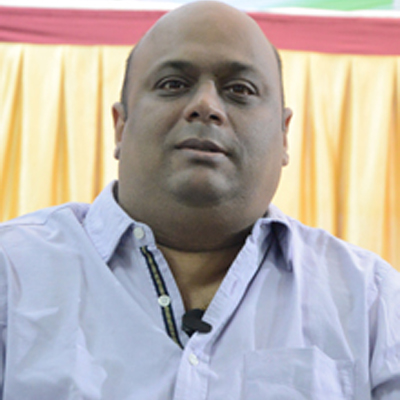
    “It is a great and welcoming move by Hathway,” says MCOF president Arvind PrabhooThe meeting between the duo was a result of the letter sent by MCOF to all MSOs, as a move to ensure smooth rollout of digitisation. It should be noted that MCOF had written to all MSOs after the Telecom Regulatory Authority of India (TRAI) gave MSOs the final deadline for starting gross billing by 15 December and submitting CAFs by 31 December.

    Calls to Hathway officials did not get a response. But sources close to India’s most evolved cable TV MSO admitted to indiantelevision.com that “yes, we have given the LMOs the right to bill and become the owners of their consumers. They are our trade partners and we want their rights to be maintained. And yes we want them to conduct their business using our SMS.”

    Hathway, apparently, has suggested two options to take things forward.

    The first is for smaller LMOs who who have a few 100 subscribers. The MSO says it could handle the billing for them. The LMO will function as the collection agent, earning a commission in the process for the subscribers who are part of his network. Hathway will be responsible for taxes in this case – including entertainment tax and service tax, wherever applicable.

    The second option is for larger LMOs with subscribers running into thousands and tens of thousands. These LMOs will be permitted to log online into the Hathway SMS with a unique ID and password and manage their subscribers, and even generate bills for them. If they choose this option, then they will be responsible for all the taxes and paperwork.

    Says the source close to Hathway.: “This system not only maintains the rights of the LMO over their consumers, but also makes the operation simpler for us. If we have to bill, activate, deactivate or change plans for all subscribers, we will have to set up those many call centres and infrastructure. It is easier for the customer as well, since for them the LMO is the touch point.”

    Hathway has been holding road shows all over Maharashtra to educate LMOs about its process and explaining to them that each of them can activate or deactivate boxes assigned only to them. Sessions have been held in Mumbai, Pune, Pimpri, Aurangabad, among other cities.

    However, there are still a couple of issues which have to be clarified and agreed upon between MCOF and Hathway. The first is in the area of revenue shares between the MSO and the LMOs. While Hathway has proposed a graded 60:40 to 57:43 split between MSO and LMOs, the latter would like it to be higher – say in the region of 45 per cent- in favour of the cable operators.

    The second issue that needs finalisation is: in whose name should the bill be raised – the LMO or Hathway?

    MCOF and Hathway are expected to meet this week to resolve these and any other issues that could crop up as well.

    “Hathway is the only MSO that has taken a step forward and has shown interest in resolving issues. Other MSOs have yet not approached us for any meeting,” says Prabhoo.
    Prabhoo need not worry. The floodgates may open sooner than he expects.
  • MCOF to meet MSOs to discuss billing issues

    MCOF to meet MSOs to discuss billing issues

    MUMBAI: The easier a process becomes, the better it is. It seems this is the process that Maharashtra Cable Operators’ Foundation (MCOF) has opted for in order to make the entire digitisation process a smooth ride. In a new initiative, the apex body of cable operators in Maharashtra has sent a letter to all the MSOs inviting them to a meeting where they would discuss about the proper implementation of digitisation.


    In the letter, of which Indiantelevision.com has a copy, the MSOs have been requested to schedule the meeting in the coming week.


    When both the parties meet, they are expected to discuss issues related to: interconnect agreement, billing, Consumer Application Form (CAF), package activation, a la carte channels choice, disconnection of set top boxes (STBs) without notice, misleading and false  information given about the LMO to the customer over call center, ownership of STB and uniform rates.
    We are making an effort from our side to meet each MSO separately, says Arvind Prabhoo


    The letter has come out a day after the Telecom Regulatory Authority of India (TRAI) gave the MSOs the final deadline of 15 December to submit the duly filled CAFs and also implement gross billing by December.  “CAF is not the only issue, there are issues related to service tax and billing,” says MCOF president Arvind Prabhoo.  “There is no clarity on whether the consumers will be billed on the service provided by the MSO or on the MRP of the package that the subscriber opts for,” he adds.


    The meeting has been called to discuss the issues concerning both the MSOs and the LMOs.


    “We are making an effort from our side to meet each MSO separately. In the meeting, we will try and understand the system of billing devised by the MSO and make suggestions, if required. If not, we will go hand-in-hand with MSOs, provided our legal status is maintained,” informs Prabhoo.


    The apex body which comprises more than 1500 LMOs is also unsure about the settlement mechanism between the MSO and the LMO once the billing is done. “The MSOs so far haven’t spoken to the LMOs on how they will pay the LMO for the customer it bills,” points out Prabhoo.


    Expressing concern on the 15 December deadline set for submitting CAFs, Prabhoo says, “If 50 per cent CAFs have been filled in one year on an average, how does TRAI expect the remaining 50 per cent to be filled in next three weeks? Also, with the holiday season coming in, is TRAI looking at switching off STBs, if the deadline is not met?”


    With TRAI pushing MSOs to start gross billing from December, Prabhoo comments, “The issue relating to entertainment tax is subjudiced. So when the MSO says it will start gross billing from next month, is it looking at levying entertainment tax as well?”


    It should also be noted that the Nasik Cable Operators Association has moved the Telecom Disputes Settlement and Appellate Tribunal (TDSAT) on billing. While TRAI was supposed to respond to it on 22 November, the tribunal has granted time till 23 January to the regulator to respond. “So when both entertainment tax and billing is subjudiced, why is TRAI pushing cable operators for contempt of court?” he questions.


    On the issue of TRAI asking the MSOs to either convince the LMOs to start billing or do it themselves, Prabhoo sternly says, “They can do it, if they want. We are not going to be delivery boys. We are owners of our own businesses. And we have the right to bill our own consumers and that is what we are fighting for.”

  • Cable TV digitisation: Parliamentary standing committee meets TV trade in Mumbai

    Cable TV digitisation: Parliamentary standing committee meets TV trade in Mumbai

    MUMBAI: There’s been a lot of press and media coverage about the process of cable TV digitisation over the past year or so. Most of it stated has been a mixed bag with opinions about its progress swinging from disastrous to a fabulous rollout. Hence, the political class decided to find out on their own what digitisation has meant for the industry.


    The parliamentary standing committee on information technology – headed by Rao Bhirendra Singh – has been making a whistle stop tour of different regions where digitisation has been implemented. 22 October 2013 saw it landing in Mumbai. Prior to this, it has had stopovers in Rajkot and Ahmedabad as well.


    The various constituents of the TV ecosystem were summoned to update the committee on the pace of digitisation and their individual specific concerns. “Phase I and II have been completed,” says a government representative. “The committee wanted to be apprised of the learnings from the first two phases by the various players and their preparedness for the next round of digitisation which is slated to be completed by December 2014.”


    Each of the players had meetings in camera with the committee and presented their positions. First, the last mile cable operators (LCOs) or last mile operators (LMOs). The Maharashtra Cable Operators Association (MCOF) and Cable Operators and Distributors Association (CODA) represented the LMOs and spoke about the issues faced by them.


    Among the concerns they raised were the fact that they had put in physical labour repeatedly during the process of delivering and installing set top boxes. They stated that it is the LCO which bears the brunt of the cable TV viewer’s ire when channels are switched off by the MSOs. But they were optimisitic about their role in phase III and phase IV.


    “Our representatives said that we want to be active players in these phases and we are happy to know that the government seems to be intent on having a clear way forward,” says a cable TV operator.


    The main bugbear raised by the national and local MSOs – Hathway, DEN, Siti Cable and InCable, apart from others – was the issue of entertainment tax. (Maharashtra and Uttar Pradesh have the highest rates.) Their demand: that the LMOs should be made responsible for collecting and paying this levy. Earlier, in the analogue regime, it was the MSOs who had to carry the burden and it is crippling them.


    Says an executive from a leading MSO: “Once the billing system is in place in a digitised India, LCOs can collect the tax and pay it and give the remainder amount to MSOs.”


    However, an LMO says a better option would be “splitting of bills between MSO and LMO and LMO to subscriber to avoid double taxation for the TV subscriber.”


    Broadcasters and aggregators – represented by the  NBA (News Broadcasters Association), a representative from Sony Entertainment Television, Indiacast, MediaPro and TheOneAlliance. The aggregators strangely stayed mum, while broadcasters harped on the usual complaints of carriage fees, lack of subscription revenues and the heavy dependence on advertising. The conversation also drifted to talks about content on television and how channels need to be careful about their content. “This is a major issue as there is no clarity about how the viewer and broadcaster are going to get value out of digitisation. If there is no elbow room for channelising of money for broadcasters then how are they going to focus on better content,” says a broadcasting industry representative.


    More such meetings are being planned according to industry sources. “Finally, we will prepare a report and submit it to the parliament for review,” says a source close to the committee.


    Hopefully, their reports and inputs will make things easier for all concerned as India’s cable TV ecosystem gears up for its most challenging phase – that of rolling out almost 80 million boxes in small towns and rural India.
    (Inputs from Meghna Sharma and Seema Singh)

  • New technology simplifies collection for cable ops

    New technology simplifies collection for cable ops

    MUMBAI: Even as industry prepares for phase III of digitisation, here comes a technology that is likely to get more than a warm welcome from cable operators.

    UPASS, a front-end automation for the cable sector and mobility solutions provider, has announced that it has successfully integrated with the subscriber management system of Media Nucleus; a development set to change the collection system. While Kottayam-based Star Vision Cable Networks is the first LCO to use the integrated solution, Media Nucleus is in talks with three other operators for installing the solution to their systems.

    It was at the recently concluded SCaT that the collaboration took place. “We finished the integration and also showcased a part of it during SCaT,” informed Media Nucleus director Santosh Nair. He explained the working of the solution as: “Each subscriber will have an ID, subscriber number or name that will be stored in the subscriber database. Once the subscriber pays the monthly fees, the collection agent will type it on the mobile phone that has all the details relating to the package etc. Also, there is a Bluetooth printer connected to this device, which will help him print a receipt immediately.  The same data will also be sent to the database, which clears the subscriber’s outstanding amount.”

    Technically speaking, UPASS’s cloud model acts as data bridge between the mobile device and the SMS server. There is an option for collection entries to be made either in cash or cheque and the relevant data is passed on to the SMS server in real-time.

    UPASS managing director Ravindra Deshmukh said: “We are excited that Media Nucleus and UPASS are collaborating to help operators overcome the challenges of billing and collection hurdles by providing data in real-time as trusted and actionable information. Our system benefits end users quickly and with self-service, regardless of data volumes and variety, or whether the data is on-premise or in the cloud.”

    The advantages of the solution are three-fold. One, it will make the collection process easier. Two, it will make the system more transparent and help MSOs with instant data on subscribers and revenue collected per day. Three, it is more economical, since it can be used even on a simple Rs 500 mobile phone.

    Nair said every operator had collection issues and with this system in place, “MSOs will just have to follow up on the data. They will get instant information, unlike earlier, when LCOs would collect data and sometimes, not even reveal it. The information will give an upper hand to MSOs as well, who can show it to their investors.”

    The new solution will help both the MSOs and LCOs by making collection easier, says Santosh Nair Explained Media Nucleus director technology and delivery Rajiv Tomer: “We had been providing the core solution of subscriber management solution and were looking at integration services to enable collection at the ground level become a part of our solution to our clients.  UPASS, having an industry benchmark solution, gave us the right option to be a go-to-market, providing end-to-end technology with a single integrated platform. We have enabled it in such a way that operators can provide the basic handset to the collection agents, which gets integrated with our SMS.”

    The solution will be available to operators at a one-time investment of Rs 2500. This apart, “the operator will have to pay less than Re 1 per transaction per month,” informed Nair, adding, “We will be meeting operators from Pune next week. We have been getting a good response for the technology.”

    Maharashtra Cable Operators Federation president Arvind Prabhoo said the technology would address the biggest problem of digitisation, which is collection. “The cost of collection for the operator is approximately Rs 25. Also, there is a huge process involved with it- right from collecting money from each subscriber to putting the data on computer etc. The solution will reduce this burden and make the system more transparent.”

    “Rs 2500 is just 10 customers for an operator, so it is very economical for them. Also, getting two-three handhelds will also reduce their burden. As for the MSO, they have for long wanted a transparent system, which they can achieve through this,” Prabhoo said.

    The UPASS solution claims that it provides customer data capture and STB activation in real time, channel/package activation from the LMO phone as well. 

  • TRAI meets MCOF’s Prabhoo on LMO issues

    TRAI meets MCOF’s Prabhoo on LMO issues

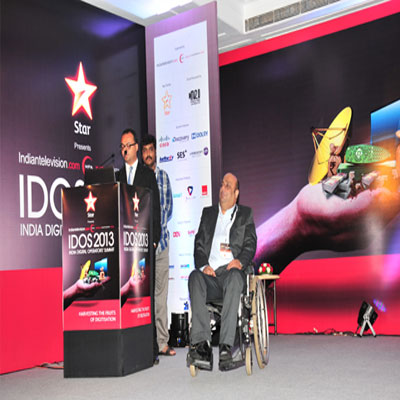
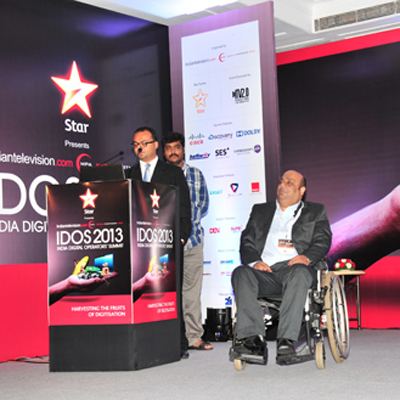
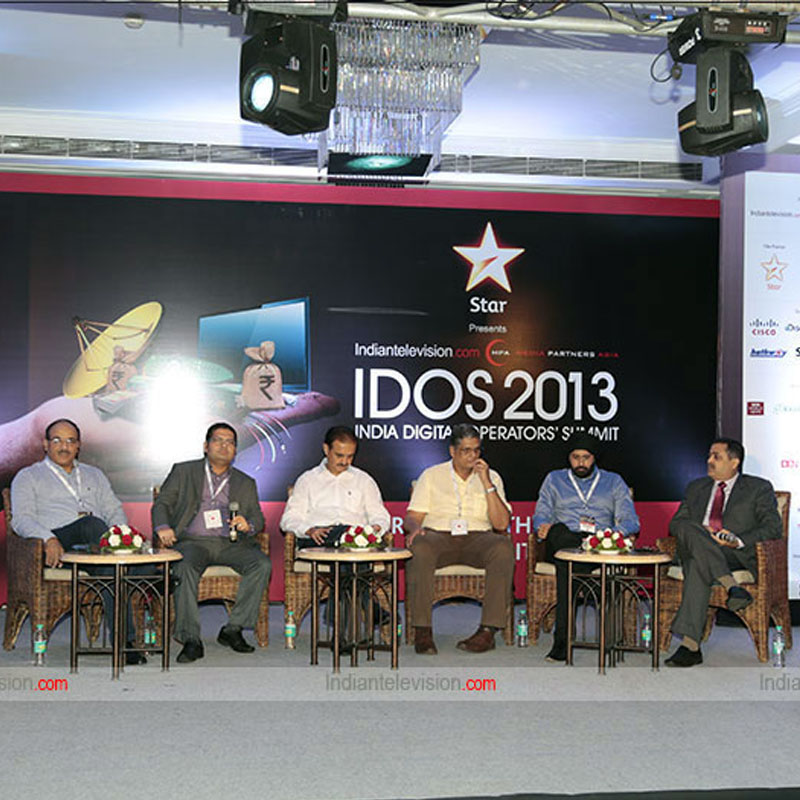
    MUMBAI: It was at indiantelevision.com & MPA’s (Media Partners Asia) India Digital Operators Summit (IDOS) that Mumbai-based cable TV heavyweight and MCOF (Maharashtra Cable Operators Federation) president Arvind Prabhoo first presented to India’s cable, DTH, regulatory and broadcast leaders the local cable TV operators’ perspective. Everyone was impressed including Telecom Regulatory Authority of India (TRAI)’s advisor N. Parameswaran, who said the regulatory body would like him to come and present at its headquarters in Delhi.

    The wheelchair bound Prabhoo did exactly that three days ago on 6 November when he presented the LMO’s viewpoint once again before the TRAI’s N Parmeshwaran, Wasi Ahmed, S K Singhal and G S Kesarwani.

    Prabhoo once again highlighted the issues that are bothering the LMOs and the role they can play in phase III and phase IV of digitisation.

    “There is a crisis in DAS I and II areas regarding LMO-MSO relationship,” says Prabhoo, adding that it was important to address the problems. Prabhoo has told TRAI that his major concern was the MSO-LMO-subscriber relationship. Subscribers belong to LMOs who collect money from them and give it to the MSOs who in turn pass it on to broadcasters. However, the MSOs believe that subscribers belong to them and not to the LMOs.

    Prabhoo also raised the issue of uneven pricing of packages in cities like Mumbai. He wants all MSOs to have similar packages so that it is convenient for a subscriber to migrate and that will even make money collection easier. At the same time, clarity on a-la-carte channels is missing even today.

    He also brought to fore the issue regarding the ownership of set top boxes (STBs). He thinks it is a big bone of contention. “On one hand, customers think they own the STBs, while the MSOs think that STBs are their property,” he remarks. “This disallows customers from migrating from one provider to another using the same STB when he shifts to a new place with a new provider and if he does, the LCO is held responsible for it. Because of this, many subscribers are shifting from cable to DTH, as it seems to be more convenient.”

    Since there’s no fixed revenue sharing deal between the MSOs and LMOs, Prabhoo came up with few solutions. He suggested that for an FTA (Free to Air) channel the sharing between MSO and LMO can be 20:80, while for pay channels it can be 75:25.

    He also suggested that the price of a STB can be reduced and a free basic broadband service be given to communicate by mail. Another suggestion was to rename the LMOs as Horizontal Connectivity Provider Agency (HCPA).

    Prabhoo also brought to TRAI’s notice the issue of entertainment tax. The 42B licenses of LMOs have not been renewed since two to three years and yet the tax is being collected from them. TRAI seemed to be unaware about the issue and has told to get in touch with the chief secretary of Maharashtra soon. They also said that as a regulator they had done everything they could.
    “There needs to be more interaction between LMO, MSO, broadcaster and TRAI if we need a proactive solution to address all our concerns,” concludes Prabhoo.

  • TRAI meets MCOF’s Prabhoo on LMO issues

    TRAI meets MCOF’s Prabhoo on LMO issues

    MUMBAI: It was at indiantelevision.com & MPA’s (Media Partners Asia) India Digital Operators Summit (IDOS) that Mumbai-based cable TV heavyweight and MCOF (Maharashtra Cable Operators Federation) president Arvind Prabhoo first presented to India’s cable, DTH, regulatory and broadcast leaders the local cable TV operators’ perspective. Everyone was impressed including Telecom Regulatory Authority of India (TRAI)’s advisor N. Parameswaran, who said the regulatory body would like him to come and present at its headquarters in Delhi.

    The wheelchair bound Prabhoo did exactly that three days ago on 6 November when he presented the LMO’s viewpoint once again before the TRAI’s N Parmeshwaran, Wasi Ahmed, S K Singhal and G S Kesarwani.

    Prabhoo once again highlighted the issues that are bothering the LMOs and the role they can play in phase III and phase IV of digitisation.

    “There is a crisis in DAS I and II areas regarding LMO-MSO relationship,” says Prabhoo, adding that it was important to address the problems. Prabhoo has told TRAI that his major concern was the MSO-LMO-subscriber relationship. Subscribers belong to LMOs who collect money from them and give it to the MSOs who in turn pass it on to broadcasters. However, the MSOs believe that subscribers belong to them and not to the LMOs.

    Prabhoo also raised the issue of uneven pricing of packages in cities like Mumbai. He wants all MSOs to have similar packages so that it is convenient for a subscriber to migrate and that will even make money collection easier. At the same time, clarity on a-la-carte channels is missing even today.

    He also brought to fore the issue regarding the ownership of set top boxes (STBs). He thinks it is a big bone of contention. “On one hand, customers think they own the STBs, while the MSOs think that STBs are their property,” he remarks. “This disallows customers from migrating from one provider to another using the same STB when he shifts to a new place with a new provider and if he does, the LCO is held responsible for it. Because of this, many subscribers are shifting from cable to DTH, as it seems to be more convenient.”

    Since there’s no fixed revenue sharing deal between the MSOs and LMOs, Prabhoo came up with few solutions. He suggested that for an FTA (Free to Air) channel the sharing between MSO and LMO can be 20:80, while for pay channels it can be 75:25.

    He also suggested that the price of a STB can be reduced and a free basic broadband service be given to communicate by mail. Another suggestion was to rename the LMOs as Horizontal Connectivity Provider Agency (HCPA).

    Prabhoo also brought to TRAI’s notice the issue of entertainment tax. The 42B licenses of LMOs have not been renewed since two to three years and yet the tax is being collected from them. TRAI seemed to be unaware about the issue and has told to get in touch with the chief secretary of Maharashtra soon. They also said that as a regulator they had done everything they could.

    “There needs to be more interaction between LMO, MSO, broadcaster and TRAI if we need a proactive solution to address all our concerns,” concludes Prabhoo.

  • Maharashtra’s LMOs to blackout TV on 2 Oct

    Maharashtra’s LMOs to blackout TV on 2 Oct

    MUMBAI: A mid- week holiday is always welcome and is a good time to catch up with friends and family as well as your favourite TV shows and channels. However, this Gandhi Jayanti will see a different type of revolt on television in the west Indian state as the Maharashtra Cable Operators Federation (MCOF) has decided to put their foot down on the alleged “harassment” that they have been facing from the MSOs.

    From 6:00 pm to 9:00 pm tomorrow, 2 October, about 3,000 cable operators under the MCOF have decided to blackout their screens opposing the ‘high-handed’ behavior that MSOs have adopted towards LMOs (Last Mile Operators), as MCOF president Arvind Prabhoo puts it. This includes the areas of Mumbai, Pune, Pimpri-Chinchwad, Nasik and Indore in MP where DAS I and II have been implemented. Approximately 15-20 lakh customers in Maharashtra alone will not get to see their favourite shows during prime time. LMOs in Gujarat have also been approached and a response is awaited from them.

    Arvind Prabhoo feels that it is time to start treating LMOs as equals and respect their demands

    The federation says that its intention is not to harass customers but just demonstrate that cable operators are united and it is high time MSOs give them their due credit in the cable TV chain. Communications to customers have already started in the form of SMSes and emails as well as leading papers – both English and Marathi – are being used to inform people about the flash blackout.

    “If the MSOs and broadcasters sit and talk with us there is no need to do this but no one is listening to us,” stresses Prabhoo. He does not even feel that the two will reach out to the LMOs before evening of tomorrow. Initially the plan was to shut it down for a whole day but due to legal regulations, it was reduced  to three hours.

    This isn’t the end as well. If nothing comes out of this then more such days will see blackouts with increased hours especially during festive times.

    There is a possibility that MSOs may take legal action against MCOF for this move but it is ready to fight the biggies. “This is exactly what we are opposing. When an MSO switches off channels on its own, no one questions its decision but the local guy is questioned. No legal action is taken but we have to bear all the brunt from both the MSOs as well as the customers,” adds Prabhoo. Recently, InCable had decided to switch off signals to all sports channels, right before the Champions Trophy T20, a way to bully the LMOs to cough up more cash, claims the federation.

    The issues that LMOs have been grappling with are many. Prabhoo points out that last minute decisions taken by MSOs lead to chaos which has to be resolved by local operators. This happened during DAS Phase I when STBs (Set Top Boxes) were being installed in homes. Unending trips to customers to fill forms is a burden on them as well, discloses Prabhoo. MSOs have the power to switch off signals to channels arbitrarily as well as make channels unavailable on a-la-carte rates so that only packages exist. “They should talk business, not superiority or inferiority,” adds Prabhoo.

    For now, the impending blackout is on the cards for tomorrow. Unless discussions take place soon, cable TV viewers in Maharashtra could well be in for more evenings of just looking at a blank TV set or one with a flickering static-riddled picture.

  • Arvind Prabhoo shares LMO perspective at IDOS 2013

    Arvind Prabhoo shares LMO perspective at IDOS 2013

    GOA: In this special session, the Maharashtra Cable Operators Federation president Arvind Prabhoo addressed some dire issues currently being faced by the last mile owners (LMOs).

    Prabhoo thanked Telecom Regulatory Authority of India (TRAI) for pushing digitisation as he feels that the cable industry has been stagnant for nearly 10-12 years. He went on to introduce how the cable industry has been blossoming in India. “Let’s go back to 1989 when we first started to replace nearly eight million fixed line phones with cable and the process was completed in merely two years.”

    He elaborated on how the LMOs have been investing and re-investing to improve the quality of signals that have been transmitted to their consumers and this without any financial backing or infrastructure provision.

    “Let me demystify an LMO for you – we are entrepreneurs to the core, self-motivated and self-learned men. We have the highest SLA track record among service providers,” he added.

    Prabhoo further spoke on the LMOs’ contribution towards the progress of DAS, he said that nearly 95 per cent of the STBs of the two crore boxes have been installed by LMOs in individual houses. “Contrary to common belief, it was us who purchased the boxes from MSOs at subsidised rates and installed in our customers’ homes.”

    There is no argument that cable is a preferred medium for better quality of picture and sound, “LMOs are the roots, so strengthen us to face the storms ahead as the economy is going through tough times now.”

    He further elaborated on the implementation of DAS and the fact that customers are still to enjoy the benefits of DAS roll out. “The benefits are still invisible for the consumers, there is still no clarity on the ownership of STBs, the consumer has already lost nearly Rs 200 crore in one year alone because of not having the option of just going in for FTA channels (which according to Prabhoo nearly 30 per cent of the customers would prefer watching) and to add to that extra cost charged as entertainment tax… so where are the benefits? And who is gaining out of this?” questioned Prabhoo.

    So what is the way ahead for LMOs: Prabhoo expounded, “It’s going to be tough for us, we only stand to lose out customer base and revenue, there will be marginalisation in customer care and the most pressing issue remains the lack of settlement mechanism between MSOs and LMOs.”

    What the LMOs are really wishing for is G’NOC’OLISED (globalised, nationalised and localised) content and to work in a mutually beneficial manner with the MSOs and bring about a revolutionising change to the way cable is being perceived today.

    “A-la-carte is the way forward, and the customer will always be the one whom we cater to,” ended Prabhoo.

  • STB availability key to Cas success

    STB availability key to Cas success

    MUMBAI: Availability of set-top boxes (STBs) is one of the key concerns for the successful roll out of conditional access system, speakers at a workshop on “Cas and Digital CATV” said here today.

    Cable operators should not only look at the price of the boxes but also the quality of features it offers as there is revenue to be earned from the consumers. “While what is being pushed now in India is basic boxes, there is need also to go in for middleware that enables enhanced facilities. The important question to be asked is what the boxes can do. Cable operators will be able to, after all, earn revenues from features like video-on-demand and gaming,” said Technosat managing director Irshad M Contractor.

    The Dubai-based company is prepared to set up a manufacturing facility in India if the demand for STBs pick up. Technosat has boxes ranging from basic to premium features on MPEG-2 and is currently conducting trials on MPEG-4.

    Though multi-system operators (MSOs) are currently importing boxes, several manufacturers in India are keen to come up with local production facilities. “We are introducing 4-5 flavours of STBs that are fully developed in India. The boxes will have personal video recorder (PVR) and digital video recorder (DVR). We are integrating the encryption system with Conax. We are also in talks with other Cas technology providers,” said Surbhi Broadband general manager sales P C Mishra.

    The two-day workshop, which concluded today, was organised by Satellite & Cable TV (SCaT) magazine and attracted over 250 delegates. The focus was on facilitating cable operators to make the transition from analogue to digital cable. The issues covered ranged from digital headends to billing solutions for Cas.

    Speaking on digital headends for simulcasting digital video broadcasting – cable (DVB-C), Peter Batt of Teleste said there was need to offer on demand TV and other value-added services. The third generation headends improved footprint and power consumption while offering unicast/multicast video services and triple play. But the fourth generation IP-centric headend for DVB-C and IPTV combined everything and offered “ultimate flexibility.”

    Earlier SCaT editor and executive director Dinyar Contractor said Headend-In-The-Sky (HITS) would mean rapid digital and Cas roll out as it would reach out to the smallest and far flung last mile operators (LMOs). Even as Cas made it unviable for LMOs to set up a digital Cas headend and offer a large pay bouquet, HITS offered several advantages to them.

    “The transmodulator cost is as low as Rs 2000 per channel and the LMOs can assemble their own, local basic tier. It is economically attractive if the Telecom Regulatory Authority of India (Trai) permits nationwide Cas,” he said.

    SCaT chairman Sudeep Malhotra spoke on uplink and downlink policies, elaborating on the regulatory framework prescribed for the different genres of channels such as news and sports. “There are 164 Indian channels licensed to be uplinked from India. The channels that are registered and allowed to be downlinked into India amount to a total of 54 channels,” he said.

  • FTA subscription sharing: TDSAT for expanded review by Trai

    FTA subscription sharing: TDSAT for expanded review by Trai

    NEW DELHI: The Telecom Disputes Settlement Appellate Tribunal (TDSAT) has sent back the case related to MSO’s demanding a share of the Rs 77 for FTAs to be paid by consumers under the Cas regime, for an expanded review by the Telecom Regulatory Authority of India (Trai).

    The tribunal, in its order issued yesterday, said that the process would have to be completed within six weeks.

    According to the TDSAT, since the case is of great importance and has wide repercussions, Trai should also incorporate the views of all stakeholders, including those of the cable operators.

    Wire and Wireless India Limited (formerly Siticable) had filed the case against the 31 August, 2006, order by Trai, giving to the cable operators the entire Rs 77 that consumers pay for Free-to-air channels under the Cas regime.

    “We said that if this is done under the Cas regime, the Rs 75-odd in fees that we get for carrying pay channels will not even cover our variable costs, let alone overheads,” Arvind Mohan, vice president, WWIL, told Indiantelevision.com.

    In the court the WWIL counsel proffered his logic, stating that Trai had said that while cable operators could keep the Rs 77, MSOs could keep the subscription from pay channels, as well as the carriage fees.

    However, the subscription for the pay channels would also be shared between MSOs and LMOs as well as broadcasters, as per a Trai formula.

    ‘Carriage fees’ are the amount charged by MSOs for carrying a certain pay channel in the ‘prime band’ or ‘colour band’, that is, special, viewer-preferred slots. This was applicable when the channels were streamed in the analogue system, because in that system, the number of channels would be limited to a maximum of 60.

    Under the Cas system, where digitalisation is compulsory, the number of channels shown can be innumerable, theoretically, and not less than 600, or 10 times that under the analogue system.

    WWIL argued today that Trai itself had gone on record that ‘carriage fees’ are a temporary phenomena and would disappear under the Cas regime, because the carrying capacity would shoot up from 60 to at least 600. Hence, the MSOs would lose that avenue of revenue.

    Trai argued that sharing of the FTA purse would lead to disputes and hence it had opted for a simple formula that MSOs could keep the carriage fees and the cable operators could keep the Rs 77 from the consumer subscription for FTAs.

    The tribunal, however, felt that he matter was seminal and the views of all the stakeholders need to be incorporated, and asked Trai to file the response of the views of all parties concerned within six weeks.

    Incidentally, this is the second time in two weeks that TDSAT has asked Trai to review aspects of an important case. The first was last week when TDSAT asked Trai to give their views on transponder capacity issue after examination of the facts. That case too, had been filed by Siticable, now known as WWIL.