Tag: LMO

  • Maharashtra stares at possible 3-hour cable TV blackout today as LCOs flex muscle

    Maharashtra stares at possible 3-hour cable TV blackout today as LCOs flex muscle

    MUMBAI: Cable operators across the country, and particularly in Maharashtra, seem to have upped the ante in their confrontation with the Telecom Regulatory Authority of India (TRAI) over the new tariff order that will be applicable to the broadcast sector from 29 December 2018. At a protest gathering in the city on Wednesday, the Cable Operator and Distributors’ Association (CODA) called for a cable TV blackout from 7 to 10 pm today.

    The cable operator fraternity has taken affront to the TRAI formula that dictates the revenue sharing model. As per the regulator’s math, MSOs and LCOs will split the network capacity fee (NCF) of Rs 130 in a minimum 55:45 ratio, with no share for the broadcasters. Consumers will have access to 100 FTA channels, including 26 mandatory Doordarshan channels, by paying the NCF. For pay channels, broadcasters will pocket 65 to 80 per cent of the MRP with the MSO and LCOs sharing the rest in a 55:45 ratio.

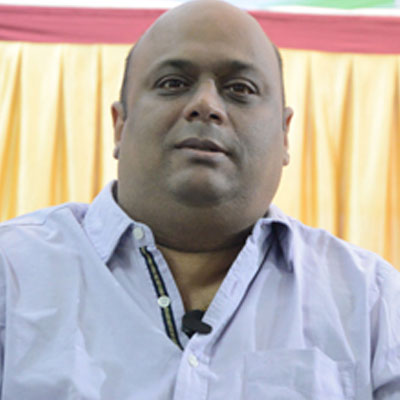
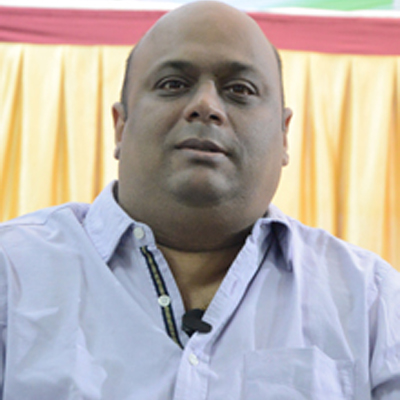
    “The protest is about two things, one is the price hike which is going to affect the customer and second the revenue share. The cable operators must get 40 per cent and the remaining 60 per cent should be divided between the broadcaster and the MSO,” said CODA’s Anil Parab.

    Apart from the sector regulator, the Maharashtra cable operators seem to have trained their guns at the Star India Network too. There’s a protest planned at Lower Parel’s Urmi Estate, which houses the Star India office, at 2 pm on 28 December. Not just that, LCOs say they will also refrain from pushing Star’s channel pack to consumers.

    “We are boycotting Star India channels. We are going to sit outside Star office in Lower Parel on 28 December at 2 pm. We will not book Star India channels initially,” added Parab.

    The reason for their ire at Star is the broadcaster’s alleged refusal to meet and negotiate with cable operators.

    “All the broadcasters except Star are in communication with us and are willing to sit across the table to iron out differences,” Maharashtra Cable Operators’ Federation committee member Asif Syed told Indiantelevision.com.

    He also said that dissuading consumers from opting for the Star pack won’t be all that difficult given the personal equations LCOs share with most of them.

    “It takes about a week to change the viewing preference of consumers. We have first-hand experience of this,” he added.

    While the distribution ecosystem is now up in arms, it was Star India that fought the TRAI tooth and nail in the Madras High Court and then the Supreme Court over the tariff order.

    In private conversation, however, some operators agree that they should have voiced their concerns on the matter ahead of time. The last-minute agitations may not yield the desired results, but the faction-riddled cable fraternity is determined to put up a united front.

    “We demand that the revenue sharing should be around 60 and 40 per cent. 60 per cent of the pay channel revenue should be shared between the MSOs and the broadcasters, and the remaining 40 should purely go to the LCOs. On the FTA channels, minimum fee of Rs 20 should be taken by the MSO for carrying channels up to the LMOs headend, as after that he distributes on his own network. 80 per cent of the networks where FTA channels are carried are in the hands of the LCOs. 20 per cent of the FTA channels revenue should be given to the MSOs,” argues MNS Cable Sena VP Jagdish Joshi.

    While the LCOs are spoiling for a fight, MSOs don’t seem to be wanting a piece of the action.

    “The protest is about the amendments in the sharing revenue model on pay channels and want it to be changed to 60:40 from 80:20 currently. There is no support from us,” a member of the senior management of a national MSO told Indiantelevision.com on the condition of anonymity.

    This protest isn’t just a Mumbai phenomenon. LCOs from over 30 associations across the country descended on New Delhi’s Jantar Mantar on Wednesday asking TRAI to amend the tariff order.

    The Vadodara Cable Operator Association, joined by their counterparts from Ahmedabad, called for a complete blackout on 28 December night to let their displeasure known to the regulator during a gathering at the Gandhinagar Gruh.

    In Hyderabad on Tuesday, the Old City Cable TV Operators Welfare Association threatened to blackout paid channels and stop payments to MSOs if they were compelled to pay based on the new tariff regime.

    “We are not against the tariff order; we just want some amendments to be done before the implementation. As per the trends going in the country, if the revenue share is very unfair, nobody is ready to do business in the country,” Joshi concluded.

    Stepping up its efforts to enable a smooth transition, TRAI said it is preparing a detailed Migration Plan for all the existing subscribers. On Wednesday, the regulator issued a circular allaying fears of a potential blackout.

    “The authority has noticed that there are messages circulating in the media that there may be a black-out of existing subscribed channels on TV screens after December 29, 2018. The authority is seized of the matter and hereby advises that all broadcasters/DPOs/LCOs will ensure that any channel that a consumer is watching today is not discontinued on 29.12.2018. Hence, there will be no disruption of TV services due to implementation of the new regulatory framework,” the circular said.

    Earlier this month, filed a petition seeking clarification on the issue of 15 per cent cap on discount on a bouquet price of TV channels to consumers that had been set aside by Madras High Court while upholding TRAI’s right to regulate the broadcast sector. The matter will be listed when the top court resumes post the winter break in January 2019. There’s another case being heard in the Delhi High Court involving Tata Sky, Airtel Digital TV and Discovery India that will be heard on 10 January.

    The LCOs are closely monitoring these matters. They also don’t rule out raking up the ongoing issue with the TDSAT. For now, however, they intend to show their might to TRAI and the broadcasters as the country prepares to adopt a new tariff regime. It remains to be seen what impact they can conjure up.

  • DEN Network fixed-line b’band biz plan hinges on partnerships & leveraging present infra

    DEN Network fixed-line b’band biz plan hinges on partnerships & leveraging present infra

    MUMBAI: With telcos handing out data at cheap rates in various package sizes under innovative schemes, mobile data consumption has increased rapidly in India in the last few years, while the growth of fixed-line broadband (FLBB) users has been tepid, if not completely static. MSO DEN Networks now wants to tap the hitherto unexplored opportunities of FLBB as a business proposition. So, what’s the plan?

    Not only DEN wants to use its own and partners’ customer bases in 100 small cities of India, but is also, probably, eyeing the huge FLBB market that will open up as the Indian government ramps up its BharatNet project to provide Internet and broadband services to approximately 250,000 gram panchayats or local village administrations through state-run telcos and third-party service providers, including cable operators. 

    The reason for hi-speed broadband in 100 cities in 10 Indian states is to try overcome the low returns in big cities and metros. “We have also seen a lot of stress in the fixed line broadband ARPUs of all the major metros, be it Mumbai, Delhi, Bangalore [and] Kolkata,” DEN Networks CEO SN Sharma said during a recent analyst call, going onto add that the ARPUS were low in the “top 10 towns of the country”.

    public://graph_1.jpg

    In April, DEN Broadband Pvt. Ltd, a subsidiary of DEN Networks, had announced expansion of its hi-speed internet services to 100 cities across India.  After completion, DEN Broadband aims to enable 1.1 crore (11 million) Indian households with high-speed broadband services by 2020 with 20 MB speeds on an average under different sets of packaging and schemes — in contrast to average lower offerings from various telcos.

    And, to back its claims, DEN Networks quotes data from international and domestic sources. In a presentation made to investors, the Sameer Manchanda-founded company justified its focus on FLBB by saying that if regulator TRAI’s December 2017 data was to be believed, there were 425 million wireless Internet subscribers, while there were only 18 million FLBB subs. Over the years, Indian FLBB growth has remained static compared to its APAC peers like Australia, China, Vietnam and Thailand.

    So, how is DEN going to go about its FLBB plans in 100 cities? The company plans to leverage its existing cable universe and tie-ups with last mile operators by going the franchisee model, leveraging present infrastructure (80 per cent already fibre-enabled), and lower capex and operational costs. Affordable technology like Metro Ethernet and GPON, coupled with standardized technical solutions, customer support from DEN and a pre-paid collect model on B2C basis, according to the company, would make good business sense.

    “We have a plan to enable 15 towns in the first quarter. Overall, 100 towns have to be enabled, and you will be surprised that LCOs themselves are approaching us,” Sharma informed an analyst, adding that it was not just a one-way traffic as company execs too were tapping LCOs informing them of the benefits as the infrastructure is already in place and the project could have additional revenue spin-offs for the LCOs. DEN has earmarked Rs. 100 crore (Rs.1 billion) as capex for the FLBB project over the three-year period.

    What is fueling DEN’s aspirations? Quoting Singapore-based Media Partners Asia figures, the company presentation told investors that there had been 

    15X rise year-on-year in Internet data traffic in 2017 with video content contributing 65 per cent of total mobile data traffic apart from the fact that India’s FLBB penetration was expected to increase to 10.3 per cent from the present single digit share by year 2022. Moreover, as content and applications keep getting heavier and denser in size, FLBB high speed broadband solutions could be ideal for offices and homes.

    “Our fiber is just 100 meters away from each of the subscriber that is being served by us,” Sharma explained to analysts, adding with broadband ARPUs low in metros and bigger cities it was decided to target the rest of the country that is not only a “virgin area” but has “equally good” demand.

    Asked about Reliance Jio’s ambitious plans to rollout broadband services in the country, which can disrupt this segment too, Sharma refused to comment, saying, “I am nobody to comment on others business.” 

    Also Read :

    DEN expands broadband services; plans Rs 100 cr capex

    Aim to take phase 3 ARPU to phase 1 value: Den Networks’ SN Sharma

    DEN readies Android-based STB for Feb launch

    TDSAT rules in favor of DEN Networks, directs ZEE entertainment to provide channels on RIO basis

  • DAS Phase III: MSO Alliance heading towards Caveat route in multiple states

    DAS Phase III: MSO Alliance heading towards Caveat route in multiple states

    MUMBAI: The Digital Addressable System (DAS) Phase III deadline came and went and what it’s left behind is chaos and carnage. The analogue signals, which went off for a day or two in some territories, are all back now. Last mile operators (LMOs) who faced the set-top-box shortage crisis have taken the judicial route to challenge the deadline given by the Ministry of Information and Broadcasting (MIB). In six states so far the High Court has permitted an extension where as in Assam’s Kamrup district, the District Magistrate after reviewing the petition allowed an extension.


    Now multi system operators (MSOs) are also exploring various legal routes and if sources are to be believed, then the MSO Alliance is moving the Uttaranchal and Jharkhand High Courts to file a Caveat. “We sense that the LMOs will go to the honorable court in the two states and hence before they reach out in order to aware the court about the scenario, we are filing a caveat,” a source close to the development tells Indiantelevision.com
     
    The DAS Phase III dilemma has also opened the piracy floodgates says a senior cable operator in Assam. “We have migrated from analogue to digital and therefore did not have the infrastructure to provide analogue signals, which we were ordered to be discontinued. But others continued with their analogue signals. ACC in Assam had the analogue signals running all throughout, which is piracy. Now the district magistrate has also ordered the extension in a particular territory, but the analogue signals are running all across Assam. Is it not piracy?” he questions. 
     
    The path ahead will be watched keenly as various stakeholders pull rabbits out of their hats in the coming days.
  • Change in investor mindset needed for MSOs to chart growth path

    Change in investor mindset needed for MSOs to chart growth path

    GOA: While the direct-to-home (DTH) sector has managed to attract investment from private investors because of its growth, the cable industry will be able to do so only if multi-system operators (MSOs) add broadband to their services.


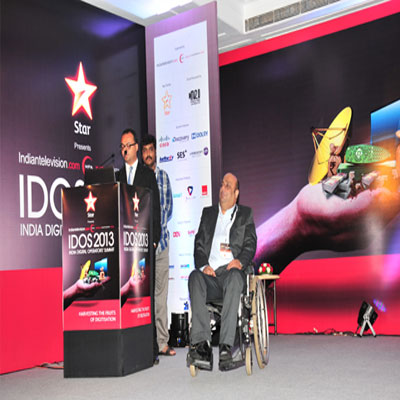
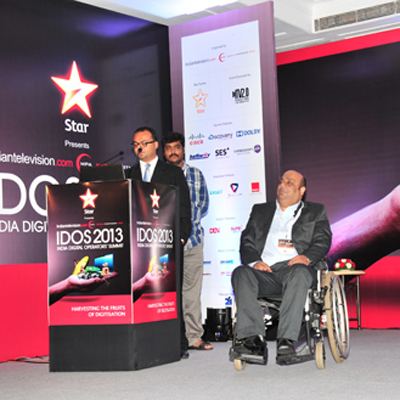
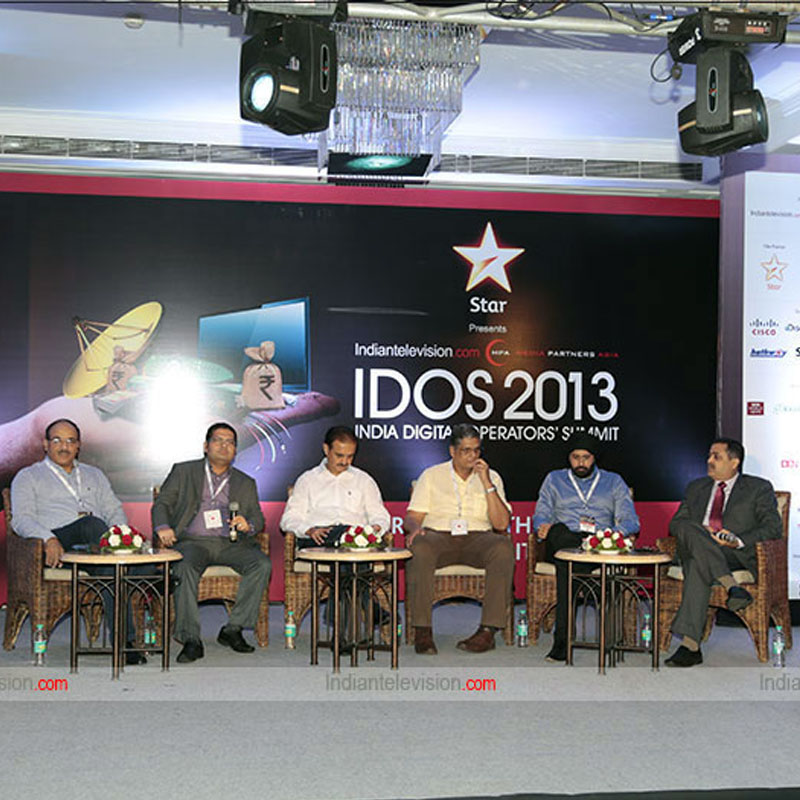
    This was the general consensus of a session on ‘Investing in Digital assets – Gems and long bets’ at the ongoing Indian Digital Operators Summit (IDOS) 2015 organised by Indiantelevision.com and Media Partners Asia.


    HSBC Securities and Capital Markets (India) Pvt Ltd director of analyst telecoms, media and Internet Rajiv Sharma said that DTH had gained as it has shown growth in terms of average revenue per user (ARPU), and innovation.


    While the stocks of cable industry initially went down, a reading of the figures of both cable and DTH showed that there was some recovery towards the end of the year. “The MSOs have not matched up to expectations, partly because of MSO-local cable operator problems,” Sharma said.


    In the session moderated by Castle Media ED Vynsley Fernandes, Sharma said that broadband can be the catalyst, which can bring in growth but only one or two MSOs have entered the broadband space.


    “The scale of growth is directly linked to attracting investments. If LCOs (local cable operators) can show that they own subscribers, they will get investment,” Sharma said. However, he was quick to add that broadband infrastructure and broadband compliant STBs (set top boxes) would help.


    Asked about collaborations, Sharma said that the media can learn a lot from telecom where networking and collaborations led to the government thinking in terms of letting them sell or share spectrum. “Telecoms focus on revenues to share, while the cable industry wants finance for set top boxes,” he said.


    Replying to a question about the slow growth of broadband in the country, he said, “Anything that is wireline will grow slowly whereas wireless will grow much faster. The consumer is willing to pay but it is for the government to facilitate this.”


    Sharma also added that the quality of management, profitability and network will attract investments. He regretted that the cable industry had failed to learn any lessons from the first two phases of the Digital Addressable Systems (DAS).


    Concurring with Sharma, MPA executive director Vivek Couto added, “Investors reward growth and DTH did exactly that.” However, he was of the opinion that the last mile operator (LMO) will consolidate under the Headend In The Sky (HITS) platform and that may change the situation. “The results will begin to show in the three to four years,” he said.


    Referring to NXT Digital, which was prepared to offer funding, he said that LMOs may now come forward.


    Couto added that while organized MSOs were doing well, investment in broadband in the short term would bring in benefits in the long term.


    In reply to a question, he said that India was the only country where content generation was growing. “But in all this, the cable industry was feeling lost,” he opined.


    Indiantelevision.com founder CEO and editor-in-chief Anil Wanvari had the last word when he said that the mindset of investors had to change as few MSOs in India could today afford the kind of growth their counterparts had shown in foreign countries.


    In another session, Maharashtra Cable Operators Foundation president Arvind Prabhoo and Sagar E-Technologies executive director Sudhish Kumar agreed that the cable industry had to organise itself better if it was to attract investments and grow in the digital era.


    Prabhoo said he had succeeded to an extent in this by getting the LCOs to be seen as the last mile operator (LMO). In an example of how the LMOs can grow, he said, “30 LMOs in Nagpur have joined together to form an MSME and were not prepared to invest in other LMOs,” he said.


    He added that if investors put in money to help create model services, there will be a major change in the next six months or so. “If cable operators offer other services through their STBs, there will be a churn in the industry,” he said.


    Kumar, who has a headend in Bangalore, lamented that finance was a major problem. “One STB cost around Rs 1500, but some of the larger MSOs sell boxes for around Rs 1000 and this forced others to sell at lower rates, which in turn results in a loss,” he said.


    Emphasising on the fact that MSOs were not concentrating on marketing, he said that if they did, it would help in consolidating the industry.


    Citing his own example, he said that he had not lost a single LMO despite having had ups and downs in his company because of the faith reposed in the company.

  • LMO – consumer collaboration is key to successful digitisation: IDOS

    LMO – consumer collaboration is key to successful digitisation: IDOS

    GOA: Collaboration is the only way for the Indian digital industry to go forward – particularly if it involves the last mile operator (LMO) as well as the subscriber. This was the core of the opening of the Indian Digital Operators Summit (IDOS) 2015 organised by Indiantelevision.com along with Media Partners Asia on the theme of ‘Defining the Digital Future.’


    Speakers at the summit, which is being held at The Lalit, Goa from 24 – 25 September, stressed that it was time to stop fighting with each other in courts or other forums and to move forward together since digitisation was inevitable.


    Speakers in the opening session of IDOS 2015 were clear that though the government was the largest gainer by way of taxes etc, it could not be depended upon and it was for the stakeholders to move forward on their own if the Phase III and IV digitisation deadlines set by the government had to be achieved. 


    Describing the scenario as a marathon race, Viacom Group CEO Sudhanshu Vats said it was critical for all stakeholders to collaborate and yet compete at the same time.


    The industry also needed to keep in mind the fact that the consumer is running ahead and everything depends and changes according to what he wants.


    In order for the market place to evolve, it was imperative that all stakeholders moved forward in a collaborative spirit. The policy makers, unfortunately, are the last in this race as they are slowest. So frustration will set in if everyone looks to the government as the winner.


    “Digitisation is being looked at myopically but it is necessary to look at it along with the consumer. Over the Top services will shortly take over in a big way. It is therefore important to realize that while each platform has a different technology, it’s important to keep pace. Players have to be pro-active and customise for all the 1.2 billion viewers,” Vats said. 


    Walt Disney India MD Siddharth Roy Kapur said it was important to see how consumers were rapidly moving from just a single screen scenario to usage of multiple platforms. “That is the reason why I prefer to use the expression ‘video content delivery business’ instead of television business. There is a strong need to put consumers at the centre of the whole media business,” he added.


    However as a result of multiple screens coming in, the level of attention span per screen has been declining. “Stakeholders have to keep this in view while planning their strategies. Content creation therefore has to change accordingly and companies need to find ways to get the consumer to value the content,” he added.


    He also stressed on the need for companies to look at each other as partners and move ahead to derive more value and average revenue per user (ARPU).


    Hinduja Group’s Grant Investrade MD Tony D’Silva said his company had carried out various studies before launching their Headend In The Sky (HITS) platform – NXT Digital. “All these studies showed that the last mile operator, who had built this industry with his sweat and blood, had to be taken along, and the consumer was a key stakeholder,” he said.


    It was clear that the first beneficiary through taxation, service tax, entertainment duty or licence fee was the government. However, the government has done little to support the industry. On the other hand, the second beneficiary was the broadcaster, which received 75 to 80 per cent of the revenues. “He therefore must play a key role in this journey,” D’Silva said. 


    Considering what these stakeholders – government and broadcasters – get, it was necessary that the two help other stakeholders if digitisation had to be achieved. 


    Digitisation will also help bring about transparency in a scenario where the LMOs had been declaring just around 15 – 20 per cent of their subscriber numbers.


    NXT Digital has been designed in a manner in which the LCO/LMO does not lose proprietorship of their business and did their own broadcasting deals as well as pricing and packaging as per market rates. The HITS platform also enabled LCOs to obtain set top boxes at their own convenience with easy funding and set up local channels in order to compete with other digital platforms like direct-to-home. NXT Digital had worked out a fee of just Rs 50 per subscriber per month and is offering 500 channels.


    It also ensured encryption at three stages: in the NXT system, at the LCO level and at the STB-end. GPS had been provided to the STB to ensure any movement was detected. It is therefore clear that the LCO has to be helped if Digital Addressable Systems (DAS) has to succeed. Perhaps the biggest problem was to get the consumer to pay, and the LCO needs to be aided in this task.


    In a presentation of the present scenario, MPA executive director Vivek Couto said that it was important for stakeholders to get their act together as digital penetration was only at 50 per cent so far. “It is also necessary to remember that Phase III and Phase IV comprise a large chunk than the first two phases,” he added.


    According to Couto, around 70 per cent of the content contribution was coming from players like Viacom, Sony, or Fox. Adding that the low rate of internet connectivity around the country was a major issue, he said, “The Indian pay TV business will remain competitive and reach its peak in the next three years, but research and collaboration is very critical for this.”


    Indiantelevision.com founder CEO and editor-in-chief Anil Wanvari said in his opening remarks that in order to meet their targets, stakeholders had to have commitments and take tough decisions. “However, the large number of legal cases and problems of agreements between various stakeholders must make them realise that DAS will not succeed in this manner,” Wanvari emphasised.


    At the same time, Wanvari was also of the opinion that LCOs and LMOs had to change and forge partnerships in order to move forward. 


    The government on its part must do something about taxation along with opening up for greater foreign direct investment (FDI).

  • TDSAT asks Bangalore MSO not to cut signals of local association’s LCO members

    TDSAT asks Bangalore MSO not to cut signals of local association’s LCO members

    NEW DELHI: All Digital Network Ltd of Gandhi Nagar in Bangalore has been directed by the Telecom Disputes Settlement and Arbitration Tribunal (TDSAT) to main status quo and not to disconnect the signals to any member of the All Digital Cable TV Operations Welfare Association of Bangalore.


    The Tribunal said that in case there is any disconnection of the supply of signals by the respondent to any of the cable operators in this petition, All Digital Network will restore the connection till any order is passed.


    TDSAT chairman Aftab Alam and members Kuldip Singh and B B Srivastava listed the matter for 22 September.


    All Digital Network counsel Sharath Sampath has been given time to get proper instructions in the matter.

  • DAS: A mirage that moves farther, the closer one gets to it

    DAS: A mirage that moves farther, the closer one gets to it

    New Delhi/Mumbai: When developed countries like the United States and the United Kingdom decided to adopt digital addressable systems (DAS), they knew there would be major road blocks.

    Not only did these countries decide to complete digitisation by 2017-end, but admitted that both analogue and DAS would have to co-exist for some time until all viewers realised the advantages of digitisation.

    In its effort to beat these bigger countries, India decided it would set out a deadline wherein analogue and DAS would not co-exist.

    The result was a mirage that was shown to most Indians and – as it happens with a mirage – the realisation became more distant as the deadlines approached.

    It was exactly a decade earlier (14 September, 2005) that the Telecom Regulatory Authority of India (TRAI) presented its first report on Digitisation of Cable Television. Five years later, in August 2010 it gave recommendations relating to DAS.

    However, it was only in April 2011 that the Ministry of Information and Broadcasting (MIB) finalised the schedule for digitisation. According to that decision, which was notified in November that year, the entire country was to have adapted to digital addressable cable systems by December 2014. The first phase covering the metros was to be completed by 31 March, 2012, Phase II covering cities with a population more than one million by 31 March, 2013, Phase III covering all urban areas (Municipal Corporations/Municipalities) by 30 September, 2014 and Phase IV covering the rest of India by 31 December, 2014.

    Since then, the deadlines have been pushed at least twice. The first was when Phase I was delayed by six months, whereas the second was when the current Government decided that the Phase III deadline would be extended to December 2015 and Phase IV to December 2016.

    And clearly at a time like this, it would be apt to quote these popular lines from Robert Frost’s poem made famous by the country’s first Prime Minister Jawaharlal Nehru – ‘The woods are lovely, dark, and deep, But I have promises to keep, And miles to go before I sleep.’

    Indeed there are miles to go even as Phase I in the metros claimed to be major success. But it is well known that DAS continued to be barred by a stay order of the Madras High Court, and there are large pockets in the other three metros (Mumbai, Delhi & Kolkata) where analogue TV continues to thrive. 

    Phase II also suffered in that many of the cities are still not digitised and this is evidenced by the large number of cases pending before the Telecom Disputes Settlement and Arbitration Tribunal (TDSAT).

    Keeping in mind ground level realities, the government initially contemplated merging the final two phases, but realised that this might lead to major embarrassment. Therefore, it was decided by the Narendra Modi led government to implement Phase III by the end of 2015 and the rest of the country in Phase IV by the end of 2016. The third phase includes 38.79 million television households spread across 630 districts and 7,709 urban areas.

    In a recent conversation with Indiantelevision.com, MIB additional secretary J S Mathur, who heads the Task Force for the final two phases, ruled out any possibility of extension of deadline. He said, “There is no reason for any extension of dates for completion of phase III. Work is proceeding as per schedule.”  

    However as the saying goes, there are many a slips between the cup and the lip. So even as the first deadline is barely four months away, there are many hurdles in the way that need to be crossed.

    Apart from several legal issues, the last Task Force itself laid bare many of these hurdles.

    SHORTAGE OF MSOs

    Although the Home Ministry has in principle decided to do away with security clearance for multi system operators (MSOs), the fact is that India still has not even touched the figure of 375 in the number of MSOs. As per the last report dated 20 August,2015, while 226 MSOs have 10-year licences, 146 have only provisional licences. It does not need a bright mind to figure out that the number stands out as a joke when one considers the number of television households in the country.

    SET TOP BOXES

    The country still does not have adequate STBs and it is claimed by many local cable operators (LCOs) that the STBs being supplied are those that are meant for direct-to-home (DTH) transmission and not cable and therefore create problems. The other option is to take cheap China-made STBs.

    Despite the Make in India campaign, very few manufacturers have come forward with proposals for reliable STBs. 

    The Consumer Electronics and Appliances Manufacturers Association (CEAMA) complained at the Task Force meeting that no major orders were being placed with it by MSOs. However, a representative of the CEAMA said, “There is little time to place orders if they want the STBs, which are required to be delivered before the cut-off date.”

    The FICCI annual survey of manufacturing shows that there has actually been a decline in the manufacture of electronic goods, despite the Make in India impetus. The manufacture of electronics – presuming these include broadcast equipment and STBs – and electrical came down from 75 per cent in the last quarter of 2013-14 to 70 per cent in the same period of 2014-15.

    LACK OF AWARENESS

    Clearly, this is a grey area, since many people in the country are not aware of the advantages of DAS. The last Task Force meeting stressed on the need to push up awareness through advertisements, workshops, and interactive sessions. There was even mention of a Chetna Yatra.  

    There is lack of communication even between the regulator TRAI and the stakeholders. A Task Force member from Assam said, “The regulatory bodies need to speed up their action. TRAI is supposed to launch its regional operations. There is no clear idea when that will happen. The system here in Assam is not aware of various rules and regulations and the operators do not have the affording power to take the legal battle to Delhi so they often succumb to injustice.”   

    INTER-CONNECT AGREEMENTS

    TRAI had recently asked all broadcasters and MSOs to make the Authority aware of any problems they were facing. However! there were very few complaints, because in most cases the matters are pending before TDSAT or courts of law.

    The interconnect agreement between the stakeholders of the ecosystem is pending even in DAS phase I and phase II areas. “People are not ready to spend in head-ends as there is no clear revenue model. There are distributors who have their favorite MSOs and there is a discrimination of revenue flow on the basis of that favouritism,” said an LCO. He further added “We want a transparent revenue model, which will only come after signing of the interconnect agreement.”

    DAS TARIFF

    In an order on 28 April subsequently upheld by the Supreme Court, TDSAT told TRAI that it “will be well advised to have a fresh look at the various tariff orders in a holistic manner and come out with a comprehensive tariff order in supersession of all the earlier tariff orders.”

    It had also said, “While doing so, it may consider all the agreements and relevant data available with it. It may consider differentiating between content, which is of a monopolistic nature as against that which is shown by other channels also. It may also consider classifying the content into premium and basic tiers.”  The Tribunal had struck down TRAI’s tariff orders.

    COMMERCIAL TARIFF

    TRAI has already begun a fresh exercise in the light of court orders in trying to determine the difference between commercial and private tariff. Following directions by TDSAT earlier this year that there was need for a fresh look at tariff orders, TRAI had issued a new paper on “Tariff issues related to Commercial Subscribers”. In the paper, TRAI asked commercial subscribers whether there is need to define and differentiate between domestic subscribers and commercial subscribers for provision of TV signals and the basis for such classification.

    PROBLEMS BETWEEN MSO AND DISTRIBUTORS

    There is no clear communication between the two very important stakeholders of the DAS ecosystem – the MSOs and distributors. Recently all Multi Screen Media MD channels were taken off Hathway due to internal issues between the two stakeholders. Additionally, Indusind Media and Communication Limited (IMCL) and India Cast are now going through disruption. IMCL informed its subscribers through a message: “Indiacast group is demanding steep increase in monthly subscription, which is commercially unviable, they are pressurizing us by running OSD on colors. IMCL is planning to take the legal recourse. Regret inconvenience caused to you and appreciate your support. Thanks IMCL team”

    MSO – LMO TUSSLES

    The lack of understanding is more prominent when it comes to the MSO and the last mile operators (LMO). The LMOs claim that they are never given their due. The differences are often taken to the regulatory bodies. In one such case, the Bombay High Court issued directions to TRAI to settle the Interconnect Agreement (ICA) issue between LMOs and MSOs within two weeks even as the MSOs believe that there is not enough transparency when it comes to the revenue models.     

    Progress, it is said, cannot be stopped. Similarly, DAS is bound to come in the country. What remains to be seen is whether in its race to catch up with the developed world, it will succeed in a smooth transition or lead to a mess that probably will linger on in courts of law, corridors of bureaucracy, or the one-upmanship of political parties. 

    digitisation


  • Sangram Committee to support Patna LMOs

    Sangram Committee to support Patna LMOs

    KOLKATA: Kolkata-based Cable Operators Sangram Committee – has extended its helping hand to last mile owners (LMOs) in Patna. The city boasts of approximately 2.5 – 3 lakh digitised cable TV homes in the DAS II area. However, the LMOs are a ‘unhappy lot’ as they neither get proper bills and receipts nor full payment from customers.


    Going forward Sangram Committee, which currently is active in Kolkata, aims to spread its operation in the eastern region including Assam, Tripura and Jharkhand and plans to address the grievances of all the LMOs in the eastern region to the authorities jointly.


    More than 450 LMOs in Patna met with the Sangram Committee affiliated LMOs and discussed the ground problems faced by the LMOs while operating in their respective zones.


    Speaking to Indiantelevision.com, Cable Operators Sangram Committee general secretary Apurba Bhattacharya said, “We will place our demand to all the MSOs operating in Patna and request them to operate as per the Telecom Regulatory Authority of India (TRAI) guidelines. LMOs are neither getting the bills nor the receipts.”


    It should be noted that Patna has around eight lakh cable TV homes, of which 2.5-3 lakh that fall under DAS II area are all digitised. While another five lakh homes are expected to be digitised in the later phases.


    Multi-system operators like Siti Cable, GTPL, Patna-based Darsh and DEN Networks mostly operate here.


    “Since customers are not getting the bills, they are not ready to do full payment. Apart from this we are also not getting any receipt from the MSO,” said Kumar Nilesh, a LMO affiliated to GTPL.


    While Rakesh Kumar Singh, a LMO affiliated to Siti Cable said, “Most cable operators have not yet signed revenue-sharing agreements with their MSOs.”


    Another LMO when asked about the popular package, said that people mostly go for packages below Rs 300 here.


    Explaining further, an LMO said that if a customer has chosen a package of Rs 240, he will have to pay Rs 240+Rs 15 (amusement tax) plus an additional 12.36 per cent service tax. “But some customers are just paying Rs 240, so do we pay their service tax and amusement tax?” he questioned.


    “Customers were expecting to get bills and now when they don’t get their bills, they are upset. Some are not willing to pay the monthly rental also,” he further added.


    On other hand, MSOs have a different picture to present.


    Darsh Digital Network director Sushil Kumar said that the MSOs can see that even after collecting payment from the consumers, LMOs are not paying the respective MSOs. “If there is a backlog of three to four months in payment, how can we survive?” Kumar avers.


    “Television has become an inseparable part of our lives. So not only MSOs and LMOs but consumers too have to think in a mature way and all other stakeholders should act as per the norms, for the smooth rollout of DAS,” concluded an expert.

  • IMCL introduces prepaid payment options

    IMCL introduces prepaid payment options

    MUMBAI: It was in February 2014, when Tony D’silva took charge as the MD and group CEO of IMCL and laid the vision of adopting a prepaid model. And as the year comes to an end, the dream has been accomplished.

    The multi system operator (MSO) has brought in two important additions in its operations. One, it has introduced prepaid model for all its a-la-carte including Star channels and mini packs for consumers; and two, the MSO has introduced a prepaid system for last mile owners (LMOs) offering packages to their consumers.

     “The prepaid model is applicable for a-la-carte, Star channels and for the mini-packs. So if a consumer wants all the GECs plus sports or English entertainment channels, they can create a mini-pack and can pay for that through our website or by going to the cash counters. We have introduced all the payment modes that are available for recharge of DTH and telecom,” informs D’silva.

    The prepaid model for a-la-carte channels and mini packs was introduced after broadcaster Star India decided to enter into only Reference Interconnect Offer (RIO) deals with MSOs.  

    This apart, a prepaid mode of payment for LMOs selling packages to their consumers has also been introduced from 1 December. “The reason behind this is that the same pack is priced differently in different parts of the city by the LMOs. In this case, we, as MSOs have no control over the pricing given by the LMO and so we decided that the LMO should pay for the packs they give to their consumers upfront to us,” he informs.

     “In case the LMO does not pay for the packs that they give to their consumers, we will either downgrade them or remove all pay channels from them,” adds D’silva.

    It can be noted that MSO Siti Cable too is looking at a similar prepaid model, wherein the LMOs would deposit an advance to the MSO to take signals and then collect the same from the consumer. The LMO according to the prepaid model will get the signals from the MSO till his credit balance remains.  The MSO is testing the viability of the model in Delhi first, and has decided to replicate it in other states, at a later stage.

    According to D’silva, prepaid model of payment is the only way by which the process of monetisation of packages can begin. Talking about the response, he says that of the 2.2 million IMCL subscribers, so far 100,000 subscribers have used the prepaid model. “This shows that the market wants a payment mode like this,” he adds.

    Also from the LMO point of view, as per D’silva, the collection is going good. “This is the only way that cable industry can move,” he opines.  

    So will the prepaid model help increase ARPUs? Says D’silva, “Everything is about packaging and bundling. Nobody watches more than 20 channels, so if I can give these 20 channels at a reasonable price and after that add extra channels of the choice of consumers; it wouldn’t pinch the consumer’s pocket.”


  • CVNO Alert: Kolkata LMOs sign MoU with Meghbela

    CVNO Alert: Kolkata LMOs sign MoU with Meghbela

    KOLKATA: The Cable Virtual Network Operator (CVNO) in Kolkata is moving fast in order to meet its 15 December launch deadline. In the latest, more than 200 Kolkata based last mile owners (LMOs) have signed a Memorandum of Understanding (MoU) with city-based multi-system operator (MSO) Meghbela Cable & Broadband Services.


    The MoU, which will see Meghbela provide the infrastructure to the LMOs will be valid for 36 months.  


    “Yes, the MoU is signed and now based on this, we can initiate our work.  Around 205 LMOs have come together so far,” confirmed Cable Operators Sangram Committee general secretary Apurba Bhattacharya to indiantelevision.com.


    “Our brand name will be Meghbela, since the MSO is a DAS license holder. The watermarked logo of the MSO will also be displayed on the TV screen,” he further added.


    The nature of agreement is based on the Telecom Regulatory Authority of India’s (TRAI) regulations as well as on the demand and requirements of both the parties.


    The CVNO model, according to the LMOs will operate in all areas of Kolkata. “The MSO will levy a minimum price against every set top box (STB),” informed a LMO, who is part of the business model. 


    Talking on the cable TV tariff, Bhattacharya said, “While the package rates will be the same but the LMOs will have the freedom to allow discounts from their pocket to subscribers.”


    Meghbela Cable has already installed around 1.26 lakh STBs in Kolkata DAS I areas. While in places which fall under DAS III and IV like Haldia, Bankura, Arambagh and Hooghly, the MSO offers 9-10 lakh cable TV connections, majority of which is analogue.


    The CVNO model is set to empower LMOs to give their subscribers the choice of channels according to affordability.