Tag: L&M

  • The expanding Cosmos of Indian animation

    The expanding Cosmos of Indian animation

    “Animation can explain whatever the mind of man can conceive” – Walt Disney

    India is at the cusp of a creative revolution. There has been a sudden proliferation of media platforms. Content consumers are spoilt for choice. This increase in supply has peculiarly resulted in increased demand and consumption, thereby giving rise to more such platforms and more opportunities. This has been a boon for storytellers and IP creators like Cosmos-Maya. Cosmos-Maya’s growth is a microcosm of that of the Indian animation sunrise industry. A recent report by KPMG pegs that the Indian Animation and VFX industry, which now stands at $1.23 billion, will more than double in size to $2.6 billion in the next 5 years.

    With a market share of 65 per cent in the burgeoning kids’ animation space, Cosmos-Maya is a shining success story like no other. From producing four half-hour episodes a month to producing 50, from having one show to having 15 on-air and from being a onetime service provider, backend studio to a leading IP creator, Cosmos-Maya today is the largest kids’ animation company in India with a 360-degree expansion focus.

    Since KKR backed Emerald Media acquired a controlling stake in the company, the last few years have seen Cosmos-Maya attain a consistent annual growth of more than 50 per cent. Its success can be attributed to its evolution from a premium animation outsource destination to IP creator. The report states that the Indian animation IP production business grew by about 20per cent in the last year and currently stands at Rs 860 crore. It is slated to double in size to Rs 1750 cr in the next 5 years.        

    Digital platforms are seeing a boom in the country. Close to 650 million Indians have access to internet services today. Smartphone penetration has reached the 500 million mark. When we look at the breakup of India’s animation production pie, 53.5per cent is digital’s share. This is driven by content viewing on mobile phones in a country which has mostly single TV households. WowKidz, Cosmos-Maya’s YouTube network, has been a big benefactor of this digital growth.

    WowKidz today has more than 26 million subscribers and 13 billion views. An average of 60,000 new subscribers are added daily to the mix. WowKidz had humble beginnings and Cosmos-Maya saw it as a source of additional revenue. It was given a push when Cosmos-Maya envisaged a brand which viewers could bank upon for 24X7 quality entertainment. In just 18 months, it is now a full-fledged business entity raking in a substantial share of the company’s revenue pie. The platform now has 10,000 odd videos of quality entertainment for the 3-14 year demographic. WowKidz has the world’s largest Hindi language animation content catalogue today. The company has also acquired blockbuster shows like Smurfs, Boonie Bears, Omnom, Hotwheels and Simba from American, Chinese and European countries and these are giving back rich dividends on WowKidz. WowKidz has become a window to bring the best global content to India and to showcase quality Indian kids’ content to the world.

    Interestingly for India, the classic Television is also still growing. There are currently 24 kids’ channels in India. Another report by Boston Consultancy Group says that traditional media continues to be the media of choice for consumers with an overall share of 84 per cent, the biggest chunk of which is with television. More than 200 million households in India today have a television, up from 180 million in s 2016. This ensures a consistent, pan-India reach of the content aired on TV. What makes these statistics even more interesting for a market like India are its absolute numbers. There are more than 300 million households in the country today, growing ever so quickly. TV has 30 per cent share in India’s animation production pie, but still has the maximum reach. Today TV and digital are both growing in the country. With animation transcending boundaries between the two, we live in a beautiful era of plurality. For a content creator like Cosmos-Maya, both platforms are equally lucrative.

    This lucrative scenario has been an enabler of cross-continental partnerships to develop high-quality co-productions with top studios in the world. Cosmos-Maya currently has 5 European co-productions, namely ‘Leo Da Vinci’ (with Gruppo Alcuni and All Rights Entertainment), ‘Berry Bees’, an Italian-Australian-Irish co-production), ‘OPS’ (with Studio Campedelli and Movimenti) and ‘Atchoo!’ (with Studio Campedelli and Cartobaleno). ‘Galactic Agency’, is the latest co-production with Studio 100 France. Cosmos-Maya is aggressively expanding into China with co-productions and licensing deals with the top Chinese entertainment players.

    Cosmos-Maya has organically moved into the international content distribution space with WowKidz Distribution. The onus will be on acquiring best in class American, European and Chinese content, the seeds of which have already been sown. We are following a three-pronged approach of marketing, creative localization (which includes voice casting in local language and music) and syndication of the content. Our knowledge and distribution experience of local Asian markets coupled with our creative prowess enables us to add that extra zing to the content and making it ready for consumption. To quote an example, ‘Berry Bees’, one of our biggest co-productions with Atlantyca, SRL and Telegael will be ‘The Dabangg Girls’ in India, thereby giving it an Indian soul and yet retaining its original charm. Glocalization is the future.

    Licensing and merchandising (L&M) segment accounted for a share of 17 per cent in the Indian animation production pie. Needless to say, with home-grown IPs growing in number, this is a category waiting to explode. Cosmos-Maya’s IPs like Selfie With Bajrangi and Guddu are very conducive to L&M given their reach and relatability and a full-fledged L&M department has been created to exploit this space.

    A $2 billion giant in the form of the Indian ed-tech industry has been given a push by animation. A major need gap exists between the education and entertainment industries. Cosmos-Maya is creating the WowKidz Edutainment App to bridge this gap and bring fun ways of learning to kids of all ages. The same is slated to launch in the next financial quarter. Cosmos-Maya is working with the largest ed-tech company in the country. Ed-Tech assumes a major chunk of the company’s revenues and the scope of business is planned to grow exponentially in the next couple of years.

    To sum up, Disney established itself as a leader in the animation industry before diversifying. The Indian animation industry is alive and kicking. Cosmos-Maya will continue to drive growth of this sunrise sector.

    (The author is CEO Cosmos-Maya. The views expressed are his own and Indiantelevision.com may not subscribe to them)
  • Guest column: Personifying animated characters for kids

    Guest column: Personifying animated characters for kids

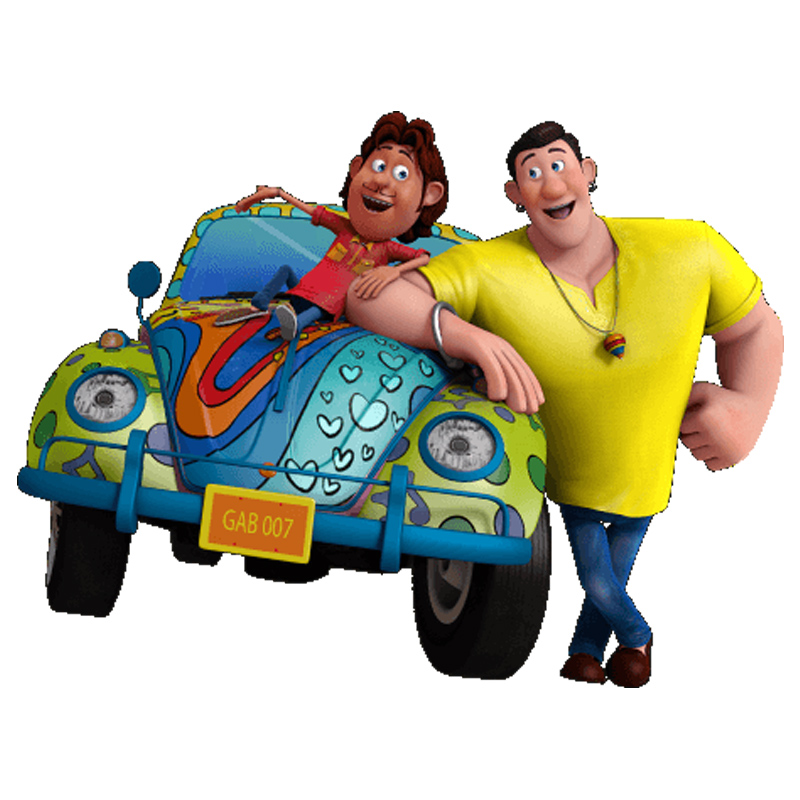
    MUMBAI: One day, while at my neighbor’s house, I couldn’t help but notice how excited her daughter was to dress up for her annual fancy dress competition. More than being excited about the event, she was looking forward to dressing up as her favorite animated character! I realised then how big a role characters play in influencing kids. They just don’t consume the content but also relate to the characters as they are the first and major source of entertainment and engagement for them.

    Growing up is about following myriad animated characters. The story of a character transcends beyond the show into the kid’s world and builds a strong bond with them. A child consistently associates with key qualities of a character such as beauty or courage or even just language, mannerisms or situations. Beyond just being entertained, kids constantly pick up nuances from these character worlds and relate them to their own. In them, they find an idol, a hero or just a friend.

    Kids today are surrounded by innumerable characters that have become a day-to-day part of our pop culture. We, as content creators, tend to plug into a kid’s system to gather their understanding about their likings, preferences, routines and relationships, which become an innate part of their personality. From the look and feel of the characters to the storylines, the ultimate aim is to give kids something genuinely engaging and a reason to connect with the characters.

    Readings indicate that an average child watches approximately 18,000 hours of television from kindergarten to high school. It is thus natural for them to learn and soak in these animated characters. The animation industry, which has been a massive part of our childhood, is becoming more widespread and impressive as time has gone on. Shows with Indian characters with relevance and comedy-oriented plots click brilliantly with children. Hence, a content curator needs to constantly work towards build a show by personifying an animated character with the hope of making the brand memorable and the character that may seem worthy of a relationship.

    It is only in the kids’ segment that viewers’ loyalty goes beyond the show to its characters. Characters tend to develop into being kids’ friends with whom they can have fun with. This is exactly what translates into kids wanting to have every product or merchandise with their favorite character on it.

    “Only children believe they’re capable of anything,” quoted Paulo Coelho. They’re trusting and fearless; they believe in their own power and animated characters create a fictional world that kids can relate to. It encourages them to believe in the victory of good over bad and appeals, to a great extent, to their optimistic outlook.

    Today, India’s animation industry is booming and a large part of the revenue comes from licensing and merchandising (L&M)–an important layer that allows characters to be present far and wide in a kid’s life like in schools, homes, play areas and even their bathrooms! This, however, needs to be a lot more organised and L&M needs to be seeded while a show or a character is being conceptualised. The amount of animated character-based merchandise available in the grey markets for toy clearly reflects the enormous opportunity for any brand to put foresight and planning to create product-embedded concepts and shows.

    Moreover, building early affinity to a brand can lead to a lifelong relationship. By creating meaning in the mind of the child, it helps the brand become more relatable to them. Thus, linking a brand to a popular character helps bring it to life and leverage the relationships kids have already formed with these endearing characters that they see round the clock.

    public://ms-leena-dutta.jpg The author is the business head for the kids’ genre at Sony Pictures Networks India. The views expressed here are her own and Indiantelevision.com may not subscribe to them.

    Also read:

    Guest column: Perception sales key to news channels’ revenue

    Guest column: Digital outlook for 2018

    Guest Column: The comeback of full-service agencies in India

  • WWE boosts L&M activity by entering construction toy category for the first time

    WWE boosts L&M activity by entering construction toy category for the first time

    MUMBAI: World Wrestling Entertainment (WWE) has announced an exclusive, multi-year agreement with US toy manufacturer The Bridge Direct to develop and market construction toys based on WWE events and characters. The agreement marks the first time WWE will enter the construction toy category.

    Targetted to WWE fans between the ages of 4 and 14, the line includes figures, accessories, and construction bricks to “build your own” play sets, which bring WWE‘s action-packed events and Superstars to life.

    WWE executive VP consumer products Casey Collins said, “We are excited to partner with The Bridge Direct and bring WWE‘s new construction line to market for the first time. The new product line will provide the youngest members of the WWE Universe with an entirely new way to engage with our brand, further cementing their connection to WWE.”

    The Bridge Direct president CEO Jay Foreman said, “WWE is one of the greatest sports entertainment franchises in the market today. We are thrilled to partner with WWE on an exciting product line that offers a compelling and interactive way for young fans to engage with one of their favorite entertainment franchises.”

    The WWE construction toys are expected to begin rolling out at major mass retailers across the US next year.

  • Kings XI Punjab inks six-year L&M deal with Miroma Entertainment for MG of $6 mn

    Kings XI Punjab inks six-year L&M deal with Miroma Entertainment for MG of $6 mn

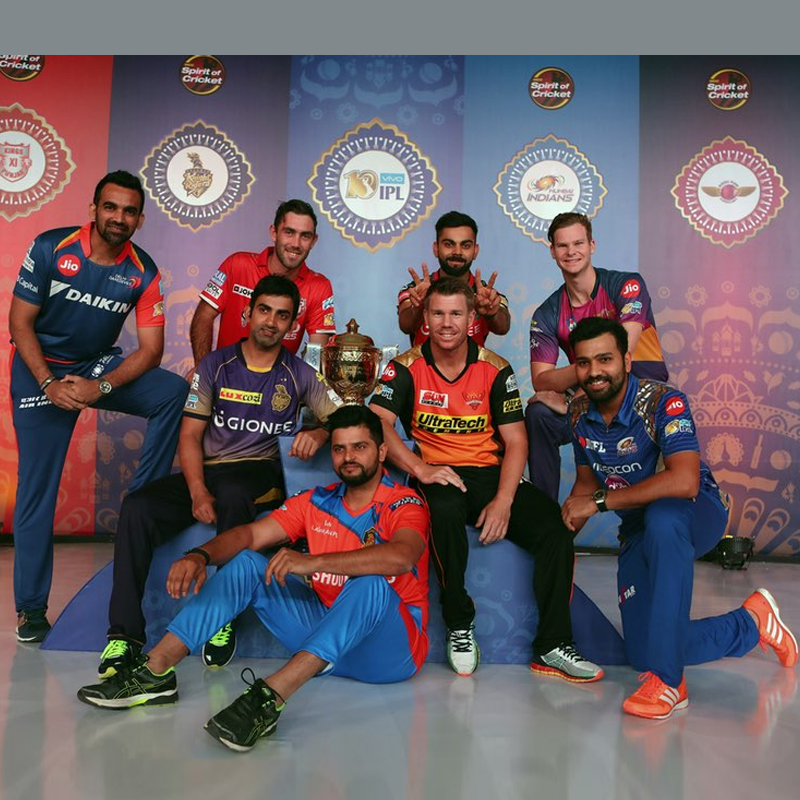
    MUMBAI: Indian Premier League (IPL) franchise Kings XI Punjab has inked a six-year licensing and merchandising deal with UK-based Miroma Entertainment for a minimum guaranteed amount of $6 million, a top company executive said.

    The Mohali franchise will also get royalty revenues. “We expect the business to generate revenue of at least $25 million over the course of six years. Earlier we tried different models including doing it ourselves or giving it to a local agency but it did not quite work out,” Kings XI Punjab COO Col. Arvinder Singh told Indiantelevision.com.

    The deal with Miroma Entertainment will expand Kings XI Punjab’s brand reach to the overseas markets where there is a strong Punjabi population.

    Said Singh, “We see the US, UK and Canada as important overseas markets as they have a good Punjabi diaspora. We got feedback from our fans through channels like social networks that our products were not available there. Merchandise will include things like T-shirts, flags, key chains and scarves. As our Master Licensee, Miroma will do deals with companies in different areas like linen, food, shoes and stationery. The sky is the limit in terms of the number of licensing partners that sign up.”

    The products have started to roll out and will be more visible once the IPL starts.

  • ‘One individual is not capable of running IPL’s complex business ecosystem’ : Brand Finance India managing director Unni Krishnan

    ‘One individual is not capable of running IPL’s complex business ecosystem’ : Brand Finance India managing director Unni Krishnan


    The Indian Premier League (IPL) is caught in the midst of a storm with dark clouds hovering over team ownership issues, sources of funding, corruption and match-fixing charges.


    Lalit Modi, the architect of the IPL, is being accused of holding hidden stakes in some of the franchises. Income-Tax sleuths have broadened their probe into the financial details of the IPL by conducting nationwide raids cut across Multi Screen Media (MSM), World Sport Group and the franchise owners.


    So how will these chain of events affect the brand value of the IPL pegged at $4.13 billion?


    In an interview with Indiantelevision.com‘s Sibabrata Das, Brand Finance India managing director Unni Krishnan says the risks for brand value erosion are significant if the IPL does not quickly put in place proper management systems and processes.


    Excerpts:


    With controversy swirling around the IPL, is there a need now to downgrade the brand?

    It is too early to take a call on this. The probe has started and we will have to wait for the government to come out with a final report on the investigations before we can comment on whether the IPL brand is fractured.


    But in our February report, we had cautioned that the IPL branded ecosystem is rapidly approaching an inflexion point. We had predicted this to happen in the next 6-10 months. This has come sooner than that.


    Surely, there are definite weaknesses regarding brand value governance and transparency, management systems and processes. But have we got a revised value of the IPL brand? Not yet.


    Does this mean that there is no brand erosion at this stage?

    The risks for brand value erosion are significant if things are not managed swiftly and the stakeholder relationships start weakening. But the truth is that the IPL is a very valuable brand created in a very short period of time. The wealth that can be created by the brand is going to be substantially significant for many stakeholders. A conducive ecosystem has to be created to move the brand to the next level.


    But will it be safe to say that the IPL brand has got tainted?

    The fault is not with the IPL brand. Some people are commenting that the property be nationalised. That is not how you run a global commercial property like the IPL. Iconic brands such as the IPL are national assets and a source of wealth creation. The question is whether we have the capability and determination to put systems and processes in place to manage one of the best brands we have produced. If we fail to do so, and all the allegations also turn out to be true, the brand will take a big knock.


    Enough dirt is thrown on Lalit Modi, the architect of the IPL. Now it looks like the man who created and built the IPL property would be thrown out. Will that not damage the IPL brand?

    Let us not confuse the individual called Modi with the business and the brand. One individual is not capable of running such a complex business ecosystem like the IPL. The need is to fix the weaknesses.


    Are you suggesting a proper balance of power system?

    As the architect of IPL, Modi has done a great job. But for such a large-scale property, we need 10-12 key members. We are not sure if the IPL governing council acts as a rubber stamp. We need to go through these questions urgently if are to create a sustainable brand property.


    The IPL brand is a set of complex relationships with fans, franchises, sponsors, business houses and players. This can create huge value in future if properly managed – not by one individual but by a system.

      
    ‘The IPL is a global commercial property produced from India. The unfortunate part is that if we don‘t do a clean-up action, we would be destroying it not due to any competition but because of our own action‘


    A fundamental problem being raised is that the revenues do not match the sudden flood of investments that have gone into the IPL. Are you worried about a possible nexus between the IPL organisers, the politicians, the big corporates and the Bollywood celebrities?

    There is an entry price to every business. Substantial investments are required and the revenue potential is huge. If there are misconducts like match-fixing and betting, then obviously the guy watching the game will turn off. So will sponsors. Years ago, when the first match-fixing charges were made, there was a brief period of lull. But that does not mean that cricket has died in India. The key question is governance and transparency.


    Is there inherent strength at the IPL franchise level?

    There has to be transparency at the ownership level too. Media reports are suggesting murkier deals. We don‘t know at this stage what is the truth. But sporting properties have to be run like proper businesses. Look at how the English Premiere League (EPL) has hurt itself. The club owners chased iconic players and made unrealistic purchases through a huge load of debt. Sports businesses can be lucrative but proper regulations have to be in place.
     

     Is the IPL an overheated economy?

    Is there value to be created? Yes. There are strong revenue and marketing opportunities.


    Most of the clubs, however, have not yet put the systems and processes in place to manage these opportunities. Take the licensing and merchandising (L&M) business which is pegged globally at $108 billion. This is not a Mickey Mouse number. Manchester United has 25-30 per cent of its revenues coming from L&M. But in India, this revenue stream is not visible in many of the clubs. We have to build the requisite bandwidth to monetise these opportunities.

     
    Is this a struggle between the old and the new India?

    As a country, we need to move away from intrigues and corrupt systems to a phase where we develop international properties. We can‘t run these properties with the same baggage as we move from a developing to a developed country. The tussle between the old and the new India will lead to pain and tribulations. But the fact is that we have created a positive property in the IPL which can provide sustainability in the long run for various stakeholders.


    People are seeing a new India through the IPL. This goes much more than cricketing business; it is about brand India. On a much broader level, IPL has demonstrated the coming of age of India‘s commercial prowess on a global stage.

     
    Does this remain as a dream at this stage?

    The developed world is looking at the IPL as a global property produced from India. The IPL has changed the very perception of India in the global stage. The unfortunate part is that if we don‘t do a clean-up action, we would be destroying IPL not due to any competition but because of our own action. The moment of truth has arrived for us. We have to face it with independence and courage. Can we live up to the expectations that we have created? It will be a sad essay if we don‘t deliver.

     
    How do we move the IPL up from one-third its value ($4.13 billion) to a level that it can sit along with the EPL ($12 billion)?


    That is only an indicative figure we have given to compare a property developed in one part of the world with another that has achieved maturity status. The IPL has hardly scratched the surface. It has a long way to go and a considerable value to realise before it lives up to its full revenue and brand potential.

     
    Brand Finance has more than doubled the brand value of the IPL from its first evaluation. What are the reasons for this?

    We are seeing a remarkable increase in revenues from broadcasting (as deal was renegotiated) and sponsorship. We have also considered the IPL‘s capability to draw in fans and viewership.

     
    Why have you upgraded Chennai Super Kings (CSK) to the top as the most valued IPL franchise (Rs 2.24 billion, up 35.5%)?

    There are 3-4 breakaway clubs. We have looked at teams who have managed cricket as a product and blended this with marketing and commercial excellence. The two performances have to be done simultaneously.


    CSK is beginning to put the various pieces together, synergising between their enterprise (India Cements) and their IPL business. We are also seeing Mumbai Indians show a remarkable revival this year, both in performance on the field and in their commercial activities.

     
     Why has Kolkata Knight Riders (KKR) slipped in your latest brand value estimate (Rs 2.13 billion, up 20.6%)?

    KKR topped in our first round as it has an iconic brand like Shah Rukh Khan. This gives it an undue advantage. But they are not able to exploit this to the maximum. Their performance as a cricket team has also been bad. If this trend continues over the next few seasons, then it will seriously erode the brand value of KKR.