Tag: LK Advani

  • For DD, it’s time to introspect not celebrate

    For DD, it’s time to introspect not celebrate

    NEW DELHI: There were evenings in the 1960s to mid ’70s when India, at least those homes fortunate to have TV sets, set their alarm clock in the evening to around 6 pm. It was that time the TV sets came alive with a signature tune and colour bands heralding something exciting.

    Those were the days when Indian pubcaster Doordarshan brought the world and entertainment — in a rationed manner typical of those pre-liberalization days — to Indian homes via production values that would be considered shoddy by today’s standards.

    Cut to circa 2016. TV sets today beam audio and video round the clock by DD, as Doordarshan came to be popularly known as, and a swathe of private sector TV channels.

    However, at a time when DD celebrated its Foundation Day (or birthday) on September 15, a question that rankles everybody is: Why does Doordarshan not function like some other pubcasters — the BBC, NHK, DW, PBS, etc —- in terms of functioning and quality of programming?

    Clearly, it is linked to another question: was Doordarshan doing better off when it was a direct wing of the Ministry of Information and Broadcasting (MIB), or has it benefitted by become ‘autonomous’ under Prasar Bharati?

    Doordarshan since 1959 beamed for half an hour educational programmes three days a week. However, as its programming timing grew, so did the control by the government, which found in DD a perfect tool for propaganda.

    Whether the Emergency days during Prime Minister Indira Gandhi or other governments, the government of the day realized the importance of DD’s widening networks and its role in pushing the government agenda.

    The Prasar Bharati Bill, paving the way for an autonomous DD and sibling All India Radio, was only notified and formalized in 1997.

    Interestingly, DD saw its hey days in the eighties with programmes like ‘Hum Log’; ‘Buniyaad’, ‘Ramayana’, ‘Mahabharat’, ‘Tamas’ and ‘Nukkad’, among many others, which not only highlighted India’s cultural traditions but also the ongoing societal changes. In fact, one wonders, whether a serial like `Tamas’, based on India’s partition, could be made today without somebody’s sentiments getting hurt and, in the bargain, getting canned.

    Though DD (and AIR) are modeled on the BBC — as famously described the then MIB Minister Jaipal Reddy in 1997 — DD’s case is different. Despite being dependent on government funding, it is running low on financial resources with each successive government insisting that Prasar Bharati start generating its own resources, but not letting go of the control. But this is difficult when the network has to compete against more than 800 private channels that are not impeded in terms of programming and other initiatives like DD is.

    No wonder the present Prasar Bharati CEO Jawhar Sircar said on DD’s birthday, “We need to look forward…renew our tryst with destiny.”

    Lines by a Canadian author, who penned ‘Morningstar’, aptly sum up the confused state of Prasar Bharati: “If you think you know what your purpose is, but can never seem to gain satisfaction from it, then it’s probably not the purpose you’re destined for.”

  • For DD, it’s time to introspect not celebrate

    For DD, it’s time to introspect not celebrate

    NEW DELHI: There were evenings in the 1960s to mid ’70s when India, at least those homes fortunate to have TV sets, set their alarm clock in the evening to around 6 pm. It was that time the TV sets came alive with a signature tune and colour bands heralding something exciting.

    Those were the days when Indian pubcaster Doordarshan brought the world and entertainment — in a rationed manner typical of those pre-liberalization days — to Indian homes via production values that would be considered shoddy by today’s standards.

    Cut to circa 2016. TV sets today beam audio and video round the clock by DD, as Doordarshan came to be popularly known as, and a swathe of private sector TV channels.

    However, at a time when DD celebrated its Foundation Day (or birthday) on September 15, a question that rankles everybody is: Why does Doordarshan not function like some other pubcasters — the BBC, NHK, DW, PBS, etc —- in terms of functioning and quality of programming?

    Clearly, it is linked to another question: was Doordarshan doing better off when it was a direct wing of the Ministry of Information and Broadcasting (MIB), or has it benefitted by become ‘autonomous’ under Prasar Bharati?

    Doordarshan since 1959 beamed for half an hour educational programmes three days a week. However, as its programming timing grew, so did the control by the government, which found in DD a perfect tool for propaganda.

    Whether the Emergency days during Prime Minister Indira Gandhi or other governments, the government of the day realized the importance of DD’s widening networks and its role in pushing the government agenda.

    The Prasar Bharati Bill, paving the way for an autonomous DD and sibling All India Radio, was only notified and formalized in 1997.

    Interestingly, DD saw its hey days in the eighties with programmes like ‘Hum Log’; ‘Buniyaad’, ‘Ramayana’, ‘Mahabharat’, ‘Tamas’ and ‘Nukkad’, among many others, which not only highlighted India’s cultural traditions but also the ongoing societal changes. In fact, one wonders, whether a serial like `Tamas’, based on India’s partition, could be made today without somebody’s sentiments getting hurt and, in the bargain, getting canned.

    Though DD (and AIR) are modeled on the BBC — as famously described the then MIB Minister Jaipal Reddy in 1997 — DD’s case is different. Despite being dependent on government funding, it is running low on financial resources with each successive government insisting that Prasar Bharati start generating its own resources, but not letting go of the control. But this is difficult when the network has to compete against more than 800 private channels that are not impeded in terms of programming and other initiatives like DD is.

    No wonder the present Prasar Bharati CEO Jawhar Sircar said on DD’s birthday, “We need to look forward…renew our tryst with destiny.”

    Lines by a Canadian author, who penned ‘Morningstar’, aptly sum up the confused state of Prasar Bharati: “If you think you know what your purpose is, but can never seem to gain satisfaction from it, then it’s probably not the purpose you’re destined for.”

  • Farewell Editor

    Farewell Editor

    The last time I did an India at 9 debate on CNN IBN on June 2, 2014, Vinod Mehta was on the panel. As the debate was ending, Vinod insisted on having the last word. ‘What is this I am hearing about you quitting or going on a sabbatical? Don’t stay away from the screen for long, you must return soon!’ As it turned out, that was my last appearance on CNN IBN: I did not return. Little did I know then, that neither would Vinod. He left us permanently this Sunday, leaving behind a great void.

    I never had the privilege of working under Vinod, although my wife Sagarika did and she told me wonderful stories of an editor who was passionate and committed to journalism. My interactions with Vinod were largely on the television screen though he did get me to write the occasional column for Outlook. I found him the person I had always imagined him to me: honest, straightforward, and above all, irreverent. Most editors take themselves very seriously and believe their one article or programme can change the world. Many will tell you how proximate they are to the corridors of power. Not Vinod. His almost self-deprecating attitude to being an editor was perhaps his greatest strength (he had even named his dog ‘Editor’). That coupled with a nose for news and the big, bold headline made him the ideal reporters’ editor, someone who nurtured and embraced many fine young talents. For Vinod, the story mattered, not the pomposity of the byline or the celebrityhood of being editor.

    In a sense, Vinod belonged to what I would call the grand ‘Bombay school of editors’, reared in the more genteel 1960s and 70s. Leading the pack was my first editor when I was in college: Behram Contractor or Busybee, someone also blessed with the craft of using simple language to bring a story alive. Vinod and Behram were in many ways two of a kind: they didn’t flaunt their connections or get intimate with their sources, but enjoyed the idea of bringing out a cracking good newspaper or magazine.

    Sadly, we live in an age where the editor is an endangered species, combating marketing, corporate and political pressures. Vinod is perhaps one of the last of the editors who would not compromise on journalistic independence. As he once told a colleague: “Let someone serve a legal notice, the story must go!” His views were his own, he did not wish to follow the herd or be intimidated by the cacophony of cheerleaders and naysayers. That both LK Advani and Sonia Gandhi were present at his funeral exemplified his ability to cut across the political divide. He wrote a fine book on Sanjay Gandhi and an equally well written biography of Meena Kumari: in both books, there was just enough gossip and anecdote to make them real page turners. Editor, author, journalist: we shall all miss his affable, always energetic presence. RIP.

    Post- script: Vinod made the effortless transition to being a pundit on television. ‘I don’t really like it, but it does pay well,’ he told me with a smile. That was quintessential Vinod: he liked expressing his thoughts candidly, but not without a glass of whiskey in the hand!

    (The piece has been written by veteran journalist Rajdeep Sardedsai on his blog http://www.rajdeepsardesai.net and Indiantelevision.com took his consent and uploaded it after his approval)

  • Dilip Kumar, Amitabh Bachchan get Padma Vibhushan

    Dilip Kumar, Amitabh Bachchan get Padma Vibhushan

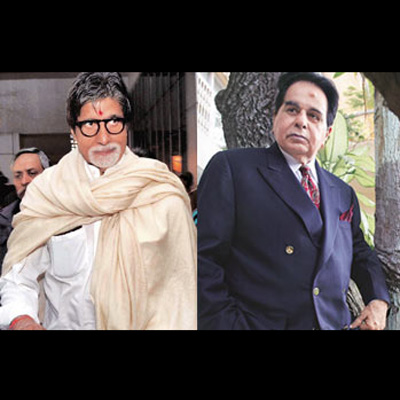
    MUMBAI: Legendary Bollywood actor Dilip Kumar and megastar Amitabh Bachchan have been conferred with the second highest national honour – the Padma Vibhushan – in the Republic Day honours this year.


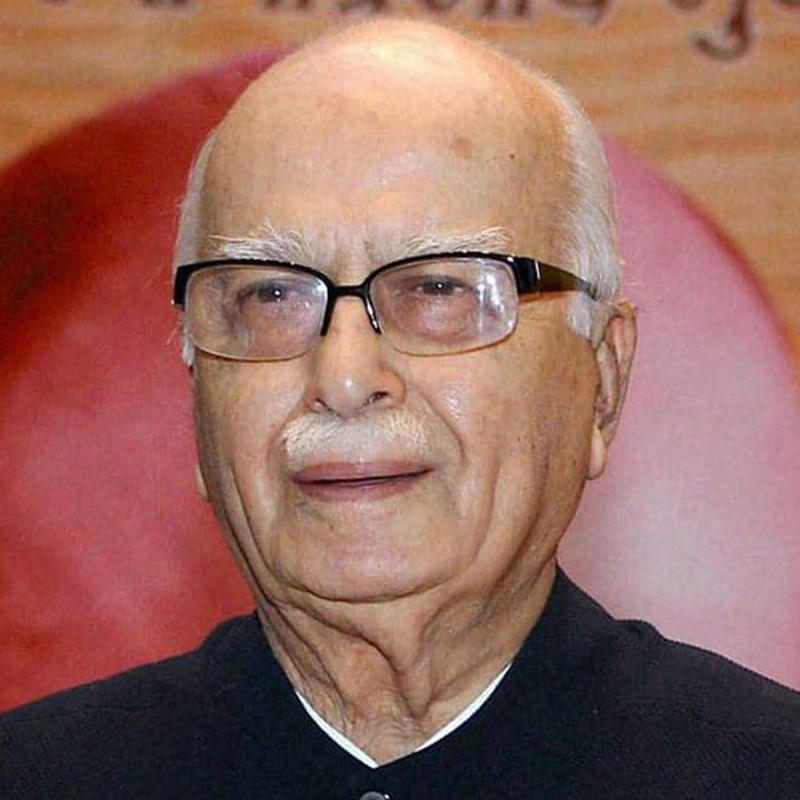
    A former Information and Broadcasting Minister, veteran Bharatiya Janata Party leader LK Advani has also been honoured with the Padma Vibhushan.


    India TV’s Rajat Sharma, Assamese filmmaker Jahnu Barua, carnatic composer and vocalist Sudha Raghunathan, and khayal and dhrupad classical vocalist Dr. (Pandit) Gokulotsavji Maharaj are also among the recipients of the Padma Bhushan.


    The Padma Shri awardees include filmmaker Sanjay Leela Bhansali, wildlife and natural life filmmaker Naresh Bedi, veteran music director Ravindra Jain, lyricist Prasoon Joshi and author Tarak Mehta on whose writings the popular television series ‘Tarak Mehta Ka Ulta Chashma’ is based.


    Recipients of Padma Shri from the music field include carnatic music vocalist A. Kanyakumari, Oriya singer and musician Prafulla Kar, Shillong Chamber Choir founder Neil Herbert Nongkynrih, music composer and singer Shekhar Sen and Hindustani classical vocalist Tripti Mukherjee, who is now based in the United States.


    Cartoonist and ‘Chacha Choudhary’ creator Pran Kumar Sharma who died in August last year has also been named posthumously for the Padma Shri.


    The Bachchan family now boasts of six Padma awards: Amitabh has earlier received the Padma Shri and Padma Bhushan; his late father Harivansh Rai Bachchan received the Padma Bhushan, and his daughter-in-law Aishwarya Rai Bachchan and his wife Jaya Bachchan have also received the Padma Shri.

  • When Arnab vanished, almost

    When Arnab vanished, almost

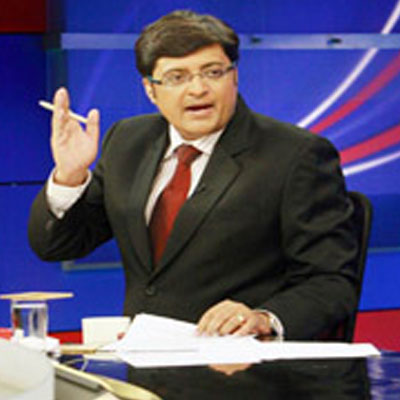
    What happens when the nation’s most vociferous, most articulate news show anchor goes missing? Well, the nation goes into overdrive, demanding to know the whereabouts of the host it has come to love, or hate, as the case may be.

    We’re talking about Arnab Goswami, Times Now Editor-in-Chief and presenter of The Newshour, one of the most widely-watched and debated shows on the channel. Goswami’s disappearing act last week, though brief, was enough to set off a cacophony of telephones ringing at the Times Now office. And much like Arnab’s familiar rant on the show ‘The Nation wants to know’, viewers wanted to know where in God’s name was Arnab?

    Unable to deal with so many telephone calls, The Newshour even put out a tweet saying: “Our viewers have been asking about Arnab. To them, we would like to say that he will be back on Monday at 9pm on show again”. However, the calls continued unabated. A Times Now employee described the number of calls and emails inquiring whether Arnab had taken ill as ‘astonishing’ and that “Only celebrities get such calls, don’t they?”

     
    Forget the cold vibes between BJP prime ministerial candidate Narendra Modi and the party’s tallest leader LK Advani, it was Arnab who was the topic on social media.
     

    The twitterati took to their favourite website with a vengeance, sending out both love and hate tweets for the man who loves to play devil’s advocate on The Newshour. Some went on to draw parallels between Arnab’s absence from The Newshour with that of say a Salman Khan from Bigg Boss or Amitabh Bachchan from KBC. Others made unfavourable comparisons with other news anchors in tweets like: “Barkha Dutt to undergo a face implant to look like Arnab Goswami to boost NDTV TRPs” and even derided tongue-tied panellists as: “Panellists on The Newshour speechless as they’re used to speaking for just 10 seconds with Arnab around…”.

    Still others heaved a sigh of relief as “they could finally turn up the volume of their television sets rather than turn down.” Forget the cold vibes between BJP prime ministerial candidate Narendra Modi and the party’s tallest leader LK Advani, it was Arnab who was the topic on social media. So with such an iconic presence missing, did the channel lose out on TRPs or did other news channels make most of the opportunity. Only next week will tell… that is when the TAM ratings are out…

    The collective impact of regulation and the creeping tyranny of the minority have stifled innovation in our industry and, dare I say, in the economy as whole. At 15 per cent, we may grow at thrice the rate of the GDP but that is more a reflection of our topline economic growth than the health of our industry. At this rate, it will take us another 15 years to hit $100 billion in value and by then, we will be just three per cent of the world media market. This is just unacceptable.

    Till then, both those who love and hate Arnab can sit back and watch his shenanigans as he returns today same time same show on your favourite news channel…

  • Mani Shankar mulls Advani biopic

    Mani Shankar mulls Advani biopic

    MUMBAI: Mani Shankar‘s relations with LK Advani that started with the latter lending his voice to a portion of the former-directed anti-corruption song ‘Ab Bas‘ of the video against corruption that was played during Advani‘s rath yatra, has been further strengthened with the director expressing his intention to make a biopic on the politician.


    “It seems like an impossible task to put together a film on Advaniji‘s life. But lately I‘ve had the privilege of spending a lot of time with him and his daughter Pratibha.


    She has been incredibly helpful in shedding light on her father‘s life. The more I came to know about Advanji‘s life, the more fascinated I became. It‘s a time-consuming task. But I am in no hurry,” the director has been quoted in media.


    The director has decided to devote a major portion of the film to Advani‘s relationship with his daughter Pratibha besides delving in detail on his political career.