Tag: live events

  • Netflix to rewire its homepage in a game-changing move

    Netflix to rewire its homepage in a game-changing move

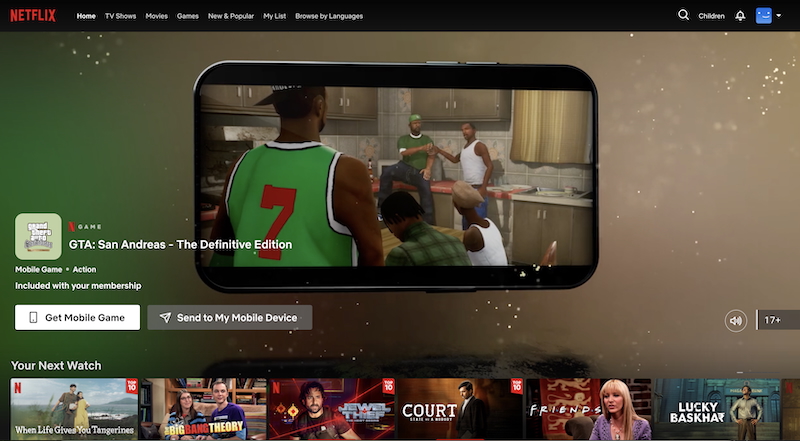
    MUMBAI: Netflix plans to reimagine its homepage, swapping its classic layout for a sleeker, smarter design that’s more than just eye candy. 

    The streaming giant has confirmed that the new homepage will roll out over the “next few weeks and months,” varying by location, as it dives into fresh waters—live events, games, and a cutting-edge search tool powered by OpenAI’s generative AI.

    According to Netflix chief product officer Eunice Kim, the streamer has been tinkering with its home page  for 12 years, but the current refresh is bigger than ever as it involves a mix of new tech and an expanded entertainment range.

    Netflix’s new look is cleaner, bolder, and all about discovery. Visual elements pop, while shortcuts that used to hide on the left now glide to the top. The revamped recommendation engine is a step up, promising to read your mood like a fortune-teller—whether you’re after a thriller, a tearjerker, or a pixel-packed game.

    Kim added that the new look is a playground for everything Netflix  offers—films, live events, and games. 

    But the behemoth isn’t stopping there. A TikTok-style vertical video feed is also in the works, letting users swipe through bite-sized clips of shows and movies—tap to watch, add to your list, or share the hype.

    For Netflix, the new homepage is more than a fresh coat of paint—it’s a gateway to everything it hopes to be.

  • GUEST ARTICLE: Experiential marketing to thrive in the post-pandemic world

    GUEST ARTICLE: Experiential marketing to thrive in the post-pandemic world

    Mumbai: The immersive experience was popular earlier, but the Covid-19 pandemic accelerated its application by several companies, making it take centre stage rather than being offered as an add-on. Let’s see how the dynamics changed during the pandemic and the way forward.

    The world is seeing the light on the other side of the tunnel. The Covid-19 pandemic’s effect has weakened now and after two years of struggle and adversity, the world is slowly paving its way back to normalcy. As the world starts connecting in person once again, experiential marketing is seeing an uptick in demand from consumers. Before the pandemic hit, experiential marketing was well perceived by consumers, with marketers seeing the potential of immersive brand experiences and events. With a locked-down lifestyle of over two years, the demand for real-life experiences has now grown exponentially.

    Live events, which were seen in their element after a hiatus of over two years, got all the more creative and we could see they are now heavy on technology to bring out the personalised impact. Intimate experiences are what consumers in the modern day are striving for, and after the upheaval of the pandemic, wherein the uncertainty surged suddenly, people now want to live it to the fullest with their dear ones.

    Weddings have evolved to be upbeat and intimate. For that matter, destination weddings are slowly gaining standard status in India across all economic classes. From event companies to branded hotel chains, everyone has tailored their offerings to thrive in this space by providing exhilarating experiences at bespoke destinations with breathtaking natural views in the background. Customers are now looking beyond just what is basic. They want all that with their close ones, and ideally, only close ones will witness it all. The one big event inviting multiple people is not what patrons are looking at for multiple reasons, with the Covid-safe environment taking centre stage.

    People have been striving to immerse themselves in human interactions and in-person events for the longest time. Covid-19 kept them away from each other. Yet, the world somehow found ways to connect, though virtually. Events were being hosted online. Live events and destinations have started hosting virtual tours through the internet. Be it concerts, corporate events, car and bike expos, or destination conventions and trade shows, the brand value was kept alive online, but people longed to witness them again in person. Hence, marketers redefined how customers experience these events with an added value. For example, a tour and travel firm, during the Covid times, introduced a subscription-based VR experience to showcase to customers how they can sense various destinations. If they liked the appeal of a close-to-real experience, the customer could engage in a valuable package to travel to the destination once the lockdown was lifted.

    Real-life experiences create happy memories for the customers, and that has been shown to contribute a lot to increased conversions or sales. In the foodservice industry, many upbeat events saw drastic closures during the pandemic. Hotels turned into quarantine centres, and their restaurants remained confined to receiving delivery orders only. However, they conceived things differently. Instead of sending just the end products, hotels reimagined the live-kitchen experience of their award-winning restaurants at the patron’s home. Hence, the concept of DIY signature dishes was born. The hotel sent individual ingredients for the signature dishes, and patrons were guided on how to make the dish via a note or virtual live guidance from the executive chef. The results were lip-smacking. The hotels that practised this approach expressed an increase in customers visiting them currently who wanted to experience the signature dishes at the hotel in the ambience provided by the hotel.

    Experiential marketing has come a long way, and digitization has certainly helped people remain connected all the time. People are finding newer ways to stay connected, and experiential marketers are trying their best to make a point of how the patron is as immersed in the product or service as possible. While 4D in cinema dates back several years, the application of virtual reality and augmented reality has come a long way in the events sector too. From headphones-based beach parties to VR gaming zones, experiential marketing has revolutionised how people looked at events previously.

    The crux of the success of experiential marketing remains the feeling of ownership that it creates. People love taking control of things and using them for the best according to themselves, so experiential marketing creates just the environment. For example, the new-age apparel stores online are coming up with features wherein one can see how they will look in a particular outfit even before deciding to buy it. They sense how they would look in it and how it’d feel to own it. This can lead the customers to buy or choose another outfit. So, the feeling of ownership even before making the sale has led to the success of experiential marketing. In the case of events, people love to witness how their prospective event will look through a virtual environment. A virtual walkthrough of the event’s flow helps the customer visualise how their event will look before the day.

    Experiential marketing has come a long way in these years where it originally came as an ancillary service but has become a crucial element of the marketing mix for many corporates. It is in line with the evolving needs of customers, who are now savvy and demand more from brands and are well over the age-old advertising tactics.

    The author of the article is Hubble Entertainment co-founder and managing partner Hafiz Khan.

  • Comment: Why it’s important for Rathore at MIB to walk the (sports) talk

    Comment: Why it’s important for Rathore at MIB to walk the (sports) talk

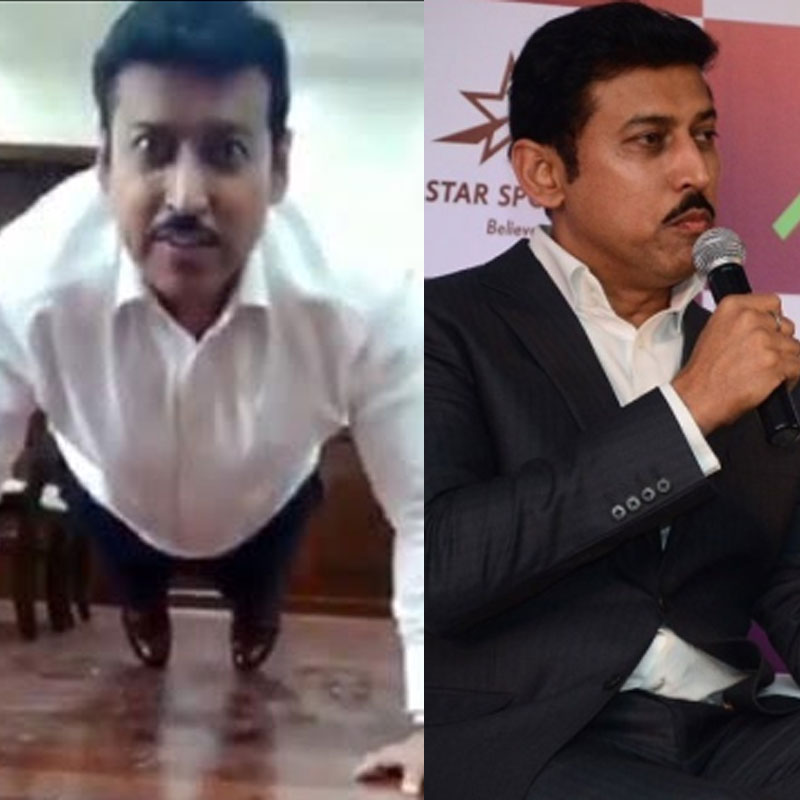
    He may have started the #HumFitToh IndiaFit campaign that went viral on social media last month and had celebs and plebs posting images of their health routine. He may also be a comparatively low-profile minister in the PM Modi cabinet who has delivered on various fronts, including being proactive on issues relating to sports. But Minister of Information & Broadcasting and Youth Affairs & Sports Rajyavardhan Rathore now needs to bring his Olympian attitude-to-succeed and political astuteness to marry the various causes his two ministries espouse.

    Though he has been around at MIB for some years now, acting as a junior to more high-profile ministers like Arun Jaitley and Smriti Irani, Rathore’s rise at MIB has lot to do with his success as minister of Youth Affairs and Sports. And, India’s broadcast and entertainment industry, still reeling under the after-effects of a slow economy and some economic policy decisions taken by the federal government, believed they may have found a messiah in Rathore when he was given independent charge of MIB a couple of months back. The arrival in the ministry of a new Secretary (Amit Khare) raised hopes further of removal of many artificial roadblocks created by the previous regime.

    Many of the earlier and controversial moves by the Ministry, headed by former TV actress-turned-politician Smriti Irani had the broadcast industry, especially, in a bind and hindered unencumbered growth and expansion. Policy decisions like introduction of hiked processing fees, new classification of `regional’ channels, unofficially nudging TV channels and teleport operators to move operations from foreign to Indian satellites, centralization of regular approval processes, etc. sent the industry into a tailspin.

    What was intriguing that though justified by the former minister and some bureaucrats, such moves in the MIB flew in the face of the present BJP-led government and PM Modi’s repeated assertions that India was taking policy steps to improve the country’s global ranking in the `Ease of Doing Business’ index. So much so that the Prime Minister’s Office  had to intervene and order a rollback of a MIB decision under Irani on online content and fake news.

    Col. (retd.) Rathore as both the Sports and MIB Minister has all the powers at his command to take right steps for the development of sports culture in the country that has produced only a handful of Olympian medalists in individual sports — he himself shot at a silver medal successfully. He has proved his determination in revamping school games with the successful conduct of `Khelo India’ (Play India), which is a holistic approach to prepare athletes from schools to Olympics.  It is aimed at achieving the twin objectives of mass participation and promotion of excellence in sports through competition on ground and slick packaging through TV sports channels to give the much needed exposure to emerging Indian talents in the sporting arena.

    However, some critics have questioned his commitment to promote sports through media as despite being the Sports Minister, he didn’t protest when his senior at MIB  introduced in December 2017 a whopping Rs.100,000 as processing fee for channels telecasting live sporting events.

    Given the fact that for the first time he has freedom and a free run to integrate promotion of sports with industry-friendly media policies, it is hoped that he uses the time wisely and work to fulfil the Prime Minister’s ambitious goal of making India both a global media and entertainment hub, and a sporting power.

    The lifeline of a sports channel is to have at least three or four live sports properties in a day and channels like Star Sports and Sony-ESPN excel in such a lineup. But a high processing fee per channel per day for live telecasting sporting events could soon make such business decisions unviable for sports channels; especially when they not only invest in telecast rights, but also building up properties from the scratch — Pro Kabaddi League, Pro Wrestling League and Ultimate Table Tennis are prime examples of this model. High fees, which also include temporary uplinking costs incurred on government permissions and technologies, not only put heavy burden on sports channels but also act as a dis-incentive to invest in other non-cricket and emerging sports like badminton, table tennis, weightlifting, boxing, basketball, gymnastics, football and athletics.

    Unlike in developed countries, the governing bodies in India that are running these non-cricket sports mostly survive on government grants and fail to attract major sponsors or TV channels as partners for promotional activities. Some of the recent policy decisions of MIB (in the form of high processing fee and creation of artificial barriers) have further disincentivized TV sports channels in joining hands with sports federations to showcase sporting competitions with a view to give a platform to emerging talents and bring more audience to the television screens and also on the ground.  

    If the government — and the MIB —believes that those managing and telecasting games like cricket can afford to pay the high processing fees and, thus, should be taxed is an argument that’s flawed. It is like in aiming to punish a high performer — also admittedly a bit controversial —for its success, the government has, in reality, managed to end up pushing those low-profile but potential target-sports further down. Controversies and opaqueness notwithstanding, it cannot be wished away that India’s cricket administrative body BCCI has successfully managed to promote the game in India and abroad with resounding success — and in turn making the country a global force to reckon with.

    Even the sector regulator, TRAI, had opposed formally introduction by MIB of processing fee for live telecast by non-news and current affairs TV channels and questioned the government as why such a step was taken without due consultation process. Now that the regulator has come out with some progressive recommendations relating to Ease of Doing Business in the Broadcast sector and issues relating to uplink and downlink of TV channels, instead of acting on those suggestions, another move has upset the industry — a recent MIB reference to the regulator to study the matter of temporary uplinking has not gone down too well with the industry that was hoping some respite under Rathore at MIB.

    The Sports Minister, who is also the MIB Minister, has a rare opportunity to showcase his talent — to promote sports in India through mass media by easing regulations and lessening the burden on the broadcast sector through administrative reforms, which will very well be in line with PM Modi’s vision. Khelega nahin India, toh champion kaise banega India (If India doesn’t play and gets a chance to showcase talent, how would champs be created)?

  • Live events in India need huge impetus from government

    Live events in India need huge impetus from government

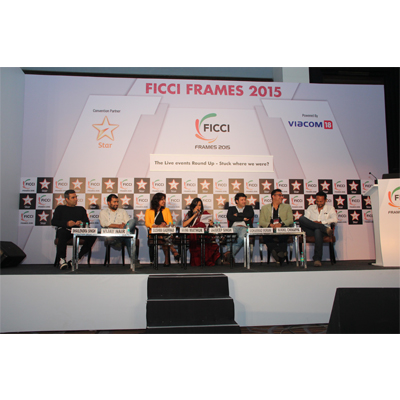
    MUMBAI: In order to discuss the long road ahead in making India a productive profit centre in the global live event landscape, a session dedicated to the same was conducted on the final day of FICCI Frames 2015 held in Mumbai.


    With a vision to wash away the red tape and enable business environment, the discussion was led by a panel comprising entrepreneurs like Cineyug director Mohammad Morani, OML CEO and founder Vijay Nair, Ice Global owner Sushma Gaekwad, Viacom18 INS Jaideep Singh, Coca Cola India VP – marketing Debu Mukherjee and Percept joint MD Shailendra Singh. The session was moderated by anchor Mini Mathur.


    Gaekwad kick-started the discussion by saying that issues relating to licensing norms and taxation policies amongst others needed to be sorted out. “We have to sort out these issues. There is a lot of work ahead of us but yet the industry has the potential to grow,” she said.


    Gaekwad believes that the industry has taken the first step in sorting everything out and like-minded bunch of entrepreneurs have started coming together as an association. “Earlier each business was of its own, but now as an association, we can sort issues that each of us bring to the table.”


    Percept’s Singh went on to add that almost 58 per cent of India’s population was below the age of 25 years and the young population is extremely restless and has tremendous amount of energy. “What young people need in today’s time is entertainment. Live entertainment is a very serious business, but the government has never understood the industry and has not taken it seriously. One can’t even imagine that how much business the industry can bring, how many job opportunities it can create and how well it can entertain. We are deprived as a country for live entertainment just because the Government doesn’t believe that this industry should be taken seriously,” he opined.


    For Festival curator Nikhil Chinappa, making the sense of 1.25 million population in the country is the biggest concern. He believes that in the space, the numbers are vast and so are the opportunities. “Even though we are talking about the opportunities, but we need to know whether there are more people buying tickets or are the same people trying to buy different tickets again and again?”


    Answering his own question, he replied saying that research indicated that there are no new people, who buy tickets but the same ones who are interested in buying always.


    Agreeing with Chinappa, Singh continued to say that in this sector, it has not been able to harness new members in the industry. “We can only grab eyeballs of the newbies by our strong business models and that is going to lead the success path,” he said.


    Picking up to what Gaekwad pinpointed on the licensing part, Nair feels that Maharashtra has been left behind when it comes to licensing policies. “If an artist is performing at the same venue for 10 times in a year, he has to apply for licenses all the time, which is not needed. Moreover, the situation is going to get worse with the new laws coming in. For example, 14 per cent of service tax has been added to buy tickets.”


    Percept’s Singh believes that everything in the society happens from top down. “If there is a ministry sitting at the top to look at these issues at the forefront, then why are we begging in front of them? They have to understand that this is the need of the new Indian. Young India wants entertainment. Why should we pay the price or suffer?” he questioned.


    He further said that it is impossible to make money in live entertainment today. “The opportunity that live events provide is massive. When will the government understand this?” he further lamented.


    On the other hand, Viacom18’s Singh believes that the government alone cannot be blamed alone because the onus lies on the entrepreneurs, who are working in this space too. “I believe that this should come from top, but we are also equally responsible for it maybe because we are not pushing it or fighting enough for it. We need to put our business propositions together and fight for it right up there. We need to prove our might with numbers, which they are not seeing right now.”


    Mathur questions, “Are we doing enough as an industry?” To which, Gaekwad responded that the fraternity has taken the first step by coming together and working towards it and is confident that by next year it will be talking a different language. But she also believed that currently there is a lack of vision, which needs to be improved. “It is not only about the local spender but also about the international spender.”


    Talking about the industry’s future, Chinappa stated that to him vision is accessibility. “If you want the music and dance industry to grow, one needs to ensure that it is easily accessible for people and that can happen best through social media platforms. Digital platforms are the best mediums where people can share and exchange ideas,” he said.


    Viacom18’s Singh further revealed that brands too have been taking the industry very seriously. Where there is reach, there are brands. According to him, in the first year it got close to 10 – 12 brands on board, whereas the second year saw some improvement with close to 25 brands. What’s more, the third year saw a fantastic response with about 60 brands coming on-board.


    Throwing light on the solutions to make the industry more profitable, Percept’s Singh said that the market will grow where there is a sense of security. To top it all, the three E-formulas will always work wonders – educate the market, empower and entertain the consumers.


    The session concluded with each of them focusing on issues like making music more available and accessible to people, strong compelling business to generate numbers, collaborate and work together as an association for faster progress and yet be competitive by focusing on the consumer’s need.