MUMBAI: When love meets Pujo, sparks fly louder than dhak beats. Caratlane has dropped a new festive film that transforms Durga Puja into the most romantic stage for a proposal, complete with sindoor, Rabindra Sangeet, and one unforgettable ring.
The campaign, titled ‘Maayer Aashirbaad’, is conceptualised by BBH India and directed by award-winning filmmaker Bauddhayan Mukherji of Little Lamb Films. At its core is Caratlane’s elegant proposal ring, unveiled as the ultimate symbol of commitment, timed to match the emotional crescendo of Bengal’s grandest celebration.
Music drives the entire storytelling. Composed by Debojyoti Mishra, the score is a soul-stirring medley that blends timeless Rabindra Sangeet with earthy folk melodies. Sung by Mekhla Dasgupta and Chirantan Banerjee, the tracks double as dialogue, with lyrics becoming playful exchanges between the protagonists, actors Ayoshi Talukdar and Subhrojit Saha. Their chemistry carries the love story from Shoshthi to Doshomi, across iconic moments like Anjali, Dhunuchi Naach, and Bhog.
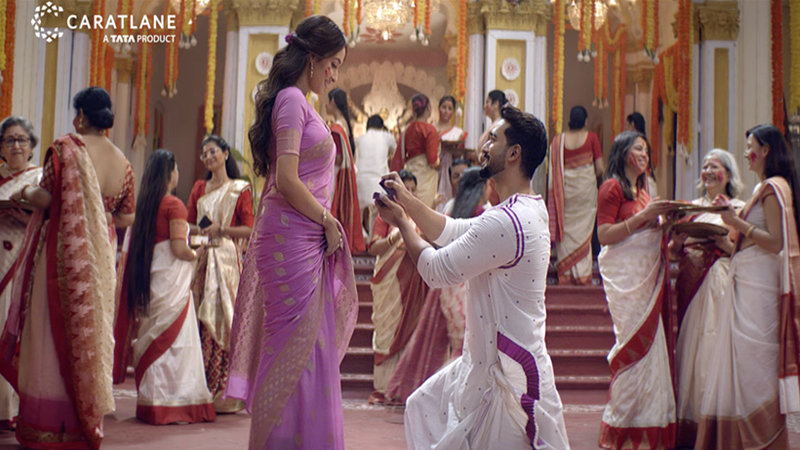
The film reaches its high point during Doshomi’s sindoor khela, where the male lead drops down on one knee in a cinematic proposal. The ring gleams not just as jewellery but as a promise rooted in tradition yet charged with spontaneity. It’s the kind of moment that lingers, much like the colours of Pujo itself.
For BBH India, CCO Parikshit Bhattacharya the festival was always a love story waiting to be framed. “Durga Pujo is already about romance, rituals, and memories. We wanted to set one more love story against that backdrop,” he said, emphasising how cultural truths create deeper brand narratives.
Caratlane MD Saumen Bhaumik echoed that sentiment, noting that proposals are “matters of the heart free flowing, spontaneous, like a melody.” By weaving music, ritual and romance, the campaign aims to move beyond standard jewellery ads into something more heartfelt and enduring.
With its lush visuals, rich soundscape, and a story that plays out as much in the heart as on screen, Maayer Aashirbaad isn’t just a campaign, it’s a proposal wrapped in the colours, chaos, and cadences of Pujo itself.