Tag: liquor

  • India’s advertising clampdown leaves alcobev industry hungover

    India’s advertising clampdown leaves alcobev industry hungover

    MUMBAI: Having a little drink here and there never harmed anyone. While most of us would like to believe and often preach this, the Indian government clearly does not seem to think so. Maybe that’s also because we Indians like to consider ourselves “Sanskaari” who do not indulge in any misdemeanour or wrongdoing. A part of it is also because it may ‘influence’ the children to indulge in drinking and turn them into big bad drunk people.

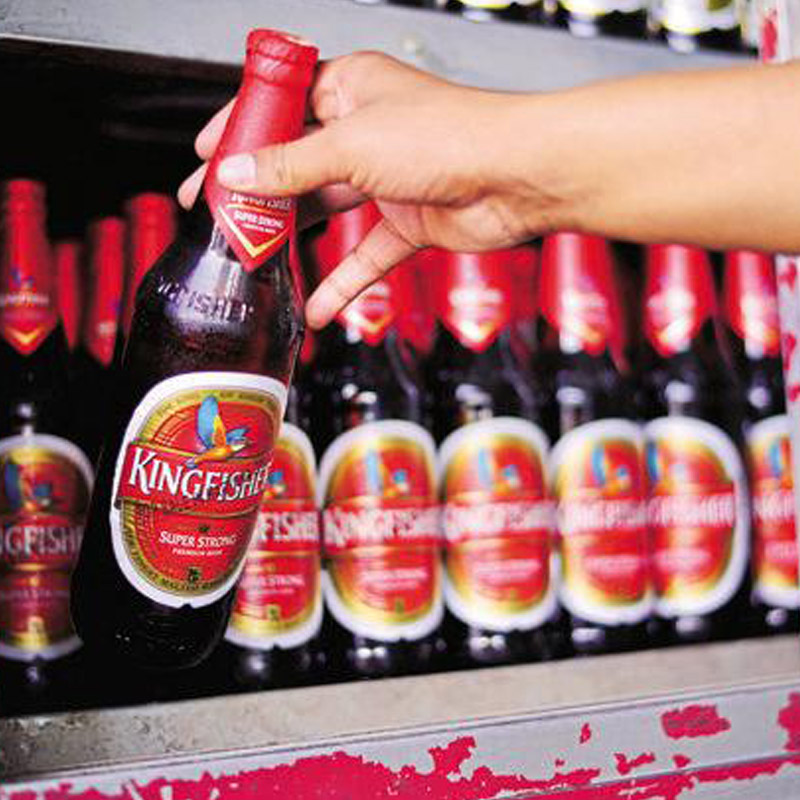
    India has held a strong stance on the ban of advertising tobacco and liquor products since 1995. That’s why we don’t see Kingfisher, Budweiser, Smirnoff, etc advertising liquor on television or outdoor. The ban was enforced after extensive research from the Indian Ministry of Health that found cigarettes and liquor had adverse effects on a person’s health. Also, the Indian government holds the notion that these products are especially harmful to a person’s mental health while making them lazy and unmotivated. The combination of these factors eventually led to a ban on advertising of these products throughout its media channels.

    However, the increase in population saw the sales of tobacco and liquor increase at an exponential rate, forcing companies to seek alternative means of advertising, which led to the eventual creation of surrogate advertising in India.

    Advertising alcoholic beverages have been banned in India as per the Cable Television Network (Regulation) Amendment Bill which came into effect on 8 September 2000. Private channels often permit alcohol companies to advertise using the surrogate route and that is why we see major liquor brands promoting and advertising themselves for their club sodas, mineral water, CDs or playing cards to hammer the brand name into the heads of consumers.

    Bagpiper was one of the earliest brands that took to surrogate advertising. The brand introduced the slogan of “Khoob jamega rang jab mil bhaitenge teen yaar. Aap, main aur Bagpiper” in 1993 and got the-then famous Bollywood celebrities such as Dharmendra, Jackie Shroff and others to feature in its ‘soda’ campaigns.

    India is the third largest liquor market in the world, with an overall retail market size of US$ 35 billion per annum. The annual consumption rate has been increasing steadily over the past six years and stood at 8.9 per cent as of 2017.

    The Indian Premier League (IPL) tournament 2018 saw more liquor ads than ever. There are ads for Black & White, Royal Challenge, Signature, Chivas and Seagram’s Royal Stag. It was nothing but a charade of surrogate ads that were openly selling liquor. One such instance was RC showcasing Indian cricketer Virat Kohli marketing a sports drink which is not to be found anywhere easily on e-commerce websites or local supermarkets.

    While liquor brands already have limited channels to advertise (including on the board and in-store at bars and wine shops, pubs), they have been further cut down to practically nothing! Remember seeing Virat Kohli’s image on a wine shop’s hoarding? Or whiskey pouring down from a bottle of McDowell’s or Blender’s Pride? Well, those are things of the past now as the Excise Department of Maharashtra in April this year directed all alcohol stores to remove advertisements of liquor brands, flexes and neon signs. Indore had earlier put a ban on advertisement boards outside liquor shops in December 2017.

    The department stated that the names could be displayed on boards having a maximum size of 60×90 cm. This includes the display of license number, location and hours of operations. The directive comes on the basis of an archaic 69-year-old Bombay Prohibition Act, 1949.

    Following this, in May 2018, the Excise Department also banned advertising liquor inside the store but has now allowed it on the condition that “the liquor brand or product should not be visible from the entrance of the store”.

    Sale of beer, wine and spirits in Mumbai has been growing exponentially over the last few years and that’s due to the changing lifestyle of people, increased social calls and income to spare. While sale of spirits saw a 35.39 per cent increase this year, beer saw a 14.26 per cent jump, while wine saw the highest increase, with an increase of 42.96 per cent when compared to figures of April 2017.

    Alcohol sale has been completely stopped in the state of Bihar since 2016 whereas Kerala, a state which records annual liquor sales of over Rs 12000 crore, is also considering putting a state ban on alcohol sale by 2025.

    Earlier, marketing for liquor brands involved largely print and television where they communicated a lifestyle and an attitude.

    But with this new directive, alcohol brands have been squeezed tight with no medium to advertise themselves as they can’t use television, print, magazine, hoarding or radio. One might wonder what these brands will do next and how will they market themselves in a cluttered AlcoBev sector? Maybe that’s why AlcoBev brands are increasingly shifting their focus on digital advertising as there are no restrictions on the media so far. On digital, these brands can say the narrative they want to, the way they want to.

    Nevertheless, AlcoBev brands can still advertise in other parts of the county but we don’t really know how long it will be before the directive is passed on to other states as well. Since Maharashtra contributes to the largest share of alcohol consumption in India, banning advertisement here will only result in reduced business for these brands. How will customers know if new brands have entered the market or there is a new product launch unless the store manager tells them?

    But shouldn’t we be asking whether all of this is really necessary in today’s digital world? A kid as young as seven or eight years old has a smartphone and is able to operate the device like a charm. Kids or young adults on the brink of adulthood are bound to be curious about the big world outside. Even if the government bans liquor advertising on television, print and outdoor, they can easily find that content on Facebook, Instagram and YouTube.

    Today, any person irrespective of the age can log in to a liquor company’s official website to get access to all the information they may need. And social media is just a cheery on the top for these curious young minds.

    Maybe it’s time for liquor rules and regulations to be more liberal because the digital audience will anyway find its way.

  • Competing with consumer activities not brands: Kingfisher’s Sheikhawat

    Competing with consumer activities not brands: Kingfisher’s Sheikhawat

    MUMBAI: The liquor market is witnessing major upheavals with umpteen number of alcohol brands battling it out for a slice of the market. The fight is tough since consumers can choose from a wide variety of beer brands – Tuborg, Kingfisher, Bira and Heineken among other local beer brands. 

    Craft beers and microbreweries are niche concepts in India but have been growing rapidly for the past few years. The trend is certainly attracting middle-class Indians, particularly the ones from urban areas who do not mind spending a few extra bucks for a smooth beer. The craft beer market in India is currently pegged at Rs 280 crore and is expected to grow to Rs 4400 crore by 2020. 

    Today, India is the third-largest liquor market in the world with an overall retail market size of USD 35 billion per annum. The annual consumption rate has been increasing steadily over the past six years and stood at 8.9 per cent in 2017. 

    Beer in India is dominated by the off-trade channel (wine-shops), which accounts for 79 per cent of volume sales. Companies, however, are now increasingly focusing on sales through the on-trade channel by associating with music festivals and sponsoring other events. 

    United Breweries (UB), which manufactures India’s most-loved Kingfisher beer, controls 60 per cent of the total manufacturing capacity for beer in India and is the market leader with the national market share in excess of 50 per cent. This explains the company’s major investments and association with various events, sports and other entities. The brand has been associated with the Indian Premier League for over 10 years and continues to engage fans and customers via various on-ground and other marketing initiatives. The company refreshes the labels of all its products every three to four years in order to provide a fillip to the product’s image. 

    Typically, consumers always evolve faster than brands and, hence, brands have to keep up with consumers’ them. Today, India has the world’s most popular beer brands available in the market.

    UB spends 20 per cent of its marketing budget on television and a mere 10 per cent on digital but that is changing, and the company now has a separate team assigned for digital along with a separate digital agency on board. The company leverages all social media and digital platforms while also creating user-generated content. “The audience today is not interested in brand advertising or brand stories but are only interested in stories that suit their line of thinking, and are looking for content and narratives that involve them,” says UB CMO Samar Singh Sheikhawat. 

    Kingfisher beer is manufactured across 31 breweries in India, which means the time between brewery to market is extremely less resulting in fresher and chilled beers for consumers to sip after a tiring day at work.

    While the beer brand’s market share has been dropping over the last two quarters due to microbreweries, craft beers and other new entrants in the market, Sheikhawat is optimistic about Kingfisher’s legitimate consumers who still vouch for the product’s peculiar taste and flavour. “We are not competing with any other beer brand but are competing with anything a consumer wants to do. We are competing with a consumer wanting to go watch a movie or go out partying because, at the end of the day, there are multiple beer occasions. We should ideally be available in cinema halls but in India, you are not allowed to sell inside the cinema hall. Hence, we should be available at all major restaurants near cinema halls.”

    UB launched Kingfisher Storm in May last year. Targeted at the stylish, urban, confident, independent consumer with swag, the beer comes in an electrifying blue colour bottle with ring pull cap. The alcohol content in Storm is slightly low as compared to other Kingfisher products. “A huge base of our consumers still prefers the taste of Kingfisher Strong but the urban audience is looking for a change. We wanted to launch a new product for consumers who love the brand but given an occasion, want to try something different,” says Sheikhawat. 

    Currently available in Karnataka, West Bengal, Maharashtra and Orissa, Storm will soon be available nationally over the next 18 months.

    UB also launched a new brand under malt-based ready-to-drink beverage called Kingfisher Buzz in 2016 which has only 4.8 per cent alcohol content. Available only in two flavours – Berry and Lychee, Kingfisher Buzz competes directly with Bacardi Breezer, which is a market leader in this segment. Although the original idea for Kingfisher Buzz was conceived 10 years back, it was launched only in 2016. Sheikhawat says, “Buzz is a small brand and we expected it to be a small brand that is targeted at young adults who don’t like the taste of beer but want to consume something.”

    Out of the total portfolio of UB, the company has 20 per cent of its revenue from non Kingfisher brands that are regional or power brands including London Pilsner, Kalyani, UB Export, Bullet, Zingaro and Cannon 1000.

    United Breweries has also begun exporting its products to other countries where Kingfisher Strong and Premium have been the star performers for the brand. Though UB Global is a small business, it is growing rapidly as the company exports to 70 countries including US, UK, New Zealand, Germany, Middle East, South East Asia and Singapore. 

    Also Read :

    Surrogate liquor advertising: Time for change?

    Why do we lack animated ads despite their popularity

    Cinema advertising begins to take centre stage

    Digital takes centre stage on tepid Valentine’s Day for brands

  • Digital is as important as traditional: Diageo

    Digital is as important as traditional: Diageo

    MUMBAI: Imagine any musical evening, whether it is soulful, hard core EDM (Electronic Dance Music) or just jam sessions. What goes well with music to get the party started, one may ask? The answer, liquor! Most liquor brands have cashed in on music by associating themselves with various concerts, sponsoring music festivals or even coming up with their own CDs.

    Though alcohol is their main forte, India’s ban on direct advertising of the product forced them to position and market themselves through other products/services such as soda and music CDs that add negligible value to their sales.

    Traditionally, alcohol beverage brands marketed themselves largely via print and television where they communicated a lifestyle and an attitude. But consumers today have multiple personalities and are more evolved resulting in brand using digital and social media platforms in a big way to communicate and be in tune with the audience. Diageo’s Amrit Thomas notes that digital is equally important for them as it is for any other brand in any given category.

    When asked about how Diageo’s marketing and advertising budget has increased over the years, Thomas mentioned, “We are investing in our brand to build demand and manage a portfolio of brands and spends basis brand stage and requirements.”

    Thomas does believe the impact of highway ban on liquor and GST has steered to subside now. “We are now looking at springing back from these events and project 2018 to be a good year for us.” The company is also strongly focused on its premium products and will be increasing its investment to boost the distribution and sale.

    It is usually the media agency that creates a campaign for brands but in this case, the client decided to hand over the responsibility to Qyuki, which is a cross-platform media network across digital, live, TV and film. The company uses proprietary technology and analytics to discover and promote digital superstars and manages the end to end value chain for them across traditional and new media platforms. The tracks have been produced by Qyuki Media and creatively supported by DDB Mudra. Qyuki Media founder Samir Bangara mentions, “When you work with large brands they have a certain set approach on how much they want be involved in the project.There is a fine line between controlling the project and giving creative freedom and McDowell’s allowed us to get as creative as we wanted to, which is a rare brief to find nowadays.”

    Today, India is the 3rd largest liquor market in the world, with an overall retail market size of $35 billion per annum. The annual consumption rate has increased steadily over the last six years and stands at 8.9 per cent as of 2017 and is growing at a CAGR of 8.8 per cent. The consumption is expected to reach 16.8 billion litres by the year 2022. The largest consumers come from the state of Haryana, Kerala, Karnataka, Himachal Pradesh and Andhra Pradesh. Although liquor brands advertise and promote their products in supermarkets and clubs, it is only limited to tier I and tier II cities The real challenge for them lies in advertising and pushing the brand in rural markets where the only platform they can use to create brand awareness is TV.

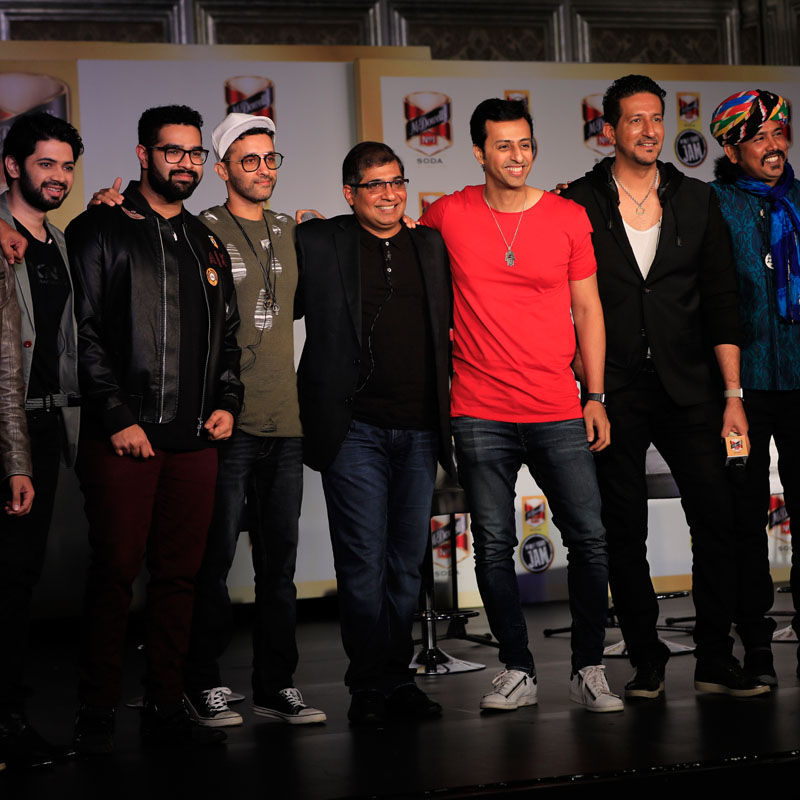
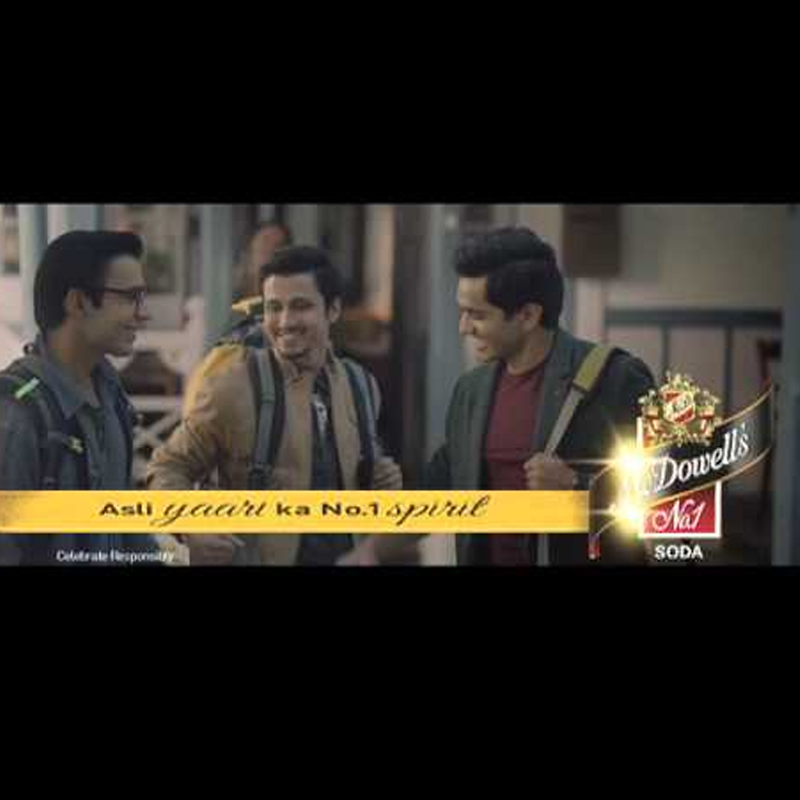
    McDowell’s, a product from British alcoholic beverage company Diageo, launched its first ‘No.1 Yaari’ ad back in 2014 for its soda category and that was an instant hit. Keeping in tune with its philosophy of strengthening the bonds of brotherhood, McDowell’s has introduced its new sonic asset through ‘No.1 Yaari Jam’, a music platform with the release of five enchanting sound tracks. Shaped by ace music directors Salim & Sulaiman Merchant along with distinguished and renowned music artists from across India, these exhibit the spirit of Yaari that McDowell’s seeks to evoke amongst its customers across India.

    Music is the largest genre that is consumed online with Youtube growing at the rate of 150 per cent year-on-year and drawing over 40 billion views per month. Hence, it was only fitting that McDowell’s decide to leverage digital superstars to perform in Yaari music videos. Bangara said, “Video content is exploding in India and with so much information thrown at us everyday on digital platforms, the only way a brand can break though the clutter is by creating content and not just advertising.”

    The musical opus unfolds in five languages with Swarathma leading the jam in Karnataka, Mame Khan and band replicating their spellbinding symphonies in Rajasthan, Ishq Bector fashioning a foot tapping number from Punjab and Siddharth Mahadevan and Soumil Shringarpure weaving their magic in Maharashtra. The nationwide musical caravan concludes with Salim- Sulaiman and one of their oldest yaar Shaan. It took a dedicated eight months to come up with the masterpiece.

    The music videos will be promoted on television, radio, OTT platforms, digital and all leading audio platforms including Saavn, iTunes, Gaana, etc

  • Surrogate liquor advertising: Time for change?

    Surrogate liquor advertising: Time for change?

    MUMBAI: Remember the famous ‘‘Oh la la la la…Le O’’ jingle by Kingfisher for its calendar, the “No.1 Yaari” catchphrase by McDowell’s for its club soda or the “Men will be men,” a 19-year old prominent tagline for Seagram’s Imperial Blue CDs?

    What do all of these brands have in common? A lot, and nothing!

    While all these brands are prominently into selling liquor and spirits, they position and market themselves for the products/services that contribute insignificantly to their sales.

    And, why is that you ask?

    Well, since there is a ban on advertising alcohol, tobacco and cigarettes in India, liquor companies leverage the power of surrogate advertising to convey their brand identity/message.

    First things first! Let’s understand surrogate advertising to begin with and its prominence in the Indian advertising industry. Surrogate advertising is a form of advertising which is used to promote banned products, such as cigarettes and alcohol, in the guise of another product.

    India has held a strong stance on the ban of advertising tobacco and liquor products on all media platforms since 1995. The ban was enforced after extensive research from the Indian ministry of health found that cigarettes and liquor have adverse effect on a person’s health.

    However, the increase in population saw the sales of tobacco and liquor increase at an exponential rate. Therefore, companies were forced to seek alternative means of advertising, which lead to the eventual creation of surrogate advertising in India, and that is why we see major liquor brands promoting and advertising themselves for their club sodas, mineral water, CDs or playing cards to hammer the brand name into the heads of consumers.

    public://63yqljiy.jpgBagpiper was one of the earliest brands that took to surrogate advertising. The brand introduced the slogan of “Khoob jamega rang jab mil bhaitenge teen yaar. Aap, main aur Bagpiper” in 1993 and got the-then famous Bollywood celebrities such as Dharmendra, Jackie Shroff and others to feature in its ‘soda’ campaigns.

    Today, India is the third largest liquor market in the world, with an overall retail market size of US$ 35 billion per annum. The annual consumption rate has been increasing steadily over the past six years, and stands at 8.9 per cent as of 2017.

    But how has the marketing and advertising evolved for such brands with time?

    Earlier, marketing for these brands involved largely print and television where they communicated a lifestyle and an attitude but consumers today have multiple personalities, and are more evolved, resulting in brands using digital and social media platforms in a big way to communicate and be in tune with the audience.

     “Today, it’s the age of everyday heroes rather than mega celebrities and alcoholic brands and tobacco brands are increasingly leveraging this trend,” says WATConsult AVP – strategy and account planning Sabiha Khan. “Additionally, sponsorship of events was used earlier to reach the mass audience, but now brands are directing energies towards acquiring audiences via targeted messages online.”

    United Breweries Limited (UBL), which manufactures India’s most loved Kingfisher beer, controls 60 per cent of the total manufacturing capacity for beer in India and is the market leader with the national market share in excess of 50 per cent; which explains the company’s major investments and association with various events, sports and other entities.

    Marketing head Samar Singh Sheikhawat affirms that the marketing spends in the industry for spirits and beer have gone up because all players are leveraging major platforms to connect with the consumer but television still works best since it creates a better chance of brand visibility and salience. UBL gets its biggest revenue from sponsorships and associations with various events and gigs and spends typically about six to seven per cent of its net revenues on marketing in a year.

    While surrogate advertising may work for leading brands that have been in the Indian market for years and have big bucks to spend on advertising, sponsoring events, fashion tours and sports, it is the new entrants and smaller players who run the risk of missing out on brand communication and visibility.

    “It is a challenge for the new entrants and the agencies because, as a new brand, they first have to create brand awareness, inform about the product details, flavour, taste and brand ethos and spirit which they want to convey to the consumers. A new player will not be able to communicate well with surrogate and takes years to build the brand image — first through word of mouth promotion,” adds iProspect India branch head – south Krishna Kumar Revanur.

    Surrogacy has come around in a big way to support promotion of liquor brands but it has its own diluted drawback. You would not want to market something as prominent as Blender’s Pride just for its fashion tour or Royal Challenge as merely bottled water. The core challenge for agencies while creating a campaign for such brands lies in not damaging the brand image and managing to promote it to the right audience.

    Dentsu Webchutney creative strategist — general management Pranav Sabhaney notes, “No creative person ever wants to be told that this is the boundary that you have to work around but it is an interesting challenge for the creatives as they know they have to work with restrictions yet find the best communication possible. The constraint might irritate creatives at some point as spirits is an interesting sector to work on but they don’t have an opportunity to do anything.”

    Giving a brand’s point of view, Sheikhawat adds, “It is complex and challenging since we are not allowed to display the product, mention the word liquor or beer or show consumption in the campaign, and that is the reason why agencies that work on such products have been agencies that work with those brands for the last 20-25 years. It’s a very complex, hard task and takes a lot of money to build brand imagery in India as opposed to the other parts of the world.”

    Is there a need for the rules to be more accommodating and liberal so that brands can promote and advertise the products in a better way?

    With an opinion that adults should be given the freedom to be adults and to make their own choices, Publicis Worldwide managing director and chief creative officer Bobby Pawar says: “The fake rules and regulations by the government for the liquor industry are not great, and while I do understand that when you advertise these products freely, underage people will get to see it but the government needs to find a way around it. It is sheer hypocrisy of the government which states that you can sell liquor and build your brand but you can’t advertise it.”

    Adding on to Pawar’s point, Krishna Kumar mentions: “If the government allows the product to be sold in the country but not advertise it, that means the government is following dual standards.

    United Breweries spends 20 per cent of its marketing budget on television and a mere 10 per cent on digital but that is changing, and the company now has a separate team assigned for digital along with a separate digital agency on board. The company leverages all social media and digital platforms while also creating user-generated content. “The audience today is not interested in brand advertising or brand stories but are only interested in stories that suit their line of thinking, and are looking for content and narratives that involve them,” concludes Sheikhawat.

    Whether the ban on displaying alcoholic products will ever be lifted or not is a story for another day but brands and agencies do know how to work around the restrictions and create some of the most memorable ads that click with the audience right away.

    McDowell’s No.1 soda TVC: