Tag: LinkedIn

  • Microsoft to acquire LinkedIn for USD 26.2 billion

    Microsoft to acquire LinkedIn for USD 26.2 billion

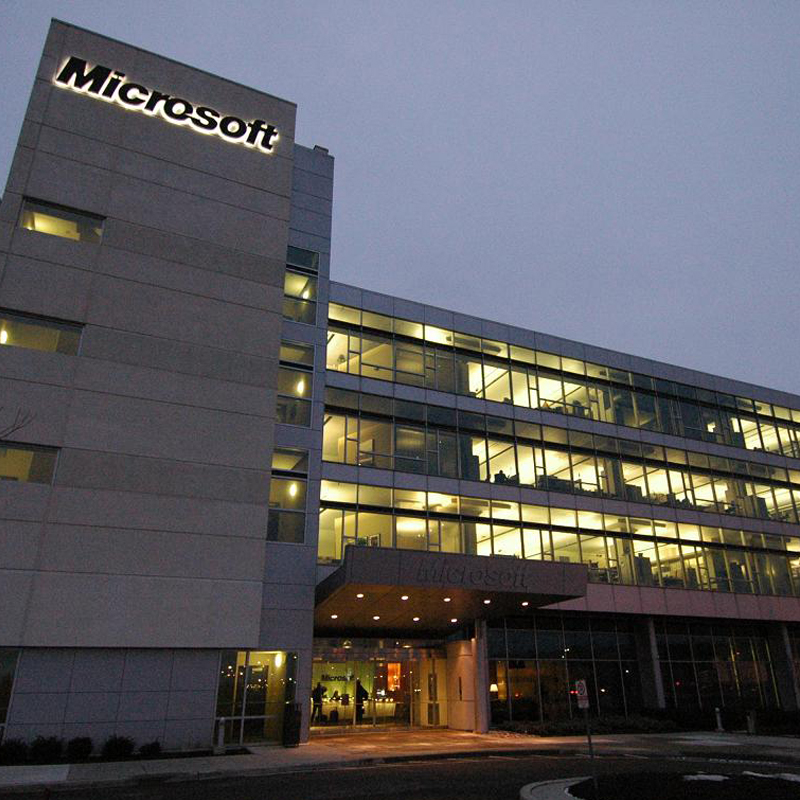
    MUMBAI: What comes as a major development in the technology and social media space, tech giant Microsoft has announced its plan to acquire LinkedIn, the social network that connects professionals by the end of this financial year. The company will buy LinkedIn’s shares priced at $196 in an all cash transaction amounting the acquisition to $26.2 billion, which includes LinkedIn’s liquidity as well.

    The acquisition will not affect LinkedIn’s branding, work culture and independence, with its CEO Jeff Weiner retaining his position and reporting to Microsoft CEO Satya Nadella.

    “The LinkedIn team has grown a fantastic business centered on connecting the world’s professionals,” Nadella has said at a press conference announcing the development. “Together we can accelerate the growth of LinkedIn, as well as Microsoft Office 365 and Dynamics as we seek to empower every person and organization on the planet,” he added.

    In the past one year LinkedIn has shown great growth trajectories ranging around 19 percent growth year over year (YOY) and expanded its network base to more than 433 million members worldwide. The social media platform had released a new mobile friendly version and acquired learning platform Lynda.com to add to its services.

    “Just as we have changed the way the world connects to opportunity, this relationship with Microsoft, and the combination of their cloud and LinkedIn’s network, now gives us a chance to also change the way the world works,” Weiner said, supporting the acquisition. “For the last 13 years, we’ve been uniquely positioned to connect professionals to make them more productive and successful, and I’m looking forward to leading our team through the next chapter of our story.”

    “Today is a re-founding moment for LinkedIn. I see incredible opportunity for our members and customers and look forward to supporting this new and combined business,” said LinkedIn co founder Reid Hoffman . “I fully support this transaction and the Board’s decision to pursue it, and will vote my shares in accordance with their recommendation on it.”

    To carry this high profile M & A forward, Morgan Stanley is acting as exclusive financial advisor to Microsoft, and Simpson Thacher & Bartlett LLP is acting as legal advisor to Microsoft. On the other hand Qatalyst Partners and Allen & Company LLC are acting as financial advisors to LinkedIn, while Wilson Sonsini Goodrich & Rosati, Professional Corporation, is acting as legal advisor.

    Microsoft will finance the transaction primarily through the issuance of new indebtedness. Upon closing, Microsoft expects LinkedIn’s financials to be reported as part of Microsoft’s Productivity and Business Processes segment. Microsoft expects the acquisition to have minimal dilution of ~1 percent to non-GAAP earnings per share for the remainder of fiscal year 2017 post-closing and for fiscal year 2018 based on the expected close date, and become accretive to Microsoft’s non-GAAP earnings per share in Microsoft’s fiscal year 2019 or less than two years post-closing.

    In addition, Microsoft also reiterated its intention to complete its existing $40 billion share repurchase authorization by Dec. 31, 2016, the same timeframe as previously committed. Microsoft and LinkedIn will host a joint conference call with investors on June 13, 2016, at 8:45 a.m. Pacific Time/11:45 a.m. eastern time to discuss the transaction in detail.

    (Source: Microsoft Media Release)

  • “Reaching out to the mass is our biggest challenge”: ASCI’s Benoy Roychowdhury

    “Reaching out to the mass is our biggest challenge”: ASCI’s Benoy Roychowdhury

    MUMBAI:  Step outside your home and there is hardly a place where you can’t spot an advertisement — bus stops, public transports, and of course, the hoardings.  At home it reaches us through the glaring television screen or through melodious jingles via radio waves, in the newspapers and newspaper inserts, in magazines and leaflets. Many advertisers know us on a first name basis and communicate with us through SMS and WhatsApp forwards. Given their all-encompassing nature, there is no shortage of ads that claim everything and anything under the sun and  prey on gullible consumers.


    In spite of disagreements and disapprovals on certain advertisements, people hardly raise their voice against such ads assuming it is beyond their power – a fact that poses a challenge to the Advertising Standards Council of India (ASCI)


    Need to be better known:


    While ASCI commands considerable credibility amongst the industry operators, there is a growing need for it to be better known as an organisation. “Today pretty much all of the industry knows us. The large advertisers, the big companies who deal with us know how we function. The issue lies with the lay consumers who are directly affected by rogue and misleading advertisements,”says  HT Media executive director and recently appointed ASCI chairman Benoy Roychowdhury.


    “Often people come across something offensive or false, but aren’t informed enough to take action against it. When they see something offensive, they question themselves ‘what to do about it? Most of them are unaware of a body that protects their interests against advertisers, without drawing them into court litigations, etc.  I think informing them about ASCI and encouraging them to actively use our help to address misleading advertisements is our biggest challenge at hand,” Roychowdhury admits.


    ASCI is already taking action to redress the situation by reaching out to the consumer digitally.


    Roadmap for maximum reach:


    Considering the fact that gaining popularity is ASCI’s biggest challenge, Roychowdhury shares the regulatory body’s plans to launch a campaign to spread awareness of ASCI and its functions. “We are working on an advertising campaign, which we plan to put in place in the next few months. The purpose is to reach out to consumers and tell them what to do when they see some offensive advertising and familiarising them with how ASCI functions,” shares Roychowdhury.


    He also adds that the agencies on board with ASCI will contribute to the concept and execution of the ad campaign ASCI is about to launch.  With 2015 being the thirtieth year of ASCI’s operation, the organisation wants to send out a message through the campaign about how it has been working to protect consumers and what it has to offer.  “In fact, five or six years ago, we did a similar campaign with a popular television actress with the tagline, ‘Jhoot bole kauwa kaate’”, Roychowdhury recollects.


    “The second step in ASCI’s roadmap is to make it easier for consumers to reach out to ASCI and lodge their complaints. A vital step in this process was to put out an ASCI app that enables consumers to immediately share their grievances with us. Today, we have also started receiving a bulk of our complaints through emails as well, and we are also looking at other modes of communication with consumers like Whatsapp etc.,” shares Roychowdhury. His contention is that if the process to lodge a complaint becomes complicated, consumers are likely not to reach out to ASCI.


    While conventional media like print and broadcast are going steadily, it is the digital media that is growing rapidly. “Hence we need to focus on ad campaigns on the digital platform as well,” he asserts. Following this directive, the organisation has upped its ante in the social media sphere in the last one and half years. “We are taking part in more online discussions and expanding our engagement with people through various social networking sites like Facebook, Twitter, LinkedIn etc. as well,” he adds.


    Digital India- an edged sword: Native advertising


    While technology and digitisation has brought ASCI closer to the consumer, it has also the paved way for new marketing initiatives by advertisers using different mediums and tools that makes it harder for the self-regulatory body to implement its guidelines.


    “Digital is great for ASCI as 15 percent of our complaints are digitally sent to us now. Our app allows you to take a photograph of the advertisement you want to complain about and send us through the app.  10 percent of our digital presence is through this app. To that extent digital is something great,” Roychowdhury reveals.


    ASCI does not find any major problem in dealing with digital advertisers since the body believes in accepting and evolving with the society. “The real issue is that digital advertising is giving way to these so called native advertising, most of which is content driven. They fall into this grey area between content and advertising. We need to develop norms for them as we as a body do not pass any comment on content, unless it is offensive and obscene to the public,” he says.


    While consumers have predominantly complained about TV Commercials, ASCI has also seen an increase in the complaints against digital advertisements rising from 5 percent  in 2013-14 to 11 percent in 2014-15. The challenge is also to identify an advertisement from user uploaded content, and differentiate between advertorial and editorial.


    Reassuring consumers, Roychowdhury further adds, “Thankfully there are people ahead of us in the curve in other countries like Advertising Standards Authority (ASA) in UK. We are examining their rules and bylaws to figure how to incorporate them in India. Also the sheer size of the digital space is so vast that it becomes difficult to monitor each sphere of it.”


    Censorship of advertisement:


    Apart from mitigating issues about misleading advertisements, ASCI also has the additional responsibility to look out for advertisements that hurts people’s sentiments. Several consumers complain about vulgar and obscene advertisement to ASCI. But unlike film and television content, advertisements don’t go through a censorship screening.


    Explaining the knowhow behind the process, Roychowdhury says, “We don’t pre-screen advertisement in India. Every channel has its own set of rules and regulations that the advertiser has to adhere to. Moreover, ASCI being a self-regulatory body can only provide an advertising advice when a certain advertiser approaches them with questionable content, which is not binding on them. Having said that, most of the suggestions given by us have been upheld by advertisers and have worked to their advantage.”


    The parameters of judging whether an ad is offensive and vulgar are changing with times as society moves ahead and becomes more progressive. “There was a time when airing lingerie ads was unthinkable and now we don’t even flinch at them,” Roychowdhury compares. “Therefore the question of offensive content is a subjective matter and the norms keep evolving.”


    “When a council member looks into such ads they take into consideration if it can cause grave or widespread offence. An ad can cause grave offense to an individual, while others will be fine with it. Secondly, we judge an advertisement based on the product it is selling. If it is for lingerie or a condom, then the advertisement’s content needs to be taken in that light. On the other hand, we will raise an eyebrow to a car advertisement having unnecessary skin show,” he explains.


    Industry support:


    Being a self-regulatory body comprising of all four sectors connected with Advertising — advertisers, agencies, media including broadcasters and the press and others like PR agencies, market research companies, the organisation enjoys support and reverence from its stakeholders.


    “The specific reason behind why you have a self-regulatory body is because before moving the court, here is an option to settle the issues as per industry guidelines. It is challenging at times to keep our stakeholders on the same page, but if they are reminded of the option they have apart from ASCI – moving the court or going to the government, they clearly prefer us. Going to the government is a terrible option as it takes time due to bureaucratic involvement and secondly it comes at a hefty price. Whereas, ASCI addresses the issues without having to employ fancy lawyers or going through a tedious process,” explains Roychowdhury.


    While Chowdhury doesn’t cringe at the idea of going to the court if any party has been given a court notice, as ASCI isn’t above the court, going by industry behaviour, advertisers tend to settle intra-industry disputes through ASCI.


    “Most advertisers see us a far better option than going for either litigation or moving any other government body.” But the picture is completely different when it comes to the masses, the consumers who are directly affected by misleading advertisements.


    Industry dispute:


    “Lately we have observed a number of broadcasters using ASCI mails to settle their own personal score with rivals”. Roychowdhury makes it very clear that ASCI is strongly against such usage of their notices and mailers that are not included in their press releases meant for the public.


    “It’s not like we are carrying out any business behind closed doors. All the decisions we make are available through our press releases on our website and people are free to go over it. But picking specific details to carry out their rivalry is uncalled for,” he says.


    Out of the 1877 advertisements complained against during the year, 71 were received from industry regarding misleading advertising or unfair competitive advertising. Of these, 58 were upheld, as per ASCI’s CCC analysis report.


    “We are here to promote self-regulation among advertisers, so intra-industry disputes are more than welcome at ASCI. Because the resolution takes less time thanks to our fast track mechanism for intra member complaints, we are a more preferred mode to address their grievances. What we do discourage is going to the media with individual decisions to settle personal or industry rivalry. In the long run it doesn’t benefit the industry. In fact we don’t entertain queries on such issues,” he shares.


    While health and teleshopping remain an issue for ASCI to tackle, Roychowdhury informs that education has emerged as a sector that gives way to rogue advertisement.


    Biggest offenders:


    A majority of the advertisements against which complaints were upheld fall under the educational sector (439), followed by the healthcare sector (297) and medical services clinics (271).


    “This year we also see emergence of complaints against advertisements in the automotive (69) as well as the telecom sector (58). There have been other complaints against leadership claims of media (Channels/Publications), teleshopping advertisements promising magical results and real estate advertisements as well,” Roychowdhury informs.


    Surprisingly, he doesn’t find any issues with Ayurvedic and herbal product advertisers. “Ayurvedic remedies form a very respectable section of Indian traditions. ASCI doesn’t discourage advertisement of such products, as long as they don’t make unnatural claims like pills that reduce weight in a  jiffy and Ayurvedic products that cure cancer, AIDS  etc,” he says.


    Overall, ASCI has been able to achieve close to 90 per cent compliance, which is a good figure considering ASCI is a self-regulatory body. With the backing of regulatory agencies such as the MIB as well as the DCA, Roychowdhury hopes that this number will go up in the coming year.

  • Olivier Legrand to succeed Hari Krishnan as LinkedIn APAC MD

    Olivier Legrand to succeed Hari Krishnan as LinkedIn APAC MD

    MUMBAI: LinkedIn has appointed Olivier Legrand as its managing director for the Asia-Pacific region, effective 1 January, 2016.


    He will succeed Hari Krishnan, who is incidentally LinkedIn’s first employee in Asia. Krishnan, who has been managing director for the Asia-Pacific region since January 2013, is leaving the company after a stint of six years. Prior to his most recent post, he served as LinkedIn country manager for India from November 2009 to December 2012, Krishnan is slated to join PropertyGuru Group as president and chief business officer.


    Krishnan oversaw business in the region that continues to post healthy growth, including a member base that more than doubled to 78+ million (as at Q3 2015) in less than three years. This includes 33+ million in India, 7+ million in Australia and 15+ million in S.E. Asia.


    The Asia-Pacific region, home to some 40 per cent of the world’s professionals, is a key growth region for LinkedIn. More than 1,000 LinkedIn employees in 10 offices (across Australia, China, Hong Kong, India, Japan and Singapore) serve members and clients such as Singapore Post, Toshiba, HCL Technologies, Li & Fung and ANZ.


    “The Asia-Pacific region continues to be a key economic player in an increasingly connected and digital world where new opportunities emerge every day,” Legrand said. “I am excited about the opportunities for LinkedIn to help our members and clients become even more successful. While LinkedIn has come a long way in the region since establishing our presence here in 2009, there’s still a long runway for growth ahead for us.”


    Legrand will have a dual role, continuing to serve as head of marketing solutions for LinkedIn in the region.


    Singapore-based Legrand, who joined LinkedIn in 2012 to drive the marketing solutions business in the Asia-Pacific region, is a senior executive with more than a decade of leadership, marketing and business development experience in the region.


    Before joining LinkedIn, he was General Manager of The Wall Street Journal Digital Network for Asia.

  • 9XM innovates with on-ground standup comedy show Laughter Shots

    9XM innovates with on-ground standup comedy show Laughter Shots

    MUMBAI: Venturing into a new area of content creation, music channel 9XM has launched a new on-ground standup comedy show called Laughter Shots. The first show with the comedian group ‘Improv Comedy,’ was held on 4 October, 2015 at The Little Door, Mumbai at 8 pm.


    This is the first time that 9XM experimented with an on-ground comedy event, where standup comedians got people high on laughter whilst getting drunk themselves on shots.


    What’s more, the channel also has plans to hold six more shows across Mumbai till January, 2016. Plans are also afoot to take the property to other cities like Pune, Bangalore and Delhi.


    Laughter Shots featured the city’s comic talent trying to find the audience’s funny side, one shot at a time. It indeed was a radical step that changed the way comedy is delivered.


    While the channel has until now focused on Bollywood music interspersed with animated characters like Bheegi Billi, Badshah Bhai etc, with this new on-ground initiative, 9XM is forging towards comedy.


    Speaking to Indiantelevision.com, 9XM vice president marketing Kapil Sharma says, “It was our first initiative towards such an event and thus we expect engagement of more people by promoting it via social media and to 100 – 200 people through the on-ground show.”


    Sharma says that the first event witnessed a packed house with over 120 – 150 people turning up for the event at The Little Door in Mumbai.


    Since it was a premature experimentation, the show was not broadcast on the channel. Instead the venture tasted success by targeting people through digital media. Word of mouth was also a key element for the endeavour.


    Sharma informs, “Building audience, connecting with viewers and creating high quality content being the prime focus of 9XM, selective moments from the on-ground show will be captured and uploaded on 9XM’s digital and social media accounts on platforms like YouTube, Facebook, Twitter and Linkedin amongst others.”


    9XM has a community of eight million people across various social media platforms and will be pushing Laughter Shots to their entire fan base online.

  • One-in-four digitally connected Indian will ensure growth of medium: IAA

    One-in-four digitally connected Indian will ensure growth of medium: IAA

    MUMBAI: The International Advertising Association (IAA) India Chapter conducted its 12th Webinar on 19 December 2014 as part of the ‘World Goes Digital’ webinar series.


    GroupM South Asia, veteran digital media specialist and managing partner, Tushar Vyas was a guest speaker in this series of the webinar.  As part of the GroupM South Asia ExCo, Vyas leads the digital media practice for GroupM South Asia. He is also responsible for investments and corporate business development.


    Commenting on the importance of the digital medium, Vyas said “The number of people who have embraced digital as a medium is a testimony to its growth and importance. There are 5 million smartphones being bought every month in India, which has ensured that 25 per cent of the Indian population is digitally connected.”


    IAA India Chapter & vice president, development (Asia pacific region) Srinivasan K Swamy commented, “Having experts like Tushar Vyas, ensures that our members and the fraternity in general gets the latest and most authoritative view on the digital media.”


    The Free Press Journal director and Webinar Series chairman Abhishek Karnani said “We were delighted to have Tushar Vyas addressing the 12th in the series of ‘World Goes Digital’ Webinar series hosted by the IAA India Chapter. These sessions go a long way in spreading the awareness of the digital media.”


    The International Advertising Association (IAA) India Chapter has hosted speakers like Citi India CMO Sanjeev Kapoor, Bookmyshow.com founder and CEO Ashish Hemrajani, Google India managing director Rajan Anandan, Linkedin India managing director Nishant Rao, Rediff.com founder Ajit Balakrishnan SAP chief story teller Julie Roehm, Hungama Digital Media managing director and CEO Neeraj Roy and mCordis co-founder & managing partner (EMEA) Paul Berney.


    Recently, Ram Subramanian and Rajjat Barjatya were also invited as guests on ‘World Goes Digital’ webinar series.

  • LinkedIn India country manager Nishant Rao on CNN-IBN’s ‘CEO Of Life’

    LinkedIn India country manager Nishant Rao on CNN-IBN’s ‘CEO Of Life’

    MUMBAI: Continuing with its commitment to providing viewers with differentiated programming, CNN-IBN announces a one-of-its-kind series ‘CEO of Life’, in association with Urbana, a premium men’s formal brand from Indus League, a division of Future Lifestyle Fashion Ltd. The show hosted by CNN-IBN’s Business Editor Karma Paljor, celebrates India’s distinguished young entrepreneurs who not only believe in driving their business but in doing it with a lot of passion.


    This week on CEO Of Life, Nishant Rao, the Country Manager, LinkedIn India, humbly reveals his life’s journey and his remarkable experience with LinkedIn. His mantra in life is to dream big, embrace authenticity, be focussed and simultaneously drive a healthy work-life balance. He talks about how his one-year-old child inspires the simplicity that he promotes. Aspiring to be seen as an inspirational leader, Rao believes that the secret to success in any company is transparency within employees at all levels.


    Tune into ‘CEO of Life’ this Saturday, December 20, 2014 @ 4:30 pm with repeat telecasts on Sunday @ 12:30 pm & 4:30 pm, only on CNN-IBN


  • NDTV Prime official Broadcast partner for ‘The Delhi Brand Summit 2014’

    NDTV Prime official Broadcast partner for ‘The Delhi Brand Summit 2014’

    MUMBAI: NDTV Prime has partnered with The Delhi Brand Summit 2014 in its fourth edition as the official television broadcaster. Scheduled for August 22, this year’s conference will see leading marketers discuss the future of marketing.


    The Delhi NCR Brand Summit is the fourth edition of Paul Writer’s flagship event and will see 200+ marketers from India’s leading brands come together to discuss trends, debate ideas, and share knowledge. This year the Summit will also include a recognition programme for Delhi-NCR Hot 50 Brands.


    Partnering NDTV, Jessie Paul, CEO, Paul Writer said, “Marketing is at an exciting phase as we’re transitioning from the days of “mad ads” to ‘math ads”.  We’re excited to partner with NDTV Prime to broaden the conversation among the leading marketers on what’s the future of marketing.”


    “A conference that brings together 200 of India’s top marketers is bound to be exciting and filled with intellectual fireworks, and thanks to NDTV Prime we’re honored to extend the debate, best practices and discussion to the thousands of marketers that make India a top commerce destination”  she further added


    The Summit will see an amalgamation of eminent speakers from leading brands such British Airways, Intel, LinkedIn, Bata, Bharti Airtel, Dentsu Asia Pacific, OLX and Volvo Car among others.


    Catch all the insights from the world of marketing in a half hour special exclusively on NDTV PRIME on 30th August, on All About Ads Prime at 11:30 am.

  • LinkedIn buys out Newsle

    LinkedIn buys out Newsle

    MUMBAI: LinkedIn, world’s largest professional network, has acquired Newsle, a San Francisco based machine learning startup. According to various media reports, the terms of the deal are undisclosed.


    It can be noted that LinkedIn has over 300 million members in more than 200 countries and territories around the globe. Newsle is an application developed that sends news updates to connections on various social networks. Typically, whenever a contact is mentioned in a news article, Newsle will send an e-mail about it in near real-time.


    In a blog post on LinkedIn, it stated that LinkedIn and Newsle share a common goal; both want to provide professional insights that make an individual better at what he/she does.


    According to a report by ANI, the acquisition was the latest on Linkedin’s list which has been spending generously on acquiring companies that can bolster its services and offer a better user-experience on the website.


    The last acquisition took place in February when Linkedin acquired Bright, a data-driven job search startup, to bolster its job-search features.

  • Social networking sites cater more to career aspirations: Genius

    Social networking sites cater more to career aspirations: Genius

    Kolkata: Social media, which connects friends, has become a professional networking place, which can be leveraged to find and be found by prospective employers.


    Kolkata-based Genius Consultants which conducted a survey on the hiring scenario of the current fiscal 2014-15, reveals that 55 per cent of the 575 companies surveyed among different sectors said new jobs will be created in the current fiscal.


    “Social networking sites are being used more for enhancing career opportunities than anything else. For candidates sourcing avenues, around 11 per cent would be done from social media and 12 per cent form advertising,” said Genius Consultants CMD RP Yadav, a Rs 450 crore company, on the sidelines of releasing ‘Hiring & Attrition Trend Survey 2014-15 in Kolkata on Thursday.


    Around 50 per cent of the users, at present, create an account on platforms like Facebook, Orkut, Twitter and YouTube with professional motives, he added. Social media, especially LinkedIn, plays a major role in mid-level jobs.


    Experts said around 75 per cent of LinkedIn users are graduates and postgraduates, with 15 per cent belonging to senior management levels. LinkedIn charges companies to search profiles and to place recruitment advertisements. Apart from being a means to headhunting, it gives recruiters visibility as users visit LinkedIn very often.


    By way of tracking candidates through the social media, recruiters can unify all the resumes in their database and standardise hiring processes.


    Online job sites, which ate into the share of newspapers in the last decade, now have to face up to social media, added Yadav.


    Talking about the media industry, he said that though the industry is growing, in the long term small media companies would be phased out.


    For the survey, the consultancy firm sent mailers to 3000 companies, out of which 824 companies participated and around 575 companies answered all the questions.


    Yadav further said organizations plan to give increments to their employees in 2014-15. Around 40 per cent companies said that the range of increments will be between 10 to15 per cent, while 33 per cent companies expect it to be in between 5 to 10 per cent range. 


    On the other hand 13 per cent companies expected it to be in between 15 to 20 per cent and 10 per cent companies expected the increments to be less than 5 per cent.