Tag: LinkedIn

  • 66% of active job seekers will increase time spent on job search: LinkedIn Workforce Confidence Index

    66% of active job seekers will increase time spent on job search: LinkedIn Workforce Confidence Index

    NEW DELHI: LinkedIn today announced the findings of the seventh edition of the Workforce Confidence Index, a fortnightly pulse on the confidence of the Indian workforce. Based on the survey responses of 1,303 professionals in India, findings from June 15-28 reveal India’s rising optimism towards job security as businesses slowly reopened last month.

    The seventh edition of the Workforce Confidence Index shows a modest increase in India’s overall workforce confidence, which reflects in this fortnight’s composite score of +50 (up from +48 in June 1-14). This growing confidence comes at a time when the economy continues to reboot, thus sparking hiring prospects across varied industries such as ecommerce, IT services, insurance and gaming. In fact, the economic repercussions of the pandemic have also urged businesses to innovate their offerings to lead through change, thereby stimulating job creation across sectors. Backing this up, Metro Cash & Carry India MD & CEO -Arvind Mediratta says, “There is going to be a lot of demand for new products and services which, maybe, we’re not even able to envisage right now.”

    Active job seekers confident about career progression as economy reboots

    The lifting of the lockdown in several states and the continued adversities caused by COVID2019 have instituted a new set of workforce demands, thus creating new economic opportunities across the country’s industrial landscape. This uptick in hiring has fuelled the confidence of active job seekers towards career progression as findings show that about 2 in 3 professionals will increase their time spent searching for (66 per cent) and applying to (64 per cent) jobs in the next 2 weeks. Findings also highlight the active job seekers’ clear intent to upskill today for a safer tomorrow as 68 per cent say they will increase their time spent on online learning to harbor long-term job security and career progression.

    Decision makers more confident about job security than junior workers

    To understand how this optimism towards job security differs across seniority levels, the LinkedIn Workforce Confidence Index also captured responses from professionals with varied work experience levels. Findings state that decision makers appear to be more confident about their job security when compared to their junior workers. Only one in four senior professionals said they would increase their time spent on searching for jobs in comparison to almost half (45 per cent) of the junior workforce. Further reinforcing the confidence of senior executives towards job security, findings showed that only 16 per cent of Director+ professionals (decision makers) would increase the number of jobs they apply to, when compared to 48 per cent of the junior workforce.

    Commenting on this growing optimism, HR expert Prabir Jha explains why India’s rising hope towards job security comes with slight trepidation – “It must be understood that retaining a job in the present times is in itself a strong confidence booster. Many people are also willing to take up to 50% cut in their salaries for an assured job. This means that whoever retains a job today, clearly knows that his/her role matters to the organization even in the new reality.” 

    He also added, “More experienced workers may have savings to support them in the long run,” to explain why senior professionals are not as inclined towards increasing their time spent on searching for jobs.

    Job-seekers can signal that they are #OpenToWork, with LinkedIn’s new feature

    To help job seekers land a job in an uncertain environment, LinkedIn is providing free tools and resources for effective job search and placement. One such profile feature that was recently launched is #OpenToWork, which helps job seekers maximize their visibility on the LinkedIn platform. The feature, which frames the profile picture on LinkedIn, helps members signal to recruiters that they are immediately available to take up in-market opportunities. The feature also helps them specify the types of jobs they are interested in, and what their preferred start date and location is. So far, more than 30 million job seekers have used the #OpenToWork tool to find their next job on the platform. 

  • 63% of enterprise professionals think employers will be better off a year from now

    63% of enterprise professionals think employers will be better off a year from now

    MUMBAI: LinkedIn, the world’s largest professional network, today announced the findings of the fifth edition of the LinkedIn Workforce Confidence Index, a fortnightly pulse on the confidence of India’s workforce. Based on survey responses of 2,903 professionals in India, findings from the fortnight of 14 to 31 May reveal how executives with different professional backgrounds exhibit varied levels of confidence towards company outlook, personal finances, and remote working.

    This fortnight’s LinkedIn Workforce Confidence Index shows that while India’s overall confidence remains steady with a composite score of +49, the country’s confidence in jobs is beginning to trend downward. The report also states that professionals from healthcare, manufacturing and corporate service industries are more likely to anticipate a decrease in personal spending and personal investments in the next six months.

    Findings of this fortnight also bisect India’s composite workforce confidence score into Individual Confidence Index (ICI) and Confidence in Employer Index (CIE). The Individual Confidence Index indicates how professionals feel about their ability to leverage economic opportunities available to them, and the Confidence In Employer Index points to how professionals feel about the future of their employers. This new addition comes at a time when India is beginning to ‘unlock’ and reboot its business landscape.

    Here are this fortnight’s key findings:

    ●    Enterprise professionals most confident about the future of their employers: 

    With a CIE score of +24, employees at large enterprises – companies with 10,000+ workers – are more confident about the future of their employers when compared to their peers from mid-market (+15) and SMB (+16) companies. Reaffirming this optimism, findings further show that 41 per cent of enterprise professionals think their companies will do better in the next six months, while 63 per cent think their companies will be better off one year from now. However, this confidence of professionals from larger enterprises fades when it comes to individual confidence, as ICI scores show that enterprise professionals (+42) are least confident about the future of their jobs, finances and careers, when compared to their SMB (+51) and mid-market (+50) peers.

    ●    Healthcare, manufacturing and corporate service industries least optimistic about personal finances: With India’s continued focus on social distancing, people are expected to control their discretionary spending, despite improved access to resources. Findings reaffirm this trend as two in five employees in manufacturing (38 per cent), corporate services (40 per cent) and healthcare (45 per cent) will decrease personal spending in the next six months. Findings also show that 52 per cent of healthcare, 48 per cent of corporate services, and 41 per cent of manufacturing professionals anticipate a decrease in investments in the next six months. 

    ●    40 per cent of the Indian workforce anticipates fewer jobs and interviews in the immediate future: As the Indian workforce navigates a shrinking job market, two in five (40 per cent) professionals believe that the number of jobs and scheduled interviews will decrease in the next two weeks. The news comes as bittersweet for Indian professionals, as more than one in three  Indian professionals state that they will now spend more time working on their resumes and preparing for interviews. Findings also show India’s consistent focus on upskilling as 67 per cent of the Indian workforce state that they will continue to increase time spent online learning.

    ●    Marketing, project management, and engineering professionals confident about the effectiveness of remote working: Over the past three months, many organisations have shifted to a remote working model to circumvent the pandemic and ensure business continuity. This fortnight’s findings show that three in five (61 per cent) marketing professionals feel confident about being effective when working remotely. They are joined by more than half of project management (56 per cent) and engineering (54 per cent) professionals, who are also confident about  the effectiveness of remote working. In contrast to this optimism, only 39 per cent of HR, 36 per cent of finance, and 31 per cent of education professionals think they would be effective when working remotely.

  • How Covid2019 is affecting outdoor media

    How Covid2019 is affecting outdoor media

    Outdoor advertising had a fantastic 2019. Defying predictions, India’s OOH (Out Of Home) industry, grew at over 15 per cent. Driven by IPL, elections and a huge increase in the OTT industry’s outdoor advertising, the industry saw a big increase, enabled adequately by digitization. The industry itself has been seeing radical positive transformation over the years. From the rather primitive static format, it has now become a dynamic audiovisual one, with all kinds of creativity made possible by technology. Global giants like Google Maps and LinkedIn have used OOH to create an impact, in addition to Netflix, Amazon Prime and Hotstar. Events are a big money spinner for OOH, and last year KumbhMela was proof of this. Witnessing audiences in crores, the promotion of brands on-site contributed significantly. In the financial year 2019, the revenue generated from out-of-home advertising across India amounted to over Rs 34 billion. This was estimated to reach up to Rs 52 billion by the financial year 2024, and Rs 38 billion in 2020.

    But all this has now been severely affected by the pandemic Covid2019. Many organizations have slashed their ad campaign budgets and have left the advertisers reeling for their incomes. OOH has been acutely affected in this scenario.

    Looking at history does not help, as during the previous instances of recession or pandemic, digital media or ambient advertising (a variation of outdoor) were not as developed as it is today. 1918 was the year when the Spanish Flu hit the world, and at that point mass television broadcast was at least 25 years away. Much later, in 2008, when the financial crisis hit the world, digital marketing was just fledgling.  But today, it is hard to find a single household that is not reached through digital and/or outdoor advertising.

    Lockdown has changed the way we live and the way in which we consume media. Urging people to stay indoors has resulted in streets and roads being empty. Halting public transport has created a vacuum in bus shelters and train stations and the busy shopping areas are deserted. The familiar red colour of Coca-Cola or the bright branding of Samsung is no longer visible while walking down the busy areas of metros in India. Many hoarding sites are empty as there are no consumers to view these.

    In-home media has been the gainer during this period. Whether it is TV, which has increased reach in terms of viewers and duration of viewership, or web streaming, which has seen a significant climb in the household watching time, or even video games (where playtime has gone up), people staying at home has resulted in a sharp increase in in-home entertainment and viewing.

    Out-of-home also includes ambient advertising i.e., advertising in unexpected areas. Aimed at evoking an emotional response, ambient advertising includes placing products, models etc. in attractive locations like malls and restaurants in order to catch the consumer’s attention. It is also called ‘creative guerilla advertising,’ and that has also hit a new low now. Reduction in public traffic has done away with the need for this kind of advertising, at least temporarily. Cancelling events has also had a bearing on this industry. With no immediate need to promote new products on a mass scale, clients are cancelling these events, leaving the advertisers high and dry.

    So, how can the outdoor media industry buck the trend?

    Outdoor medium is an integral part of our cityscapes and our lives. It has always had a place in building trust with local communities. Located in proximity to where people live and commute, it ensures a special bond with the citizens of that geography. And in times such as the current crisis, the medium is all the more relevant in garnering faith and educating the public. The medium, therefore, needs to play to its strengths. There have been cases where governments have recognized this and placed their confidence in this medium. According to the Ad Council of the US, ‘Out Of Home’ media plays a critical part in informing local communities and residents on how to stay safe during times of uncertainty. As part of their ongoing efforts to address the growing Covid2019 pandemic, the US department of health and human services (HHS) and centers for disease control and prevention (CDC), have convened (OOH) industry leaders, to bring critical Covid2019 safety messaging to the American public. From mall kiosks to airport TVs to Uber car tops and billboards, the industry is leveraging their extensive networks to help slow the spread of the virus. The scenario in India is no different. The advertising giants – Lintas, Ogilvy, JWT, etc. – are all focusing efforts on their outdoor advertising arm to bring more awareness to the public on Covid2019.

    Already known for its novel campaigns in the ambient format, the OOH industry needs further innovations. Take the case of Ro, an American digital health company, that has both men and women health products. Situated in New York, they decided to use outdoor medium and came up with a public utility message on safety on billboards, while also announcing their website-based tele-health assessments. This dual-purpose innovation helped them gain consumer mind share while also doing public good.

    Flexibility is the other aspect that will enable OOH to flourish. Media agency outfits that have a digital or TV component should allow clients to trade their outdoor budgets for digital or TV campaigns during this lockdown period, thereby retaining clientele. This will give them the much-needed revenues and allow them to get back on track once the current crisis is over.

    Making advertising trustworthy has always been a challenge. The metric for measuring trust in advertisements – the AD TRUST Scale – highlights the reliability of source as the topmost. Outdoor medium scores significantly on that front. Seeing China rebound from Covid2019 gives hope to outdoor marketers that all will be well soon. Coincidentally, the Beijing Olympics of 2008 was one of the pioneer outdoor events which showcased what OOH was capable of, through spectacular creativity (and technology). Given that outdoor advertising touches people in a personal, topical way, it is important that the industry adopts a combination of the above-mentioned strategies of playing to its strengths, practicing innovation and retaining flexibility.

    (The author is senior associate professor (marketing), Great Lakes Institute of Management, Chennai.)

  • White Rivers Media launches the second edition of its annual eBook – ‘How digital changed in 365 ways, in 365 days’

    White Rivers Media launches the second edition of its annual eBook – ‘How digital changed in 365 ways, in 365 days’

    2nd January 2020, Mumbai: The year 2019 has been a game changer for the digital world, especially in terms of global marketing. With advancements in the field of artificial intelligence, data-driven marketing, and voice search engine, the industry saw a fine blend of strategy, ideas and technology.

    After the success of the first edition of its eBook, White Rivers Media, one of the most awarded independent digital marketing agencies of 2019 has launched the second edition on how the digital scenario changed in 365 ways in 365 days. The eBook captures the evolving trends and showcases the essence of how a brand can stay on top in today's competitive online landscape.

    The eBook has been curated to keep marketers, advertisers and brand managers abreast with the digital innovations and trends that went down in 2019 and is an all-you-need reference guide for all global marketers. It includes all the major changes the industry saw in the previous year and also gives us a glimpse of what to expect in 2020.

    From LinkedIn adding new AI tools to improve matches to Facebook offering a glimpse of its work on ultra-realistic VR Avatars, there is a lot that has come to pass. LinkedIn added new interest targeting options for ad campaigns, Google+ got an official end date and Instagram opened its AR Filter Creation tools to all users.

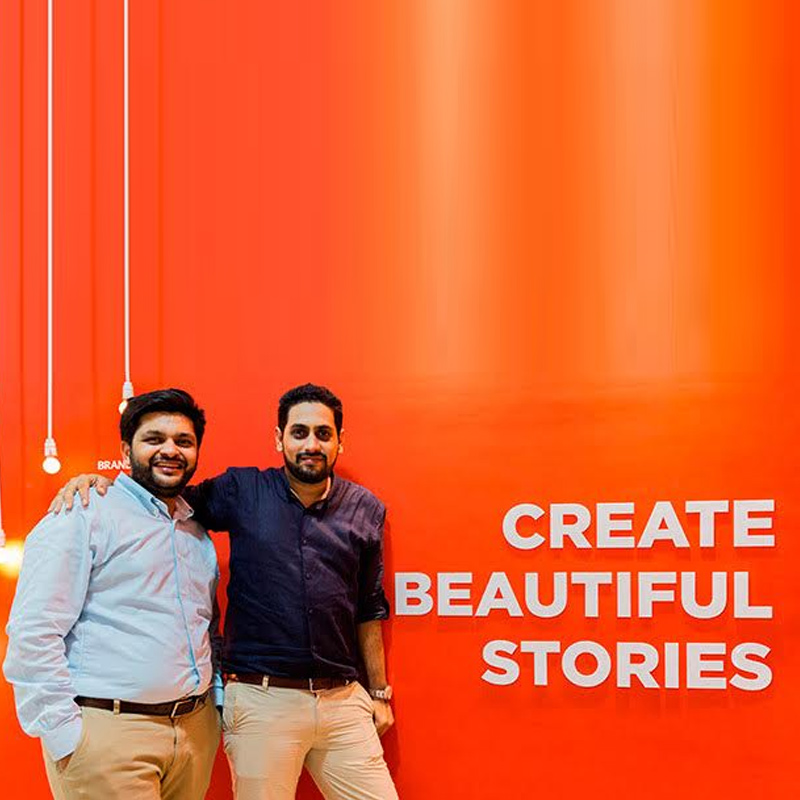
    Talking about the launch of White Rivers Media’s latest eBook, Shrenik Gandhi, Chief Executive Officer and Co-Founder of White Rivers Media said, “The speed at which digital is changing every day, it is crucial to be abreast with all new things digital. This eBook is our annual give back to the global advertising ecosystem. I am confident that this eBook shall help not only marketers and students but also every entrepreneur whose business and/or marketing are digital driven.”

    Adding to this Mitesh Kothari, Right Brain and Co-Founder of White Rivers Media quoted, “In the world of ever-evolving technology and new age means of doing business, one has to be completely aware of the latest in digital. We have heard it enough number of times that digital is changing every day. This free eBook is our humble effort to showcase the 365 new ways digital changed in 2019. This eBook marks the beginning of our strong slate of eBooks planned for this year for the global advertising ecosystem.”

    This eBook comprises of 365 updates from the digital industry that enables one to stay on track with the changing technologies and trends. It is an insightful and compelling read that will give a competitive edge to every business owner, executive, global marketer or individual contributor.

    You can download a copy of the eBook here.

  • Instagram most preferred platform for influencer marketing: Report

    Instagram most preferred platform for influencer marketing: Report

    MUMBAI: Around 70 per cent of brands, which participated in a survey done by Buzzoka – influencer marketing company, have bet on Instagram, a Facebook-owned photo-sharing app, as the best platform for influencer marketing in 2019, followed by LinkedIn & Tik Tok at 8 per cent each.

    In its third edition of Influencer Marketing Outlook, Buzzoka surveyed over 500 brand custodians and content creators in December. The brand custodians included agency and brand folks across the Indian eco-system.

    While 50 per cent of surveyed brands see influencer marketing as an important tool, at least 52 per cent of them believes that it gives better reach and engagement with audiences.

    According to the report, the majority of brands look for the quality of content, influencer produces before finalising; with a maximum spend of $50,000 for each campaign in a year of a brand.

    Over 30 per cent of surveyed brands believe influencer marketing has been the fastest growing online customer acquisition method.

    Meanwhile, around 60 per cent of the brands believe that Instagrammers are the most effective in the influencer marketing system compare to other social media platforms.

    Over 45 per cent of brands are of opinion that around 5-7 per cent of the overall budget is spent on influencer marketing in 2018. However, over 70 per cent of the brands are ready to increase the percentage spends in the influencer marketing budget in 2019.

    Out of the surveyed brands, 50 per cent of them are okay with influencers disclosing the content they are putting is sponsored, whereas 50 per cent are not comfortable with revealing it.

    Over 75 per cent of brands see ‘determining the ROI (return on investment) of my influencer marketing programs’ as one of the major challenges for influencer marketing in 2019.

  • Only 3 Per Cent of digital marketers in India are measuring ROI correctly: LinkedIn report

    Only 3 Per Cent of digital marketers in India are measuring ROI correctly: LinkedIn report

    MUMBAI: LinkedIn, the world’s largest professional networking platform, today released ‘The Long and Short of ROI’ report in India to identify how digital marketers measure ROI (Return on Investment). The survey was conducted amongst 4,000 marketing professionals across 19 countries, including India, and reveals how measuring ROI over the length of the sales cycle can lead to more accurate reporting, greater marketer confidence, and improved campaign management.

    The findings of the report highlight that digital marketers deliver tremendous value to their businesses but struggle to highlight their impact or true ROI when reporting on performance. The metrics are either reported too soon or wrongly chosen to deliver quick results in order to meet business pressures.

    In fact, 78% digital marketers in India claim to be measuring digital ROI long before a sales cycle has concluded. In India, only 3% of digital marketers are measuring ROI over a 6-month period or longer — one of the lowest amongst all regions, lower than the global average of 4%. This means that many marketers are likely not measuring ROI at all. 

    “The Indian digital marketing industry is incredibly competitive today. As marketing campaigns become more dynamic, real-time, and data-driven, measurement is going to be a key discussion in boardrooms going forward. The LinkedIn report highlights how Indian marketers are struggling to measure the true impact of performance; they are thinking short-term and are measuring KPIs, instead of ROI. Measuring too quickly can have a poor impact on campaigns, specifically in industries such as higher education and real estate where it can take months of consideration before sale,” says Virginia Sharma, Director, Marketing Solutions – India, LinkedIn.

    Here are the common behaviours of digital marketers in India, when it comes to ROI and measurement, and best practices for marketers to consider: 

    1.    78% Indian marketers measure ROI too soon: 78% of Indian marketers measure ROI within the first 30 days of the campaign, which results in an inaccurate reflection of the actual return, considering that sales cycles are 60-90 days or longer. In fact, only 3% of Indian marketers are measuring ROI over a six-month period or longer – one of the lowest among all regions (lower than the global average of 4%).

    2.    50% digital marketers rely on inaccurate metrics: 81% of Indian digital marketers claim to measure ROI today, which strongly reinforces India’s data-driven stature. However, another finding shows that 50% digital marketers – with a lead generation objective – claim to use cost-per-click as their ROI metric, which does not show impact-per-advertising dollar spent. Ideally, cost-per-lead is a better measurement metric here. This is the highest percentage among all countries, clearly indicating that Indian marketers are measuring short-term impact in the form of KPIs, which is not an accurate reflection of ROI.

    3.    64% Indian marketers face pressure to prove ROI: As opposed to 58% globally, 64% Indian marketers acknowledged that they needed to show ROI numbers to justify spend and get approval for future budget asks. This clearly shows how pressured Indian digital marketers are internally, hence rushing to measure and prove ROI. 

    4.       60% of Indian marketers have to consider revising budgets: 60% of Indian marketers who measure ROI in the short term end up having budget reallocation discussions within a month, often unprepared and hence under confident. In fact, 47% of Indian digital marketers don’t feel confident about their ROI measurements today. 

    The report was released after LinkedIn conducted an online survey of 4,000 global B2B and B2C marketing professionals from 19 countries in June 2019. Sample countries include United Kingdom, France, Germany, Spain, Italy, Netherlands, United States, Canada, Australia, New Zealand, India, Hong Kong, Korea, Japan, Malaysia, Taiwan, China, Brazil, and Mexico.  This research was conducted via online survey in June 2019. 

  • LinkedIn Adds Enhanced Targeting Tools to Help Marketers Reach More of the Right Audiences

    LinkedIn Adds Enhanced Targeting Tools to Help Marketers Reach More of the Right Audiences

    India, October 3, 2019: Marketers shared that one of their biggest priorities is to reach more of the right audiences at scale. LinkedIn recently invested a lot in bringing that to life with the introduction of new tools to expand the audience reach for marketers, including lookalike audiences, interest targeting with Bing search insights, and audience templates.

    Today, LinkedIn is taking that up a notch by bringing more sophisticated audience, targeting, and reporting features to Campaign Manager. These tools are designed to help marketers who are looking for more powerful reach and insights for their LinkedIn campaigns.

    More powerful audience forecasting and intelligence

    Planning and forecasting is crucial to the success of any campaign. After all, the more marketers know about the types of audiences they are trying to reach and what resonates with them, the better the brand campaign will perform.

    LinkedIn has improved the campaign forecasting panel in Campaign Manager, so marketers can now see the make-up of their target audience right from the dashboard. Marketers can also customize the panel to surface specific professional characteristics, like top industries, years of experience, or company sizes for your audience. When combined with contacts marketers uploaded to Matched Audiences, can be sure that they are not only serving ads to the specific prospects they are trying to reach, but that they have the demographic insights to deliver the content and creative mix that will resonate with their audiences.

    “Since we gained access to this feature, we have been able to assess the makeup of our targeting and ensure our ads would get in front of decision-makers,” says Tanner Stolte, account executive and media buyer at Elite Digital Group, an early user of the new audience forecasting tool. “This level of insight to improve your targeting in a B2B campaign really doesn’t exist elsewhere. By putting our ads in front of these high-end targets we’ve increased our MQLs 11.3% month-over-month with a comparable ad spend and seen our close rate improve near 5% from our LinkedIn leads, with more deals still in the pipeline that are expected to close.”

    https://lh3.googleusercontent.com/VM4M6ru8nkgVSwu550DaQRkQHHi5mEdusAPkZrxz719ARNOGRomLNmbDKeA1HEOLaGV00PiIAZYdKEIAP5e7kUxmAJAPKr_a6zJfQNXuWrQW-UFGC3CpVMwRD6aURjR6NRQRoN8e

    New Boolean logic to target with precision:

    As we ‘worked with’ OR ‘surveyed’ customers to prioritize targeting capabilities to build, many of them placed Boolean targeting logic, i.e. using “And/Or” in your queries, at the top of the list. That’s because “And/Or” targeting enable marketers to reach more of the right audiences through more sophisticated combinations of profile facets like job function, seniority, and titles – all in a single campaign.

    For example, let’s say a marketer wanted to target people using Director job seniority and the Finance job function. Previously, within a campaign marketers could only do so by targeting Directors in Finance roles. Now, with Boolean targeting, marketers can use a single campaign to reach people who are Directors at any job function, as well as people in Finance roles of any seniority. This gives marketers greater flexibility to determine the kinds of professionals who see their ads.

    To learn how boolean targeting can work for your next campaign, check out the how-to video or visit our Help Center.

    Understand even more about the professional audiences engaging with your campaigns

    Demographic reporting has been one of LinkedIn’s most popular features because it helps marketers see the types of audiences clicking and converting on their ads, based on professional characteristics like company name and job seniority. Today, LinkedIn is making this reporting feature even better by allowing marketers to understand which audiences are watching their video ads, filling out your Lead Gen Forms, and opening the Sponsored InMail messages.

    With this data, marketers can demonstrate to their exec team or partners in the Sales org exactly what kinds of professionals are becoming quality leads for their business or engaging with their content.

    This type of demographic information also helps marketers better understand the value they are getting from campaigns, and can give them the insight they need to make strategic adjustments to the ad creative so they get better results from the audiences they care about most.

    LinkedIn India’s audience forecasting and Boolean targeting updates are available globally, while the updates to demographic reporting will be available to all advertisers over the next two weeks.

  • SEMrush to kick-off the Biggest Business Show in India

    SEMrush to kick-off the Biggest Business Show in India

    New Delhi: SEMrush a leading online visibility management platform will host the biggest business event in India which is to be held on 5th December 2019 in Bangalore at Sheraton Grande Whitefield Hotel & Convention Center.

    SEMrush Marketing Show will have around 40 worldwide speakers from top international companies, including Microsoft, IBM, Uber, etc.  The opening keynote will be presented by one of the most known marketers all over the world – Larry Kim talking about growth marketing strategies. The conference will be also featured by the leaders at Shopify, Hubspot, Quora, Swiggy, Nykaa and others. The workshop track of the conference will be conducted by speakers from Google, Facebook, LinkedIn and SEMrush.

    Sharing his thoughts on the conference, one of the conference’s speakers Charmis Pala, Global SEO Head at Cleartrip.com states, “This conference is an excellent opportunity to receive the latest industry news, learn the best practices from marketing leaders and get new creative ideas for your digital marketing campaigns. It's great to see that such conferences are coming to India.”

    The conference will gather around 2,000 participants responsible for implementing marketing technology and operations that drive growth, profitability, and extraordinary customer experiences in Indian and international companies. According to SEMrush data, global searches for top Indian startups which got abroad, grew by 12% in the last three years. For some of these companies, the growth of interest exceeds even 1000%. No surprise ‘digital marketing' is 140% higher in the demand in Google in India now than it was in 2016.

    Mr. Fernando Angulo, Head of Communications, SEMrush commented, “This conference will bring about a change in practices of the marketing leaders and will enhance them with new ideas and latest industry updates. It will bring a revolutionary change in the market which will eventually lead to innovative campaign. It is our honor and privilege to come up with such conference in India.”

  • OYO Hotels and Homes, Cure.Fit, and TapChief take top 3 spots on 2019 LinkedIn Top Startups List

    OYO Hotels and Homes, Cure.Fit, and TapChief take top 3 spots on 2019 LinkedIn Top Startups List

    MUMBAI: LinkedIn, the world’s largest professional network, today launched the second edition of the  LinkedIn Top Startups List for India, as determined by the actions of more than 60+ million professionals on the platform. The list reveals the 25 hottest Indian startups to work for in 2019 and how these companies influence growth and opportunity for the country’s workforce and the economy.

    This year, the world’s third-largest hospitality chain, OYO Hotels and Homes (#1) has retained its pole position on the list by expanding its services across 80 countries and becoming a decacorn in 12 months. With its foray into international markets and $100 million in annual revenue within three years of inception, health and fitness startup Cure.Fit (#2) has also maintained its rank, coming in second after the hospitality chain. Breaking the pattern, the list welcomes online consultation platform TapChief at the (#3) spot. Alongside TapChief, the top 10 features three new entrants this year, Bounce (#5), the world’s fastest growing bike sharing startup, Playment (#6), an AI-driven crowdsourced marketplace, and mfine (#9), an online doctor consultation platform. 

    Consumer Internet startups retain their dominance on this year’s list, and showcase the emergence of healthcare, wellness, and e-learning startups that are embracing AI to offer accessible medical, wellness, and upskilling solutions for consumers. Making their debut on the list, startups like mfine (#9) and Pristyn Care (#21) are providing AI-driven doctor-consultation and affordable surgical access with instant online access to doctors. As Indian companies invest in future-proofing their talent by proactively working towards bridging the skills gap, e-learning platforms InterviewBit (from #22 in 2018 to #10 in 2019) and upGrad (from #21 in 2018 to  #14 in 2019) have made significant strides on the list.

    “India is the world’s second largest startup ecosystem and this made it incredibly exciting to curate the second edition of the Top Startups list. The list is symbolic of the thriving ecosystem, and features companies that are vanguards of key trends in e-learning, healthcare, and financial services. In terms of creating opportunity, the startup ecosystem continues to flourish by fulfilling employment needs across various industries in the midst of the economic slowdown. Our data shows that these 25 companies collectively created about 18,000 jobs in the past year, and are expected to create more than 19,000 new employment opportunities in the coming 12 months,” says Adith Charlie, India Managing Editor, LinkedIn.

    Nearly 50% of the companies on the 2019 Top Startups List for India are Bengaluru-based, including firms such as Cure.Fit (#2), TapChief (#3), Bounce (#5) and Udaan (#11), which further endorses Bengaluru’s status as the startup capital of India.

  • LinkedIn partners with ESPN to launch Office Sports Quiz

    LinkedIn partners with ESPN to launch Office Sports Quiz

    MUMBAI: LinkedIn, the world’s largest professional network in association with ESPN, the one-stop destination for all things sports, today, announced the launch of the LinkedIn ESPN Office Sports Quiz for working professionals. The registrations for this joint initiative for corporates across the country are open.  

    The consumer insights gathered by ESPN indicate that sport has been one of the top discussion topics amongst white-collar business professionals. The multisport LinkedIn ESPN Office Sports Quiz is an attempt to provide a platform to these discerning sports fans in offices and workspaces to demonstrate their sports knowledge, unique skills as a team, passion for sport and get rewarded for it.

    “People often find inspiration for their personal and professional lives from the sports they follow. We are really excited to partner with ESPN for the Office Sports quiz, to see our members collaborate with each other, enjoy a common interest, and spur a sense of community at the workplace. At LinkedIn, we believe in helping our members become better professionals and this is an interesting way to encourage passions, connections, and conversations beyond the workplace,” says Srividya Gopani, Director – Brand and Consumer Marketing, APAC and China at LinkedIn.

    The LinkedIn ESPN Office Sports Quiz comprises two rounds. The first round will be conducted online over three weeks on www.ESPN.in followed by the second round including semi-final and final to be played offline on July 17, 2019, in Mumbai.  Gaurav Kapur, a popular television presenter, actor, and ex-IPL host will anchor the second round. The on-ground show will be shot in a full-blown studio with multi-cam set up to produce full HD quality video content and rolled out on ESPN platforms, ESPN.in & ESPNcricinfo.

    The winning team will get an all-expense paid trip to England to watch an English Football League match live from the stadium.

    Akshaya Kolhe, Head of Sales, ESPN, said, “ESPN is continually engaging with sports fans through various interactive shows and engaging fun content to keep their passion for sports alive. We all have grown up participating in quiz competitions and sports quizzes, it is our attempt to bring back the same flavor and

    competitiveness for the present-day fans. By making it multi-sports including cricket, our attempt is to tap the ever-increasing multisport interest in India”

    To be eligible to participate in the quiz, the applicants will have to form a team of two within the same organization and register here. The applicants can register in any of the three weeks but will have to play the quiz any day within that particular week.