Tag: linear TV

  • Guest column: Looking back at 20 to look ahead at 21

    Guest column: Looking back at 20 to look ahead at 21

    MUMBAI: Many media and entertainment industry professionals would have already activated their “OOO” messages, while the others would be counting down to call time on what would have been the craziest year yet in their careers. However, before we do that, a little bit of looking back and some amount of looking ahead to 2021 is par for the course.

    For many of us (including me), the dominant sentiment is: did you ever imagine?

    For no one predicted the onset of the pandemic, and even when we started accepting the new “strange”- it continued to surprise us basis how it played out. What mattered was the vantage point and the ability to be both adaptively agile and resilient at the same time.

    Here is a bit of crystal ball gazing even at the risk of falling flat on my face, given how unpredictable and unchartered the waters seem to be. These observations are based on conversations with marketers and experts, and my personal experiences of the last nine months of seeing media and brands in various stages of lockdown and unlock phase. 

    1. Resilient television (linear – let us call it LTV) will continue to be the highest reach, most brand-safe medium in the near term. However, LTV’s babies – connected TVs, streaming and OTT – will start to make their impact felt with advertisers demanding “video neutral” planning that drives incremental reach. With media owners offering viewership, optimisation and brand lift measurement (a la Star’s Sirius); this may become a reality sooner than later. Also, with programmatic and addressable options eventually opening up, measurement and DSP integration will be the key.

    2. Fickle subscription behaviour will finally begin to change, thanks to the fillip provided by Covid2019’s last few months, with urban audiences willing to pay for content behind the paywall. It will be visible on video as well as be heard on audio and consumed on digital avatars of erstwhile print and upcoming digital offerings. So Disney+ Hotstar will continue to dominate the space that Amazon Prime Video and Netflix are increasingly winning with deep pockets of locally produced content. Spotify playlists and substack subscriptions will start showing signs of choice overload and the role of the algorithm (no prediction can be complete without mentioning these and AI) to make better quality recommendations will become critical. 

    3. Enter retailer and e-commerce media  will become key lines on media plans thanks to increased online shopping which saw 25 to 30 million new shoppers giving the addressable size a lift to 150 million. With large numbers (>70 per cent) of e-consumers willing to continue during the unlocking, this growth and behaviour seem irreversible. The opportunities for social commerce (Meesho, Instagram/Facebook shops) and D2C brand investments will further open up opportunities for consumer experiences and conversations with voice, local/vernacular content and video becoming key components.

    4. Doctors and healthcare professionals will be a video call away, giving telehealth/telemedicine a huge shot in its arm. While this part of the advertising landscape is regulated and is unlikely to change, given the sheer magnitude of the opportunity and its big data/ technology ramifications- this may lead to a transformation in pharma/wellness/healthcare communications and demand generation.

    5. News as a genre will continue to find consumption and advertising growth. Given the uncertainty and unpredictability of the environment, consumers will gravitate towards established news platforms and the tussle between social media and legacy news giants will lead to an “infomedic” with fake news and ways to counter toxic, harmful, misleading content gaining more urgency.

    (The author is CCO, Zenith. Indiantelevision.com may not subscribe to his views.)
  • Netflix ventures into linear offering in France

    Netflix ventures into linear offering in France

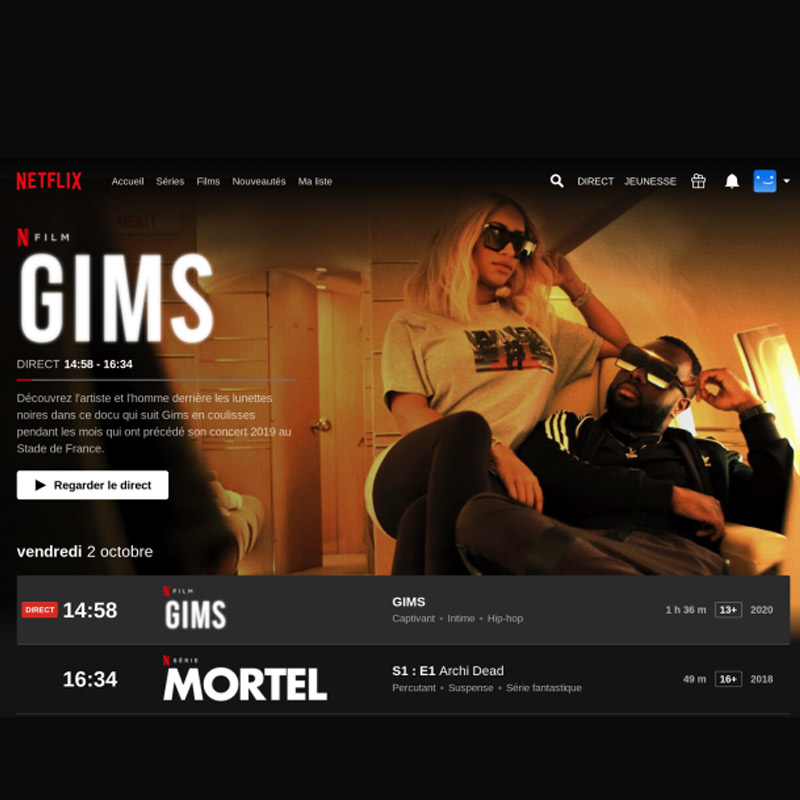
    KOLKATA: While Netflix has been the catalyst that changed the way the world consumed linear TV, it is reportedly testing its first programming channel – Netflix Direct. The channel will be exclusively available to subscribers of the regular Netflix streaming service and will get a trial run in France, for the time-being.

    The channel will offer a pre-programmed feed of French, international and US feature films and TV series and will only be accessible through the web browser, not on any apps or streaming devices. And in a move that is totally unlike Netflix, viewers can watch the content in real-time only, without an option to rewind.

    The reasoning behind the launch is that in France, one of the most important markets for the streaming giant, traditional TV consumption is very high. Many people prefer the convenience of not having to spend time on content discovery.

    “If you’re lacking inspiration or using Netflix for the first time, you can let yourself be carried away without having to choose a particular title, and be surprised by the diversity of the Netflix catalogue,” the company commented as per media reports.

    The test channel had a soft launch on 5 November and will be more widely available in France by early December, Netflix added.

    Direct will have curated shows based only on popular choice rather than personal preferences. It could be a great marketing initiative to lure customers to the service who are not certain about streaming yet.

    Earlier in this year, there were talks about Amazon Prime Video adding linear TV channels to bolster its video service.

  • DTH operators go big on hybrid boxes this festive season

    DTH operators go big on hybrid boxes this festive season

    KOLKATA: Leading direct-to-home (DTH) operators are endorsing their hybrid set-top boxes during the festive season. While it’s nothing new for them to piggyback on festivals to attract new subscribers, but this time rather than promoting discounted packages or value-added services, the operators are trying to bring in new perspectives about their products in users’ mind.

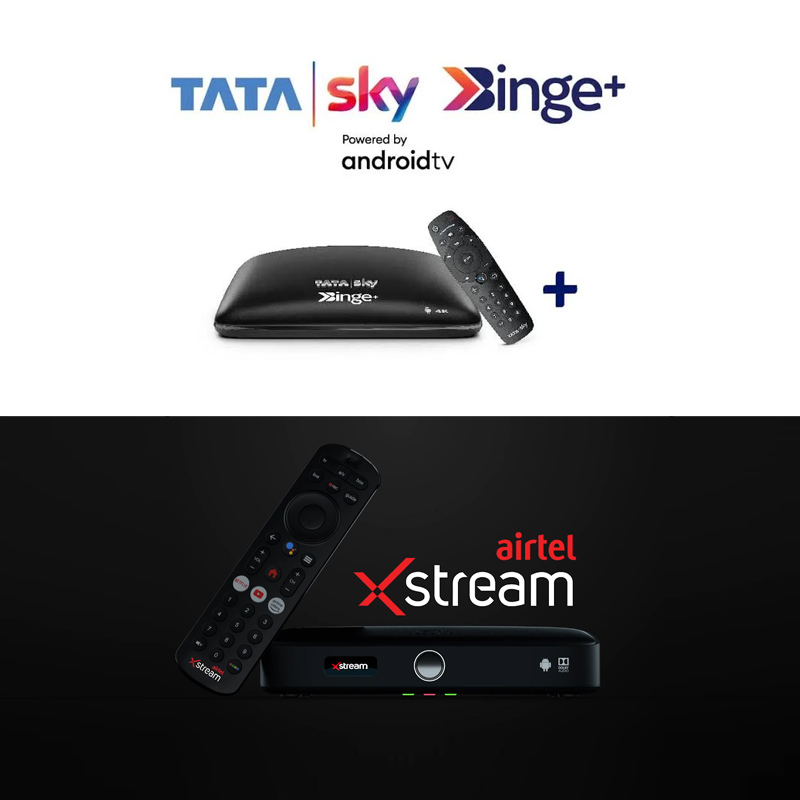
    Take Airtel India for instance. In its Ab Jo Dekho Bada Dekho campaign, the DTH service provider is running a TVC to promote its Xstream box. The video captures two young consumers discussing “entertainment ke bade duniya” (the larger world of entertainment). The core message of the video is that it is now easy to switch back and forth easily between linear TV and online premium content using Airtel’s new box. 

    The Sunil Mittal-led company launched its converged platform last year. With a robust wired broadband base, the company has been upbeat about its bundled offering.

    “Homes business segment witnessed revenue growth of 7.3 per cent YoY. We added over 129,000 customers during the quarter to reach a total base of 2.58 million. We re-calibrated our offering and launched Xstream bundles with content and unlimited internet to accelerate penetration. The company signed on many more LCO partnerships in non-wired cities, extending the model to 48 cities,” Airtel stated in its Q2 earnings release.

    The market leader in the DTH segment, Tata Sky, has also launched a TV campaign for Tata Sky Binge+. The latest ad highlights how the box meets different consumer needs across age groups. Moreover, it has also taken the influencer marketing route on its social media platforms featuring stars like Sayani Gupta and Rasika Dugal.

    However, the cost could be a barrier for these boxes in winning over the masses. In this regard, Tata Sky recently fine-tuned the pricing of its smart set top box Tata Sky Binge+, making it available at a competitive price of Rs 2,999 for new subscribers and Rs 2,499 for existing subscribers opting for an upgrade or a secondary multi-TV connection. On the other hand, Airtel Xstream Basic is available at Rs 2499.

    At the beginning of the Covid2019 crisis, the overall pay-TV ecosystem lost subscribers – be they cable operators or DTH players. Even in the first quarter of 2020, DTH subscribers grew marginally by 2.8 lakh. While on one hand, the leading players claimed that their new connection addition rate is back to pre-Covid period, the traditional players have to offer various propositions for consumer retention, especially given the massive OTT uptake during the last six months. Tata Sky, Airtel launching new campaigns for hybrid set top boxes could be a bid to retain their existing customer base in the face of the OTT challenge and also bolster their new subscriber count.

    “Hybrid boxes are the future for these players. Youth is moving to digital very fast. In terms of payment mechanism also, it is more expensive for a consumer to pay separately on TV, then for data and OTT platforms; effectively it turns out to be an expense of almost Rs 20,000 per year. The advantage of hybrid boxes is they give all at a very affordable price and conveniently. If you have a mechanism for bundling all those together, it’s a win-win for consumers, DTH players, and OTT platforms and beneficial for the entire ecosystem,” said Elara Capital VP – research analyst (Media) Karan Taurani.

    Although it is just the beginning for this segment, with several existing challenges, Taurani also added that there will be a high rate of conversion in future from pure play TV to these boxes. Moreover, the additional trigger will be smart TV growth, which is also going up significantly in recent times.

    Currently, the DTH industry has an active subscriber base of 72.44 million paying customers as of 31 March. Tata Sky, with a market share of 32.33 per cent, was leading the segment while Airtel Digital TV had 23.65 per cent of the pie.

    (Indiantelevision.com reached out to them for more clarity but they declined to respond.)

  • Around 80% of ZEE5’s revenue is attributed to India: Punit Goenka

    Around 80% of ZEE5’s revenue is attributed to India: Punit Goenka

    KOLKATA: ZEEL is working towards creating a digital dominance in the Indian media and entertainment market. Their plan has been on track as ZEE5 has significantly grown in the last one year.

    At the second leg of APOS2020, ZEEL MD & CEO Punit Goenka reported the last quarter’s financial results of ZEE5 for the first time since its launch. He mentioned that 80 per cent of ZEE5’s revenue is currently attributed to India, and the rest comes in from Asia.

    Goenka shared that the platform has not seen a lot of revenue coming in from the western world till now as ZEEL’s linear business is pre-dominantly still running there. Goenka thinks this part of the world could offer the next phase of growth for ZEE5.

    ZEEL will shut its linear business in the UK and Europe sometime around the end of this year and ZEE5 will carry the content instead. Later, the move will be repeated in the US and other developed markets. Given the Indian diasporas demand for content, it is presumable that ZEE5 will certainly see fair traction in traffic.

    However, the plan is not similar in APAC, MEA, and Africa due to different market dynamics. As TV and digital co-exist in these markets yet, ZEEL is not planning complete digital migration immediately. But, Singapore and Hong Kong exceptionally provide an opportunity for such migration although the timing is not decided yet.

    “We have to understand ZEE5 will be played out in the Indian context very differently compared to the developed world. In India, we are still a 97 per cent single TV household market. Therefore, the consumption of television still remains prime. What happens in the digital world or on ZEE5 is that we get consumption in individual capacity which is private consumption. We don’t have enough penetration of alternate screens like PCs or laptops that you see around the world which can replace television,” he states.

    “In India, the second screen is usually a mobile phone. You can never replace the TV experience on the phone. Therefore, the consumption of ZEE5 while at home will be replacing television for all people who are either not TV consumers or have moved out of television because of the sheer kind of content. I look at ZEE5 or digital content consumption as an incremental consumption of content. It is not TV versus digital,” he further opines.

    ZEE5’s advertising revenue has been impacted in the second quarter of the calendar year as well due to the unprecedented situation as it largely depends on television content. But like the linear business, Goenka is confident that ZEE5 will see a resurgence in advertising from the second or third quarter onwards as it comes out of the Covid2019 situation.

    “The biggest thing I had said as a part of the agenda last year was to take ZEE5 ahead and build ZEE5. I put a five-year horizon where it could be as much as 30 per cent of the total business of the company. The business of the company is growing at healthy 12-13 per cent on a CAGR over five year period. That would mean, even on today’s context, ZEE5 revenue could potentially go up by 4x or 5x in the next four years,” Goenka puts it as. 

  • Linear TV witnesses upsurge in viewing during lockdown

    Linear TV witnesses upsurge in viewing during lockdown

    MUMBAI: Recent media reports have revealed shifts in consumers’ viewing behaviours, with individuals and families spending more time at home due to the Covid2019 pandemic. This has resulted in a spike in linear TV viewing, in terms of penetration and time spent across multiple markets and all generations.

    News channels and programmes have seen a surge in viewership as news updates and government announcements on new regulations and the pandemic development become profoundly important to the public. During this period of uncertainty, satellite continues to be a reliable and cost-effective means for content delivery, serving audiences nationally and abroad with critical and timely news and information.

    As Asia’s leading provider of broadcast platforms, AsiaSat strives to meet consumers’ evolving demand for content and viewing quality. Among the 550 TV and radio channels originated from more than 30 countries and regions in 30 languages delivered by the AsiaSat fleet, more than 80 are news channels, with 60 per cent of them in local languages targeting local markets as well as expatriates and travellers who want to keep abreast of the happenings in their home countries.

    Over the past year, the number of HDTV channels increased across AsiaSat’s core video satellites AsiaSat 5 and AsiaSat 7, as well as its new video hotbird AsiaSat 9 at 122°E. These HDTV channels have included the Asian Action Channel, CTI Asia, ET Mall, PILI TV, Trace Sport Stars, Trace Urban, TVB Xing He and tvN Movies on AsiaSat 9, and a selection of WarnerMedia’s bouquet of regional HD channels on AsiaSat 7 including CNN, Cartoon Network, Boomerang and Warner TV, raising the share of HDTV services to 30% across the AsiaSat fleet.

    “At AsiaSat, while committed to protecting the safety and health of our employees during this difficult period, we will continue supporting our customers to deliver high-quality and uninterrupted services to their audience even as demand for TV content surges unpredictably. With our growing HDTV services and wide-ranging news and entertainment programming, we are delighted to demonstrate satellite’s ability to multicast high resolution content, particularly over a vast geographical area and with a growing population of receive antennas, which is more resilient in coping with unexpected soaring demand for services than streaming TV services that were required to lower streaming quality at times of network congestion,” said Ina Lui, senior vice president, commercial, business development and strategy at AsiaSat.

  • Summer of IPL and a bonanza for the TV

    Summer of IPL and a bonanza for the TV

    MUMBAI: In Shaktigarh, a small town, on the outskirts of Burdwan, West Bengal, Ranjan Basu settles down in front of his TV set in his living room. It is all quiet outside, except for the chirping of crickets, as dusk settles. He picks up the TV remote, his finger pressed on the power button as his heart races with excitement.

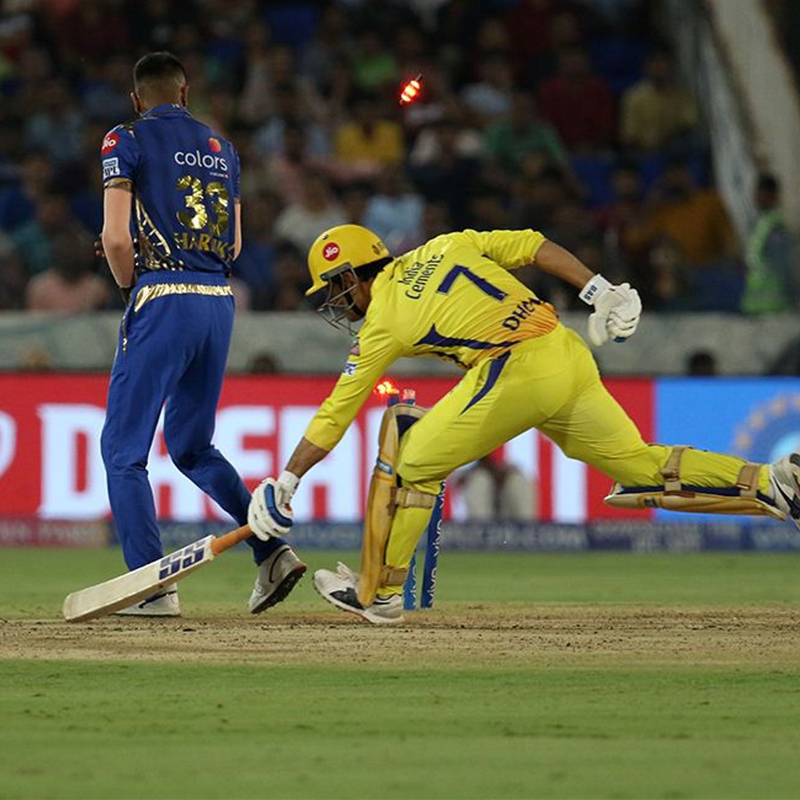
    It’s the final of IPL 2019, featuring the Mumbai Indians and the favourites CSK.  He raises the TV’s volume and the family sits down to what they hope will be an evening of a heart-stopping cricket match. The commentary is in Bengali and the action keeps them on the edge of their seats. For the next four hours, they will be transported to another world, as they find themselves totally engrossed in the fascinating game of T20 IPL cricket on the ubiquitous medium in India: the television.
    The scenario is repeated all over the country: in the north, south and the west.

    In fact, IPL is the biggest unifier in India. The spectacular event has now become so integral to the socio-cultural narrative of the country during the last one decade that the fans of a particular team leave no stone unturned in showering their love on its players even if they are out of the hometown or the state. Moreover, people’s alacrity to watch the matches with a group on the big screen of TV is not showing any signs of receding.

    Even as the naysayers have been saying that television is yielding ground to streaming services, the facts prove otherwise. According to the KPMG report 2019, TV continues to be a critical mass entertainment medium and is expected to grow at a CAGR of 11.2 per cent between FY19 and FY24 on the back of strong viewership from rural and urban markets as well as continued investment in new regional channels and sports properties by broadcasters.

    According to the Broadcast Audience Research Council (BARC), television is the widest spread medium in India and one of the most watched pieces of content is sports, and more specifically, the IPL. The TV measurement body revealed that 462 million viewers watched last IPL, 12 percent up from the previous year.

    Not only did the number of viewers go up but engagement as well. IPL season twelve garnered 337.7 bn viewing minutes, a 13 per cent increase in live viewership. Along with cumulative reach, average time spent for the last season of IPL also went up by eight per cent, reaching 36.40 minutes.  It’s no wonder that sponsors and advertisers are getting more aggressive to make their presence visible during the league.

    Moreover, IPL is not anymore a man’s game. The marriage of entertainment and sports in the biggest cricket showbiz of the country also brought viewers across age groups and genders before TV sets. IPL 2019 saw the highest growth of viewership among kids (2-14 years), an increase of 25 per cent compared to last session. Even female viewership grew by 14 per cent during  the edition. More age groups coming to the League are also increasing the chances of new brand associations.

    According to a report by Velocity MR, brands which were not associated with any IPL teams but were advertising heavily during the tournament were seen to be doing better than brands which were associated with a particular team. As per this report, Swiggy and PhonePe are major instances of the brands which reaped benefit from the association with IPL as an advertiser. Total awareness went up by 8 per cent for Swiggy and by 10 per cent for PhonePe, as both the brands were heavily advertised or marketed during the IPL season.

    IPL 2019 went deeper into the hinterlands, too. Star’s gambit on regionalization paid rich dividends for the broadcaster. Last year,  there were dedicated Telugu, Kannada and Bangla sports channels for matches. According to BARC data, while viewing minutes in Hindi increased by 18 per cent, other regional languages including Tamil, Telugu, Malayalam, Kannada, Bengali and Marathi saw 10 per cent growth. Regional languages other than Hindi got 74.9 bn viewing minutes, which was higher than the viewership that the English language commentary got. We may see local brands trying to associate themselves with the League in coming time.

    Sports in general, and the IPL in particular, is a driver for cable TV and DTH subscriptions. While major DTH operators are trying to penetrate deep into TV dark areas, major tournaments like IPL drive that growth.

    IPL may have crossed a decade. But the excitement around the League is not ebbing. The brand value of the tournament went up to Rs 47,500 crores in 2019 from Rs 41,800 crores in 2018. With just a month or so left for the next season, we can only see the League shining even better.

  • Access, language variety, local partnerships to drive next billion subscribers

    Access, language variety, local partnerships to drive next billion subscribers

    MUMBAI: Despite the overwhelming growth of the OTT sector, players still need to pay more focus on issues such as content discovery, distribution, partnerships across verticals.

    The Future of Video India 2019 organised by Asia Video Industry Association (AVIA) hosted a session on “Capturing the next billion subscribers”. ZEE5 India CEO Tarun Katial, Amazon Prime Video India director and country general manager Gaurav Gandhi, Viacom18 Digital Ventures marketing and partnerships head Akash Banerji and Discovery digital business and partnerships director Issac M John participated in the panel moderated by TriLega partner Nikhil Narendran.

    Gandhi pointed out that screens and connectivity are the routes to the next billion users in the sector. According to him, the next important aspect is the hunger for content. Going against the common notion that Indian consumers are price conscious, he said that they are, in fact, value-conscious who will not mind paying for the right content at the appropriate price point.

    “Then there are questions of access and distribution. How easy is it to get these content or service by virtue of mobile phones, apps and then is the option of easy payment. Another important part is bringing the ecosystem together whether it’s cable companies or telcos trying to make sure they are able to offer customers the service,” he added.

    Discovery’s John spoke about the importance of content in regional languages as the next wave of consumers is coming from rural India. He also added that short-form content is going to drive content consumption citing the popularity of TikTok videos. According to John, offering unique content can create a clear demarcation of value.

    Banerji said that the next billion subscribers are not certainly going to come on the back of OTT videos only. It’s going to be multiple industries spanning retail, travel, etc. Banerji emphasised on the role of technology so the streaming services work seamlessly in tier II and III markets. He opined that ensuring the product works even in patchy network is a necessity, especially for someone who is possibly coming to the internet universe for the first time.

    Terming the present phase an exciting period, ZEE5 CEO Katial said everybody knows video, vernacular and voice search are going to change the game. He added that India will have an ad-supported model along with premium content behind a paywall but both will keep evolving.

    Gandhi pointed out content discovery, getting customers to see value in content and making them pay for it, and piracy as the hurdles to overcome. In addition to that, the media veteran spoke about the unsatiated demand for content which is a challenge for creators to fulfil in relevant languages. Katial agreed with Gandhi’s view giving an example of the demand for returning seasons of popular shows. In addition to that, he threw light on the need for personalisation and segmentation on the platforms with proper technology.

    While Banerji said that content is going to be a key differentiator for further growth, he cited the example of the FMCG industry for sales, distribution and brand building. For ensuring distribution in far-flung places, he thinks to work closely with local partners, local broadband players and local cable/DTH players is important. From the marketing aspect, he mentioned how FMCGs do micro marketing by working with local radio stations and print mediums. He even raised the question of attracting those not in the internet universe or older audiences.

    However, the experts reaffirmed the co-existence of linear TV and digital content at least for the next five to ten years. Demand for all types of content is increasing even as the TV becomes more accomodating to TV and non-TV content.

  • Industry experts discuss OTT growth, need for measurement system

    Industry experts discuss OTT growth, need for measurement system

    MUMBAI: To measure or not to measure? Despite the humongous growth of OTT in the country, experts still can’t seem to agree on this question. While some of the experts believe a TV like measurement system will bring more transparency in the ecosystem, other players think third-party tools are already serving the purpose.

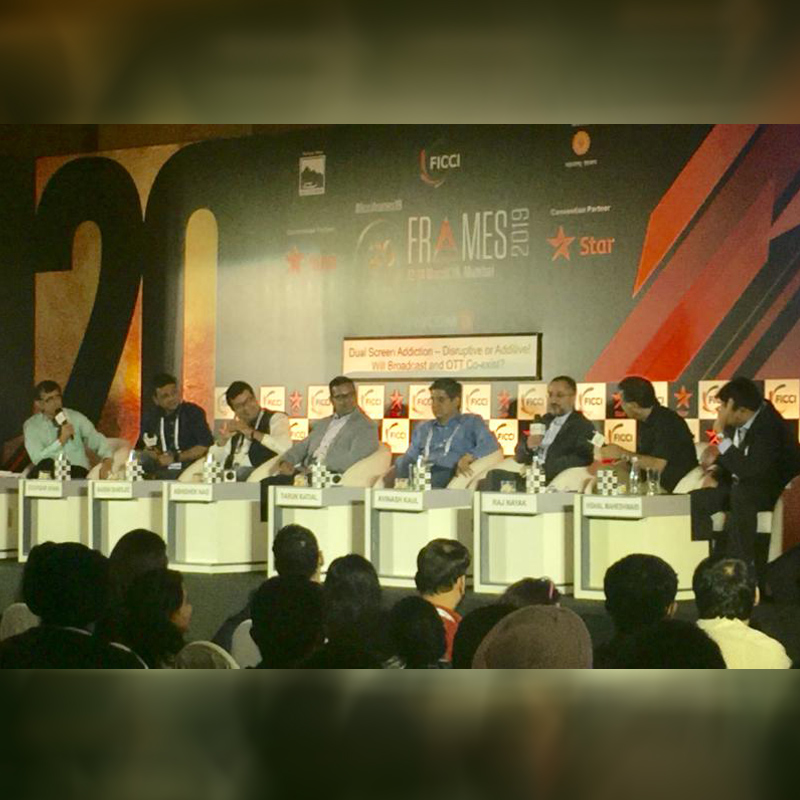
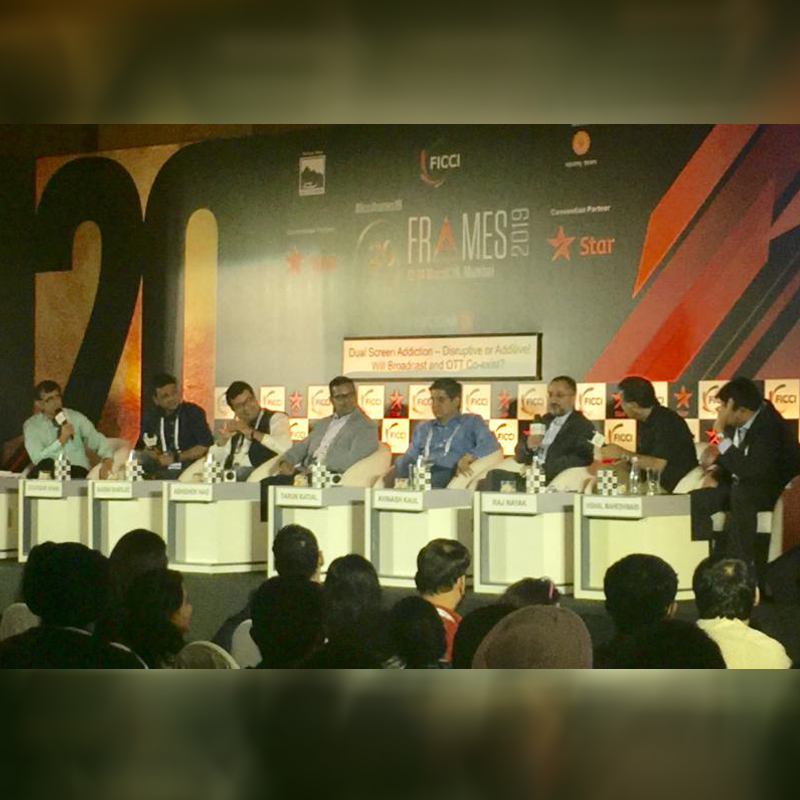
    A session on Dual Screen Addiction saw panellists Star India Hindi GEC president and head Gaurav Banerjee, ZEE5 CEO Tarun Katial, Network 18 COO, A+E Networks MD Avinash Kaul, media veteran Raj Nayak, Netflix partnerships director Abhishek Nag, Hooq India MD Zulfiqar Khan, Vuclip country head Vishal Maheshwari and moderated by Balaji Telefilms group CEO Sunil Lulla.

    Speaking at a session in FICCI FRAMES 2019 Banerjee emphasised on the need of a unified measurement system. “As we have entered into digital, we have not thought of putting in place a measurement system which is extremely robust,” he said. Banerjee thinks it will make assessments of watch-time easier for the advertisers.

    Katial strongly disagreed and argued that there are robust third-party tools in the market. He also cited the example of YouTube and Facebook’s strength in digital advertising. According to him, if there was no credibility in measurement, advertisers would not have put so much money.

    “In the case of TV, when consumers now exercise their choice some channel may lose its base of 198 million and drop to 20 million but that also shows the affluence of the customer who can pay Rs 20 a month. Otherwise, channels on DD Free Dish would have retained revenue three times greater than Star Plus,” Kaul commented.

    Nayak said that advertising money is going to get fragmented and it’s going to get worse with more players coming in. “In the OTT space, the number of players will shrink. I predict that in the next 3-5 years there won’t be more than 10 players in this space. I think then the realisation of value will happen both in terms of subscription and advertising,” he added.

    Talking about monetising on OTT through advertising, Katial said the volume of content on the platform is a necessity. He added that when ZEE5 was launched it kept the faith on three ‘v’s – voice, vernacular and video which worked. According to him, CPM is also rising on the contrary to popular belief in the industry.

    However, the experts agreed to the growing subscription model in the country. Netflix partnerships director Abhishek Nag said this is a great time for subscription business in India. The use of credit cards for online payment without fear of fraud and mobile wallets especially the ones with low bandwidth has opened up revenue channels for the platforms. Nag also thinks bundling of telco or broadband plans with live TV and OTTs can make it stronger.

    ZEE5 CEO said along with B2B2C, the B2C model is growing. According to him, proper bundling and pricing play a major role in B2C revenue. In the case of B2B2C, he said partnerships with e-commerce platforms like MakeMyTrip will add value to the model in future.

  • Broadcasters need to relook at content to cope with OTT platforms

    Broadcasters need to relook at content to cope with OTT platforms

    MUMBAI: With the upsurge in demand for OTT platforms in India, the future of broadcasters has been debated much. TV still has enough headroom to grow thanks to underpenetrated households. While the players in the ecosystem firmly believe that TV is not going to die soon, they also think broadcasters need to rethink their content.

    On the second day of FICCI Frames 2019, experts from the television and OTT industry discussed on ‘Dual Screen Addiction –Disruptive or Addictive! Will Broadcast and VoD Co-exist?’ It had panellists Star India Hindi GEC president and head Gaurav Banerjee, ZEE5 CEO Tarun Katial, Network 18 COO, A+E Networks MD Avinash Kaul, media veteran Raj Nayak, Netflix partnerships director Abhishek Nag, Hooq India MD Zulfiqar Khan, Vuclip country head Vishal Maheshwari and moderated by Balaji Telefilms group CEO Sunil Lulla.

    Banerjee said they are in the business of curating stories where making purposeful stories is important. He thinks it should be left to consumers what stories they want to watch together and on which personal device.

    Agreeing with Banerjee, Katial said, “It’s good to tell stories, eventually you have to make money and yes, we are all trying to monetise content in different formats. What OTT brings to the table is totally different from TV which is a high degree of personalisation and segmentation, and the ability to discover content at your own convenience. That’s not going away. Consumers are going to want more and more of that. I think we all say linear TV should stay, the convenience aspect of digital is huge.”

    Lulla raised the question of how broadcasters should defend their turf with all these changes. Media veteran Raj Nayak said that he is a big believer that television is here to stay. He added that families in small towns, even today, sit together to watch TV in the evening. According to him, OTT and TV will co-exist in India at least for another ten years.

    Banerjee also echoed Nayak’s view that OTT is not going to kill linear TV. According to him, three generations watching TV together and having a conversation is very important in Indian society. He added that TV consumption is only on the upward side in the country.

    But Nayak also reminded the fact that amid ongoing changes in the ecosystem, consumers now compare the quality of TV and OTT content. Hence, Nayak thinks TV channels will have to course correct to give content on linear TV which is as compelling as OTT.

    Hooq India MD Zulfiqar Khan added that streaming services have a direct connection with consumers which helps them to have great knowledge of consumer choice. On the other hand, linear TV has been a consumer facing brand but not consumer facing business. Hence, he said that at a content level as well as business level there has to be a rethink.

    “The households not yet penetrated by TV will continue to be the main stake of linear TV. Most of it is coming from the northern and eastern parts of India. OTT and TV will obviously co-exist. The question is how they will compete with each other and take best practices from each other,” Kaul said while adding that OTT ‘s biggest advantage is its one-on-one relation.

    Vuclip country head Vishal Maheshwari said India is the only country where broadcasters are so well organised on their OTT businesses. According to Katial, broadcasters created a catch-up content environment in the early days and went slow on premium content compared to platforms like Netflix.

    The industry experts agreed that rather than having a debate about TV content and OTT content, the debate should be on linear and non-linear consumption and the need for compelling content.

  • Netflix CEO excited about Disney’s entry into OTT

    Netflix CEO excited about Disney’s entry into OTT

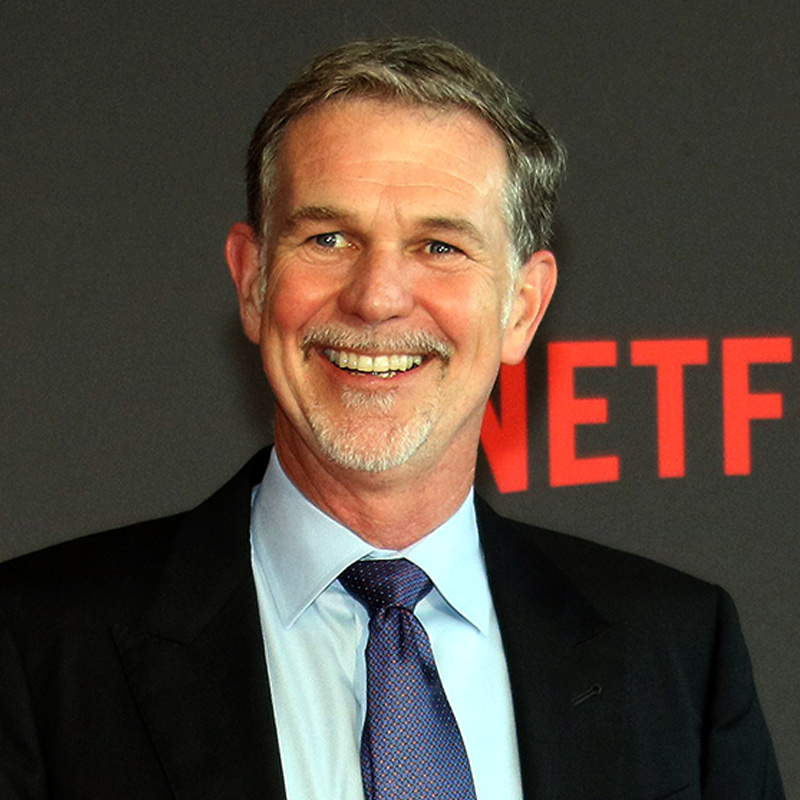
    MUMBAI: Netflix has a new market threat – the upcoming streaming service Disney+. Despite all the market speculation, Netflix CEO Reed Hastings seems calm and relaxed. Hastings has said in an interaction with ET Now that he is excited about Disney’ launch and even praised it saying that the service looks good. He also mentioned that the service is thriving already in a highly competitive space amid HBO, YouTube, Hotstar, Amazon and linear TV.

    In terms of the Indian market, where the company is looking for the next 100 million subscribers, Hastings thinks they have been very successful in three years. After a free trial of one month, Netflix charges Rs 500 per month, which Hastings thinks is totally worthy for the high quality content the service offers as people in India pay Rs 200-250 ticket for one movie. He admits that there are free services like YouTube and cheaper options like Hotstar and Amazon but the Netflix boss is confident about his content.

    While Hastings does not deny the fact that with the current pricing it’s tough to penetrate mass audience, he thinks it is good enough for the first 100 million. For the first segment of target audience, Netflix is really focused on the fragment that watches English entertainment. Later on, the company will explore Hindi and other regional languages after getting into that market properly. He also said Netflix will have more pricing options in future but not for the next couple of years.

    “You know, we are the only one in the world with Sacred Games, House of Cards, To All the Boys I’ve Loved Before. So, all our content is exclusive and if we can build excitement around our content which is a unique proposition, then we will have great success. When you subscribe to Netflix, it’s not the only thing you do, you may use YouTube, Hotstar, other entertainment apps, so it’s one of the things that makes you happy,” Hastings commented.

    After Netflix’s Q3 results, there were reports that Netflix may slightly tilt its strategy when it comes to original movie release. There may be a number of Netflix originals which will have limited theatre screening.  While asked about that, Hastings said it already releases movies in film festivals and the OTT  is only an extension of that.

    As many investors are betting hard on Netflix, the CEO was asked about the reason. Taking the example of India where online content is exploding after Jio’s entry, he said that it is happening everywhere else in the world. People are using more internet thanks to low cost data which is really propelling the growth of services like Netflix.