Tag: linear TV

  • Mipcom 2025: Glance to crack the code on what audiences actually want

    Mipcom 2025: Glance to crack the code on what audiences actually want

    PARIS: In a media landscape where Netflix and YouTube hoover up nearly half of all US streaming hours, knowing what audiences want isn’t just useful—it’s survival.

    Glance, the TV and video market intelligence outfit, will lay bare the winning formulas at Mipcom Cannes 2025 next month, drawing on audience data from more than 120 territories to answer the industry’s most vexing question: who’s watching what, how and why?

    Frédéric Vaulpré, senior vice-president, and Maryam Ramassamy, international research director, will lead the session on 13  October, tackling how content creators can stand out as linear TV withers and streaming platforms multiply like rabbits.

    The presentation will dissect BVoD strategies including TF1+’s digital ad revenue surge, and explore the curious phenomenon of “co-petition”—traditional broadcasters cosying up to the very streaming giants eating their lunch. With advertisers fixated on the golden 25-49 demographic and revenues under pressure, the old rules no longer apply.

    Glance will showcase how hyper distribution—flinging content across AVoD, Fast, SVoD and linear channels simultaneously—often trumps exclusivity. The session will also examine how content is tapping into geopolitical anxiety, evolving gender norms and early-2000s nostalgia, whilst high-concept formats embrace AI and other shiny new tech.

    “The media landscape is more fragmented than ever, yet the need for precise audience intelligence has never been greater,” said Vaulpré.

    Ramassamy added: “Our industry is trying to cope with a fundamental change in how audiences consume TV, in both substance and form. The storytelling needs to be closer to audiences’ current state of mind.”

    Glance, part of Médiamétrie, delivers official ratings for more than 7,000 channels and works with over 100 data providers and 230 major broadcasters, streaming services and production studios worldwide. The Paris-based firm employs over 700 people and notched  a turnover of €103.5m in 2024.

    The session takes place at 9 am on 13 October in the Grand Auditorium at the Palais des Festivals.

  • Kantar study: CTV revolution gains ground as 23 per cent  Indians ditch linear TV

    Kantar study: CTV revolution gains ground as 23 per cent Indians ditch linear TV

    MUMBAI: India’s media landscape is turning the page, and the headline is clear: Connected TV (CTV) is booming, and one in four Indians is now digital-only. That’s the key takeaway from Kantar’s Media Compass 2025, which maps the country’s evolving media consumption habits across linear TV, print, and digital.

    With a whopping 87,000-strong sample and quarterly tracking, Kantar’s new offering aims to replace outdated guesswork with data-driven firepower. And the early signs are disruptive: 35 million Indians have jumped on the CTV bandwagon, and 23 per cent of the population now accesses the internet without watching a second of linear TV.

    While linear TV still claims 58 per cent monthly reach, the shifts are seismic. CTV, once a metro darling, is now reaching deep into rural India. And digital-only audiences are mushrooming among young, male, and lower-income demographics—dispelling old myths and throwing up new marketing equations.

    Media preferences split starkly by age: 55 per cent of Indians aged 15–34 favour OTT and social platforms, while 44 per cent of those above 45 remain loyal to the TV set. Notably, 75 per cent of digital-only and linear TV viewers reside in rural areas, demolishing the notion of urban dominance.

    CTV remains a premium medium, with its incremental growth concentrated in NCCS A households, while digital is democratising access in lower-income groups.

     Kantar director – specialist businesses, insights division (south Asia) Puneet Avasthi said: “In today’s fragmented and fast-evolving media landscape, brands are under pressure to make every media rupee count. Yet, most decisions are still being made using outdated or incomplete data, leading to suboptimal media planning and missed connections with consumers. Media Compass 2025 aims to correct this and equip advertisers with timely, in-depth insights across platforms- enabling smarter media planning, stronger audience engagement and sharper targeting for maximum impact.”

    The message to marketers? India’s media map is redrawn. The compass has shifted. Time to follow the data.

  • “Content in the context of cricket, delivers high recall in terms of measurement”: Kingshuk Mitra

    “Content in the context of cricket, delivers high recall in terms of measurement”: Kingshuk Mitra

    Mumbai: Cricket, often hailed as a religion in India, commands widespread excitement for a variety of reasons. Against the backdrop of this fervor, Star Sports eagerly anticipates broadcasting the highly anticipated ICC T20 World Cup 2024, slated to take place in the USA and West Indies.

    Additionally, the previous World Cup (2023) emerged as a blockbuster cricket event on television, setting new benchmarks:

    1.  Reach: The Men’s ICC event, Cricket World Cup 2023, shattered all past viewership records, reaching nearly 520 million viewers.
    2.  Watch-Time: The 2023 World Cup also recorded an unprecedented watch-time of 428 billion minutes, the highest ever across all past World Cups on TV.
    3.  High Viewership Across Segments: The World Cup attracted substantial viewership across various segments, with Youth reach at 254 million, Male reach at 276 million, Female reach at 243 million, and Rural reach at 245 million.

    Moreover, the world cup on TV saw significant female engagement, with females contributing to 47 per cent of the viewership in CWC 2023, highlighting the broad appeal of cricket among diverse audiences.

    As anticipation mounts for the upcoming ICC T20 World Cup, the landscape beckons with key inquiries surrounding investment strategies, viewership trends, and the perpetual debate between traditional television and digital platforms

    Indiantelevision.com caught up in a virtual conversation with Disney Star head – Ad Sales, Sports Kingshuk Mitra. This interview delved into the nuances of linear TV, the significant surge of Connected TV and various other factors influencing the current views and trends of sports broadcasting and advertising.

    Edited excerpts

    On ICC’s decision to host the tournament at USA

    From a broadcaster’s perspective, I’d like to highlight a couple of key points. Firstly, in comparison to previous T20 World Cup editions like those in 2021 and 2022, where we typically had around 33 matches, this year’s tournament boasts a remarkable 55 matches. This expanded schedule presents an excellent opportunity for brands to capitalize on heightened reach compared to past editions.

    Secondly, if we examine the previous T20 World Cups, we notice a significant increase in prime-time matches, nearly doubling in number. Additionally, all India matches are strategically scheduled at the coveted 8 pm India time slot. This stands in stark contrast to the last T20 World Cup held in Australia, where some of India’s most anticipated matches aired during less favorable time slots, such as 12 or 1 pm. From a broadcaster’s standpoint, this shift to prime-time matches is a source of great excitement and anticipation, as it promises to drive substantial viewership.

    In essence, these factors align favorably for broadcasters, paving the way for increased engagement and viewership throughout the tournament.

    On linear TV being more widely consumed than mobile phones during sporting events

    I’d like to highlight a couple of key points. Firstly, from a live sports perspective, the allure of the big screen offers a unique and immersive experience. Historical data consistently showcase the vital role played by television and large screens in enhancing the viewing experience of live sporting events.

    Secondly, I refrain from framing the comparison as TV versus digital, as each platform serves its distinct purpose. As a consumer myself, I acknowledge the convenience of mobile viewing while on the go. However, for events as monumental as cricket, the preference shifts towards enjoying it in the company of family and friends, on the expansive canvas of a big screen.

    On your plans to leverage the ICC T20 World Cup for advertising sales and unique media opportunities you offer

    There’s a lot of points to cover here. Advertisers are buzzing with excitement for the upcoming World Cup. No surprise there. There’s been an increase in cricket-centric storytelling within marketing strategies across various clients. Incorporating cricket narratives has proven to yield high recall rates, as evidenced by the remarkable surge in female viewership during past World Cups and IPL seasons. This surge has particularly piqued the interest of Consumer Packaged Goods (CPG) clients, many of whom were traditionally less cricket-savvy but are now actively investing heavily here. Moreover, there’s been significant growth in the affluent class, with a substantial portion hailing from banking, finance, and international business sectors. Additionally, lower-tier markets, primarily TV-centric, are attracting attention from advertisers aiming to target these audiences.

    Another consistent trend is the focus of startups on brand building and trust creation, with cricket serving as an ideal platform for these objectives. Many of these companies heavily invest in cricket to bolster their brand stature and foster consumer trust.

    On the product front, we have launched product launches that serve as market differentiators. Firstly, our partnership with Tata Play offers a unique opportunity to target high-income users, providing targeted viewing opportunities that traditional television lacks. Secondly, our Star Deals initiative has changed the way people engage with ads, making television commercials more interactive. This technology allows viewers to transition from watching an ad to redeeming discounts or promotions. Additionally, the synchronization between TV ads and second-screen prompts aids advertisers in closing the loop on viewer engagement, providing valuable insights into the efficacy of TV campaigns.

    Another innovative offering involves leveraging the expertise of Star Sports anchors to create custom content and influencer marketing pieces for advertisers. This strategy capitalises on the high recall and brand association that cricket-centric content offers. Lastly, our studio show “Cricket Live” boasts incredible reach. Through strategic product placements within the studio environment, we enhance brand visibility and drive substantial returns on investment for our clients.

    While we continue to iterate and learn with new clients, I am very confident that these will be our mainstream products moving forward.

    On the rise of Connected TV ecosystem and consumers shifting from linear TV to CTVs due to premiumization as recalled by experts

    In addressing the question, I find it challenging to predict the landscape of this ecosystem in the coming years, whether it be four, five, or even ten years down the line. Presently, I don’t observe any significant impact because, when analysing historical data, television viewership has consistently grown. Comparing the data from previous World Cups or IPL seasons that we’ve published, both ratings and reach have demonstrated steady increases. Thus, it doesn’t align with the narrative of a shifting audience; in fact, the data suggests quite the opposite.

    On measures you have taken to ensure advertisers receive optimal ROI during the World Cup

    I’m pleased to note that many clients are recognizing cricket’s ability to deliver extensive scale and reach. Nowadays, there’s a growing emphasis on understanding the business outcomes resulting from every dollar invested in cricket. We’ve made substantial investments ourselves in comprehending these dynamics. For clients who engage in cricket advertising, we’ve observed a surge in their brand visibility and e-commerce sales. This allows us to attribute specific business outcomes directly to their investments. Consequently, our discussions are evolving towards more refined conversations centered on business outcomes, rather than just pricing or reach metrics. It’s nice to see the gradual shift towards recognising cricket’s true value proposition, as it consistently delivers impressive results in terms of business outcomes and that’s essentially where most of our conversations are leading to.

    On sharing any insights into the viewership trends and advertising opportunities that you anticipate during the World Cup

    Building upon my previous point, it’s evident that we’re witnessing a notable increase in female viewership ratings, particularly within the Consumer Packaged Goods (CPG) category. This surge is underpinned by a consistent trend of FMCG (Fast Moving Consumer Goods) companies investing in major sporting events like the World Cup and IPL. Moreover, we’ve successfully onboarded several new clients who are venturing into cricket-related investments for the first time.

    Also, the fintech sector emerges as a significant player in this arena, and this trend will be continued in future. Their alignment with cricket investments has proven advantageous, consistently translating into tangible outcomes such as increased app downloads and heightened search visibility.

    As we transition into the summer season, we anticipate active participation from seasonal categories such as soft drinks, air conditioners etc. Concurrently, numerous product launches are on the horizon, with many coinciding with cricket events. This alignment has historically amplified campaign impact, a fact well-recognised by our clients who eagerly embrace this synergy.

    So these early trends indicate promising opportunities, and we’re optimistic about channeling our business efforts in this direction.

  • “India is the second largest TV market globally with 210Mn Tv HHs”: GroupM’s Atique Kazi

    “India is the second largest TV market globally with 210Mn Tv HHs”: GroupM’s Atique Kazi

    Mumbai: The emergence of addressable TV has been nothing short of ground-breaking. Offering targeted advertising opportunities and personalized content delivery, addressable TV has swiftly carved out a significant niche in the industry. India, with its burgeoning digital market and rapidly expanding connectivity, has been at the forefront of this transformative shift.

    The latest insights from GroupM’s TYNY 2024 report shed light on the remarkable momentum witnessed in the realm of TV in India. Unlike the global market, TV marked a seven per cent growth with the market share of 29 per cent. With each passing year, the adoption of connected TV and the prevalence of addressable TV homes have surged, reshaping the way audiences engage with television content and advertising.

    The report cites phenomenal momentum in the space of addressable TV over the last few years. By the end of 2023, there were 34 million addressable TV homes streaming on connected TV in India. As per the report, in 2024, this growth is expected to be reaching 45 million homes with a YoY growth of 21 per cent.

    By delving into the key findings of the report, it becomes evident that addressable TV is not just a passing trend but a fundamental evolution in the media landscape, poised to reach unprecedented heights in the year 2024. With projections indicating substantial growth in the number of addressable TV homes, India stands on the brink of a new era in television broadcasting and advertising.

    Let’s explore the implications of this growth and future of media consumption in India as Indiantelevision on the sidelines of the GroupM event, caught up with GroupM India president (Data Performance and Digital Products) Atique Kazi, where he shared a lot of insights on the current addressable & linear TV space….

    Edited excerpts

    On the growth of addressable and linear TV in India

    In recent years, the growth of addressable TV homes has been significant. With 7-8 million Addressable TVs in 2021, it quickly rose to 17-18 million and now crossed 34 million. Current projections suggest it could breach 45 million, translating to approximately 21% of TV households in India, given there are around 210-213 million Television households. This growth is fuelled partly by the widespread availability of unlimited broadband, allowing people to stream content without constraints. Interestingly, many of the 45 million users are not completely abandoning traditional TV but are instead switching between linear and on-demand content. Primarily, these users are younger than 40, as older individuals may struggle with new user interfaces & habits. People are making smarter choices based on their viewing habits, opting for platforms that offer their preferred content without additional costs. This trend indicates a shift towards more flexible viewing options.

    On difference between USA and India’s television business and India reaching on par with the developed nations

    India is the second largest TV market globally with 210Mn Tv HHs. Recent increases in prices and the abundance of content accessible through streaming platforms are prompting consumers to transition from Pay TV to Free TV, often supplemented by low-cost or ad-supported streaming services made possible by improved internet connectivity. In the United States, over 85% of households are users of Connected TV (CTV), whereas in India, CTV penetration stands at only approximately 16% (FYR only 34mn/210mn), indicating significant growth potential in India. CTV advertising constitutes 7% of the total media expenditure in the US, while India has just embarked on this journey in the last three years, with digital extensions already accounting for 4% %( FYR only 5750cr/155386 cr ) of the overall advertising expenditure and expected to surpass the US average.

    On consumers preferring TV over mobile phones for media consumption

    The preference for viewing always rests with the consumer based on their convenience. For example, while I am outside home and want to catch on to my favourite content, mobile is definitely an option. But at the comforts of home when you have access to a large screen, preferences change. What has happened now is the ease of access to content is the same on TV & mobile, what changes is the environment with whom/where you watch them. With features such in IPL like multi camera viewing angles and enhanced post-match production, viewers are provided with an improved viewing experience, influencing their choice on a big screen vs small screen.

    On the fall of DTH industry according to TRAI’s latest reports on losing 1.32 paid subscribers in July-September 2023

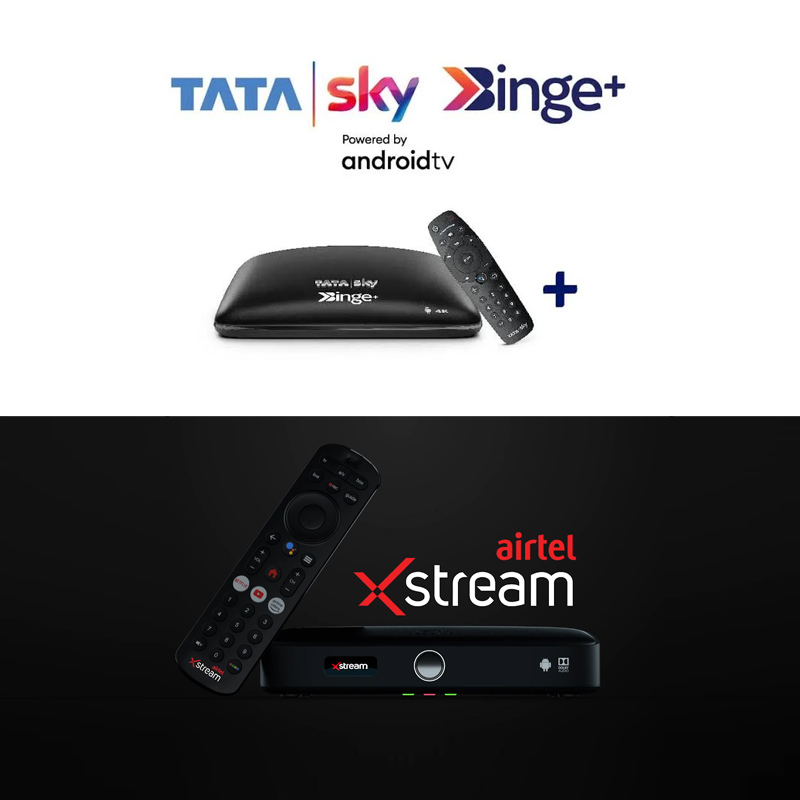
    The DTH industry is shifting towards free-to-air (FTA) content over pay TV, building the need for smarter, internet-enabled set-top boxes. The advancement I foresee is for the insertion of addressable ads on linear television, revolutionizing the advertising ecosystem. However, the industry faces challenges due to broadcasters’ split strategy for television and their digital platforms, as well as the disconnect between broadcasters and distributors. Without collaboration to effectively sell addressable ads, the potential benefits of this technology, as seen in markets like Korea, may not be easy in India. Airtel and Tata Play have introduced smart set-top boxes capable of addressable ads, but without broadcaster collaboration, unlocking their full potential may prove difficult.

  • Sony Entertainment Television’s exclusive linear TV airing of Shrimad Ramayan

    Sony Entertainment Television’s exclusive linear TV airing of Shrimad Ramayan

    Mumbai: Sony Entertainment Television (SET) celebrated the New Year by connecting with Indian television viewers through its exclusive linear TV airing of Shrimad Ramayan. Recognising the enduring allure of linear TV, the channel chose to launch the divine epic exclusively on cable TV and DTH platforms.

    Shrimad Ramayan resonates deeply with millions, portraying essential relationships amid inherent conflicts. The narrative of Lord Ram, the ‘Ideal Man,’ embodies timeless values such as integrity, loyalty, courage, love, and resilience. In an endeavour to echo the relevancy of the value that this timeless epic is known for, SET has created compelling short videos promoting the essence of relationships and essential life lessons

    Beyond the familiar story, Shrimad Ramayan will also showcase multiple untold stories, offering a nuanced understanding of the saga’s depth and eternal beauty. By exclusively releasing it on cable TV and DTH, Sony Entertainment Television aims to play a vital role in revitalizing family viewing.

    SPNI’s distribution marketing and sales head Makarand Palekar emphasises, “In my experience, while streaming services have become increasingly popular, linear TV remains a resilient and relevant part of the media landscape. It is not only coexisting with on- demand platforms but also adapting to evolving viewer habits, ensuring its continued presence in the foreseeable future.”

    Sony Entertainment Networks was amongst the earliest movers to make the bold, industry-first step of discontinuing all its Live TV channels on Sony LIV. This move along with exclusive Linear TV only releases like Srimad Ramayan will help create differentiated content, both in the linear & the OTT offerings of the network, thus helping drive viewership and revenues for both the mediums.

    The network, known for its novel and popular shows, features progressive storylines in existing shows like ‘Kavya – Ek Jazbaa, Ek Junoon,’ ‘Sapnon Ki Chhalaang,’ ‘Mere Dad ki Dulhan,’ and ‘Aangan.’ Upcoming shows such as ‘Mehndi Wala Ghar,’ ‘Kuch Reet Jagat Ki Aisi Hai,’ and ‘Nivedita Maajhi Tai’ promise a rich and diverse content mix.

    Undoubtedly these shows are a huge draw for viewers and also provide advertisers with distinct opportunities for targeted engagement and strategic product placements. Company anticipates that exclusive content like Shrimad Ramayan marks the beginning of a pivotal moment in the continued vitality of television entertainment. The distinctive allure of such shows, with their unique narratives and exclusive platform specific airing, is poised to significantly elevate viewership and reaffirm the enduring appeal of linear television.

  • Disney Star registers FIR against piracy group Tamil Rockers, Tamil MV, Tamil Blasters and Pikashow

    Disney Star registers FIR against piracy group Tamil Rockers, Tamil MV, Tamil Blasters and Pikashow

    Mumbai: Disney Star has registered a FIR (First Information Report) against piracy groups Tamil Rockers, Tamil MV, Tamil Blasters and Pikashow on Wednesday at the Bengaluru cyber cell.

    The case has been registered under Information Technology Act 2008 under Section 66, Copyright Act 1957 under Section 63 and 65 and IPC (Indian Penal Code) 1860 under Section 420 against R Kumaravel and R Radhakrishnan. As per the report accessed by Indiantelevision.com, R Kumaravel resides in the Yelahanka suburb of Bengaluru city.  

    While Tamil Rockers, Tamil Blasters and Tamil MV are illegal piracy websites, Pikashow is a third party standalone mobile application that facilitates the free access to content from all major broadcasters and OTT platforms. It has over 12 million downloads.

    Disney Star noticed that its Hotstar Specials such as Rudra: The Edge of Darkness, Bigg Boss Ultimate (Tamil), Human, Parampara, Escaype Live and Anupama: Namaste America, its movie library such as “Tadap”, “Kaun Pravin Tambe”, “Atrange Re”, “Hum Do Humare Do”, “Sanak”, “Badhaai Do”, “12th Man”, “Taanakkaran”, “Maaran”, “Bheemla Nayak” and “Bheeshma Parvam” were being leaked by these piracy groups. Its linear TV content from channels Star Plus, Star Gold, Star World and Star Sports was made available on the Pikashow app. The company tried to register a case with the Tamil Nadu cyber cell unsuccessfully for three months finally taking the decision to file the report with Bengaluru cyber cell.

    The piracy group sources their content directly from theatre/OTT platforms and releases it on the internet. They distribute content through torrent, third party cyberlockers, user-generated platforms and offshore servers.

    The group initially focused on leaking content in Tamil, Telugu and Malayalam but of late they’ve expanded their rogue operations to include other languages such as Hindi. The cumulative traffic on these websites is estimated to be 64 million. Theatrical movies and OTT content are the biggest victim of such piracy groups. All theatrical releases are made available on these illegal websites within 24 hours of release. They are able to create new mirror domains to avoid internet service provider (ISP) blocking.

    In March last year, an investigation by the crime branch of Faridabad revealed the operations of Boss IPTV that was distributing illegal set-top-boxes (STBs) through various vendors after a police complaint was filed by live TV platform Yupp TV. The company was allegedly stealing TV signals from various Indian and international broadcasters & offering them via its platform.

    As major media companies increase their presence on the internet as a means to distribute its content, the crackdown on illegal piracy groups continues.

  • Ad fraud a huge challenge for Indian marketers in 2022, reveals Integral Ad Science study

    Ad fraud a huge challenge for Indian marketers in 2022, reveals Integral Ad Science study

    Mumbai: Majority of Indian marketers surveyed consider ad fraud to be a great concern across mobile environments in 2022, according to the latest Industry Pulse Report released by Integral Ad Science.

    According to the report, as many as 78 per cent of respondents said that ad fraud will remain a great concern across mobile environments this year and at least 26 per cent said mobile web video environments will be among the most vulnerable in terms of brand risk. The respondents believed that contextual targeting solutions (74 per cent) and third-party verification (72 per cent) will be important to ensure brand safety in mobile environments.

    “As the ongoing pandemic has driven consumers to embrace hybrid lifestyles and digital experiences, digital advertisers pivoted their strategies globally to emphasise mobile, social media, CTV, and digital audio. This scenario is similar in India. However, in India, brands are becoming more conscious of the importance of quality impressions and safe brand environments. As a result, the role of verification partners is gaining prominence in creating a safe and transparent setting for brands,” said IAS commercial lead Saurabh Khattar.

    The Indian edition of the report released recently found that improving mobile experiences, measuring quality for social media campaigns, and the emergence of digital video and audio are top considerations in the year ahead. The report also provides insights into the emerging trends and priorities that will drive change in digital advertising across India in 2022. The results are based on the responses of 151 Indian digital advertising professionals representing brands, agencies, publishers, and ad tech vendors in November 2021.

    According to the report, these key priorities will guide the year ahead:

    Marketers bet on mobile and social media

    India continues to be a mobile-first market, with 77 per cent of respondents making it a top priority in 2022. Mobile internet users in the country are expected to surpass 600 million this year. Mobile ad spend in India is set to grow 27 per cent to surpass $2 billion in 2022, representing nearly two-third of overall digital ad-spend in the country.

    71 per cent of media experts in India said they will prioritise social platforms. With over 450 million social media users in India, the medium is rife with opportunities for marketers. YouTube ranks as the top choice for 82 per cent of respondents, closely followed by Facebook (80 per cent), and Instagram (77 per cent).

    Increased focus on mobile video and ad fraud

    As consumers gain faster 5G mobile connections, nearly eight-in-ten (78 per cent) media experts bet on mobile video streaming being one of the biggest opportunities. However, with this growth, the threat of ad fraud looms large; 78 per cent of respondents agree that ad fraud will be a greater concern across mobile environments this year. 26% of respondents also agreed that mobile web video environments will be among the most vulnerable in terms of brand risk. As a result, respondents believe contextual targeting solutions (74 per cent) and third-party verification (72 per cent) will be important to ensure brand safety in mobile environments.

    Quality matters for social media campaigns

    Over 86 per cent of marketers are concerned about the vulnerability of social channels to ad fraud. Experts also pointed to insufficient transparency and eroding consumer trust, with 65 per cent and 62 per cent of respondents, respectively, citing these key factors as cause for adjusting their spending in 2022.

    Digital video and audio ready to take off

    The Indian audience continues to transition from linear TV and terrestrial radio to digital streaming channels such as CTV, OTT, and podcasts. As new consumer habits developed during the pandemic, 80 per cent of respondents anticipate an accelerating transition from linear TV consumption to digital video streaming this year, while over seven in 10 agreed that audio listeners will shift towards digital alternatives. However, 68 per cent of media experts anticipate higher brand risk with audio streaming content as more inventory becomes available. Ultimately, 68 per cent of respondents agreed that third-party verification will be important to ensure the quality of audio streaming inventory.

    Media quality takes a team effort: With ad budgets at stake, brands and verification tech providers play a pivotal role in mitigating ad fraud and brand risk. 45 per cent of respondents noted that verification tech providers are responsible for ad fraud mitigation, while 38 per cent say brands should lead these efforts.

  • OACT2021: The evolution of Connected TV in India

    OACT2021: The evolution of Connected TV in India

    Mumbai: The addressable connected TV (CTV) advertising universe is estimated at six to eight million, according to mediasmart, an Affle company, India and SEA, senior director- brand and strategy Nikhil Kumar.  The CTV evolution has arrived in India. Today, you can easily join the CTV ecosystem via a smart TV, dongle, gaming console, or connected set-top-box (STB).

    Kumar was addressing the ‘OTT Advertising and Connected TV Summit 2021’ organised by Indiantelevision.com on 7 October. The two-day event is co-powered by mediasmart, an Affle company and summit partner – The Q. Stakeholders across the industry engaged in insightful discussions on the dynamics of OTT and CTV advertising.

    The growth of CTV in India is driven by several factors. Chinese manufacturers have played a pivotal role by introducing low-cost smart TVs for as much as Rs 15,000. Low-cost dongles like Amazon Firestick and Google Chromecast are popular ways to access web content. Jio has led the adoption of connected STBs. These technologies have driven the penetration of the CTV market to a point where you don’t necessarily have to be from a metro or Tier-1 city to be a part of the CTV ecosystem. According to a report by Counterpoint Research, India’s smart TV market saw 65 per cent year-on-year growth in Q2 2021 due to increasing demand.

    Some may conflate over-the-top platforms with CTV but they are completely different ecosystems. While OTT can be seen as a subset of the CTV ecosystem, its journey began almost two decades back with Netflix. Certainly, a majority of the usage on CTV is driven by OTT viewing. A report indicates that 91 per cent of users watch movies on CTV, there is also a small but growing audience that is listening to music, playing games, and catching up on the news.

    “CTV is reaching an incremental base of evolved users who have come into the ecosystem to enjoy everything that the internet has to offer,” said Kumar, adding that the pandemic has played the role of a catalyst for CTV.

    “People confined at homes realised that linear TV was mundane because of repeated content and were looking at new ways to entertain themselves,” he added. It helped that India has the cheapest data costs in the world at $ 0.09 per Gb. A survey showed that 78 per cent of smart TV users were accessing the internet via direct apps instead of search and discovery platforms.

    Even though the base of CTV was nascent compared to other media, mediasmart was excited to tap into the opportunity. “We’ve always been a platform that’s believed in strong digital ownership of the consumer journey,” said Kumar.

    The company did not look at CTV in isolation. When it targeted a CTV household, it assumed that there were three to four members in the household who owned a smartphone. They developed a technology system called ‘Household Sync’ that maps the user journey on CTV and mobile.

    Marketers have always bifurcated between brand and performance, opined Kumar. “Here’s a technology that puts your brand advertising on the largest screen possible but also delivers middle and bottom-funnel conversions, so it takes you across the entire funnel. At mediasmart, we’ve always valued metrics such as cost per conversion and verticalisation approaches.”

    mediasmart’s solutions looked at delivering immediate action-oriented feedback to advertisers on the brand impact. Their platform allowed them to look at completion rates on TV followed by retargeting on mobile devices. It also let them measure click-through rates to analyse if the brand was reaching the last mile. “Ultimately, what every brand is concerned about is the bottom-funnel,” opined Kumar.

    The CTV market is growing in double-digits month-on-month that will lead to an increase in users, advertising penetration, and reach. In markets like the US, the share of video impressions on CTV is as high as the share of video impressions on mobile. While the US was never a major mobile market, unlike India, Kumar explains that the opportunity is still attractive because even though the base is small, the impact is large.

    He added, “There is a lot of headroom for CTV to grow in India. There is still a significant base of box TV users in India who may potentially migrate to low-cost smart TVs. Apart from cord-cutting, there is a whole new generation of ‘affluent cord nevers’ who are opting for CTV systems over DTH and cable connections.”

    (Source: India CTV Report 2021 by mediasmart, an Affle Company, VTION, and Interactive Avenues)

    For more information: https://indiantelevision.com/events/oact-summit-2021/

  • Indian pay TV ecosystem yet to optimise HD viewing opportunity

    Indian pay TV ecosystem yet to optimise HD viewing opportunity

    KOLKATA: Industry leaders have emphasised over and over again that despite recent developments and change in consumer preferences, pay TV will continue to coexist with over-the-top (OTT) platforms. On the other hand, the need for a sustainable business model is also undeniable amid the rapid flux in the media and entertainment industry. In the coming future, the conversion from standard definition (SD) to high definition (HD) can be a key growth driver, the experts said in a panel discussion at the Video and Broadband Summit (VBS) 2021. Moreover, the broadband segment will be another crucial factor, which has seen higher uptake in the last few quarters.

    ‘The leaders speak laying out a profitable future’ moderated by Indiantelevision.com founder, CEO and editor-in-chief Anil Wanvari included Indiacast Media Distribution president Amit Arora, Siti Networks CEO Anil Malhotra, Star & Disney India- India & International TV distribution president Gurjeev Singh Kapoor, Travelxp 4K founder & CEO Prashant Chothani, Fastway Transmission & Netplus Broadband group CEO Prem Ojha, and NXTDigital MD & CEO Vynsley Fernandes as panelists.

    Arora said broadcasters will always remain focused on telling new, exciting stories. But the mediums of broadcasting, distributing content will include a range of devices, TV, screens. DPOs have to look at how they can assimilate all the content assets and determine the best way of marketing those.

    “The pot of gold I see for the industry is how you can make a dollar more from the customer giving him more and more content. India will stay in a broad spectrum of free TV to $10 in the next 10 years, which segment you want to operate in is going to be your choice,” he quipped.

    Fernandes agreed to the need of looking at a wider spectrum rather than having a singular kind of telescopic lens for the distribution platform operators (DPOs) as well. In addition to that, DPOs need to bear down costs like infrastructure sharing. The important thing is how they drive out a better value for each dollar, he added.

    “Our offtake of HD in the country is very low. We have not been able to achieve a strong HD push. There is that much runaway available to us. So, can we make the transition from SD to HD as one of the key drivers going forward as there is so much runway available? The second thing we have to focus on is if we can take the second runway of a whole bunch of customers who are watching FTA content and look at them converting them to basic pay bundles, maybe from one dollar,” he stated further.

    Arora highlighted another important aspect; while HD consuming subscribers are hovering around 14-15 million, a large section of the population buys HD boxes but watches SD channels. Hence, marketing the HD proposition is very important to raise awareness.

    “We are a market of 200 million TV homes and we have 15 million homes who are watching HD channels. We have closer to 40-45 million homes that have HD TV set. The communication piece is a big issue. People don’t know when they buy an HDTV set, they also have to buy an HD set top box, along with that they have to buy a subscription for HD channels. What they think is if they have a TV set, they would get brilliant quality of channels regardless,” Kapoor detailed.

    Broadcasters and DPOs have not taken HD expansion as an agenda but it is more important than ever as OTT platforms are offering high-quality video, experts concurred. However, Travelxp’s Chothani thinks the industry needs to look beyond HD and start focusing on 4K too.

    “Five years from now, there will be 40 million 4K homes in India. MSOs and DPOs have to look at the 4K opportunity. India has a great opportunity because of the infrastructure in the cable system. If a consistent effort by MSOs, DTH platforms is taken, people will realise SD quality is not good enough,” he noted.

    On the other side, broadband looms as a highly promising prospect on top of everything, Fernandes added. Siti Network’s Malhotra is also optimistic that there is an opportunity for everyone despite the presence of players like Jio, Airtel as there are 22 million wired broadband customers compared to 650 million internet users in the country. Even if Jio subsidises as it did for wireless broadband, they might have maximum market share but would not be able to acquire all consumers, he opined. However, the home broadband rollout is slow in the country because it is physically extensive work.

    Ojha said that his organisation has already penetrated the urban consumers in its strongholds and will reach rural areas faster than Jio. “Evolution is happening in the ecosystem. There can be imperfection at every level, even at the regulation level. But we will have to look at the longest horizon where the growth engine has to be broadband driven,” Ojha commented.

  • VBS 2021: The way forward for linear TV ecosystem

    VBS 2021: The way forward for linear TV ecosystem

    KOLKATA: The debate of over-the-top (OTT) platforms versus pay TV has been centre stage in media and entertainment conversations over the last couple of years. More recently, the subject has died down as the industry reached the conclusion that both linear TV and on-demand TV will co-exist in India for a long time, unlike the markets in the west. But the change in technology and consumer behaviour have definitely thrown challenges at the traditional TV ecosystem. At the Video and Broadband Summit (VBS) 2021, the industry discussed how to stay resilient even amid the flux.

    The summit started with a welcome note by Indiantelevision.com founder, CEO and editor-in-chief Anil Wanvari as the prestigious conference marked its seventeenth edition this year. Back in 2003, when the summit (earlier IDOS) was held for the first time, the industry was much more disorganised. Over the passage of nearly two decades, the industry has gone through multiple changes like digitisation, new price regime etc.

    India has escaped cord-cutting, TV viewing is growing but the industry cannot afford to lean back, Wanvari said. He also cautioned alarm that despite the projections of the Indian pay-TV ecosystem reaching $15-16 billion revenue, it still stands at around $11 billion.

    “Only about 800 million are being served by linear TV. Another 500 million are yet to be served. Traditional TV is definitely strong here but it has come under attack. Broadcasters have to find ways of combating the surge of edgy and almost meaningful content which has recently been brought under the regulation of I&B ministry that is being put out by OTT platforms to hook and retain customers. Now DTH operators, HITS providers, Cable TV players have to find ways of making their operations even more scalable, provide additional services,” Wanvari commented.

    Post the welcome note, VBS 2021 hosted its first panel discussion, moderated by Wanvari, bringing together top executives from broadcasters and distribution platform operators (DPOs). In ‘The leaders speak laying out a profitable future’ session, Indiacast Media Distribution president Amit Arora, Siti Networks CEO Anil Malhotra, Star & Disney India- India & International TV distribution president Gurjeev Singh Kapoor, Travelxp 4K founder & CEO Prashant Chothani, Fastway Transmission & Netplus Broadband group CEO Prem Ojha, and NXTDigital MD & CEO Vynsley Fernandes discussed the industry’s recovery post-Covid2019 and the way beyond.

    The leaders agreed that the industry has come out of the Covid2019 impact and is bouncing back gradually, although there are still some hiccups. “We all had to recast our business models, there were a lot of learnings that happened. One was that the government ensured that cable TV and broadband were treated as essential services,” Fernandes stated. Fastway’s Ojha added that technology took a big leap catalysed by the pandemic situation.

    “Majority of content consumption still happens on DPO level. They were keeping up the service level in the pandemic. I am really amazed to see how all of them were able to put up that spirit to their team that let’s not get frightened, let’s get the connectivity going. DPOs are the real media Covid warriors. This is my learning from the pandemic – that there has to be cross-dependency and there has to be faith between the entire ecosystem, then we are going to have much bigger recovery, much bigger growth going forward,” Chothani said. While the subscription count went down during the crisis due to migration, MN Vyas asserted that the numbers are bouncing back. “We’re looking forward to the good fiscal year 2022,” Arora said.

    Other than a dip in subscriber addition due to the Covid crisis, the broadcasters and DPOs could not undertake any price revision due to the lack of clarity on NTO 2.0. Kapoor said there is now competition in every genre reducing the risk of monopoly, both for broadcasters and MSOs. Hence, the pricing of content should be left with market forces rather than implementing heavy regulations.

    Talking about future opportunities, the leaders agreed that the conversion from SD to HD can be one potential area if communicated properly to consumers. Along with that, wired broadband is another potential growth driver for MSOs as the penetration is very low currently. Even if deep-pocketed players like Jio starts aggressive acquisition, there will still be enough opportunities left for other players given the fact there are only 22 million home broadband subscribers currently, Malhotra noted.

    Along with a robust business model, technology acts as the deciding factor in today’s fast-moving era. The second session discussed ‘Future proofing DPOs on video delivery solutions’ in the presence of NXTDigital group CTO Ru Ediriwira, Asianet Satellite Communications Ltd vice president & technology head Salil Thomas, Broadpeak Business Development vice president  Xavier Leclercq, and Planetcast Media Services founder director MN Vyas.

    Ediriwira said it is important to focus on future proof technology but new technology can come anytime and disrupt the industry despite the precautions. According to her, it is important to keep abreast of current developments and be open to new opportunities. Thomas echoed a similar sentiment, saying every organisation should be ready to adapt to changes, no matter what.

    “I think futureproof is something which is never possible. We have to really look at what is needed –at least what is needed in the next five years. We have to make a sea change in our distribution system. TV has to be more intelligent,” Vyas added.

    The panel also discussed the possibility of IPTV as a solution to simplify the network. Although it needs long-term investment and has not been considered widely, it could be the right direction to look at. Leclercq said, “Everywhere in the cable network, efficiency is reducing, complexity is moving everything to IP based delivery. I think one of the encouraging steps in this direction is seeing some big scale MSO in Europe, US launching IP only set top boxes.”

    The summit rounded off with a session focusing on ‘Customer First’ moderated by PwC India’s partner and leader – media, entertainment & sports advisory Raman Kalra. The panelists included some of the top names from the broadband and cable industry, such as JioFiber president Anuj Jain, Siti Networks ‘ DGM Strategy Anurag Nigam, UCN Cable Network operations head Debashis Mohanty, GTPL Hathway vice president Yatin Gupta and Shemaroo Entertainment broadcasting business COO Sandeep Gupta.

    Kalra opened the session by mentioning how customers today are spoilt for choice when it comes to choosing content to consume, what with video on demand and OTT platforms mushrooming with ever increasing channels of entertainment. Despite demands for content and internet broadband having skyrocketed during the pandemic, the challenge of remaining relevant is a concern for both the service and content provider, as well, in the highly competitive market. So the question arises on how to acquire and retain a customer base with the constantly changing customer demands and behaviour.

    The panel debated the pros and cons of the pandemic and the post-Covid market scenario. Everyone agreed that the period was a huge shot in the arm to the industry as people were confined to their homes with increasing digital requirements for their work, study and entertainment. It resulted in a major spike in cable TV and broadband consumption in the initial months of the pandemic, which flattened out towards the latter half of the lockdown.

    Strategies were discussed on how best to meet consumer needs and ensure customer stickiness. The session concluded by summarising that there’s a need for businesses to invest deeply in knowing and engaging with their customers. Analysing customers’ content consumption data can also lead to rich dividends.