Tag: Limelight Networks

  • Limelight Networks named a leader in leading analyst firm vendor assessment

    Limelight Networks named a leader in leading analyst firm vendor assessment

    MUMBAI: It is official, Limelight is a leader in the CDN market in the IDC MarketScape: Worldwide Commercial CDN 2019 Vendor Assessment (doc # US44842119, August 2019)

    The report provides a comprehensive view of top global commercial content delivery network (CDN) providers comparing their capabilities to offer CDN services, innovate and strategies for growth. Limelight was recognized for our high-quality/price ratio, the continuous capacity expansion of our dense and private network for content delivery, our edge services, our investment in low latency video streaming, and more. Download now for the report excerpt.

  • limelight networks announces limelight realtime streaming

    limelight networks announces limelight realtime streaming

    MUMBAI: Limelight Networks, Inc. (Nasdaq: LLNW), a leading provider of edge cloud services, today introduced Limelight Realtime Streaming, the industry’s first globally scalable, sub-second live video streaming solution that is natively supported by major browsers and devices. The new service also supports integrated realtime data, making it possible to create interactive live online experiences.

    Based on data from Limelight’s State of Online Video 2017 Report, Indians are the highest consumers of online video globally, with an average viewing time of 7.12 hours per week. Furthermore, Indian viewers reportedly found video rebuffering and poor video quality their top two frustrations with online viewing.

    Yet, streams of live events are still typically delayed from the broadcast feed by 30 seconds or more. This often results in poor viewing experiences, and, ultimately, causes loss of revenue, as a result of customer drop-outs.

    Limelight Realtime Streaming eliminates these challenges by enabling organizations to stream live video from anywhere in the world to anywhere else in less than a second, providing online viewers with the same experience enjoyed by broadcast viewers. The solution leverages the industry-standard WebRTC video format and Limelight’s global edge network to deliver scalable, broadcast-quality, realtime video streaming that can be viewed in all major web browsers without the need for special software or plug-ins.

    “ The ability to stream video with sub-second latency lets our customers enjoy the action as it happens, wherever they are, on enabled devices or platforms,” said Lukas Seiler, Managing Director Audiovisual at SportRadar, a leading global provider of sports data intelligence.

    In addition to eliminating streaming latency, Limelight Realtime Streaming expands the business opportunities associated with existing and new live video applications in areas such as:

    · Live sports and events. By making live viewing a more interactive social experience, broadcasters now have additional opportunities to monetize their live video content by offering value-added experiences that are not possible with traditional broadcast.

    · Online Gaming. Realtime video streaming and interactive data functionality enables more immersive gaming experiences, and provides a platform for greater interaction with competitive, live events.

    · Health and social care. Realtime video with embedded data enables timely interactions between professionals in time critical situations, allowing them to share updates and visual information across teams without relying on proprietary equipment, systems and formats.

    · This has also extended to additional areas where milliseconds matter in video streaming applications, like transportation, emergency and security applications.

    “While increasing digital adoption has opened up considerable opportunities for both global and regional content distributors in India, latency has remained a key challenge. We are delighted to make online viewing experiences more interactive through the delivery of sub-second latency live video, audio and data, globally, at scale,” said Jaheer Abbas, Senior Director, SEA & India at Limelight Networks. “With Limelight Realtime Streaming, we expect to see a new wave of immersive, low latency, and content-rich applications. We are confident that this development will be a crucial milestone for the global live video market.”

    Limelight will be demonstrating its new Realtime Streaming solution and full video delivery services at IBC 2018 in Hall 5, Stand B.52, including new enhancements to its Multi-Device Media Delivery Live solution that simplify the process of recording live events for use as VOD assets.

  • Urban-rural internet experience gap needs bridging: Gaurav Malik

    Urban-rural internet experience gap needs bridging: Gaurav Malik

    MUMBAI: The digital savvy generation not only yearns for good content but also a seamless viewing experience. A few seconds of latency or buffering can push the user to switch to other platforms.  Thus media companies, especially OTT platforms, are integrating with content delivery networks (CDN), content management systems and cloud platforms increasingly to improve efficiency. Though CDN is not strictly limited to video transmission, Limelight Networks country director Gaurav Malik thinks the demand for CDN in India is primarily driven by video proliferation.

    Consumers have endless option for online video content. Starting with international players like Amazon, Netflix to local players like ZEE5, SonyLiv, Hotstar, Voot and YouTube also can’t be forgotten. Hence longer loading time can lead to higher churn rate, smaller base along with decreasing ROI and loss of consumer confidence.

    For Limelight Networks, the global player in digital content delivery with 19 offices across the Americas, EMEA and Asia Pacific, the Indian market definitely holds a special position. Malik thinks not only Limelight but also the entire CDN market is being benefitted by rising OTT Consumption. Moreover, CDN’s role becomes more prominent when it comes to OTT consumption in rural areas.

    Though the demand for online video content has rapidly grown in rural areas, infrastructure in the areas still now lacks proper development. While the rural audience predominantly uses feature phones, that also under dissimilar network conditions, sometimes OTT platforms cannot offer the video formats supported by those devices. Moreover, the geographical distance of a device from the data centre can also cause video lag.

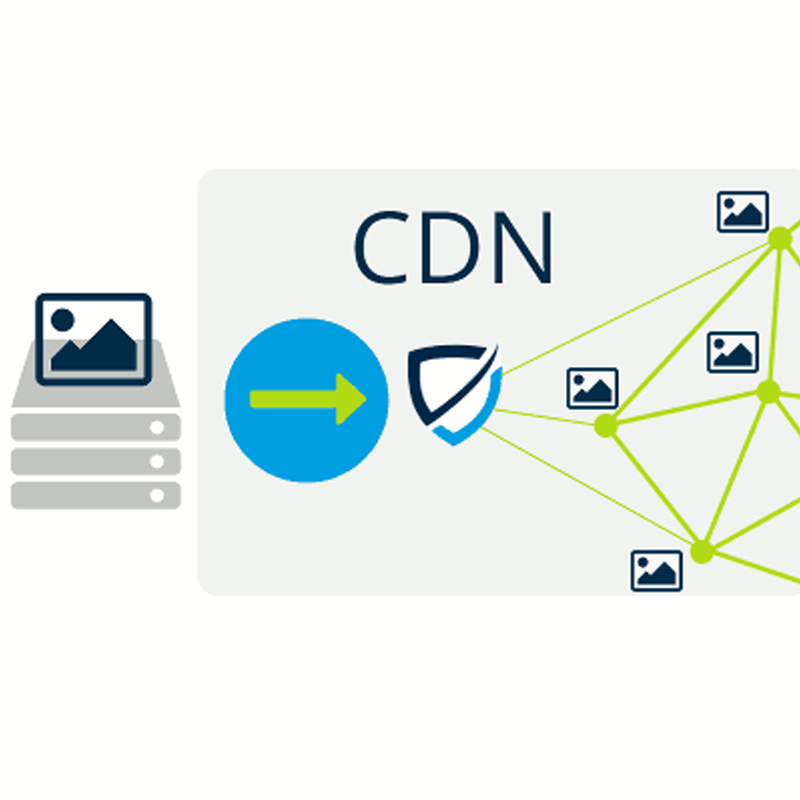
    “CDN players store every media file across their data centre as well as globally-distributed proxy servers. They then transmit this media file in the most ideal format after detecting the user’s device configuration. This is also done through a proxy server that is closest to the user, thereby preventing delays in transmission,” Malik comments explaining the importance of CDN players for seamless content delivery across the country.

    While talking about rural internet consumption, he highlights another important point that the internet experience for urban and rural users differ vastly, resulting in an urban-rural digital divide. “This gap needs to be bridged,” he said.

    “As such, the simultaneous growth of OTT platforms and CDNs have enabled the Indian online content market to expand massively during a short period of time, surmounting these challenges and enabling an optimal consumer experience,” he said.

    Consumer dissatisfaction can lead to more crucial problems like piracy along with increasing churn rate. Addressing common issues like poor video quality and lag, the problem can be countered to some extent. This aspect makes the role of CDNs more significant in the issue of curbing piracy by offering simplified video sharing and streaming video delivery.

    As the CDN market is growing, more players are also seizing opportunities. Akamai is one of the main competitors of Limelight in the video content delivery vertical and website acceleration vertical while the former entered the market early. On the front of cloud origin storage, Amazon’s S3 is the prime competitor of the company.

    Over last few years, India’s technological scenario has got better and better but cybersecurity still now remains one of the major areas of concern. While the tactics, techniques, and procedures (TTPs) of cyber attackers are becoming more advanced as they are beginning to leverage sophisticated technologies, an average user in India is often not even familiar with the most basic cyber attacks.

    “We believe that information regarding cyber attacks, including the simplest of attacks, must be proactively shared to help each other in countering this prevailing cyber threat. There is also a ubiquitous need for a more concerted effort, including infrastructure building by the larger ecosystem to ensure greater digital security of users. From a technological perspective, the geographical distances between servers and users are also an area of opportunity,” he commented on the issue.

  • CDN players work for efficient content delivery experience

    CDN players work for efficient content delivery experience

    MUMBAI: Internet users in India are growing exponentially, riding on the back of cheap smartphones and low-cost data plans. By 2020, there will be 730 million internet users in India. This makes content delivery networks (CDN) crucial and the need to be efficient.

    In India, it’s a good time for CDN players to be in the market. The traffic growth is turning CDN into a necessity. While a major chunk of it is coming from tier III cities, rural areas where traditionally internet connection has not been good, Akamai media country sales manager Sandeep Reddy believes better in-depth optimisation can provide an enhanced experience to users at the fringes.

    “In India, we have been seeing massive growth. It’s poised to grow 30 to 35 per cent year on year. That’s one of the fastest growth you can see in the world,” Limelight Networks country head Gaurav Malik says.

    Several big CDN players provide added services. While some focus on fastest delivery of content, others highly emphasise on security to protect customer data. Along with digital growth, the CDN market also needs to ensure seamless viewer experience. If your content takes more than a few seconds to load, 50 per cent of the traffic is likely to bounce off. The need of the hour is faster delivery.

    Brightcove, a leading technology company in the field, started in 2004, has stuck to a B2B model since inception. Though it is not directly aligned to customers, the company’s obsession lies with end-user experience. Brightcove media head Greg Armshaw emphasises on the importance of fast delivery. Without claiming to be the fastest players, he says that engineers are working to focus on faster video loading and playing.

    Brightcove has its own proprietary software named Context Aware Encoding. “It’s a machine learning process where we examine the content of each frame of the video. We analyse based on past approvals and if we need to save more information about that frame,” says Armshaw.

    While cost of delivery is one of the biggest expenditures, Armshaw assures the company can save between 30-50 per cent of it with quality products. One of the features is to look at every frame, encode them and this allows for savings too.

    Among other CDN players and large competitors, he thinks this is one feature which adds value to Brightcove’s existence in the space. Recently, Young Hollywood reduced its operational cost using this technology. Its over the top (OTT) channel, Young Hollywood TV, realised a 23 per cent saving in storage and a 35 per cent saving in bandwidth.

    Despite the improvement in infrastructure, technological hurdles mar the outcome. One of the challenges, as Malik highlights, is that planned events can be executed better while unforeseen instances like the Ram Rahim row in Punjab can cause hassles. In case of these unplanned events, CDN can face a problem.

    With more OTT apps than ever, content discovery for users can be a challenge. Analytics can be the only way out to provide users with great recommendations by getting constant feedback of users’ experience. 

    Reddy thinks analytics can pave the way for good recommendation by analysing user habit. “Analytics is a growth area for understanding customers and harvesting information about people’s consumption,” Armshaw says.

    “Analytics of data is the core of any business, whether its OTT or not. That gives the visibility on what’s working and what’s not. It tells you how people are reacting and adapting to it so that you can improve, learn and improvise on that. It’s a constant feedback,” Malik adds.

    Reddy also mentions ‘deeper focus on analytics’ as one of the company’s new initiatives. “We have a tool called cloud test which helps to determine and understand user interaction with the site. End user performance monitoring is a big area of focus,” he says.

    CDNs are known to also be targets of piracy such as stealing of live stream and encoding it. However, some players believe streaming is not the primary root of piracy and creating a pay-worthy environment on platforms can curb the problem.

    To lessen the security threat also, CDN companies have various tools. While Limelight Networks uses a private network to manage everything across data centres, Akamai has a platform-based service to protect customers from attacks. The company also tries to provide smarter authentication protocols so that only legitimate users can avail the content.

    Content creators are churning out more to gobble and CDN players are there to provide users with better experience. But today, CDN companies are indulging in more services. The more good content and technology will go hand in hand, more users will be attracted to the digital content.

    Also Read :

    PTC Network embraces Amagi’s cloud technology for broadcast

    Isobar bags digital mandate for LIXIL water technology

    UC Browser Launches India’s first Women-only Mobile News Channel

  • Global OTT may expand at 14.5 per cent CAGR

    Global OTT may expand at 14.5 per cent CAGR

    MUMBAI: Over-the-top (OTT) content is the delivery of audio, video, images, and other media over the internet and bypasses traditional content distribution services. OTT services are mostly related to communication and media and are generally lower in cost than the traditional method of content delivery. OTT content, applications, and services are increasingly being adopted in all segments of commerce and society and are affecting and disrupting traditional industries at a significant pace.

    Consumers use online video instead of traditional television; online communications platforms instead of traditional telephone services; and today are able to download films and music that were once provided only on physical media. Additionally, the process of advertising and searching for services is increasingly moving to these online platforms. This has led to an exponential market growth globally. The global OTT content market is estimated to be valued at US$ 53.2 Bn by the end of 2016 and is expected to register a CAGR of 14.5% during the forecast period (2016–2026).

    Top OTT content market players are developing innovative marketing and distribution channels to enter and rule untapped markets. Some of the top companies operating in the global OTT content market include Akamai Technologies, Amazon.com Inc., Apple Inc., Facebook Inc., Google Inc., IBM, LeEco, Limelight Networks, Microsoft Corporation, and Netflix Inc. Several Indian companies have also entered the OTT content market in a big way. Some of the Indian OTT content market players include Star India Pvt. Ltd., Zee Entertainment Enterprises Ltd., Spuul, Eros International Plc., and Viacom 18 Media Pvt. Ltd, according to a PRNewswire release.

    Penetration of high speed broadband

    Growth in the penetration of high speed broadband, increasing mobile subscriptions and adoption of mobile connected devices, new features and advanced capabilities in smartphones, attractive pricing, and more content options are some of the major drivers fuelling the growth of the global OTT content market. Also, a shift in viewer preferences from the television format to a more customised, anytime, anywhere content viewing format is also boosting the growth of the global OTT content market.

    However this growth is hampered by factors such as online piracy activities, low bandwidth in emerging countries, lack of offline content availability, and technical challenges faced during OTT content delivery.

    Video content

    Video content type segment projected to be the most attractive segment over the forecast period. In terms of revenue, the video segment is anticipated to register a relatively higher CAGR of 15.8% between 2016 and 2026. This growth is attributed to extensive growth of high speed broadband infrastructure in emerging economies and popularity of subscription-based models in developed economies. This segment is expected to register high Y-o-Y growth rates throughout the forecast period.

    TVOD revenue model segment expected to register high Y-o-Y growth rates throughout the forecast period. The TVOD segment is estimated to register a CAGR of 15.8% during the forecast period. The AVOD segment is expected to witness significant revenue growth due to its ease of use; personalized, modern interface; and better viewing experience of AVOD services.

    Smartphones and Tablets

    Smartphones and Tablets device / platform type segment projected to be the most attractive segment over the forecast period. The smartphones and tablets segment accounted for a relatively high market value share in 2015 and this segment is anticipated to remain dominant through 2026. The dominance of the smartphones and tablets segment is attributed to increasing consumer preference towards these devices for availing OTT services such as video and audio streaming, social networking, and texting. The Smart TVs segment is expected to register high Y-o-Y growth rates throughout the forecast period and is anticipated to register a CAGR of 18.7% between 2016 and 2026.

    APEJ and Latin America

    APEJ and Latin America expected to be the fastest growing markets over 2016–2026. The APEJ OTT content market is projected to be the most attractive regional market in the global OTT content market and is anticipated to witness a CAGR of 24.6% over the forecast period. The market in North America accounted for a relatively high value share in 2015.

  • Global OTT may expand at 14.5 per cent CAGR

    Global OTT may expand at 14.5 per cent CAGR

    MUMBAI: Over-the-top (OTT) content is the delivery of audio, video, images, and other media over the internet and bypasses traditional content distribution services. OTT services are mostly related to communication and media and are generally lower in cost than the traditional method of content delivery. OTT content, applications, and services are increasingly being adopted in all segments of commerce and society and are affecting and disrupting traditional industries at a significant pace.

    Consumers use online video instead of traditional television; online communications platforms instead of traditional telephone services; and today are able to download films and music that were once provided only on physical media. Additionally, the process of advertising and searching for services is increasingly moving to these online platforms. This has led to an exponential market growth globally. The global OTT content market is estimated to be valued at US$ 53.2 Bn by the end of 2016 and is expected to register a CAGR of 14.5% during the forecast period (2016–2026).

    Top OTT content market players are developing innovative marketing and distribution channels to enter and rule untapped markets. Some of the top companies operating in the global OTT content market include Akamai Technologies, Amazon.com Inc., Apple Inc., Facebook Inc., Google Inc., IBM, LeEco, Limelight Networks, Microsoft Corporation, and Netflix Inc. Several Indian companies have also entered the OTT content market in a big way. Some of the Indian OTT content market players include Star India Pvt. Ltd., Zee Entertainment Enterprises Ltd., Spuul, Eros International Plc., and Viacom 18 Media Pvt. Ltd, according to a PRNewswire release.

    Penetration of high speed broadband

    Growth in the penetration of high speed broadband, increasing mobile subscriptions and adoption of mobile connected devices, new features and advanced capabilities in smartphones, attractive pricing, and more content options are some of the major drivers fuelling the growth of the global OTT content market. Also, a shift in viewer preferences from the television format to a more customised, anytime, anywhere content viewing format is also boosting the growth of the global OTT content market.

    However this growth is hampered by factors such as online piracy activities, low bandwidth in emerging countries, lack of offline content availability, and technical challenges faced during OTT content delivery.

    Video content

    Video content type segment projected to be the most attractive segment over the forecast period. In terms of revenue, the video segment is anticipated to register a relatively higher CAGR of 15.8% between 2016 and 2026. This growth is attributed to extensive growth of high speed broadband infrastructure in emerging economies and popularity of subscription-based models in developed economies. This segment is expected to register high Y-o-Y growth rates throughout the forecast period.

    TVOD revenue model segment expected to register high Y-o-Y growth rates throughout the forecast period. The TVOD segment is estimated to register a CAGR of 15.8% during the forecast period. The AVOD segment is expected to witness significant revenue growth due to its ease of use; personalized, modern interface; and better viewing experience of AVOD services.

    Smartphones and Tablets

    Smartphones and Tablets device / platform type segment projected to be the most attractive segment over the forecast period. The smartphones and tablets segment accounted for a relatively high market value share in 2015 and this segment is anticipated to remain dominant through 2026. The dominance of the smartphones and tablets segment is attributed to increasing consumer preference towards these devices for availing OTT services such as video and audio streaming, social networking, and texting. The Smart TVs segment is expected to register high Y-o-Y growth rates throughout the forecast period and is anticipated to register a CAGR of 18.7% between 2016 and 2026.

    APEJ and Latin America

    APEJ and Latin America expected to be the fastest growing markets over 2016–2026. The APEJ OTT content market is projected to be the most attractive regional market in the global OTT content market and is anticipated to witness a CAGR of 24.6% over the forecast period. The market in North America accounted for a relatively high value share in 2015.