Tag: licences

  • MIB gives nod to RIL’s Viacom18 to transfer TV channel licences to Disney’s Star India

    MIB gives nod to RIL’s Viacom18 to transfer TV channel licences to Disney’s Star India

    MUMBAI: The creation of a media monolith in India got another tick mark over the weekend.

    Oil to telecom to retail giant the Mukesh Ambani-owned Reliance Industries Ltd and its broadcast subsidiary  TV18  Broadcast Ltd informed the Bombay stock exchange that the ministry of information & broadcasting (MIB) has given its offshoot Viacom18 Media the go-ahead to transfer its non-news and current affairs TV channel licences to the Walt Disney owned Star India.  

    The ministry issued the clearance on 27 September, stating that it is subject to complying of conditions laid down by the Competition Commission of India (CCI). 

    RIL and the mouse house had on 28 February announced that the two giants were “setting up a strategic  joint venture to  bring together the most compelling and engaging brands in India.”

    The transaction had valued the joint venture at Rs 70,352 crore, with RIL pumping  Rs 11,500 crore into it.

    The two had also agreed to merge Viacom 18 Media’s assets with Star India with the  transfer and vesting of the Media Operations Undertaking from Viacom 18 and Jio Cinema into Digital 18, a subsidiary of Viacom 18.

    RIL owns a clutch of channels including the Colors and Sports 18 brands through  Viacom18 as well as the OTT platform JioCinema whereas Star operates market leader Star Plus, several regional language channels  and the OTT service Hotstar. 

    Under the finalised deal, RIL and its affiliates will hold a 63.16 per cent  stake in the newly formed entity, which will manage two streaming services and 120 television channels. The Walt Disney Company will retain the remaining 36.84 per cent stake.

    Permissions for the initiative got the CCI green signal, subject to certain conditions, on 28 August, while the Mumbai bench of the National Company Law Tribunal (NCLT) gave its clearance on 30 August for the two to merge, subject to clearance for the transfer of licences by the MIB.

    Post the merger, RIL director Nita Ambani will be appointed as the chair person of the new entity with Uday Shankar being  the vice-chairman. 

  • MIB issued licence to ZMCL; Leader, Turner and Zee ME among five cancelled last month, nine allowed as per court orders

    MIB issued licence to ZMCL; Leader, Turner and Zee ME among five cancelled last month, nine allowed as per court orders

    MUMBAI: In all, the number of private satellite TV channels having valid permission in India as of 30 September, 2017, are 877. Of these, the number of permitted news and current affairs channels is 388, according to data provided by the ministry of information and broadcasting (MIB).

    In fact, the total number of permissions granted to private satellite TV channels so far is 1098, of which 221 permissions have been cancelled so far.

    Last month, MIB issued one and cancelled five licences. The solitary permission granted was to Zee Media Corporation Ltd (ZMCL), to launch Zee Uttar Pradesh Uttarakhand.

    The channels licences of which were revoked are — Leader Television and Entertainment’s Leader TV, L And C Media’s SS Entertainment, Turner International India’s TCM Turner Classic Movies, Vyjayanthi Televentures’ Mayabazar and Zee Cinema Middle East.

    Of the 877 channels, nine have been cancelled by the MIB but are running following orders from the courts of law. These are —

    1. Punjab Today

    2. STV    Jammu-Kashmir News
    (Earlier STV – Marathi News)

    3. STV Haryana News

    4. STV    UP    News (STV-Rajasthan)
    (Earlier STV    Bihar-Jharkhand News)

    5. Mahuaa Media Private News
    Uplinking    03-03-2016*

    6. Mahuaa News
    Mahuaa Media Private Limited
    News
    Uplinking    03-03-2016*

    7. First    India    (earlier, Mahuaa Khobor)
    Mahuaa Media Private Limited
    News
    Uplinking    03-03-2016*

    8. Mahua  Music  (Mahuaa  News  Line)
    (Uttar Pradesh /Uttrakhand)
    [earlier Mahuaa Bangla]    
    Mahua Media Private Limited
    Non-news
    Uplinking    03-03-2016*

    9. Mahuaa Movies
    Mahuaa Media Private Limited
    Non-news     
    Uplinking    03-03-2016*

    The total number of TV channels permitted for uplinking from India, and downlinking into India is 778, of which 368 are new channels, and the remainder is the number of non-news channels.

    The number of TV channels permitted for uplinking from India but not permitted to downlink in India is 16, of which five are news channels. And, the number of TV channels permitted to only downlink into India (uplinked from aboard) is 83, of which 15 are news channels.

    click here to view list

  • FremantleMedia licenses new game show format to Paraguay & Egypt b’casters

    FremantleMedia licenses new game show format to Paraguay & Egypt b’casters

    MUMBAI: FremantleMedia’s brand new family friendly game show format Cash or Splash has launched in Cannes with two international versions of the show already under its belt: the first to Paraguay’s Telefuturo and the second to Egypt’s MBC Masr. 


    An amalgamation of the hit Fuji TV formats Clock HangerBoxing Glove, and Run Quiz Run, the format sees teams of contestants compete for cash prizes by answering questions and completing hilarious physical challenges in order to avoid being sent for a plunge into an icy pool of water.


    The news reflects an increasing appetite for game and studio shows that have a strong comedic element, and follows recent international successes for other FremantleMedia titles like Thank God You’re HereThrough the Keyhole and Total Blackout. The trend suggests that laughter may not just be good for the soul, but good for the format business too.


    Thank God You’re Here, which tests celebrities improvisational skills by throwing them into an unknown situation which they must ad-lib their way through, aired for the first time in Turkey (TRT), Vietnam (VTV3) and Finland (MTV3), where the show became an instant hit rating number one in its timeslot among 15-24s and +97 per cent above the slot average for the same age group.


    Through the Keyhole, which sees the show’s host let loose to rummage around three mystery celebrity houses giving comic clues to an all-star panel who then has to guess which famous face lives there, launched as the UK’s highest rated new entertainment show among adults 16-34 in 2013. The Belgian version’s first run on VTM earlier this year, established a similar record as it became Belgium’s highest rated entertainment launch of the past 12 months.


    Total Black Out, already in 17 territories worldwide, extended its international footprint to two further markets in the few months; Brazil (Bandeirantes) and France (W9). In France the show, in which six people struggle over a series of knock-out rounds to compete to survive outrageous challenges in complete darkness, outperformed the broadcaster across all key demographics (including the lucrative 15-34 year old demo, where it performed +86 per cent above average).


    Even long-established formats such as Family Feud are benefitting from the trend. In the US, where the show has been running since 1976, the series, which is now fronted by comedian Steve Harvey, reached a new high in January 2015, attaining an average Household rating of 7.2 – the show’s highest performance for over 20 years. In Australia, it regularly ranks as the No.1 show in its time slot for young adults and in the UK S11 launched to an audience of 5.4 million viewers outperforming the S10 launch by +37 per cent.


    “Laughter is a global currency and the fact that these shows all extended their global footprint and performed so well in these new markets is proof that comedy in a Gameshow or Studio show is a winning formula, no matter where in the world they go. While these shows have always been about fun, today’s clever casting and scripting, which aims to maximize comedic value while still staying true to the principals of the core show, are attracting new viewers, particularly in the sought-after younger demo. That’s got to be great news for broadcasters,” said FremantleMedia director of global production Chris O’Dell.

  • Times TV Network to launch another entertainment channel?

    Times TV Network to launch another entertainment channel?

    MUMBAI: Thanks to the new government, the Times Television Network has reasons to rejoice.

    The network had applied for a number of channel licences to the Information & Broadcasting Ministry which included for both entertainment and news channels.

    “Thanks to the quickness of the current government, we have got the three news licences, which were old applications,” says the network managing director and CEO MK Anand while adding that a number of licences are still pending.

    The three news channel licences are for Times Now 2, Times Now 3 and ET Now 3.

    The network currently has Times Now, ET Now, Zoom TV, Movies Now and Romedy Now channels in its kitty.

    Anand goes on to say that though the new licences have been awarded, the current plan will go on as it is. “These licences don’t impact our current strategy or my plans for the network.”

    After the Telecom Regulatory Authority of India (TRAI) came out with its deaggregation paper, a number of networks have applied for new licences while some have even launched a new set of channels.

    The year also saw the launch of three new Hindi entertainment channels – Zindagi, Sony Pal and Epic. TTN is the only network which doesn’t have a Hindi general entertainment channel to its list.  And with a few entertainment licenses applied by TTN pending with the MIB, one can see possibilities of a new GEC entrant in the market.


  • TRAI to finalise views on AGR in four to five weeks

    TRAI to finalise views on AGR in four to five weeks

    NEW DELHI: The Telecom Regulatory Authority of India (TRAI) has sought a time of three to four weeks for finalising its views on the definition of Revenue Base (AGR) for the Reckoning of Licence Fee and Spectrum Usage Charges.


    TRAI Chairman Rahul Khullar said in an Open House Discussion (OHD) on the subject that the regulator had issued a consultation paper in July-end at its own insistence since the matter was important. Most of the stakeholders present felt that AGR should not apply to those stakeholders who do not need to apply for licences to operate.


    The OHD was attended largely by telecom players and internet service providers. From the TRAI, member Vijayalakshmi Gupta and principal advisor N Parameshwaram were present.  


    The paper had been issued following a multitude of cases by both telecom and broadcast operators to review the definition of Gross Revenue (GR) and the permissible deductions to arrive at Adjusted Gross Revenue (AGR) in the context of the National Telecom Policy 2012.


    It was also aimed at examining the components of GR, AGR and minimum presumptive AGR, rates of licence fee and spectrum usage charges, formats of statements of revenue and licence fee and audit and verifiability of revenue and licence fee.


    The paper on Definition of Revenue Base (AGR) for the Reckoning of Licence Fee and Spectrum Usage Charges will also examine the changes made in the licensing regime, the transition from the administrative allocation regime towards market-determined prices for spectrum, and the conclusion of tenure of many licences. The paper provides the relevant background information on the subject covering various issues involved.


    On the definition of AGR specifically, the authority had in 2012 recommended that only the revenue from the wireless services shall count towards AGR calculation for the limited purpose of calculation of Spectrum Usage Charges (SUC) that would continue to be determined on service area basis, and should be levied only in respect of those service areas where the licensee holds any access spectrum.


    TRAI wanted to know whether there is a need to review/revise the definition of GR and AGR in the different licences at this stage; the guiding principles for designing the framework of the revenue sharing regime; and whether the rate of licence fee (LF) be reviewed instead of changing the definitions of GR and AGR, especially with regard to the component of USO levy in the interest of simplicity, verifiability, and ease of administration.


    The paper also wanted to know whether the revenue base for levy of licence fee and spectrum usage charges include the entire income of the licensee or only income accruing from licenced activities if the definitions are to be reviewed/revised.


    It has asked whether LF be levied as a percentage of GR in place of AGR in the interest of simplicity and ease of application, and should the revenue base for calculating LF and SUC include ‘other operating revenue’ and ‘other income’.


    The government prepared a draft licence agreement for International Long Distance (ILD) services in September 2000 containing a provision that LF was payable as a percentage of revenue. For the Public Mobile Radio Trunk Service (PMRTS) too, the revenue share regime was made applicable from 1 November 2001.


    The definition of AGR has been litigated since 2003. TSPs questioned the inclusion of various components of revenue in the reckoning of AGR as well as the legality of the definition before TDSAT. In 2006, TDSAT, after noting that revenue from non-licensed activities needed to be excluded from the reckonable revenue, asked TRAI to make recommendations on the inclusion or exclusion of the disputed items in the AGR. TRAI made its recommendations on September 13, 2006 and the Tribunal gave its final order in the matter on August 30, 2007 after accepting most (but modifying some) of TRAI’s recommendations.


    In the course of finalising the recommendations of the authority on the reference from TDSAT, the views of DoT were obtained by the authority through its representative and incorporated in the “Recommendations on components of Adjusted Gross Revenue” dated 13 September  2006. The authority was informed that the basic rationale adopted by the government while formulating the definition of AGR was that it should be easy to interpret – so as to pose fewer problems in application and less disputes and litigations, and to make it less prone to reduction in LF liability by way of accounting jugglery; and it should be easy to verify.


    The TDSAT’s judgment of 30 August 2007 was taken in appeal by DoT to the Supreme Court and was set aside by its judgment on 11 October 2011 on the grounds, among others, that TDSAT had no jurisdiction to decide the validity of the terms and conditions of the licence including the definition of AGR incorporated in the licence agreement. It was for DoT – and not TRAI and TDSAT – to take a final decision on the definition of AGR. The Supreme Court also held that a licensee can raise a dispute about the computation of AGR relating to a particular demand and that TDSAT can then examine whether the demand was in accordance with the licence agreement and the definition of AGR.


    The judgment of the Supreme Court settled important points of law and has clarified the nature of the contractual relationship between the Government as licensor and the TSPs. The judgment also laid down the parameters of institutional responsibility in arriving at the contractual terms and conditions.


    Litigation regarding the computation of LF continues before the TDSAT in the case of individual demands made on TSPs. It has also been reported that writ petitions re-agitating the revenue share definition have been filed by TSPs in different High Courts. 

  • DAS deadline extended to December 2015

    DAS deadline extended to December 2015

    NEW DELHI: The deadline for the digitisation of cable television systems in the entire country has been put off to December 2015.


    While Phase I of digital addressable system (DAS) came into effect in March last year and Phase II later in the year, the entire process was supposed to be completed by December this year.


    Information & Broadcasting Ministry secretary Bimal Julka speaking exclusively to  indiantelevision.com said that the government had decided to delay the digitisation deadline by a full year in order to give all those involved enough opportunity to overcome all the unseen hurdles that had come up after the UPA government mandated  DAS and the various analogue sunset dates.


    He said that the previous UPA  government had failed to complete all the required work with regard to regulations, licences, permissions etc and so the current NDA government’s  I&B Minister Prakash Javadekar – after consulting all the stakeholders – has decided to put off the final date by one year.


    Julka was confident that digitisation would be completed  well before the end of 2015, but said the new last date had been set keeping in mind the various issues that need resolution.


    Earlier, the Ministry had said Phase III covering all urban areas (Municipal Corporations/Municipalities) would be digitised by 30 September 2014 and Phase IV covering the rest of India would be digitised by 31 December 2014.


    The DAS process had led to several problems including court cases in various parts of the country. In the first phase for the four metros, Chennai could not be covered because of a stay by the Madras High Court. The second phase covered 38 cities with populations of more than one million. However, reports say that analogue systems are still working not only in the metros but also in these cities.


    Furthermore, cable operators feel that the set top boxes being imported are of inferior quality with very few facilities for servicing. The MSOs went to the Telecom Disputes Settlement & Appellate Tribunal (TDSAT) challenging the ratio of profit sharing between the various stakeholders. And TDSAT has been flooded with litigation involving broadcasters, MSOs, LCOs and DTH operators over the past year and a half – coinciding with the government’s thrusting digitisation down the throats of those involved in India’s relatively unorganised cable TV ecosystem. 


    Julka said that all these issues had been taken into consideration before taking the decision to put off DAS by a year.

  • M&E industry to meet I&B Minister next week

    M&E industry to meet I&B Minister next week

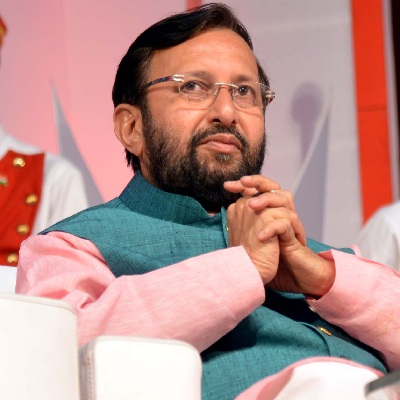
    MUMBAI: After the mammoth election, the new BJP-led NDA government took charge on 26 May and since then, the new Information & Broadcasting Minister, Prakash Javadekar, has been a busy man. From attending press conferences and ceremonies to meeting the various stakeholders, he has been on the move since he took the oath.


    The Minister has been vocal about his thoughts on what he expects from the industry and what needs to be done. On day one itself, he had announced his commitment towards freedom of press and there is no intention of regulating the media. This has given new hopes to the media industry which is currently caught-up in policy hurdles, implementation delays and controversies.


    As per industry sources, the Minister will be meeting the various associations of the Media & Entertainment industry together early next week.


    Though the dates aren’t clear yet and so is the agenda, but the various sources have hinted upon the following topics which will be discussed over the table.


    Digitisation – With the phase I & II over and III & IV in the pipeline, it will be one of the hot topic. The Minister, couple of days back had said that in a step to boost employment and small-scale industry, efforts will be made to encourage indigenisation of set-top boxes. The stakeholders could also discuss carriage fees, opportunities in the DTH and how digitisation can help broadcasters.


    Licences – More the merrier has been the slogan for large media houses. With more and more channels being launched by networks, many pending licence files have been gathering dust in the numerous Ministry offices.


    FDI – The Ministry is already looking for inputs from various stakeholders on whether to allow 100 per cent FDI in News media. Currently, the FDI allowed is up to 26 per cent in news and current affairs media, while 100 per cent is allowed in non-news media like trade publications and entertainment channels.


    Way forward – The industry has been in a limbo for a long say highly placed industry sources who are betting that the new Minister will be able to hurry up things and set a positive tone for the coming years.


    “The meeting is all about the big picture. Everyone has been wanting to meet the new Minister and discuss the grievances and hurdles they face,” says a source who believes a little pep talk and a push is needed to take things in a positive trend.


    Agreeing, another industry source adds, “Everyone will come with their own wish list in a hope to get things to work in their benefit and economically do better than what it has been doing so far.”


    One thing is clear that in the meeting set to be held early next week, the new I&B Minister will have his platter full, with M&E industry handing him a checklist.

  • Merger and Acquisition Policy for Telecom by mid-October: Sibal

    Merger and Acquisition Policy for Telecom by mid-October: Sibal

    NEW DELHI: The government hopes to announce its merger and acquisition policy for telecom companies by mid-October.

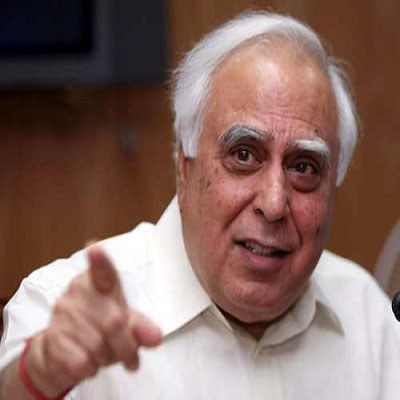
    Communications and Information Technology Minister Kapil Sibal said he had wanted them to in place by the middle of September but this had not been possible.

    Speaking at the Indian Women’s Press Corps, he said the Department of Telecom has plans to meet industry representatives before releasing the final guidelines.

    Meanwhile, Sibal said his top priority was to get Post Banks started in rural area. “Something that is very close to my heart is to get post bank in place for rural India. All post offices should also function as banks. I think we will be able to serve the rural economy and rural folk much better,” Sibal said.

    The Department of Posts has applied for a banking licence. The approval of banking licence by the Reserve bank of India is expected to triple bank branches in the country.

    The Minister wants to ensure that the “next auction is not just successful but phenomenally successful”.

    For the financial year 2013-14, government expects revenue of Rs 40,847.05 crore from other communication services, which include receipt from spectrum sale and one-time spectrum fee levied on old players for holding airwaves frequencies in addition to quantum they were allocated with licences.

    Sibal said that his ministry is working on a policy framework for Optical Fibre Network under which 250,000 village panchayats in the country will get connected by 2014. He wants to move the fibre optics policy framework as quickly as possible so that 600 universities and 3,500 colleges can also be connected with dedicated national knowledge network.

  • FM radio players protest WorldSpace terrestrial foray

    FM radio players protest WorldSpace terrestrial foray

    NEW DELHI: It is not only the television broadcasters that are grappling with the issue of distribution and competition. Private radio broadcasters too have started sampling irritants in this regard.

    The private sector FM radio players has complained against satellite radio provider WorldSpace’s attempt to get certain licences that would help it distribute the services terrestrially also.

    According to information available with Indiantelevision.com, WorldSpace, India’s only satellite radio service, is trying to get a license for L-band terrestrial repeater from the information and broadcasting ministry, which, if obtained, will help it to transmit its services on moving vehicles terrestrially — the primary target audience of FM radio.

    “Repeaters are basically targeted at subscribers-on-move like in a car, etc. A satellite radio cannot enter into terrestrial segment by any means,” a letter to the government from the Association of radio Operators in India (AROI) states.

    Raising the emotional quotient, AROI seems to be appealing to the conscience of the government by saying, “We fail to understand why the Government of India is working on the WorldSpace application even when a proper guideline on satellite radio in India is still not available.”

    The letter goes on to add that considering FM radio in India is in a nascent stage and the FM radio broadcasters have paid “an exorbitant OTEF (one-time entry fee)”. the government should “protect FM radio industry for at least next 10 years.”

    “Before even waiting for the commissioning of the new stations, the ministry is already making plans to welcome new players into the terrestrial radio arena, directly threatening the existence of the FM Radio licensees. This is not acceptable at all,” the high-pitched AROI letter states.

    The AROI letter has been marked to prime minister Manmohan Singh, Congress chief Sonia Gandhi, defence minister Pranab Mukharjee, home minister Shivraj Patil and telecommunication minister Dayanidhi Maran and I&B ministry secretary SK Arora.

    The move of AROI comes at a time when the government is working on putting in place a policy for satellite radio services, including caps on foreign investments, which would force the likes of WordSpace to restructure themselves and find majority Indian partners.

    The AROI letter is also likely to put pressure on the government to bring about stringent regulations relating to satellite radio services. The Sector regulator has already submitted a set of recommendations to the I&B ministry.