Tag: LIC

  • TAM report: LIC of India ascended to second position in Jul-Sept’23

    TAM report: LIC of India ascended to second position in Jul-Sept’23

    Mumbai: TAM AdEx India has released a quarterly advertising report on radio for Jul-Sept’23.

    Ad volumes during Apr-Jun’23 and Jul-Sept’23 have witnessed growth of four per cent and six per cent respectively compared to Jan-Mar’23. Also, Jul-Sept’23 observed growth in ad volumes by seven per cent on radio advertising compared to Jul-Sept’22.

    The services sector retained its first position with 34 per cent share of ad volumes during Jul-Sept’23 over Apr-Jun’23 on radio advertising. The top 10 sectors collectively added 89 per cent share of ad volumes in Jul-Sept’23. The education sector descended to sixth position with six per cent share of ad volumes compared to second position in Apr-Jun’23.

    Properties/real estates and hospital/clinics retained their first and second positions during Jul-Sept’23 over Apr-Jun’23 on radio advertising. Life insurance and ret cars were new entrants in the top 10 list of categories in Jul-Sept’23 compared to Apr-Jun’23. The top 10 categories together accounted for 53 per cent share of ad volumes on radio advertising during Jul-Sept’23.

    During Jul-Sept’23, the top 10 advertisers together covered 15 per cent share of ad volumes on radio advertising. LIC of India ascended to second position in Jul-Sept’23 compared to its sixth position in Apr-Jun’23. Union Bank of India, Patanjali Ayurved and Tata Motors entered the top 10 list of advertisers in Jul-Sept’23 over Apr-Jun’23. 2.9k plus exclusive advertisers were present during Jul-Sept’23 compared to Apr-Jun’23.

    Kedia Sezasthan and Vimal Pan Masala retained their first and second positions in Jul-Sept’23 over Apr-Jun’23 on radio advertising. Out of the top 10 brands present in Jul-Sept’23, two of them belonged to Life Insurance Corporation of India. Magics Hair Care was an exclusive brand that entered the top 10 brand list and secured seventh position in Jul-Sept’23 over Apr-Jun’23.

    Properties/real estates among categories witnessed highest increase in Ad secondages with growth of 25 per cent followed by cars with 55 per cent growth during Jul-Sept’23 compared to Apr-Jun’23. In terms of growth percentage, computer printers category witnessed the highest growth percentage among the top 10, i.e. 180 times in Jul-Sept’23.

    Compared to Apr-Jun’23, Gujarat and Maharashtra retained their first and second positions with 20 per cent and 17 per cent share of ad volumes respectively in Jul-Sept’23. Top five states together contributed 67 per cent share of ad volumes in Jul-Sept’23. Jaipur retained its first position with 11 per cent share of ad volumes in Jul-Sept’23 compared to Apr-Jun’23. Also, the top 10 cities together covered 70 per cent share of ad volumes in Jul-Sept’23.

    The evening was the most preferred time band on radio followed by morning and afternoon time bands on radio advertising. Evening & morning time bands together added 69 per cent share of ad volumes.

    Ad commercials with 20-40 seconds was most preferred for advertising on radio during both the periods Jul-Sept’23 & Jul-Sept’22. Together, 20-40 seconds and <20 seconds ad size added 94 per cent share of ad volumes on radio advertising.

  • TAM report: LIC was the leading brand during Jan-Jun’23

    TAM report: LIC was the leading brand during Jan-Jun’23

    Mumbai: TAM India has released a half-yearly report for advertising in Banking Finance Investments(BFSI).

    Ad volumes’ trend for BFSI on TV:

    The BFSI sector’s ad volumes on television increased by four per cent during Jan-Jun’23 compared to Jan-Jun’22.

    The top 10 categories together accounted for 85 per cent share of ad volumes in TV during Jan-Jun’23. Life insurance & mortgage loans retained their first & second positions in Jan-Jun’23 over Jan-Jun’22. Housing/construction loans, multiple loans & retail banking were the new entrants in the top ten list of categories in Jan-Jun’23

    compared to Jan-Jun’22. During Jan-Jun’23, the top ten advertisers accounted for 58 per cent of total ad volumes. LIC of India & Muthoot Financial Enterprises retained their first & second positions during H1’23 over H1’22. Piramal Capital & Housing Finance was an exclusive advertiser with five per cent share of ad volume in H1’23 over H1’22.

    Top 10 brands accounted for 42 per cent share of ad volumes in H1’23 over H1’22

    with Muthoot Finance Loan against gold leading the list. LIC New Pension Plus & Piramal Finance Home Loan were exclusive brands during Jan-Jun’23 over Jan-Jun’22.

    The top two TV channel genres accounted for 82 per cent of ad volumes share for BFSI sector during H1’23. The news channel genre was most preferred by BFSI players in Jan-Jun’23.

    News bulletin was the most preferred program genre to promote brands in the BFSI sector on television. The top two program genres i.e. news bulletin and feature films together added 61 per cent of the sector’s ad volumes.

    Prime time garnered the highest advertising on TV followed by afternoon and morning time bands. In terms of ad volumes, the prime time, afternoon, and morning time bands collectively accounted for 73 per cent share.

    Advertisers of the BFSI sector preferred 20 – 40 sec ad size on TV during H1’23. 20-40 seconds and less than 20 seconds ads together covered 92 per cent share.

    Ad space for BFSI sector in Print:

    Ad space of the BFSI sector witnessed a degrowth of seven per cent in Jan-Jun’23 compared to Jan-Jun’22.

    Public issues & life insurance retained their first and second positions in H1’23 over H1’22 with public issues leading the list. Fixed deposits & retail banking were the only new entrants in the top 10 list of categories during H1’23 over H1’22. During H1’23, the top 10 categories together added 88 per cent share of ad space. LIC of India retained its first position in Jan-Jun’23 with 19 per cent share of ad space. Adani Enterprises was an exclusive advertiser during Jan-Jun’23 with two per cent share of ad space. In print medium, the top 10 advertisers of the BFSI sector together added 38 per cent share of ad space in Jan-Jun’23.

    Out of the top 10 brands, five of them belonged to LIC of India in H1’23.

    The top 10 brands accounted for 25 per cent share of the total ad space in print.

    LIC Dhan Varsha, Adani Enterprise-IPO, HDFC Systematic Investment

    Plan & LIC New Pension Plus were exclusive brands present in Jan-Jun’23

    over Jan-Jun’22.

    The English language has the highest share of ad space, i.e., 51 per cent. The top five publication languages together added 88 per cent share of the sector’s ad space. General interest dominates ad space in general newspaper with 59 per cent.

    South zone was the leading territory with 34 per cent share of BFSI advertising in Print in Jan-Jun’23. Mumbai & New Delhi were the top cities in the West zone and North zone respectively. Also, they were the top two cities in PAN India during H1’23.

    Ad volumes’ trend for BFSI sector on radio:

    Index ad volume growth of BFSI sector witnessed surge of 32 per cent during Jan-Jun’23 compared to Jan-Jun’22.

    Life Insurance dominated the category list with 28 per cent of the total BFSI ad volumes. The top 10 categories added 91 per cent ad volume share of the sector on radio. The top four brands retained their respective positions in Jan-Jun’23 compared to Jan-Jun’22. The top 10 advertisers added 81 per cent share of ad volumes during H1’23, among which LIC of India was the leading advertiser. AMFI was an exclusive advertiser during Jan-Jun’23 compared to Jan-Jun’22.

    Top 10 brands accounted for 58 per cent share of ad volumes in Jan-Jun’23, in which LIC Housing Finance retained its first position. Five out of the top 10 brands belonged to LIC of India during H1’23. LIC Dhan Varsha, LIC Pension Plus & AMFI were exclusive brands present in the top 10 list in H1’23 over H1’22.

    The top three states occupied 47 per cent share of ad volumes for the BFSI sector. Maharashtra was the leading state for advertising on radio with 20 per cent share of the sector’s ad volumes in Jan-Jun’23.

    Advertising for BFSI was preferred in the evening closely followed by morning timeband on radio. 87 per cent share of the BFSI ad volumes were in evening and morning time-bands in Jan-Jun’23.

    Ad impressions trend for BFSI sector on digital:

    On Digital medium, ad impressions observed a massive surge of 91 per cent

    during the H1’23 compared to H1’22.

    Mutual Funds ascended to first position with 18 per cent share of ad impressions in H1’23. Also, the top 10 categories together accounted for 92 per cent share of ad impressions. Credit cards and retail banking were the new entrants in the top 10 list of categories during Jan-Jun’23. The top 10 advertisers collectively added 47 per cent share of ad impressions during H1’23 with AMFI leading the list of advertisers.

    Top 10 brands accounted for 41 per cent share of ad impressions in Jan-Jun’23.

    AMFI retained its first position with 11 per cent share of ad impressions in H1’23

    over H1’22.

    Programmatic was the leading transaction method for digital advertising of the BFSI sector in Jan-Jun’23 with 61 per cent share. Programmatic and programmatic/ad network transaction methods together captured 80 per cent share of BFSI ad impressions on digital.

  • BC Patnaik takes charge as MD of LIC

    BC Patnaik takes charge as MD of LIC

    Mumbai: Life Insurance Corp (LIC) of India on Friday elevated BC Patnaik to the rank of managing director. He was appointed as managing director vide government of India notification on 5 July, LIC said in a statement.

    Patnaik joined LIC of India in March 1986 as a direct recruit officer. In a career span of over three decades in the organisation, Patnaik has occupied important positions and made his mark in the areas of marketing, new business, personnel, pension and group savings, and customer relationship management. 

    He has served as regional manager (marketing), western zonal office covering states of Maharashtra, Gujarat, and Goa. He also worked as regional manager (CRM), North Central zone and regional manager (Bancassurance) in the Eastern zone. He was senior divisional manager in charge of the Jamshedpur and Berhampur divisions of LIC of India.

    Prior to this role, Patnaik was Council for Insurance Ombudsmen (CIO) Mumbai’s secretary-general. Before joining CIO, he was director at Zonal Training Centre, North Central Zone, Agra.

  • The LIC of India launches its new digital campaign, goes offline to promote the same

    The LIC of India launches its new digital campaign, goes offline to promote the same

    MUMBAI: The LIC of India which recently launched a new digital campaign to promote the importance of life insurance in different phases of life, has taken the campaign offline to reach out and engage with the audience, bringing in a personal touch. The campaign called – Smart logon ki clear hai priority, baaki sab baadmein, Pehle LIC, showcases the importance of having a life insurance to live one’s dream.

    It shows that ups and downs are a part of life and it is significant and essential to have life insurance. Having life insurance helps one fulfill their dreams like owning a start-up, buying a house, going abroad for further studies or even planning a nice holiday.

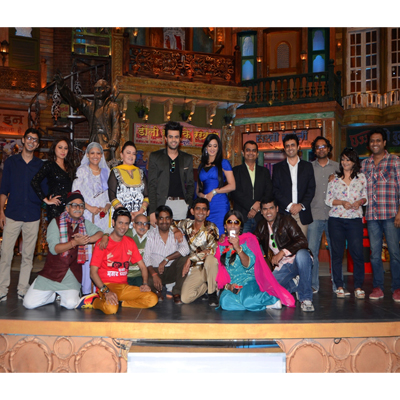
    To reach out to maximum audience and to celebrate with them, the brand conducted a flash mob in association with Screenox Media at a mall in Mumbai, to encourage the youth of today to prioritize life insurance for themselves and their families. The flash mob saw the young boys and girls dance to the signature steps of the jingle, thus creating a strong brand connect. The flash mob has been beautifully aligned with Valentine’s Day celebration, and dancers were seen holding a Love note saying “On this Valentine’s Day, gift your loved ones “Jeevan bhar ka saath”. 

    Rhythm and beats are the best way to get the message across to youth and with this step LIC wants that youth should appreciate the importance of life insurance early in their life. 

    Speaking on the same, LIC corporate communications executive director K. Rajivan Nair said, “Today’s young generation loves to stay in motion all the time, they want to pursue their passions and hobbies at 100 per cent. We want to be together with them in their journey of achievement and advancement with our robust offerings. To build a stronger connect with the youth, we are continuously taking new initiates, and this flash mob is an extension of our Digital, Radio and TV campaign. We are glad to see it being received so well. We are sure, we will be able to help the youth of today understand the importance of taking life insurance via our various initiatives.”

  • Straddling the extremes of broadcasting & pointcasting: The coming of age of OOH

    Straddling the extremes of broadcasting & pointcasting: The coming of age of OOH

    It is indeed no more a conjecture that digital is on a growth path and despite it blooming to a large extent in 2015, it has a long way to go! 

    Nevertheless, in the process of its bloom, digital media has pushed media-fragmentation to a new limit of ‘singlecasting,’ arguably completing media fragmentation that travelled from broadcasting to narrowcasting to singlecasting. Yes, mobile is almost a personal media device – to each, her own. 

    The story however does not end here and the media fragmentation has been pushed a tad more by OOH wherein the ‘singlecasting’ – transmission of marketing messages to one person has further been fragmented into ‘Pointcasting’ that is, transmission of marketing messages to a ‘persona’ rather than a person. 

    Persona (Pl. – ‘personae’) is defined as the ‘psychological dimension’ of a person, which in turn is defined as a ‘biological being.’ Because man has emotions and these emotions vary according to time, place and state of mind, which exactly are the elements of the ‘media aperture’, OOH media thin-slices a ‘person’ into personae and creates more adequate situation for message reception and retention.

    There is a new awakening on the exact opposite side of the above argument. Whereas OOH media is capable of pushing the fragmentation further than what digital could achieve, it is dawning on all the professionals that OOH has also emerged as ‘the only broadcast media’ capable of delivering undifferentiated audience as all other media have lost their capacity to deliver the undifferentiated audience because of the increasing complexity of their content and distribution. 

    OOH has no content and has no inherent ‘editorial or content environment’ to provide context to marketing messages. It derives the context from the emotional state of the audience and from her exact psychographic state. The media is always ‘on’ and the message is disseminated indiscriminately to anyone who pays it a fleeting glance! The distinction however, lies in the way the message is received, interpreted and retained. And this totally depends on the prevailing psychographic stage of the person, the role she is playing – of a parent or of a spouse or of an executive or whatsoever. OOH media derives its context from ‘life’.

    It is logical that last year was a great revival year in many senses as we had first begun going beyond 2008 levels. The year didn’t have many remarkable events like the general elections but a lot of things were happening. The industry revenue grew by over 18 per cent in 2015 over that of 2014. The year saw e-commerce blooming to a new high with some very high profile launches like Housing.com. 

    The industry also witnessed a reversing trend in terms of the duration of the OOH campaigns. The years before had witnessed the shrinking of campaign periods and most of the campaigns were 10 – 15 days. There were very few three months or six months campaigns, albeit annual sites remaining in fashion. Last year, we saw emergence of Apple, which brought in long term OOH campaigns and showed that OOH media works surely and every week of exposure results into ‘real volume offtake.’ Maruti Suzuki also resorted to long term campaigns and built brand Nexa from concept to a premium destination. Its galloping success with Baleno and its beating the reigning category leader i20 from Hyundai, a part of the advertising and marketing folklore in recent times. The year’s other notable contributors have been mobile phone brands and government. The categories that remained quite subdued are consumer durable, telecom services, ISPs and real estate. 

    Whole of India contributed to the growth of OOH media revenues but almost 60 per cent of spends still remains directed towards top six cities namely Mumbai, Delhi, Bengaluru, Hyderabad, Kolkata and Chennai. When we get into the next level of detailing we see that in terms of media formats that are the recipients of this revenue, billboards still rule the roost. Their share however has declined from 75 per cent three years back to about 60 per cent now. The media formats that have emerged as clear ‘growth formats’ are ambient and transit. The new metro lines, new malls, corporate parks and world-class airports have given a new boost to OOH advertising. It is no surprise that Airport, transit and ambient together account for 26 per cent of revenue share and this segment is posting steady growth. 

    The growth story was scripted by advertisers from across categories like e-commerce, retail, automobile, mobile handsets, education, consumer banking and media except cinema advertising. The top ten OOH advertisers last year were Airtel, Cadbury, Honda, Housing.com, Hyundai, LIC, Maruti Suzuki, SBI, Samsung and Quikr, not necessarily in that order. 

    I am not a big votary of ‘innovation’ in OOH media segment as OOH advertising is subtle advertising and it must ‘occur’ to the audience. I say this because OOH media is not a ‘conscious and committed consumption.’ It is consumed sub-consciously and almost always in a non-committed mode because the audience consumes this media only when it is ‘out-of-home in order to participate in life’ and as such its principal focus, attention and commitment is elsewhere. OOH media receives ‘fleeting attention’ but in the regime of CPA or ‘Continuous Partial Attention’ where no one is investing complete attention in anything or any medium, this has emerged as a distinctive strength of OOH media. Very loud innovations, demand conscious investment of attention, which is contrary to the inherent strength of this medium. 

    The year however saw some offbeat work where people tried to bring in some elements of surprise, which not only generated some interest but also lots of publicity. Maruti Baleno, LED lit innovation on a billboard in Kalkaji, Delhi was extremely innovative. The movement of light created attractiveness for the billboard and the dynamic illumination highlighted the distinct features of the car. Other innovations that generated interest were done by Oreo, Hanuman by Sony Entertainment Television and an innovation for the serial Sumit Sambhal Lega by Star Plus. Aircel executed an Umbrella branding on a bus shelter whereas Godrej Realty used LED in an innovative way to highlight its projects ‘Sky’ and ‘Trees.’ 

    The industry has not seen many take-overs and mergers though some new entities came into being. Most of these are media agencies, which is a disturbing trend as the business model does not require much capital investment. The industry, which is bereft of measurements and operates still largely in commodity-mode, mushrooming of agencies shift the pivot of the game to pricing alone. This creates an internecine war between the incumbent and the newbie, ensuing only in value-erosion for the industry. 

    The industry has been doing well as we did not see any company in the industry going belly up. Every agency has claimed a growth in billing and people also look much better-off. Despite no institutional investment coming to the industry, there has been quite a bit of expansion and upgradation, which means the internal accruals have been healthy. 

    The year ahead looks like a growth year for the advertising industry as a whole. India is conspicuous in still allowing growth to print media. The macroeconomic data have all been in favour of India and now even sectorial green shoots have started showing. With some big events like cricket World Cup T20 and launch of some 70 new automobile models will create a positive growth environment for OOH also. 

    OOH is now an integral part of the media plan in almost all categories, hence growth of advertising will mean growth in OOH revenues. The decline in overall percentage share of ad revenue of OOH media is a statistical eyesore but in absolute number terms, the OOH media industry remains healthy and finds itself in a growth arena. We hope sectors like real estate, telecom, BFSI, consumer durable, FMCG and e-commerce will find more traction and will enhance their ad spend to post better performance. 

    The OOH media industry is progressing institutionally also with IOAA having been recognised by AAAI. The industry will see new SOP being widely accepted this year and with that a lot of vexatious issues in the regulatory structure will be addressed. Smooth flow of transactions will unlock better values for all concerned. 

    The OOH media is finding a new relevance in the fast urbanising world where people are staying out of home much more – either by compulsion or by choice. Since in this fast-paced world, if one has to ‘participate in life,’ chances are that one will mostly have to step out of ‘home.’ It is only after we have taken care of all the ‘businesses’ of life, and nothing remains to be done or having been pushed to tomorrow, we return ‘home.’ It is no wonder that home has emerged as ‘residual destination’ today. This creates its own opportunities and threats for all media formats, which still get consumed mostly ‘at home.’ No wonder OTT is a fast emerging rival to the TV as we know traditionally!! 

    Even TV steps ‘out of home’!! 

    (These are purely personal views of Laqshya Hyderabad Airport Media CEO Shashi Sinha and Indiantelevision.com does not necessarily subscribe to these views.)

  • Straddling the extremes of broadcasting & pointcasting: The coming of age of OOH

    Straddling the extremes of broadcasting & pointcasting: The coming of age of OOH

    It is indeed no more a conjecture that digital is on a growth path and despite it blooming to a large extent in 2015, it has a long way to go! 

    Nevertheless, in the process of its bloom, digital media has pushed media-fragmentation to a new limit of ‘singlecasting,’ arguably completing media fragmentation that travelled from broadcasting to narrowcasting to singlecasting. Yes, mobile is almost a personal media device – to each, her own. 

    The story however does not end here and the media fragmentation has been pushed a tad more by OOH wherein the ‘singlecasting’ – transmission of marketing messages to one person has further been fragmented into ‘Pointcasting’ that is, transmission of marketing messages to a ‘persona’ rather than a person. 

    Persona (Pl. – ‘personae’) is defined as the ‘psychological dimension’ of a person, which in turn is defined as a ‘biological being.’ Because man has emotions and these emotions vary according to time, place and state of mind, which exactly are the elements of the ‘media aperture’, OOH media thin-slices a ‘person’ into personae and creates more adequate situation for message reception and retention.

    There is a new awakening on the exact opposite side of the above argument. Whereas OOH media is capable of pushing the fragmentation further than what digital could achieve, it is dawning on all the professionals that OOH has also emerged as ‘the only broadcast media’ capable of delivering undifferentiated audience as all other media have lost their capacity to deliver the undifferentiated audience because of the increasing complexity of their content and distribution. 

    OOH has no content and has no inherent ‘editorial or content environment’ to provide context to marketing messages. It derives the context from the emotional state of the audience and from her exact psychographic state. The media is always ‘on’ and the message is disseminated indiscriminately to anyone who pays it a fleeting glance! The distinction however, lies in the way the message is received, interpreted and retained. And this totally depends on the prevailing psychographic stage of the person, the role she is playing – of a parent or of a spouse or of an executive or whatsoever. OOH media derives its context from ‘life’.

    It is logical that last year was a great revival year in many senses as we had first begun going beyond 2008 levels. The year didn’t have many remarkable events like the general elections but a lot of things were happening. The industry revenue grew by over 18 per cent in 2015 over that of 2014. The year saw e-commerce blooming to a new high with some very high profile launches like Housing.com. 

    The industry also witnessed a reversing trend in terms of the duration of the OOH campaigns. The years before had witnessed the shrinking of campaign periods and most of the campaigns were 10 – 15 days. There were very few three months or six months campaigns, albeit annual sites remaining in fashion. Last year, we saw emergence of Apple, which brought in long term OOH campaigns and showed that OOH media works surely and every week of exposure results into ‘real volume offtake.’ Maruti Suzuki also resorted to long term campaigns and built brand Nexa from concept to a premium destination. Its galloping success with Baleno and its beating the reigning category leader i20 from Hyundai, a part of the advertising and marketing folklore in recent times. The year’s other notable contributors have been mobile phone brands and government. The categories that remained quite subdued are consumer durable, telecom services, ISPs and real estate. 

    Whole of India contributed to the growth of OOH media revenues but almost 60 per cent of spends still remains directed towards top six cities namely Mumbai, Delhi, Bengaluru, Hyderabad, Kolkata and Chennai. When we get into the next level of detailing we see that in terms of media formats that are the recipients of this revenue, billboards still rule the roost. Their share however has declined from 75 per cent three years back to about 60 per cent now. The media formats that have emerged as clear ‘growth formats’ are ambient and transit. The new metro lines, new malls, corporate parks and world-class airports have given a new boost to OOH advertising. It is no surprise that Airport, transit and ambient together account for 26 per cent of revenue share and this segment is posting steady growth. 

    The growth story was scripted by advertisers from across categories like e-commerce, retail, automobile, mobile handsets, education, consumer banking and media except cinema advertising. The top ten OOH advertisers last year were Airtel, Cadbury, Honda, Housing.com, Hyundai, LIC, Maruti Suzuki, SBI, Samsung and Quikr, not necessarily in that order. 

    I am not a big votary of ‘innovation’ in OOH media segment as OOH advertising is subtle advertising and it must ‘occur’ to the audience. I say this because OOH media is not a ‘conscious and committed consumption.’ It is consumed sub-consciously and almost always in a non-committed mode because the audience consumes this media only when it is ‘out-of-home in order to participate in life’ and as such its principal focus, attention and commitment is elsewhere. OOH media receives ‘fleeting attention’ but in the regime of CPA or ‘Continuous Partial Attention’ where no one is investing complete attention in anything or any medium, this has emerged as a distinctive strength of OOH media. Very loud innovations, demand conscious investment of attention, which is contrary to the inherent strength of this medium. 

    The year however saw some offbeat work where people tried to bring in some elements of surprise, which not only generated some interest but also lots of publicity. Maruti Baleno, LED lit innovation on a billboard in Kalkaji, Delhi was extremely innovative. The movement of light created attractiveness for the billboard and the dynamic illumination highlighted the distinct features of the car. Other innovations that generated interest were done by Oreo, Hanuman by Sony Entertainment Television and an innovation for the serial Sumit Sambhal Lega by Star Plus. Aircel executed an Umbrella branding on a bus shelter whereas Godrej Realty used LED in an innovative way to highlight its projects ‘Sky’ and ‘Trees.’ 

    The industry has not seen many take-overs and mergers though some new entities came into being. Most of these are media agencies, which is a disturbing trend as the business model does not require much capital investment. The industry, which is bereft of measurements and operates still largely in commodity-mode, mushrooming of agencies shift the pivot of the game to pricing alone. This creates an internecine war between the incumbent and the newbie, ensuing only in value-erosion for the industry. 

    The industry has been doing well as we did not see any company in the industry going belly up. Every agency has claimed a growth in billing and people also look much better-off. Despite no institutional investment coming to the industry, there has been quite a bit of expansion and upgradation, which means the internal accruals have been healthy. 

    The year ahead looks like a growth year for the advertising industry as a whole. India is conspicuous in still allowing growth to print media. The macroeconomic data have all been in favour of India and now even sectorial green shoots have started showing. With some big events like cricket World Cup T20 and launch of some 70 new automobile models will create a positive growth environment for OOH also. 

    OOH is now an integral part of the media plan in almost all categories, hence growth of advertising will mean growth in OOH revenues. The decline in overall percentage share of ad revenue of OOH media is a statistical eyesore but in absolute number terms, the OOH media industry remains healthy and finds itself in a growth arena. We hope sectors like real estate, telecom, BFSI, consumer durable, FMCG and e-commerce will find more traction and will enhance their ad spend to post better performance. 

    The OOH media industry is progressing institutionally also with IOAA having been recognised by AAAI. The industry will see new SOP being widely accepted this year and with that a lot of vexatious issues in the regulatory structure will be addressed. Smooth flow of transactions will unlock better values for all concerned. 

    The OOH media is finding a new relevance in the fast urbanising world where people are staying out of home much more – either by compulsion or by choice. Since in this fast-paced world, if one has to ‘participate in life,’ chances are that one will mostly have to step out of ‘home.’ It is only after we have taken care of all the ‘businesses’ of life, and nothing remains to be done or having been pushed to tomorrow, we return ‘home.’ It is no wonder that home has emerged as ‘residual destination’ today. This creates its own opportunities and threats for all media formats, which still get consumed mostly ‘at home.’ No wonder OTT is a fast emerging rival to the TV as we know traditionally!! 

    Even TV steps ‘out of home’!! 

    (These are purely personal views of Laqshya Hyderabad Airport Media CEO Shashi Sinha and Indiantelevision.com does not necessarily subscribe to these views.)

  • Rediffusion-Y&R creates ads for LIC’s Single Premium Plans

    Rediffusion-Y&R creates ads for LIC’s Single Premium Plans

    MUMBAI: Rediffusion-Y&R has conceptualised LIC’s latest campaign film, the objective of which is based on two of LIC’s single premium plans.

    The ads for the ‘Bima Bachat’ and ‘Jeevan Shikhar’ plans, which are targeted at the modern upper middle class families, extends the brand proposition of ‘Be rest assured once and for all.’

    LIC’s objective was to build their campaign communication in order to familiarise people with a single premium endowment plan and its benefits, thereby encouraging them to invest in the same.

    Rediffusion Y&R ECD – West & North Pranav Harihar Sharma said, “The film taps the mind space of a father, how he thinks long term and in the disguise of a birthday gift, how he starts planning for a bigger occasion in future. And this actually is a beautiful thing that only we Indians have. The habit of saving and planning for future is an in-bred thing in us and that’s made the core insight in the film.  The story line was kept simple and slice of life and the effort was to connect the story seamlessly back to the product offering from the brand. I think simplifying a product in an interesting way is the job of communication and that’s what we tried doing here.”
     
    Rediffusion Y&R president Dhunji S. Wadia added, “We were given a very detailed and specific brief. This helped the team in terms of addressing the issues and working on an interesting creative solution.”

    The campaign aims at making people realise the importance of saving early in life and investing in the future of their loved ones.

  • Rediffusion-Y&R creates ads for LIC’s Single Premium Plans

    Rediffusion-Y&R creates ads for LIC’s Single Premium Plans

    MUMBAI: Rediffusion-Y&R has conceptualised LIC’s latest campaign film, the objective of which is based on two of LIC’s single premium plans.

    The ads for the ‘Bima Bachat’ and ‘Jeevan Shikhar’ plans, which are targeted at the modern upper middle class families, extends the brand proposition of ‘Be rest assured once and for all.’

    LIC’s objective was to build their campaign communication in order to familiarise people with a single premium endowment plan and its benefits, thereby encouraging them to invest in the same.

    Rediffusion Y&R ECD – West & North Pranav Harihar Sharma said, “The film taps the mind space of a father, how he thinks long term and in the disguise of a birthday gift, how he starts planning for a bigger occasion in future. And this actually is a beautiful thing that only we Indians have. The habit of saving and planning for future is an in-bred thing in us and that’s made the core insight in the film.  The story line was kept simple and slice of life and the effort was to connect the story seamlessly back to the product offering from the brand. I think simplifying a product in an interesting way is the job of communication and that’s what we tried doing here.”
     
    Rediffusion Y&R president Dhunji S. Wadia added, “We were given a very detailed and specific brief. This helped the team in terms of addressing the issues and working on an interesting creative solution.”

    The campaign aims at making people realise the importance of saving early in life and investing in the future of their loved ones.

  • Motivator appoints Maulshree Joshi as National Creative Director

    Motivator appoints Maulshree Joshi as National Creative Director

    Mumbai:  GroupM ‘s media agency, Motivator has appointed Maulshree Joshi as the national creative director. Maulshree will be reporting to Rabe Iyer, the Managing Director of Motivator. Henceforth, she will be working closely with the organisation’s business teams and senior client leads. 


    Joshi had been serving Group M since 2007 as the creative head (Content). She has scripted and conceptualized some award winning campaigns and shows in her career, which includes Group M’s first AFP show Mallika-e-Kitchen, the Boost Sachin Anthem which achieved the fastest ever million digital views of any branded content in India, Alpenliebe Magar Ke Nagar – India’s first virtual reality show on DD, radio campaigns by Pepsi, and many others.

    Speaking on the new development, Iyer said, “Maulshree comes in with a unique advantage of creative craft and a decade of experience, working with planners, traders, media owners, creative artists, directors, visualisers, digital communication planners, mobile specialists, CRM experts and expert data analytics personnel in the top agency network of India. Our endeavour is to consistently execute creatively, ideas for our brands on the back of our data centricity and globally backed grasp of the emerging digital world; Maulshree is best poised to contribute to it.”

    Maulshree Joshi also commented on her new role. “Today data and content are the two key pillars of any successful brand communication and I have been fortunate to work with clients who were the early-adopters to acknowledge the importance of content. I am now immensely delighted to be a part of Motivator and looking forward to contribute ‘content-fully’ towards its aggressive growth in the industry.” She said.

    Motivator has been one of the fastest growing agencies in India on the back of integrating multiple disciplines and practices. The agency’s current client base includes Havells, Honda Cars, Redington and Ingram, Himalaya Consumer Division, Ola Cabs, Essilor, Yamaha, LIC, Hungama.com, Bajaj Finserv, Kalyan Jewellers, Pepperfry.com and Hike Messenger.

  • United Mediaworks crosses a lakh seats per show across India

    United Mediaworks crosses a lakh seats per show across India

    Mumbai: Secured digital cinema platform United Mediaworks (UMW) announced that its ad network had attained 1,10,000 seats per show. The company gets its revenue from content processing charges, content distribution charges and advertising revenues. With this seating capacity per show, UMW says that its offering makes for a cost effective proposition for advertisers to promote their brands in semi metro cities as well as tier 2 and 3 cities and reach out to these upcoming towns. Also, the company says that it has shown great support for social causes by showcasing ads for the same at highly subsidized rates across its network.


    Commenting on the growing ad network of United Mediaworks, co-founder and joint managing director Ashish Bhandari said “We are delighted to witness the daily growth with our ad network. It is a pleasure to view this kind of response to the dedication and hard work of our team. We strive to provide the best services with a high level of security and aim to be one of the top digital distribution services in India. With this kind of response and growth, I am sure the day is not very far when we will be the first partner of choice when it comes to digital content and distribution.”


    United Mediaworks recently screened election ad campaigns across its network. The company has been screening corporate ads and has a number of brands on board including LIC, Gillette, Fortune Basmati Rice, SBI Life, Rural Electrification Limited, Bajaj Allianz, Chevrolet Enjoy, Manyavar, Emami, Tata Sky, Rupa, UTI, among others,.