Tag: LeTV

  • ATF 2016 discusses secret sauce for Asian OTT’s successes

    ATF 2016 discusses secret sauce for Asian OTT’s successes

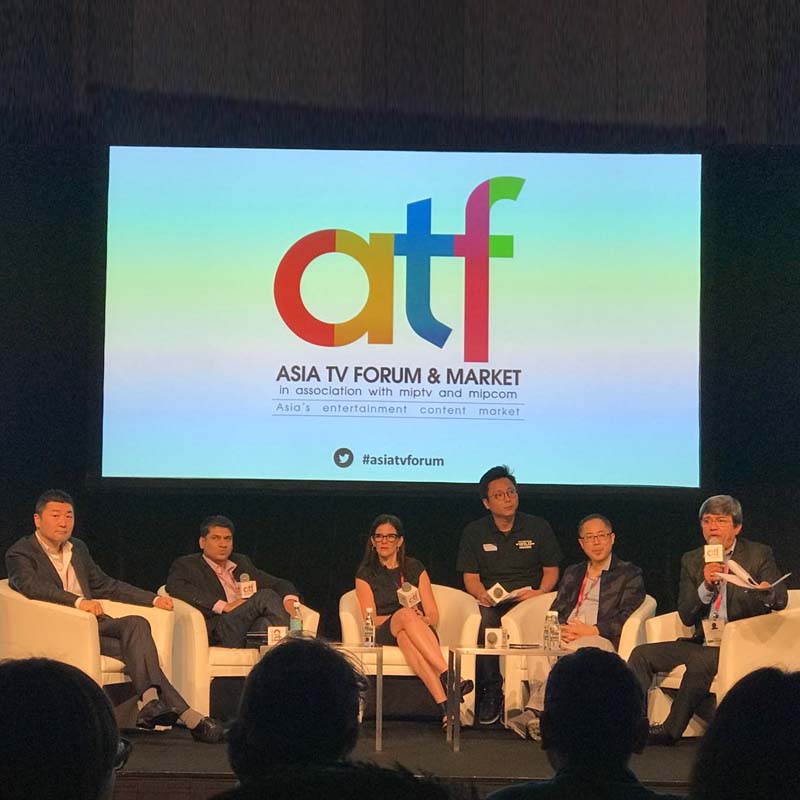
    SINGAPORE: The media and entertainment industry is known for its dynamic and unpredictable nature. With digital media taking an upward turn, over the top services are slowly making a mark and challenging traditional viewing methods. To address how effective are the various OTT models, the pre-ATF market conference on 6 December witnessed the session ‘View From Over The Top.’

    The discussion was led by IndianTelevision.com group founder, CEO and editor-in-chief Anil Wanvari, and covered the scope of the new content buyers in the online evolution and the success in re-aligning company strategies to meet new demands.

    The panelists consisted of an interesting bunch of execs whose services are as different as chalk and cheese: Hulu Japan (Japan), chief content officer, Kazufumi Nagasawa; Singapore-based Hooq co-founder and chief content officer, Krishnan Rajagopalan; LeTV (China), chief executive producer, Hao Fang; and US-based AwesomnessTV head of worldwide distribution, Rebecca Glashow.

    Wanvari set the ball rolling by questioning whether OTT as a business concept is a pipe dream or a reality. “OTT services have not really made a dent on viewing habits for a large part in Asian markets where television viewing is still rating high with consumers,” he stated. “Yet close to 100 or so OTT/VOD services have launched in various Asian nations. No one knows what the right business model is — Is it AVOD? Is it TVOD? Or, is it SVOD? Or is it a freemium model? Or is it a telco-bundled/TV set-bundled service? What is the pricing sweet spot? How much time will it take to build them into viable businesses? It looks like the OTT industry looks like what the cable and satellite TV industry did in the early nineties across Asia. The broadcasters were making losses and kept on bleeding for a decade or so. Will the same happen to OTT? And, what could help accelerate its fortunes better? Is it data costs? Or consumer education?”

    The panelists then went to on to talk about how they were each dealing with the market’s challenges. With China being the largest market in terms of mobile subscribers, LeTV took a strategic decision to bundle its streaming service platform with ‘Le’ mobile phones and in Hong Kong with its TVs. Consumers got LeTV free for varying periods as it was built into the price of the hardware.

    On the other hand, Hooq, being a comparatively young player in the market, Rajagopalan mentioned that the Asian audience is slowly getting used to the idea of paid services. Hooq has strong partnerships with telcos such as Singtel, Airtel, Vodafone, Globe Telecom, Telkomsel in different regions as it rolls out. Partnering with other companies has enabled Hooq to reach out to consumers who might be unaware of Hooq or don’t want to shell out money as it’s a SVOD service. Hooq launched in Singapore in end-November adding to Indonesia, Philippines, India and Thailand – countries in which it has been investing.

    AwesomnessTV follows a completely different approach; it perceives itself as a content creator for all the screens – TV, theatre, mobile, tablet – and its MCN strategy is totally a separate kettle of fish. Its advantage is that it has a strong millennial content focus on account of it strong digital talent. This has landed it deals with various platforms: Verizon for its Go90 mobile service; with ITV2 in the UK for which it is developing a millennial targeted commissioned programme block. A slate of feature films is also in the offing.

    And because its productions have a slew of digital stars it uses their online social media following to tease their fans and lure them to watch the content it creates for the other screens. Glashow said that she was in Asia to explore and evaluate opportunities and build partnerships to help it with its Asian foray. With enough money from its varied parents right from Verizon to Dreamworks Animation and Hearst Entertainment, it can afford to be ambitious for the continent as well.

    Hulu Japan – which is owned wholly by the broadcaster Nippon TV after Hulu exited a few years ago — follows the SVOD model, and has partnered with the Japanese major telco DoCoMo. As far as content is concerned, Nagasawa said that the OTT service has an international to domestic content ratio of 50:50. The service offers its users a smorgasbord of international top series as well as domestically produced content. Production budgets vary from 10,000 dollars to as much as a million dollars.

    Nagasawa said he has plans to make Hulu a one-stop-destination for consumers as the company plans to expand its linear streaming service to include transactional video on demand (TVoD) and electronic sell-through.

    Speaking about original content production, Hooq which recently released the trailer of its first original co-produced show ‘On The Job’ at ATF, Rajagopalan commented: “We have converted a movie into a TV series and are paying more than what goes into the production of a TV show as with multiple business models existing, content differentiation is the key to success. And that’s where the focus should be.”

    Stressing the same fact, Fang added, “While creating our content, we almost feel as if we are buying a building as it costs us around RMB four to five billion! We want to produce more original content but it is difficult.”

    When asked by Wanvari what kind of content and partners are the panelists looking for, Ramagopalan said that it all depends on how differentiated the content is. Glashow advised, “Before producing anything, know your audience and then reach out to them. For us, our client is the audience and so we take feedback from them and listen to what they want.” And, Fang revealed that LeTV is keeping an open mindset and is willing to participate with everyone.

  • ATF 2016 discusses secret sauce for Asian OTT’s successes

    ATF 2016 discusses secret sauce for Asian OTT’s successes

    SINGAPORE: The media and entertainment industry is known for its dynamic and unpredictable nature. With digital media taking an upward turn, over the top services are slowly making a mark and challenging traditional viewing methods. To address how effective are the various OTT models, the pre-ATF market conference on 6 December witnessed the session ‘View From Over The Top.’

    The discussion was led by IndianTelevision.com group founder, CEO and editor-in-chief Anil Wanvari, and covered the scope of the new content buyers in the online evolution and the success in re-aligning company strategies to meet new demands.

    The panelists consisted of an interesting bunch of execs whose services are as different as chalk and cheese: Hulu Japan (Japan), chief content officer, Kazufumi Nagasawa; Singapore-based Hooq co-founder and chief content officer, Krishnan Rajagopalan; LeTV (China), chief executive producer, Hao Fang; and US-based AwesomnessTV head of worldwide distribution, Rebecca Glashow.

    Wanvari set the ball rolling by questioning whether OTT as a business concept is a pipe dream or a reality. “OTT services have not really made a dent on viewing habits for a large part in Asian markets where television viewing is still rating high with consumers,” he stated. “Yet close to 100 or so OTT/VOD services have launched in various Asian nations. No one knows what the right business model is — Is it AVOD? Is it TVOD? Or, is it SVOD? Or is it a freemium model? Or is it a telco-bundled/TV set-bundled service? What is the pricing sweet spot? How much time will it take to build them into viable businesses? It looks like the OTT industry looks like what the cable and satellite TV industry did in the early nineties across Asia. The broadcasters were making losses and kept on bleeding for a decade or so. Will the same happen to OTT? And, what could help accelerate its fortunes better? Is it data costs? Or consumer education?”

    The panelists then went to on to talk about how they were each dealing with the market’s challenges. With China being the largest market in terms of mobile subscribers, LeTV took a strategic decision to bundle its streaming service platform with ‘Le’ mobile phones and in Hong Kong with its TVs. Consumers got LeTV free for varying periods as it was built into the price of the hardware.

    On the other hand, Hooq, being a comparatively young player in the market, Rajagopalan mentioned that the Asian audience is slowly getting used to the idea of paid services. Hooq has strong partnerships with telcos such as Singtel, Airtel, Vodafone, Globe Telecom, Telkomsel in different regions as it rolls out. Partnering with other companies has enabled Hooq to reach out to consumers who might be unaware of Hooq or don’t want to shell out money as it’s a SVOD service. Hooq launched in Singapore in end-November adding to Indonesia, Philippines, India and Thailand – countries in which it has been investing.

    AwesomnessTV follows a completely different approach; it perceives itself as a content creator for all the screens – TV, theatre, mobile, tablet – and its MCN strategy is totally a separate kettle of fish. Its advantage is that it has a strong millennial content focus on account of it strong digital talent. This has landed it deals with various platforms: Verizon for its Go90 mobile service; with ITV2 in the UK for which it is developing a millennial targeted commissioned programme block. A slate of feature films is also in the offing.

    And because its productions have a slew of digital stars it uses their online social media following to tease their fans and lure them to watch the content it creates for the other screens. Glashow said that she was in Asia to explore and evaluate opportunities and build partnerships to help it with its Asian foray. With enough money from its varied parents right from Verizon to Dreamworks Animation and Hearst Entertainment, it can afford to be ambitious for the continent as well.

    Hulu Japan – which is owned wholly by the broadcaster Nippon TV after Hulu exited a few years ago — follows the SVOD model, and has partnered with the Japanese major telco DoCoMo. As far as content is concerned, Nagasawa said that the OTT service has an international to domestic content ratio of 50:50. The service offers its users a smorgasbord of international top series as well as domestically produced content. Production budgets vary from 10,000 dollars to as much as a million dollars.

    Nagasawa said he has plans to make Hulu a one-stop-destination for consumers as the company plans to expand its linear streaming service to include transactional video on demand (TVoD) and electronic sell-through.

    Speaking about original content production, Hooq which recently released the trailer of its first original co-produced show ‘On The Job’ at ATF, Rajagopalan commented: “We have converted a movie into a TV series and are paying more than what goes into the production of a TV show as with multiple business models existing, content differentiation is the key to success. And that’s where the focus should be.”

    Stressing the same fact, Fang added, “While creating our content, we almost feel as if we are buying a building as it costs us around RMB four to five billion! We want to produce more original content but it is difficult.”

    When asked by Wanvari what kind of content and partners are the panelists looking for, Ramagopalan said that it all depends on how differentiated the content is. Glashow advised, “Before producing anything, know your audience and then reach out to them. For us, our client is the audience and so we take feedback from them and listen to what they want.” And, Fang revealed that LeTV is keeping an open mindset and is willing to participate with everyone.

  • LeEco to produce content for India; launches new phone with ‘Supertainment’ package

    LeEco to produce content for India; launches new phone with ‘Supertainment’ package

    MUMBAI:  Chinese technology player LeEco launched its ecosystem membership program along with its latest smartphone Le 1s Eco in India yesterday. The announcement was made in collaboration with Eros Now, YuppTV and Hungama at an event in Mumbai, along with youth heartthrobs Siddharth Malhotra and Jacqueline Fernandez. 

    The company has plans to produce its own content for India. According to LeEco Smart Electronics India COO Atul Jain, “I think we will roll it out in phases. As we go deeper in the content space, producing our own content is an option we are considering. But the easier option in the first few months as a ‘go to to a new market’ is tie-ups. That is why we are currently investing in developing strong partnerships in this market and soon we will get in the content business like we do in China. We are taking one step at a time. That will be phase two for us. By the end of the financial year we might have something coming out of our own production pipeline.”

    That LeEco, like all the other mobile devices companies from across the world, is going all out to woo Indian customers to buy its products is very obvious. LeEco Content VP for APAC William Lee said, “Today we launched our innovative LeEco membership program with partnerships with Eros Now, Hungama and YuppTV.  LeEco is the sole company that delivers a membership program which integrates terminals, clouds and applications in India. Indian Superfans can enjoy more than 2,000 movie titles through Le Vidi, over 100 TV channels via Le Live, and 2.5 million music tracks under LeEco membership.”

    The Chinese company also launched a ‘Supertainment’ package which will be available for Rs 10,899, including Le 1s Eco for Rs 9,999 and a one-year membership fee of Rs 4,900, and a LeEco offer of Rs 4,000. For the first flash sale on Flipkart at 2pm on May 12th, LeEco will offer the Supertainment package at Rs 9,999. 

    Speaking about the Supertainment package, Jain said, “To cope with LeEco membership program, we introduce a special ‘Made for India’ superphone, Le 1s Eco, the first of its kind of integrating a content ecosystem. Le 1s Eco will redefine entertainment in the country. With this blockbuster superphone, we live up to our promise of offering the best value, breakthrough technology and great features at a disruptive price.”

    Besides aiming to provide users with rich and high quality content, the company says that its membership program also integrates comprehensive eco-services like personal clouding services -LeEco Drive, LeMall and aftersales services. In 2015, LeEco global membership revenue reached to $417 million, top of its kind in the industry. The membership program provides users a seamless and extreme experience based on LeEco terminals, clouds, and applications, and will include more quality content and eco-services thanks to the company’s business growth in India.

    Given the high decibel launch that LeEco had for its ‘Supertainment’ membership, one can’t help but wonder about its marketing strategy to take the buzz further.  “We will continue our strategy of reaching out to consumers and users through print and digital for quite some time. Once we are more widely available we will look into going into TV,”   revealed Jain.

    After its Le 1s bagged the ‘online top-selling’ tag having sold over 200,000 items in just 30 days, LeEco is now eyeing to enter the retail market as well. It would have its own brick and mortar stores by June 2016, informed Jain, to showcase and hawk an array of existing and new products that will be launched in the coming months.

    Currently Madison World handles the media account for LeEco while Leo Burnett’s Orchard Advertising Bengaluru does its creative work.

  • LeEco to produce content for India; launches new phone with ‘Supertainment’ package

    LeEco to produce content for India; launches new phone with ‘Supertainment’ package

    MUMBAI:  Chinese technology player LeEco launched its ecosystem membership program along with its latest smartphone Le 1s Eco in India yesterday. The announcement was made in collaboration with Eros Now, YuppTV and Hungama at an event in Mumbai, along with youth heartthrobs Siddharth Malhotra and Jacqueline Fernandez. 

    The company has plans to produce its own content for India. According to LeEco Smart Electronics India COO Atul Jain, “I think we will roll it out in phases. As we go deeper in the content space, producing our own content is an option we are considering. But the easier option in the first few months as a ‘go to to a new market’ is tie-ups. That is why we are currently investing in developing strong partnerships in this market and soon we will get in the content business like we do in China. We are taking one step at a time. That will be phase two for us. By the end of the financial year we might have something coming out of our own production pipeline.”

    That LeEco, like all the other mobile devices companies from across the world, is going all out to woo Indian customers to buy its products is very obvious. LeEco Content VP for APAC William Lee said, “Today we launched our innovative LeEco membership program with partnerships with Eros Now, Hungama and YuppTV.  LeEco is the sole company that delivers a membership program which integrates terminals, clouds and applications in India. Indian Superfans can enjoy more than 2,000 movie titles through Le Vidi, over 100 TV channels via Le Live, and 2.5 million music tracks under LeEco membership.”

    The Chinese company also launched a ‘Supertainment’ package which will be available for Rs 10,899, including Le 1s Eco for Rs 9,999 and a one-year membership fee of Rs 4,900, and a LeEco offer of Rs 4,000. For the first flash sale on Flipkart at 2pm on May 12th, LeEco will offer the Supertainment package at Rs 9,999. 

    Speaking about the Supertainment package, Jain said, “To cope with LeEco membership program, we introduce a special ‘Made for India’ superphone, Le 1s Eco, the first of its kind of integrating a content ecosystem. Le 1s Eco will redefine entertainment in the country. With this blockbuster superphone, we live up to our promise of offering the best value, breakthrough technology and great features at a disruptive price.”

    Besides aiming to provide users with rich and high quality content, the company says that its membership program also integrates comprehensive eco-services like personal clouding services -LeEco Drive, LeMall and aftersales services. In 2015, LeEco global membership revenue reached to $417 million, top of its kind in the industry. The membership program provides users a seamless and extreme experience based on LeEco terminals, clouds, and applications, and will include more quality content and eco-services thanks to the company’s business growth in India.

    Given the high decibel launch that LeEco had for its ‘Supertainment’ membership, one can’t help but wonder about its marketing strategy to take the buzz further.  “We will continue our strategy of reaching out to consumers and users through print and digital for quite some time. Once we are more widely available we will look into going into TV,”   revealed Jain.

    After its Le 1s bagged the ‘online top-selling’ tag having sold over 200,000 items in just 30 days, LeEco is now eyeing to enter the retail market as well. It would have its own brick and mortar stores by June 2016, informed Jain, to showcase and hawk an array of existing and new products that will be launched in the coming months.

    Currently Madison World handles the media account for LeEco while Leo Burnett’s Orchard Advertising Bengaluru does its creative work.

  • Le Eco’s Atul Jain: It’s not just marketing, it’s creating an entire ecosystem

    Le Eco’s Atul Jain: It’s not just marketing, it’s creating an entire ecosystem

    MUMBAI:  A late entrant in the market, Chinese smartphone and screen manufacturer LeEco, previously called LeTv, has already created waves with its aggressive approach for the Indian market, and has given existing players like Xiaomi and Samsung a run for their money. Industry insiders unanimously agree that LeEco has disrupted the entire smartphone business in the country, and perhaps even redefined it. After launching its first product in India in January 2016, the company has already broken all records for online smartphone sales and bagged the ‘online top-selling’ tag for its flagship product Le 1s, having sold over 200,000 Le 1s in just 30 days!

    And why not? The company has set itself a target to be the number one online smartphone player in the next five months. It doesn’t take a scientist to guess that a feat like that would be impossible without a sound and efficient marketing strategy to back the brand with. Ask LeEco India Smart Electronics Devices COO Atul Jain about what the secret is behind the brand’s success and he says “It’s the ecosystem that we create.”

    As per Jain, the ecosystem LeEco strives to create in India works on four different parameters – devices (smartphones and screens), content, cloud and platforms.

    “For now we have introduced our devices in the form of the smartphones that boast of breakthrough technology supported by disruptive pricing. We are also working on building the ecosystem and will be able to provide the same from quarter two (Q2) onwards of coming financial year,” says Jain. The brand also plans to enhance its screen presence by bringing in what it calls a ‘super TV’ by Q2.

    On the content side, LeEco has already partnered with over-the-top content provider YuppTV led by Udaynandan Reddy and the Sunil Lulla led Eros International. “We are striving for many more partnerships with Indian media houses in the upcoming months,” Jain reveals. “We are also looking at building a huge content library, be it through partnerships, acquisition or self-produced content,” he adds. It is to be noted that the company has presence in the media in China through Le Movies, its own production house.

    “From a cloud network perspective, we have already introduced content distribution networks (CDNs) in Delhi and Mumbai, and are looking to expand it to ten more cities. LeEco already has 650 CDN networks through the cloud across the world,” explains Jain. “This is in compliance with LeEco’s Chinese model of strengthening its delivery network to boost the smartphone business and maximise profit.”

    Jain shares that outside China, India and the US are the top two biggest markets in focus for LeEco for this financial year. “We have plans for other APAC countries like Indonesia, Singapore and Malaysia, but our biggest business expansion is going to happen in India and the USA.”

    Entering the market this late and establishing a formidable presence wasn’t an easy task for the Chinese technology giant. “We were quite unknown in India even six months ago. To create the awareness around the brand was the biggest challenge. The go to market strategy, setting up a team here, were some of the initial challenges.” Jain explains that instead of being bullish about a strict marketing plan, they kept their eyes open for what the consumers wanted, understanding their needs and translating that into products. “In our case we looked at bill of materials (BOM) pricing and that was very attractive for the consumers. “That becomes very critical when you market to a new place. Secondly, we paid attention to creating awareness about the brand through all the media available to us, and that was relevant to the product, that is, social, digital, and even offline presence through retail stores,” he says.

    Perhaps the biggest boost to sales was the flagship campaign ‘LeEco Day’, wherein consumers enjoyed extremely lucrative offers and prices on the smartphone. It must be noted that several other smartphone brands, including Freedom 251 also went the ‘disruptive’ prices route to meet a completely different and disappointing end.

    Explaining LeEco’s mass media plans, Jain says, “LeEco is also looking at being present in radio, and television advertising isn’t ruled out either. While a substantial chunk of the company’s marketing spends are directed towards digital, moving forward Le Eco will have good spends in television and print as well. Around 30 to 40 percent of the brand’s marketing spends would be towards digital, and the balance split between print, OOH and television.”

  • Le Eco’s Atul Jain: It’s not just marketing, it’s creating an entire ecosystem

    Le Eco’s Atul Jain: It’s not just marketing, it’s creating an entire ecosystem

    MUMBAI:  A late entrant in the market, Chinese smartphone and screen manufacturer LeEco, previously called LeTv, has already created waves with its aggressive approach for the Indian market, and has given existing players like Xiaomi and Samsung a run for their money. Industry insiders unanimously agree that LeEco has disrupted the entire smartphone business in the country, and perhaps even redefined it. After launching its first product in India in January 2016, the company has already broken all records for online smartphone sales and bagged the ‘online top-selling’ tag for its flagship product Le 1s, having sold over 200,000 Le 1s in just 30 days!

    And why not? The company has set itself a target to be the number one online smartphone player in the next five months. It doesn’t take a scientist to guess that a feat like that would be impossible without a sound and efficient marketing strategy to back the brand with. Ask LeEco India Smart Electronics Devices COO Atul Jain about what the secret is behind the brand’s success and he says “It’s the ecosystem that we create.”

    As per Jain, the ecosystem LeEco strives to create in India works on four different parameters – devices (smartphones and screens), content, cloud and platforms.

    “For now we have introduced our devices in the form of the smartphones that boast of breakthrough technology supported by disruptive pricing. We are also working on building the ecosystem and will be able to provide the same from quarter two (Q2) onwards of coming financial year,” says Jain. The brand also plans to enhance its screen presence by bringing in what it calls a ‘super TV’ by Q2.

    On the content side, LeEco has already partnered with over-the-top content provider YuppTV led by Udaynandan Reddy and the Sunil Lulla led Eros International. “We are striving for many more partnerships with Indian media houses in the upcoming months,” Jain reveals. “We are also looking at building a huge content library, be it through partnerships, acquisition or self-produced content,” he adds. It is to be noted that the company has presence in the media in China through Le Movies, its own production house.

    “From a cloud network perspective, we have already introduced content distribution networks (CDNs) in Delhi and Mumbai, and are looking to expand it to ten more cities. LeEco already has 650 CDN networks through the cloud across the world,” explains Jain. “This is in compliance with LeEco’s Chinese model of strengthening its delivery network to boost the smartphone business and maximise profit.”

    Jain shares that outside China, India and the US are the top two biggest markets in focus for LeEco for this financial year. “We have plans for other APAC countries like Indonesia, Singapore and Malaysia, but our biggest business expansion is going to happen in India and the USA.”

    Entering the market this late and establishing a formidable presence wasn’t an easy task for the Chinese technology giant. “We were quite unknown in India even six months ago. To create the awareness around the brand was the biggest challenge. The go to market strategy, setting up a team here, were some of the initial challenges.” Jain explains that instead of being bullish about a strict marketing plan, they kept their eyes open for what the consumers wanted, understanding their needs and translating that into products. “In our case we looked at bill of materials (BOM) pricing and that was very attractive for the consumers. “That becomes very critical when you market to a new place. Secondly, we paid attention to creating awareness about the brand through all the media available to us, and that was relevant to the product, that is, social, digital, and even offline presence through retail stores,” he says.

    Perhaps the biggest boost to sales was the flagship campaign ‘LeEco Day’, wherein consumers enjoyed extremely lucrative offers and prices on the smartphone. It must be noted that several other smartphone brands, including Freedom 251 also went the ‘disruptive’ prices route to meet a completely different and disappointing end.

    Explaining LeEco’s mass media plans, Jain says, “LeEco is also looking at being present in radio, and television advertising isn’t ruled out either. While a substantial chunk of the company’s marketing spends are directed towards digital, moving forward Le Eco will have good spends in television and print as well. Around 30 to 40 percent of the brand’s marketing spends would be towards digital, and the balance split between print, OOH and television.”

  • Letv to launch handsets in India officially on 20 January

    Letv to launch handsets in India officially on 20 January

    BENGALURU: On 5 January, internet conglomerate and technology company Leshi Internet Information and Technology or Letv launched its Le 3D Helmet, LeMe Bluetooth Headphones and Super Cycle in New Delhi. The company will launch its globally successful flagship Superphones in India on January 20 in NCR.


    Letv entered the smartphone industry in April 2015, having sold one million Le Superphones in November. The top-seller Le Superphones, released by the company that entered the smartphone market just half a year ago, have achieved great sales success says the Chinese company. Letv is also the first company that has publicly-announced a phone with Qualcomm’s new Snapdragon 820 processor, the LeTV Le Max Pro.


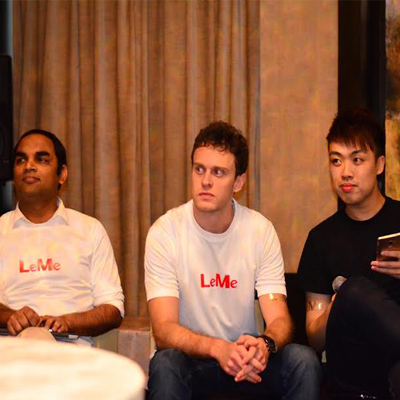
    The company recently organised meetups under the brand Le Meetup with #Superfans, bloggers, keen tech enthusiasts and influencers in New Delhi, Bengaluru and Hyderabad to give them an exclusive hands-on experience of LeTV’s products even before sales kicked off in India.


    Along with the US, India is a key market for LeTV’s expansion plans. The company intends to match the product launches in India with that of global launches. On entering India Letv will initially focus on device and content offerings. Going forward it plans to bring its complete ecosystem to India and is currently focusing on strengthening the development of its internet app services.


    Letv is engaged in myriad businesses, spanning Internet TV, video production and distribution, smart gadgets and large-screen applications to e-commerce, eco-agriculture and connected super-electric cars. The company also has a large content libraries comprising movies, TV dramas, entertainment shows, sports and music, which can be viewed on Letv devices.


    Letv operates across six screens -mobile, tablet, computer, cinema, smart TV, automobiles.


    To build a 360-degree experience for customers, Letv also operates an e-commerce platform – LeMall.com. The platform was officially launched in India after its debut in Hong Kong and US, highlighting the importance of the Indian market for Letv.

  • LeTV has first ‘Le Meetup’ in Bengaluru

    LeTV has first ‘Le Meetup’ in Bengaluru

    BENGALURU: LeTV held its first Le Meetup with its super fans in Bengaluru on Saturday. The meet witnessed a full house gathering of LeTV’s Superfans, bloggers, keen tech enthusiasts and influencers from the city who had an exclusive hands-on experience of LeTV’s products even before sales kicked off in India.

    Le Meetup has been conceived and implemented as a platform to bring its Superfans and blogger community together and listen to them speak and experience Le Future up-close. The participation from Superfans and bloggers made the event a lively, interactive exchange rather than just a one-way communication. It turned out to be a great opportunity to meet and chat with fellow Superfans, bloggers, LeTV staff and take away LeTV super products.

    The meetup had an exclusive Q&A session and allowed an open dialogue between fans, bloggers, YouTubers, and Le staff.

    LeTV head of digital marketing Ivan Wang said, “It has been a truly rewarding experience interacting with our fans and followers. We recognise that they are vital and hence we have ensured that our comment response rate is 98 per cent and response time is three minutes. This is a new benchmark in the industry and has been acknowledged by our fans in this very forum. Thank you all for the overwhelming response, your feedback matters and we will very closely consider them!”

    LeTV shared its focus for India as a key market, which along with the US is part of its expansion plan. The company also intends to match the product launches in India with that of global launches. The company will have a preview event on 5 January where it will make more confirmed announcements on its launch date. Le Meetups will be held in multiple cities the next one will be held in Delhi on 30 December and 9 January, followed by one in Hyderabad.