![‘We are building India’s first Youth GEC, slot by slot’ : Channel [V] and Star Pravah EVP & GM PREM KAMATH](https://wordpress.indiantelevision.com/wp-content/uploads/2025/12/PREM-KAMATH.jpg)
From an international music channel in its early days to a Bollywood music driven one to a youth oriented entertainment offering. That’s the path that the Star Network owned Channel [V] has taken. Its last overhaul in July 2012 has reaped rich dividends with shows such as Gumrah and The Buddy Project generating loyal viewership apart from pocketing awards. The prestigious Indian Telly Awards, 2013 recognised the shows by bestowing the Best youth non-fiction and the best youth fiction show awards respectively.
The man who has been piloting the Channel [V] ship through this latest journey is Captain (pun intended) Prem Kamath. A former advertising executive with stints in Enterprise Nexus and Chaitra Leo Burnett, Kamath spent a short period as marketing head of Star India before being assigned the task of heading Channel [V] and giving it direction in 2009. His successful reengineering of the channel last year led to him being given additional charge of Marathi channel Star Pravah.
Last week he announced that he was rejigging Channel [V] once again with a new logo, new packaging and a slate of new shows.
Indiantelevision.com’s Disha Shah caught up with Kamath for a tete a tete to understand from the man himself what is it that is working with Channel [V], where does he see it going and, finally, sundry industry issues.
Excerpts:
Please define the Channel [V] viewer in terms of demographics and pyschographics?
In terms of demographics, I think the way TAM is structured, we define it as 15-24 ABC, but I don’t think that is necessarily a homogenous group. So, internally, we operate through a psychographic definition of youth. And for us, we define youth as a period between childhood and the time you gain economic independence. It means you are no longer a child and you have not started earning on your own and that life stage is what we define as ‘Youth Life stage’. Because we believe that life stage brings in a whole set of unique issues, attitudes and experiences that are common for those between 15 and 24 years of age. And this is that mindset we really try to talk to.
What is the differentiator for the channel?
The biggest differentiator for us is that we are far more rooted and far better connected to the youth than most other channels. We have a far deeper understanding of the youth and a finger on the pulse of the audience and that’s fairly evident from the fact that whatever the kind of programming we do, other channels start picking up two to three years down the line. We did Gumrah 3 three years back, and now you find Bindaas doing a show which is very similar, you find MTV Webbed doing something very similar, which are all slices of what we did. We do believe that our understanding of what the audience wants and how the audience behaves is far sharper and deeper than most of the people out there. I don’t mean just television brands, but brands in general and I think it’s that strength we try to leverage while creating programming and content. That’s really what is behind our success more than anything else.
What have been the channel’s achievements over the past years?
I came on-board in February 2009 and we did our first re-launch in August 2009, where we introduced a host of new shows and started reducing the amount of music. In those days, we used to get 8 or 9 GRPs and we were ninth or tenth on the list of youth music channels. And today, we are a 45 to 50 GRPs channel so it’s a five to six fold growth in terms of market share and revenue also. So, in terms of our run, the last four years have been extremely good. We have charted a new direction for the channel. For the channel, it was an experiment that we undertook at that point of time, but it is something that has paid off extremely well for us. We are at a stage today, where we are clear we have a foundation to build India’s first truly large mass youth general entertainment channel. And that is what we are building slot by slot.
What circumstance forced Channel [V] rethink its raison de’etre?
We were playing music videos at that point of time and there was a time, when people used to tune into television to find out what’s new in music. And I think that time changed several years back with the advent of the Internet, where people had multiple means of consuming music.
The relevance of television for accessing music has gone down dramatically. I don’t think anyone tunes into television to find out what’s new in music.
So, that was the first point where we said that if we want to be a youth channel, we have to widen our scope beyond just music, and that is where we started our journey. The second aspect is music is a commodity. It is the same content that all the 18 other music channels of the market have access to and there is no such differentiation. And thirdly, music cannot create appointment viewing, which is very critical if the channel has to monetize its audience through an advertiser.
All of these pointed us in that direction that if we have to become a relevant youth’s channel, we have to go beyond music into creating our own proprietary shows.
What was the feedback that you got from viewers after the change from music to reality shows?
The first feedback we got was a lot of hate mails from old channel viewers saying: Why are you stopping music? Why are you abandoning music and why is Channel [V] selling out music etc. But I think the kind of response we have got from our new viewers has been phenomenal. So the five-fold growth in the market share does not happen unless there is an old host of people embracing you for the new direction. And it’s a change that had to be made and we have moved forward. Now the real job for us is to build on this, consolidate on the good and solid start that we have had and go towards building something substantially larger.
What have you learnt about your audience? Considering you have been at the helm for about four years now?
One of the big things that we have learnt is how quickly the audience changes. How quickly the tastes change. And that is in sharp contrast to how shows run on GECs. That is something we have learnt along the way as well. We always had programs that did well for us. With the current run of shows, we have extended it to more than we should have. So the replacements that we are doing right now, in retrospect, we should have done four to six months ago. So that is something we have learnt and it has reflected in our demonstrating that we are now going with finite series. So we have series that will end in six months. We are forcing ourselves to end them after six months and we will put something new even if these shows are successful. So, all our programs are designed that way. That’s been one of the biggest learning. The other learning is connected to what I believe makes us strong, which is that we need to have a very sharp understanding of our TG. Unless we dig really deep to get a sense of the audience, we will never be able to create something which is relevant to them.
The youth is a fickle audience with a short attention span. How do you keep them engaged?
One of the things that reflect in our content is that these are all finite shows. They are two days a week, not even daily, and they last only six months. This allows us a story pace which is faster, lets us do things a lot more unpredictable where we don’t have to drag storylines and don’t have to just fill in six days a week. That lets us keep shows tighter, crisper, more unpredictable and therefore, more dramatic. The other aspect we engage youth through is social media. We keep them engaged through a lot of contests, questions and a whole set of engagement activities. This has been one of the areas that have worked well for us. This is revenue where we keep things fresh by doing different things on a daily basis.
 We also believe that a large part of the country is youth that is either not watching television or is watching whatever is there on television for want of a better option. And that’s the gap that we are trying to service… |
What shows are working on the channel?
Gumrah – End of Innocence has been the big show for us. Dil Dosti Dance (D3) has always been the highest rated show since we have launched. Apart from that, Buddy Project has also been decent for us. Therefore, these are the shows that will continue, along with the four new shows that we are launching. At present, the channel is getting around 10 to 12,000 TVTs on a weekly basis.
How many hours of fresh programming do you air currently?
We currently run about 10-hours of programming a week, apart from the movie content that we do.
What role does research play to help you stay connected with the audiences?
Like I said, our entire body of work is based on fairly extensive and on-going research. All the shows come forth from specific consumer insights. And they start with the brief that is based on the consumer insights and shows are developed in and around them. So we engage with our consumers on a continuous and on-going basis.
What future do you foresee for the channel in a digitized India? Do you expect a second and third youth channel being launched under the Channel [V] brand?
I think as we go more and more into digitization, it will be critical for the channels to differentiate themselves sharply. The only channels that will survive are the ones that have a very sharp differentiation and those that can very well service whichever segment that they define their audience is. And that is what we are clearly doing.
We are very clear that we are a youth channel; we believe that there is a great potential and great market for youth-centric content. We also believe that a large part of the country is youth that is either not watching television or is watching whatever is there on television for want of a better option. And that’s the gap that we are trying to service. Sometimes, digitization is great for channels like us, which are highly differentiated and it will only drive more and more demand for us.
As far as the second part of your question, I think it’s too early for that. We are still laying the foundation of something that can be significantly larger than what it is. Overall in the market, there are youth who contribute about 3,000 GRPs if I use the old metrics. And even a ten per cent share out of that is a 300 GRP channel, so I think from 50, we still have a long way to go before we have maximized the potential of the channel that we have right now.
Who do you feel is your competitor?
I don’t think there is anyone who is doing what we are doing today. Both Bindaas and MTV or any of the others have 75 per cent of their content as music. We are cast in the mould of a general entertainment channel because we are running our own shows and our FPCs are in that fashion. There is no other entertainment channel which airs 24 hours youth entertainment shows. In that sense, we are fairly unique. But I do believe that sooner or later, there will be more players who will start doing exactly what we are doing.
Is creative talent which understands youth programming as an issue today?
No. It is a challenge. Most of the talents that are in the market today are geared towards creating content for GECs because that has been the lion’s share of entertainment so far. We are trying to source new people, we are getting people who write teen fiction to start writing for television; a couple of our writers are first-time writers on a couple of shows, who are writing for television for the first time but who have been bestselling authors. Some of the shows that are pitched to us have not come from production houses but have come from creative directors. So, we are improvising on the content eco-system as well, because there isn’t much talent available to cater to youth entertainment specifically.
Are there enough production houses which understand youth content? Are there any name you’d like to mention?
Yes, it’s just the same. For example, we were doing Buddy Project with Sunshine Productions – Seema and Sudhir Sharma and two of our bi-weeklies have been done by them. So, Sunshine Productions is the one who we work with closely. Balaji Productions didGumraah for us, so our new show Teen Confessions is done by them. So, there are some people like these we have worked in the past who we were very happy with and are doing more shows with. There are some producers who are established in the industry. So, we work with different people and we develop a certain sense of comfort. Moreover, we are constantly on the lookout and the quest for newer people and producers who will come into this world.
Have you managed to get higher rates with the reduction in the air-time?
Yes, we have absolutely. So this is not being just with the reduction in the air time, this is been the on-going process ever since we have re-launched, and our performance has been in an up spring. Like I said, our market share has gone up five times in the last four years; this rate increase has been on-going process since then. On a periodic basis with all our clients we revise our rates.
 Most of the talents that are in the market today are geared towards creating content for GECs, so we are improvising on the content eco-system as well, because there isn’t much talent available to cater to youth entertainment specifically… |
Are you encouraging branded entertainment and advertisement programming integration? How?
On both we have a simple premise. We are very happy to do branded entertainment, as long as the entertainment quotient of it is not lost out. As much the brand part of it, the entertainment part of it also matters a lot to us. As long as it is entertaining for the viewers, is the concept both of us the client and us believe will be really entertaining we are very happy to explore it. The issue with the branded entertainment in the country today is that most people want to make it an advertorial. And that is something which is not okay with us because primarily our responsibility is to entertain our viewers. And we believe that if the viewers are not entertained even the brands purpose is not solved.
Moreover, we do immense amount of integration for almost all of our shows. We have integrations; we give almost all our shows sponsors mileage within the show. We believe that this is very valid and very relevant way of building our brand for the clients and this is something we do on our on-going business.
How strong is the distribution of the channel? How many homes do you reach?
In a week we reach out to 1.2 crore people in our age group (youth), so that will be around five crores in a month.
What has the impact of digitisation phase I and phase II been on Channel [V]?
For us it has been good. Overall there is a rationalising of general television numbers, but I believe that digitisation gives us the opportunity to reach far more homes than before. The inherent advantage that in the cable system provider legacy brands goes away a bit and it gives an equal opportunity for people to sample and stand out like us. So I think it was a very positive outcome.
How do you see the aggregators scenario evolving? Will they disappear or stay?
On the cable side, it is very difficult to put a prediction on that right now. Obviously there is a role for everybody to be playing and I believe that in a longer term people who innovate and add significant value to consumer’s life will have a clear module. And about broadcasters, as long as their shows are relevant and as long as shows are entertaining. Eventually people are consuming content whether it’s on television or across mediums, and as producers of content as long as that content is relevant and entertaining, they will have a very robust module.

 According to Leo Burnett Chief creative officer K V Sridhar, the new logo is much more energetic and brings through the focus they are trying to put with Star Sports. “It is a Diwali colourful logo. Their biggest challenge is to merge ESPN and Star Sports. Now promoting their channels will become much easier for them. What they are doing is just the beginning because they are taking upon themselves a very beautiful and visionary strategy to make Star synonymous with sports,” he says.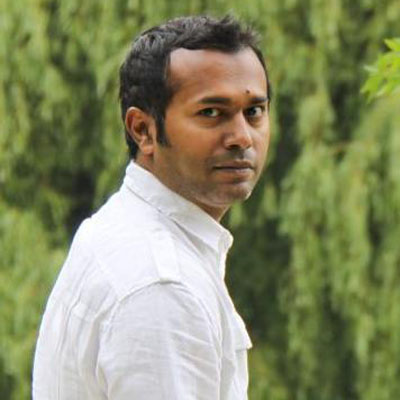











 While broadcasters have already decided to go ahead with the issuance of net bills on 22 April, AAAI appeared to be oblivious to this development when Indiantelevision.com telephoned its president and Leo Burnett chairman & CEO Indian subcontinent Arvind Sharma. He pointed out that there has been no communication from the IBF that broadcaster members would be dispatching net bills tonight. “I hope it is not true. If they were to dispatch the net bills tonight, we will be constrained to send them back,” he said.