Tag: Leo Burnett

  • Leo Burnett ropes in Pranav Sharma as ECD

    Leo Burnett ropes in Pranav Sharma as ECD

    MUMBAI: Leo Burnett India has appointed Pranav Harihar Sharma as Executive Creative Director. Pranav will report to Rajdeepak Das, Chief Creative Officer of Leo Burnett, South Asia.

    Sharma will be based in the Mumbai office. His last stint was at Rediffusion Y&R where he was the Executive Creative Director for West and North.

    In a career spanning over 18 years, Sharma has worked across several agencies such as DDB Mudra, J. Walter Thompson, Linen Lintas and Grey Worldwide, in addition to three stints at Rediffusion Y&R.

    Apart from his experience as a creative in advertising agencies, Pranav is also a well-known ad and short filmmaker. He was given the script and screenplay credits of the Dabur Vatika film – Brave and Beautiful when he handled the brand’s creative business at Linen Lintas. The campaign went on to receive multiple awards in advertising festivals across the country.

    Speaking about this new role at Leo Burnett India, Sharma says, “I have always admired the kind of work Leo Burnett India has been behind. It is an agency known for its innovation and effectiveness, and that is exactly the sort of culture I want to be a part of. My role here is to extend the legacy handed over to me and churn out effective work in the space of ‘content’, a key word in today’s advertising industry. I look forward to my new innings.”

    Das adds, “Pranav is a passionate and creative person who 

    combines strategic advertising thinking with brilliant filmmaking skills. His understanding of the Indian consumer runs deep, making him the kind of talent that is coveted in our industry. I have great expectations from him at Leo Burnett, and I’m confident he will easily fulfil them all.”

  • Is India ready for the impact of AI on marketing?

    Is India ready for the impact of AI on marketing?

    MUMBAI: From self-driving cars to voice assistants Siri and Alexa, artificial intelligence (AI) is expeditiously becoming popular. While one may think of AI only as intelligent robots or technology, it encompasses everything from Google’s search algorithm to e-commerce to geo-target and understanding consumer behaviour. 

    AI has taken a hold of the advertising and marketing industry too along with big data, analytics, machine learning (ML), and chatbots. Not one advertising or marketing conference goes by without one or more sessions on the subject. 

    It was in 2017 that marketers realised the leverage AI and ML provided. But the reality is far from the hype as marketers in India and around the world are still unacquainted with the technology and the benefit it can add to business.

    Today, companies are gathering thousands of records from each consumer touch point. They have the entire database of what their consumer is searching for, from which device and how long before they actually purchase it. Companies can also trace the consumer’s likes and dislikes by scrutinising their customer profile. This large set of data about consumer behaviour, which is also known as big data, provides definite information to brands that can help their business. This is where AI comes into the picture.

    public://kirin.jpg

    AI in marketing terms consists of machine learning, deep learning and natural language processing applications. But the hard reality is that many of the tools that are being marketed as AI are still in their primitive form and there is a long way before companies can actually begin to use AI to yield better results. Currently, a lot of brands feel the urgency to adopt the modern and new technologies to keep up with the changing marketing dynamics, but AI, just like any other technical tool, is not a magic solution and requires time, resources and money. 

    Though the name sounds fancy, it may not be essential for every brand to jump on the bandwagon. Agencies, being industry experts, first need to familiarise themselves with how best to use AI for their client before even discussing client readiness of AI in marketing strategy. Setting the record straight, The Glitch managing partner and business head Kabir Kochhar says that the first step to getting clients interested in using these tools by showing them the money. “Showing improved return on investment will get clients to take notice and giving them deeper insights into their customers will allow and inform them on their future product roadmaps,” he says. 

    public://goolge.jpg

    For instance, predictive analytics allows online players like Amazon, Netflix, Hotstar, Myntra, Flipkart and YouTube among others to surface and finesse recommendations. Putting together information from diverse datasets is a common use of AI. Even the most advanced tech firms in Silicon Valley are just beginning to unearth its possibilities. Dentsu Aegis Network chief data officer Gautam Mehra suggests that if media companies do not catch up, it’s definitely going to affect them as we do see the local OTT players and even telecoms such as Jio building significant data practices.

    In spite of all the automation and move to programmatic, there are large parts of media planning and strategy that are still being done laboriously by human intervention. While stating that currently only some really sharp media planners will come up with half a dozen hypotheses and run tests that either prove or disprove the same, Indigo Consulting national head of strategy Devang Raiyani believes that going forward, a few startups will lead this and big media players will wait till some of them acquire critical mass and acquire them. 

    The revolution of AI in marketing has been propelled by the advent of affordable and advanced data analytics tools, extensive datasets and a growing acceptance of the data-driven approach to marketing decision making by marketers. With the advent of cloud computing, it’s very easy to scale without having to make large upfront investments. Most of the cost to use an AI system is rarely the system itself, but in ensuring you have the right data in the right format prepared for the AI engine. While stating that certain AI systems require some level of initial investment in technology, Mehra points out that these, however, sustain themselves within a year and hence it’s not really a CapEx investment in that sense. And then there are AI systems that are absolutely turn-key and pay-per-use.

    It is a herculean task for agencies to convince clients unaware of AI to use the technology. In such cases, Raiyani opines that the best way is to prove the use-cases at the fringes, create a few proof of concepts before betting big as the challenge with most Indian companies is that data available is not very clean and highly fragmented across touch-points. He believes that it will be the GAFAs (Google – Apple – Facebook – Amazon) of the world who will lead this change.

    Kochhar thinks that the grasp of terms such as AI and big data are theoretical and in practice, we’re just scratching the surface on how AI can transform industries. “For now, agencies need to think of it as a tool of inspiration for the copywriter as it will essentially eliminate a bunch of A/B testing we currently do to see the effectiveness of communication,” he says.

    AI in creative advertising has been touted as a replacement to human copy although there’s still a long way to go for that since, in advertising, context is everything and the nuances of language still need to be mastered. AI will help throw up more insights based on user interaction with ads and act as a guide showcasing the types of communication routes that can have a higher impact on the end user. 

    Also Read :

    FabIndia sets aside 40% on digital advertising

    Vodafone India modernises for IoT-ready future

    How iProspect’s Vivek Bhargava foresaw a digital future two decades ago

    Talent retention is key, says Mindshare’s Prasanth Kumar
  • McDonald’s shows that you’re never too old for toys

    McDonald’s shows that you’re never too old for toys

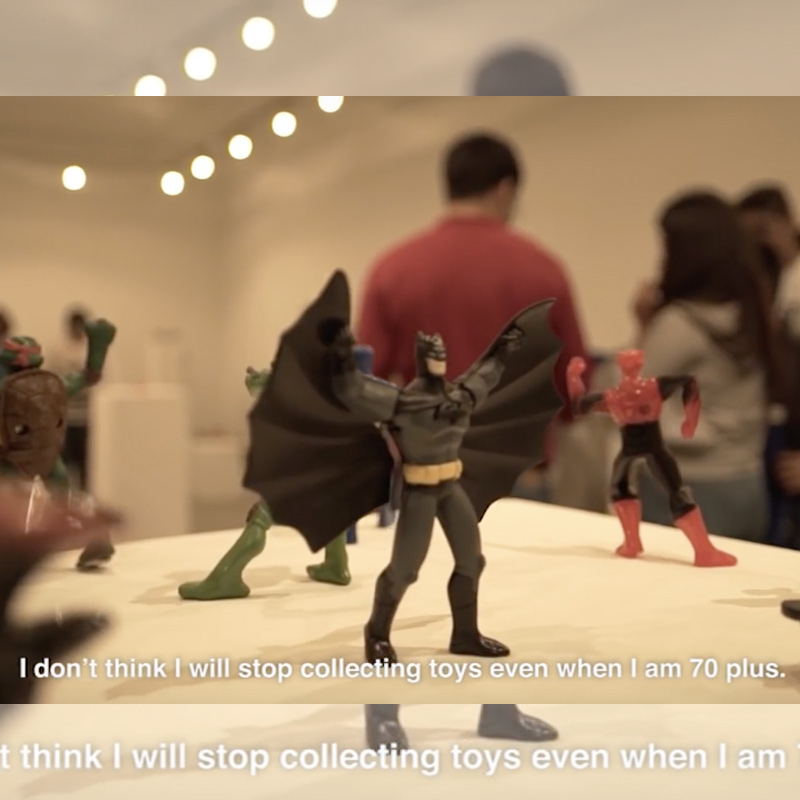
    MUMBAI: McDonald’s Happy Meal was best known for the toy that came with the pack. Now, the brand is allowing any meal to be made into a Happy Meal by adding a toy for just Rs 35.

    Inspired by the hundreds of entries McDonald’s received for the biggest Happy Meal fan search, the campaign focuses on kids of all ages — a unique search for the biggest Happy Meal Toy collectors in India!

    Conceptualised by Leo Burnett, the digital campaign brings to the fore the heart-warming story of Sunil Chawla, a 35-year-old man, based in Bangalore. Sunil has, over the years, collected over a whopping 300 Happy Meal toys! The film shows Sunil speaking fondly about how his obsession with the Happy Meal toys began. He describes his possessiveness and how over the years he’s made sure to travel far and wide just to complete his toy collection.

    McDonald’s India senior vice president of strategy, innovation and capability Seema Arora Nambiar says, “Since the launch of the iconic Happy Meals in India in 1997, it has grown in popularity. The toys that our customers have collected bring back the happy memories created over food. We wanted to celebrate the emotional connect that our customers have with the brand through their Happy Meal toys, which is why we have featured a real life Happy Meal toy collector and his story in this ad film!”

    Leo Burnett South Asia chief creative officer Rajdeepak Das adds, “There is a child in all of us, and we keep indulging this child with its favourite treats however old we may be. McDonald’s has just made it easier for everyone to embrace this child. We don’t stop liking toys, for instance, just because we grow up, do we? The joy of collecting toys knows no age. This simple idea got us to the story of Sunil, and we knew it was a story that our consumers would instantly resonate with.”

    The new campaign employs digital and social media as touch points.

  • Thumbs up asks people to #TakeCharge

    Thumbs up asks people to #TakeCharge

    MUMBAI: As the new Thums Up Charged makes it way to shelves across India, Coca-Cola India has launched a new campaign called, #TakeCharge featuring ever-energetic actor and Thums Up brand ambassador Ranveer Singh.

    The new campaign builds further on Thums Up’s unique expression of masculinity and belief that heroism is a choice for us to make and an opportunity to take. The campaign conveys that for any challenge that demands heroic action, the hero needs to get charged to rise up to that occasion.

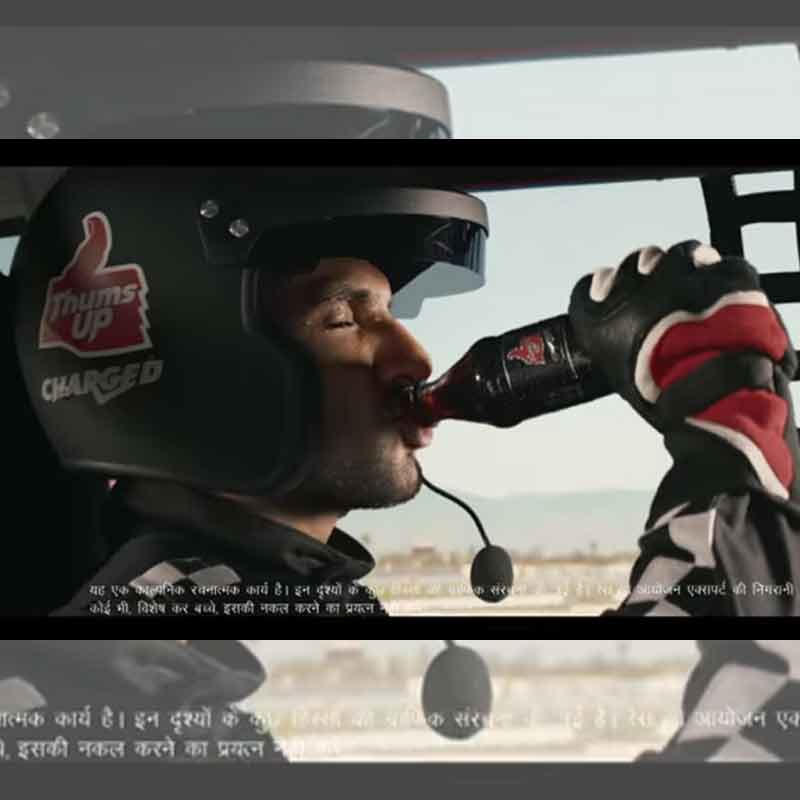
    The TVC opens to an international car race event where the protagonist is seen ready to hit the track in his car which is inscribed with the ThumsUp Charged logo. Focused on victory, with his ThumsUp Charged by his side, he starts manoeuvring his way past the other cars. Just as he’s about to take the lead, the car in front of him loses control and brings our car to a halt. Shaken but determined, the protagonist takes a gulp of his ThumsUp Charged and sets off to finish the race. As he charges ahead and victory is almost in sight, his gearbox jams. Epitomising the ‘Never Give Up Ever’ attitude, he puts his car in reverse and races to victory in a photo-finish.

    ThumsUp Charged is the first-ever variant of Thums Up that was recently launched by Coca-Cola India to celebrate 40 years of Thums Up. The company will be rolling out a series of initiatives including consumer-led engagement campaigns along with exciting marketing campaigns with its brand ambassadors through digital, social, traditional, and outdoor media channels.

    Coca-Cola India and South West Asia Director, Colas marketing Ajay Bathija says, “ThumsUp TVCs are all about seeking thrill, adventure, exhilaration and excitement and Ranveer Singh as a brand ambassador embodies all of that perfectly. The ‘#TakeCharge’ campaign is about taking the controls of life in one’s hands and overcoming adversities by not giving up hope. Our TVC captures this attitude and we are confident that the campaign will resonate well with all Thums Up lovers.”

    Actor Ranveer Singh mentions, “I distinctly remember when I first tasted toofani Thums Up and since then it has become my favourite cola. It’s an honour to be the face of this brand. The ‘Take Charge’ campaign is very close to my heart as I constantly push boundaries and don’t believe in quitting when a challenge is thrown my way. Challenges keep me going in life and make me strive harder to achieve my goals. I thoroughly enjoyed being a part of the campaign; it was an invigorating experience to perform as a car-racer.”

    Leo Burnett creative head Sainath Saraban adds, “ThumsUp Charged has an extra thunder in it just the kind of push that somebody needs to take his or her achievement to the next level. Even though the story is set in a massive car race that makes for grand theatre, it is an intensely personal journey about how a huge victory starts within your own self. When I wrote this film, I wanted to leave the viewer with a message that worked at a product level and was inspirational as well. If there’s one thing we want people to do after being exposed to this communication, it is to take charge.”

    #TakeCharge is a 360-degree campaign that will leverage mass-media on larger-than-life outdoor sites in the core markets of the product. The campaign also leverages key social media platforms of YouTube, Facebook, Twitter and Instagram.

  • HDFC Life promotes ULIP through anti-bullying campaign

    HDFC Life promotes ULIP through anti-bullying campaign

    MUMBAI: HDFC Life Insurance Company has launched a new ad campaign on Unit Linked Insurance policies for planning children’s future. The ad highlights the issue of bullying and conveys a message that parents need to empower their children to fight their own battles, making them self-reliant.

    The campaign emerged from a consumer insight that parents are inherently wired to be protective towards their children, but at the same time, they also want their children to be equipped with life-skills to navigate through the unexpected twists and turns that life throws their way. It shows parents’ efforts in preparing their loved ones for the future. The TVC will run for one and half months.

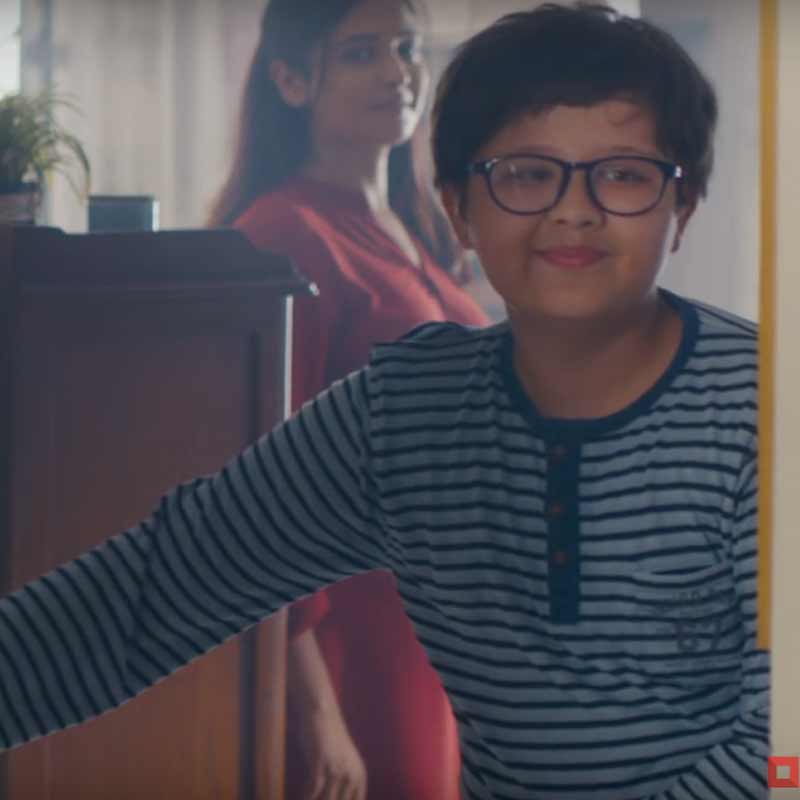
    The film narrates the story of a young boy who is bullied for his weight. The twist comes when the father, although concerned for his child’s well-being, sends him back to confront his tormentors. HDFC Life has tried to highlight the valuable life lessons that parents try to inculcate in their children; making them face their fears against their natural instincts of protecting their children. The film brings out the brand thought of ‘Apno Ko Apne Dum Pe Jeena Sikhao’, an interpretation of ‘Sar Utha Ke Jiyo’, showing the breadwinner of the family as more than just a conventional financial provider.

    The ad articulates the essence of the brand – helping your loved ones live with pride while making sure they have a secure future. And ULIPs offer dual benefits of growth and security which enables one to fulfil long-term financial goals and also ensures financial security. Thus, the campaign brings to light the necessity of not only providing financial strength in achieving future dreams but also the strength of character that helps one endure times of difficulty.

    HDFC Life executive vice president of strategic alliances, bancassurance and marketing Pankaj Gupta says, “As parents, financial security is not the only gift we want to leave behind for our children. We also want them to be emotionally independent. Our motto of ‘Sar utha ke jiyo’ is all about holding one’s head high no matter what the situation is.

    “Through this campaign, we aim to convey this in the context of a prevalent concern among children – bullying. Instead of showing the child as the victim and having viewers sympathising with him, we wanted to show how the right kind of encouragement from parents empowers and prepares him to face the future. Planning for the child’s future and securing it, is the priority for every parent. In fact, our research shows this as one of the key reasons for buying life insurance, especially the savings and investment plans. Our ULIP offerings enable parents to plan their child’s future over the long-term,” he adds.

    Leo Burnett South Asia chief creative officer Rajdeepak Das mentions, “To truly imbibe ‘Sar Utha Ke Jiyo’ in today’s world, we needed to understand what’s happening with the kids today. Of the many problems that they face today, bullying is something that kids are unable to tackle head on. We wanted to use this as a metaphor to highlight the importance of teaching children to be emotionally independent. I am proud of how our philosophy flows through this entire campaign, and I am confident consumers will relate to it and do what is best for the emotional health of their children.”

  • How agencies deal with defaulters

    How agencies deal with defaulters

    MUMBAI: The history of the advertising industry has its fair share of examples of client default on payments leading to agencies bleeding losses. A classic case is that of JWT Walter Thompson (Now known as JWT), having to wind up back in 1974 due to non-payment by clients. Although the company resurrected a few years later, it still shows that companies aren’t secure especially when clients declare themselves bankrupt.

    In a fresh case that stirred the conversation about defaulting clients, media agency Madison Worldwide and creative agency Leo Burnett have filed a case against Chinese electronic brand LeEco over non-payment of dues in India. It failed to make payments for the period from January-December 2016, for which Madison is suing the company for Rs 39 crore plus interest in a Hong Kong court, while Leo Burnett has filed a case in the Bombay High Court for its dues of Rs 2.65 crore.

    In a typical scenario, if an agency doesn’t pay the media on time, it stands to be blacklisted by the media and will lose its accreditation with the industry. This could be a deal-breaker for them since, without accreditation, agencies have to pay the media in advance for any further business. In such a situation, if the agency does not have a large amount of fund to spare, it might have to shut down.

    Dentsu Aegis Network chairman and CEO South Asia Ashish Bhasin says, “Sometimes clients delay payments because there is a genuine reason but quite often, clients default on the payments deliberately and that puts the agency in a tight spot. Although there is a legal route, it is often cumbersome and long-drawn and agencies don’t have that kind of bandwidth. But if there is no option, that is what they have to do.”

    Calling it unfair and need for stronger laws to be implemented for the same, Publicis Worldwide chief creative officer Bobby Pawar believes it should be illegal for clients to get away without paying for the services they’ve consumed. “It is very unfortunate as more often than not, it is the agency that has to bear the cost of it,” he says.

    For print ads, the credit period is usually 45 days from the month of activity. Here, the agency has to pay media, irrespective of client payment and earns only when the client pays. Non-payment or outstanding can result in blacklisting of the agency and all activities for the agency across all clients.

    For television and radio, the credit period is 60 days from the month of activity. The agency has to pay only after the client pays, and earns only when payment happens. Problematic clients or habitual defaulters are closely monitored by Indian Broadcasters Federation (IBF), the regulatory body for TV and radio. Serial offenders work mostly on advance while tripartite agreements are usually the norm.

    For instance, if a client owed the agency Rs 7.65 crore at a certain point in time which was long overdue, at five per cent media commission, the agency retained only Rs 38 lakh. Now if the client still has an outstanding unpaid debt of Rs 1.56 crores, the net amount is a loss of Rs 1.18 crore.

    Havas Media chief finance officer Pritesh Bhatnagar believes bad debts always hit the bottom line and its impact on P&L is always significant. “Agencies need to be more prudent in agreeing to the credit terms with clients. We ensure we follow our internal credit control guidelines and policies to safeguard our interests,” he adds.

    Ad agencies must compulsorily approach the Advertising Agencies Association of India (AAAI) to recover outstanding debts but with no assurance of recovery. At best, the AAAI can prevent the media from taking any new contracts from the same client.

    Extended credit lines are vital to maintaining a competitive edge and brands may be required to have credit insurance as part of a tender, to reassure stakeholders or satisfy the bank. Advertising and media companies face risks when selling and often rely on future bookings for media space and general advertising from a number of different providers. While credit checks are routinely conducted on new clients, it is impossible to track their status for the duration of the agreement. Remarking that the industry is starting to get a little more organised, Bhasin makes a point that stringent actions against such clients need to be taken not just by agencies, but also by involving various industry bodies. “It is important for agencies to do reasonable credit rating check for clients.”

  • Iodex helps women stretch their limits

    Iodex helps women stretch their limits

    MUMBAI: Women are known to be the ultimate multi-taskers as they perfectly manage their home and families while fulfilling their own dreams and ambitions. Bringing alive this insight, Iodex, a brand in India since 1919, has introduced an all-new campaign ‘Thodi Himmat, Thoda Iodex’ featuring actress Swara Bhaskar.

    Iodex, through this campaign, aims to be women’s everyday ally by helping them stretch further and explore their true potential.

    GSK area marketing lead for pain relief and respiratory health Saurabh Nandi says, “With our new platform – Thodi Himmat, Thoda Iodex, we are talking to the modern woman representing a progressive India. These are women who are not only giving their 100 per cent to their home and family but also stretching themselves physically to give their 110 per cent to do something extra. The extra could come with the desire of supporting their family financially or following their pursuits. In this journey, pain is inevitable. And instead of giving up, Iodex wants to convey to these women that all they need is a little courage and a little Iodex.

    The film features the eminent film actress Swara Bhaskar playing a Bharat Natyam dance teacher. It begins with her teaching dance to her students, and she sprains her back while showing them a slightly difficult step. To this, her husband questions her as to why she takes on so much work at once, be it her dance class or managing household chores. She says that she wants to equally take on the financial responsibility hence needs to be courageous. Her husband is touched and applies Iodex on her sprained back reiterating the brand’s proposition ‘Thodi Himmat, Thoda Iodex’.

    Leo Burnett, South Asia chief creative officer Rajdeepak Das says, “Women are the backbone of any household in a way that they keep the entire family together. They want to do more with their lives, and yet equally contribute to their households. We thought this was an exciting insight to bring to life, especially since a woman’s invaluable contribution is rarely spoken about across the entire category. I’m confident the campaign will hit home with our consumers.”

    The film has been executed by Prodigious India, Publicis Communications’ in-house production house.

  • Viacom18 promises to #OpenNewWorlds in new corporate film

    Viacom18 promises to #OpenNewWorlds in new corporate film

    MUMBAI: Viacom18 has launched a corporate brand film titled ‘Open New Worlds’. Conceptualised by Leo Burnett Orchard, the film commemorates the entertainment conglomerate’s completion of 10 years in India. The film will have an integrated reach and will be activated on touch points like outdoor, digital, in addition to the Viacom18 network.

    The montage film portrays the impact Viacom18’s lines of business have had on Indians across geographies, different ages, backgrounds, platforms, cultures and interests through its properties on air, online, on ground, in shop and through cinema. The narrative of the film is held together by an inspiring rendition of the brand philosophy in the title track sung by singer Jubin Nautiyal.

    Video Link: http://bit.ly/2hLk3l1

    Viacom18 head of communications and CSR Sonia Huria says, “While deliberating on the singular theme that would best describe the corporate brand salience, the one thought that kept resurfacing throughout our varied businesses and brands was how Viacom18 has been encouraging everyday Indians to explore possibilities, push their own boundaries, embrace opportunities and challenge norms. This was the genesis of the brand promise of ‘Open New Worlds’.”

    Leo Burnett Orchard executive creative director Amod Dani adds, “This project has been an interesting challenge right from the start. How do you introduce a decade-old media company, with immensely famous brands in its fold, that defines entertainment across genres, platforms and cultures, with a film that is more than just a corporate statement? The inspiring brand ethos that reflects the belief of the company helped us outline how each of Viacom18’s individual brands change lives of Indians every day. And how unlikely audiences connect with content, merchandise and derive inspiration and joy. Creating ‘Open New Worlds’ has been a highlight of our journey with the group, one that will live with us for a long time.”

  • Star Plus says #DontKillIdeas in first Ted Talks India campaign

    Star Plus says #DontKillIdeas in first Ted Talks India campaign

    MUMBAI: Star Plus and the global digital platform for ideas, TED, have come together to India to create a collaboration never seen before on television.

    A limited edition series, Ted Talks India Nayi Soch, will launch on 10 December 2017. Airing all week long, the series aims to inspire the nation to embrace and celebrate ideas

    Social conditioning, rote learning and risk aversion are the culprits that prevent us from letting our ideas come to life and are hurdles to realising our vision to be an innovation powerhouse.

    This cultural insight is at the heart of the campaign of Ted Talks India Nayi Soch as the first look went live on 18 November 2017.

    Two films Gudiya and Bobby Ka Idea focus on how ideas that could have potentially provided a way out of the drudgery of life are systematically discouraged and killed. #DontKillIdeas is the central theme on which the first look of the marketing campaign is based.

    Star India consumer strategy and innovation president Gayatri Yadav said, “It’s an important and pertinent message from the brand that encourages new thinking (Nayi Soch), about how a seemingly ordinary idea comes with the immense power to transform lives.”

    Star Plus business head Narayan Sundararaman mentioned, “Ideas are often dismissed as figments of people’s imagination. Yet, every great achievement, discovery or invention starts with an idea. It’s time we put a premium on ideas. All of us at some point in time or the other have been victims of our ideas being killed or have been responsible for killing ideas. These simple slices of life films bring out this point vividly and with a disarming charm. The films have been conceptualised by the creative agency Leo Burnett India and directed by Nitesh Tiwari of Dangal fame”.

    At the show’s unveiling some months ago, Star India CEO Uday Shankar said that TV should also offer content that feeds the human passion for knowledge, stokes curiosity and inspires people. Nayi Soch is produced by Freemantle India with Shah Rukh Khan as host. This is the first time TED has moved out of the English language.

    There will be a mix of speakers, thinkers and doers from India who questioned norms and brought forth ideas that have the potential to inspire many.


  • Ranveer Singh plays an offbeat mechanic for HP Lubricants

    Ranveer Singh plays an offbeat mechanic for HP Lubricants

    MUMBAI: HP Lubricants has rolled out a tongue-in-cheek and vibrant integrated campaign for its motorcycle engine oil HP Racer. The campaign, featuring popular Bollywood actor Ranveer Singh, emphasises the importance of using the right engine oil for bikes to both, bike owners and mechanics. The new campaign is conceptualised and executed by Leo Burnett India.

    The TVC opens with a young biker riding into a garage and asking the mechanic to refill the engine oil in his bike. To this, the mechanic asks if he wants regular engine oil or HP Racer. The customer reacts indifferently saying he doesn’t care. In comes Ranveer Singh along with other mechanics, rapping the superior benefits of HP Racer.

    HPCL executive director of direct sales Rajnish Mehta says, “In a strategic move to improve visibility and brand recall of our ‘Power Brands’, we believe that Ranveer Singh, as the face of the brand, will help strengthen our association further with biking enthusiasts and mechanics. Engine oil is a low-involvement category, and we are confident that this campaign will see consumers voluntarily opting for the technologically superior HP Racer.”

    Leo Burnett South Asia chief creative officer Rajdeepak Das adds, “Ranveer Singh’s infectious energy and natural connect with all audiences lent themselves seamlessly to the film. His portrayal as a mechanic is sure to strike the right chord with our primary audiences – the mechanic community and youth of the country – predominantly bikers. I’m confident that our customers will remember the catchy rap and Ranveer’s jig in the HP Racer film for some time to come, especially since it is so relatable.”