Tag: Leo Burnett India

  • “Special ads will soon start storming in for mobile phones:” Rajdeepak Das

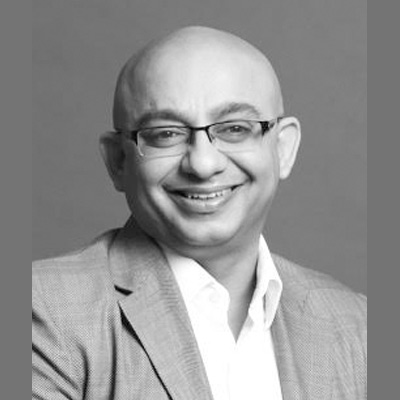
    “Special ads will soon start storming in for mobile phones:” Rajdeepak Das

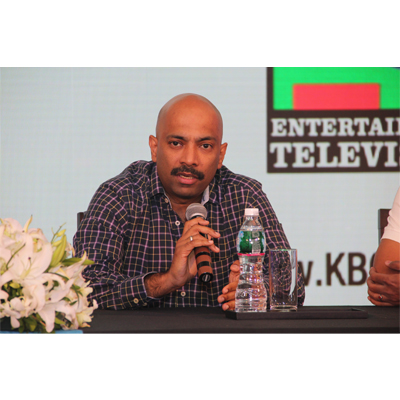
    At a young age he decided to convert his passion into profession. At 21 he made his first ad and by the time he was 23, he joined Contract Advertising. At 25 he was off to BBDO Bangkok where he waited outside the office for 17 days as the security did not allow him to go inside due to a language problem.


    At 28 he started BBDO Mumbai with five creative officers and five interns and took the company to new heights. He has many accolades against his name and one of them is being the youngest executive creative director. He is Leo Burnett India chief creative officer Rajdeepak Das.


    A Bob Dylan and Steve Jobs fan, a firm believer in Hope, Faith, Love and Charity, Das speaks to Indiantelevision.com’s Anirban Roy Choudhury about the changing advertising industry and the role that mobile is going to play in near future.


    Excerpts:


    Do you think the ad fraternity will have to start adapting to the growth of smartphones in India?


    Special ads will soon start storming in for the mobile phone where the format is not landscape anymore. It will be more candid, more catchy, sometimes longer and interactive. Mobile opens a number of avenues like geo-targetting. For example, there is no point in showing a Bandra person, an ad about Delhi. Moreover, mobile also enables us to know the behavior and attitude of users. The adaptation has already started and the ad fraternity is creating special creatives and strategies for smart phones.


    Do you think the device mobile phone is used a little too often in ads now?


    We have 300 million TV and 500 million mobile phones and therein lay the answers. In next 10 years, the country will have 1.2 billion mobile phones, which will be three or four times more than a TV. People are on Facebook, Whatsaap, Twitter and the amount of time they spend on the mobile is way more than TV. The time spent on mobile phones is only likely to increase more with time.


    Let’s take prime time for example. What has happened to prime time? It used to be from 7 pm – 10 pm but that has changed. Now the prime time is the time you are in the toilet or traveling. The phone has enabled us to decide our prime time where we can consume content at our own convenience. The mobile phone is a major target of brands and hence in every second ad there is a phone on the screen.


    Do you think different treatment should be given to campaigns curated for a high magnitude and prolonged event like IPL to avoid repetitiveness?


    Vodafone came up with 52 days 52 ads with their Zoo Zoo campaign during IPL. So variety is possible. We launched around five ads during this IPL. Sometimes repetition is necessary to make something noticeable hence you can’t totally get away with it.


    What role is social media playing in advertising? Are shares and likes becoming one of the prime demands of clients?


    I think this is one of the best times to be in the creative field. While we are solving clients’ problems, it’s not about shares and likes. It’s more about creating something that addresses the problem.


    Gone are the days when advertising was just creating an ad. Now it is about understanding issues like clients problem, business problem etc. At times you might not even need an ad. A simple change in packaging, understanding the ground territory or understanding what people want can do the trick


    At Burnett, we follow the philosophy of Human Kind, so we try to understand the problem from people’s point of view. Social media has emerged as a weapon for us. The interaction has become faster, we get to know the reaction immediately and if we see that we need to correct it somewhere, we go ahead and do it.


    Crash the IPL was a great example of crowd sourcing. Do you think following its success, it can become a trend and disrupt the ad agency?


    If I want something to be written, I can go to the crowd. There are many amateur writers. All of them will send something but will it carry a solution for the brand? Maybe… maybe not.


    It is not necessary that quality content can become a quality solution. So with crowd sourcing, the chances of hit are less and miss are more while an agency will surely provide you with a solution.


    Interaction with crowd will always be there. There will be more interactive creative campaigns, which will make people talk about it. But for the time being, I don’t see crowd sourcing becoming a trend and hurting ad agencies.


    Due to YouTube and other technical innovations, foreign ads have become easily accessible and with that emerged a competitive debate. Where do you see us compared to them?


    What works in India will work anywhere in the world. We cry, we smile, we fall in love, we have desires and greed and that’s the same everywhere. I love Japanese ads and ads of Thailand. So if it is good work, it will garner global recognition.


    The difference is in quality of production. Their crafting is better than us and they exhibit some quality work. Having said that, we are not far behind. Our directors are getting better as is our story telling. At the creative thinking level, we are at par if not better than them.


    Do you think out of the box ideas, which once created can be recreated? And if it is recreated, will it work?


    It depends on the story telling and how well the execution is. Dil Chahta Hai,Zindagi Na Milegi Dobara and Rock On had the same story. Did it work? Of course it did. It worked and it became bigger and better. So out of the box concepts will always stand out and there will be many more recreations. It will be a mix of new and old, depending on the need of the brand. Everything will work if it is done eloquently.


    What should young minds who aspire to become an ad man do? Is classroom education enough?


    Classroom education is not enough. They should start working as soon as possible. Work for small clients, less money but work. They should start practicing the art as early as possible. The greatest of minds in this world are college dropouts. I am not insisting anyone to dropout from college but them becoming big have a reason.


    They learn by themselves. For them, learning 5+5 = 10 is not as easy as it is for someone in college and schools. In the process of learning 5+5 = 10, they learnt 10 different things, which made them what they are. I want all of them who aspire to become an ad man to start working as early as possible and that will take them a long way.


    What do you like about the advertising industry and is there anything that the industry should change?


    The beauty of our industry is that whether it is an intern or a chief creative officer, we all start by looking at an empty white page. Whoever cracks the idea and comes with a better concept is victorious. So there’s a subtle unanimity in all hierarchal positions. In other words, there is no boss or everyone is the boss.


    The thing that the advertising industry needs to change is to stop making an ad, if it is not necessary. An ad is not the solution of each and every problem. We should understand the problem and address it. After duly understanding the problem, if there is a need of an ad, only then should we go for it. Ads shouldn’t be a subject of hatred for consumers. We can’t keep interrupting someone with a pop-up ad. By doing that, we will only manage to get skipped and nothing beyond that.


    What’s the way forward for Rajdeepak Das?


    I love what I do and there is one thing that I will do till my last breath and that is ads. I want to keep making quality ads provide creative solutions to brands, which helps them rejuvenate their statistics. I believe in the four magical words that I saw written on Steve Jobs’ grave: Hope, Faith, Love and Charity and that says it all.
  • Publicis Groupe’s H1 profit drops down 17 per cent, exchange rates impact numbers

    Publicis Groupe’s H1 profit drops down 17 per cent, exchange rates impact numbers

    MUMBAI: With the slowdown of global economic activity since the start of the year and economic uncertainties prevailing in several regions of the world, Publicis Groupe has announced that its second-quarter performance was well below that of the first quarter. The company saw a 16.9 per cent fall in first-half net profit to Euro 260 million as compared to the Euro 313 million in the corresponding half of the previous calendar year-2013.


    Due to the substantial impact of the strong Euro (Euro 81 million negative impact in Q2 alone), the Group’s reported consolidated revenue for Q2 2014 was Euro 1,761 million, down 1.5 per cent as compared to the Euro 1788 million in H1 Q2 2013.


    The group says that organic growth of just 0.5 per cent was largely due to unfavourable comparable (+5.0 per cent in Q2 2013), but also to the persistent weakness of certain markets and investments on the part of a number of clients who substantially downsized their budgets.


    In a statement published on the group’s official website, Publicis Groupe chairman and CEO Maurice Lévy said, “The first half-year was heavily impacted by exchange rates which had an adverse effect on revenue of Euro 148 million. At constant exchange rate, revenue would have increased by close to 5 per cent during the period.


    As we predicted last fall, growth stalled in the second quarter. However, it should be underscored that weakness was stronger than expected mostly due to the cancellation or postponement of campaigns and lagging economies in Europe and in emerging countries. Our organic growth was +1.8 per cent for the first half-year. Our margin remained strong, though fractionally down, as a result of accounting treatments and lagging growth.”  


    Lévy conceded, “These figures are not satisfactory by our standards. They are not consistent with what our operations can achieve. As can be seen from our digital growth (+8.8 per cent) or the numerous awards from various juries (Gunn Report, Gartner and an impressive haul of awards at the Cannes International Festival), our strategy is spot-on and our networks are at the cutting edge of the industry. For the second part of the year, we can confirm that we are already on track for higher growth, and this should be evident as of the third quarter.”


    “Given the situation in Europe and the slow pick-up in the emerging economies, we prefer to be extremely cautious on growth prospects and prioritize cost control in order to achieve a margin closer to our goal for the full year.


    Although 2014 will be a difficult year, it does not undermine our mid-term prospects. Our business plan between now and 2018, as announced on 23 April 2013, is currently being revised to factor in market developments and the investments required reaching our transformation goals ahead of schedule. The strong feedback from our entities leaves us very confident about achieving all our goals,” he concluded. 


    It was in May 2014 when Publicis Groupe and Omnicom Group have called off their $35 billion merger. Levy then in a statement mentioned, “The decision to discontinue the process was neither pleasant nor an easy one to make, but it was a necessary one.” Experts believe the deal failed majorly because of tax issues.


    Four regions contribute to Publicis Groupe’s revenue- Europe excluding Russia and Turkey, North America, BRIC + MISSAT (Mexico, Indonesia, Singapore, South Africa and Turkey), and the rest of the world.


    The group says that Europe (excl. Russia and Turkey) remained negative overall (-0.3per cent), while all the other regions reported growth in the first half-year. North America recorded growth of +2.8 per cent, and continues to show resilience.


    The BRIC and MISSAT countries achieved growth of +0.4 per cent though the good performances of Russia (+5.9 per cent), Mexico (+10.3 per cent), Turkey (+2.5 per cent) and Singapore (+7.2 per cent) were overshadowed by the Greater China region’s slower-than-expected return to high growth (+1.4 per cent) and by negative growth in Brazil (-0.6 per cent). India’s -14.7 per cent adversely affected the BRIC group. The economic slowdown observed since mid-2013 in emerging countries has had a significant impact on advertising investments. The rest of the world, which includes Australia and Japan, reported growth of +5.6 per cent.


    On 30 January 2014, Publicis Groupe acquired a major stake in Indian based advertising agency Law & Kenneth. In an unprecedented move, Law & Kenneth took over the Indian operations of Saatchi & Saatchi and now is called L& K Saatchi & Saatchi. During the first half of the year, the holding company’s BBH India won the creative mandate of Viber (India) and Piaggio Vehicles’ Vespa (India), while Leo Burnett India added MAA TV to its kitty.


    Click here to read the financial report

  • KBC8: Strumming the heart strings of viewers

    KBC8: Strumming the heart strings of viewers

    MUMBAI: It’s Big B time on Sony Entertainment Television.  Almost 14 years after he mesmerized the nation with his baritone voice as the host of the first season of Kaun Banega Crorepati (KBC), Amitabh Bachchan  made his fictional debut in  a drama series Yudh on the Hindi GEC earlier this month. Come mid-August, and viewers of Sony will get to see more of the thespian as the first episode of the eight season  of the quiz game show hits TV screens.


    KBC8 – as it is being called – promises a lot and the channel is banking heavily on it to boost its viewership and pull it out of its fifth placed spot amongst GECs.  Like previous years, Sony Entertainment’s marketing mavens are putting their best foot forward to help it build a better connect with audiences.


    “We sat and thought about what we have said and done in the past so that we can come up with a new concept this time,” says SET senior VP and marketing head Gaurav Seth. “The conclusion we came up was that whatever be the case, Big B and a few contestants over these past years have been able to win million of hearts. Hence, came the new communication, which is – Yahan Sirf Paise Nahi, Dil Bhi Jeete Jate Hain. ”


    Conceptualised by Leo Burnett and executed by Opticus,  the underpinning thread of KBC’s promotional campaign this year will center around social issues gripping the nation.  Three films, each with a different story, character, set-up and theme, will be aired over the coming few days on TV and released in social media.


    The first of these titled ‘Kohima’ touches upon the sensitive issue of racialism or discrimination that people from the northeast face.


    Just over a minute long, the TVC  opens with Amitabh Bachchan asking Poornima, a young contestant hailing from the northeast, “Which country is Kohima in? (A) China (B) Nepal (C) India or (D) Bhutan.”


    The contestant opts for an audience poll (a lifeline in the game show) and 100 per cent of the respondents say India. Bachchan tells her, “it’s India, everyone knows this answer” to which the young contestant replies, “Everyone knows the answer, but how many people actually acknowledge it?”


    The film ends with the message ‘Yeh khel kuch aisa hi hai, yahan sirf paise hi nahi dil bhi jeete jaate hain.’


    It took three-four months of brainstorming, a lot of hard work by all the concerned entities (Sony Entertainment, Big Synergy, Leo Burnett) to weigh the pros and cons, before the theme was finalised.


    Leo Burnett executive creative director Nitesh Tiwari says the first challenge for him was to be innovative and avoid repetition. Says he: “This is the fourth year I am being associated with the channel. In the last three years, we had done it all, so the biggest challenge for us was how to make it different this season.”


    The creative agency’s CEO Saurabh Varma believes Tiwari and his team have come out with a winner as the KBC8 ads effectively use the power of communication to raise the collective conscience of the nation.


    He asserts: “Over the years we have noticed that people wait for the KBC promos as much as they wait for the next season of KBC. And the participants who reach the hot seat take more than just money from the KBC stage. Our latest promos take this insight to a larger, national and social canvas. The ads effectively use the power of communication to raise the collective consciousness of the nation.”


    Pantvaidya too is pleased with the way the three TVCs have been filmed (for the first time in Gujarat), adding that stereotypes have indeed been broken.  What must be making him happy is the number of views that the Kohima film has garnered on Youtube since its release on 8 July:  584,251 views, at the time of penning the article.


    Promos aside, Pantvaidya is pushing below the line activation in a big way in the coming weeks to build a face-to-face connect between KBC8 and Indians on the streets.  Marketing spends according to sources have been upped by 30 per cent or so.


    “We believe that we need to address these consumers by reaching out to them and that is the real thought behind all our campaigns,” adds Pantvaidya.


    The direct-to-consumer push includes Amitabh Bachchan  hosting four events across four cities; Surat being the first one. Another100 ground events are slated to be held in smaller towns which will give small-town-ers an opportunity to play along and get a chance to sit on the hot seat and try his/her luck to win the cash price of Rs 5 crore. This aside, viewers will also be encouraged to play the game real time through the KBC8 application on their hand held devices like mobile phones and tablets.


    As far as each episode of KBC is concerned, its length has been cut to an hour as against an hour and a half last year. Then, a new lifeline has been added called the community lifeline, which allows contestants to call any one in the community for help if they find a question tricky.


    Production for KBC8 is in the able hands of Siddhartha Basu’s Big Synergy Productions with filming slated to start in end July.

  • Leo Burnett India expands its senior creative team

    Leo Burnett India expands its senior creative team

    MUMBAI: Close on the heels of the announcement of RajDeepak Das joining the Leo Burnett Group as chief creative officer comes new of Prajato Guha Thakurta and Sachin Kamble joining the agency.


    The two will join in as associate executive creative directors. Thakurta and Kamble will be based at the head office in Mumbai and will work closely with RajDeepak.


    Leo Burnett Group CEO Saurabh Varma said, “Leo Burnett continues to be a magnet for incredible creative talent. We want to build the momentum with the hire of Prajato and Sachin.  They have an excellent track record and have proven their mettle by creating some outstanding integerated campaigns. We look forward to having them join a super charged Leo Burnett.”


    Added Das, “With a special affinity for digital, design and technology, I am really happy to have the duo on board.  It will be fun working together with them on integrated campaigns across Leo Burnett India’s diverse portfolio of brands.”


    “Times are changing and getting even more demanding and dynamic by the day. Leo Burnett is recognized for the wonderful integrated campaigns they’ve created for their clients worldwide. I am very keen and excited to be a part of this great agency and working on some of the iconic brands in their portfolio,” said Thakurta


     “It is an exciting and opportune time to be at Leo Burnett India. I am thoroughly excited to be a part of the trajectory path of Burnett 2.0 as drawn by Saurabh and visualised and articulated by RajDeepak in our interactions. It would be amazing to see what new we can do together,” mentioned Kamble.

  • KV Sridhar quits Leo Burnett India

    KV Sridhar quits Leo Burnett India

    MUMBAI:  KV Sridhar (Pops) has finally decided to move on. Leo Burnett India and subcontinent chief creative officer will be hanging his boots on 4 May, after spending 17 years in the agency.  


    Pops has over 30 years of working experience in advertising and has now decided to take the leap to reinvent himself and pursue other interests.


    “Pops has always been a young man at heart and once again his nomadic spirit has led him to look at things afresh and follow his heart to pursue new adventures. We want to thank him for his tremendous contribution over the years, building Leo Burnett India into the creative powerhouse it is today. The agency and I will continue to build on the creative trajectory he has set,” said Leo Burnett Group India CEO Saurabh Varma.


    He started as a Bollywood film billboard painter and became the CCO  India  sub continent  of  Leo Burnett.  Over  the  years,  he helped the agency gain recognition at international awards shows including Cannes  Lions,  New  York  Festival,  and  local  Indian  awards.  Under his creative leadership, Leo Burnett India went on to win agency of the year in the Leo Burnett global network, twice. He also led the agency to be ranked by Creativity magazine to be among the top 20 creative  agencies  in the world.   Sridhar   has   also represented   the agency   on  many  Indian  and International award juries.


    “It  has  been  a  purposeful  journey  for  me  at  Leo  Burnett, growing with and having a chance to play a key role in shaping the agency’s creative  prowess.  I have had the opportunity to work  with and get to be friends with some of the brightest creative minds in the world, worked on some of the most exciting campaigns with some of the most amazing clients.


    For now, I would like to take a break to reinvent, rediscover and rededicate myself. I wish Saurabh and Leo Burnett great success,” said Sridhar

  • Pops and Amir Kassaei on New York Festivals 2013 jury

    MUMBAI: Leo Burnett India chief creative officer India Sub Continent KV Sridhar, fondly called Pops, and DDB Worldwide Chief Creative Officer Amir Kassaei have been selected to be part of New York Festivals International Advertising Awards. The announcement was made after the second round of appointments to the 2013 Executive Jury. Since 2011, NYF has assembled a group of worldwide creative officers brought together to select the world‘s best advertising.

    The second round of the 2013 Executive Jury Members includes:

    • Leo Burnett, India chief creative officer India Sub Continent KV Sridhar,
    • JWT US president, chief integration officer Mike Geiger
    • DM9 Jayme Syfu, Philippines chairman, chief creative officer Merlee Jaymee
    • DDB Worldwide Chief Creative Officer Amir Kassaei,
    • Havas Worldwide US chief creative officer Jason Peterson
    • Y&R Asia, Singapore Chief Creative Officer Asia Marcus Rebeschini

    Additional executive jury appointments are forthcoming. International Awards Group/New York Festivals president MichaelO‘Rourke said, “The 2013 Executive Jury will evaluate only the Shortlist selected by the NYF‘s Grand Jury. This process of the Executive Jury evaluating entries during five rounds of judging allows each entry to be given the utmost attention. To have your work seen by a jury with this much combined experience makes earning an award in the New York Festivals International Advertising Awards a testimony to the creativity and originality of the entry.”

    The NYF Executive Jury will convene in New York City from 27 April – 1 May, concluding with the New York Show awards presentation on 2 May.

    The executive jury evaluates every shortlisted entry selected by the online grand jury, comprised of 400+ international executive creative directors, making it the most diverse jury of any advertising competition in the world.

    New York Festivals will host the 2013 celebration of the World‘s Best Advertising with The New York Show, a two-day series of creative events held at the New York Public Library‘s Beaux-Arts building in New York City. Festivities will be held on 1 and 2 May 2013 and includes the Executive Jury Press Conference, keynote speakers, creative panel discussions, networking events, and exhibits of the shortlisted work. Thursday evening features the 2013 New York Show awards ceremony and after-party to honor the winners in New York style.

    New York Festivals International Advertising Awards receives entries from 70 countries, recognizing work in all media in the following competitions: Avant-Garde, Branded Entertainment, Creative Marketing Effectiveness, Design, Digital, Direct & Collateral, Film, Integrated, Outdoor, Print, Public & Media Relations, Public Service Announcements, Radio, and Student.

    The deadline for the 2013 competition is 27 January 2013, entries received after this date are subject to a 15 per cent rush fee.


  • 2012: Industry unites to avert deadlocks : Arvind Sharma, Chairman of Leo Burnett India Sub-Continent

    2012: Industry unites to avert deadlocks : Arvind Sharma, Chairman of Leo Burnett India Sub-Continent

    As the ancient Chinese proverb goes – May you live in interesting times! 2012 was certainly an interesting year. Worsening economic conditions caused India‘s GDP growth rate to fall dramatically and its credit rating to be downgraded (much has been written about its causes and remedies). The telecom industry survived the impact of an unprecedented cancellation of 122 licenses. Clients approached life with what is euphemistically called ‘cautious optimism‘. In the middle of all this action, there were a number of good campaigns and a number of unorthodox marketing initiatives – Goafest is round the corner and we‘ll celebrate these soon. These included an unlikely one by Arvind Kejriwal. I was amused that his party‘s name came out of a slogan I had written for the 2004 Congress election campaign, ‘Aam Aadmi ko kya Mila?‘

    Each one of these topics is worthy of a piece in itself. However, in this piece I am writing about a new perspective. A perspective derived from a very unique situation that my industry colleagues put me in. I was requested to perform three industry level roles – each one of them probably a whole job in itself. The roles were that of the President of Advertising Agencies Association of India (AAAI), Chairman of Advertising Standards Council of India (ASCI) and a member of Readership Studies Council of India (RSCI).

    For the last several years, the broad view that industry bodies have been taking was that they represent special interest groups and they must confront associations and institutions which represent other groups. This philosophy has merits – it is fair and legitimate that all sections of the industry aggressively push their viewpoints and interests. However, demerits of this approach should be equally obvious. If every association is locked into an inflexible position of self interest, you only have deadlocks and ‘cliffs‘. 2012 was a year where my colleagues across associations, took a U-turn on this mindset. We were able to resolve a number of deadlocks that had dogged the industry for years.

    Audit Bureau of Circulation (ABC), promoters of erstwhile National Readership Survey (NRS), and Media Research Users Council (MRUC), owners of Indian Readership Survey (IRS), not only came together but actually agreed on all the improvements that were required in readership studies. They agreed on major methodological issues. They even agreed on choice of a new research agency to conduct the new IRS.

    On the TV measurement front, Indian Broadcasting Foundation (IBF), Indian Society of Advertisers (ISA) and AAAI actually signed an agreement to create the Broadcast Audience Research Council (BARC). And surprise surprise! Everyone agreed on the choice of the technical committee chairman! Hopefully, BARC will now move forward and deliver us a new TV audience measurement system in around a year.

    A few years ago, an attempt to introduce digitisation under the name of Conditional Access System (CAS) in metros failed miserably. One of the reported reasons for the failure was that under CAS, measurement data is bound to be unstable for some weeks which resulted in unexpected winners. The winners tried to make the most of their weekly bonanzas and the losers retaliated by withdrawing support for CAS. AAAI, IBF and ISA, looking at the big picture, agreed to suspend release of audience measurement data for a few weeks. Of course, the then Minister of Information and Broadcasting, Mrs. Ambika Soni‘s role in making digitisation possible has been recognised across the country. However, the role that the three associations collectively played to ensure successful implementation of this law has been critical.

    On regulation of advertising content, similar positive and collaborative dialogues are under way between ASCI and various other institutions.

    Various institutions and industry associations do represent interests of various segments of the society and business. However, in 2012, the wisdom that segments cannot improve their lots unless the whole improves, is the wisdom that prevailed. I fervently hope that this will continue to be the industry‘s mindset as we move forward to address many issues that the society at large and the industry face moving ahead.

    With some definite signals and many forecasts optimistic of a better year ahead, I eagerly look forward to 2013. I believe that it will not just be an interesting year but a year of growth and progress for all of us. Wishing everyone a happy 2013!