Tag: Lenskart

  • Brands halt retail expansion; focus on online models

    Brands halt retail expansion; focus on online models

    NEW DELHI: As the digital media started to pick up pace in India, retail brands like Pepperfry, Zivame, Nykaa, Lenskart, UrbanLadder, cropped up with entirely online business models. Slowly, they began to enter into the offline space to help customers engage with the brand in multiple ways and maintain recall factors. But with almost a 50 per cent drop in footfall and high rent rates, companies are unable to sustain. It’s not uncommon to hear of layoffs as well.

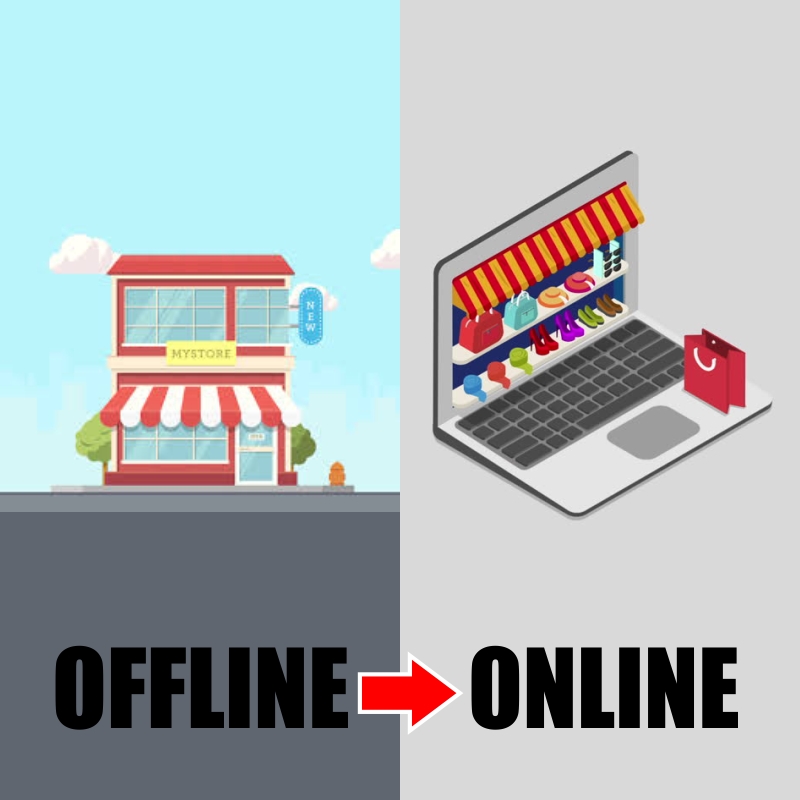
    The reverse phenomenon is happening now. Offline retailers are going online as they see that’s where maximum sales will happen. Most of them have paused omnichannel expansion across India.

    Furniture e-commerce brand Pepperfry had delayed its plans to launch new stores to mid-June due to the lockdown but has now resumed their offline expansion. The brand used to get 38 per cent from offline sales. As per media reports, fashion retail brand FabAlley is also dealing with the same issue. The brand has around 430 stores across India out of which only 200 are currently open. However, its online sales have picked up at a higher pace.

    Even cosmetic brand Nykaa, which extensively forayed into offline stores, has also taken a blow due to the lockdown. According to reports, the brand believes online is the only option to bounce back. 

    Business strategist and angel investor Lloyd Mathias explains, “Shutting down brick n mortar stores will certainly impact business revenue in the short term. Categories which are overly dependent on physical stores such as spas and salons and luxury goods will take a big hit and some permanent loss of revenue.”

    However, Brand-nomics MD Viren Razdan feels, “It depends on the digital maturity of the product category and within that, the role your brand has played up until now. Have you been a late entrant to the digital play or were you up ahead in the game? New categories would have teething issues such as jewellery shopping might not have the comfort of first-time digital shoppers.” 

    According to the Retailers Association of India (RAI) report, malls in India have registered negative growth and the street retail shops have also seen a decline. 

    The lower demand for offline shops in India is due to the touch-based factor and even brands like FabIndia have started a new category of ‘experimental zones’ for better engagement. Once the situation returns to normalcy, brands will prefer an offline medium again.

    Independent communication and marketing consultant Karthik Srinivasan shares, “Offline behaviour in India is deep-rooted, and the fact that digital money and internet availability is not 100 per cent, an offline presence is a necessity. Offline is an experience-led medium. Most brands that go back to offline would probably start questioning what they are bringing in terms of the experience that cannot be mirrored online. And that difference is what will help them continue because if everything else can be done online, there is no need for the offline version.”

    Mathias also feels that brick and mortar presence will remain relevant for consumers who want the look and feel of real shopping. “A large section of consumers will always like this option available to them. So, while the Covid2019 pandemic has been a set back to the offline stores – over time they will come back. However, for many this period has broken the stranglehold of brick and mortar with increased adoption of digital payment options and the sheer number of first-time online shoppers,” he asserted. 

    “India will always have markets with our country operating at varying levels of sophistication in technology adoption, so a phyigital reality will have room to play for some time to come,” Razdan shares.

  • John Jacobs aims to clock Rs 500 cr rev by March 2021

    John Jacobs aims to clock Rs 500 cr rev by March 2021

    MUMBAI: Eyewear brand by Lenskart, John Jacobs is aspiring to drive Rs 500 crore in revenue in the coming two years as it will strengthen its retail presence and expand the product portfolio by adding six more stores in next two months. The brand already has eight stores spread across Delhi, Pune, and Bengaluru. It is also aiming to set up about 50 stores by March 2021.

    John Jacobs business head Manan Duggal shared that the brand is witnessing strong growth. “We expect to close this fiscal with a top line of Rs 180 crore. By March 2021, we expect our revenues to touch Rs 500 crore.

    He added that about 40 per cent of the sales are driven by online channels, with the rest coming from offline stores.

    Last year, Lenskart had said it will invest $4 million in John Jacobs to fuel the brand’s expansion plans.

    “We are aggressively growing our presence both in online and offline. The brand is already retailing through Lenskart outlets (over 450 in more than 100 cities). The aim is to take the number of our own stores from 8 now to 50, by March 2021, covering all major metro cities,” he said, adding that the store expansion will entail investment of about Rs 10-15 crore.

    John Jacobs is also in discussions with fashion retail chains for distribution of its products.

    “In terms of online reach, we are already there on Lenskart and Amazon.in and will soon be available on Flipkart as well,” Duggal said, adding that the brand is aggressively expanding its product portfolio as well.

    John Jacobs recently introduced a new eye-wear delivery model where the brand delivers eyeglasses, fitted with powered lenses, in a 20-minute time-frame.

    The service, currently available in select stores in Bengaluru, will be expanded to Delhi and Pune as well, Duggal said. He added that with the new service, the brand expects to see 30-40 per cent upside in orders.

  • Going from clicks to bricks

    Going from clicks to bricks

    MUMBAI: Nothing beats the feeling of being served at your doorstep and this convenience is what has thrust e-commerce to pole position among shoppers worldwide. Add to it the ease of picking, cross-checking prices across sites and the frequent discounts are the cherries on the cake.

    The growth of e-commerce became evident since 1994, with the first sales of Sting album in the United States. Soon, products like wine, chocolates and flowers became the pioneering retail categories which further fuelled the growth of online shopping. Before long, researchers dug out that some products are more appropriate for e-commerce buying than others – most of them turned out to be generic items which didn’t need physical touch validity. Nothing isn’t online today, you name a product and it’s up for purchase.

    India officially went online publicly in 1995; before that, it was only for research and educational institutes. It was in the early 2000s when India was introduced to a novel way of purchasing – teleshopping. With the advent of the internet age here, this hopped onto the web with Flipkart being one of the earliest entrants. Starting with books, the Softbank-backed company is now giving a tough fight to America’s Amazon.

    Old teleshopping TVC:

    Today, India has an internet user base of over 450 million, which accounts for 40 per cent of the country’s population. NASSCOM has projected the country’s e-commerce market to be worth Rs 2 lakh crore this year. As per Google, there were 100 million online shoppers in India in 2016. Online apparel is one of the most popular verticals, which along with computers and consumer electronics, makes up 42 per cent of the total retail e-commerce sales. According to various media reports, India’s online retail market grew at about 25 per cent in 2017 and is projected to touch $20 billion by the year 2020. It won’t be incorrect to say that it has been a joyride for online websites and e-commerce platforms in India.

    But things seem to be changing now. Following a successful run in the online world, e-commerce companies are now venturing into a space they once thought would soon see the same fate as dinosaurs— brick and mortar stores.

    Globally, this phenomenon has taken the industry by a storm. Large organisations that were leaders in online have taken the route of opening physical stores or pop up shops. E-commerce marketplace Amazon is one such example. The global giant has teamed up with Calvin Klein to open holiday-themed pop-up stores in New York City and Los Angeles. Chinese e-commerce titan Alibaba is all set to steal a page from Amazon’s playbook by opening its first store in Shanghai.

    In India, lifestyle and fashion company Myntra, beauty and cosmetics website Nykaa, eyewear company Lenskart, housing and furniture websites Pepperfry and Urban Ladder and lingerie website Zivame are a few of those who have taken the online-to-offline route.

    Lenskart has established its strong presence in the offline space and is targeting to take its total brick and mortar count to over 900 in the next two years. Its current 400 offline stores contribute 50-60 per cent of its business. Online furniture website Pepperfry currently has over 23 physical stores which contribute 20 per cent to its overall sales.

    Flipkart owned online fashion marketplace, Myntra is considering launching its own multi-brand offline stores where customers can walk in and shop for all the collection that is also available on its online platform. Earlier in March 2017, Myntra launched its first offline store in Bengaluru for its homegrown brand – Roadster. The decision is in line with the company’s effort to aid profitability.

    Pepperfry, Lenskart and Urban Ladder are aiming to come up with their Initial Public Offering (IPO) in the next two to three years.

    Chinese mobile handset manufacturer Xiaomi, which was only available in India via Flipkart and Amazon in 2016, decided to open up stores here to boost sales and boy, did that work for the company!

    Xiaomi, which currently has 13 Mi Homes in top six metro cities, plans to increase the count to 100 by the end of next year. The Chinese manufacturer clocked revenue of about Rs 7000 crore in 2016 but doubled it in 2017 posting Rs 14,000 crore.

    Online leaders are investing heavily in setting up physical stores to fuel their next phase of growth. The move aids them in getting more customers and the hybrid strategy helps in gaining double-digit growth figure while expanding the business.

    Setting up offline stores also helps brands in balancing the high cost of acquisition that the online store demands. Although this is an emerging trend which will play an important role for online retailers in the days to come, brands have begun to embrace this omnichannel approach.

    Having said that, it is also a gamble that not every brand might have an appetite for. Setting up physical stores means investing heavy money into infrastructure and land acquisition while also running the risk of the store being an utter dud! It is a win-win situation for brands that are willing to embrace the step back.

    Also read:

    A year after demonetisation: E-payment services emerged winners

    BFSI’s changing communication in the digital era   

    E-commerce ad wars are the result of marketing myopia: experts


  • E-Commerce giants dish out exclusive offers this Leap Year

    E-Commerce giants dish out exclusive offers this Leap Year

    MUMBAI: Even as e-commerce giants lure customers via various discount offers throughout the year, this leap year the companies have found yet another reason to attract more shoppers. 

    With an extra day added to this year in 29 February, e-commerce sites are poised to take advantage in order to boost sales by offering high discount rates. Websites like Askmebazaar.com, Amazon.in, Snapdeal.com, AmericanSwan.com, Zimmber.comand Paytm.com are offering special discounts on 29 February with an aim to pump up sales. 

    Askmebazaar.com, an online marketplace for shoppers has come up with exclusive leap year deals by offering up to 70 per cent off on every item. On the other hand, Snapdeal.com is offering free data and bank discounts on Infocus smartphones.

    Buyers will be able to avail offers of up to 65 per cent off plus 100 per cent cashback on every 29th order on AmericanSwan.com. The leap deal is also available on sites like Jabong where clothing, footwear and accessories have upto 80 per cent off, 20 per cent off and one per cent off respectively. Meanwhile, Shopclues.com is providing flat 77 per cent off on daily essential combo packs. 

    Grand appliances sale by Amazon.in is offering upto 50 per cent off on top appliances. It is also offering 25 per cent off on Lenovo, Asus, dell laptops and two in ones. Not the one to be left behind, Paytm.com is also offering mobile recharge offers where customers can avail Rs 65 cashback on every recharge of Rs 500.

    Moskart.com and Cubishop.com, the marketplace for consumer electronics industry is offering exclusive offers for the year’s extra day. Moskart.com is offering half price on mobile and mobile accessories, whereas Cubishop.com will be selling mobile charger for Samsung and Android mobiles for just Rs 150. 

    Zimmber.com, the only site that provides handyman services like electrical, AC, plumbing et al has come up with mega offers for 29 February by offering flat Rs 444 off on salon spa, car spa and pest control. It is also offering Rs 333 off on sofa spa, Rs 222 off on air conditioner services and Rs 555 off on home spa. 

    The online eyewear portal Lenskart.com is also eyeing more customers by giving customers 29 per cent off plus 29 per cent cashback on every purchase.

  • E-Commerce giants dish out exclusive offers this Leap Year

    E-Commerce giants dish out exclusive offers this Leap Year

    MUMBAI: Even as e-commerce giants lure customers via various discount offers throughout the year, this leap year the companies have found yet another reason to attract more shoppers. 

    With an extra day added to this year in 29 February, e-commerce sites are poised to take advantage in order to boost sales by offering high discount rates. Websites like Askmebazaar.com, Amazon.in, Snapdeal.com, AmericanSwan.com, Zimmber.comand Paytm.com are offering special discounts on 29 February with an aim to pump up sales. 

    Askmebazaar.com, an online marketplace for shoppers has come up with exclusive leap year deals by offering up to 70 per cent off on every item. On the other hand, Snapdeal.com is offering free data and bank discounts on Infocus smartphones.

    Buyers will be able to avail offers of up to 65 per cent off plus 100 per cent cashback on every 29th order on AmericanSwan.com. The leap deal is also available on sites like Jabong where clothing, footwear and accessories have upto 80 per cent off, 20 per cent off and one per cent off respectively. Meanwhile, Shopclues.com is providing flat 77 per cent off on daily essential combo packs. 

    Grand appliances sale by Amazon.in is offering upto 50 per cent off on top appliances. It is also offering 25 per cent off on Lenovo, Asus, dell laptops and two in ones. Not the one to be left behind, Paytm.com is also offering mobile recharge offers where customers can avail Rs 65 cashback on every recharge of Rs 500.

    Moskart.com and Cubishop.com, the marketplace for consumer electronics industry is offering exclusive offers for the year’s extra day. Moskart.com is offering half price on mobile and mobile accessories, whereas Cubishop.com will be selling mobile charger for Samsung and Android mobiles for just Rs 150. 

    Zimmber.com, the only site that provides handyman services like electrical, AC, plumbing et al has come up with mega offers for 29 February by offering flat Rs 444 off on salon spa, car spa and pest control. It is also offering Rs 333 off on sofa spa, Rs 222 off on air conditioner services and Rs 555 off on home spa. 

    The online eyewear portal Lenskart.com is also eyeing more customers by giving customers 29 per cent off plus 29 per cent cashback on every purchase.

  • “Good ideas always find an investor, so there is no point compromising with the idea:” Ronnie Screwvala

    “Good ideas always find an investor, so there is no point compromising with the idea:” Ronnie Screwvala

    20 years back when the word entrepreneur was rarely pronounced correctly, a 19 year old man in the midst of great legacy businesses turned out to be a stand-out first generation entrepreneur, who fearlessly kept invading into undiscovered territories.


    After starting as a local cable operator, he went on to finding United Television Group (UTV), ventured into sports with Kabaddi and funded e-commerce enterprises like Lenskart and Zivame. While the world was witnessing catastrophes, he decided to turn philanthropist with the Swadesh Foundation. From Shanti on Doordarshan to Swadesh on the big screen, from Rang de Basanti to Dev Dhe has enumerable number of trophies in his cabinet.  


    The distinguished voyage that ignites million minds, the role model for aspiring entrepreneurs in India – Ronnie Screwvala in conversation with Indiantelevision.com’s Anirban Roy Choudhury, shares his priceless guidelines for young aspirants.         


    Excerpts:  


    What triggered you to pen Dream with Your Eyes Open?


    Entrepreneurship is a challenge and the perception that only people with huge initial capital can become an entrepreneur is a myth and that’s the message I wanted to convey and that’s where the book came into picture.


    Dream With Your Eyes Open is not an autobiography but a voyage that has both highs and lows, failures and success, encouragement and demotivation. Another reason behind penning down the book is to encourage aspirants to go for entrepreneurship passionately and not take it as a second option.


    What do you think is stopping India from becoming a global leader when it comes to entrepreneurship?


    20 years back when I started, people could hardly pronounce the word entrepreneurship. Even today, while on the one side, there are a fair amount of businesses, on the other, there is huge parental pressure of going and getting a good job. Entrepreneurship has always been plan B. But that doesn’t stand true.


    One can either go and get a good job or turn an entrepreneur – both are equally respectable. The most important reason for less growth is the fear of failure. In India, people don’t talk about this fear and if they do, they can’t handle it. For most people, failure means the end of the game… the fear that everything is over is what acts as an obstacle.


    The thought process needs to be that if you failed yesterday, you should see today as another day and move forward. When you have such a fear about failure, you don’t start. That is one of the reasons why India is ranked between 140 to 150 when it comes to entrepreneuring nations.


    How does an aspiring entrepreneur deal with the intriguing question of ‘How do I get funded’? Do you think in order to find that answer, the basic idea gets feeble or compromised?


    Everyone in India thinks that you need an investor to start a business and finding one is the biggest challenge. In my opinion, that’s not the procedure that you need to follow always. If we look at the entrepreneurs who are prospering today, all of them bootstrapped themselves on their own. Bootstrapping is a must when it comes to entrepreneurship. You have your idea and you should start executing it and only after you reach a particular level, should you go for an investor.


    Your success ratio goes up if you bootstrap first and then go for an investor. If you get an investor early on, you get spoilt. The entire work culture changes and half the time the investor runs the business that you are supposed to run. The hunger is much more when you are doing it on your own and hence if you have an idea, you should start executing it and after you have concept proofed it to yourself, you go for the investor. A good idea will always find an investor therefore there is no point compromising with the idea.


    Is stagnancy another reason behind the low rate of entrepreneurship growth in India? Do you think one should have the hunger of invading into new territories?


    It’s good that these questions are coming now because a few years back, no one thought about what happens after the substantial establishment of a business. In India, after a certain level we refrain from moving forward, get stagnant and eventually start downscaling.


    In business, downscaling begins the moment stagnancy sets in. So, one should always be open to venturing into new territories as entrepreneurship doesn’t mean earning a livelihood but generating employment. The more we explore, the more are our chances of succeeding.


    Do you think digital can give birth to a non-advertiser source of revenue model, which will be subscription based?


    If we see globally Google, which is the world’s number one company, has taken its platform YouTube and left it free. It runs on advertising. Facebook is also on advertising. If we look at it from that perspective, that’s where it’s going.


    Let’s face it, in two weeks’ time, a newly released movie is available on Tata Sky for Rs 75 but people are refraining from opting for that as there are pirated DVDs available for Rs 35. Piracy is a huge barrier of subscription based model and to counter piracy we need consumer behaviour to change, which is a slow process and will take time.


    Digital media is cost efficient. The capital investment is less when compared to the other mass medium platforms and hence there is a slim chance of having a subscription based revenue model. However, it will take time as there are bandwidth and technological issues that need to be sorted first. For now, I think advertising is going to be a long-term stay.


    Don’t you think an investor, after financing the concept, at some point of time starts regulating the strategic affairs?


    If you are a strong entrepreneur, you will never let anyone regulate you. I think there is a misconception that an investor comes in to regulate. Investors have two aspects: firstly, his risk capital is higher than most entrepreneurs because he is choosing one out of 999 and secondly, all investors get into a portfolio investment mode where they know out of 10, five will fail, three will somehow sustain and two will succeed. Who else in the entire cycle has got a risk of five failures out of 10? So, investors are seasoned veterans, who take their decision after enormous number of research and knowledge so that they put their money in right place. 


    Investors’ key is to back entrepreneurs with whatever they are doing and not regulate them. So it’s a misconception that an investor regulates. Yes, if things go wrong, an investor may get hyper and interfere with a perception that he can add value. It’s a myth that investors regulate a company.


    What’s your opinion on the Indian eco-system? Is there enough encouragement and support from the Government’s side for an aspiring entrepreneur?


    I don’t think it’s the government’s job to support. The thing that everyone is looking at is ease to do business. So the business environment has to be simplified by the government. When it comes to taxation, with 30 per cent tax we are one of the least taxed nations of the world. The tax structure in the UK and the US is higher than India. With the Goods and Service Tax (GST), it will come down to 16 per cent, which solves many problems. In the UK, value added tax (VAT) is at 17 per cent so there is no room for blaming the government.


    The reason why service tax was increased is to bring it closer to GST. The complication lies in the number of regulations and multiple-window clearances. The media is the least controlled in India. In the US, you have to be a citizen of the United States to be able to operate any digital or broadcast media, whereas in India anyone can operate an entertainment venture and hence when it comes to democracy and freedom, India beyond question beats the rest.


    Regulations make doing business complicated in India as there is no single body that deals with all the regulatory issues, which makes opening a business in 10 days impossible.


    Do you think it’s important to add entrepreneurship as one of the major aspect when it comes to academic upbringing of the youth in India?


    There are 10 million graduates coming out of college every year. Do we have jobs for all of them? The answer is a big no. The only way of tackling that problem is adding entrepreneurship in the curriculum as early as possible. I started at 19, so an early start is possible provided you think about it at an early stage. The manifestation should be there. The target should not be to get a job and then become an entrepreneur.


    Managers and presidents of big companies should think about where they will stand ten years down the line when there will be a hundred million skilled youth looking for jobs. Hence they should devote time into entrepreneurship, which will provide job to those skilled people.


    You are venturing in motorsport now. Can you throw some light on it?


    Well, yes I am venturing into motorsport. However, the report stating an investment of Rs 300 crore is incorrect. Nowadays, whatever you do, a zero gets added automatically. Here motor sports doesn’t mean cars. It caters to bikers in India, which is the largest bike selling nation of the world. The over 250cc category has grown at an incredibly high rate in last five years and we are looking at a tourism based sport. Currently, we are researching on the ten most exotic places in India, where on television one will enjoy India’s natural beauty along with skilled bikers. The plan is to make it a tourism cum sporting event.


    In the beginning, we will get a mix of Indian and international bikers, as the aim is to make it world class. Each team will have one Indian and one foreign biker for the first two years and after that we would look at making it a 100 per cent Indian event.


    From the first super-flop Dil Ke Jharoke Mein to the blockbuster entrepreneur writing his book, how will you describe the versatile voyage of yours?


    The opening four lines in my book is about the biggest failure of my life Dil Ke Jharoke Mein, which is what I started with. The concept behind starting the book with that was to convey that failure is just a part of life and not the end of the world.


    My journey so far has been to not stop after a failure but to keep moving on. Cable was different, UTV was different and sports is different. I have always rediscovered myself and for me that’s the way forward.

     

  • Madison Media bags media rights for Bandhan Bank

    Madison Media bags media rights for Bandhan Bank

    MUMBAI: Continuing its aggressive list of acquisitions in 2015, Madison Media has added one more account to the tally. The media agency has won the media mandate for the proposed Bandhan Bank in Kolkata.


    Bandhan Financial Services, a microfinance entity, was set up in 2001 to address the dual objective of poverty alleviation and women empowerment. Bandhan has been the talk of the banking and financing community having got an in-principle approval from the Reserve Bank of India to start its banking operations.  Currently, it operates in 22 Indian states through more than 2000 branches, run by 14,000 employees. It has a borrower base of 6.5 million. As a bank, it will have pan-India operations and meet the credit needs of different types of customers even as offering various savings products.


    Bandhan chairman and managing director C S Ghosh said, “As we embark on this new journey, we need to reach out to new consumer across Indian states and we are confident that Madison will help us achieve our objective.”


    “Bandhan’s accomplishments are truly remarkable and we are delighted to partner them in this exciting new phase in their life which will make them play an even more meaningful role in the Indian financial sector, changing lives of many millions,” added Madison World CMD Sam Balsara.


    Madison Media was in the news recently for handling the media mandate for BJP for the national elections and for Maharashtra, Haryana, Jammu & Kashmir and the current Delhi election. It has recently won a host of new accounts like Viber, Lenskart, Amul Hosiery, Metro Cash & Carry, DHFL and Gaana.com.

  • Brands piggyback the selfie

    Brands piggyback the selfie

    MUMBAI: When Oscars 2014 host Ellen DeGeneres posted a selfie co-starring some of Hollywood’s finest stars, it went on to crash the record hitherto held by President Barrack Obama. At the end of the awards’ ceremony, DeGeneres’ “Best photo ever” stood at 2,070,132 retweets and counting; a milestone in social media history. More importantly, the fact that Degeneres had clicked the iconic selfie using a Samsung Galaxy Note 3 (given to her by the brand itself) wasn’t lost on the teeming tweeple. In fact, various international reports stated that 37 million people worldwide tuned in to the broadcast to view DeGeneres’ tweet while 43 million tuned in just to view the Samsung snap.

    Taking a cue from Samsung and other such international brands, home-grown brands too are increasingly tapping into the marketing potential of the selfie, allegations of narcissism notwithstanding. For instance, Dove and Ponds from the house of HUL are running a large-scale social media contest incorporating the selfie element even as we speak. When contacted, company officials refrained from sharing any details. However, it is learnt that along with cross promotions, these products are creating a lot of noise across social media platforms.

    Click here to watch the video

    At least a dozen Indian brands are putting the selfie to good use. ”Selfies are the latest fad and something that would instantly connect with our customers. From celebrities to teenagers to even middle-aged people, everyone today is suddenly using their phone cameras to not only click their surroundings but themselves,” said Lenskart CEO & founder, Peyush Bansal. Recently, Lenskart rolled out a social media campaign, asking for selfies from its fan base. “The idea was to see how involved our customers are in our products. We wanted to engage the online customers in a fun Lenskart selfie contest by asking them to take a selfie, share it on our and their social media pages by linking and tagging Lenskart through all platforms and using the hashtag – #mylenskartselfie. They had to ask all their friends to ‘like’, ‘favourite’ their selfies and the ones with the maximum number of likes won the contest,” said Bansal.

    Force-fitting selfie-ness

    Using selfies to market products is fine but the general perception is that all brands, from beauty to surrogate, are looking to engage social media by calling for selfies. We spoke to a few social media experts for their views.

    “Not every brand can pull off a selfie stunt and hope to make it an instant social media hit. It needs to connect with the audiences; it should come across as something natural or on the spur of the moment and not staged. Unless one makes no bones about it but does it in style,” said Grey Digital executive creative director Navin Kansal.

    On the other hand, Digital Quotient COO Vinish Kathuria, expressed the view that curated content really works for brands these days. “It is interesting to see that various brands are thinking in terms of crowd sourcing techniques while rolling out contests on social media,” he said.  

    Whether the continued use of selfies will work for brands or it will reach a point of saturation, only time will tell.