Tag: Lenovo

  • Lycos, Breaking Data team up for sports app

    Lycos, Breaking Data team up for sports app

    NEW DELHI: Lycos and Breaking Data Corporation signed a key partnership agreement to power Lycos Sports, a mobile app that will be available in the US in October followed by other countries, including India.

    As part of the partnership, Lycos will introduce its sports application on all smart phones and tablets and users can track their fav teams and players along with stats and news.

    “Lycos Sports app will have selections that include professional sports, specific teams, key players, game reporting and related news. We are eager to provide personalization and social commentary reflecting each user’s needs,” an official statement from the company issued from Hyderabad quoted Lycos Media GM Edward Noel as saying.

    Breaking Data CEO Marvin Ingleman commented: “Breaking Data delivers all media formats in real-time, without overwhelming users. Breaking Data looks forward to providing exactly what’s needed for Lycos’ users without them having to work hard to find what they want or enjoy— namely sports on-the-go.”

    Breaking Data Corporation is a technology provider of semantic search, machine learning and natural language processing. The company’s technology platform has many practical applications, in multiple business and consumer verticals that are immersed in massive media and data rich settings.

    Lycos is one of the original and most widely known Internet brands in the world, evolving from pioneering search on the web, into a family of three business units covering digital media, marketing, and Internet of Things (IoT). The company is a network of easy-to-use community and social sites in 120 languages across 177 countries. Its clients include blue chip advertisers like Airtel, British Airways, Coca-Cola, Hyundai Motors, ICICI Bank, ITC, ING, Lenovo, LIC, Maruti Suzuki, MTV, P&G, Viacom, Sony, Star India and Vodafone.

  • Lycos, Breaking Data team up for sports app

    Lycos, Breaking Data team up for sports app

    NEW DELHI: Lycos and Breaking Data Corporation signed a key partnership agreement to power Lycos Sports, a mobile app that will be available in the US in October followed by other countries, including India.

    As part of the partnership, Lycos will introduce its sports application on all smart phones and tablets and users can track their fav teams and players along with stats and news.

    “Lycos Sports app will have selections that include professional sports, specific teams, key players, game reporting and related news. We are eager to provide personalization and social commentary reflecting each user’s needs,” an official statement from the company issued from Hyderabad quoted Lycos Media GM Edward Noel as saying.

    Breaking Data CEO Marvin Ingleman commented: “Breaking Data delivers all media formats in real-time, without overwhelming users. Breaking Data looks forward to providing exactly what’s needed for Lycos’ users without them having to work hard to find what they want or enjoy— namely sports on-the-go.”

    Breaking Data Corporation is a technology provider of semantic search, machine learning and natural language processing. The company’s technology platform has many practical applications, in multiple business and consumer verticals that are immersed in massive media and data rich settings.

    Lycos is one of the original and most widely known Internet brands in the world, evolving from pioneering search on the web, into a family of three business units covering digital media, marketing, and Internet of Things (IoT). The company is a network of easy-to-use community and social sites in 120 languages across 177 countries. Its clients include blue chip advertisers like Airtel, British Airways, Coca-Cola, Hyundai Motors, ICICI Bank, ITC, ING, Lenovo, LIC, Maruti Suzuki, MTV, P&G, Viacom, Sony, Star India and Vodafone.

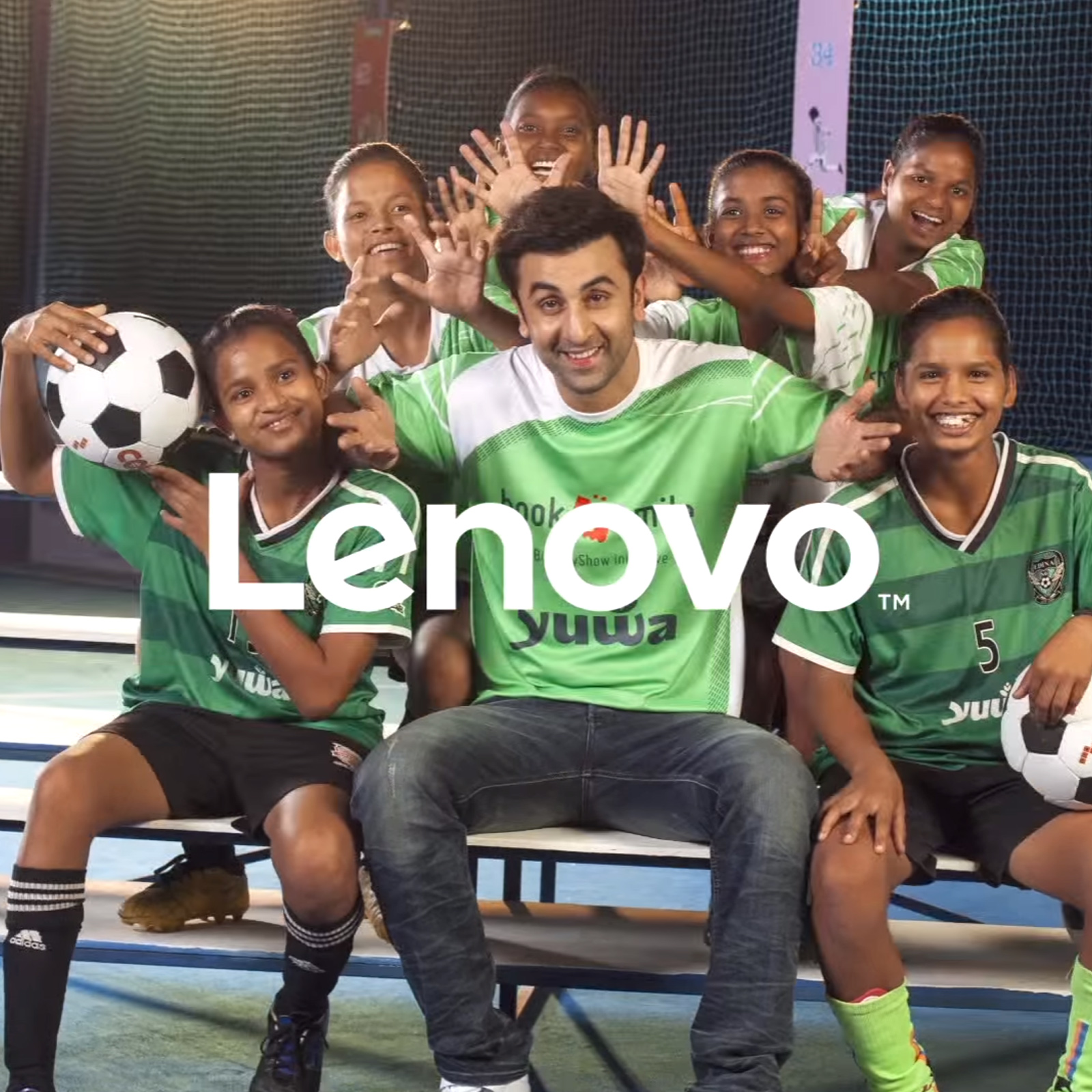
  • Lenovo and YUWA emerge winners as the #GirlsWithGoals campaign concludes

    Lenovo and YUWA emerge winners as the #GirlsWithGoals campaign concludes

    MUMBAI: Lenovo India announced today that its ‘Girls With Goals’ campaign has entered its second phase – fundraising on ground to build a school in Hutup, a Jharkhand village riddled with child marriage and violence against women.

    The campaign started with the story of young tribal girls from Jharkhand who shamed failure and social injustice as they marched proudly to Spain to compete in the Donosti Cup, an international football tournament. These “girls with goals” backed by YUWA, a not for profit organization that uses sports as a tool for empowerment, may not have won the competition against some of the world’s toughest youth football teams in the world, but their remarkable story has the world rallying behind them.

    Earlier this month, Lenovo partnered with the YUWA foundation yet again to document the inspiring story of the YUWA team from Hutup, Jharkhand. The objective of the campaign was to raise awareness about YUWA and eventually drive corporate sponsorship and community support to build a new school in Hutup. The real-time, unscripted web series, shot in Hutup, Mumbai, and Spain, captured the real life experiences and unbreakable spirit of the girls. Naturally, it touched the hearts of many and quickly gained immense traction across various social media platforms, scoring over 5 million views, over 14 million reach, and over 11,000 shares, and even a Twitter trending topic under its belt. Another significant part of the campaign was a social media hashtag #KickForABrick, an idea that invited the community to add bricks to YUWA’s new school in Hutup. The social media community was asked to kick a ball and share it on social media and then nominate their friends to build a chain. Lenovo also roped in Bollywood superstar Ranbir Kapoor and ace footballer Sunil Chhetri to urge the community to contribute. The initiative garnered massive eyeballs on Twitter and other social platforms and a total of 400 videos have been submitted so far.

    Now that the community has come together to raise awareness about the YUWA girls, it is time to raise funds on ground for the school. Lenovo is running a long-term fundraising campaign on Ketto. Inspired by the YUWA story, the campaign is seeing independent third parties and individuals join the effort with their own Ketto pages. Together, they have garnered 42 backers and counting for the fundraising initiative. The coming days will see Lenovo invite women corporate leaders and industry stalwarts to contribute to the cause through personalized messages and a printed storybook highlighting YUWA’s work in social development.

    Speaking about the campaign, Bhaskar Choudhuri, Director – Marketing, Lenovo India said, “The YUWA girls truly embody the spirit of the Lenovo brand of relentlessly moving forward, undaunted by failure. Our partnership with YUWA goes beyond the successful awareness campaign. We are aiming for sustainable, on-ground impact and we are urging the business community to come together and root for the YUWA School. Engaging business leaders is the natural next step – and we strongly believe that the awareness campaign has set us up for success on that front too. I attribute our own enthusiasm to the invincible spirit of the YUWA team that just returned from Spain. Onward and upwards!”

    Franz Gastler, the founder and brains behind YUWA’s inspiring work, said “Sports is a great tool for awareness and empowerment but we can’t lose sight of fundamentals like education. Involved partnerships like the one we have with Lenovo ensure that we go beyond what grabs eyeballs, to make real impact. I thank them for their partnership.”

    Catch all the campaign updates here:
    Website: www.girlswithgoals.in
    Twitter: @Lenovo_in
    Facebook page: Lenovo India
    Be part of the conversation: #GirlsWithGoals; #KickForABrick

  • Lenovo and YUWA emerge winners as the #GirlsWithGoals campaign concludes

    Lenovo and YUWA emerge winners as the #GirlsWithGoals campaign concludes

    MUMBAI: Lenovo India announced today that its ‘Girls With Goals’ campaign has entered its second phase – fundraising on ground to build a school in Hutup, a Jharkhand village riddled with child marriage and violence against women.

    The campaign started with the story of young tribal girls from Jharkhand who shamed failure and social injustice as they marched proudly to Spain to compete in the Donosti Cup, an international football tournament. These “girls with goals” backed by YUWA, a not for profit organization that uses sports as a tool for empowerment, may not have won the competition against some of the world’s toughest youth football teams in the world, but their remarkable story has the world rallying behind them.

    Earlier this month, Lenovo partnered with the YUWA foundation yet again to document the inspiring story of the YUWA team from Hutup, Jharkhand. The objective of the campaign was to raise awareness about YUWA and eventually drive corporate sponsorship and community support to build a new school in Hutup. The real-time, unscripted web series, shot in Hutup, Mumbai, and Spain, captured the real life experiences and unbreakable spirit of the girls. Naturally, it touched the hearts of many and quickly gained immense traction across various social media platforms, scoring over 5 million views, over 14 million reach, and over 11,000 shares, and even a Twitter trending topic under its belt. Another significant part of the campaign was a social media hashtag #KickForABrick, an idea that invited the community to add bricks to YUWA’s new school in Hutup. The social media community was asked to kick a ball and share it on social media and then nominate their friends to build a chain. Lenovo also roped in Bollywood superstar Ranbir Kapoor and ace footballer Sunil Chhetri to urge the community to contribute. The initiative garnered massive eyeballs on Twitter and other social platforms and a total of 400 videos have been submitted so far.

    Now that the community has come together to raise awareness about the YUWA girls, it is time to raise funds on ground for the school. Lenovo is running a long-term fundraising campaign on Ketto. Inspired by the YUWA story, the campaign is seeing independent third parties and individuals join the effort with their own Ketto pages. Together, they have garnered 42 backers and counting for the fundraising initiative. The coming days will see Lenovo invite women corporate leaders and industry stalwarts to contribute to the cause through personalized messages and a printed storybook highlighting YUWA’s work in social development.

    Speaking about the campaign, Bhaskar Choudhuri, Director – Marketing, Lenovo India said, “The YUWA girls truly embody the spirit of the Lenovo brand of relentlessly moving forward, undaunted by failure. Our partnership with YUWA goes beyond the successful awareness campaign. We are aiming for sustainable, on-ground impact and we are urging the business community to come together and root for the YUWA School. Engaging business leaders is the natural next step – and we strongly believe that the awareness campaign has set us up for success on that front too. I attribute our own enthusiasm to the invincible spirit of the YUWA team that just returned from Spain. Onward and upwards!”

    Franz Gastler, the founder and brains behind YUWA’s inspiring work, said “Sports is a great tool for awareness and empowerment but we can’t lose sight of fundamentals like education. Involved partnerships like the one we have with Lenovo ensure that we go beyond what grabs eyeballs, to make real impact. I thank them for their partnership.”

    Catch all the campaign updates here:
    Website: www.girlswithgoals.in
    Twitter: @Lenovo_in
    Facebook page: Lenovo India
    Be part of the conversation: #GirlsWithGoals; #KickForABrick

  • India Tablet shipments sluggish in Q1 2016: International Data Corporation

    India Tablet shipments sluggish in Q1 2016: International Data Corporation

    New Delhi: According to International Data Corporation (IDC),Indian tablet market in CY Q12016 remained flat over previous quarter with total shipments of 0.86 million units (including slate and detachable form factors). However, shipments grew by a marginal 1.3 percent over the same period last year. Declining consumer interest in the slate tablet form factor and rapid growth of large screen smartphones (phablets) causing the tablet market to slow down.

    Detachables traction continued in Q1 2016 with triple digit year-over-year growth, although it was on low base as uptake in this form factor began mainly from Q2 2016.“Windows based detachables continue to account over 70 percent share, however Apple’s recent foray into this segment has garnered them to clock decent numbers given the premium price of their products. Although, continued long-term success may prove challenging as it plays inhigher entry price pointand iOS is yet to prove its enterprise-readiness unlike Microsoft”says,Karthik J, Senior Market Analyst, IDC India.

    Micromax continued to leaddetachables category accounting for more than one-third oftotal shipments in Q1 2016.“Smartphone vendors constitute more than half of detachables. Their strong understanding of mobile ecosystem and the volume achieved from their smartphone product lines would allow them to aggressively compete in this new computing segment”, adds Karthik.

    Datawind: Datawind withstood its top position with 27.6 percentage share as shipment grew at a healthy 33.5 percent over previous quarter. Vendor’s shipments doubled year-on-year showing a sharp trajectory in last one year. Vendor’s television channel partners played pivotal role in this quarter’s growth through their aggressive marketing and selling during mid-quarter.

    Samsung: Samsung sustained its 2nd place with vendor share of 15.2 percentage in Q1 2016. Shipments dipped marginally by 3.7 percent over previous quarter but grew 5.1 percent over Q1 2015. Entry level Galaxy Tab models continue to be volume runners for Samsung in Slate tablets. However, vendor began to face stiff competition in premium detachable segment from Apple and Microsoft in Q1 2016. 

    Lenovo: Lenovo being the only PC vendor in Top 5 moved up to 3rd position in Q1 2016 with a market share of 13.6 percentage. Q1 2016 shipment grew at a healthy 30.5 percent over the same period last year while dipped marginallyover Q4 2015. While commercial segment continued to drive volumes for the vendor, its new product Phab saw some healthy shipments in consumer segment.

    Micromax: Micromax slipped to 4th place as shipments dip further in Q1 2016 by 27 percentover previous quarter to hold themarket share of 11.3 percentage. However, vendor managed to post 16.2 percent growth over the same period last year owing to healthy contribution from its Laptab detachable. 

    iBall: iBall manages to be in Top 5 with vendor share of 8.7 percentage in Q1 2016. iBall shipments dip approximately by 12 percentage both sequentially and year-on-year. While the vendor was one of the first few who introduced low cost detachables in the Indian market, it has somewhere lost out opportunity to capitalizethe growth in detachable category.
    IDC India Forecast:

    Tablet market in CY 2016 is expected to be stagnant in India but is likely to witnesschanging trends like healthy growth in commercial segment, migration to higher screen slate tablets and increase in adoption of 4G based tablets.

    “Detachables are expected to ramp upswiftly with majority traction coming from affordable windows based devices. Also, with Apple launching iPad pro 9.7, iOS is likely to gain share in detachables category this year”, says Navkendar Singh, Senior Research Manager, IDC India.

     

  • India Tablet shipments sluggish in Q1 2016: International Data Corporation

    India Tablet shipments sluggish in Q1 2016: International Data Corporation

    New Delhi: According to International Data Corporation (IDC),Indian tablet market in CY Q12016 remained flat over previous quarter with total shipments of 0.86 million units (including slate and detachable form factors). However, shipments grew by a marginal 1.3 percent over the same period last year. Declining consumer interest in the slate tablet form factor and rapid growth of large screen smartphones (phablets) causing the tablet market to slow down.

    Detachables traction continued in Q1 2016 with triple digit year-over-year growth, although it was on low base as uptake in this form factor began mainly from Q2 2016.“Windows based detachables continue to account over 70 percent share, however Apple’s recent foray into this segment has garnered them to clock decent numbers given the premium price of their products. Although, continued long-term success may prove challenging as it plays inhigher entry price pointand iOS is yet to prove its enterprise-readiness unlike Microsoft”says,Karthik J, Senior Market Analyst, IDC India.

    Micromax continued to leaddetachables category accounting for more than one-third oftotal shipments in Q1 2016.“Smartphone vendors constitute more than half of detachables. Their strong understanding of mobile ecosystem and the volume achieved from their smartphone product lines would allow them to aggressively compete in this new computing segment”, adds Karthik.

    Datawind: Datawind withstood its top position with 27.6 percentage share as shipment grew at a healthy 33.5 percent over previous quarter. Vendor’s shipments doubled year-on-year showing a sharp trajectory in last one year. Vendor’s television channel partners played pivotal role in this quarter’s growth through their aggressive marketing and selling during mid-quarter.

    Samsung: Samsung sustained its 2nd place with vendor share of 15.2 percentage in Q1 2016. Shipments dipped marginally by 3.7 percent over previous quarter but grew 5.1 percent over Q1 2015. Entry level Galaxy Tab models continue to be volume runners for Samsung in Slate tablets. However, vendor began to face stiff competition in premium detachable segment from Apple and Microsoft in Q1 2016. 

    Lenovo: Lenovo being the only PC vendor in Top 5 moved up to 3rd position in Q1 2016 with a market share of 13.6 percentage. Q1 2016 shipment grew at a healthy 30.5 percent over the same period last year while dipped marginallyover Q4 2015. While commercial segment continued to drive volumes for the vendor, its new product Phab saw some healthy shipments in consumer segment.

    Micromax: Micromax slipped to 4th place as shipments dip further in Q1 2016 by 27 percentover previous quarter to hold themarket share of 11.3 percentage. However, vendor managed to post 16.2 percent growth over the same period last year owing to healthy contribution from its Laptab detachable. 

    iBall: iBall manages to be in Top 5 with vendor share of 8.7 percentage in Q1 2016. iBall shipments dip approximately by 12 percentage both sequentially and year-on-year. While the vendor was one of the first few who introduced low cost detachables in the Indian market, it has somewhere lost out opportunity to capitalizethe growth in detachable category.
    IDC India Forecast:

    Tablet market in CY 2016 is expected to be stagnant in India but is likely to witnesschanging trends like healthy growth in commercial segment, migration to higher screen slate tablets and increase in adoption of 4G based tablets.

    “Detachables are expected to ramp upswiftly with majority traction coming from affordable windows based devices. Also, with Apple launching iPad pro 9.7, iOS is likely to gain share in detachables category this year”, says Navkendar Singh, Senior Research Manager, IDC India.

     

  • China Based Vendors Gaining Ground In Tier 2 And Tier 3 Cities: IDC

    China Based Vendors Gaining Ground In Tier 2 And Tier 3 Cities: IDC

    MUMBAI: According to International Data Corporation’s (IDC) monthly city level smartphone tracker, the Tier 1 cities namely – Delhi, Mumbai, Chennai, Bengaluru and Kolkata accounted for 26.4 percent of the entire smartphone market in Q1 2016 as compared to 29.9 percent in Q4 2015 clearly indicating that the smartphone market is gradually deepening towards Tier 2 And Tier 3 cities.

    Click to Tweet: China based vendors gaining ground in Tier 2 and Tier 3 cities says IDC #IDCIn
    According to Navkendar Singh, Senior Research Manager, IDC India, “As Tier 1 markets saturate, the next growth frontiers for smartphone players are clearly the smaller cities and towns. China based vendors have understood this trend and are gradually building & investing significantly in the offline distribution network in Tier 2 cities and beyond. This really shows that the offline channel remains significant and the vendors have understood that offline must go hand in hand with the online channel.”

    China based vendors have already captured more than 20 percent of the smartphone market in 25 Tier 2 and Tier 3 cities of India and are expected to penetrate further as their offline presence increases.

    “Majority of the sales for the China based vendors like Lenovo, Motorola, Xiaomi, LeEco are still coming from the online channel in these cities due to their superior positioning as quality brands, with a value for money proposition. Others like Oppo and Vivo are expected to grow in coming months in these markets with their huge marketing spends and increasing retail presence” adds Singh.

    Customers across the city tiers are getting future ready, by choosing more 4G than 3G devices, with more than 65 percent of the smartphones being 4G compatible across all city tiers. Also, with Telecom operators gradually increasing the 4G footprint and promoting 4G services, this is expected to see exponential growth in coming months.

    “In Tier 2 and Tier 3 cities, China based vendors are eating into the 4G device share of global brands, with almost 40 percent of the demand being generated by them” says Varun Singh, Market Analyst, Channels, IDC India. “This is a clear indication of the acceptance of said brands in these markets with their affordable & quality smartphones” adds Singh.

    Price parity between offline & online channels has been a constant concern for the traditional distribution channel. “While online exclusive models will continue to generate demand, the new government regulations forbidding the predatory pricing and dominance by a few sellers on the e-commerce marketplace will help in bringing back the pricing hygiene across channels and a level playing ground for all brands” says Upasana Joshi, Senior Market Analyst, Channels, IDC India.

  • China Based Vendors Gaining Ground In Tier 2 And Tier 3 Cities: IDC

    China Based Vendors Gaining Ground In Tier 2 And Tier 3 Cities: IDC

    MUMBAI: According to International Data Corporation’s (IDC) monthly city level smartphone tracker, the Tier 1 cities namely – Delhi, Mumbai, Chennai, Bengaluru and Kolkata accounted for 26.4 percent of the entire smartphone market in Q1 2016 as compared to 29.9 percent in Q4 2015 clearly indicating that the smartphone market is gradually deepening towards Tier 2 And Tier 3 cities.

    Click to Tweet: China based vendors gaining ground in Tier 2 and Tier 3 cities says IDC #IDCIn
    According to Navkendar Singh, Senior Research Manager, IDC India, “As Tier 1 markets saturate, the next growth frontiers for smartphone players are clearly the smaller cities and towns. China based vendors have understood this trend and are gradually building & investing significantly in the offline distribution network in Tier 2 cities and beyond. This really shows that the offline channel remains significant and the vendors have understood that offline must go hand in hand with the online channel.”

    China based vendors have already captured more than 20 percent of the smartphone market in 25 Tier 2 and Tier 3 cities of India and are expected to penetrate further as their offline presence increases.

    “Majority of the sales for the China based vendors like Lenovo, Motorola, Xiaomi, LeEco are still coming from the online channel in these cities due to their superior positioning as quality brands, with a value for money proposition. Others like Oppo and Vivo are expected to grow in coming months in these markets with their huge marketing spends and increasing retail presence” adds Singh.

    Customers across the city tiers are getting future ready, by choosing more 4G than 3G devices, with more than 65 percent of the smartphones being 4G compatible across all city tiers. Also, with Telecom operators gradually increasing the 4G footprint and promoting 4G services, this is expected to see exponential growth in coming months.

    “In Tier 2 and Tier 3 cities, China based vendors are eating into the 4G device share of global brands, with almost 40 percent of the demand being generated by them” says Varun Singh, Market Analyst, Channels, IDC India. “This is a clear indication of the acceptance of said brands in these markets with their affordable & quality smartphones” adds Singh.

    Price parity between offline & online channels has been a constant concern for the traditional distribution channel. “While online exclusive models will continue to generate demand, the new government regulations forbidding the predatory pricing and dominance by a few sellers on the e-commerce marketplace will help in bringing back the pricing hygiene across channels and a level playing ground for all brands” says Upasana Joshi, Senior Market Analyst, Channels, IDC India.