Tag: LCOs

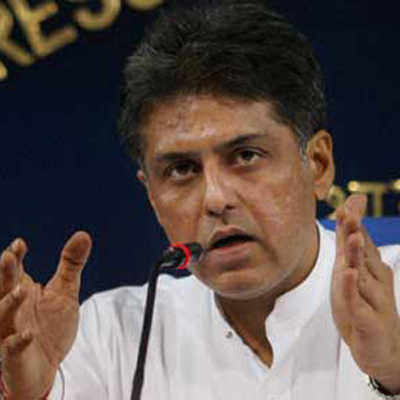
  • Arasu has a provisional MSO licence to operate: Manish Tewari

    Arasu has a provisional MSO licence to operate: Manish Tewari

    NEW DELHI: The Tamil Nadu Arasu Cable TV Corporation, a multi-system operator (MSO) run by the TN government – has been claiming that the government has not given it an operational licence, thereby restricting it from transmitting digital signals to its subscribers. The MSO even filed a case in the Madras High Court in December, 2013 and got a stay over Telecom Regulatory Authority of India’s (TRAI) earlier order which stated that MSOs transmitting analogue signals in Chennai would be prosecuted.


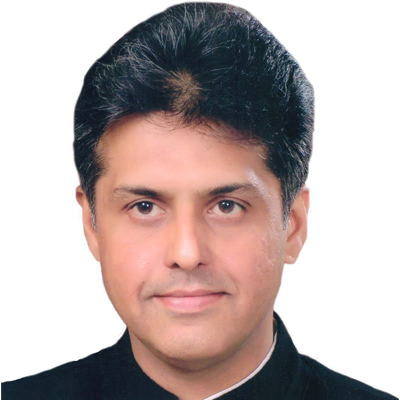
    While the case is yet to get its second date of hearing, the Information and Broadcasting (I&B) minister Manish Tewari, in a response to a question in the Parliament, said that on 26 November, 2007 Arasu had applied for grant of MSO registration in conditional access system (CAS) notified area of Chennai. The Ministry had granted provisional permission on 2 April, 2008. It was on the condition that after TRAI recommendations are considered, the Ministry will decide whether state governments/PSUs and other entities can enter into broadcasting activities including MSO/Cable operations.


    Along with Arasu, four other MSOs in Chennai were also given CAS licences in 2006 including IMCL, Hathway Cable and Datacom, Kal Cable and JAK communications.


    In response to a question about licences given to private players in other southern states, Tewari said that CAS was implemented in the notified areas of Delhi, Mumbai and Kolkata on 31.12.2006; while in Chennai, it was implemented since 2003 under notifications of 14 January, 2003 and 31 July, 2006. Since CAS was implemented only in Chennai, no CAS permission was granted to MSOs in other southern states.


    The entire episode has in a way turned everything around. The case is pending in court till the time TRAI submits its response. So while TRAI – which is completely against the idea of govt. owned MSOs and awaits Ministry’s response to its recommendations – awaits the responses, it could mean that Arasu is free to operate. Moreover, it can even give digital signals or seed STBs as TRAI can’t take any action against it, given that the MSO has a temporary licence.


    The picture will be clear only after the Ministry brings out its regulation and the case in the Madras High Court proceeds.

  • Bengaluru MSOs to start gross billing, packaging from April

    Bengaluru MSOs to start gross billing, packaging from April

    MUMBAI: The multi-system operators (MSOs) in Bengaluru are determined to do all that is needed to be in the good books of the Telecom Regulatory Authority of India (TRAI). The latest is that 12 MSOs met today in Bengaluru to discuss the status of consumer application forms (CAFs), gross billing, local cable operators (LCO) agreements and packaging to ensure compliance with TRAI regulations on digitisation.


    “This was a coordination meeting where we discussed about gross billing and also packaging,” informs a highly placed MSO who was present at the meeting.


    The group of 12 MSO will soon come out with a joint advertisement that will be published in Bengaluru newspapers and will inform the consumers about gross billing and packaging.


    The same was done in Delhi when the MSO Alliance jointly came out with an advertisement in local newspapers on the issue of gross billing.


    “We are looking at forming a joint committee in order to ensure that the guidelines set by TRAI can be followed,” informs the source.


    The timeline to start gross billing was also discussed in the meeting. “Gross billing in Bengaluru will start not later than April 2014,” informs Hathway Cable & Datacom MD & CEO Jagdish Kumar Pillai. Another important issue raised was that of the LCO-MSO agreement. “There were discussions on the revenue share for LCOs, the package rates etc,” adds Pillai.


    A Bengaluru-based MSO on the condition of anonymity informs, “The MSOs discussed on getting into a truce so that none of the MSOs infringe on each other’s subscribers. No decision has been taken on this though. The MSOs have asked for a couple of days to come to a final decision.”


    Another point discussed was that each LCO has to pay Rs 90 per subscriber per month to the MSO for using its services. “Discussions on packaging took place, which should be in place by April,” adds the Bengaluru based MSO.


    Earlier this week, Hathway, which has around eight lakh subscribers in the city, had switched off set top boxes of close to two lakh subscribers as they had not filled CAFs. “We had switched off 2.5 lakh STBs. This was to ensure that we comply with the TRAI guidelines,” concludes Pillai. 

  • GGCTOA writes to APDCL, asks to disclose electric pole data for Guwahati

    GGCTOA writes to APDCL, asks to disclose electric pole data for Guwahati

    MUMBAI: The Assam Power Distribution Company Limited (APDCL) and Greater Guwahati Cable TV Operators’ Association (GGCTOA) still seem to be at loggerheads on the issue of the payment for the electric poles. After several meetings and deadlines, the issue remains unresolved.


    The issue began in September last year when APDCL asked the cable operators in Assam to pay Rs 25 per electric pole per month. The issue has just stretched since then, the last set deadline for cable operators to pay Rs 25 as electric pole fee was 22 January. It was then that GGCTOA approached the Guwahati High Court. The High Court, in the hearing held on 29 January, has asked both parties to come on a consensus by 28 February.


    “Let the required exercise be carried out as expeditiously as possible preferably within 28.02.2014, subject however, to the condition that petitioner shall pay the change of Rs 10 per pole for a period of one month i.e. up to 28.02.2014, which however is subject to the final outcome of the exercise required to be carried out in terms of the order and without prejudicing the rights and contentions of the parties. Needless to say that in the event of the prayer of the petitioners finds favour of APDCL authority, the said amount will be adjusted with future charge, if any, or refunded,” the Guwahati HC order reads.


    However, now GGCTOA has written to the APDCL and has asked to disclose the number of poles used by the cable operators. “We have written to the APDCL on 3 February and have asked them to arrange for a meeting and also give us the complete data of the number of polls used by the cable operators and amount that has to be collected, since we do not have any such data with us,” informs GGCTOA general secretary Md Iquebal Ahmed. 


    The cable operators have also agreed to pay Rs 10 per electric pole per month in the interim. “But for that we will need the data. Also, if in this interim the APDCL can bring down the electric pole fee to Rs 10 or less, we will be happy. If it doesn’t, we will again approach the court,” adds Ahmed.


    According to APDCL, 31,000 electric poles in Guwahati are being used by the cable operators. “The HC expects us to settle down issues before 28 February. We will decide on that in the coming days,” says APDCL public relation officer Chandra Mudoi, informing that they have received the letter from GGCTOA and will act on it soon.

  • The LMO-MSO relationship will get clarified within six months: Sameer Manchanda

    The LMO-MSO relationship will get clarified within six months: Sameer Manchanda

    NEW DELHI: Digitisation has given an opportunity for cable to compete with direct-to-home (DTH). There was a time when digital meant DTH and cable was largely analogue. But now, there is competition between digital and digital. While world over, cable is supposed to provide premium products, here in India, DTH was and is considered as a premium product. Digitisation has given cable an opportunity to show its might to DTH, compete with it, and provide customers television without interruption and with broadband internet and Value Added Services (VAS).


    We are in a highly competitive work environment. For smaller players to emerge, they will need scale, pure execution and vision of where they want to see themselves. They should be thinking big and along with that, should have the patience to wait for at least 5-10 years. There will be hiccups and ups and downs, but as long as they manage and maintain the course, they will achieve their goal. Cable has a unique proposition. It has scale, is a mass product, has mass appeal, is bigger than DTH, and every home has been watching cable since 1991. So just believe in the vision.


    Cable is a technology; we just have to leap frog from analogue to a complete different pipe, and that will happen in the next 5-10 years. As we saw in the case of mobile, even cable will go the same way as the world has gone.


    I know that there is a lot of pain, and in the beginning years, we have all faced it and will probably face it for a little longer too. But in the next 10 years, everyone will benefit. And every stakeholder, be it small Multi System Operators (MSOs), Last Mile Owners (LMO) or national MSOs, each one will gain. The industry can only be as vibrant and strong as each of its players. So, one player cannot remain vibrant while the other isn’t. The whole industry has to be vibrant and so, we all have to take a step forward in unifying the cable industry and making it vibrant.


    The LMOs and MSOs have to think that they are partners. Right now, there is a turf war of economics. But it will wear off once they realise that the customer will go wherever he/she wants to. He will go to DTH or the IPTV platform or 4G or any other platform where he/she gets better service. So, the LMOs and MSOs have to understand that they have to be together.


    If you see, the MSOs are ploughing in a lot of investment; they are dealing with broadcasters and are taking risks. They are also the ones who are making the pipe much stronger, so if you look at that, there is a role that the MSO plays and then there is a role that the LMO plays.


    Today, the turf war is on economics. But in six to nine months, each player will understand the strengths and weaknesses of each party. And if they play to the strengths, the customer will get a better product and then he/she will pay much more than what he/she earlier paid. Because if you see that from 70 channels, they will have 300-400 channels, then there will be VAS and much more. So you will see that the LMOs will be making much more than what they are making today.


    The revenue share needs to be sorted and these are things that need discussion. The MSO is also in a tight position. He has to deal with broadcasters and also ensure that the customer management is better than DTH. There are investments that need to be made. So I think that both parties need to understand each other.


    The first effect of digitisation has already been felt and that has happened from the customers’ end. The customer today has moved from some 70 channels to 300 channels and all this with no interference. He/she has been given a box for a reasonable sum and in a few minutes, with no wire and antenna, he has started getting the digital experience. This has been the real effect of digitisation, which has unfortunately gone unnoticed. And this was the reason that 21 million homes, which could have chosen DTH, chose digital cable instead. So the effect of digitisation has been felt, but now because of switch offs, the LMO issue, and under investment by some players, the impact is marred. So there will be good and bad times for cable, but then in a couple of years, it will all be sorted.


    The entire chain of media will become vibrant. The broadcaster, LMO and MSO will gain. Currently, since everybody is looking at getting the most, there are wars, but this will get resolved in six months, it can’t take longer. I want to see the industry getting stronger, more vibrant. Customers should be so happy with cable that they start moving from other players to cable. We all want cable to be strong and the whole chain to be very vibrant.


    I am an optimist. Media has a great future in the next 5-10 years. No one part can say that he will gain while others don’t. All stakeholders will benefit. Even the customers will have the option of close to 1,000 channels. Yes, they will have to pay more for that, but at least, they will have the option to pay for what they want to watch, which was not there earlier. But unfortunately, this will need them to cough up a lot of money. There will be pain, but eventually, every stakeholder will have to think about 5-10 years later.


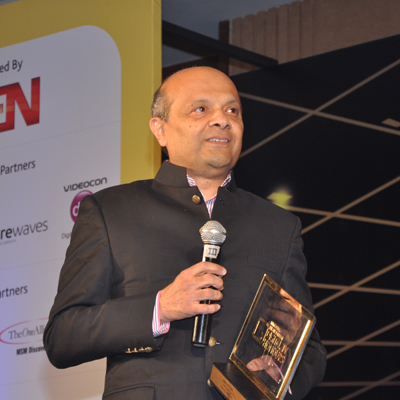
    (The remarks above are a part of the acceptance speech by DEN Networks Chairman & Managing Director Sameer Manchanda during indiantelevision.com’s The First Indian Digital TV Honours held in New Delhi on 28 January 2014)
  • First Indian Digital TV Honours on 28 Jan

    First Indian Digital TV Honours on 28 Jan

    MUMBAI: 2013 was a watershed year for the cable TV and DTH industry, what with the the entire TV industry – cable TV operators, MSOs, DTH players –  working on going into overdrive, pushing the government’s digital addressable system (DAS – digitisation) mandate. There were big developments and even bigger initiatives, and it is with a view to recognising and rewarding such endeavours as well as the individuals and organisations behind them that Indiantelevision.com has instituted a first-of-its-kind initiative called ‘The Indian Digital TV Honours’, to be held on Tuesday 28 January at The Lalit, New Delhi.


    The list of best practices and worthy winners has been compiled by an advisory board comprising senior executives, industry veterans and the indiantelevision.com editorial team led by founder, CEO and editor-in-chief Anil Wanvari.


    According to Media Partners Asia executive director and co-founder and member of the advisory board Vivek Couto, The Indian Digital TV Honours is a laudable effort as it will go a long way in encouraging individuals to accelerate the development of the industry.  “That’s because it seeks to recognize the achievement, innovation and vision of the stakeholders,” he says.”


    Media observer and consultant and member of the advisory board Sanjeev Hiremath adds: “It is an encouraging initiative by Indiantelevision.com. It is a way to both support and encourage the implementation of DAS. I am glad that a platform like this has been set up by the Indiantelevision team.”


    BCCL president corporate development (and member of the advisory board) Sunil Lulla believes there was a need to acknowledge the manner in which television distribution is changing. “I am glad that there is another first from Indiantelevision.com. Acknowledgement is needed. Though the switch from analog to digital will take time, encouragement is needed.”


    Chrome Data Analytics and Media founder and MD Pankaj Krishna joins his peers in lauding the effort. “I am sure pretty soon, others will follow it too. One must remember that digitisation is very critical to us now and with the change in wind, the transition from analog to digital is going to become crucial. In short, it is like the change from Kodak film roll which we used 10 years ago to a digicam, which has become a part of our lives now.”


    So how did the advisory board select the winners? Says Wanvari: “We had detailed discussions with various stakeholders in the industry, to come up with a filtered list of top achievements to which the advisory members also contributed.”


    Adds Lulla: “A list was given to us comprising names of people and companies that have made a difference to digitisation from various points of view like preparedness, initiatives taken, consumers, success etc. So, I looked at these from various perspectives like who made it simple for consumers, who followed the regulations, which company or person drove the change and so on…”


    What were the criteria for selection? Couto anwers: “The criteria were simple. Any stakeholder or regulator who has ushered in development through investment, leadership or a combination of both to accelerate quality content and infrastructure for consumers will feature in the list.”


    The entire selection process took almost a month for the advisory board. Hiremath, who identified categories to honour key initiatives, says: “This is going to be an exciting and interesting event.”


    According to Hiremath and Couto, while the first edition will honour well-known names from the industry, the awards will only get bigger and better with time.


    “We will see OTT players, software developers, app developers and many others entering the ecosystem in the future,” Couto rounds off.
     

    The Event is: 

    Powered by Partner:  Den

    Associate Partners: Hathway, Surewaves, Videocon D2H

    Support Partner: SES, The One Alliance

    Media Partner: India News

    Thanks to HBO Defined and HBO Hits for the support

    Online Media Partners: Radioandmusic.com, Tellychakkar.com

    Event Executed By: ITV2.0 Productions

    An Initiative By: Indiantelevision.com

  • MIB: Now on to DAS phase III & IV

    MIB: Now on to DAS phase III & IV

    MUMBAI: Within days of the Telecom Regulatory Authority of India (TRAI) giving out its fact sheet on how digital addressable system (DAS) phase I and II have progressed, the Ministry of Information and Broadcasting (MIB) directed all the stakeholders also known as  ‘the task force of digitisation’ to assess its progress and chart out a road map for the coming year.


    The meeting saw minister Manish Tewari, secretary Bimal Julka, additional secretary Supriya Sahu, leading MSOs such as Den CEO S N Sharma, The One Alliance president Rajesh Kaul, LCOs, News Broadcasting Association (NBA) secretary Annie Joseph, Indian Broadcasting Foundation (IBF) secretary Shailesh Shah and Tata Sky CEO Harit Nagpal. After speaking to everyone about the issues faced in DAS phases I and II and Sahu’s presentation on the value that digitisation was creating in the country, Tewari gave the go ahead to implement the next two phases.


    However this time it won’t be with two deadlines but rather a one stretch implementation across the remaining parts of the country with just one deadline of 31 December 2014. Although the ministry was of the opinion that two deadlines should exist, the TRAI had voiced its opinion in 2011 that phase III and IV could be achieved simultaneously.


    All the stakeholders brought out the issues they had faced in the first two phases to which the minister warned them to sort out their own problems internally or this would lead to a postponement of complete national digitisation – which would not bode well for the industry.  He also told everyone to keep working in coordination even now – and iron out any wrinkles or resolve all problems so that digitisation can progress further.


    Tewari said that the upcoming elections may slow down the process but digitisation is here for good and there’s no stopping it now.  The IBF and NBA have been asked to once again air promos highlighting the importance of digitisation.


    Now that the green signal has been given, all stakeholders can now attack the rest of the country without having any boundaries. But this is the toughest part as the issues they will face in the interiors will be much higher  and more difficult to resolve than metros and towns. Phase I and II saw nearly 25 million set top boxes being seeded while phase III and IV will see about 75 million more boxes being put in place.


    The minister has also assured support saying that the issues in the previous phases will be addressed as they move towards the next ones. 

  • DEN, Hathway and InCable get interim relief  on ent tax

    DEN, Hathway and InCable get interim relief on ent tax

    MUMBAI: The big four  of Indian cable TV – DEN Networks, Hathway Cable and Datacom, InCable and Siti Cable – heaved a sigh of relief as 21 January ended. The reason: the Delhi High Court – which was hearing their appeal seeking to restrain the state government’s entertainment tax authorities from taking any coercive action against them for not paying entertainment tax – gave them relief, if at least for some time. The  HC passed an interim order, forbidding the tax folks  from taking any steps  against  three of the MSOs – Den, Hathway and InCable.


    The cases that were heard in one day saw the appeals of  DEN and Hathway being joined  together while InCable and Siti Cable presented its case separately.  With the order coming into effect, MSOs have been relieved of the duty of collecting entertainment tax from the LCOs and submitting it to the government till the judgment on the case is passed. The next hearing will be on 13 March.


    The respondent (the entertainment tax collection authorities) have been given four weeks to file its reply to the case. In the meanwhile, its hands are tied. However, what was not clear at the time of writing whether  the onus is back on the LCOs to pay the tax to the government.


    Although the MSOs are receiving the tax from LCOs, they claim they aren’t getting the full amount. Hence, the balance amount normally has to be coughed up by the MSO whether it is paid the same or not by the LCO. This is pretty unfair, they have stated.


    The  MSOs approached the Delhi HC as  the inexplicable  pressure was being thrust on them to cough up taxes.

  • Four national MSOs file writ petition against Ent Tax

    Four national MSOs file writ petition against Ent Tax

    MUMBAI: Entertainment tax has become a bothersome issue for both MSOs and LCOs. Right from the amount of tax levied to ownership of collection, state government mandates have got the two cable TV factions locking horns. While government regulations mandate MSOs to collect tax from the LCOs and submit it, the LCOs would rather take the onus on themselves.


    Four Indian national MSOs – Den, Hathway, Siticable and InCable have filed separate writ petitions in the Delhi HC to challenge several aspects of the entertainment tax being imposed as well as the tax collecting authority’s stance towards the MSOs in the state of Delhi.  The cases are all set to be heard today in a joint hearing.


    While Hathway Cable & Datacom was put through an enquiry on its own premises, others have decided to legally protect themselves before something similar happens to them. Siticable claims that it has been fulfilling all duties effectively. An ex parte order was taken out against it for non compliance in April and May 2013 which Siticable had appealed against. When that didn’t go very far, it decided to lodge its writ petition seeking redressal and  justice.


    Siticable’s first hearing was yesterday when the lawyer on behalf of the tax authority asked for a day’s time to come up with its side of the case. “We had deposited the tax and had also filled the form 10 as per requirements. Yet the authorities were after us. So we went to court to request that no coercive action be taken by them ,” says Siticable CFO Sanjay Goyal.


    Hathway is of the opinion that entertainment tax collection is a duty that has been undertaken by the LCOs for several years now and that is how it should be. Its writ petition states that the order passed against it was unreasonable.


    MSOs say that they are alright with collecting the tax and passing it on to the department but traditionally it had been the job of the LCO to do that. However, in case of  a lapse of payment by the LCO, the MSO should not be asked to cough up the remaining money is what they say.


    The case will come up for hearing today. Who knows whether the Delhi High Court will give a stay order or decide on its fate tomorrow itself.

  • I&B ministry to take up cable TV monopoly recommendations

    I&B ministry to take up cable TV monopoly recommendations

    MUMBAI: The inter-ministerial committee in the information and broadcasting ministry (MIB) is likely to take up the Telecom Regulatory Authority of India’s (TRAI’s) recommendations on controlling monopoly/market dominance in the cable TV sector this week. These were released by the TRAI on 26 November 2013. This was revealed by MIB minister Manish Tewari to the Times of India (TOI) yesterday.


    According to the TRAI recommendations, a barometer known as the Herfindahl Hirschman Index (HHI) is to be used to measure monopoly of MSOs or cable TV service providers in a market which as defined as a state (with certain exceptions).


    The recommendations state that “the threshold value for any individual/group/entity contribution to the market HHI should be no more than 2500.”  According to the TOI report, this constitutes 50 per cent market share, the market being defined as a state.


    The TRAI recommendations further state that “any M&A among MSO(s) or between an MSO and LCO in a relevant market shall require the prior approval of the regulator. The decision on any proposal, complete in all aspects, shall be conveyed within 90 working days.”


    They go on to further add that in “the cases where any group’s contribution to HHI in a market is more  than 2500 as on the date of issue of guidelines, such legal entity/ ‘group’ shall take necessary remedial measures, within 12 months from the date of issue of guidelines, so as to limit  its ‘control’ in various MSO(s)/ LCO(s) in such a way that the  contribution to market HHI of that ‘group’ reduces to less than or equal to 2500.”


    Tewari told the TOI that the ministry was “seriously looking at introducing a cap on the market share of MSOs to stop monopolistic practices, whether due to political pressure or political ownership, to protect plurality and diversity of content.” 

  • Chennai Corp cracks the whip on cable TV ops

    Chennai Corp cracks the whip on cable TV ops

    MUMBAI: A major crackdown on cable TV operators is taking place in Chennai. 


    The Chennai civic body, The Chennai Corporation has gone on a drive to collect infrastructure usage and registration charges from local cable TV operators in the city.


    Sources in Chennai revealed that around 16 companies were given legal status after they coughed up Rs 1 crore to the corporation. Currently, the civic body charges Rs 9,400 per km as infrastructure use rent to cable TV and telecom operators, though a proposal to hike it to Rs 32,000 is pending with the government. 


    The Chennai Corporation has been trying to clean up the city and had issued orders to its employees and staff to snap cables of the operators who did not pay up. It expects to collect another Rs 1 crore in the coming week. 

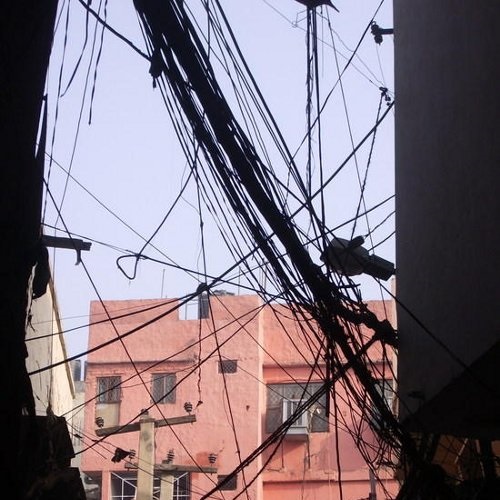
    The civic body is expected to next streamline the way the cables have been strung over head all over Chennai, say officials.