Tag: LCOs

  • Action “reportedly” taken against LCOs in Kurnool and Aurangabad showing Peace TV: Naidu

    Action “reportedly” taken against LCOs in Kurnool and Aurangabad showing Peace TV: Naidu

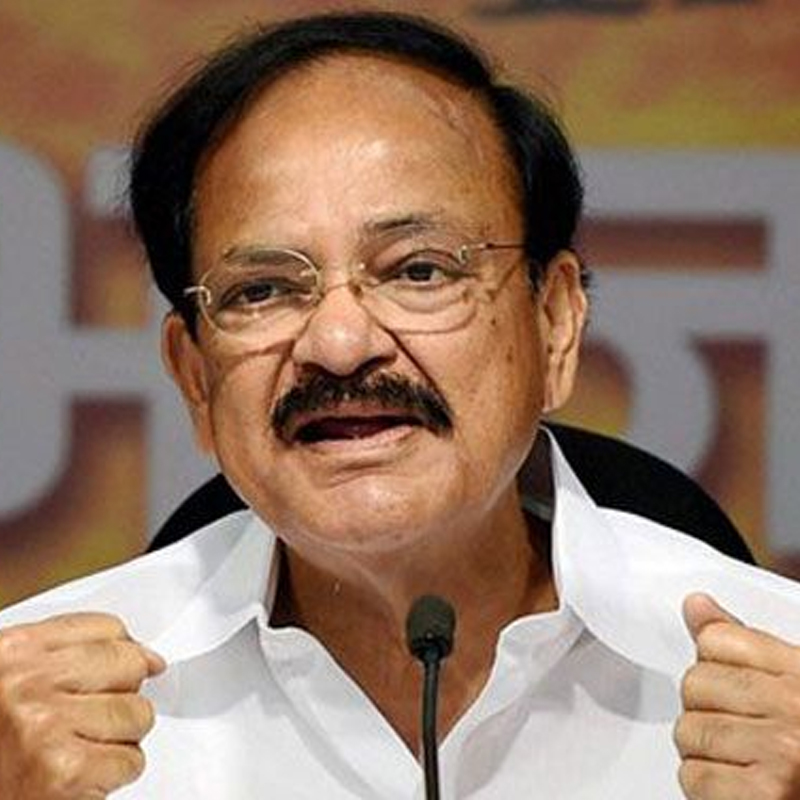
    NEW DELHI: Reiterating that action was taken against telecasting of unpermitted television channels, Information and Broadcasting Minister M Vekaiaih Naidu said today that such complaints were received against some cable operators from some districts such as Kurnool and Aurangabad regarding carriage of Peace TV channel.

    He told the Rajya Sabha that the complaints were forwarded to the District Collector for necessary action by the authorized officers under the Cable Television Networks (Regulation) Act 1995 and Rules 1994.

    “They have reportedly taken action”, the Minister added in reply to a question.

    The Ministry has also invited complaints by the general public regarding transmission of unpermitted satellite TV channels by cable operators on its social media platforms. These are also forwarded to the District Collectors for necessary action.

    Whenever instances are brought to the notice of thr Ministry regarding Uplinking of unpermitted TV channels through any Indian teleport, action is taken to stop the same as per the provisions of Uplinking guidelines 2011, he said.

    He said that the Cable Act and Cable Rules regulates the transmission and re-transmission of TV channels over the Cable Networks. The Authorized Officers (the District Magistrates, the Additional District Magistrates, the Sub-Divisional Magistrates and the Commissioners of Police within their territorial jurisdiction) under the Act are empowered to take action whenever violations of the Cable Act, 1995 are brought to notice.

    The Telecom Regulatory Authority of India (TRAI) has made recommendations on the regulation of ground channels in this regard.

    Meanwhile, he said his Ministry had on 8 July 2016 issued advisories to the State Governments and Union Territories, the District Collectors and the MSOs/LCOs that no unpermitted satellite channel such as Peace TV should be carried by the cable operators in the country.

    In addition, the Ministry has issued advisories from time to time to the State Governments and Union Territories to constitute State and District Level Monitoring Committees for recommending action against broadcast content being carried by the cable operators which are in violation of the Programme Code and the Advertisement Code under the Cable Act 1995.

    The Ministry has mandated Digitization of the entire cable network in the country by December, 2016 in a phased manner through the introduction of the Digital Addressable Systems (DAS). This measure is expected to address the issues of transmission of unpermitted TV channels, he added.
  • TRAI extends time for interconnect agreement reactions

    TRAI extends time for interconnect agreement reactions

    NEW DELHI: Several stakeholders have complained to the Telecom Regulatory Authority of India that most consumers are not even aware of the rates of various television channels and so the local cable operators were at the receiving end as they had to deal with the viewers.

    At an Open House discussion on the interconnection network for broadcasting TV Services distributed through addressable systems most stakeholders comprosing local cable operators and multi system operators raised issues that they said needed greater introspection. Cable Operators President of India President Roop Sharma said there was shortage of set top boxes and the consumer was not aware of what STB he should acquire.

    K K Sharma who edits Cable Quest said that no attention had been paid to the entry of OTT and the cross ownership that has come with this new phenomenon. The agreement has to be clear on this issue.

    Later, TRAI extended the date by one week to 10 June for comments on its consultation paper on
    Interconnect agreements for DAS areas. The date for counter-comments will remain the same – 17 June.

    TRAI had asked stakeholders to give suggestions on how a level playing can be created among different service providers using different addressable systems.

    It wanted to know whether there should be a common interconnection regulatory framework be mandated for all types of addressable systems.

    In the Consultation Paper issued on 4 May, it asked if there is any need to allow agreements based on mutually agreed terms, which donot form part of RIO, in digital addressable systems where calculation of fee can be based on subscription numbers. .

    The Paper has been issued not merely because the country is marching towards the last phase of DAS, but also in view of several judgments of the Telecom Disputes Settlement and Appellate Tribunal where it has disallowed payments in the absence of agreements despite mutual oral agreements.

    TRAI wants to know how the interconnection agreements entered on mutually agreed terms meet the requirement of providing a levelplaying field amongst service providers can be ensured, and the ways for effectively implementing non-discrimination on ground.

  • TRAI extends time for interconnect agreement reactions

    TRAI extends time for interconnect agreement reactions

    NEW DELHI: Several stakeholders have complained to the Telecom Regulatory Authority of India that most consumers are not even aware of the rates of various television channels and so the local cable operators were at the receiving end as they had to deal with the viewers.

    At an Open House discussion on the interconnection network for broadcasting TV Services distributed through addressable systems most stakeholders comprosing local cable operators and multi system operators raised issues that they said needed greater introspection. Cable Operators President of India President Roop Sharma said there was shortage of set top boxes and the consumer was not aware of what STB he should acquire.

    K K Sharma who edits Cable Quest said that no attention had been paid to the entry of OTT and the cross ownership that has come with this new phenomenon. The agreement has to be clear on this issue.

    Later, TRAI extended the date by one week to 10 June for comments on its consultation paper on
    Interconnect agreements for DAS areas. The date for counter-comments will remain the same – 17 June.

    TRAI had asked stakeholders to give suggestions on how a level playing can be created among different service providers using different addressable systems.

    It wanted to know whether there should be a common interconnection regulatory framework be mandated for all types of addressable systems.

    In the Consultation Paper issued on 4 May, it asked if there is any need to allow agreements based on mutually agreed terms, which donot form part of RIO, in digital addressable systems where calculation of fee can be based on subscription numbers. .

    The Paper has been issued not merely because the country is marching towards the last phase of DAS, but also in view of several judgments of the Telecom Disputes Settlement and Appellate Tribunal where it has disallowed payments in the absence of agreements despite mutual oral agreements.

    TRAI wants to know how the interconnection agreements entered on mutually agreed terms meet the requirement of providing a levelplaying field amongst service providers can be ensured, and the ways for effectively implementing non-discrimination on ground.

  • TDSAT: Rohtak LCOs have by and large complied with compilation of SAFs

    TDSAT: Rohtak LCOs have by and large complied with compilation of SAFs

    NEW DELHI: The Telecom Disputes Settlement and Appellate Tribunal has described as ‘unfounded’ the allegations made on behalf of Siti Cable Networks with regard to submission of subscription application forms (SAFs) of local cable operators of Rohtak.

    Under the directions of the tribunal, a joint inspection of the website of the Rohtak  Cable Operator Association, Haryana  was completed, and the report duly signed by counsel for two sides and the director of TDSAT.

    The tribunal said that according to the joint report, the LCOs had jointly and collectively submitted around 60 per cent of SAFs to Siti Cable Networks by 30 March. Some individual LCOs had submitted as much as 90 per cent of SAFs.

    Chairman Aftab Alam and member B B Srivastava directed the LCOs being represented in this petition to complete the submission of their respective SAFs as early as possible The matter was listed for 27 April when some other similar matters are also due to come up.


  • TDSAT: Rohtak LCOs have by and large complied with compilation of SAFs

    TDSAT: Rohtak LCOs have by and large complied with compilation of SAFs

    NEW DELHI: The Telecom Disputes Settlement and Appellate Tribunal has described as ‘unfounded’ the allegations made on behalf of Siti Cable Networks with regard to submission of subscription application forms (SAFs) of local cable operators of Rohtak.

    Under the directions of the tribunal, a joint inspection of the website of the Rohtak  Cable Operator Association, Haryana  was completed, and the report duly signed by counsel for two sides and the director of TDSAT.

    The tribunal said that according to the joint report, the LCOs had jointly and collectively submitted around 60 per cent of SAFs to Siti Cable Networks by 30 March. Some individual LCOs had submitted as much as 90 per cent of SAFs.

    Chairman Aftab Alam and member B B Srivastava directed the LCOs being represented in this petition to complete the submission of their respective SAFs as early as possible The matter was listed for 27 April when some other similar matters are also due to come up.


  • MSOs, LCOs alerted to get ready for Phase IV DAS, applications for registration by 30 April

    MSOs, LCOs alerted to get ready for Phase IV DAS, applications for registration by 30 April

    New Delhi, 29 March: The Information and Broadcasting Ministry has urged multi-system operators to apply by 30 April in case they want to supply signals in the areas falling under Phase IV of digital addressable system.

    In an advertisement also addressed to cable operators who want to become MSOs, the Ministry has said this is necessary as adequate time is needed for registration, and for the MSOs to be ready by 31 December this year when analogue is expected to be switched off all over the country.

    It has also been pointed out that Section 11A of Cable Television Rules 1994 is clear that any stakeholder desirous of providing television DAS signals in a notified area have to be registered as MSO with the Ministry.

    Attention has also been drawn to the notification of 11 September 2014 which gave the final deadline for the various phases and stated that digitization in IV Phase has to be completed by 31 December this year.

    The advertisement has also been placed on the website digitalindiamib.com whch can also be accessed through the main mib.nic.in.

    Stakeholders have been asked to get full details from these websites, and also have the option of calling toll-free number 1800-180-4343.


  • MSOs, LCOs alerted to get ready for Phase IV DAS, applications for registration by 30 April

    MSOs, LCOs alerted to get ready for Phase IV DAS, applications for registration by 30 April

    New Delhi, 29 March: The Information and Broadcasting Ministry has urged multi-system operators to apply by 30 April in case they want to supply signals in the areas falling under Phase IV of digital addressable system.

    In an advertisement also addressed to cable operators who want to become MSOs, the Ministry has said this is necessary as adequate time is needed for registration, and for the MSOs to be ready by 31 December this year when analogue is expected to be switched off all over the country.

    It has also been pointed out that Section 11A of Cable Television Rules 1994 is clear that any stakeholder desirous of providing television DAS signals in a notified area have to be registered as MSO with the Ministry.

    Attention has also been drawn to the notification of 11 September 2014 which gave the final deadline for the various phases and stated that digitization in IV Phase has to be completed by 31 December this year.

    The advertisement has also been placed on the website digitalindiamib.com whch can also be accessed through the main mib.nic.in.

    Stakeholders have been asked to get full details from these websites, and also have the option of calling toll-free number 1800-180-4343.


  • I&B Ministry awaits Law Ministry’s opinion on DAS Phase III stay orders

    I&B Ministry awaits Law Ministry’s opinion on DAS Phase III stay orders

    NEW DELHI: Even as High Courts across different Indian states continue to issue extension of the Digital Addressable System (DAS) Phase III deadline beyond 31 December, 2015, the Information and Broadcasting Ministry is still waiting for the Law Ministry to respond to the file on the issue.


    However, as was first reported by Indiantelevision.com, I&B Secretary Sunil Arora had confirmed that the Ministry will move the Supreme Court and file an application for clubbing the various orders in different High Courts, which ordered an extension of the deadline.


    That said, it was not immediately clear whether this would be a fresh appeal, or would be in the form of an appeal against one of the High Court orders with an additional request that since other matters are similar, they could also be heard at the same time.


    This decision came as a disappointment to many multi system operators (MSOs) in other states who said that they would find it very difficult to come to Delhi to fight the case or pay the high fee charges by Supreme Court advocates for this purpose.


    Several rounds of discussions have been held internally as well as with officials of the Law Ministry and legal experts over the past few days before coming to this decision, to thwart the snowballing effect of the orders that commenced from Hyderabad and found a boost in the arguments in the Bombay High Court based on the Kusum Ingots case of 2004, which encouraged MSOs and local cable operators (LCOs) in other states.


    While the Kerala and Karnataka High Courts are to hear petitions early next week, the implementation remains stayed for varying periods in the states of Andhra Pradesh, Assam, Chhattisgarh, Maharashtra, Orissa, Sikkim, and Telangana, apart from Tamil Nadu where prolonged legal cases have been pending since Phase I.


    Adding to its woes, I&B Minister Arun Jaitley has received a letter from the Andhra Pradesh Chief Minister N Chandrababu Naidu seeking a six-month extension for the 800+ MSOs and 9000+ LCOs across 13 districts serving 1.3 million households in the state. 


    Reacting to this, an official of the I&B Ministry said that these High Courts orders would have no effect on the Government decision to stick to its date of 31 December, 2015 and it had asked broadcasters and MSOs to switch off analogue signals in all areas covered under Phase III, which was aimed at the remaining urban areas except where certain states sought exemption.


    The official also said that the Courts were generally following the logic given before the Bombay High Court whereby the Supreme Court had said in the Kusum Ingots case that if one High Court gives an order, others can give similar orders if the circumstances are similar. In this case, the petitioners had sought to say in all the cases that there was a shortage of set top boxes (STBs), which belied the figures received by the Government, the official added.


    There was also general consensus in the Ministry that this was the right course as the apex court had on an earlier occasion relating to the Cable Television Networks (Regulation) Act 1995 and orders issued thereunder that High Courts have to be cautious when giving orders on matters relating to policy.  


    While the Ministry would prepare to file its counters in all the High Courts, the Ministry official also said it was working on how plans to thwart the implementation of Phase III could be prevented – if necessary through legislative processes.


    The Government feels that the cases would in fact work against the last mile operator (LMO) and benefit the direct to home (DTH) and Headend In the Sky (HITS) players.


    Sources said that they had evidence to show seeding of STBs to the extent of 76 per cent as revealed in the 13th Task Force meeting on 30 December. 


    Broadcasters and channel distributors feel any extension would only lead to delays in all fields of digitisation including a further delay in not just the Phase III and Phase IV (slated for December 2016) but also pockets of Phase I and Phase II, which have still not implemented digital addressable systems.


    At the same time, stakeholders agree that there is a shortage of STBs and just one or two players are making local boxes despite the ‘Make in India’ campaign, and the government had to be make some relaxations in the budget in this regard.

  • Karnataka LCOs approach High Court to seek stay of DAS Phase III

    Karnataka LCOs approach High Court to seek stay of DAS Phase III

    NEW DELHI: Having a ripple effect of sorts after Telangana, Andhra Pradesh, Sikkim, Maharashtra, Odhisa and Guwahati, now it looks like Karnataka is all set to follow suit to get a court extension on the Digital Addressable System (DAS) Phase III deadline.


    On 8 January, the Karnataka High Court is all set to hear a petition filed by the Karnataka Cable TV Operators Association for a stay on implementation of Phase III in view of the low seeding of set top boxes (STBs), problems with interconnect agreements and other issues.


    As was reported earlier by Indiantelevision.com, the High Courts have already given extensions for various periods in the states of Andhra Pradesh, Assam, Maharashtra, Orissa, Sikkim, and Telangana, apart from Tamil Nadu where prolonged legal cases have been pending since Phase I.


    Meanwhile, senior officials in the Information and Broadcasting Ministry today met legal experts to consider options before it to counter these orders even as sources in the Ministry told this website that the orders given so far will be implemented until a counter action is found.


    One of the option before the Government is to ask the Supreme Court to bar any challenge to Phase III in various High Courts as this is a policy issue and the apex court had itself ruled earlier that it would not interfere in matters of policy. The second option is to oppose each case in the respective High Court, which is being done.


    While insisting that there will be no extension of the switch off of analogue signals beyond 31 December, 2015, the Ministry is also making a more realistic assessment of the seeding of STBs.


    Meanwhile, the Telecom Regulatory Authority of India (TRAI) is awaiting counter suggestions before it comes out with a model interconnect agreement by mid-January.

  • No delay in DAS Phase III deadline, stop gap agreements allowed till TRAI draws up formal format

    No delay in DAS Phase III deadline, stop gap agreements allowed till TRAI draws up formal format

    NEW DELHI: The Bombay High Court has directed that local cable operators (LCOs) should be allowed to execute draft model standard interconnection agreement as a stop gap arrangement in view of the approaching deadline of Phase III of Digital Addressable System (DAS).

     In an order by Justice V. M. Kanade and Justice Revati Mohite Dere, which came shortly after another judgment by the Court declining to stay the DAS Phase III deadline, it was said that the Registration Authorities will give full cooperation for registration of the agreements. The Court clarified that the parties should execute an agreement but registration of the same may not be done immediately.

     The Court directed the Telecom Regulatory Authority of India (TRAI) to finalise the draft in accordance with the request made by the LCOs and multi system operators (MSOs) by the next date, 4 January “so that in future a standard format of the agreement can be executed between MSOs and LCOs throughout the country.”

     In the petition filed by the Maharashtra Cable Operators Federation (MCOF) against the TRAI and some MSOs, the judges said the agreements to be executed between the parties will be subject to further negotiation, which is going on between the parties and subject to further orders and directions given by the Court in respect of some of the clauses mentioned in the said agreement.

     The Court kept open all other contentions of the petitioner MCOF and the respondents.

     Reiterating that it was not necessary to postpone the deadline of 31 December, the Court said the MSOs will “forthwith supply the Set Top Boxes (STBs) to the local cable operators upon the payment of the costs of the STBs and licence fees as per the agreement.”

     It said MSOs and LCOs will ensure that all the customers will get the STBs in time and “if necessary, they will work overtime – day and night – for supplying these Set Top Boxes before 31 December 2015.”

     The application filed by India Broadcasting Foundation (IBF) to intervene was allowed. MCOF was asked to add IBF as Party Respondents and also supply the copy of the petition and other necessary documents.

     While Mumbai and some other cities of the state have been covered in the first two phases, several cities have been listed for the third phase.