Tag: LCOs

  • MCOF’s Arvind Prabhu on post-NTO era, LCO concerns, OTT regulation

    MCOF’s Arvind Prabhu on post-NTO era, LCO concerns, OTT regulation

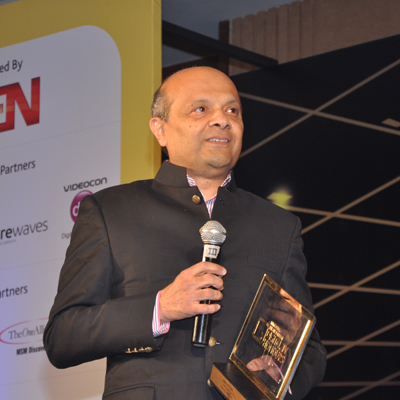
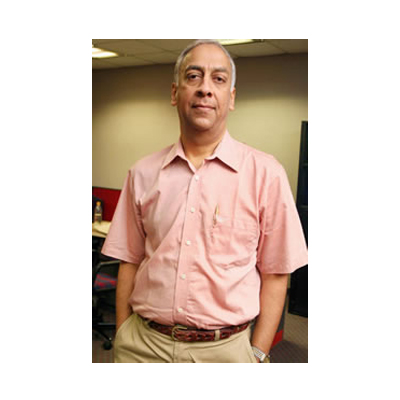
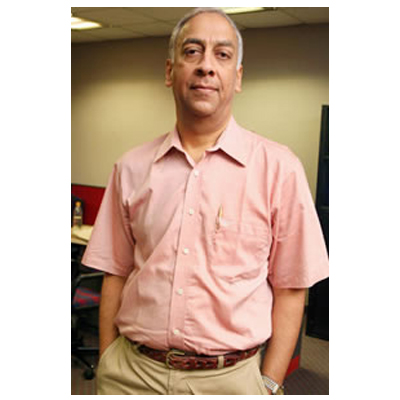
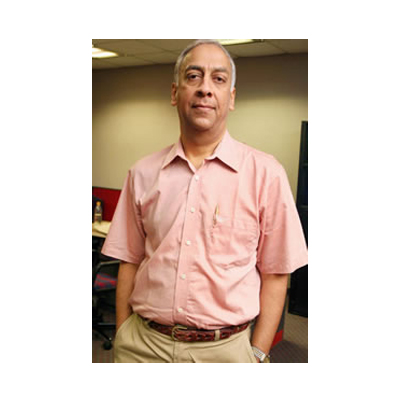
    The cable and broadcasting ecosystem started the year 2019 with a disruption – the new tariff order (NTO). With the implementation of NTO, the most dissatisfied section of the ecosystem was local cable operators (LCO) as they found the revenue-share business model would make their survival difficult which caused massive protests from LCOs. As months passed, the turmoil settled, but the ecosystem is yet to benefit from NTO, according to Maharashtra Cable Operators Foundation (MCOF) president Arvind Prabhu.

    In an interview with Indiantelevision.com, Prabhu spoke on major challenges faced by the ecosystem after NTO, how the industry evolved post-NTO, how LCOs can survive in the future with upgradation in technologies amid OTT onslaught, etc. Prabhu will also share his insights on the current state of industry at Indiantelevision.com's Video and Broadband Summit 2019, India's definitive Pay-TV and video distribution get together. 

    Edited excerpts:

    Has the industry settled down after the NTO was implemented?

    The industry has settled down but not the benefits of the NTO as envisaged by TRAI within the ecosystem. Consumers are not getting the benefits of the NTO. So the actual implementation of NTO is still found pending.

    What are the major changes you noticed post-NTO?

    What we would like to highlight is that because of the lack of proper implementation, the consumer is still not getting his choice of channels. There has been an increase in the monthly rates and we still feel the transparency is not there. The transparency which was required is still not there. Also, earlier there were two TV sets in households. Now, the second TV is still not active in post- NTO era. Only the primary TV set has been activated in the new tariff order. So, almost 20-25 per cent of our connections have still not activated.

    Initially, local cable operators showed strong disagreement to the revenue sharing model with MSOs. Has the situation changed?

    The situation has still not changed. The local cable operators (LCOs) are still not happy, especially with the network capacity fee (NCF) factor. We are still demanding the entire NCF should be given to LMO. So, the sharing with the broadcasters, the sharing of 80-20 is still not agreeable to us. There was an open-house discussion recently where lots of suggestions were given, therefore we are awaiting that to come.

    If the model does not change, have you thought of alternatives to prevent the loss?

    The revenue share model has to change. It looks like the broadcasters are going to be reducing the charges. Earlier, we thought broadcasters inflated their charges. From Rs 19 to they have gone down to Rs 12. Obviously, the ARPU is going down. If the ARPU is going down, then the revenue share also needs to be relooked and everyone in the ecosystem has to survive. If the cable operators do not get their fixed price, then they would not be able to survive. We are seeing a lot of cooperative head-ends coming up, a lot of infrastructure-sharing happening. But traditional TV is also now aligning with telcos. BSNL has opened its doors to providing its services as also Reliance Jio. There is going to be a little bit of turmoil in the market. The traditional linear viewing is changing.

    What are the other major concerns of LCOs?

    ,One of the major problem is who is the owner of the set-top box. Even today, the set-top box is given by the MSOs to LCO at Rs 1,150 or Rs 1,200. The receipt they are giving is the installation charge. As per TRAI, the installation charge is Rs 300 and registration charge is Rs 100. So, they cannot charge more than Rs 400 at any case. But they are giving the box at Rs 1,150 and saying it's installation charge. This is a violation of GST they are doing and the ultimate ownership of the box is still a question mark because the Multi-System Operators (MSOs) are taking money from LMOs, keeping the money to themselves, getting the depreciation themselves and also not paying GST.

    Also, the grievance is we are not given the choice to choose the channel that a consumer wants. As a consumer, I should have freedom of choice. But the DPOs are selling their packs, broadcasters selling their packs. I have no mechanism where I can sell my own packs. So, these all are part of NTO that was supposed to happen and that has not happened and the  tariff has gone up. So, now we are at a cross-roads.

    If you ask me whether NTO is a good thing, I will say NTO is a very good thing. It is bringing a lot of transparency, it gives equitable revenue to everyone but broadcasters and MSOs both are flouting the rules. Broadcasters are still doing fixed fee deals and MSOs are still not giving the actual audits. TRAI had also mentioned consumers be offered both prepaid and postpaid options. Now, as an LMO, LCO I am a consumer to the DPO. I have only got a prepaid option whereas my consumer is postpaid. So, what has happened is the entire liquidity of cable operators goes into prepaid mode whereas when the MSOs have to make the content  payment they make, they are easily getting three months of payment difference. So, basically MSOs are sitting on  cash. They are under-reporting to broadcasters, they have done fixed fee deals, they are not paying broadcasters also on time but they are taking prepaid from cable operators for the entire universe. The MSOs are benefitting more than anybody else.

    During the first phase of NTO implementation, a large number of consumers complained against LCOs for not giving a-la-carte channels? Why did this occur?

    Again, there was no awareness then. LCOs cannot give a-la-carte channels. Who gives a-la-carte channels? It is an MSO who has to facilitate the LCO to pass on the a-la-carte channels. MSOs are not giving a-la-carte channels, only DPO packages or the broadcaster packages. Earlier consumers were not getting that facility. Now, consumers thought the LCOs were not giving. Unfortunately, MSOs were not doing their duties and cable operators were facing the wrath of customers.

    As LCOs work on-the-ground, they are generally aware of consumer feedback. Do they think consumers are happy with the new price regime?

    Few consumers are very very dissatisfied because we are forcing packages on them and the prices have increased. Few of them – who were very very smart and educated and understood –  are very very happy with what is happening. A lot of awareness needs to happen. True pictures will emerge when we allow  consumers to select the a-la-carte channels. By and large, the ratio is 50-50.

    There are other changes in the ecosystem as well. How the OTT onslaught is affecting LCOs?

    OTT is making a lot of inroads. That is one of the points we are trying to make to TRAI that they have to bring OTT under this ambit. Because you are seeing a channel which is Rs 90 on cable or IPTV or DTH, on OTT it's available for free. And most of the people are now watching on their handheld devices. If they are getting all their entertainment and sports on an OTT platform that is not charged, it is not fair. It has to be charged and it has to be brought under regulation.

    Has Jio’s entry impacted the LCOs?

    Not much. Because they are struggling to reach a critical point. The pricing they have done also is quite affordable for LCOs to match and at Rs 699 for their basic internet charges, you know only cable operators can match those. Not much but it can be a threat.

    Why did LCOs lose a huge amount of subscribers during this phase?

    25-30 per cent of second  TV set owners may have gone to OTT or IPTV or they are not just renewing. They are finding it a luxury. Earlier they could get two TV sets coonections in Rs 300-400. Now, it's going to Rs 800-1000.

    With all the changes in technology, the emergence of new players, how do you foresee long-term future of LCOs?

    Those LCOs who upgrade themselves and do FTTH, will survive in the long run. Those LCOs who are not upgrading and think they will only do what they were doing and not invest in infrastructure, they will vanish. 

  • Bombay, Telangana HCs yet to decide on TRAI tariff cases

    Bombay, Telangana HCs yet to decide on TRAI tariff cases

    MUMBAI: Cases have been filed in various courts across the country and while the Calcutta High Court has vacated the stay on the case and the Gujarat High Court has asked for a response from TRAI, the Bombay and Telangana courts are yet to decide on similar petitions.

    The Telangana HC reserved judgment on a case filed by local cable operators who said that the regulations are arbitrary. The Pune Cable Operators Association went ahead and challenged TRAI as well, asking for a stay on the lines of the Calcutta High Court order. The bench, however, asked them to submit a copy of the order and refused to provide relief.

    The Madras High Court dismissed the PIL against the TRAI tariff order last week by quoting the Supreme Court judgment that went in favour of the regulator late last year.

    On 14 January, a similar case before the Kerala High Court was also dismissed which related to the revenue sharing aspect as well.

    LCOs all over the country are up in arms against some suggestions that have been made in the new tariff regime by TRAI that came into effect from 1 February. After TRAI won the case against Star India in October, the regulator gave the industry time till December end to put things into action. This was later extended to 31 January which was confirmed to the last date and no more extensions would be granted beyond that.

    Two days ago, TRAI claimed that all the stakeholders were ready with the new regime’s requirements. It also praised itself for ensuring that a large number of customers had exercised their options.

  • TRAI says no blackout of TV channels on 29 December

    TRAI says no blackout of TV channels on 29 December

    MUMBAI: Speculations have been rife about a complete blackout of TV channels on December 29 following the Supreme Court orders of implementing a new tariff regime, as the system allegedly is not ready for such a big move. Squashing all such rumours, regulator TRAI has asserted that it has advised all the broadcasters, DPOs, and LCOs to ensure there is no disruption of TV services.

    It says in the release, “The authority is seized of the matter and hereby advises that all broadcasters/DPOs/LCOs will ensure that any channel that a consumer is watching today is not discontinued on 29.12.2018. Hence, there will be no disruption of TV services due to implementation of the new regulatory framework.”

    The release further reads, “Keeping in view the interest of the subscribers and to enable a smooth transition, the authority is preparing a detailed migration plan for all the existing subscribers. The migration plan will provide ample opportunity to each and every subscriber for making informed choice. This will also enable service providers in carrying out the various activities as stipulated in the new regulatory framework in a time-bound manner.”

    As per TRAI, the new tariff order will give consumers the power to choose and will also lower the prices for TV channels. This new framework allows them to select and pick channels that they like to watch and pay accordingly. It also requires the TV broadcasters to disclose maximum retail price (MRP) of their respective channels and also of the channel bouquets. As per the Supreme Court verdict of 30 October 2018, the service providers were advised to complete the preparation for migration to the new framework by 28 December 2018.

    Earlier, as well, TRAI had asked the broadcasters to work closely with all the service providers to ensure a hassle-free transformation, in the interest of the consumers.

  • Hathway to target existing users for new OTT, cable hybrid STBs

    Hathway to target existing users for new OTT, cable hybrid STBs

    MUMBAI: Indian consumers are not losing interest in linear TV anytime soon but one can’t be too wary given the OTT burst. To stay ahead of the game, Hathway has unveiled two new products – an OTT set-top box and a cable hybrid box. Both of the boxes have been priced at Rs 2999.

    80 per cent of Hathway’s target will be existing users who can upgrade to the new hybrid box while 20 per cent will be new customers. As on 30 June, it had 7.2 million cable TV subscribers. Overall, the company is hoping to sell 100,000 STBs each month. The box production capacity is the same as before for now but if the volume of response explodes, it can even double it.

    The newly introduced boxes will be available to the local cable operators from 15 October and consumer registrations will start by 1 November.  For initial rollout, the company will work closely with local cable operators.

    Hathway Play Box, the OTT set-top box is based on Google’s Android TV. The remote carries a dedicated YouTube, Netflix and Google Play button. It will also have voice-enabled Google assistant and inbuilt Chromecast. The hybrid cable box named as Hathway Ultra Smart HUB combines linear TV with Play services in HDR quality along with easy navigation. It will enable users to download apps from the Google Play store also.

    “When we developed Ultra Smart Hub, the most important aspect has been listening to our customers to understand their needs regarding their TV viewing. We see a clear shift in consumption in content today compared to earlier. Indian consumers today want a mix of traditional linear television viewing combined with on-demand or streaming services. With the Smart Hub we have a product that meets their expectations,” Hathway Cable and Datacom MD Rajan Gupta said.

    There is a slight difference in the usage of both. The cable hybrid boxes can be made available in areas where Hathway has its cable infrastructure while the OTT has an advantage. It can reach areas where there’s no cable but Hathway’s broadband service is offered.

    The new boxes can lead to the company’s ARPU growth also. He hopes top 25 per cent of consumers will go for OTT services. “In general, any OTT service providers will be more than happy to do such tie-ups because it will help them increasing reach,” he also added.

    “Starting 1 December we will have a TVC for this product. Our marketing team is working on a 360-degree marketing campaign. Creating awareness, right from metros, mini metros to rural will be the key. We will also be working closely with our LCO partners. In fact, we will be rolling out first with them and apart from TVC we will also take help from them to create awareness,” he added.

    In the previous investors call from the Q1 financial result, Gupta mentioned the necessity of an innovative model, bundling IoT, cable with current pay TV and OTT. He had said that the company is working on it and would announce something soon.

    "We are pleased to be working with Hathway and look forward to leveraging their extensive broadband and cable network to enable more exciting and useful Android TV experiences for consumers," Android, Chrome & Play Business Development head India Pranab Mookken commented.

  • Broadcast media sector FDI norms see minor tweaks in govt’s fresh announcement

    Broadcast media sector FDI norms see minor tweaks in govt’s fresh announcement

    NEW DELHI: The government of India yesterday issued a comprehensive FDI policy for various sectors where a slight change has been noticed in the media sector from what had already been announced in June 2016. Now, 100 per cent FDI is allowed in cable TV and HITS under automatic route for both digital and non-digital carriage services.

    For those segments of the media where automatic FDI approval is not granted and a government okay is needed, it would now be the nodal ministry — Ministry of Information and Broadcasting (MIB) — that would be responsible for the green signal instead of Commerce Ministry’s Foreign Investment Promotion Board, a division that has been now dismantled as part of government’s bid to make easy doing business in India.

    public://b1_0.jpg

    FDI in broadcast carriage services like teleports, DTH, cable networks (both MSOs and LCOs for DAS and non-DAS areas), mobile TV, headend-in-the-sky broadcasting service (HITS) is 100 per cent under automatic route.

    The foreign investment limit (FDI) in terrestrial broadcasting of FM Radio and up-linking of news and current affairs TV channels remain at 49 per cent subject to government approval. Up-linking and downlinking of non-news and current affairs TV channels continue to be 100 per cent under automatic route.

    public://b2.jpg

    Publishing of newspaper and periodicals dealing with news and current affairs  and publication of Indian editions of foreign magazines dealing with news and current affairs have a 26 per cent FDI limit subject to government approval.

    The head of an MSO company, on condition of anonymity, said it’s slightly confusing as to why it has been stated that 100 per cent FDI is allowed for carriage services like cable TV and HITS in both digital and non-digital areas  under automatic route.

    Though the government is of the opinion that 100 per cent digitization has been achieved in the country, broadcast carriage industry (MSOs and LCOs) insist there analog pockets in the country persist as set-top-boxes are still being seeded in small towns and rural areas.

    The government has also notified — most of it reiteration of earlier policy decision — detailed conditions for the broadcast media and they can be viewed at http://dipp.nic.in/sites/default/files/CFPC_2017_FINAL_RELEASED_28.8.17.pdf:

    ALSO READ:

    Radical changes in FDI regime; Most sectors on automatic FDI route

    I&B Sector brings in over $1.25 billion  FDI between October 2014 and May 2016


  • DAS: MSOs, LCOs give low figure of STB seeding, official sources admit it’s under 80%

    DAS: MSOs, LCOs give low figure of STB seeding, official sources admit it’s under 80%

    NEW DELHI / MUMBAI: Even as the nation has stepped into an era of full cable television digitisation, there are mixed reports coming in from around the country about the situation on the ground.

    While the government had issued a warning to all broadcasters, multi-system and local cable operators about action if they fail to switch off analogue, there are reports from almost every region that Phase IV covering rural India has still a long way to go before full implementation of digital addressable system happens.

    The Government had, in mid-January, told the Task Force that while the seeding of set-top boxes in Phase III was almost complete, the figure for Phase IV was 32 per cent. Minister of state for information and broadcasting Rajyavardhan Rathore told the Parliament in mid-March that around 67 per cent seeding of set-top boxes had been achieved in Phase III and IV while it was total in the first two phases, minus Tamil Nadu.

    A ministry source told indiantelevision.com that the figure had already crossed around 75 per cent in the final two phases. Not wanting to be named, the source ruled out any more grace period, and said that several MSOs and LCOs act only after a final warning, and therefore the chances were that the figure may be higher than those given by him.

    However, since there is no plan to help the poor acquire STBs, it is unlikely that the figure would be much higher.

    In Tamil Nadu, where there is a court stay in operation since Phase I, the state government run Arasu Cable TV Corporation (TACTV) warned MSOs and LCOs against switching off analogue signals anywhere in the state after 31 March 2017.

    Pointing out that the centre had refused to grant DAS licence to TACTV because recommendations of the Telecom Regulatory Authority of India do not permit state-owned TV or distribution networks, an MSO told indiantelevision.com that the case had been gong on for so many years primarily because the Central Government was not clearabout its stand and keeps taking adjournments.

    Meanwhile, in neighbouring Telangana and Andhra Pradesh, MSOs and LCOs said that around 40 per cent of Phase III had still to be fully seeded and the figure was bound to be higher in Phase IV areas. One MSO not wanting to be named said that there was an area in Hyderabad dominated by a particular community where even law had limited reach where analogue signals continued unchecked. “Whatever had been fixed a long time ago, remains,” the MSO said.

    Interestingly, a consumer body Citizens Welfare Society had moved the High Court for the twin states saying that, while the government had made it mandatory that DAS signals should be implemented, there was nothing in law to say that analogue has to be switched off and pleading that the two should be allowed to co-exist till people take to DAS voluntarily. Though the case was not admitted, the bench of the Court heard the viewpoints of several MSOs, LCOs, and consumer bodies over twenty hours for the few days and reserved its orders on 20 February 2017. This order is still awaited keenly by consumers as well as MSOs and LCOs.

    Siti Network Limited (Essel Group) executive director & CEO V D Wadhwa said that analogue signals had been switched off in the East Zone. Network 18/Viacom18 Group distributor Indiacast Media Group CEO (and Jio Media head – content acquisition/ alliances) Anuj Gandhi also said that analogue had been switched off in compliance with the deadline set by the Government. However, sources said that completely shutting off analogue signals in other zones may be a challenge.

    Meanwhile, an MSO in Assam said that while digitisation was complete in Guwahati, it had not even covered fifty per cent of rural Assam. In Madhya Pradesh and Chhatisgarh, MSOs and LCOs interviewed said around 40 per cent seeding had taken place in Phase IV but pointed out that the confusion because of the tariff orders had resulted in direct-go-home players targeting consumers.

    Reports from Uttar Pradesh and Uttarakhand said that while the broadcasters had switched off digital signals in most areas of Phase IV, tthis may trigger some protests over the next few days from consumers as the figure of seeding of set top boxes was very low. The DTH players were also active in these areas.

    Maharashtra Cable Operators Federation sources told www.indiantelevision.com that the broadcasters had switched off analogue signals, but rural Maharashtra which faced extreme poverty was still largely uncovered by DAS STBs. However, he said he would have a more tangible report over the next two days.

    Cable Operators Association of Gujarat president Pramod Pandya said that 80-90 per cent of the state had gone digital, but some broadcasters were still supplying analogue signals in certain areas. Meanwhile, it is learnt that Reliance Jio is planning to bring in cheaper STBs soon, though these may not have many fancy features.

    Phase I covering the Metro cities of Delhi, Mumbai, Kolkata and Chennai was originally slated for 30 June 2012 and modified to 31 October 2012. The second phase covering 38 cities (with population more than one million) was slated for 31 March 2013.

    The third Phase was to cover all other urban areas (Municipal Corporations/ Municipalities) and was originally slated for 30 September 2014 and modified to 31 December 2015 which was extended to 31 January 2017 and the final phase to 31 March 2017.

  • TRAI gets support from Subhash Chandra on inter-connect  guidelines

    TRAI gets support from Subhash Chandra on inter-connect guidelines

    NEW DELHI: Urging all the stakeholders of the Indian broadcast and cable segments to sink their differences and “come together” for the overall benefit  of the industry, Zee group chairman Subhash Chandra supported regulator TRAI’s draft inter-connect guidelines that, amongst other such broadcast regulations, have been put on hold owing to them legally challenged in courts.  

    “I am a strong supporter of (TRAI’s draft) inter-connect regulations,” Chandra, a Rajya Sabha Member of Parliament from Haryana state, said, adding that in order to reduce litigations amongst stakeholders in the industry it was paramount to “support” such regulations.

    However, Chandra made it clear that though broadcast and cable industry should back TRAI draft guidelines at present — “at least temporarily” — such guidelines should be relaxed over a period of time and jocularly added that rampant litigations financially enriched lawyers only. He was responding to a question from the audience on growing division between broadcasters and distribution platforms, especially the MSOs and LCOs.

    Earlier, delivering the keynote address at the SATCAB meet organized by the All-India Dish Antennae Aavishkaar Sangh, the Zee/Essel Group founder said that there was no reason why the estimated 230,000 (his estimates) local cable operators in the country should not shed allegiance to multiple industry bodies and “unite under one umbrella” to become a force to reckon with so that their voice could be heard more forcefully in the corridors of power.

    Pointing out that not only the MSOs and LCOs should unite, but “all stakeholders” like broadcasters too, Chandra sounded a word of caution, “As an industry we need to be alert to technological evolution.” He added that unless that happens, others, like telcos, “will take a lead over consumer experience”, which will be “our weakness.”

    Chandra said the cable industry had to prepare itself “to catch up with the future” as at present the industry was at “ground level with basic set top boxes”, for example, when technology (like 3D printing) could soon make it possible for viewers to get a different experience in, say, a TV cookery show.

    Referring to various concerns of the LCOs, he said he had ensured that the issue of entertainment tax got subsumed in the Goods and Services Tax (GST), but for him to take up issues relating to the sector stakeholders needed to unite.

    Going back in time to 1992, he dwelt on how the idea of Zee had been drawn up and how when he had given this information to a senior official in the Ministry of Information and Broadcasting (MIB), he had been strongly criticized for the whole idea and was told it would never succeed. “But in just three months of launch”, he said, “Zee had 300,000 television homes subscribing to it.”  

    ALSO READ:

    Top M&E industry honchos see no major benefit from Budget ’17

    MSOs join issues with TRAI tariff plea at Madras HC

    Tariff order: Don’t notify without SC nod, TRAI told; Madras HC case to continue


  • TRAI expects stakeholders to work towards infrastructure sharing

    TRAI expects stakeholders to work towards infrastructure sharing

    NEW DELHI: India is witnessing a huge growth in the television sector and is on the threshold of complete digitization. The Telecom Regulatory Authority of India has asked stakeholders as to whether they feel the need for infrastructure sharing – irrespective of whether it is cable TV and HITS operators, DTH operators, or CAS and SMS. 

    Stakeholders have been asked to send in their comment by 21 October, 2016, with counter-comments on 4 November 2016. At the outset, TRAI says the country now has 864 private television channels apart from six private DTH players and two HITS players and a large number of MSOs and LCOs and infrastructure sharing may help the industry to grow. 

    “There appears to be a distinct possibility for sharing of distribution infrastructure among multiple DPOs for its optimal utilization. It may result in reduction in capital expenditure and operating expenditure for distributors,” says the regulator.

    Infrastructure includes satellite transponder, earth station, Head-end, Hybrid Fibre Coaxial (HFC) network, conditional access system (CAS) and subscriber management system (SMS) used for delivery of the TV broadcasting services to the subscribers.

    Each multi-channel distribution platform retransmits large number of satellite TV channels. Of these large number of satellite TV channels retransmitted by each operator, many are common across the distribution platforms in a relevant market. Therefore, retransmission of such common channels independently on each distribution platform ends up duplicating the infrastructure.

    In the light of this, TRAI has asked the stakeholders to consider certain points:

    Infrastructure sharing among Cable TV and HITS operators

    (1) Is there a need to enable infrastructure sharing among MSOs and HITS operators, or among MSOs? It is important to note that no mandate for such infrastructure sharing is being proposed.

    (2) Which model is preferred for sharing of infrastructure among MSOs and HITS operators, or among MSOs?

    Infrastructure sharing among DTH operators

    (3) Is there a need to enable infrastructure sharing among DTH operators?

    Relevant issues in sharing of infrastructure

    (4) What specific amendments are required in the cable TV Act and the Rules made there under to enable sharing of infrastructure among MSOs themselves?  

    (5) What specific amendments are required in the MSO registration conditions and HITS licensing guidelines in order to enable sharing of infrastructure among MSOs and HITS operators? 

    (6) What specific amendments are required in the guidelines for obtaining license for providing DTH broadcasting service to enable sharing of infrastructure among DTH operators? 

     (7) Do you envisage any requirement for amendment in the policy framework for satellite communication in India to enable sharing of infrastructure among MSOs and HITS operators, and among DTH operators? If yes, then what specific amendments would be required? 

    (8) Do you envisage any requirement for amendments in the NOCC guidelines and WPC license conditions relating to satellite communications to enable sharing of infrastructure among MSOs and HITS operators, and among DTH operators? If yes, then what specific amendments would be required?

    (9) Do you envisage any requirement for amendments in any other policy guidelines to enable sharing of infrastructure among MSOs and HITS operators, among MSOs, and among DTH operators?

     (10) What mechanisms could be put in place for disconnection of signals of TV channels of defaulting operator without affecting the operations of the other associated operators with that network after implementation of sharing of infrastructure among MSOs and HITS operators, among MSOs, and among DTH operators?

    (11) Is there any requirement for tripartite agreement to enable sharing of infrastructure among MSOs and HITS operators, among MSOs, and among DTH operators? Kindly elucidate with justification.

    (12) What techniques could be put in place for identification of pirates after implementation of sharing of infrastructure among MSOs and HITS operators, among MSOs, and among DTH operators?

    (13) Is there any need for further strengthening of anti-piracy measures already in place to enable sharing of infrastructure among MSOs and HITS operators, among MSOs, and among DTH operators?

    (14) Is there a requirement to ensure geographically targeted advertisements in the distribution networks? If yes, then what could be the possible methods for enabling geographically targeted advertisements in shared infrastructure set up?

    (15) Whether it is possible for the network operator to run the scrolls and logo on the specific STBs population on request of either the broadcaster or the service delivery operator after implementation of sharing of infrastructure among MSOs and HITS operators, among MSOs, and among DTH operators?

    (16) Whether implementation of infrastructure sharing affects the differentiation and personalization of the TV broadcasting services and EPG? If yes, then how those constraints can be addressed?

    (17) Whether, in your opinion, satellite capacity is a limiting factor for sharing of infrastructure? If yes, then what could be the solutions to address the issue?

    Sharing of CAS and SMS

    (18) Is there a need to permit sharing of SMS and CAS? 

     (19) If yes, then what additional measures need to taken to ensure that SMS data remain accessible to the tax assessment authorities and Authorized officers as defined in the Cable TV Act for the purpose of monitoring the compliance with relevant the Rules and the Regulations?

    (20) Whether sharing of CAS can in any way compromise the requirement of encryption as envisaged in the Cable TV Act and The rules and the regulations. 

  • TRAI expects stakeholders to work towards infrastructure sharing

    TRAI expects stakeholders to work towards infrastructure sharing

    NEW DELHI: India is witnessing a huge growth in the television sector and is on the threshold of complete digitization. The Telecom Regulatory Authority of India has asked stakeholders as to whether they feel the need for infrastructure sharing – irrespective of whether it is cable TV and HITS operators, DTH operators, or CAS and SMS. 

    Stakeholders have been asked to send in their comment by 21 October, 2016, with counter-comments on 4 November 2016. At the outset, TRAI says the country now has 864 private television channels apart from six private DTH players and two HITS players and a large number of MSOs and LCOs and infrastructure sharing may help the industry to grow. 

    “There appears to be a distinct possibility for sharing of distribution infrastructure among multiple DPOs for its optimal utilization. It may result in reduction in capital expenditure and operating expenditure for distributors,” says the regulator.

    Infrastructure includes satellite transponder, earth station, Head-end, Hybrid Fibre Coaxial (HFC) network, conditional access system (CAS) and subscriber management system (SMS) used for delivery of the TV broadcasting services to the subscribers.

    Each multi-channel distribution platform retransmits large number of satellite TV channels. Of these large number of satellite TV channels retransmitted by each operator, many are common across the distribution platforms in a relevant market. Therefore, retransmission of such common channels independently on each distribution platform ends up duplicating the infrastructure.

    In the light of this, TRAI has asked the stakeholders to consider certain points:

    Infrastructure sharing among Cable TV and HITS operators

    (1) Is there a need to enable infrastructure sharing among MSOs and HITS operators, or among MSOs? It is important to note that no mandate for such infrastructure sharing is being proposed.

    (2) Which model is preferred for sharing of infrastructure among MSOs and HITS operators, or among MSOs?

    Infrastructure sharing among DTH operators

    (3) Is there a need to enable infrastructure sharing among DTH operators?

    Relevant issues in sharing of infrastructure

    (4) What specific amendments are required in the cable TV Act and the Rules made there under to enable sharing of infrastructure among MSOs themselves?  

    (5) What specific amendments are required in the MSO registration conditions and HITS licensing guidelines in order to enable sharing of infrastructure among MSOs and HITS operators? 

    (6) What specific amendments are required in the guidelines for obtaining license for providing DTH broadcasting service to enable sharing of infrastructure among DTH operators? 

     (7) Do you envisage any requirement for amendment in the policy framework for satellite communication in India to enable sharing of infrastructure among MSOs and HITS operators, and among DTH operators? If yes, then what specific amendments would be required? 

    (8) Do you envisage any requirement for amendments in the NOCC guidelines and WPC license conditions relating to satellite communications to enable sharing of infrastructure among MSOs and HITS operators, and among DTH operators? If yes, then what specific amendments would be required?

    (9) Do you envisage any requirement for amendments in any other policy guidelines to enable sharing of infrastructure among MSOs and HITS operators, among MSOs, and among DTH operators?

     (10) What mechanisms could be put in place for disconnection of signals of TV channels of defaulting operator without affecting the operations of the other associated operators with that network after implementation of sharing of infrastructure among MSOs and HITS operators, among MSOs, and among DTH operators?

    (11) Is there any requirement for tripartite agreement to enable sharing of infrastructure among MSOs and HITS operators, among MSOs, and among DTH operators? Kindly elucidate with justification.

    (12) What techniques could be put in place for identification of pirates after implementation of sharing of infrastructure among MSOs and HITS operators, among MSOs, and among DTH operators?

    (13) Is there any need for further strengthening of anti-piracy measures already in place to enable sharing of infrastructure among MSOs and HITS operators, among MSOs, and among DTH operators?

    (14) Is there a requirement to ensure geographically targeted advertisements in the distribution networks? If yes, then what could be the possible methods for enabling geographically targeted advertisements in shared infrastructure set up?

    (15) Whether it is possible for the network operator to run the scrolls and logo on the specific STBs population on request of either the broadcaster or the service delivery operator after implementation of sharing of infrastructure among MSOs and HITS operators, among MSOs, and among DTH operators?

    (16) Whether implementation of infrastructure sharing affects the differentiation and personalization of the TV broadcasting services and EPG? If yes, then how those constraints can be addressed?

    (17) Whether, in your opinion, satellite capacity is a limiting factor for sharing of infrastructure? If yes, then what could be the solutions to address the issue?

    Sharing of CAS and SMS

    (18) Is there a need to permit sharing of SMS and CAS? 

     (19) If yes, then what additional measures need to taken to ensure that SMS data remain accessible to the tax assessment authorities and Authorized officers as defined in the Cable TV Act for the purpose of monitoring the compliance with relevant the Rules and the Regulations?

    (20) Whether sharing of CAS can in any way compromise the requirement of encryption as envisaged in the Cable TV Act and The rules and the regulations. 

  • Action “reportedly” taken against LCOs in Kurnool and Aurangabad showing Peace TV: Naidu

    Action “reportedly” taken against LCOs in Kurnool and Aurangabad showing Peace TV: Naidu

    NEW DELHI: Reiterating that action was taken against telecasting of unpermitted television channels, Information and Broadcasting Minister M Vekaiaih Naidu said today that such complaints were received against some cable operators from some districts such as Kurnool and Aurangabad regarding carriage of Peace TV channel.

    He told the Rajya Sabha that the complaints were forwarded to the District Collector for necessary action by the authorized officers under the Cable Television Networks (Regulation) Act 1995 and Rules 1994.

    “They have reportedly taken action”, the Minister added in reply to a question.

    The Ministry has also invited complaints by the general public regarding transmission of unpermitted satellite TV channels by cable operators on its social media platforms. These are also forwarded to the District Collectors for necessary action.

    Whenever instances are brought to the notice of thr Ministry regarding Uplinking of unpermitted TV channels through any Indian teleport, action is taken to stop the same as per the provisions of Uplinking guidelines 2011, he said.

    He said that the Cable Act and Cable Rules regulates the transmission and re-transmission of TV channels over the Cable Networks. The Authorized Officers (the District Magistrates, the Additional District Magistrates, the Sub-Divisional Magistrates and the Commissioners of Police within their territorial jurisdiction) under the Act are empowered to take action whenever violations of the Cable Act, 1995 are brought to notice.

    The Telecom Regulatory Authority of India (TRAI) has made recommendations on the regulation of ground channels in this regard.

    Meanwhile, he said his Ministry had on 8 July 2016 issued advisories to the State Governments and Union Territories, the District Collectors and the MSOs/LCOs that no unpermitted satellite channel such as Peace TV should be carried by the cable operators in the country.

    In addition, the Ministry has issued advisories from time to time to the State Governments and Union Territories to constitute State and District Level Monitoring Committees for recommending action against broadcast content being carried by the cable operators which are in violation of the Programme Code and the Advertisement Code under the Cable Act 1995.

    The Ministry has mandated Digitization of the entire cable network in the country by December, 2016 in a phased manner through the introduction of the Digital Addressable Systems (DAS). This measure is expected to address the issues of transmission of unpermitted TV channels, he added.