Tag: LCO

  • TRAI issues comprehensive interconnect draft guidelines

    TRAI issues comprehensive interconnect draft guidelines

    NEW DELHI: Indian broadcast regulator came out today with its third set of draft guidelines within five days — this time on interconnection issues. With an aim to bring about more uniformity and transparency in the broadcast carriage sector, TRAI attempts to tackle spiralling carriage cost, rampant discount schemes and uneven agreements between stakeholders, while creating room for distribution cost reimbursement.

    As often reiterated by the Telecom Disputes Settlement and Appellate Tribunal (TDSAT), TRAI said no broadcaster will provide signals of pay television channels to a distributor of television channels without entering into a written interconnection agreement with such a distributor of television channels.

    In the draft regulations, called the Telecommunication (Broadcasting and Cable Services) Interconnection (Addressable Systems) Regulations, 2016, published by TRAI today, the regulator said all broadcasters and distributors (DPOs) will publish on their websites a draft reference interconnection offer (RIO) for providing signals of all its pay television channels to a distributor of television channels within 30 days of commencement of these regulations or before launching of a pay television channel, in conformance with the provisions of the regulations and tariff orders notified by it.

    It also said that every broadcaster shall offer all television channels on a-la-carte basis to distributor of television channels. But it will be open to a broadcaster to offer its pay channels (in addition to offering of channels on a-la-carte basis) in form of bouquets.

    The draft inter-connect guidelines have been prepared after keeping in view the various orders and litigations pending in TDSAT or courts arising out of disputes between broadcasters and distributors or local cable broadcasters.

    Stakeholders have been asked to respond to the draft by 28 October 2016, with the year-end deadline for the final switch-off of analogue signals under the Digital Addressable Systems (DAS) less than three months away.   

    Interestingly, TRAI also dwells on carriage & placement fee — something that broadcasters have been saying is a growing menace hitting their bottomline — and discounts indicating how the issue can be tackled. 

    No carriage fee is to be paid by a broadcaster if the subscription of the channel is more than or equal to 20 per cent of the subscriber base. The rate of carriage fee has been capped at 20 paisa per channel per subscriber per month and the fee amount (charged by DPOs from TV channels) will decrease with increase in subscription numbers.

    In what could lead to some serious work in arithmetic, TRAI has suggested the distributors of TV channels may offer discounts on the carriage fee rate declared by them not exceeding 35 per cent of the rate of the carriage fee declared. Further, broadcaster can offer to a distributor a minimum of 20 per cent of the maximum retail price (MRP) of its pay channels or bouquets of pay channels as distribution fee. TV channels may also offer discounts on the MRP, provided that the sum of discounts and distribution fee in no case shall exceed 35 per cent of the declared MRP.

    The carriage fee payable by a broadcaster to the distributor under the interconnection agreement shall be calculated on the basis of the rate of carriage fee and the discounts offered in the reference interconnection offer. The term of the interconnection agreement will in no case be less than one year from the date of commencement of the agreement.

    The Authority suo-motu or otherwise may examine the reference interconnection offer submitted by a distributor of television channels and may modify the reference interconnection offer with the distributor amending the RIO accordingly and publish the same within fifteen days of receipt of the direction, if the Authority is of the opinion that the RIO has not been prepared in conformance with the provisions of the regulations and the tariff orders notified by the Authority.

    Pointing out that the new draft has attempted to keep the basic principles of non-exclusivity, non-discrimination, transparency, level playing field and fair competition in mind, TRAI said there should be a common interconnection framework for all addressable systems, DTH, HITS, DAS and IPTV.

    The “Must carry” provision for all addressable systems on first come first serve basis has been provided for and distributors have been asked to publish information about its platform, including available capacity and declare the rate of carriage fee.

    It will be mandatory for service providers to reduce the terms and conditions of all their interconnection agreements to writing and no service provider will provide for any clause in an interconnection agreement with the other service provider which would require, directly or indirectly, the latter to pay a minimum guaranteed amount.

    Furthermore, no broadcaster will provide signals of pay television channels to a distributor of television channels without entering into a written interconnection agreement with such distributor of television channels.

    The regulator said no broadcaster will provide for any clause, directly or indirectly, in an interconnection agreement with a distributor of TV channels which require such distributor to include the channels or bouquets of pay TV channels in any particular bouquet of channels offered by such distributor to the subscribers.

    A broadcaster may sign the interconnection agreement with distributors of TV channels for a-la-carte pay TV channels or bouquets of pay television channels of its subsidiary company or holding company or subsidiary company of the holding company which has obtained, in its name, the down-linking permission for its television channels from the Government, after written authorization by them.

    Every broadcaster will enter into a new written interconnection agreement with distributors of TV channels before the expiry of the existing interconnection agreement and notice of this will be given to the distributor at least 60 days prior to the date of expiry.

    The agreement between a broadcaster and a multi system operator (MSO) will include the details for describing the territory for the purpose of distribution of signals of television channels containing the registered area of operation of the MSO as mentioned in the registration granted by the Government. Provisions relating to territory covered or agreements between an MSO and LCO will not affect the direct-to-home platforms.

    The full draft guidelines could be accessed at http://www.trai.gov.in/WriteReadData/WhatsNew/Documents/Interconnection_Regulation_14_10_2016.pdf

    Also Read:   TRAI on carriage fee, other issues in draft interconnect guidelines
  • IDOS 2016: TRAI tariff framework coming next fortnight

    IDOS 2016: TRAI tariff framework coming next fortnight

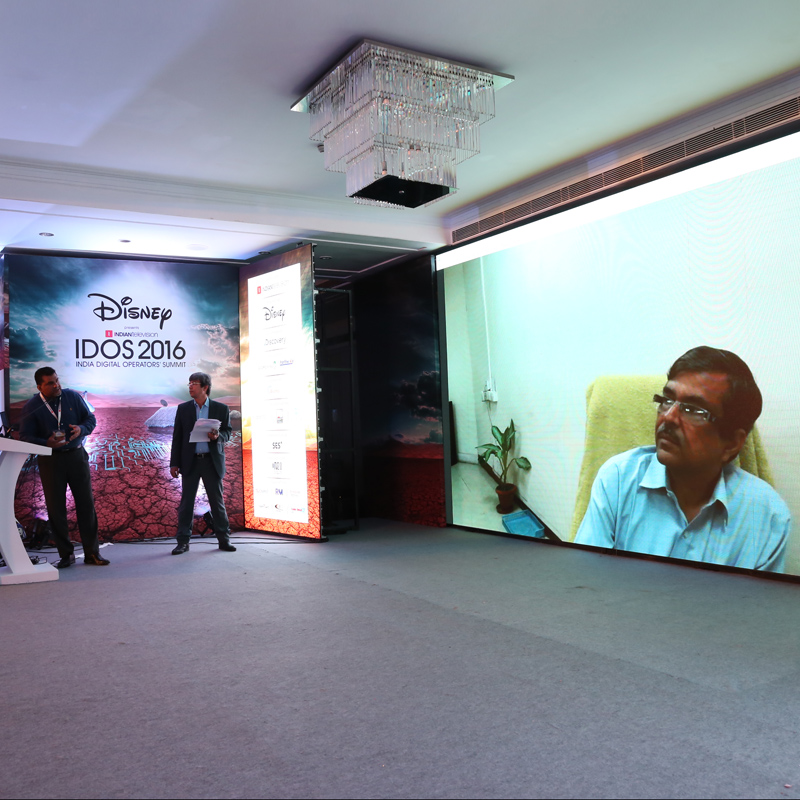
    GOA: The draft tariff framework of the Telecom Regulatory Authority of India (TRAI) is set to be released in a fortnight. This was declared by TRAI principal advisor (telecom services) Sunil Kumar Gupta in a Skype video conference with indiantelevision.com’s founder, CEO and editor-in-chief Anil Wanvari at IDOS 2016 here on Friday evening.

    “We have taken the views of all the stakeholders while drawing up the framework. It is based on the following four major planks — non-discriminatory pricing, transparency, consumer protection and overall growth of the industry,” he said.

    Gupta was clear that the sunset date for Phase IV was unshiftable. “Both MIB and we are very committed to this,” he said. “31 December 2016 is the sunset date for DAS Phase IV.”

    He cautioned that no one should take shelter around the fear that someone may try and scuttle phase IV by approaching the court. “There are enough set top boxes in the country today,” he said. “There is no shortage. Hence there can be no delay.”

    He reiterated that progress on digitisation and DAS has been good. “Revenues from the ground are going up in phase I and phase II,” he said. “According to MIB, 93 per cent of phase III has been digitised and in phase IV, there has been some good seeding too.”

    Gupta also warned that unless interconnection agreements are signed between MSOs and LCOs, the parties would not get any recourse from TDSAT as that is the direction that has been given. “It is important that the agreements are signed,” he said. “We have gone around the country and spoken to LCOs around the country. Often times they have been apprehensive about some of the agreements. But when we have explained to them, many of them have not read them properly, and hence the apprehension. When they have been explained and read it, they have gone ahead and done the shining.”

    He also expected a decisive verdict from the Delhi High Court in the first week of October around the Phase III litigation. Gupta urged the cable community to focus and keep the consumer aware of what was happening through their own networks and encourage him/her about DAS. “It is in the industry’s own interest,” he stated.

    On being asked whether TRAI would intervene and hasten the process on the infrastructure consultation paper, Gupta said there are some people who want to share infrastructure and some who don’t. On being prodded if the regulator would intervene if those who don’t want it to go through outweigh the ones who want it to, Gupta said, the consultation process would follow its due course. “Infrastructure sharing is between two private players, they can go ahead and do it. I don’t see why we need to intervene and mandate infrastructure sharing.”

    He also insisted that the entire industry – including the cable operators – need to tweak business models and the cable ops need to look at broadband seriously. “There is a lot of upside to broadband,” he said. “ARPUs are good over there, they can offer value to the consumer. Change is upon the industry and it needs to embrace this change and drive themselves forward. No telco can offer the kind of services, cable TV can offer, say 40 GB at a price of Rs 700-800 a month. The entire cable TV sector holds a lot of potential. Now the industry needs to realise it.”

  • IDOS 2016: TRAI tariff framework coming next fortnight

    IDOS 2016: TRAI tariff framework coming next fortnight

    GOA: The draft tariff framework of the Telecom Regulatory Authority of India (TRAI) is set to be released in a fortnight. This was declared by TRAI principal advisor (telecom services) Sunil Kumar Gupta in a Skype video conference with indiantelevision.com’s founder, CEO and editor-in-chief Anil Wanvari at IDOS 2016 here on Friday evening.

    “We have taken the views of all the stakeholders while drawing up the framework. It is based on the following four major planks — non-discriminatory pricing, transparency, consumer protection and overall growth of the industry,” he said.

    Gupta was clear that the sunset date for Phase IV was unshiftable. “Both MIB and we are very committed to this,” he said. “31 December 2016 is the sunset date for DAS Phase IV.”

    He cautioned that no one should take shelter around the fear that someone may try and scuttle phase IV by approaching the court. “There are enough set top boxes in the country today,” he said. “There is no shortage. Hence there can be no delay.”

    He reiterated that progress on digitisation and DAS has been good. “Revenues from the ground are going up in phase I and phase II,” he said. “According to MIB, 93 per cent of phase III has been digitised and in phase IV, there has been some good seeding too.”

    Gupta also warned that unless interconnection agreements are signed between MSOs and LCOs, the parties would not get any recourse from TDSAT as that is the direction that has been given. “It is important that the agreements are signed,” he said. “We have gone around the country and spoken to LCOs around the country. Often times they have been apprehensive about some of the agreements. But when we have explained to them, many of them have not read them properly, and hence the apprehension. When they have been explained and read it, they have gone ahead and done the shining.”

    He also expected a decisive verdict from the Delhi High Court in the first week of October around the Phase III litigation. Gupta urged the cable community to focus and keep the consumer aware of what was happening through their own networks and encourage him/her about DAS. “It is in the industry’s own interest,” he stated.

    On being asked whether TRAI would intervene and hasten the process on the infrastructure consultation paper, Gupta said there are some people who want to share infrastructure and some who don’t. On being prodded if the regulator would intervene if those who don’t want it to go through outweigh the ones who want it to, Gupta said, the consultation process would follow its due course. “Infrastructure sharing is between two private players, they can go ahead and do it. I don’t see why we need to intervene and mandate infrastructure sharing.”

    He also insisted that the entire industry – including the cable operators – need to tweak business models and the cable ops need to look at broadband seriously. “There is a lot of upside to broadband,” he said. “ARPUs are good over there, they can offer value to the consumer. Change is upon the industry and it needs to embrace this change and drive themselves forward. No telco can offer the kind of services, cable TV can offer, say 40 GB at a price of Rs 700-800 a month. The entire cable TV sector holds a lot of potential. Now the industry needs to realise it.”

  • MIB, TRAI to examine DAS Phase III interconnect issues

    MIB, TRAI to examine DAS Phase III interconnect issues

    NEW DELHI: Multi-system operators and local cable operators were yesterday assured by senior officials of the Ministry of Information and Broadcasting (MIB) and the Telecom Regulatory Authority of India  (TRAI) that contentious issues relating to interconnect agreements of Phase III of digitisation would be resolved.

    In a meeting held under the chairmanship of MIB additional secretary Jayashree Mukherjee, the MSOs and LCOs presented problems being faced by them.

    Primarily, the issues arise in the areas switching from analogue to digital addressable system and where the MSOs and LCOs have to sign fresh interconnect agreements with broadcasters.

    In the last meeting of the DAS Task Force on 31 August 2016, it was stated that the broadcasters should request the MSOs with whom they have interconnect agreements but who have not applied for MSO registration whether they were interested to work as an MSO in DAS-notified area failing which they would not be able to act as an MSO after the cut-off date.

    MIB was told that there are around 6,000 MSOs operating in the country, but only about 1,300 had applied for the MSO registration.

    The Indian Broadcasting Foundation (IBF) representative was requested to ensure that similar action is taken by all members of the organisation and also that a list of member-boradcasters with their e-mail addresses is sent so that MIB  could also write to them.

    ALSO READ:

    What really happened at the 16th DAS Task Force meeting

    TRAI may moot MRP for bouquet TV channels; no price cap on unbundled premium products

  • MIB, TRAI to examine DAS Phase III interconnect issues

    MIB, TRAI to examine DAS Phase III interconnect issues

    NEW DELHI: Multi-system operators and local cable operators were yesterday assured by senior officials of the Ministry of Information and Broadcasting (MIB) and the Telecom Regulatory Authority of India  (TRAI) that contentious issues relating to interconnect agreements of Phase III of digitisation would be resolved.

    In a meeting held under the chairmanship of MIB additional secretary Jayashree Mukherjee, the MSOs and LCOs presented problems being faced by them.

    Primarily, the issues arise in the areas switching from analogue to digital addressable system and where the MSOs and LCOs have to sign fresh interconnect agreements with broadcasters.

    In the last meeting of the DAS Task Force on 31 August 2016, it was stated that the broadcasters should request the MSOs with whom they have interconnect agreements but who have not applied for MSO registration whether they were interested to work as an MSO in DAS-notified area failing which they would not be able to act as an MSO after the cut-off date.

    MIB was told that there are around 6,000 MSOs operating in the country, but only about 1,300 had applied for the MSO registration.

    The Indian Broadcasting Foundation (IBF) representative was requested to ensure that similar action is taken by all members of the organisation and also that a list of member-boradcasters with their e-mail addresses is sent so that MIB  could also write to them.

    ALSO READ:

    What really happened at the 16th DAS Task Force meeting

    TRAI may moot MRP for bouquet TV channels; no price cap on unbundled premium products

  • TRAI may moot MRP for bouquet TV channels; no price cap on unbundled premium products

    TRAI may moot MRP for bouquet TV channels; no price cap on unbundled premium products

    MUMBAI: Broadcast carriage regulator Telecom Regulatory Authority of India (TRAI) has lined up a slew of draft guidelines relating to tariff, quality of service and interconnections, including proposing maximum retail price (MRP) for channels being bundled in genre-wise bouquets, freeing unbundled premium channels of  price caps and reining in the last mile cable operator (LCO) from breaching revenue-gravy trail.

    The draft recommendations, outcome of several consultation papers issued by TRAI over the last 12 months, could be discussed in a meeting that the regulator likely to have on Wednesday with stakeholders. Representatives of organisations like All-India Digital Cable Federation (AIDCF), Indian Broadcasting Foundation (IBF) and Ministry of Information and Broadcasting (MIB) are likely to be part of the meeting.

    Other topics for discussion at this meeting may revolve aroundanalogue tariffs to be levied in phase III and phase IV areas until sunset dates.

    Sources in TRAI indicated the regulator is in favour of introducing MRP for TV channels that broadcasters offer in a bouquet to MSOs so the prices could be conveyed to a consumer in a transparent manner for him to make an empowered choice.

    Though broadcasting companies do submit annually a-la-carte rates of their respective channels to TRAI, the regulator is of the opinion that a consumer doesn’t ultimately get to choose the channel of his choice transparently.

    How will the MRP be fixed? TRAI feels that the broadcasters should convey the price themselves as they were the best judge of their products and the same would be conveyed to the consumer. Or, the regulator could moot a formula for fixing the MRP.

    Fully aware that such measures could be termed restrictive and intrusive by industry players, TRAI is likely to dangle sops and suggest that broadcasters were free to price a premium channel at any level, but such channels cannot be part of any bouquet or bundling.

    The draft proposals, being fine-tuned by TRAI officials, are likely to be put out in public domain over the next 7-10 days. As these guidelines pertain to carriage services, the regulator can notify them itself. The likely date from which they would come into effect is April 2017. Unless, of course, somebody moves the court challenging the guidelines.

    Apart from these, TRAI is also toying with the idea of introducing an app with the help of which a consumer can get a TV channel from his distribution platform operator (DPO) after furnishing details like area of residence and area service provider’s name. The details will be get forwarded to the DPO concerned for further action.

    TRAI feels that with over 90 per cent of the areas in Phase 1, II and III already receiving digitised TV services, there would be no dearth of opportunities even if the sunset date of December 2016 for Phase IV or complete digitisation gets pushed by few months into 2017.

    In its consultation paper, issued in January 2016, TRAI had stated broadcast industry in India had been driven largely by satellite TV distribution business and unorganized growth of cable TV. During the early days, broadcasters were directly dealing with the cable operators who aggregated and carried broadcast TV services to end users. The distribution model was, according to the regulator, heavily skewed towards advertisement-driven revenues due to difficulties in maintaining transparency in the flow of subscription revenues across the analog value chain, which have become more transparent with the rollout of digital services or digitisation pushed by MIB andTRAI.

    Though TRAI had mandated a-la-carte availability of broadcast TV channels across the value chain, including subscribers, the a-la-carte tariff is presently structured in such a manner that makes it devoid of value proposition vis-à-vis bundled offerings,TRAI highlighted in its January paper (available at http://www.trai.gov.in/WriteReadData/ConsultationPaper/Document/CP_Tariff_issues_29_Jan_2016_final.pdf ), adding consumer was the “ultimate sufferer” ending up receiving hundreds of TV channels many of which remain confined to his STB and never viewed.

    ALSO READ: TRAI releases consultation paper on tariff issues for TV services

    ALSO READ: TRAI allows more time for reactions on QoS methodology under DAS

  • TRAI may moot MRP for bouquet TV channels; no price cap on unbundled premium products

    TRAI may moot MRP for bouquet TV channels; no price cap on unbundled premium products

    MUMBAI: Broadcast carriage regulator Telecom Regulatory Authority of India (TRAI) has lined up a slew of draft guidelines relating to tariff, quality of service and interconnections, including proposing maximum retail price (MRP) for channels being bundled in genre-wise bouquets, freeing unbundled premium channels of  price caps and reining in the last mile cable operator (LCO) from breaching revenue-gravy trail.

    The draft recommendations, outcome of several consultation papers issued by TRAI over the last 12 months, could be discussed in a meeting that the regulator likely to have on Wednesday with stakeholders. Representatives of organisations like All-India Digital Cable Federation (AIDCF), Indian Broadcasting Foundation (IBF) and Ministry of Information and Broadcasting (MIB) are likely to be part of the meeting.

    Other topics for discussion at this meeting may revolve aroundanalogue tariffs to be levied in phase III and phase IV areas until sunset dates.

    Sources in TRAI indicated the regulator is in favour of introducing MRP for TV channels that broadcasters offer in a bouquet to MSOs so the prices could be conveyed to a consumer in a transparent manner for him to make an empowered choice.

    Though broadcasting companies do submit annually a-la-carte rates of their respective channels to TRAI, the regulator is of the opinion that a consumer doesn’t ultimately get to choose the channel of his choice transparently.

    How will the MRP be fixed? TRAI feels that the broadcasters should convey the price themselves as they were the best judge of their products and the same would be conveyed to the consumer. Or, the regulator could moot a formula for fixing the MRP.

    Fully aware that such measures could be termed restrictive and intrusive by industry players, TRAI is likely to dangle sops and suggest that broadcasters were free to price a premium channel at any level, but such channels cannot be part of any bouquet or bundling.

    The draft proposals, being fine-tuned by TRAI officials, are likely to be put out in public domain over the next 7-10 days. As these guidelines pertain to carriage services, the regulator can notify them itself. The likely date from which they would come into effect is April 2017. Unless, of course, somebody moves the court challenging the guidelines.

    Apart from these, TRAI is also toying with the idea of introducing an app with the help of which a consumer can get a TV channel from his distribution platform operator (DPO) after furnishing details like area of residence and area service provider’s name. The details will be get forwarded to the DPO concerned for further action.

    TRAI feels that with over 90 per cent of the areas in Phase 1, II and III already receiving digitised TV services, there would be no dearth of opportunities even if the sunset date of December 2016 for Phase IV or complete digitisation gets pushed by few months into 2017.

    In its consultation paper, issued in January 2016, TRAI had stated broadcast industry in India had been driven largely by satellite TV distribution business and unorganized growth of cable TV. During the early days, broadcasters were directly dealing with the cable operators who aggregated and carried broadcast TV services to end users. The distribution model was, according to the regulator, heavily skewed towards advertisement-driven revenues due to difficulties in maintaining transparency in the flow of subscription revenues across the analog value chain, which have become more transparent with the rollout of digital services or digitisation pushed by MIB andTRAI.

    Though TRAI had mandated a-la-carte availability of broadcast TV channels across the value chain, including subscribers, the a-la-carte tariff is presently structured in such a manner that makes it devoid of value proposition vis-à-vis bundled offerings,TRAI highlighted in its January paper (available at http://www.trai.gov.in/WriteReadData/ConsultationPaper/Document/CP_Tariff_issues_29_Jan_2016_final.pdf ), adding consumer was the “ultimate sufferer” ending up receiving hundreds of TV channels many of which remain confined to his STB and never viewed.

    ALSO READ: TRAI releases consultation paper on tariff issues for TV services

    ALSO READ: TRAI allows more time for reactions on QoS methodology under DAS

  • VXL and linked LCOs barred from receiving signals from any other MSO

    VXL and linked LCOs barred from receiving signals from any other MSO

    NEW DELHI: VXL Digital has been restrained by the Telecom Disputes Settlement and Appellate Tribunal from receiving signals from Indian Cable Net Company Ltd or any other MSO.

    In a petition filed by VXL against Star India, TDSAT member B B Srivastava also restrained ICNCL and other MSOs from supplying signals to the petitioner and shareholder LCOs.

    TDSAT said the alleged arrangement of migration to another MSO by continuation of the use for facility of CAS and SMS on the previous MSO “appears prima-facie unusual and not in consonance with interconnect regulations”.

    However, TDSAT, in its order of 14 September 2016, said VXL will be at liberty to move an application for vacation and I or modification of the restraint order.

    Star India counsel Saurabh Srivastava submitted that, through an affidavit, it had been clearly admitted by VXL that nine local cable operators who are shareholders in VXL are receiving signals from ICNCL, and VXL had agreed to extend the facility of CAS and SMS for ensuring uninterrupted services to the consumers.

    It was also mentioned that their shareholder LCOs would be transferring shares of VXL to ICNCL to overcome any roadblock. This arrangement had been agreed to by the petitioner company in the letter of 28 July 2016.

    Also read:  TDSAT forbids VXL Digital to receive signals from any MSO after dispute with Indiacast

  • VXL and linked LCOs barred from receiving signals from any other MSO

    VXL and linked LCOs barred from receiving signals from any other MSO

    NEW DELHI: VXL Digital has been restrained by the Telecom Disputes Settlement and Appellate Tribunal from receiving signals from Indian Cable Net Company Ltd or any other MSO.

    In a petition filed by VXL against Star India, TDSAT member B B Srivastava also restrained ICNCL and other MSOs from supplying signals to the petitioner and shareholder LCOs.

    TDSAT said the alleged arrangement of migration to another MSO by continuation of the use for facility of CAS and SMS on the previous MSO “appears prima-facie unusual and not in consonance with interconnect regulations”.

    However, TDSAT, in its order of 14 September 2016, said VXL will be at liberty to move an application for vacation and I or modification of the restraint order.

    Star India counsel Saurabh Srivastava submitted that, through an affidavit, it had been clearly admitted by VXL that nine local cable operators who are shareholders in VXL are receiving signals from ICNCL, and VXL had agreed to extend the facility of CAS and SMS for ensuring uninterrupted services to the consumers.

    It was also mentioned that their shareholder LCOs would be transferring shares of VXL to ICNCL to overcome any roadblock. This arrangement had been agreed to by the petitioner company in the letter of 28 July 2016.

    Also read:  TDSAT forbids VXL Digital to receive signals from any MSO after dispute with Indiacast

  • NXT Digital-InCable merger gets shareholder nod; D’Silva bemoans lack of ecosystem support

    NXT Digital-InCable merger gets shareholder nod; D’Silva bemoans lack of ecosystem support

    MUMBAI: Hinduja Ventures Ltd’s (HVL’s) proposal to demerge its NXT Digital headend in the sky (HITS) business from its subsidiary Grant Investrade Ltd (GIL) and merge it into its cable TV MSO offshoot Indusind Media & Communications Ltd (IMCL) got the thumbs up from its shareholders at its AGM yesterday.

    The cable veteran and IMCL MD & CEO Tony D’Silva says that IMCL is now on the road to fully digest NXT Digital. “We are following the legal process and have already applied to the Bombay High Court and we have also informed the Ministry of Information and Broadcasting.”

    What drove the reorganisation? D’Silva explains: “When we launched NXT Digital, it was incorporated under GIL as an independent company. At that time, we thought it’s better to apply for a licence under GIL and we got the licence. We also thought that it’s better we keep GIL as the company away from IMCL so that no operator will feel that this is a backdoor entry to take over IMCL. But now the time has passed. GIL is an established company and so the NXT Digital move.”

    HVL whole time director Ashok Mansukhani adds that work is already on to integrate both NXT Digital and InCable. Says he: “We are starting with the backend. We are already synergising both the services. We have one of the best subscriber management systems (SMS) in HITS – ICC from Hansen Technologies. InCable is using Magnaquest for its SMS it is also migrating towards ICC. They will be kept separate but there will be one front end irrespective of who the operator is. “

    D’Silva says that more than 700 cable operator premise equipment (COPEs) have been installed so far. “An estimated three million cable TV subscribers are watching television through our HITS platform,” he reveals. “The philosophy of NXTDigital is very clearly to encourage the cable operator to grow and develop his/her business and also that we are a pure service provider. We don’t want to own any network and that message has gone to all the operators across the country.”

    NXT Digital is offering four different packages to MSOs and LCOs who opt for its service. The Gold Cope cost about Rs 13.5 lakh and gives a bouquet of 550 channels, the Silver costs Rs 10 lakh (450 channels) and the Bronze Rs nine lakh (350 channels). A new Eco package has been introduced for Phase IV areas with its price point being Rs 4 lakh (250 channels).

    D’Silva points out that almost 60 per cent of the installations are of the Gold Cope Unit in Phase III areas. “Even smaller markets are wanting HD channels,” he says.

    But even so the management at NXT Digital is pretty frustrated, and are especially concerned about the future of cable TV digitization. Says Mansukhani: “The final date of digitization is the bottleneck for us. Some 50 cases are pending in the high court. On Monday some cases will be hear. On 26 September there will be five cases in front of a chief justice and on 5 October 35 cases will be heard by a single bench. The chief justice has received these cases and whether they were issued in the constitutional law and interpretation of legislation – that decision will be taken on Monday.”

    The nuking of the sunset date for digitization in phase III areas by the various court cases has blown up the progress of NXT Digital. “We had earlier agreed between the IBF, MSOs, TRAI and MIB jointly that till 31 December 2015 the sunset date for Phase III broadcasters would not charge the digital rate to facilitate to process of digitisation,” says D’Silva. “That agreement is valid even today. But broadcasters are charging cable operators analogue rates in Phase III areas and they are slapping us with digital tariffs for the same regions. How is this fair? NXT Digital does not own any network…we are providing services. The same principle should apply to phase IV also where 60 million homes need to be digitized.”

    D’Silva exhorts broadcasters and the industry to give it its total support on HITS as it is a step forward in infrastructure sharing (which is a subject of a consultation paper that the Telecom Regulatory Authority of India put up recently).

    “This must be allowed. How will a big MSO in a small area function when the switchoff happens? He has to come to me. The fact is banks are sharing infrastructure in ATMs. Telcos are doing so too. Why spend money on overbuilding infrastructure,” he asks. “Excepting one broadcaster, all of them are permitting us to provide passive services to MSOs who have a DAS licence and have content agreements with them with the proviso that they pay directly to the broadcaster subject to the SMS report filed by our HITS platform. This one broadcast network is hell bent on undermining our effort to provide television to far flung subscribers in the interiors.”

    He further adds” “Then, the subscriber in Phase IV is paying Rs 60-80 for his channels. With a digitized package it could go up to Rs 160 or so. Even otherwise he may have to pay Rs 40 for just a handful of encrypted channels. The beneficiaries are only the broadcasters and they don’t have any digital model for rural India. The BARC ratings shows more and more free to air channel are popular in rural India. Who is going to pay for pay channels?”

    Asks Mansukhani: “Are we going to have a digital divide in our country? Digitisation will only be limited to metropolitan India and benefits will not flow to rural India. And going by the current goings-on there is a great danger of that happening.”