Tag: LCO

  • Hathway’s outgoing exec Panesar yet to firm up future plan

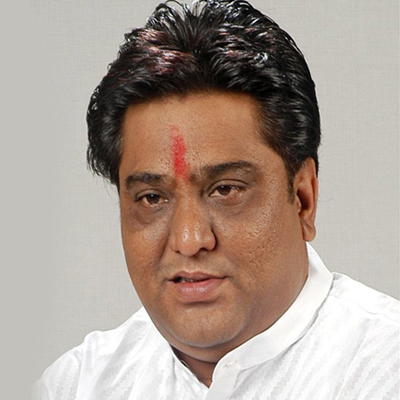
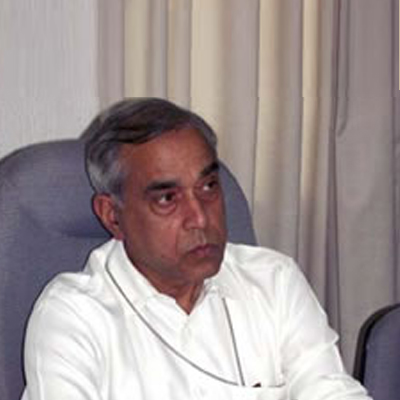
    MUMBAI: In a dramatic development, Hathway video business CEO TS Panesar has quit following the move where Hathway Cable and Datacom chose to opt out of its cable TV business to a wholly-owned subsidiary retaining the broadband operations in the parent company. Confirming the news, Panesar communicated to indiantelevision.com that he was yet to firm up his new plan and future course of action.

    The reformist Panesar, having a multifaceted 20 years of experience in the broadcasting sector, decided to call it off after spending two and half years in the cable TV distribution entity. The executive, who had moved in from Star India, played a pivotal role in reforming the TV and cable operations unveiling a battery of value-added services (VAS).

    The CEO also launched ‘Hathway Connect’, an online portal for local cable operators (LCOs) which helped them maintain their expenditures, revenues, reduce operational costs, to raise the profits and make transactions more transparent. Among other things, the former CEO contributed to the growth of Hathway in DAS Phase III areas and led the company’s foray into VAS. Panesar was responsible for the launch of an ad-free value added services (VAS) titled ‘Hathway Special’ for subscribers who wanted quality content. 

    Panesar’s exit comes after Hathway Cable & Datacom MD and CEO Jagdish Kumar quit in November 2016. Following Kumar’s exit, Hathway had reshuffled its top management team.

    Also Read:

    Hathway builds brand Special, adds two service categories 

    We believe the new cable TV tariff order will benefit everyone – Hathway Cable video CEO TS Panesar

  • Public authorities can deny cable laying permission to MSOs & LCOs

    NEW DELHI: Stressing that multi-system operators (MSOs) and local cable operators (LCOs) are required to lay and establish cables and erect posts from  time to time under, over, along, across, in or upon any immovable property  under the control or  management of a public authority, the operator can be directed to remove it or  shift it or alter its position, as the case may be, at  its own  cost in  the  time frame indicated by the  authority.

    In new Guidelines to enable the State Governments to put in place an appropriate mechanism for speedy clearances of requests by operators for Right of Way, the Information and Broadcasting Ministry has said that operators can be asked by the public authority in public interest to remove or shift or alter the position.

    In a letter sent to Chief Secretaries of all states, the Ministry said Cable Operators sometimes are required to lay and establish cables and erect posts from time to time under, over, along, across, in or upon any immovable property ever vested in or under the control or management of a public authority, after due permission.                                                            

    Section 48(5) of the Cable TV Networks (Regulation) Act 1995 specifies that the Central Government may lay down appropriate guidelines to enable the State Governments to put in place an appropriate mechanism for speedy clearance of requests from cable operators for laying cables or erecting posts in properties with a public authority.

    The Ministry has laid the basic guidelines for this purpose which covers the procedure and the obligations of both the operators and the public authority in this regard.

    It has also made it clear that no application by an operator can be rejected unless has been given an opportunity of being heard on the reasons for such rejection. The permission will be deemed to have been granted if the public authority fails to either grant permission or reject the applicationwithin 65 days of the receipt of the application.

    Where the  public  authority  accepts  the  undertaking  by  the licensee to discharge the  responsibility to  restore any damage that be cause, it may   seek a bank guarantee for  an amount in  lieu   of expenses for   restoration  of  such  damage, as  security for   performance  in   the discharge of the  responsibility.

    Any application to a public authority will be accompanied by a copy of the  registration granted by the  Government – by the Head Post Master for LCOs under Rule 5, and Central Government for MSOs under Rule 11C of  the Cable Television Networks Rules 1994;

    The extent of land required for establishment of the overground cable infrastructure will also have to be indicated.

    Also Read:

    LCOs to get unique TRAI number to ensure fair deals, says advisor Gupta

  • LCOs to get unique TRAI number to ensure fair deals, says advisor Gupta

    NEW DELHI: Despite claims of major achievements in all parts of the country in digital addressable system, a meet held recently in Chandigarh presented a dismal picture with many local cable operators complaining that the switching off of analogue had badly affected their business.

    In the seminar organised by the Telecom Disputes Settlement Appellate Tribunal, even Tribunal chairman Justice Shiva Kirti Singh said the operators should approach the government for solutions.

    Information and broadcasting ministry joint secretary (broadcasting) Manoj Kumar Pingua talked about the achievements of digitisation and referred to the transparency leading to greater tax collections by the centre as well as state governments.

    The seminar, on ‘Digitisation: Achievements Issues and the Way Forward’, was attended by the judges of different courts, lawyers, multi-system operators broadcasters and LCOs.

    Telecom Regulatory Authority of India principal advisor S K Gupta said there was a plan to issue a unique number to each LCO and keep a track of his Interconnection Agreements to ensure he gets a fair deal.

    One LCO from the Chamba in Himachal Pradesh said that he had lost all his business because broadcasters had switched off analogue signals and multisystem operators were not prepared to supply him digital signals.

    Another LCO from Punjab said his investments of Rs seven million in a HITS headend and STBs have gone waste as Jain HITS has closed its business. The government has made no policy to compensate cable operators in such conditions. He said that HITS was not working in the present circumstances as broadcasters create hurdles in providing content.

    Earlier, Zee HITS had also closed down. Now only NeXT Digital of Hindujas is operating but he said LCOs were losing faith in the technology.

    Another LCO said MSOs were not giving signed copy of the Interconnection Agreement to LCOs and exploited them every now and then by raising subscriptions. He said there is no security in the business, and since all regulations are challenged in the courts, even the regulator is unable to help.

    While GST had been cleared and Cable and DTH services will attract 18% tax and STBs and other digital equipment will be taxed at 28%, the speakers said they were worried about the negative impact of GST on the business as neither ‘Make in India’ will succeed nor the dream of a ‘Digital India’ will be fulfilled.

  • Furnish details of cable connections, Delhi Govt asks operators, MSOs wary of cascading effect

    MUMBAI: The Delhi government has ordered cable operators to furnish the number of subscribers, an attempt which seems to be driven by the idea of increasing entertainment tax collection. Cable operators generally pay entertainment tax based on the number of their connections. It is unclear whether the government plans to claim tax from retrospective effect or not, and what is the period it is claiming tax for.

    Speaking to www.indiantelevision.com, the country’s apex body for digital multi-system operators (MSOs) All-India Digital Cable Federation (AIDCF) secretary-general Saharsh Damani agreed that he had come across reports of local cable operators (LCOs) receiving tax notices. If the government were to demand and recover entertainment taxes from LCOs for the last 4-5 years, Damani opined, it would become difficult for the operators to survive commercially. If the LCOs were severely affected, it would obviously have had a cascading severe effect on the MSOs, he added.

    A written communication has reportedly been sent to multi-system operators (MSOs) to submit details of their local cable operators and cable connections at the earliest, according to the entertainment tax department. However, Den Networks CEO SN Sharma, speaking to www.indiantelevision.com, denied receiving any communication so far. Damani also replied in the negative.

    The department has reportedly asked MSOs, around 20 in Delhi, to provide details of their cable connections with each local cable operator (LCO). The department has also sought details of addresses and phone numbers of local cable operators under them, an official said. The decision has been taken to increase tax collection, the official said.

    According to the department, the government had collected Rs 160.72 crore in taxes in the financial year 2014-15, while it increased to Rs 261.94 crore in the fiscal 2015-16.

    The Delhi High Court had recently held that MSOs and LCOs distributing television signals to subscribers directly are liable to collect and pay entertainment to the government. The court’s decision came on pleas filed by four MSOs – Hathway Cable and Datacom Ltd, DEN Networks Ltd, IndusInd Media and Communications and SITI Cable Network Ltd. They had moved the court challenging the levy of entertainment tax and vires of the Delhi Entertainment and BettingTax Rules.

    The four had sought quashing of the Delhi government’s 17 December, 2012, circular and show cause notices issued in January 2014 directing them to deposit tax beginning April 2013. Delhi had threatened to halt cable TV transmission of the MSOs by closing their headends. The government had stated that the assessment of the MSOs bared that they had been indulging in tax fraud in crore since April 2013. 

    A bench of justices Sanjeev Sachdeva and Badar Durrez Ahemed, however, quashed the Delhi government’s December 2012 circular and show-cause notices served by its Department of Entertainment Tax asking the MSOs to to pay entertainment tax or face action.

    Also Read:

    Entertainment tax: MSOs & LCOs must collect & pay, HC halts Delhi ‘action’

    Subhash Chandra hails GST, seeks new tax system & ease of doing biz

  • Including Arasu, total number of MSOs goes up to 1376, to ensure DAS implementation

    NEW DELHI: Following the decision of the government to deem all provisional multi-system operators as having regular licence and giving a provisional licence to the Tamil Nadu Arasu TV Corporation, the total number of MSOs has gone up to 1376.

    Thus, TACTV is the only MSO on the provisional list and all the others are deemed to have a permanent licence for ten years.

    Thus there has been increase of 194 MSOs in the country since the end of February as the Information and Broadcasting Ministry had given registration to 1182 MSOs by the end of February 2017 which included 230 which had valid ten-year licences.

    But faced with just less than one month to go before total switch-off of analogue signals, the Government had on 6 March 2017 decided to treat all MSOs as permanent but with condition that the period of ten years commences from the date they got registered as provisional MSOs.

    However, if the continuation of registration of any MSO is at any time found to be or considered detrimental to the security of the State then the registration so granted is liable to be cancelled/suspended, the order placed on the Ministry website mib.nic.in specified.
    All other terms and conditions depicted in the provisional registration letter(s) wlll continue to apply.

    Earlier on 27 January.2017, it had been decided that all registered MSOs are free to operate in any part of the country, irrespective of registration for specified DAS notified areas granted by this Ministry.

    However, they have to submit the details of Headend, SMS, subscribers list and a self-certificate that they are carrying all the mandatory TV Channels, within six months from date of issuance of MSO registration, to the Ministry, failing which the MSO registration is liable to cancelled/suspended.

    Hence, all deemed regular registered MSOs also are required to submit the details to the Ministry within six months.

    The Tamil Nadu-Government-run TACTV was granted provisional licence on 18 April 2017 to operate as a MSO in the state on condition that it switches off analogue signals in the entire state within three months.

    The Ministry had told indiantelevision.com that it had been made clear that the provisional licence was subject to the Centre taking a final decision on the recommendation of the Telecom Regulatory Authority of India that no government owned body should be permitted in the field of running or distributing television channels.  TRAI had in 2008, 2012 and 2014 held that state governments and political parties should not be permitted to own TV channels or distribution channels.

    In Tamil Nadu where there is a court stay in operation since Phase I, TACTV had warned MSOs and LCOs against switching off analogue signals anywhere in the state after 31 March 2017.

    The sources said that Arasu had been granted provisional licence in 2006 at the time of the Conditional Access System on certain conditions based on the TRAI report but this had not been renewed when Digital Addressable System came into force.

    Also Read:

    Faced with deadline, MIB says all provisional MSOs will be deemed regular

    Arasu gets provisional MSO licence subject to analogue switch-off in three months

  • DAS: Andhra seeks extension even as MIB warns

    DAS: Andhra seeks extension even as MIB warns

    MUMBAI: As cable digitisation deadline gets over today, the Andhra Pradesh chief minister N Chandrababu Naidu has written to the central government seeking extension of cable TV digitisation deadline up to December 2017. However, on 30 March, reiterating the switch-off of analogue signals of cable television from 1 April 2017, all broadcasters, MSOs and local cable operators were warned by the central government that action would be taken against defaulters.

    The CM has explained the significance of extension of the deadline, the Hans India reported. The state government has already made plans to provide internet facility, cable TV through its Fiber Grid project.

    The projects works are under construction and said that works would be completed by December this year. If the government would extend the deadline for Fiber Grid project, it would benefit to people of state and the government. The infrastructure for this project has been readied, he stated, adding that the distribution work was under way.

    Indiantelevision.com had reported on 19 December about Chandrababu Naidu’s letter to the union minister of urban development , information and broadcasting, housing and urban poverty alleviation M Venkaiah Naidu seeking extension of deadline for digitalisation of Cable TV services in the state he governs — Andhra Pradesh.

    In the letter dated 3 December, 2016, the chief minister stated: Under A.P. Fiber Grid Phase-I Project, a state-wide high speed Optical Fiber Network Infrastructure has been setup across the 13 Districts of the State leveraging the assets of the Electricity Department. A 24-Core ADSS Optical Fiber Cable has been laid for a length of around 23,000 Kms. over the electrical poles with its back-end electronic systems set up as the Points of Presence (PoPs) at 2445 identified locations. mainly electrical sub-stations. A state-wide control and command centre for this entire network has been commissioned at Visakhapatnam as a Network Operations Centre (NOC).

    The services from AP Fiber Grid will be delivered by the Andhra Pradesh State FiberNet Limited (APSFL) to the end-users i.e. households. offices / enterprises in partnership with the Multi System Operators (MSOs) and Local Cable Operators (LCOs) etc, the letter stated.

    (Around) 13,325 LCOs and MSOs have been registered so far with APSFL as business partners to provide last mile services. The works of AP Fiber Grid have been completed and at present the infrastructure is ready for delivering the intended Triple Play Services to the households / offices. Services are being provided successfully on a pilot/test basis to identified households/offices and the commercial Public services are planned to be launched in December 2016, Chandrababu’s letter added.

    The digitalisation of Cable TV services is not yet completed in Andhra Pradesh. To accelerate this process. APSFL has initiated procurement of Customer Premises Equipment Boxes (GPON basic box+ IPTV box with WiFi) for enabling expeditious spread of AP fiber triple pay services in A.P. The CPE boxes will be seeded to the households through the APSFL’s last mile business partners i.e., MS0s/LCOs, the letter added.

    Also Read :

    MIB warns MSOs, LCOs against analogue TV signals from 1 Apr

    Extend DAS deadline to Dec ’17 for fiber expansion, Andhra CM writes to MIB


  • Analogue signals: MIB to take action against defaulters

    NEW DELHI: Reiterating the switch-off of analogue signals of cable television from 1 April 2017, all broadcasters, MSOs and local cable operators were today warned by the Indian government that action would be taken against defaulters.

    Issuing a notice, Ministry of Information and Broadcasting (MIB) instructed all stakeholders to ensure that no analogue signals are transmitted over the cable networks in phase IV areas after 31 March 2017.

    The notice said the Cable Television Networks (Regulation) Amendment Act 2011 had made it mandatory for switch-over of the existing analogue Cable TV networks to Digital Addressable System (DAS) in four phases. Digital switch-over has already taken place in phases I, II and III.

    The Ministry by notification of 23 December 2016 last had extended the cut-off date for phase IV of cable TV digitisation to 31 March 2017.

    Also Read:

    Final phase STB seeding is 35% even as deadline nears

    DAS deadline extension ruled out, govt claims 66% seeding done

    TV industry gives mixed reaction to MIB’s DAS III & IV extension

    DAS 4 deadline extended to 31 Mar

  • Entertainment tax: MSOs & LCOs must collect & pay, HC halts Delhi ‘action’

    MUMBAI: The Delhi High Court has held that MSOs (multi-system operators) and LCOs (local cable operators) distributing television signals to subscribers directly are liable to collect and pay entertainment to the government.

    The court’s decision came on pleas filed by four MSOs – Hathway Cable and Datacom Ltd, DEN Networks Ltd, IndusInd Media and Communications and SITI Cable Network Ltd. They had moved the court challenging the levy of entertainment tax and vires of the Delhi Entertainment and Betting Tax Rules.

    The four had sought quashing of the Delhi government’s 17 December, 2012, circular and show cause notices issued in January 2014 directing them to deposit tax beginning April 2013. Delhi had threatened to halt cable TV transmission of the MSOs by closing their headends. The government had stated that the assessment of the MSOs bared that they had been indulging in tax fraud in crore since April 2013.

    A bench of justices Sanjeev Sachdeva and Badar Durrez Ahemed, however, quashed the Delhi government’s December 2012 circular and show-cause notices served by its Department of Entertainment Tax asking the MSOs to to pay entertainment tax or face action.

    Terming the circular as “without any authority of law”, the bench said, “To be clear, MSOs to the extent that they directly provide cable service to the subscribers without the intervention of any LCO (local cable operator), would be regarded as the proprietors under Section 7(1) and would be liable to collect and pay the entertainment tax to the government,” PTI reported.

    “However, where the MSOs provide the service through the LCOs, the individual LCOs having its own subscriber networks, would be regarded as the proprietors in respect of their individual networks and would be liable to collect the entertainment tax and pay the same to the government.”

    The court made it clear that as far as the assessments related to deposition to tax to the department are concerned, the MSOs “would have to take their own remedies against the assessment orders and/or appellate orders in view of the decision arrived at in this case”.

  • MSO renewals and cancellations list released

    MUMBAI: The MIB has granted registration to 230 multi-system operators (MSOs) for ten years as on 13 February, 2017, to operate digital addressable system (DAS). As per MIB order no. 2/108/2015-DAS dated 27 January, 2017, all these registered MSOs can operate anywhere in India. 

    The MIB has also released a list of 45 multi-system operators (MSO) the registration of which to operate DAS has been cancelled (as on 13 February, 2017) or their pending cases have been closed. 

    Of the MSOs listed on the MIB site, permission to one MSO has been restored, and the order for closure of two has been withdrawn. 

    For Kal Cables Pvt Ltd (Chennai),  the MIB order of cancellation of MSO registration has been withdrawn and provisional registration granted on 13 January 2017. For S.S.R. Cable Network (Adilabad, Telangana), the order for closure of application has been withdrawn and provisional registration was issued on 19 January 2017.

    For Nakerkal Communications, the MIB order for closure of application has also been withdrawn and the provisional registration was issued on 10 January 2017.

    On 9 January, www.indiantelevision.com had reported that the registration of MSOs remained slow with 71 provisional clearances in December 2016 and up to 4 January 2017 taking the total to 1130 despite the fact that less than a month is left for Phase III analogue switch-off and two months before the final phase of digital addressable system DAS deadline gets over.

    The number of permanent MSOs (with 10-year licences) remained static at 229, while the number of cancellations remained at 44 as intimated on 30 November 2016. Of the 71 entrants, 21 were registered in the first four days of January 2017.

    With the home ministry directive about doing away with security clearances for MSOs not communicated in writing to the MIB, confusion prevailed over slowing down of the registration processes of MSOs for delivering services in DAS areas. The Government already deferred to 31 January 2017 the sunset date for Phase III (from 31 December 2015) and 31 March 2917 for Phase IV (from 31 December 2016).

    The Ministry on 8 July 2016 issued an advisory to the Chief Secretaries of all States/UTs Governments, the District Collectors and the Multi System Operators (MSOs)/ Local Cable Operators (LCOs) to ensure that no unpermitted TV channel, are transmitted/ re-transmitted in the Cable Networks and to take action against the defaulter under the provisions of the Cable Television Networks Act 1995 to stop transmission of these channels.

    Click here for list of 230 MSOs

    Click here for list of MSOs registration of which has been cancelled (or cases closed)

    Also Read:

    MSO registrations remain slow even as DAS deadlines approach

    Report illegal TV channels, Govt alerted

  • Action to be taken against analogue-using  MSOs / LCOs in urban areas

    Action to be taken against analogue-using MSOs / LCOs in urban areas

    NEW DELHI: With the deadline for switching off analogue signals in Phase III of digitisation of cable television getting over on 31 January 2017, all nodal officers have been asked to initiate action against multi-system operators who are still continuing with analogue signals.

    The information and broadcasting ministry said said that the nodal offices should immediately “ensure/confirm that the analogue signals in Phase lll areas are not transmitted with effect from 1 February 2017.

    The ministry said that action against MSOs / cable operators can be initiated under Section 11 of the Cable TV Networks (Regulation) Act 1995 for violating Section 44. The ministry must be informed of action taken.

    The deadline of 31 December 2015 for Phase III had been extended to 31 January 2017 because of the stay orders earlier granted by various high courts which were vacated by the Delhi High Court.

    The Chief Secretaries of all States/UTs were requested on 17 January 2017 to ensure that the Authorised officers get acquainted with their powers and enforce them against defaulters MSOs/Cable Operators if they continue to carry analogue signals in Phase lll urban areas after 31 January 2017.

    Under Section 44 of the Cable TV Act 1995, it is obligatory for every cable operator to transmit or re-transmit programmes of any channel in an encrypted form through a digital addressable system with effect from the date as may be specified/notified by the Ministry from time to time.

    The Ministry claimed that the reports from many major MSOs having switched to digital signals, has been very encouraging. But, information from many MSOs are yet to be received.

    Also Read:

    DAS P-III deadline crossed: No court stay, only three cases pending

    TRAI for pvt players in DTT, suggests capping of transmitters

    No DAS III extension beyond 31 Jan, reiterates MIB