Tag: LCO

  • Close Kolkata LCOs appeal to MIB for 10 year license

    Close Kolkata LCOs appeal to MIB for 10 year license

    KOLKATA: Since the time the process of cable TV digitisation started, if any faction has been really troubled, it’s the local cable operators (LCOs). To make their future secure, they have raised their voice time and again.

    In an attempt to form a united front and take up the common issues troubling them, around 8,000 Kolkata LCOs, who claim that mandatory digitisation has adversely affected their livelihood, are requesting the Parliamentary Standing Committee of Information Technology for 10-year license from the Ministry of Information and Broadcasting (MIB).

    One of the reasons that worry the LCOs the most is that they are registered with the post office and get only a year’s license at a time.

    “But the Multi System Operators (MSOs) get a 10-year license from the MIB,” says Cable & Broadband Operators Welfare Association (CBOWA) general secretary Swapan Chowdhury, who thinks that the present condition of licensing is unfair and is making LCOs uncertain about their future.

    “We have requested the authority to recommend the licensing provisions made in the ‘Recommendations on Restructuring of Cable TV Services’ dated 25 July, 2008 to be implemented for LCOs and MSOs,” he adds.

    The body has also appealed to Member of Parliament and Member of Parliamentary Standing Committee of IT, Tapas Paul to review the arbitrary rule and act of Digital Addressable System (DAS) in order to protect the cable operator’s fundamental rights of livelihood.

    Chowdhury thinks that the current revenue sharing model between the MSOs and LCOs is not viable for the cable operators and in due course of time it may even compel the LCOs to quit the business. In the current scenario, as defined by the regulator, the ratio of revenue sharing between MSOs and LCOs is 55:45 for free-to-air (FTA) channels and 65:35 for the pay channels. “The business model should be reconsidered to protect the livelihood of lakhs of people,” says Chowdhury and adds that CBOWA believes that the model is discriminatory and thus they have put in a request for that as well.

    Another thing that is bothering the LCOs is that the MSOs are not executing the terms in the agreement even though DAS has been implemented since February this year. CBOWA has also put in a request about this so that these issues can be addressed in the winter session.

    A cable TV analyst, Namit Dave thinks that the digitisation process is a massive exercise and requires all stakeholders – broadcasters, MSO and LCOs to work in collaboration. “It would be difficult to execute the herculean task if any of these parties don’t cooperate,” he concludes.

  • LCOs may decrease in number in the next three years

    LCOs may decrease in number in the next three years

    KOLKATA: Lately,  indiantelevision.com  has done a series of reports about local cable operators (LCOs) being unhappy with the process of digitisation. A critical area of concern being the Telecom Regulatory Authority of India’s (TRAI) ruling on consumer application forms (CAFs) and billing, which according to LCOs, makes multi system operators (MSOs) the owners of their hard-won subscribers.

    On the back of these reports comes another disturbing finding: experts say LCOs in the city’s DAS area – currently pegged at 7,000 to 8,000 – will drastically decrease in numbers in the next three years.

    Says Mrinal Chatterjee, who runs Akash Sutra, a cable network in Bangur and its adjoining areas: “During analogue times, the share between the MSOs and us used to be 20:80 but after DAS, it has come down to 65:35. The business model is not at all lucrative enough. A major number of operators might look at other options for existence.” Many others are thinking of ways to ‘only exist’ in the cable TV business, wherein they have invested nearly 20 years of their life; he adds.

    Whereas, Suresh Sethia, Siticable Kolkata director says: “Small operators will become a part of larger networks but will still be in business.” Asked to define the term ‘small operators’ Sethia goes on to explain that LCOs with 100-150 subscribers are small while those with 2,000 and more customers are big. “There are groups of LCOs having more than 10,000 subscribers that are considered large,” he says.

    Sources however say that in Kolkata, most cable ops are yet to sign revenue-sharing agreements with their MSOs.

    An MSO says while the company has asked affiliated LCOs to educate subscribers about the different packages on offer, LCOs are not doing their work. “Secondly, the LCOs did not pay us for each connection in the analogue regime. But with installed set top boxes and the number of connections transparent, LCOs are not supporting us properly implement the new system,” he says.

    By contrast, an LCO who is part of the recently formed Bengal Broadband initiative (GIVE LINK TO OUR STORY) argues: “A multi system operator may provide cable TV services directly to subscribers. They don’t need our services and we are not mere collection agents. So, I will try to become a MSO.”

    Another cable op questions: “Filling up forms to gather information about viewers’ preferences coupled with sharing of network could result in monopoly of MSOs. Where are we in the system?”


    According to Swapan Chowdhury, convener of the Cable Operators Digitalisation Committee of the Association of Cable Operators, the authorities must do something in favour of operators. But he is quick to assure that people who have spent years in this industry will be here and ‘nothing will change’.

    Corpus Media consultant GK Viswanath corroborates Chowdhury’s view and says: “LCOs will not leave the industry. They’ve spent time and money here. LCOs will be the franchisees or payment collectors.” Going forward, he feels the small LCOs will merge with the MSOs and not with big LCOs.

  • TRAI cracks the whip again on DAS phase I MSOs

    TRAI cracks the whip again on DAS phase I MSOs

    MUMBAI: Consumer billing has been a major irritant for all those involved in the process of India’s cable TV digitisation. The Telecom Regulatory Authority of India (TRAI) has been hauling up all and sundry amongst the multi-system operators (MSOs) to issue bills to cable TV subscribers, but has not managed to get the process in motion as yet even in the DAS phase I metros of Mumbai, Delhi and Kolkata.

    Now it’s time for another warning from the TRAI. It has written to 29 MSOs in the DAS phase I areas, telling them that they have to get their act together on consumer billing for the month of November 2013. Bills should be dispatched to cable TV subscribers by either the MSOs or local cable TV operators by 15 December; and a compliance report submitted by 31 December. Earlier on 6 November, the TRAI had intervened asking the MSOs to send a compliance report for Delhi, Mumbai and Kolkata by 15 November.

    The direction comes from the powers conferred on the authority under section 13, read with sub clauses (i) and (v) of clause (b) of sub-section (1) of section 11, of the Telecom Regulatory Authority of India Act, 1997 (24 of 1997) and regulation 14, 15, 16 and 24 of the Standards of Quality of Service (Digital Addressable Cable TV Systems) Regulations, 2012 and to protect the interest of the consumer.

    As per the direction, the MSOs also need to ensure that a proper receipt is given by it or its linked LCO for every payment made by the subscriber. “The MSOs will have to offer cable TV services to its subscribers on both pre-paid and post-paid payment options and generate bills for subscriber. That apart, the MSO also has to provide to the pre-paid subscriber, at a reasonable cost, the information relating to the itemised usage charge showing actual usage of service,” states the TRAI direction.

    What is notable is that it is not mandatory for the MSOs or its linked LCO to provide to the subscriber the information for any period beyond six months, preceding the month in which the request is made by the subscriber. According to the direction, “Every MSO shall, on request from the subscriber, change his payment plan from pre-paid to post-paid or vice-versa, without any extra charge.”

    To make the billing process clearer, the regulator has, as per regulation 15 of the Standards of Quality of Service (Digital Addressable Cable TV Systems) Regulations, provided that every MSO should – either directly or through the LCO – “give to every subscriber the bill for charges due and payable by such subscriber for each month or for such other period as agreed between the parties, for which such charges become payable by the subscriber.”

    The subscriber will be billed, generally on a monthly basis, including the service tax registration number and the MSO’s entertainment tax registration number. “Every MSO or its linked LCO, shall give 15 days, from the date of the bill, to every subscriber for making payment of the bill and in case the subscriber fails to make payment after expiry of the due date of payment, the MSO or LCO may charge simple interest of 12 per cent per annum on the amount due for the delay in making payment,” states TRAI’s direction.

  • Cable TV digitisation: Parliamentary standing committee meets TV trade in Mumbai

    Cable TV digitisation: Parliamentary standing committee meets TV trade in Mumbai

    MUMBAI: There’s been a lot of press and media coverage about the process of cable TV digitisation over the past year or so. Most of it stated has been a mixed bag with opinions about its progress swinging from disastrous to a fabulous rollout. Hence, the political class decided to find out on their own what digitisation has meant for the industry.


    The parliamentary standing committee on information technology – headed by Rao Bhirendra Singh – has been making a whistle stop tour of different regions where digitisation has been implemented. 22 October 2013 saw it landing in Mumbai. Prior to this, it has had stopovers in Rajkot and Ahmedabad as well.


    The various constituents of the TV ecosystem were summoned to update the committee on the pace of digitisation and their individual specific concerns. “Phase I and II have been completed,” says a government representative. “The committee wanted to be apprised of the learnings from the first two phases by the various players and their preparedness for the next round of digitisation which is slated to be completed by December 2014.”


    Each of the players had meetings in camera with the committee and presented their positions. First, the last mile cable operators (LCOs) or last mile operators (LMOs). The Maharashtra Cable Operators Association (MCOF) and Cable Operators and Distributors Association (CODA) represented the LMOs and spoke about the issues faced by them.


    Among the concerns they raised were the fact that they had put in physical labour repeatedly during the process of delivering and installing set top boxes. They stated that it is the LCO which bears the brunt of the cable TV viewer’s ire when channels are switched off by the MSOs. But they were optimisitic about their role in phase III and phase IV.


    “Our representatives said that we want to be active players in these phases and we are happy to know that the government seems to be intent on having a clear way forward,” says a cable TV operator.


    The main bugbear raised by the national and local MSOs – Hathway, DEN, Siti Cable and InCable, apart from others – was the issue of entertainment tax. (Maharashtra and Uttar Pradesh have the highest rates.) Their demand: that the LMOs should be made responsible for collecting and paying this levy. Earlier, in the analogue regime, it was the MSOs who had to carry the burden and it is crippling them.


    Says an executive from a leading MSO: “Once the billing system is in place in a digitised India, LCOs can collect the tax and pay it and give the remainder amount to MSOs.”


    However, an LMO says a better option would be “splitting of bills between MSO and LMO and LMO to subscriber to avoid double taxation for the TV subscriber.”


    Broadcasters and aggregators – represented by the  NBA (News Broadcasters Association), a representative from Sony Entertainment Television, Indiacast, MediaPro and TheOneAlliance. The aggregators strangely stayed mum, while broadcasters harped on the usual complaints of carriage fees, lack of subscription revenues and the heavy dependence on advertising. The conversation also drifted to talks about content on television and how channels need to be careful about their content. “This is a major issue as there is no clarity about how the viewer and broadcaster are going to get value out of digitisation. If there is no elbow room for channelising of money for broadcasters then how are they going to focus on better content,” says a broadcasting industry representative.


    More such meetings are being planned according to industry sources. “Finally, we will prepare a report and submit it to the parliament for review,” says a source close to the committee.


    Hopefully, their reports and inputs will make things easier for all concerned as India’s cable TV ecosystem gears up for its most challenging phase – that of rolling out almost 80 million boxes in small towns and rural India.
    (Inputs from Meghna Sharma and Seema Singh)

  • LCOs challenge TRAI DAS order in High Court By Seema Singh

    LCOs challenge TRAI DAS order in High Court By Seema Singh

    MUMBAI: The Gujarat Cable Operators Association (GCOA) has approached the High Court of Gujarat against the Telecom Regulatory Authority of India (TRAI), the central government of India and state government against the ruling on digitisation.


    In the petition submitted to the HC, the petitioner has challenged the legality of Telecommunication (Broadcasting and Cable) Services Tariff and the Telecommunication (Broadcasting and Cable Services) Interconnection Regulations.


    In the current scenario, as defined by the regulator, the revenue share ratio between the MSOs and LCOs is 55:45 for free-to-air channels and 65:35 with respect to pay channels. The LCOs in Gujarat find it discriminatory and prejudicial to their interest.


    “We have challenged all the notifications passed by TRAI. This includes revenue share, consumer application forms (CAFs) and billing,” informs Gujarat Cable Operators Association president Pramod Pandya. The laws, according to Pandya are complicated and aim at completely removing the presence of LCOs from the cable industry. “We feel that every order passed till date with regards to digitisation is one-sided. All the laws have been drawn up against the LCOs,” he adds.


    The association on 2 September 2013 moved to the Supreme Court with the matter. The SC then ordered them to address the issue to the High Court first. “We then filed a petition to the Gujarat HC on 10 September,” he informs.


    The court during its 13 November hearing has asked the TRAI and government to declare the reasons for formulating the existing laws pertaining to tariff and interconnection in the next 15 days.


    “I don’t understand the basis of these laws. It is the LCOs who build the customer base and now all of a sudden we have been asked to transfer our rights to the MSOs,” says Pandya.


    The LCOs also feel that the issues relating to digitisation have never been discussed with the registered 60,000 cable operators.


    “None of the state cable operator associations were called before the process of digitisation was enforced.”


    The cable operators in Gujarat, say they are only asking for their rights. “If I don’t have a right, then why should I collect revenue or collect CAFs from consumers? We have built the customer base for all these years. The MSO give us the signal, for which we pay them a rent and then bill the customer. How can government all of a sudden ask us to not do the billing?” questions Pandya.


    According to the petition filed, of which indiantelevision.com has a copy of, the members of the petitioning association under the said provisions work under the MSOs as their revenue collecting agents while at the same time provide maintenance and services to the subscribers on behalf of the MSOs at their own cost since the entire cable network has been laid down by them over a number of years.


    The association has some 2500 cable operators as its members. “We are not targeting MSOs…they are only following what the TRAI has asked them to do.”


    The LCOs feel that their roles have been reduced to mere commission agents.


    “We are being forced to depend on the MSOs,” opines Pandya. Under digitisation, it is mandatory for the LCOs to collect and submit CAFs. “This is harsh and oppressive since it would compel the LCOs to share their subscriber’s base with the MSO’s making them more vulnerable,” says Pandya.


    He is clear that till there is no clarification on the notifications passed by TRAI, the cable operators in Gujarat will not even seed set top boxes. When asked if the operators will meet the CAF deadline he says, “It is a court case now. We have challenged every aspect of digitisation. So till this is resolved and the court passes an order on this, there will be no CAF collection or billing in Gujarat.”


    The association had in the beginning of DAS phase II approached the High Court, which had then given a stay order for 16 days for implementation of DAS. “The process of digitisation started only from 16 April in Gujarat. So far only four cities of Gujarat: Surat, Baroda, Ahmedabad and Rajkot have moved ahead on this,” he concludes.

  • New technology simplifies collection for cable ops

    New technology simplifies collection for cable ops

    MUMBAI: Even as industry prepares for phase III of digitisation, here comes a technology that is likely to get more than a warm welcome from cable operators.


    UPASS, a front-end automation for the cable sector and mobility solutions provider, has announced that it has successfully integrated with the subscriber management system of Media Nucleus; a development set to change the collection system. While Kottayam-based Star Vision Cable Networks is the first LCO to use the integrated solution, Media Nucleus is in talks with three other operators for installing the solution to their systems.


    It was at the recently concluded SCaT that the collaboration took place. “We finished the integration and also showcased a part of it during SCaT,” informed Media Nucleus director Santosh Nair. He explained the working of the solution as: “Each subscriber will have an ID, subscriber number or name that will be stored in the subscriber database. Once the subscriber pays the monthly fees, the collection agent will type it on the mobile phone that has all the details relating to the package etc. Also, there is a Bluetooth printer connected to this device, which will help him print a receipt immediately.  The same data will also be sent to the database, which clears the subscriber’s outstanding amount.”


    Technically speaking, UPASS’s cloud model acts as data bridge between the mobile device and the SMS server. There is an option for collection entries to be made either in cash or cheque and the relevant data is passed on to the SMS server in real-time.


    UPASS managing director Ravindra Deshmukh said: “We are excited that Media Nucleus and UPASS are collaborating to help operators overcome the challenges of billing and collection hurdles by providing data in real-time as trusted and actionable information. Our system benefits end users quickly and with self-service, regardless of data volumes and variety, or whether the data is on-premise or in the cloud.”


    The advantages of the solution are three-fold. One, it will make the collection process easier. Two, it will make the system more transparent and help MSOs with instant data on subscribers and revenue collected per day. Three, it is more economical, since it can be used even on a simple Rs 500 mobile phone.


    Nair said every operator had collection issues and with this system in place, “MSOs will just have to follow up on the data. They will get instant information, unlike earlier, when LCOs would collect data and sometimes, not even reveal it. The information will give an upper hand to MSOs as well, who can show it to their investors.”
     

    Explained Media Nucleus director technology and delivery Rajiv Tomer: “We had been providing the core solution of subscriber management solution and were looking at integration services to enable collection at the ground level become a part of our solution to our clients.  UPASS, having an industry benchmark solution, gave us the right option to be a go-to-market, providing end-to-end technology with a single integrated platform. We have enabled it in such a way that operators can provide the basic handset to the collection agents, which gets integrated with our SMS.”


    The solution will be available to operators at a one-time investment of Rs 2500. This apart, “the operator will have to pay less than Re 1 per transaction per month,” informed Nair, adding, “We will be meeting operators from Pune next week. We have been getting a good response for the technology.”


    Maharashtra Cable Operators Federation president Arvind Prabhoo said the technology would address the biggest problem of digitisation, which is collection. “The cost of collection for the operator is approximately Rs 25. Also, there is a huge process involved with it- right from collecting money from each subscriber to putting the data on computer etc. The solution will reduce this burden and make the system more transparent.”


    “Rs 2500 is just 10 customers for an operator, so it is very economical for them. Also, getting two-three handhelds will also reduce their burden. As for the MSO, they have for long wanted a transparent system, which they can achieve through this,” Prabhoo said.


    The UPASS solution claims that it provides customer data capture and STB activation in real time, channel/package activation from the LMO phone as well.

  • Kolkata based MSOs, LCOs receive summons from service tax department

    Kolkata based MSOs, LCOs receive summons from service tax department

    KOLKATA: The Kolkata based Multi System Operators (MSOs) and local cable TV operators (LCOs) had uninvited guests last week. They were taken by surprise when the service tax officials conducted two raids to probe into their alleged financial irregularities. And, this in a digital addressable system (DAS) cable TV ecosystem which reveals the business and operations of these players at length.

    Apart from service tax, the income tax department also searched the premises of one of the big MSOs. And if sources are to be believed, the MSO made an upfront payment of around Rs 50 lakh – Rs 75 lakh to the income tax authorities.

    More than 350 cable operators have been issued summons for evading service tax payments for the past five years, sources said. “As per market reports two MSOs were raided last week, who then had to cough up huge amounts to the service tax authorities. The officials questioned the accountant of the MSOs on the financial details,” said a cable TV industry insider.

    It is also learnt that another MSO who had evaded service tax amounting to Rs 15 crore – Rs 20 crore spanning over four years, had to cover up the case by paying a huge amount to the authorities. “It is learnt that the company deposited a huge amount, though I am unsure of the exact amount,” the source added.

    Though the second MSO, whose office was raided on Thursday paid Rs 2.5 crore (approximately) to the service tax department officials. “Another Rs 50 lakh – Rs 75 lakh was given to the income tax department,” he informed.

    “The raid was part of a probe into financial transactions for suspected alleged tax evasion by the cable TV operators in Kolkata,” he said.

    A cable operator under Gujarat Telelink, an MSO, informed that as per the summons, the operator has to furnish details of the number of set top boxes installed and also the account details for the past five years. “If we don’t furnish it, we might be in trouble,” he said.

    Cable industry sources inform that cable TV operators are liable to pay 12.36 per cent as service tax to the authorities from the subscription amount collected every month from the customers.

    Kolkata based operators are treading in troubled waters. First it was the Telecom Regulatory Authority of India (TRAI) which planned to take strict action against the MSOs and LCOs for not collecting and feeding the CAF details into the system for DAS implementation and now they face the wrath of tax inspectors.

    Seems like it is time for operators to buck up and clear all past payments to avert any embarrassing situation in the DAS environment.

  • WB UDM Firhad Hakim pleads TRAI to extend deadline for CAFs

    WB UDM Firhad Hakim pleads TRAI to extend deadline for CAFs

    KOLKATA: First it was Information and Broadcasting Minister Manish Tewari who appealed to the Telecom Regulatory Authority of India (TRAI) to delay implementation of ad cap for news channels till the completion of digitisation, and now it is the West Bengal Urban Development Minister Firhad Hakim who has appealed to the regulator to extend the deadline for customer application forms (CAFs) submission.

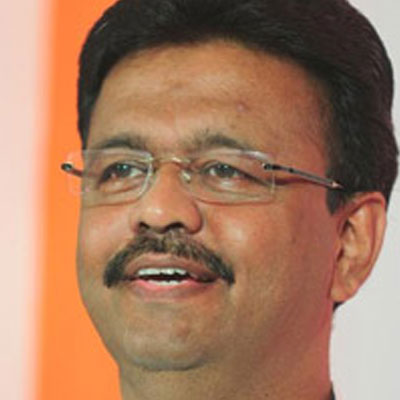
    Firhad Hakim has appealed to the regulator to extend the deadline for implementation of SMS rollout

    The request has come after TRAI confirmed last week that it will strictly adhere to the 23 August cut-off-date. “If subscriber details including channel preference is not done within this deadline, the operator’s connection is liable to be disconnected,” informed TRAI member R K Arnold.

    “After interacting with both the local cable operators (LCOs) and multi system operators (MSOs) at the ground level, we found that most of them are not aware about the registration work which they are mandated to do. TRAI before taking such decisions must spread awareness. I have spoken to the chief secretary to extend the deadline,” said Hakim exclusively to indiantelevision.com today.

    Hakim also said that TRAI must have an elaborate publicity campaign to inform the operators on the procedures involved. “How can TRAI ask the operators to disconnect its services without updating the operators about the whole process of CAFs,” he questions.

    Cable Operators Digitalisation Committee of the Association of Cable Operators convener Swapan Chowdhury informed, “So far only 30-35 per cent of cable consumers in the Kolkata Metropolitan Area have completed the form. It is not possible to meet the 23 August deadline.”

    TRAI officials who were in Kolkata last week said, “If not done within the set deadline, we will take action according to law,” said Arnold.

    Kolkata remains to be the last metro where DAS is yet to be implemented. Manthan Broadband Services director Sudip Ghosh when contacted said, “We will abide by the law and we are working towards meeting the deadline day and night.”

    While Hathway Cable managing director and CEO Jagdish Kumar G Pillai said the company is focused towards meeting the deadline.

    A MSO on the condition of anonymity said, “In the digitisation process, installation of set top boxes and offering of the channels account to more than 85-90 per cent of the work and remaining 10 per cent is clerical job which is letting the consumers to choose the channels. The LCOs have all the details of the customers, and now they just need to go and ask the customers to choose the package they want to go for. All this process will hardly take 10 minutes.”

    Can the cable operators breathe a sigh of relief after the appeal made by Hakim for the extension of deadline? Doesn’t seem like it is too easy to please TRAI, but they can only hope.

  • Kolkata MSOs racing against time to meet DAS deadline

    Kolkata MSOs racing against time to meet DAS deadline

    KOLKATA: Multi System Operators (MSOs) and local cable operators (LCOs) in Kolkata are busy collecting the consumer application forms (CAF) and feeding in details for the complete implementation of the Digital Addressable System (DAS).

    “There’s a huge increase in workload, and everything has to be collected quicker and reported quicker,” says a Kolkata headquartered MSO. While a LOC says: “It’s very tiring to go home and get called back in again, and go home and get called back in again for clarifications and further clarifications.”

    With the Telecom Regulatory Authority of India (TRAI) confirming last week that it will strictly adhere to the 23 August deadline for implementation of subscriber management system (SMS) rollout in Kolkata, the MSOs and cable operators are collecting the know your client (KYC) form details and subscribers’ choice of channels swiftly and are racing against time to feed the data into their systems day and night.

    So far 30-35 per cent of the subscriber management system (SMS) data of cable consumers in Kolkata is completed as per the TRAI data.

    SitiCable which controls a substantial share of cable TV users in Kolkata said the call centers would update the details overnight. “We will work overnight and plan to achieve as much of the work before the deadline,” said SitiCable (Kolkata) director Suresh Sethia.

    SitiCable has set up around 11.5 lakh digital addressable systems (DAS) here.

    While for Manthan Broadband Services there are no holidays and Sundays. “We have 6.5 lakh to seven lakh subscribers. The CAF rate was around 25 per cent for us last week,” said Manthan Broadband Services director Sudip Ghosh.

    “The operators connected with Manthan are working 10 times faster than before,” added Ghosh.
    While Manthan Broadband Services director Gurmeet Singh, said: “With the regulation, we have to collect 100 per cent details. We have no other choice than asking the operators to work and achieve the target.”

    DEN Networks CEO SN Sharma said the CAF collection rate for it’s close to three lakh STBs in Kolkata is nearly 40 per cent-45 per cent.

    “Before the deadline, we aim to achieve 85 per cent -90 per cent work,” said Sharma with assurance.

    “The operators are so lethargic that the customers have not yet got the forms and we are getting calls from frantic TV viewers now,” said a MSO. “We have asked them to download the form from the website and fill it up, scan and mail it to us if possible so that their TV screens do not go blank,” he added.

    With just five days in hand to meet the switch-off date, other MSOs and LCOs said that they have deployed more personnel on shift and temporary basis.

    “Consumer Application Form (CAF) collection rate is expected to be around 70 per cent-75 per cent altogether in Kolkata by 23 August,” assumes Sethia.

    “Achieving 100 per cent target by 23 August is next to impossible. Kolkata will miss the deadline,” said Association of Cable Operators, Cable Operators Digitalisation Committee convener Swapan Chowdhury. “But the cable TV industry people are toiling hard now,” he expounded.

    On the other hand industry sources on the condition of anonymity said it is not possible to give authentic data in just five days. “Filling up more than 18 lakh CAFs is not a matter of joke. The LCO may tick mark the preference of the users themselves,” he said. “For not providing genuine information, the MSOs may face dreadful consequences,” he hinted.

    If around 5,000 local cable operators and 14 MSOs, which provide service in DAS areas do not abide by the deadline of submitting the CAFs, TRAI may file a case against any MSO, concluded a source.

    With the clock ticking and TRAI not willing to give any leeway, the MSOs and LCOs have their work cut out.

  • Kolkata’s cable TV ecosystem struggles to cope with CAF

    Kolkata’s cable TV ecosystem struggles to cope with CAF

    KOLKATA: Ritika Saha, a city based Gujarati engineer, recently installed a set top box (STB) at a cost of Rs 1,400 and has still not been able to mention in writing about her preference for channels. The reason: her cable operator has not yet approached her with a consumer application form (CAF).

    “I hardly stay at home. For news and updates, a cheaper DAS package is more than enough for me. If the local cable operator does not provide me with the form, I shall not have access to cable TV post August on account of no fault of mine,” says Saha, adding that her hectic schedule does not allow her to follow up with her operator.

    “Had I placed the order for the STB eight months ago, it would have cost me just about Rs 800. The prices of these STBs have sky rocketed in the past few months,” she rues, little knowing that the depreciation of the Indian rupee against the US dollar has led to the rise in import cost of these boxes.

    There are many in Kolkata who have not yet filled up their CAFs. This is the situation even after TRAI’s order to the cable TV ecosystem in Kolkata undergoing digitisation to complete the process of collecting subscriber details before 23 August Saha is not the only one. There are many in Kolkata who have not yet filled up their CAFs. This is the situation even after the Telecom Regulatory Authority of India’s (TRAI) order to the cable TV ecosystem in Kolkata undergoing digitisation to complete the process of collecting subscriber details before 23 August. “TRAI plans to crack the whip against any MSO that fails to abide by the deadline of submitting CAFs,” informs a Kolkata based cable operator.

    CAF collection rate in Kolkata currently is about 25 per cent and should be around 60-75 per cent by 28 August,” says Siticable Kolkata director Suresh Sethia. “The implementation of DAS and its performance is not upto the mark in Kolkata,” adds media analyst Namit Dave.

    According to a report issued by TRAI last month, only 20 per cent of the city’s subscriber details and choices for channels were put up in the subscriber management system as part of the digitisation process.

    “The MSOs and cable operators are likely to miss the deadline,” says the Association of Cable Operators’ cable operators digitalisation committee convener Swapan Chowdhury. “Achieving the target by 30 August is next to impossible. Kolkata will miss the deadline,” he adds.

    “There are many other teething problems. One, not many CAFs were in supply; Two, from past seven days only the MSOs are supplying the forms to people and three even feeding in customer details is time consuming. For an exercise so massive and with so many loopholes in the process, more time is needed,” informs Chowdhury.

    While one local service provider complains of not receiving any subscriber information and management forms from his MSO, there is another MSO who says that his cable operator continues to be lethargic and has been loathe to do anything even after the forms were given to him.

    Both the MSOs and LCOs will appeal to the TRAI to extend the deadline by 15-20 daysm Both, MSOs and LCOs will appeal to the TRAI to extend the deadline by 15-20 days. “The operators and MSOs can send the subscribers’ choices of package till 31 August. And the billing can start from 1 September,” informs Sethia. “Though the MSOs will not switch off channels, the decision has been left on TRAI.”

    While 30 lakh STBs have already been installed in Kolkata, the steeper sticker prices – following the rupees downslide- makes digitisation of another 200,000 cable TV homes in Kolkata nigh impossible.

    With the depreciation of the Indian rupee to Rs 61.70 (approx) against the dollar, the import price of STBs has gone up by Rs 500-Rs 600. And this extra burden has been passed on by the distributors to consumers, says Chowdhury, adding that for some in the low income category in Kolkata, digital cable TV looks unaffordable now. “Despite the extension of the digitisation deadline, 100 per cent achievement is not possible,” he informs.

    Abhishek Cable director Rajendra Prasad Agarwal, feels that out of 35 lakh cable TV subscribers, around 30 lakh have taken STBs. “Houses with four to five cable connections have not yet taken up set top boxes,” he says. Contradicting this claim is Sethia whose estimate is that 27 lakh homes have been digitised with no analog connections left in the metropolitan area of the city.With 11.5 lakh cable TV subscribers, SitiCable is a giant in Kolkata which offers 410 channels.

    Manthan Broadband Services, another big daddy has a 34-35 per cent marketshare with a 350 channel service. . “We have 6.5 lakh to seven lakh subscribers. The CAF rate is around 25 per cent as of now,” informs Manthan Broadband Services director Sudip Ghosh. According to industry sources Hathway Cable and Datacom and Digicable Network (India) have jointly achieved 5.5 lakh installations so far.

    While the current average revenue per user in Kolkata is around Rs 180-Rs 200, cable operators in south Kolkata charge anything from Rs 350–Rs 475. What’s more is that operators in Shyam Bazaar and north Kolkata have been complaining that customers who are used to monthly subscription fees of Rs 120 are yelping about a hike to Rs 150. MSOs get to keep only Rs 70 on an average out of what subscribers are paying to local cable operators. “The local operators make huge profits,” informs Ghosh.

    Turfs have been maintained in Kolkata with everyone maintaining their position and no mergers or acquisitions taking place, unlike in the neighbouring states of Shillong, Jaharkhand, Orissa and Assam where there has been a flurry of activity.

    When asked if DTH is making inroads in Kolkata, Chowdhury says, “Since the performance of the DTH is subject to weather conditions, some dissatisfied customers will definitely opt for a digital cable connection. This can happen more so if their queries are not well addressed by the DTH players.”

    So will Kolkata meet the 31 August deadline? Answers Dave, “For the next few weeks nearly 5,000 local cable operators and 14 MSOs, which provide service in DAS area will have a herculean task to perform.”

    Yes it’s something the entire Kolkata cable TV ecosystem will have to jointly and collaboratively work together to achieve. Failing which, cable TV subscribers will see their cable connections cut.