Tag: LCO

  • TDSAT asks Siticable not to disconnect signals of 119 Bhopal LCOs

    TDSAT asks Siticable not to disconnect signals of 119 Bhopal LCOs

    NEW DELHI: The Telecom Disputes Settlement and Arbitration Tribunal (TDSAT) has directed Siticable Network to not disconnect the supply of signals to 119 cable operators represented by the Bhopal Cable Operator Association.


    TDSAT chairman Aftab Alam along with members Kuldip Singh and B B Srivastava gave the order in view of a statement made by the LCO association’s counsel Nittin Bhatia that all due payment had been made.


    Bhatia had said the LCOs have made up-to-date payments as per the invoices issued by Siticable and continue to make payment at the rate at which invoices of June 2015 were issued.


    Bhatia told the Tribunal that he had the authorisation from 67 cable operators but would get authorisation from the remaining 52 operators within a week.


    The Tribunal said the status of any cable operator who is in dues will be determined on the basis of reconciliation of accounts and dues if any would be cleared within two weeks from the ascertainment of the said amount.


    The Tribunal also said that the parties would be well advised to resolve their disputes through the process of mediation and directed both sides to appear before the Mediation Centre on 7 September.


    The primary grievance of the Association is that the respondent is unilaterally and steadily increasing the monthly subscription fees payable by them. According to Bhatia, the cable operators paid the monthly subscription at the rate of Rs 30 per STB up to March 2013 and thereafter at Rs 60 per STB and now the invoices being raised by the respondent are at the rate of Rs 83.11 paise (excluding taxes) for the package of channels supplied by it.


    Siticable counsel Tejveer Singh Bhatia did not have full instructions in the matter but stated 

  • TDSAT bars Rajasthan MSOs from giving signals to 11 LCOs defaulting in Siti Cable payment

    TDSAT bars Rajasthan MSOs from giving signals to 11 LCOs defaulting in Siti Cable payment

    NEW DELHI: The Telecom Disputes Settlement and Arbitration Tribunal (TDSAT) has directed that no multi system operator (MSOs) besides Siti Cable Network will be permitted to give signals to eleven local cable operators (LCOs) who were earlier members of the Rajasthan Cable Operators Foundation.


    While these eleven LCOs owe a sum of Rs 17.49 lakh to Siti Cable Network, the Foundation says that the LCOs are no longer its members.


    Earlier on 5 August, the Foundation said that these LCOs were its members but had failed to make payments to Siti Cable Network.


    TDSAT chairman Justice Aftab Alam and members Kuldip Singh and B B Srivastava said the cable operators represented by the Foundation including the 11 allegedly in default had been receiving uninterrupted supply of signals from Siti Cable in terms of the interim order passed by the Tribunal under which each of the LCOs was obliged to pay Rs 75 per subscriber per month, excluding of taxes. 


    As it is alleged that the 11 cable operators did not make payments in terms of the order, the Tribunal said, “It would be fair and reasonable to direct that they may not migrate to any other MSO without clearing Siti Cable’s dues in terms of the Tribunal’s orders or satisfactorily refute the allegation that they are in default.”


    Listing the matter for 26 August, the Tribunal therefore made it clear that until further orders, no other MSO apart from Siti Cable Network will supply any signals to the concerned 11 LCOs.

  • 160 MSOs get 10-year licences under DAS for specified areas; 27 denied permission

    160 MSOs get 10-year licences under DAS for specified areas; 27 denied permission

    NEW DELHI: With addition of two more multi-system operators (MSO) from Sikkim and Bihar, the total number, who have been granted permanent registration for 10 years to operate the digital addressable system during the last two months has gone up to 158 as compared to 142 by December-end.


     Most of these MSOs had been given provisional permission earlier. Thus five more MSOs have been granted permission after 5 March till 25 March.


     The MSOs, who have received permission after 5 March are Siti Maurya Cable Network Pvt. Ltd for areas in all districts in the state of Bihar except Madhepura and Arawal; Sikkim Digital Network for Gangtok city and Kabi, Phodong, Mangan, Chunthang, Lachen, Lachung, Ranka, Ranipool, 32 Mile, Singtam, Central Pandam, Namthang, Majitar, Rangpo, Duku, Pakyong, Rorathang, Rhenock, Rongli Aritar, Dalapchand, Legship, Geyzing, Pelling, Tasiding, Yuksom, Soreng, Dentak, Reshi, Sombaria, Daramdin, Melli, Bermoik, Temi, Tarku, Namchi, Jorethang and Romang; International Cable Network for Bhojpur, Buxar and Rohtash; SaiStar Digital Media Private Limited for Ahmedabad, Rajkot, Surat, and Vadodara under Phase II, all other areas under Phase III and Phase IV; and Maharaja Entertainment for pan India in all Phases of DAS.


    The list of MSOs, who have been refused permission as on 28 February has gone up to 27 from 26 with one more MSO being denied permission. Some of those in the cancelled list applied as early as March 2013.


    MSO sources, however, said that the approved list was in addition to the 140 whose names had been approved earlier in March last year.


    The Ministry website mib.nic.in has listed the areas and the date from which the MSOs have been given permission.


  • Govt earns Rs 7.41 crore as processing fee from MSOs since 2011

    Govt earns Rs 7.41 crore as processing fee from MSOs since 2011

    NEW DELHI: The Government has earned Rs 7.41 crore as processing fee from multi system operators from April 2011, the Lok Sabha was informed on 20 March.


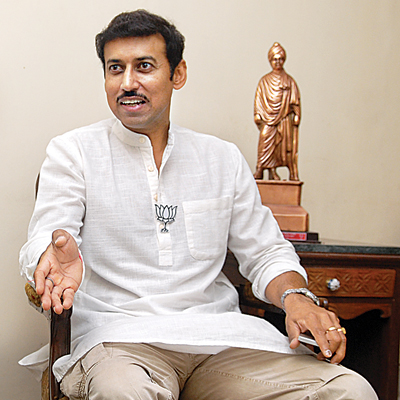
    Minister of State for Information and Broadcasting Rajyavardhan Rathore said a process fee of Rs 1 lakh was collected from MSOs at the time of submission of application for registration for providing digital addressable system.


    A sum of Rs 4.79 crore was earned till 27 January this year during 2014-15 as processing fee from MSOS.


    In comparison, the processing fee received in previous years was Rs 79 lakh in 2013-14, Rs 1.8 crore in 2012-13, and Rs 3 lakh in 2011-12.


    In addition, some states have levied entertainment tax collected directly by them, and MSOs also have to pay service tax and any other applicable taxes to the central government, the Minister said.


  • TDSAT directs Taj TV to give signals to Fastway Transmission in Karnal

    TDSAT directs Taj TV to give signals to Fastway Transmission in Karnal

    NEW DELHI: The Telecom Disputes Settlement and Appellate Tribunal (TDSAT) has directed Taj Television – the distribution arm of Zee Entertainment Enterprises Limited (ZEEL) – to provide its signals to multi-system operator (MSO) Fastway Transmission in Karnal in Haryana as an interim measure.


    The Tribunal has said that the final order will be passed post the resolution of a pending dispute where another New Delhi based MSO – Indiverse Broadband has claimed that both Siti Cable and Fastway are indulging in piracy and taking away its subscribers.


    It said the interim order was being given “having regard to the fact that due to non-supply of the signals, Fastway may be losing the market on a daily basis.”


    Even as it appointed Mansoor Ali Shoket as the advocate-commissioner to record the submissions of all the parties, the Tribunal said that Fastway will pay a monthly sum of Rs 17 lakh to the Tribunal and the first month’s fee will have to be deposited in the Tribunal by 3 February.  


    TDSAT chairman Aftab Alam and member Kuldip Singh said, “The supply of signals by virtue of this direction shall not create any equity in favour of Fastway. It is further directed that while enlisting any LCOs or subscribers, Fastway should bear in mind that in case its petitions are finally dismissed, the supply of signals by Taj Television may come to a sudden end without any notice. It is further made clear that as a result of disconnection of the supply of signals, Fastway alone will be responsible for any monetary claims raised by any LCO or subscriber or any civil or criminal liability.”


    The order further said, “Even while the Tribunal proceeds to consider the rival cases of the parties on their merits, it is made clear that the pendency of the petitions before the Tribunal shall not, in any manner, come in the way of any other authority or court having jurisdiction to proceed in the matter.”


    The Tribunal said the cases will be listed on 2 February for framing of issues. On that day, the counsel for all the parties shall jointly submit an agreed list of issues. In case there are issues on which there is no agreement between the parties, the decision will be taken by the Tribunal. All the three sides shall file their respective evidence affidavits by 10 February.


    Fastway shall then produce its witnesses for cross-examination before Shoket – appointed by mutual consent – on 12 February. After cross-examination of Fastway’s witnesses, cross-examination of the Indiverse witnesses will take place following which the cross-examination of Taj Television witnesses will take place. The Advocate-Commissioner and all sides shall ensure that cross-examination of all the witnesses is over by 5 March.


    Shoket will be paid honorarium at the rate of Rs 7,500 per day. The payment for the days on which the cross-examination of any party takes place, will be made by that party. The three cases will be listed for hearing on 19 March.


    The Tribunal noted that in these cases, “We are faced with the issue of piracy of TV channels, that is to say, in case it is established that an MSO is engaged in unauthorised transmission of channels on a large scale and in an organised manner over a long period of time, what would be its liability and what would be the remedies available to the broadcaster whose channels are re-transmitted without legal sanction.” 


    Even though clause 3.2 of the Interconnect Regulations 2004 expressly mentions “default in payment” as the ground for denial of signals, “the question that needs to be examined is whether an MSO indulging in organized large scale piracy over a long period of time would still be entitled to claim the supply of signals as of rights in terms of the Regulations. The ancillary question is what remedies are available to the broadcaster and the other MSOs suffering losses on account of the piracy,” the Tribunal noted.


    Fastway Transmissions had come to the Tribunal seeking a direction to Taj Television, to give its channels for re-transmission in Karnal. Earlier, Indiverse had filed its petition seeking a direction to Taj Television to agree to a substantial reduction in its subscriber base on the plea that the unauthorised entry of Fastway and another MSO, Siti Cable in Karnal, has greatly eroded its subscriber base.


    Taj Television resisted the demands of its channels by Fastway primarily on the allegation that the latter is engaged in rampant piracy of its signals in the area of Karnal. Indiverse also makes the same allegation and states that even though it held dominant position as an MSO in Karnal, as a result of unauthorised entry of Fastway and Siti Cable, another MSO there, and the rampant piracy by them, it is reduced to a state where 90 – 95 per cent of its network is taken over by the two MSOs.

  • Hinduja Venture’s HITS project to rollout by April 2015

    Hinduja Venture’s HITS project to rollout by April 2015

    MUMBAI: Hinduja Ventures’ Headend in the Sky (HITS) project will soon see the light of day. While the platform will start the field testing in January-February 2015, the actual rollout will take place between March-May 2015.

    “We are working as per the plan and are on schedule,” informs IMCL MD and group CEO Tony D’silva to indiantelevision.com.

    The platform is in talks with several independent MSOs and LMOs.  “By the time we launch, we will have close to 8-10 million consumers being serviced through our HITS platform,” he says.

    In order to gauge the interest level of the operators in the HITS project, Hinduja conducted a major research in nine states including four states from the south, Maharashtra, Rajasthan, Gujarat, West Bengal and others. “The study was done by an outside agency and involved close to 1000 operators,” informs D’silva who is elated with the results.

    According to D’silva, the research shows that the operators are happy with the cash and carry model being offered by Hinduja’s HITS model. This apart, the study revealed that the operators are also excited about the customised packaging and bundling at a charge which is 50 per cent lower than what they would pay for this kind of setup.

    While the study also shows that the operators are excited about the launch, D’silva says that he doesn’t want to launch it in a hurry. “We want to test our services and make sure that the set top boxes (STBs) are of top quality. There have been a lot of issues with the boxes all across the country and so we want to subject the STBs to all kinds of heat, cold, dust etc test,” he adds.  

    The operators are also happy to do a small Annual Maintenance Contract (AMC) for the boxes, probably at the cost of Rs 5 per subscriber per month, so that replacement of STBs becomes easier.

    As for the licence clearance from the Information and Broadcasting Ministry, D’silva says that the process is moving smoothly. “We will get the final licence in hand only after we are ready for the rollout and pay Rs 40 crore as bank guarantee. Licence will not be an issue any more,” he says.

    D’silva claims that the platform has got the best products and four vendors have been roped in to provide the STBs.  “While no indigenous STB manufacturers are currently onboard, we are still looking at them. We want MPEG4 boxes at the same commercial terms as others. But, we haven’t got any positive feedback from them as yet,” informs D’silva.  

    As for the name of the platform, D’silva says that the research for the name is on. “I think, while brand name is good for us to build but at this point, HITS as a concept is more understood by the LMOs and so we do not want to confuse them at this stage,” he adds.  

    No agreements will be signed between the MSO or LMO and HITS, but a MoU could be signed before the HITS project is launched. “We cannot sign an agreement before the launch, since we will get the licence only after the rollout, but we may enter into MoUs.”

    The marketing campaign about the new launch will commence from middle or end of January. “We are providing a very competitive service to fight any competition, with value added services etc. We are also providing HD STBs to operators at the cost of SD boxes. We are entering the market looking at the future and not today,” signs off D’silva.


  • TRAI asks if LCOs, MSOs be permitted to share infrastructure with VNOs

    TRAI asks if LCOs, MSOs be permitted to share infrastructure with VNOs

    NEW DELHI: The Telecom Regulatory Authority of India (TRAI) wants to know if there is any need to introduce more competition in service delivery by the way of introduction of Virtual Network Operators (VNO) and whether this will pose any threat to Network Service Operators (NSO).
     
    In a Consultation Paper on “Delinking of  the license for networks from delivery  of services by way  of Virtual Network Operators,” TRAI has also asked how Mergers & Acquisitions should be dealt with in the VNO/NSO licensing model and should the recently announced M&A guidelines issued by the Government for existing players be extended to cover VNOs.

    It has asked the stakeholders to send in their responses by 5 January and counter-comments by 12 January. The Department of Telecommunications had on 7 July 2014 sought the  Authority’s recommendations for delinking of licensing of networks from delivery of services by way of virtual network operators etc. including associated  issues   such as Adjusted Gross Revenue, terms of sharing of passive and active infrastructure under unified licensing regime.
     
    TRAI had earlier released a pre-consultation paper on “Delinking of the license for  networks from delivery of  services by  way of  Virtual Network Operators” on 3 September 2014 highlighting some of the issues associated with the proposed licensing framework by the DoT and had solicited inputs and comments of the  stakeholders on these issues or any other issues involved in the proposed  framework.
     
    The paper issued today raises specific issues for consideration by stakeholders. A consultation paper on ‘Definition of revenue base (AGR) for the reckoning of license fee and spectrum usage charges’ has been already issued on 31 July 2014.

    Therefore, this consultation paper is   limited to the issues related to delinking of licenses for networks from the delivery of services by way of virtual network operators.
     
    TRAI also wonders if a business case exists for introduction of VNOs in all segments of Voice, Data and Videos and whether VNOs should be introduced in all or some of the services notified in the Unified licence.

    It also wants to know if there is sufficient infrastructure (active and passive including access spectrum) available with a TSP to meet its own requirements. If any TSP is able to share its infrastructure with VNOs, the regulator wants to know what the broad terms and conditions for sharing the infrastructure should be.

    Can VNOs be allowed to create their own infrastructure to reach out to niche markets, the Regulator asks, or can local Cable Operators (LCOs) or Multi System Operators (MSOs) with cable networks be permitted to share infrastructure with VNOs to provide last mile connectivity.

    The regulator wants to know if a VNO be issued a license at the National Level or for LSAs as in the case of UL or should it be based on the host NSO license areas and the duration of the licence.

    It also has questions about any cross-holding restriction between a NSO and VNOs and the financial obligations of VNOs in the form of a) Equity & Networth b)Entry Fee c)PBG and d)FBG etc.


  • TRAI is working on amending QoS regulation: N Parameswaran

    TRAI is working on amending QoS regulation: N Parameswaran

    MUMBAI: It has been nearly three months since the Telecom Regulatory Authority of India (TRAI) came up with its consultation paper on levying financial disincentives on multi system operators (MSOs) and local cable operators (LCOs) who are delaying the process of billing in the digital addressable system (DAS) areas of the country.

    Although it has been long since the deadlines for commencement of billing in DAS areas got over, there is no clue on how the whip will be cracked on those who haven’t gone beyond installing set top boxes in phase I and II.

    TRAI principal advisor N Parameswaran says, “We are in the process of working on the amendment to the Quality of Service (QoS) regulation. The comments have come and we are yet to take a final decision on the same.”

    Meanwhile, the MSOs that indiantelevision.com spoke to have said that billing has happened only in few areas of New Delhi and Kolkata while the remaining cities in DAS phase III and IV don’t even have proper consumer application forms (CAFs).

    TRAI earlier had said that it is seeking to implement financial penalties on those MSOs and LCOs who defy the law. Comments had been asked from stakeholders on the same. The regulator had also said that for non-compliance of issuing bills, a disincentive of not exceeding Rs 20 per subscriber will be levied on the MSO and/or its linked cable operator and for the second time, penalty would be Rs 50. “For non-compliance of regulations, Rs 100 will be levied on each MSO for each contravention. If the MSO and LCO have entered into an agreement, both of them will be penalised for faults while in the case of no deal being signed, only the MSO is liable to pay,” TRAI had said.

    As per the consultation paper, the amendment, when approved, will come into effect 30 days from the date of publication.


  • TRAI issues draft tariff order for non addressable cable TV systems

    TRAI issues draft tariff order for non addressable cable TV systems


    MUMBAI: The Telecom Regulatory Authority of India (TRAI) has come out with its draft tariff order for non addressable cable TV system and is asking for comments on the same from stakeholders.


    This comes after the Supreme Court’s order in September wherein it had asked stakeholders to submit views by 30 September, which the TRAI has now extended by 15 December, which it says will be final.


    To be called Telecommunication (Broadcasting and cable) services (seventh) (non-addressable systems) Tariff Order, 2014 (draft) it will come into effect from 1 January 2015 and will be applicable to broadcasting and cable services provided to cable subscribers throughout India through non addressable systems. The Telecommunication (Broadcasting and Cable) Services (Fourth) (Addressable Systems) Tariff Order, 2010 (1 of 2010) shall apply to only DAS areas.


    For wholesale tariff, broadcasters have to specify their channels rates both a-la-carte as well as bouquets provided that the a-la-carte and bouquet rates for  pay and free to air (FTA) channels shall not firstly exceed its current rate before the order comes into force.


    In a bouquet the sum of the a-la-carte rates of all channels shall not exceed 1.5 the rate of the entire bouquet. The a-la-carte rate of one channel will not exceed thrice the average rate of a pay channel. The bouquet composition as on 1 December 2007 shall not change.


    If a bouquet is to be modified post this order coming into existence, this is how it will be calculated: The rate of the modified bouquet = [rate of the existing bouquet] x [sum of a-la-carte rate of pay channels comprising the modified bouquet/sum of a-la-carte rate of all the pay channels comprising the existing bouquet].


    Rates of channels or bouquets can only be increased by a TRAI order while it can be reduced without the same. For conversion of channels from pay to FTA or discontinuation, the bouquet prices need to be modified accordingly. New channel launches will be priced similar to other channels in its genre and language. For new launches or conversions, a-la-carte as well as bouquet rates shall be declared 30 days in advance.


    The charges that a local cable operator (LCO) shall pay to a multi system operator (MSO) will have to be mutually decided. The LCOs have been told to issue bills to subscribers with a breakup of the number of channels, the charges levied (excluding taxes), nature and rates of taxes levied and amount thereof and then issue a receipt for the same.


    The draft tariff order is proposed for the cable TV services offered through non addressable (analogue) cable TV systems. The operators who implement DAS before the notified cut off dates for phase III and IV will be governed by the DAS regulatory regime.


    The Telecommunication (Broadcasting and Cable) Services (Second) Tariff Order 2004 (6 of 2004) has been repealed with this new one that will be called the Telecommunication (Broadcasting and cable) services (seventh) (non-addressable systems) Tariff Order, 2014 (draft).


    The Supreme Court in its order has disposed off the appeals, while leaving all the questions of law open. It also ordered that status quo will continue till 31 December 2014. The order further stated that TRAI will attempt to notify the fresh tariff order immediately after 31 December 2014. Since the last consultation paper had been given out in 2010, TRAI felt that stakeholders need to relook entirely.


    On 10 February 2014 five amendments, to the tariff orders and regulations were notified by TRAI. These amendments were made to bring in clarity in the roles and responsibilities of the broadcasters and their authorised agents. On 31 March 2014, eleventh amendment to the tariff order applicable for non-addressable cable TV systems was notified by TRAI to allow inflationary adjustment at, both, retail and wholesale levels.


    Click here to read the consultation on draft tariff order


    Click here to read the press release


    Click here to read the report submitted to Supreme Court

  • I&B Ministry to study why MSOs are not taking indigenous STBs

    I&B Ministry to study why MSOs are not taking indigenous STBs

    NEW DELHI: The Information and Broadcasting Ministry (I&B) will facilitate a meeting of manufacturers of indigenous set top boxes (STBs) and multi-system operators (MSOs) next week in view of complaints by the manufacturers that no orders were being placed for their STBs.


    This was decided at a meeting of the Task Force which will oversee the next two phases of digital addressable system (DAS) and which met under the chairmanship of Ministry Additional Secretary J S Mathur here today.


    Earlier this week, the manufacturers had met Ministry secretary Bimal Julka and made the same complaint.


    The participants were apprised that around 3.5 households had to be covered in the third phase of digitisation.


    A Ministry source told indiantelevision.com that the meeting discussed various roadblocks on the road to full digitisation and ways to overcome these hurdles.


    Star India legal & regulatory senior vice president Pulak Bagchi, who is also the representative of the broadcasters said emphatically that broadcasters would support voluntary transition to DAS as long as there were some ground rules.


    He also said that broadcasters were prepared to give concessions to operators switching over to DAS provided the operators totally stopped analogue transmission.


    Bagchi also said that it should be made mandatory that any MSO or local cable operator who switches over to DAS should switch off analogue and not run both systems.


    The meeting was attended by around 20 people and included representatives of trade bodies like FICCI and CII, apart from MSOs, LCOs and DAS advisor Yogendra Pal.