Tag: Laxmikant Thipse

  • Balancing act: Exploring the intersection of AI advancements and job security in the gaming sector

    Balancing act: Exploring the intersection of AI advancements and job security in the gaming sector

    Mumbai: In the ever-evolving landscape of the gaming industry, the emergence of AI stands as a transformative force, reshaping the way games are developed, played, and experienced. As AI technologies continue to advance at a rapid pace, game developers find themselves at a critical juncture, facing a delicate balancing act between harnessing the power of AI for innovation and ensuring the preservation of job security and human creativity within the sector.

    The intersection of AI advancements and job security in the gaming industry presents a complex tapestry of opportunities and challenges that demand careful consideration and strategic navigation. From revolutionising gameplay experiences to potentially displacing traditional roles, AI’s impact on the gaming sector is profound and multifaceted.

    The main focus is on the intricate dynamics at play as developers explore the vast potential of AI in game development while grappling with concerns surrounding job security, ethical implications, and the need to strike a harmonious balance between technological advancement and human ingenuity. By examining these critical issues through a lens of innovation, sustainability, and ethical responsibility, we aim to shed light on the evolving landscape of gaming in an AI-driven world.

    Changing the Game Development Landscape

    Gaming executives recognise the potential of generative AI to revolutionise the video game industry over the next 5 to 10 years, with expectations that it will contribute significantly to the development process. However, concerns linger about job displacement and the impact on talent models as AI technologies evolve within the sector.

    AI’s influence extends beyond gameplay enhancements to optimising monetisation strategies in games, offering both positive outcomes and potential challenges. The adoption of AI in game development introduces opportunities for streamlining processes, such as automating tasks like content generation and testing, which can lead to more efficient game launches and higher customer satisfaction. AI-driven algorithms are not only enhancing graphics and realism but also enabling personalised storytelling experiences tailored to individual player preferences.

    Current State of AI in the Gaming Industry

    The current state of AI in the gaming industry is characterised by a significant transformation driven by the integration of artificial intelligence technologies. AI is revolutionising gameplay experiences, enhancing graphics and realism, streamlining game development processes, and redefining the role of game designers. Here are key points highlighting the impact of AI in the gaming sector:

    1   Revolutionising Gameplay: AI is enabling more immersive and engaging gameplay experiences by creating dynamic and personalised content, such as intelligent NPCs, adaptive environments, and enhanced player interactions.

    2   Enhancing Graphics and Realism: AI-driven algorithms are improving graphics quality, generating lifelike textures, environments, and characters, and simulating realistic interactions between objects and characters.

    3   Streamlining Game Development: AI automates various tasks in game development, such as generating procedural content like terrain and levels, optimising monetisation strategies, and enhancing pre-production planning processes.

    4   Challenges and Concerns: While AI offers numerous benefits to the gaming industry, challenges include ensuring ethical AI use, managing player expectations, balancing innovation with responsibility, addressing job displacement concerns due to automation, and navigating data privacy and security issues.

    Job Security in the AI Era

    In the era of artificial intelligence (AI), the evolving technological landscape raises significant questions and concerns about job security across various industries, including the gaming sector. As AI technologies continue to advance and integrate into different aspects of game development, there is a growing apprehension about the potential impact on traditional job roles within the industry. Automation and AI-driven processes can streamline tasks, optimise workflows, and enhance efficiency, but they also pose a risk of displacing human workers who traditionally perform these functions.

    The gaming industry, like many others, faces the challenge of balancing the benefits of AI adoption with the preservation of job security for its workforce. There is a valid concern about the displacement of jobs that rely on manual or repetitive tasks. Developers and industry stakeholders must navigate this delicate balance by exploring ways to upskill employees, restructure job roles to align with AI integration and prioritise human creativity and innovation in game design.

    Addressing job security in the AI era requires a proactive approach from both companies and individuals within the gaming industry. Embracing AI technologies while simultaneously investing in employee training and development can help mitigate job displacement risks and foster a more sustainable workforce. By maintaining a culture of continuous learning, adaptability, and collaboration between humans and AI systems, game developers can harness the full potential of AI advancements while safeguarding job security and promoting a thriving ecosystem where human creativity remains at the forefront of innovation.

    Why Creativity Cannot Be Automated

    While AI can enhance many aspects of game development, it cannot replace the human element – creativity and emotional intelligence. Storytelling, character development, and world-building are aspects where the human touch is irreplaceable. These elements of game design require empathy, cultural understanding, and emotional depth, traits that AI currently cannot replicate.

    The gaming sector must recognise and value these uniquely human contributions, ensuring that while AI is used to augment development, it doesn’t become a substitute for the creative minds that drive the industry’s innovation and appeal.

    Collaboration Between AI and Human Talent

    Collaboration between humans and AI is reshaping industries, including gaming, by deploying the unique strengths of both entities to achieve better results. The interaction between humans and AI is crucial as each possesses distinct capabilities that, when combined, lead to enhanced outcomes. Humans contribute creativity, empathy, and critical thinking skills, while AI excels at processing vast amounts of data and performing repetitive tasks efficiently. By working together, humans can provide context and decision-making abilities, while AI offers data-driven insights that enhance decision-making processes.

    The fear that AI will replace human jobs is a common concern; however, the reality is that AI is not meant to replace humans entirely. While some jobs may become obsolete due to automation, new roles will emerge as a result of AI integration. Many tasks still require human input, creativity, and empathy, highlighting the importance of human-AI collaboration in optimising costs, improving decision-making processes, and maintaining competitiveness in evolving markets. Human-AI collaboration is a trend that is gaining momentum across various industries as companies recognise the value of combining human expertise with AI capabilities to achieve better results.

    Conclusion

    As the gaming industry navigates the intersection of AI advancements and job security, the focus should be on balance and adaptation. While AI offers incredible opportunities to revolutionise game development, it is essential to approach these changes with an understanding of their impact on jobs and the irreplaceable value of human creativity. By fostering a symbiotic relationship between AI and human talent, the gaming sector can continue to flourish and innovate in an AI-augmented future.

    The author of this article is GameCloud Technologies CEO Laxmikant Thipse.

  • Balancing act: Exploring the intersection of AI advancements and job security in the gaming sector

    Balancing act: Exploring the intersection of AI advancements and job security in the gaming sector

    Mumbai: The development, playability, and experience of games are all being altered by the advent of AI, which is a disruptive factor in the rapidly changing gaming industry. Game creators are in a difficult position as AI technologies continue to progress quickly. They must strike a careful balance between utilising AI’s potential for innovation and maintaining the stability of jobs and human creativity in the industry.

    The gaming industry’s employment security and AI developments create a complicated web of opportunities and obstacles that call for thoughtful analysis and strategic navigation. AI has a huge and varied impact on the gaming industry, potentially upending established positions and revolutionising gameplay experiences.

    The main focus is on the complex dynamics at work as developers wrestle with issues of job security, ethical ramifications, and the need to find a healthy balance between human creativity and technical growth as they explore the enormous potential of AI in game production. Through the lenses of innovation, sustainability, and ethical responsibility, we hope to shed light on how the game industry is changing in a world driven by artificial intelligence.

    Shifting the Scene for Game Development

    Over the next five to ten years, generative AI can completely transform the video game business, and gaming executives anticipate that it will have a major impact on the creation process. But as AI technologies advance in the industry, worries regarding job displacement and its effects on talent models continue to exist.

    AI’s impact on gaming goes beyond improving gameplay; it also optimises game monetisation techniques. The use of AI in game production opens up possibilities for process optimisation, including the automation of testing and content creation. This can result in more smoothly launched games and happier players. In addition to improving graphics and realism, AI-driven algorithms are making it possible to create customised storytelling experiences based on the tastes of each player.

    Workplace Safety in the AI Age

    Artificial intelligence (AI) is a rapidly changing field that creates serious issues and worries regarding job security for people in a variety of industries, including the gaming industry. There’s growing concern about how AI technologies can affect traditional job roles in the game development business as they improve and become more integrated into various sectors of the industry. While automation and artificial intelligence (AI) can improve productivity, optimise workflows, and streamline jobs, there is a chance that these procedures could displace human workers who have historically carried out these duties.

    Like many other industries, the gaming sector must strike a balance between the advantages of AI adoption and maintaining worker job security. Concerns about the loss of jobs involving manual labour or repetitive duties are legitimate. Developers and industry stakeholders need to find ways to prioritise human creativity and innovation in game design, reorganise job responsibilities to fit with AI integration, and upskill staff to traverse this delicate balance.

    Companies and individuals in the gaming business need to take the initiative to address job security in the AI era. Adopting AI technology and funding staff training and development at the same time can reduce the likelihood of job displacement and promote a more resilient workforce. Game developers can fully utilize AI advancements while preserving job security and fostering a vibrant ecosystem where human creativity remains at the forefront of innovation by fostering a culture of constant learning, adaptability, and collaboration between humans and AI systems.

    Why Automating Creativity Is Not Possible

    Although artificial intelligence (AI) has numerous benefits for game developers, it cannot take the place of human creativity and emotional intelligence. The human touch is indispensable in world-building, character development, and storytelling. These aspects of game creation include emotional depth, empathy, and cultural awareness—qualities that AI is currently unable to imitate.

    To ensure that artificial intelligence (AI) is used to support development but does not take the place of the creative minds that fuel the industry’s innovation and appeal, the gaming industry must acknowledge and reward these distinctively human contributions.

    AI and Human Talent Working Together

    Gaming is one of the businesses that is changing as a result of human-AI collaboration, which uses each entity’s special skills to produce better outcomes. Human-AI contact is essential since each has unique skills that, when combined, produce better results. When it comes to creativity, empathy, and critical thinking, humans are superior to AI, which is better at processing large volumes of data and handling repetitive jobs quickly. When people and AI collaborate, humans can contribute context and decision-making skills, and AI can bring data-driven insights that improve decision-making.

    It’s a popular worry that artificial intelligence (AI) will take the place of people in all jobs, however, this is untrue. Automation may cause some occupations to become obsolete, but AI integration will lead to the creation of new roles. Numerous activities still call for human creativity, empathy, and input, which emphasizes how crucial human-AI collaboration is to cost optimization, enhanced decision-making, and competitiveness in dynamic marketplaces. The trend of human-AI collaboration is becoming more and more popular in a variety of industries as businesses realize how valuable it is to combine human expertise with AI skills to get better outcomes.

    Conclusion

    The gaming business should prioritize adaptability and balance as it negotiates the confluence of AI developments and job security. Even though AI has the potential to completely transform the game production industry, it is crucial to approach these developments with a knowledge of how they will affect employment and the importance of human creativity, which cannot be replaced. In a future enhanced by AI, the game industry can thrive and evolve by cultivating a mutually beneficial connection between artificial intelligence and human skill.

    The author of the article is Mr Laxmikant Thipse, CEO, GameCloud Technologies.

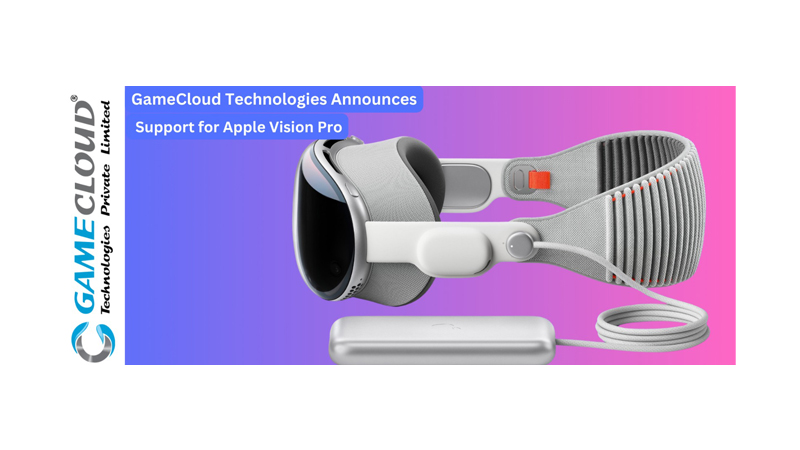
  • GameCloud Technologies announces support for Apple Vision Pro

    GameCloud Technologies announces support for Apple Vision Pro

    Mumbai: In a significant development for the XR industry, GameCloud Technologies Pvt Ltd has announced its support for the Apple Vision Pro, Apple’s latest foray into spatial computing. This move marks a pivotal moment in the XR landscape, positioning GameCloud Technologies at the forefront of testing and development for cutting-edge mixed reality applications.

    The Apple Vision Pro is a groundbreaking device in the realm of mixed reality, blending AR, VR, and mixed reality (MR) to create an unparalleled user experience. With its advanced capabilities, the Vision Pro is set to revolutionize how users interact with digital content, offering immersive and interactive experiences unlike anything seen before.

    The leading XR testing and development company will offer its services for the new mixed-reality headset from Apple

    GameCloud Technologies, known for its expertise in XR testing and development through the independent division, QualityReality.com, is adding this new device in its existing VR hardware inventory to also provide its customers with access to the Vision Pro headset and its visionOS platform. This strategic move will enable the company to offer a comprehensive suite of services for developers of XR applications and games, ensuring that they can optimize their games and apps for the unique capabilities of Vision Pro.

    The company’s decision to support the Vision Pro stems from its commitment to staying at the cutting edge of XR technology. By integrating the latest hardware and software advancements into its services, GameCloud Technologies ensures that its customers are always ahead of the curve in delivering engaging and immersive XR experiences.

    “We are excited to support the Apple Vision Pro, which we believe is a game-changer for the XR industry. Our customers can rely on us to provide them with the best XR testing and development services, as well as the latest technologies and hardware. We are committed to helping our customers create immersive and engaging XR experiences that leverage the full potential of the Vision Pro and visionOS,” said GameCloud Technologies CEO Laxmikant Thipse.

    This announcement is more than just a new service offering, it’s a testament to GameCloud Technologies’ dedication to innovation and excellence in the XR domain. By aligning with Apple’s Vision Pro, the company not only expands its capabilities but also reinforces its position as a leader in the rapidly evolving world of XR.

    For developers and creators in the XR space, this collaboration presents an exciting opportunity. With GameCloud Technologies’ support, they can now explore the vast possibilities of Vision Pro, pushing the boundaries of what’s possible in AR, VR, and MR. From gaming to education, entertainment to training, the applications of this technology are virtually limitless.

    GameCloud, through QualityReality.com, is undertaking the heavy lifting by investing in the latest technologies of this kind. This approach ensures that their customers avoid the capital investment in rapidly depreciating assets and hardware that becomes outdated within a year in today’s fast-paced technological environment. Consequently, GameCloud, via QualityReality.com, guarantees that customers incur no capital expenditure (CAPEX) and only a negligible operational expenditure (OPEX) by outsourcing to QualityReality.com.

    GameCloud Technologies’ support for the Apple Vision Pro is a significant milestone in the XR industry. It paves the way for the creation of more innovative, immersive, and engaging XR experiences, harnessing the power of the latest technologies to transform how we interact with the digital world. As the XR landscape continues to evolve, GameCloud Technologies remains at the forefront, leading the charge in testing and development for the next generation of mixed reality experiences.

    The Apple Vision Pro headset, a highly anticipated mixed-reality device, is currently priced at $3,499 in the United States, where it first launched. This price is for the model with 256GB of storage, making it a premium offering in the AR headset market. In comparison, Meta’s high-performance Quest Pro VR headset is priced significantly lower, at around $999, while its Quest 3 model is even more affordable, retailing at $499. The Quest 2, another model from Meta, is available for as low as $299. This stark price difference highlights the Apple Vision Pro as a considerably more expensive option in the realm of immersive headsets. Especially for the small teams developing apps and games on VR platforms, this cost is significantly on the higher side.