Tag: Las Vegas

  • Vh1 to air The Billboard Music Awards 2016 on 23 May

    Vh1 to air The Billboard Music Awards 2016 on 23 May

    MUMBAI: Vh1 is all set to bring its viewers the Billboard Music Awards 2016 on 23 May at 6:30 am with a repeat at 9 pm. The channel will air the function straight from the T-Mobile Arena in Las Vegas.

    Commenting on the initiative, Viacom18 EVP and head English and youth entertainment Ferzad Palia said, “In the past, we have received an incredible response for the live telecast of the Golden Globe Awards and the Grammys. The telecast of Billboards is our endeavor to further our promise of showcasing the best in English Entertainment. Award shows have a huge impact on the music industry as it witnesses the union of numerous talented musicians from across the globe. We, at Vh1, are thrilled to telecast the grand celebration of music to our audience in India”

    The 2016 Billboard Awards will see the always eccentric actor and singer Ludacris along with the gorgeous supermodel and singer Ciara as hosts of the show. Top nominees for the show include The Weeknd with a whopping 19 nominations across 16 categories, followed by Justin Bieber with 12 nominations across 11 categories. Drake and Fetty Wap are both nominated 11 times, in 10 categories. Singing sensations Taylor Swift and Adele are competing with each other with 8 nominations each.

    The Joe Jonas-led band, Mendes is set to join performers P!nk and The Go-Go’s, together to celebrate the35th anniversary of “We Got the Beat” – A Go-Go’s classic hit.

    One of the highlights of the event is P!nk gearing up to make the World Television Debut of Just Like Fire, her new single from Alice Through the Looking Glass.  Alongside the glamorous and popular faces, a number of fresh talents such as DNCE and Shawn Mendes will also be seen performing at the glorious award ceremony.

    The Annual Billboard Music Awards is a part of an extravagant award show line-up aired on Vh1 which includes Golden Globe Awards, The American Music Awards, The Annual Grammy Awards, Video Music Awards and Europe Music Awards.   

    The complete list of nominees for the Billboard Music Award can be browsed at:

    http://www.billboard.com/articles/news/bbma/7326512/billboard-music-awards-2016-nominations

  • Amagi announces world’s first watermark-Based OTT Ad insertion mechanism ‘Thunderstorm’

    Amagi announces world’s first watermark-Based OTT Ad insertion mechanism ‘Thunderstorm’

    MUMBAI: Amagi one of the leaders in cloud-based broadcast infrastructure and targeted TV advertising, today announced Thunderstorm, a new OTT ad-insertion platform that delivers personalised and targeted advertising for premium live sports and news feeds using a patented content watermarking technology. With Thunderstorm, TV networks can dynamically insert ads on the server side, as opposed to the traditional client-side insertion, monetising video on every screen without dependency on device apps. Amagi will showcase the new platform in booth SU13006 at the 2016 NAB Show, taking place April 18-21 in Las Vegas.

    “The dynamic nature of live sports and news broadcast on OTT platforms calls for a responsive and accurate ad-insertion capability,” said Amagi co-founder Baskar Subramanian. He further adds, “For the first time in the OTT advertising landscape, we have used watermarking-based ad insertion to simplify the broadcast workflow, increase flexibility, and eliminate huge integration efforts into existing broadcast traffic systems. Amagi’s patented watermarking technology is already in use by TV networks worldwide to deliver millions of targeted ad seconds every month, and through Thunderstorm we have extended this successful platform to OTT feeds.”

    Thunderstorm adds more power to the ad-insertion workflow by enabling server-side ad stitching and personalization. When multiscreen ads are delivered via client-based ad insertion systems, broadcasters and advertisers lose control over the advertising playout process. Often, viewers skip or block the ads, and the decision whether ads are played or not, can be left to the OTT service provider. Amagi’s Thunderstorm platform transforms this workflow, enabling TV networks to take control over the ads aired in their content, boost monetization, and enhance viewer satisfaction across the multiscreen environment.

    Thunderstorm will also allow broadcasters to integrate multiple ad formats, including bugs, L-bands, and linear video, for ultimate flexibility. Since ads are stitched on the cloud into the linear stream. Thunderstorm eliminates the need to create device-driven OTT ads, making ads compatible across various screens. The platform packages content and targeted ads together into a linear stream, undetected by ad blockers, leading to a smoother overall user experience.

    Amagi has a proven track record in watermark-based targeted advertising on traditional TV for well-known international broadcasters. Using Amagi’s content watermarking technology, broadcasters can identify replacement triggers and achieve frame-accurate ad splicing. In addition to Amagi watermarks, Thunderstorm also allows TV networks to use traditional triggers such as SCTE-35. By allowing TV networks to efficiently deliver personalized advertising on OTT streams as well, Amagi expands their media pack and strengthens revenue streams.

  • Amagi announces world’s first watermark-Based OTT Ad insertion mechanism ‘Thunderstorm’

    Amagi announces world’s first watermark-Based OTT Ad insertion mechanism ‘Thunderstorm’

    MUMBAI: Amagi one of the leaders in cloud-based broadcast infrastructure and targeted TV advertising, today announced Thunderstorm, a new OTT ad-insertion platform that delivers personalised and targeted advertising for premium live sports and news feeds using a patented content watermarking technology. With Thunderstorm, TV networks can dynamically insert ads on the server side, as opposed to the traditional client-side insertion, monetising video on every screen without dependency on device apps. Amagi will showcase the new platform in booth SU13006 at the 2016 NAB Show, taking place April 18-21 in Las Vegas.

    “The dynamic nature of live sports and news broadcast on OTT platforms calls for a responsive and accurate ad-insertion capability,” said Amagi co-founder Baskar Subramanian. He further adds, “For the first time in the OTT advertising landscape, we have used watermarking-based ad insertion to simplify the broadcast workflow, increase flexibility, and eliminate huge integration efforts into existing broadcast traffic systems. Amagi’s patented watermarking technology is already in use by TV networks worldwide to deliver millions of targeted ad seconds every month, and through Thunderstorm we have extended this successful platform to OTT feeds.”

    Thunderstorm adds more power to the ad-insertion workflow by enabling server-side ad stitching and personalization. When multiscreen ads are delivered via client-based ad insertion systems, broadcasters and advertisers lose control over the advertising playout process. Often, viewers skip or block the ads, and the decision whether ads are played or not, can be left to the OTT service provider. Amagi’s Thunderstorm platform transforms this workflow, enabling TV networks to take control over the ads aired in their content, boost monetization, and enhance viewer satisfaction across the multiscreen environment.

    Thunderstorm will also allow broadcasters to integrate multiple ad formats, including bugs, L-bands, and linear video, for ultimate flexibility. Since ads are stitched on the cloud into the linear stream. Thunderstorm eliminates the need to create device-driven OTT ads, making ads compatible across various screens. The platform packages content and targeted ads together into a linear stream, undetected by ad blockers, leading to a smoother overall user experience.

    Amagi has a proven track record in watermark-based targeted advertising on traditional TV for well-known international broadcasters. Using Amagi’s content watermarking technology, broadcasters can identify replacement triggers and achieve frame-accurate ad splicing. In addition to Amagi watermarks, Thunderstorm also allows TV networks to use traditional triggers such as SCTE-35. By allowing TV networks to efficiently deliver personalized advertising on OTT streams as well, Amagi expands their media pack and strengthens revenue streams.

  • Live events boost viewing of TV, but need newer digital technologies

    Live events boost viewing of TV, but need newer digital technologies

    NEW DELHI: It is the live events covered by television that boost ratings and help encourage innovation and establish new services, despite the popularity of on-demand content and the proliferation of over-the-top services.


    In fact, television viewership has remained near record levels in part because of the popularity of coverage of big events, said panelists in the session “Cisco Presents: The Transition from Live to Event TV” on the concluding day of the National Association of Broadcasters Show in Las Vegas. 


    “The broadband world is growing and people are watching more programmes on demand,” said Globo, CTO & general director of ENG Fernando Bittencourt.


    “But in the world of broadcasting, I think the future is live programming. I do not think movies will be in primetime broadcast in the next five or 10 years. People will watch those on demand. … There will be more news, more sports and live content like our tele-novelas that are designed to be watched at a specific time.”


    “They drive a lot of viewer and social interaction, but they have also been an important driver for the development of TV Everywhere and authenticated services,” said IDC research manager of consumer markets, video Greg Ireland.


    He noted that big events like the Olympic Games have encouraged consumers to set up authenticated apps, making it more likely that they would later use the apps for regular programming.


    Cisco Systems, VP & GM of ESBI Charles Stucki said, “Big live events have bigger budgets, so you can have a lot of innovation.” He mentioned the recent Summer and Winter Olympics, from which NBC streamed a record amount of coverage to online and mobile platforms.


    This innovation also helped boost the popularity of the linear live broadcast, with NBC posting record ratings for its summer games coverage. During the Winter Olympics, viewers who watched content online tended to watch more live games programming on TV.


    But finding the right technologies for the digital applications that viewers increasingly demand with big live events can be challenging.


    Globo’s Bittencourt said popular programmes on the Brazilian broadcaster regularly pull in 30 million to 40 million viewers. “If only half of those go to the second screen, it is very difficult for the network to support it.”


    Such concerns were highlighted right before the NAB Show, when the HBO Go app went down during the season premiere of its hit series Game of Thrones.


    “Consumers now have the expectation that a big event will have a live streaming component, but the experience is not always optimal,” Ireland said.


    “A lot of extra engineering has to go into creating and surviving big events that require a lot of additional resources beyond those needed to simply produce live programming,” Stucki explained.


    He said Cisco sees a growing number of broadcasters building staff to manage CDNs used for big events, in order to assure the best architecture and redundancy.


    The general trend toward IT and IP infrastructures raises additional issues of reliability.


    Bittencourt revealed while Globo’s viewers would not tolerate the network going off the air, the quality of online streaming can be quite variable. In addition, the lag between the live broadcast and the mobile stream causes complaints. “During the World Cup, viewers will want to watch the Brazilian games on a TV,” he said. “If they watch on the Internet, they will see the goal 30 seconds after it happens” – after their neighbors have already started celebrating.


    But for 4K production, he said that IT and IP technologies would be necessary. “You can’t do that with traditional technologies,” said Bittencourt, adding that Globo planned a test 4K broadcast during the World Cup.


    Stucki argued that the growing importance of video on digital platforms, where video traffic now accounts for half of all mobile traffic, is forcing the IT and IP worlds to become more reliable.


    “They are starting to figure this out,” Bittencourt agreed. “Right now we have very specific vendors for broadcast and different ones for IT and IP. We have to create a third world where there is a combination of IT and broadcast that would be specific for broadcast to get the high reliability we are used to.”

  • Failing to create New Broadcast Standard for all platforms will harm the industry: Haim Saban

    Failing to create New Broadcast Standard for all platforms will harm the industry: Haim Saban

    NEW DELHI: Asserting that it is “not just important, it is vital,” Univision chairman Haim Saban has urged the development of a new broadcast transmission standard “to allow us to deliver our signal to all platforms, all the time.”


    Addressing the National Association of Broadcasters (NAB) show in Las Vegas, Saban said “If we do not, we will be left back in the 20th century. It is not an option.”


    He called on the Advanced Television Systems Committee to “seriously not consider anything else.” “Make it freakin’ happen,” Saban added, urging the NAB to lead the effort.


    Saban’s remarks came during a frank and lively keynote conversation with NAB president and CEO Gordon Smith. 


    During the discussion, Smith additionally asked Saban about his support for retransmission consent. “I don’t understand what the argument is,” Saban said. “‘I have got your content. I’m going to sell it and get paid for it—but I am not going to pay you. It is illogical; it does not make any sense.”


    He got a laugh when he recalled selling Fox Family Worldwide, which included the Mighty Morphin Power Rangers franchise, to Disney, only to buy the Power Rangers back “at a fraction, fraction of the cost.”In that specific case, I guess we were better than them,” he quipped.


    In another session, Oscar-winning cinematographer Emmanuel Lubezki, ASC, AMC, spoke about the film ‘Gravity,’ the groundbreaking Alfonso Cuarón-directed film that has the whole motion picture industry re-examining the once-clear borders between animated and live-action filmmaking.


    Produced in partnership with the American Society of Cinematographers (ASC), the session was presented in the form of a lively interview with the ASC’s Jon Witmer. Set in outer space, the film positions real actors inside an almost entirely virtual environment. Lubezki recalled the first time he heard Cuarón’s idea for ‘Gravity.’


    The film combines the shooting of actors with elaborate CGI work, so VFX supervisor Tim Webber came on board very early in the production process of determining exactly how to create the elements necessary to realize Cuarón’s vision.


    “We can do it very simply,” Lubezki recounts Cuarón saying. “It will be one actor. It’s in space so we can shoot it in front of a black background.”


    Lubezki explained that they immediately realized the procedure was “the opposite of normal. Usually, you shoot the actors and then [the VFX artists] make the CG work with those [elements]. This time, we had to make an entire CG movie, then shoot actors to incorporate into that.”


    The CG artists at visual effects house Framestore built an elaborate pre-visualization of the film with all the shots planned precisely, with roughly animated likenesses where the real actors’ faces would later be composited. Lubezki discussed his collaboration with the 10 animators at Framestore who were creating much of what would become the movie.


    “It was a group of different artists with different ideas and different solutions,” he said. “I would say I want the sun to be a little to the right in this shot and they might see it as ‘cheating.’ ‘That is not where the sun would be if there is a cut from here to here,’ they would object. It was like working with 10 different gaffers!”


    As the CGI took form, the filmmakers were still figuring out how to shoot and light the actors who were going to be composited into the “CGI movie” they were creating. So much of the texture and feeling of cinematography comes from the way the subject, environment and light all interact. And the filmmakers still wanted as much of that magic to take place in camera as possible.


    Lubezki explained that the way the actors floating through space was simulated, was through a combination of moving the actors on platforms, and flying cameras and lights around them using robotic arms. Much of the shooting of the actors was done inside a specially-designed “light box,” a small room of approximately 12 x 12 feet, constructed entirely from LED panels on which the production could project appropriate portions of the pre-vis so that the actors could see what the characters were seeing and the illumination from the projected scenes was actually reflecting on them.


    “If you zoom in on [Sandra Bullock’s] face,” Lubezki said, “you can see the environment and even other characters reflected in her eyes. That’s the kind of thing we really did not want to try to do in post.”


    The then-new ARRI Alexa made the film possible, he reported. This was partly due to its ability to shoot at EI 1600, which he says was sometimes necessary in order to get the exposure he wanted with the LED panels serving as the primary source of illumination. He also explained that despite his love of shooting film, his initial testing indicated that film’s texture — even stocks with the tightest grain — simply didn’t work for the 3D experience.


    The fact that ‘Gravity’ was always designed to be shown in 3D informed everything about the way he shot the live-action portions. He worked primarily with very wide lenses — mostly 18 mm and 21 — and at deep stops—generally T-5.6 —“to give the audience an immersive experience.”


    While his approach was clearly a departure from the simpler style that has helped Lubezki’s work stand out for some time, he emphasized that he didn’t really see his work as a cinematographer as essentially different on “Gravity” than on any other project. “It felt exactly the same. It was about lighting and framing and movement. It was everything I do on a ‘normal’ movie, just using different tools.”


  • Rovi announces guide solution for SD and HD digital terminal adapters in North America

    Rovi announces guide solution for SD and HD digital terminal adapters in North America

    MUMBAI:  Rovi Corporation ROVI +0.07%  , a global leader in entertainment discovery, today announced the launch of a guide solution for standard definition (SD) and high definition (HD) digital terminal adapters (DTAs) devices for North American cable operators. With the addition of this new guide, Rovi now offers discovery solutions that span across the array of cable platforms – from basic DTAs and advanced digital video recorders (DVRs) to second screen devices – that can help cable-TV service providers improve the user experience across their entire subscriber footprint.


    Frequently used for secondary televisions not connected to an advanced digital set-top and in homes that subscribe only to basic cable services, DTAs are basic cable boxes used to enable cable operators to upgrade their systems to an all-digital environment. In North America, cable companies are transitioning to all-digital in order to support bandwidth intensive services such as HD channels, multi-screen devices, and high speed data that are becoming increasingly popular with subscribers. DTAs provide cable operators with opportunities to more easily expand their service offerings, optimize the use of bandwidth, and enhance the experience for consumers by introducing a guidance experience on more set tops across their subscriber-base in North America.


    The capabilities included in the Rovi DTA Guide are the ability to find out what’s on TV, tune channels directly from the program grid, set parental controls, and set language options for the guide and audio. Rovi DTA Guide, anticipated to be broadly available to North American cable operators in early 2014, supports the growing market for DTA set-top boxes in this industry-wide transition to an all-digital environment. Rovi is currently working with many DTA providers, such as Cisco, Evolution Digital and Pace, to test and pre-port Rovi DTA guides.


    “For many cable TV subscribers, the guide has been designated as ‘only for the advanced DVR.’ Now that it is available on lower-end devices in addition to the premium set top box, cable TV subscribers including Basic and Expanded Basic households, can enjoy a better experience on every TV in their home,” said Michael Buchheim, senior vice president of product management for Rovi. “The guide experience is no longer limited to the premium digital subscribers, and cable operators will be able to use it to show the added value that they bring to their customers.”


    Rovi plans to demonstrate DTA Guides for industry executives in a private suite at Caesars Palace during the CES tradeshow in Las Vegas, January 7-10. Invited attendees can view Rovi services and technologies driving entertainment discovery and monetization, and learn first-hand how Rovi works with leading brands to unlock the full value of their entertainment offerings.

  • Gefen’s New Wireless for HDMI 60 GHz Extender

    Gefen’s New Wireless for HDMI 60 GHz Extender

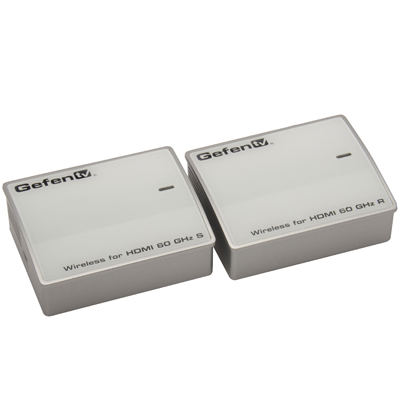
    MUMBAI:  Gefen’s new Wireless for HDMI 60 GHz is designed for any in-room transmission of high quality, 1080p full HD video up to 33 feet (10m). It delivers 3DTV, is plug and play and supports all audio formats including the new lossless High Bit Rate (HBR) 7.1 channel Dolby True-HD and DTS-HD Master Audio. The ability to pass through uncompressed video, lossless audio and 3DTV is ideal for cutting-edge, high performance commercial or residential installations.


    This extender uses the best technology currently available for an impeccable method of wireless extension that takes full advantage of the WirelessHD specification, which is based on the 60 GHz EHF (Extremely High Frequency) radio band. This high quality method of extension eliminates the need to run cables, making it a great solution for retrofits or any environment that wants to streamline cabling.


    The editors of Electronic House magazine gave a formal nod to this new extender from Gefen by awarding it a Product of the Year award for 2014. Endowed by a panel of distinguished industry leaders and the editors of Electronic House and CE Pro, Gefen joins an exclusive group of products deemed the most noteworthy. Announced on January 7, 2014 at the International CES in Las Vegas, Nevada, the GefenTV Wireless for HDMI 60 GHz was selected as best in the A/V cables and interconnects category. 


    Due to its in-room transmission and use of the uncluttered 60 GHz frequency band, this extender can perform seamlessly alongside other wireless devices in adjacent rooms with zero interference. It is very easy to install, requiring a connection of the video source to the sender and of the display or projector to the receiver.  Content is transported wirelessly at 4Gbps from source to display. This extender also features a small footprint and a compelling MSRP. Included is a risk-free warranty backed by Gefen’s reputation and well-regarded customer support team.

  • Avid unveils upgraded digital audio and video technology at NAB

    Avid unveils upgraded digital audio and video technology at NAB

    MUMBAI: Avid, the creator of digital audio and video technology, has introduced a new and upgraded solution for audio production, professional editing, multi-platform content distribution, on-air graphics production, and asset management at the Nab television technology trade convention in Las Vegas.

    The company also shared its strategic vision, termed “Avid Everywhere,” which expresses the company‘s commitment to create the most fluid end-to-end, distributed media production environment in the industry.

    ‘Avid Everywhere‘ recognises that flexible deployment options, including remote and cloud-based collaboration technology, have become critical to content creators and distributors as they face relentless pressure for operational excellence.

    Intense cost pressures and content creation complexity are key challenges for media and content professionals in this ever more mobile and social world. ‘Avid Everywhere‘ helps our customers meet these challenges by empowering distributed work teams, multi-platform delivery, and the ability to work in any production environment.

    Avid president, CEO Louis Hernandez Jr said, “Over the past 25 years, Avid has built a strong heritage of industry leadership; we‘re proud of the role we play in empowering our customer community to create the most compelling media in the industry. As a critical element of Avid‘s growth strategy, Avid Everywhere inspires our next phase of innovation around our entire product suite. We look forward to sharing more announcements over the next year.”

    Specific new and upgraded products announced at Nab include:

    Creative Tools-Avid‘s professional creative tools set the industry standard for the highest quality content creation and production solutions to power the complete professional content creation environment.

    • Avid Media Composer 7 – The nonlinear editing solution is now available and the aim is to bring value to post production editors. The new version features accelerated and simplified file-based workflows including optimised HD delivery from high-res source material and automated media operations. The new release also offers Interplay Sphere for Mac support, extending real-time production everywhere.
    • Avid Pro Tools 11 – Avid‘s digital audio workstation features audio and video engines, 64-bit architecture, expanded metering, and direct HD video workflows.
    • Avid Motion Graphics 2.5 – Avid‘s next-generation platform of on-air graphics production includes a new dual-channel configuration option and stand-alone playout engine to increase deployment flexibility and speed graphic workflows, to create stunning imagery and get work quicker to air.
    • Avid Fast Track Solo and Duo – Avid‘s two new portable audio interfaces for composing and recording high-quality audio come equipped with Pro Tools Express software for Mac and PC, and connect directly to the iPad, providing high-quality I/O for any iOS app.Media Management Solutions-From the largest media enterprises to independent professionals, Avid provides the most open, flexible, and scalable solutions in the industry.
    • Avid Interplay Production 3.0 – Avid‘s latest version of the production asset management solution simplifies and speeds file-based workflows for post production and broadcast customers, and offers Interplay Sphere with full Mac support.
    • Avid Interplay Pulse – Avid‘s enhanced multi-platform content distribution solution delivers content to online, mobile, and social platforms everywhere, in the right form and format for each, while featuring integration with Avid‘s connected newsroom solution set and unified web client.
    • Avid AirSpeed 5000 2.5 – Avid‘s latest-version video server delivers slow motion playback for SD and HD, fast media replay, and continuous record.
  • Cameron to use performance capture in water for Avatar sequel

    Cameron to use performance capture in water for Avatar sequel

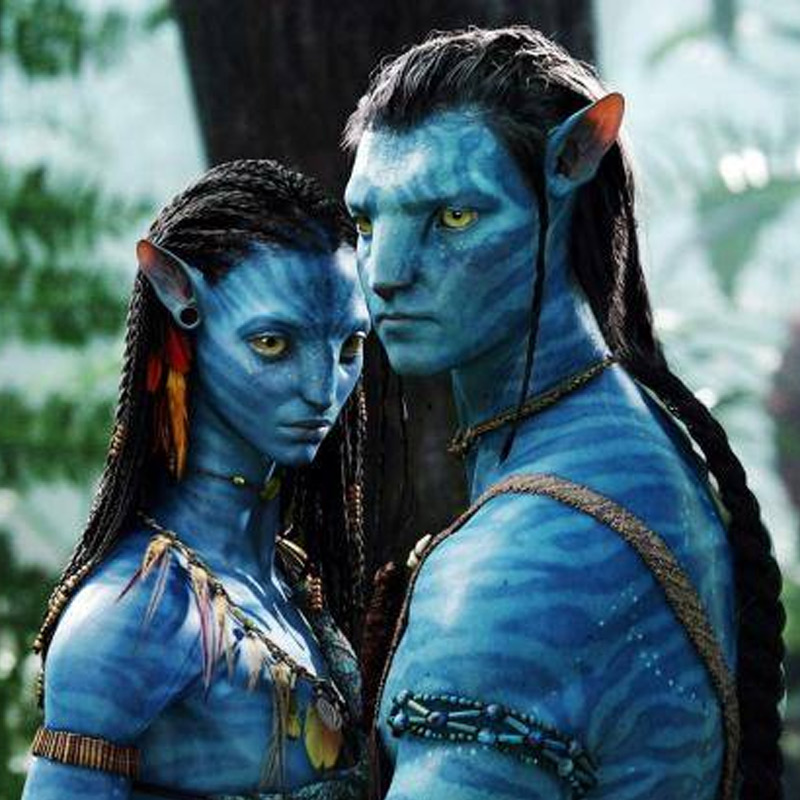
    MUMBAI: The forthcoming sequel of James Cameron‘s Avatar will feature underwater motion capture, according to Jon Landau, co-producer of the record-breaking first film.
     
    Speaking at the Technology Summit on Cinema in Las Vegas, Landau said Cameron will take advantage of the technologies brilliant people are putting out in the next two films, it has been reported. "James has proposed to make use of the process because we can simulate it visually but can‘t simulate it experientially for them," Landau has reportedly said. He described the process as performance capture in water.
     
    Earlier, Cameron hinted at the possibility of exploring the oceans of Pandora, the forest moon setting for his 2009 3D box-office hit in the films to come in time to come. "We want to take advantage of the technologies brilliant people are putting out to make the next two movies even more emotionally engaging and visually tantalising, and to really wrap up the story arc of our two main characters," Landau added.
     
    Cameron had also said that he would shoot part two and three back-to-back and release them in December 2014 and 2015 respectively. There is also talk of a fourth film that may manifest as a prequel.

  • Boxee co-founder Avner Ronen to keynote Nab

    Boxee co-founder Avner Ronen to keynote Nab

    MUMBAI: Boxee CEO, co-founder Avner Ronen, will speak at the upcoming 2013 National Association of Broadcasters (Nab) Show, the annual conference and expo for professionals who create, manage and distribute entertainment across all platforms.

    Ronen will deliver the keynote address to the Disruptive Media Conference on 10 April in Las Vegas.

    The idea for Boxee was born in 2004 when Ronen and four friends began using Xbox Media Center, open source software for the original Xbox that allowed people to play digital media on their TVs. They became members of XBMC‘s open source community and in 2007 imagined a way to take the platform even further, founding Boxee.

    Ronen and a team of 11 others worked to extend the base code for XBMC with online sources like Netflix and YouTube as well as incorporate social networking into Boxee, which became available as a free software for users to download and run on a home theater PC. Since then, Boxee has released two branded consumer electronic devices dedicated to running the Boxee software. Currently, with Boxee‘s newest device, Boxee TV, the company has introduced the world‘s first unlimited cloud DVR, blending live TV integration with over-the-top streaming services.

    Named one of Rolling Stone‘s Top Agents of Change, Ronen is “the Internet generation‘s everyman”, striving to make personalised, Internet-delivered TV a reality and bringing video from everywhere, to any device, at any time.

    Prior to co-founding Boxee, Ronen was the head of Corporate Development and M&A for Comverse, a provider of software and service to telecom service providers. Ronen was responsible for acquisitions valued at $450 million, which were key to the company‘s evolution from a voicemail company to a billing and VAS provider.

    The Disruptive Media Conference, produced in partnership with Digital Media Wire, gathers professionals who oversee the digital and interactive divisions within their companies to explore developments in online video, mobile and branded entertainment. The two half-day programs, April 10-11, cover disruptive media as well as more traditional OTT technologies and how these are impacting business models for distribution and consumer engagement. The conference is sponsored by Adobe Primetime, Cypress and Telx.