Tag: languages

  • Anupam Sengupta jumps aboard AI dub firm  Camb.ai

    Anupam Sengupta jumps aboard AI dub firm Camb.ai

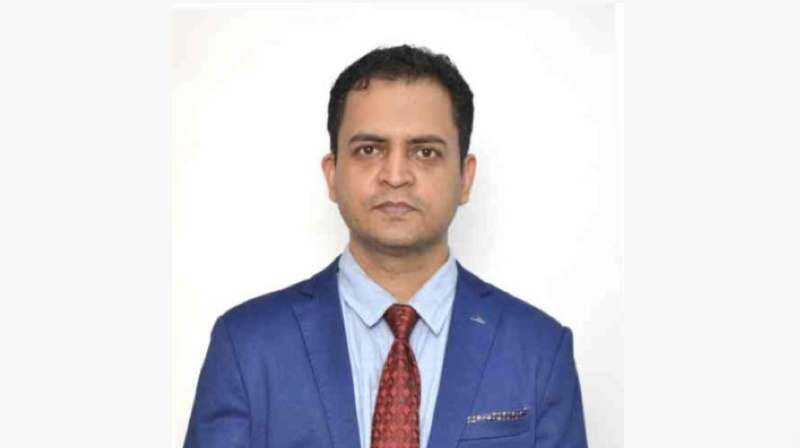
    MUMBAI: Anupam Sengupta, a seasoned tech heavyweight with a CV that reads like a who’s who of global giants, has taken the helm as business head for the Indian subcontinent and southeast Asia at Camb.ai. This AI media tech company, fresh from a $11m funding round and eyeing a cool $75m+ by FY26, is betting big on Sengupta’s knack for driving high-impact deals and digital transformations.

    Sengupta, whose past conquests include stints at Sony Group, WPP, Zee, and Standard Chartered, isn’t just bringing his Rolodex; he’s bringing a vision. Camb.ai, based in west Asia, aims to bridge linguistic divides with AI that’s more than just a translator – it’s a cultural chameleon. It has positioned itself as the world’s most capable speech and translation AI, offering the capability for humankind to dub content into over 140 languages using proprietary AI models.

    Camb.ai  founder & CEO Avneesh Prakash articulated the company’s mission with a touch of the poetic: “As founders with deep Indian roots, we’ve seen how language can both empower and exclude. At Camb.ai, our mission is to bridge India’s linguistic diversity through advanced AI, ensuring equal access across entertainment, sports, education, and healthcare. With India and SEA emerging markets central to our strategy, we’re excited to build long-term, transformative impact.”

    Sengupta himself is equally bullish, stating, “At Camb.ai, we are pushing the frontiers of AI voice and language research—not merely translating words, but carrying emotion, intent, contextuality, and cultural nuance across languages. It’s a deeply challenging science, but one with immense potential across sectors. In these transformative times, I’m excited to build this deep tech business grounds up in Asia. Together the team is deeply committed to building long-term, sustainable value in this region where language inclusion can further unlock true cultural and economic potential.”

    In essence, Sengupta’s appointment isn’t just a career move; it’s a strategic play in Asia’s burgeoning AI landscape. Camb.ai is betting that his expertise will translate into more than just revenue; it’ll translate into a cultural revolution, one perfectly nuanced AI voice at a time.

  • AIR doubles transmission time for programmes in six languages

    AIR doubles transmission time for programmes in six languages

    Mumbai: Stepping up its outreach to neighbours through airwaves, All India Radio (AIR) has decided to double its transmission time in six languages, starting 3 January.

    Making the announcement, the External Services Division of AIR said, the broadcast time has been doubled from the existing 1- 1.5 hours to three hours. The six languages include Dari, Pashto, Tibetan, Nepali, Baluchi, and Mandarin Chinese. The transmission would now be available daily for 1.5 hours every morning as well as evening.

    While Balochi is spoken in the Baluchistan province of Pakistan, Dari and Pashto are spoken in Afghanistan which is currently under Taliban rule.

    Keeping its mandate of reaching out to regions across the globe the External Affairs Division of AIR currently broadcasts in French, Sindhi, Indonesian, Tibetan, Mandarin Chinese, Baluchi, Urdu, Pashto, Arabic, Swahili, Punjabi, Saraiki, Bengali, Persian, Nepali, and Dari.
     

  • Snapdeal targets low-end value shoppers in strategic shift

    Snapdeal targets low-end value shoppers in strategic shift

    KOLKATA: It has been more than six months since the onset of the pandemic. While most businesses have taken a major hit, e-commerce has been have a rollicking time with a further boost projected during this festive season.

    A recent report from ReedSeer Consulting said that goods with a gross merchandise value of  $3.1 billion were sold by e-commerce companies  like Flipkart, Amazon, Myntra, and Snapdeal  in less 4.5  days of starting their festive sales. Snapdeal’s Kum Mein Dum sale, which concluded on 20 October, saw a massive adoption in smaller cities. Eager to hold on to this fresh inflow of shoppers, the platform is widening the depth of the value segment, said Snapdeal communications & corporate affairs SVP Rajnish Wahi.

    He explained that a large part of the audience the company targets is in tier-2, tier-3 and beyond. Moreover, many of them have high aspirations but limited disposable incomes. After fulfilling basic expenditures, they may not have Rs 10,000 to buy a pair of shoes at the end of a month. But they shop often, mostly in local outlets. “Our target is to bring the same collection online which they would possibly go to local markets for,” he said, adding that most products on the platform are priced between Rs. 250-2,000.

    The e-tailer has added 10,000 small and local sellers  and manufacturers in the last couple of months.

    Along with creating the value shopping segment, Snapdeal is also trying to make the service easier and more accessible for buyers of all shades and income levels. As a number of them are not comfortable with English, it has also added eight Indian local languages to its user interface. 30 per cent of the overall users opt for the UI in vernacular languages. Not only can they shop in their mother tongue, but also get promotional messages in that language as well.

    “India is a very heterogeneous market. At first, the 80-100 million who came online were largely urban, English-speaking with high disposable incomes. In the second phase, up to 300-400 million are going digital, and these people have different tech-awareness, different language preferences, and lower disposable income. Those who seek to discover, who want to explore further are our target segment. What differentiates us is the depth of merchandise in  our "value" segment,” said Wahi.

    He emphasised that owing to its good brand awareness and high recall value, Snapdeal is among the top three e-commerce players in India.

    With the change in its business strategy, Snapdeal has also started going hell for leather by investing increasingly in digital marketing, especially on social  media. Wahi explained that the platform has moved beyond the brand-building phase and is now looking at a more targeted, result oriented marketing strategy.  While social media can also help to explain a product, it’s word of mouth that greatly helps a discovery-led platform like Snapdeal, he added.

    Will visitors make a great deal out of Snapdeal's  broadbasing strategy?-

  • ABP’s Punjabi foray on hold, for now

    ABP’s Punjabi foray on hold, for now

    MUMBAI: Everyone is feeling the pinch of the bad economic conditions in the country and news channels seem to be hit hard by it.

    According to sources, the Punjabi news channel that MCCS was planning to launch has been postponed to sometime in end-2013, due to the difficult phase that the industry is going through Although no date was fixed, sources had told indiantelevision.com, that it would be sometime in September or October.

    “News media is going through difficult and painful times and we are waiting for things to settle down,” says a source from the organisation. ABP already has a foothold in Hindi (ABP News), Marathi (ABP Majha) and Bengali (ABP Ananda).

    The news network had decided to expand into regional languages or Tier II cities as it felt it had saturated the potential in the metros. It had identified Punjabi as the first of the languages that it would launch. Sources in MCCS say that the company is reaping good profits and the delay is due to the overall financial conditions of the genre and the fact that it was still waiting to be granted an uplink license from the ministry of information and broadcasting.

    Recently, Network 18 laid off more than 350 employees and Bloomberg slashed its rolls by 30 as well. Tough times are peeling off the skin from the news sector.