Tag: Lachlan Murdoch

  • Lachlan Murdoch crowned as siblings take billion-dollar bow

    Lachlan Murdoch crowned as siblings take billion-dollar bow

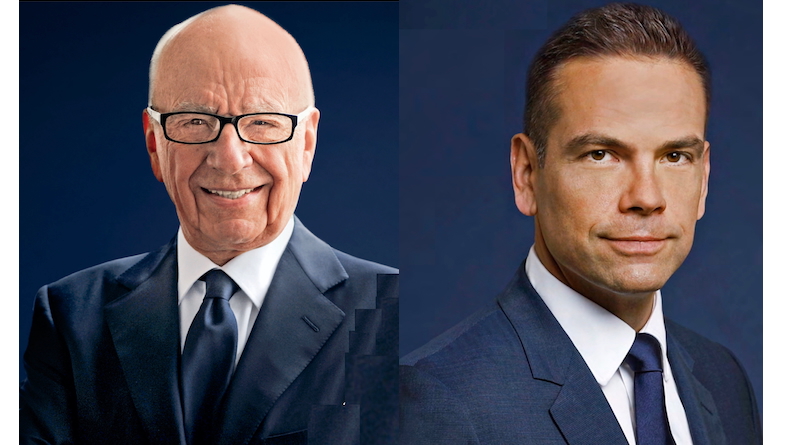
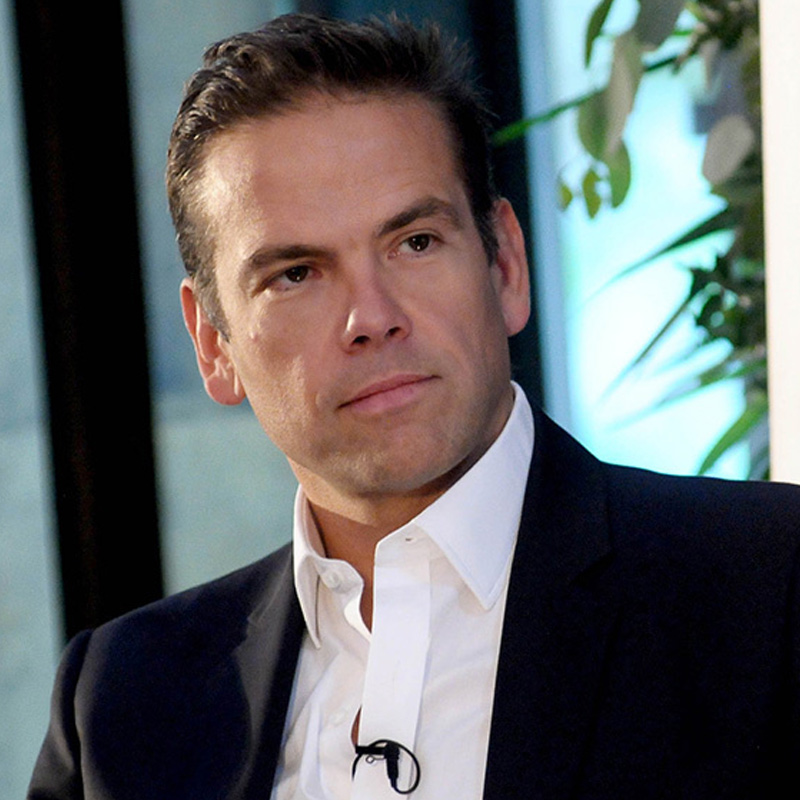
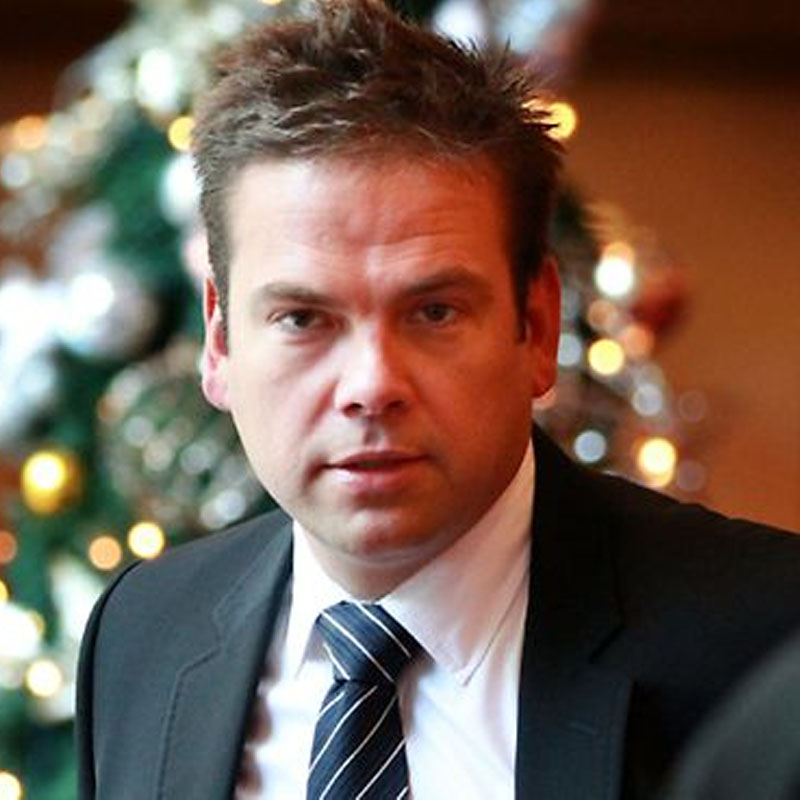
    MUMBAI: The Murdoch family succession drama has finally reached its climax. Lachlan Murdoch, Rupert’s favoured son and ideological ally, has emerged with undisputed control of Fox Corp and News Corp after a protracted courtroom battle in Nevada. The denouement sees three siblings—Prudence MacLeod, Elisabeth Murdoch and James Murdoch—cut out of the empire altogether, each walking away with a billion-dollar payday.

    The companies announced on Monday that all litigation over the Murdoch Family Trust had been terminated. New trusts will be created for Lachlan and his half-sisters Grace and Chloe, with their combined holdings pooled into a new vehicle, LGC Holdco. That entity will command about 36.2 per cent of Fox’s Class B voting shares and 33.1 per cent of News Corp’s Class B stock. Crucially, sole voting power sits with Lachlan as managing director. The arrangement runs until 2050, effectively locking in his control for a generation. Rupert, 94, retains the honorary role of chairman emeritus.

    The three departing heirs are not just sidelined—they are barred from returning. Their buyouts, partly funded by the sale of 16.9 million Fox and 14.2 million News Corp shares previously held by the trust, will be followed by the disposal of their remaining token stakes. A long-term standstill agreement ensures they, or their affiliates, cannot repurchase stock or interfere with the companies. Within six months, they will be gone in every sense: no shares, no votes, no say.

    The outcome caps years of intrigue. James Murdoch, increasingly estranged from the empire, has openly backed Democrats and liberal causes. Elisabeth, once seen as a rival for the top job, nurtured her own ambitions in television. Prudence, though less visible, was part of the bloc resisting Rupert’s 2023 bid to rewrite the trust in Lachlan’s favour. That manoeuvre was struck down by a Nevada court last winter, which found Rupert, Lachlan and their advisers had acted in “bad faith.” The ruling forced negotiations that culminated in this week’s truce.

    For Rupert, the settlement is as much about politics as power. By engineering billion-dollar exits for his dissenting heirs, he has secured not only Lachlan’s throne but also the conservative orientation of his media empire, anchored by Fox News. The prospect of a posthumous coup—James and Elisabeth uniting to steer the company leftward—has been neutralised.

    Fox’s board endorsed the outcome, calling Lachlan’s leadership “important to guiding the company’s strategy and success.” Investors may also breathe easier: the messy trust fight, which threatened to destabilise one of the world’s most influential media conglomerates, has been neatly resolved.

    It is an ending with all the hallmarks of the Murdoch mythos: courtroom secrecy in Reno, billion-dollar pay-offs, siblings sidelined, and one heir enthroned. Rupert, the ultimate showman, has once again scripted the finale to his family saga—leaving Lachlan in command until mid-century.

  • Murdoch loses family trust case in Nevada

    Murdoch loses family trust case in Nevada

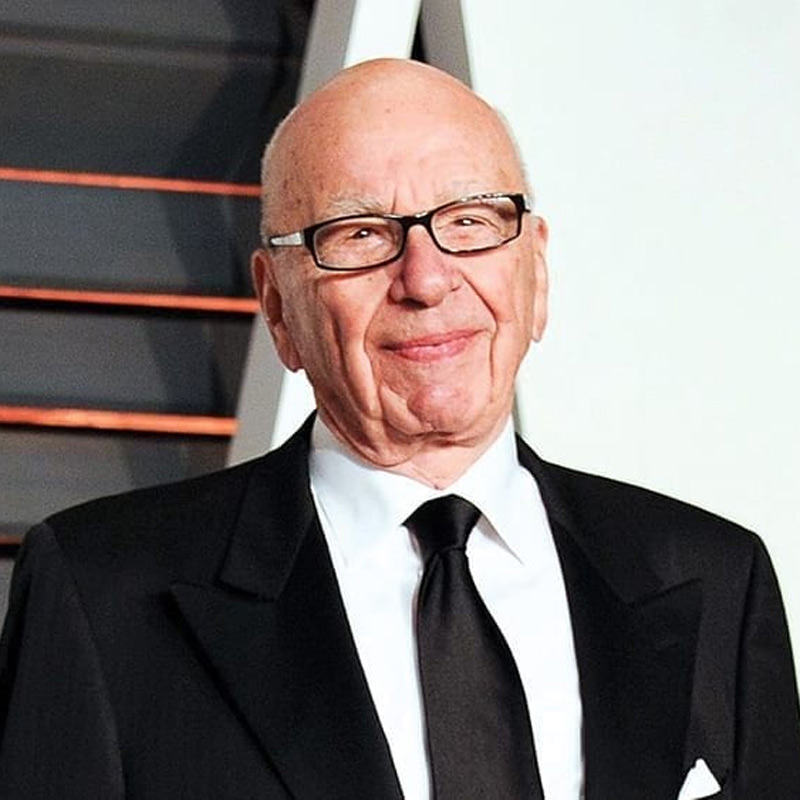
    MUMBAI: This is one battle he lost but he says he intends to fight it. 93 year old media baron Rupert Murdoch is one tough guy. Even at his age.

    He wanted to change the family trust, which gave his  four children equal voting rights to his empire, so that control would vest in his eldest son Lachlan’s hands who shared his right wing political beliefs. But he lost the case over the weekend when a Reno-Nevada probate commissioner  ruled against him and said he was acting in bad faith, when he tried to change the terms of the irrevocable trust and leave Lachlan in charge. 

    Murdoch owns 40 per cent of the voting stock in both Fox Corp and News Corp through the trust.  Upon his death James, Elisabeth , Lachlan and Prudence were to share control  of the trust equally. But the old man  wanted to change the terms of the trust  and put Lachlan, the CEO of Fox and chairman of News Corp  fully in charge upon his death. This was something his other children were not inclined to.

    Hence, they took their father to court in Nevada which was a probate court and was not open to the public. Earlier, a probate commissioner had told Murdoch senior that he could change the terms if what he was attempting to do was in good faith and in the best interests of his heirs. Murdoch senior had argued that were his other three children – Prudence, James and Elisabeth – to have voting power, they  would lean towards making his news outlets moderate which would harm their prospects as it would alienate the hard right wingers who supported it. 

    But the trio did not buy into this as they felt they would be left out and took their father and brother to court in Nevada. A case they won, following which they are now saying they would like mend and heal family relationships. 

    However, the family feud does not seem to have ended as the elder Murdoch said he was going to appeal against the probate commissioner’s decision.

  • Uday Shankar & what’s driving the Star-Disney-Viacom18 merger

    Uday Shankar & what’s driving the Star-Disney-Viacom18 merger

    MUMBAI: Uday Shankar has been lying low for quite a while, avoiding mixing and sharing his wisdom with journalists – a breed from which he emerged  – as he goes about reshaping a new media and entertainment powerhouse coming out of the merger of Disney Star with Reliance Industries’ Viacom18. 

    But the incoming vice-chair took some time out to speak to McKinsey.com. Speaking to the consulting firm’s insights section online, Uday, highlighted what drove the merger.

    “..India is one of the few markets where television still has reasonably good health, within that, a lot of it is changing. Connected TVs and handheld devices have become very substantial and mainstream,” he said. “You’re competing with global players: Google and Meta. Most of digital-advertising revenue goes to these two companies. So you need to pivot; you need to create a business. We saw an opportunity to leverage our inherent strengths and make that strategic pivot. That’s the primary rationale for the merger.”

    He added that the streaming business also requires innovation and disruption with AVoD and SVoD models having limited revenue potential in India. 

    “While there are a lot of people today who are willing to pay for content and who are interesting or important to advertisers, there are also a lot of people who are not relevant for either of these models,” explained Uday. “You need to create unique or native monetisation models to create value from that base. Whoever manages to create new revenue streams definitely has an advantage. So I think all these opportunities exist.”

    Uday then went on to say he’s learnt from every leader he has worked with, from Rupert, James, Lachlan and Mukesh Ambani who he currently continues to work closely with. 

    “The first thing is they’re all very clear about why they’re doing what they’re doing—and that clarity is very helpful,” he elucidated “They all play to win. And they all have a high threshold for failure. They’re patient, and they’re not willing to give up. And then, they all work on trust. They all take their bets on people. And once they trust people, they’re willing to back them up. And I learned that myself. I take my bets on people; I trust them once they earn my trust. And I back them up.”

    To read the full interview logon to 
    https://www.mckinsey.com/industries/technology-media-and-telecommunications/our-insights/uday-shankar-on-indias-media-and-entertainment-evolution#/

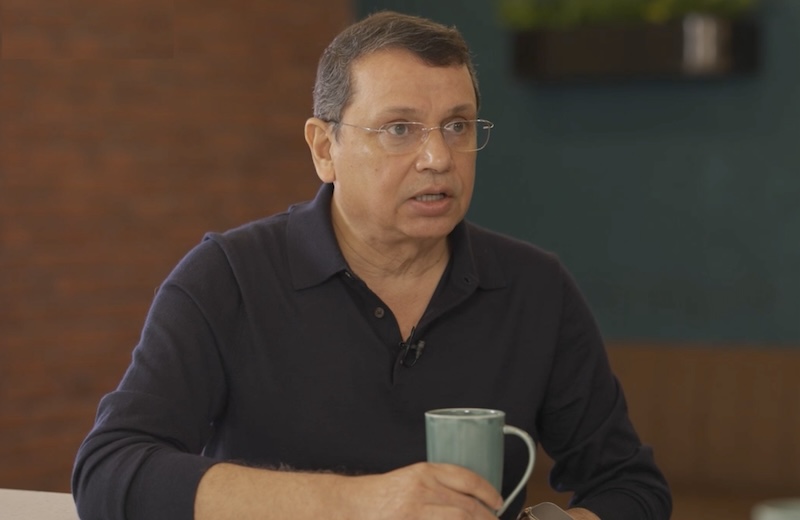
    Picture courtesy: McKinsey.com’s video interview with Uday Shankar
     

  • Scale is important; has to be focused right: Fox executive chair & CEO Lachlan Murdoch

    Scale is important; has to be focused right: Fox executive chair & CEO Lachlan Murdoch

    Mumbai: Addressing analysts during a conference call to announce the company’s Q1’23 results, Fox executive chair & CEO Lachlan Murdoch spoke about the importance of scale. Fox’s assets include the juggernaut Fox News. Fox posted revenue of $3.19 billion, up 5 per cent a year ago.

    “Look, I think you know the scale; it has to be focused right. Scale is important, and what we’ve seen amongst our media peers over the last few years is that our peers are getting bigger through mergers and acquisitions (M&A), and so I think scale lends flexibility in many ways. So, we continue to grow our business, we continue to look at M&A and be very disciplined in how we look at it, but we also do look at the importance of scale, particularly over the next couple of years when, I think, opportunities in the marketplace will emerge. They have the scale to be flexible, and how we deal with them will be important,” he said.

    In terms of a potential reunion of Fox and News Corporation, Murdoch declined to take questions. “As has been made public, both Fox and News Corporation have formed separate special committees to explore a potential combination following letters received from my father, Rupert Murdoch, and the Murdoch Family Trust. For a combination transaction to proceed, it will need the approval of both special committees and a supportive vote by the majority of the minority non-affiliated shareholders of each company.”

    He added, “The special committee has not made any determination at this time, and there can be no certainty that the company will engage in such a transaction. Given the importance of the work of the special committees, I’m not in a position to take any questions on the proposed transaction at this time.” 

    Murdoch pointed out that the company’s fiscal year is off to a good start. “The September quarter results once again highlight the strength of our leadership brands, and we are just getting started on what promises to be a banner year for Fox. We are encouraged by the operating trends across the portfolio and the early returns on our digital investments. When paired with our strong balance sheet and low leverage, the Fox story remains a differentiated one amongst its media peers. And while we continue to be mindful of how the macroeconomic environment evolves during the months ahead, Fox remains well positioned to navigate and outperform through any potential uncertainty.”

    Talking about the ad scene, he said that the ad growth in the quarter was driven by strong pricing at Fox News and Fox Sports. “Record first quarter political revenues at the local stations, and in a quarter where industry-wide digital advertising revenues appear to have been under pressure, to post standout revenue growth of almost 30 per cent.”

    He added, however, that the company recognises that there is a lot of commentary around advertising headwinds as the macro environment evolves. “Yes, the broader national advertising market is looking more fluid compared to the time of our last earnings call. However, the macro impact is not uniform across our verticals.”

    “We have observed some softness in the linear entertainment scatter marketplace. Remember that Fox does not over-index to network entertainment. So, any impact there is, is nominal to us and has been more than offset by the digital entertainment strength delivered by Tubi,” he went on.

    Murdoch said, “Additionally, despite the economic headwinds, we are seeing continued strength across our linear news and sports portfolios, led by the pharmaceutical, restaurant, and streaming categories. These dynamics underscore a flight to quality, and the importance of our focus on live content, with over two-thirds of our advertising revenue generated by live sports and news.”

    Fox News, he noted, turned in another stellar performance, finishing the fiscal first quarter as the number one channel on cable and the third most viewed network in Weekday Prime in all of television, behind only NBC and CBS.

  • Rupert Murdoch to merge Fox Corp and News Corp?

    Rupert Murdoch to merge Fox Corp and News Corp?

    Mumbai : Media baron, Rupert Murdoch has begun the process of reuniting his media empire, according to News Corp and Fox Corp, which announced on Friday that they would consider combining at his request, nearly a decade after the companies split.

    Both have formed special committees to review potential merger proposals, they said.

    If the merger goes through, Murdoch will have more control over his media assets and the companies will be able to cut costs. Media companies are competing with deep-pocketed social media and content websites for users’ attention while experiencing decades-low growth in advertising sales.

    After years of global expansion, Murdoch split his empire in 2013, putting the print business under the newly formed public entity News Corp and the TV and entertainment business under 21st Century Fox.

    Murdoch stated at the time that his vast media holdings had become “increasingly complex,” and that a new structure would make operations easier. The separation also protected Fox’s entertainment assets from any potential financial consequences of a phone hacking scandal involving the media conglomerate’s now-defunct News of the World publication in the United Kingdom.

    According to a person familiar with the decision-making process at the time, the thinking was that separating the companies would ultimately generate value for shareholders. In 2019, Fox sold the majority of its film and television assets to Walt Disney Co for $71 billion.

    According to Wall Street analysts, the sale focused Fox on live events such as news and sports rather than “disruptive” scripted entertainment content on streaming platforms. The major streaming services, on the other hand, have begun to breach the protective moat. Apple Inc. and Amazon.com Inc, two tech behemoths with deep pockets, have begun bidding for sports rights, securing the rights to stream major league baseball, soccer, and football games.

    Fox recently renewed a long-term contract with the NFL to continue broadcasting Sunday afternoon games, but gave up Thursday Night Football to Amazon. According to a person familiar with the proposal, reuniting Fox and News Corp would give the combined companies greater scale to compete and complement their assets. The combined companies would generate approximately $24 billion in revenue.

    Murdoch, currently owns nearly all of the stock in both companies. Lachlan Murdoch is the chairman and CEO of Fox Corporation. Companies that use such arrangements typically require subsequent mergers to be approved by a majority of shareholders who are not related to the controlling shareholder, though it is unclear whether this will be the case in this case.

    According to Refinitiv, as of Friday’s market close, News Corp. had a market cap of $9.31 billion and Fox Corp. had a market cap of $16.84 billion. In after-hours trading, News Corp shares rose 5 per cent , while Fox rose about 1 per cent.

  • Fox’s fiscal revenue up by 8% to $13.97 bn

    Fox’s fiscal revenue up by 8% to $13.97 bn

    Mumbai: Fox reported total full-year revenues of $13.97 billion, an increase of eight per cent from the previous year’s $12.91 billion. Affiliate fee revenues increased by seven per cent, with a 10 per cent increase in the television segment and a five per cent increase in the cable network programming segment. Ad revenues increased nine per cent, primarily due to higher pricing at Fox Sports and Fox News Media, continued growth at Tubi and the return of a full schedule of live events at Fox Sports. These ad gains were partially offset by lower political ad revenues. Other revenues increased by 15 per cent, owing primarily to higher sports sub licensing revenues and Fox Nation subscription revenues in the cable network programming segment, as well as the impact of entertainment production company consolidation in the television segment.

    The company reported a full-year net income of $1.23 billion as compared to the $2.20 billion reported in the prior year. Full-year adjusted Ebitda was $2.96 billion, down from $3.09 billion the previous year, as revenue increases were offset by higher expenses. The increase in expenses primarily reflects increased digital investment at Tubi and Fox News Media, costs associated with the launch of the USFL, and higher programming rights amortisation associated with normalised sports and entertainment schedules that were impacted by Covid-19 in the prior year.

    Fox executive chair and CEO Lachlan Murdoch said, “We completed another successful year at Fox, with fiscal 2022 results demonstrating the strength and durability of our core brands and their ability to deliver consistent audiences across the entirety of Fox. These results validate the strategy we embarked on three years ago – to focus on live news and sports while investing in high-growth digital initiatives to create a platform for ongoing growth. We begin fiscal 2023 with strong momentum, supported by an enviable schedule of live sporting events and the midterm election cycle, and bolstered by a best-in-class balance sheet. These attributes will serve us well in navigating any macroeconomic uncertainty while continuing to create value for our shareholders.”

    The company reported total quarterly revenues of $3.03 billion, a five per cent increase over the $2.89 billion reported in the prior-year quarter. Affiliate fee revenues increased by four per cent, with seven per cent in the television segment and two per cent growth in the cable network programming segment. Ad revenues increased by seven per cent, primarily due to higher pricing and ratings at Fox News Media, higher political advertising revenues at the Fox Television Stations, and continued growth at Tubi. Other revenues increased by four per cent, primarily due to the impact of the consolidation of entertainment production companies and higher Fox Nation subscription revenues, partially offset by the timing of sports sublicensing revenues.

    The company reported a quarterly net income of $308 million as compared to the $272 million reported in the prior year’s quarter. Quarterly adjusted Ebitda increased by seven per cent to $770 million from $717 million in the previous fiscal year, owing primarily to increased contributions from the television segment.

  • Fox Corp profits shoot up in Q3, despite ad revenue dip

    Fox Corp profits shoot up in Q3, despite ad revenue dip

    New Delhi: Fox Corporation on Thursday reported increase in quarterly net income which rose to $582 million as compared to the $90 million reported in the prior year quarter.

    A change in how the TV broadcasting company valued some of its assets is being considered a key reason for the increase in net income.

    However, the total quarterly revenues dropped to $3.22 billion as compared to the $3.44 billion reported in the year ago quarter. According to the New York-based company, this was primarily due to the absence of the ad revenue from the broadcast of Super Bowl LIV. Advertising revenues fell 24 per cent to $1.20 billion as compared to the $1.57 billion reported in the prior year quarter. Fox News, too recorded a seven per cent drop in ad revenue.

    Though, it was partially offset by the consolidation of it’s free streaming platform Tubi and the impact of additional NFL regular season and playoff broadcasts in the current year quarter, said the company.

    The affiliate revenues increased 10 per cent with 18 per cent growth at the television segment and six per cent growth at the Cable Network Programming segment.

    Overall, the cable news giant Fox News continued to make vast majority of the Fox Corporation’s profits, said the company.

    Executive chairman and chief executive officer Lachlan Murdoch said the company has delivered operationally and financially with the year-to-date revenues, despite the impact of Covid and the comparison against a Super Bowl year. 

    “Consistent with our expectations, Fox News reclaimed its leadership position as America’s number one cable news network and the most watched cable network in primetime, while Fox Sports reached a landmark agreement with the NFL to extend our Sunday NFC rights package with expanded digital rights. These strategic milestones, coupled with a slate of complementary, high-growth, digital-focused assets, led by continued record growth at Tubi, provide a powerful platform to grow our business for the long-term,” he detailed.

    Murdoch went on to add that the company would lay emphasis on digital media and the new business was likely to be found in podcasting, digital venues, and a new weather-news unit Fox had been building in its Fox News Media unit.

    The net Income attributable to Fox Corporation stockholders was $567 million ($0.96 per share) as compared to the $78 million ($0.13 per share) reported in the prior year quarter. 

    The company also used the occasion to announce the acquisition of OutKick Media, the news outlet founded by Clay Travis.

  • James Murdoch resigns from News Corp board

    James Murdoch resigns from News Corp board

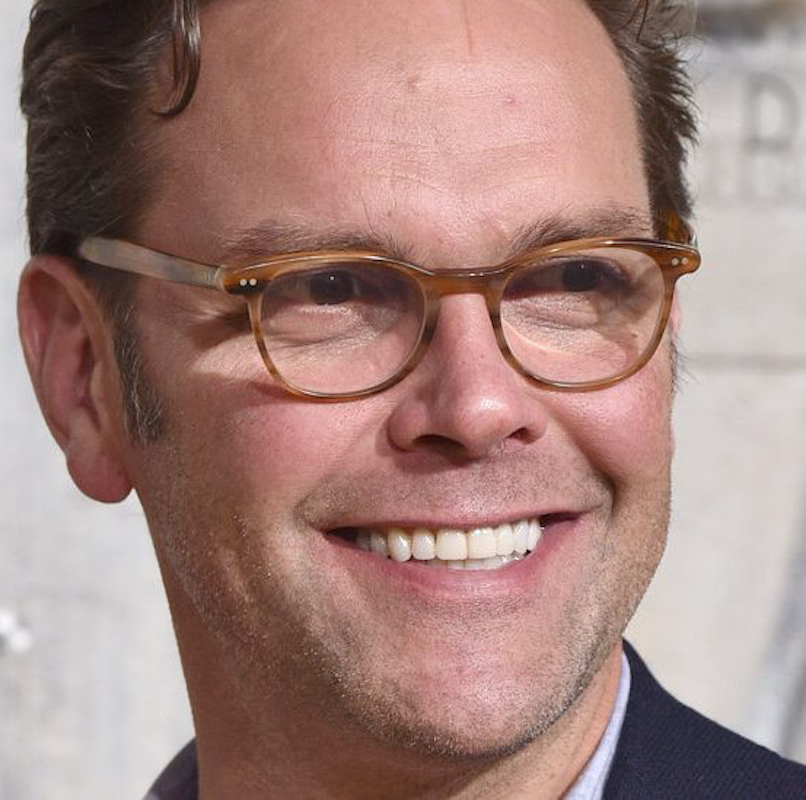
    MUMBAI: Truly, a saga has come to an end. James Murdoch once considered to be the successor to Rupert Murdoch has resigned from the News Corp board yesterday. James, who helped his father build his Asian empire under Star TV and later at 20th Century Fox and then Fox, was associated with his father’s businesses for more than 20 years.

    The reason for his resignation according to a filing by the company with the US regulators: “My resignation is due to disagreements over certain editorial content published by the Company’s news outlets and certain other strategic decisions.”

    Rupert and James’ elder brother Lachlan accepted his resignation saying: We’re grateful to James for his many years of service to the company. We wish him the very best in his future endeavours.”

    James’ departure brings to the forefront the differences that have arisen between him and Lachlan and Rupert. Rupert has been a pretty strong supporter of Donald Trump and has conservative views, while James has Democrat leanings and has been rooting for Joe Biden through donations.

    This apart, the newspapers under News Corp have been pretty blasé in their coverage of the Australian wildfires, something that has irked James and he and his wife Kathryn have protested against the media conglomerate’s stance on climate change.

    James was CEO Twenty First Century Fox before its entertainment assets were sold to Disney a couple of years ago.

    News Corp owns publications such as Wall Street Journal, The Times, The Sun and The Sunday Times in the UK, as well as a stable of Australian newspapers, including The Australian, The Daily Telegraph and The Herald Sun.

    Raj Nayak who worked with him at Star TV tweeted that he has fond memories of working with him during his tenure there. “A fabulous human being & a wonderful boss,” he added.

    Former Hathway Cable CEO K Jayaram said he had a tough time on the board with James during his tenure as he could not achieve his numbers. “But he was good at heart,” he concluded.

  • Fox executives take pay cuts; Murdochs forgo salaries

    Fox executives take pay cuts; Murdochs forgo salaries

    MUMBAI: There will be salary cuts at Fox Corp in view of the crisis caused by COVID-19 pandemic. While CEO Lachlan Murdoch will give up his salary, the company’s 700 employees will take a pay cut. There will also be a suspension of compensation increase across the company, including for the board of directors.  

    Top executive officers at Fox will go without pay until September 30 of 2020, according to an internal memo. Those who are foregoing salaries include Rupert Murdoch, chief financial officer Steve Tomsic, chief operating officer John Nallen, and chief legal officer Viet Dinh.  

    “We are able to protect our full-time colleagues with salary and benefit continuation during the period we are most affected by the crisis," said Fox Corp CEO Lachlan Murdoch.

    While Rupert Murdoch took home $42.1 million in fiscal 2019, Lachlan’s total compensation was $42.1 million, according to company filings with the Securities and Exchange Commission.

    Dwindling ad spends have hit the media empire which comprises Fox News, Fox Entertainment, and Fox Sports, in addition to local TV channels. While production of some entertainment programmes was cancelled, broadcast rights had to be postponed or cancelled.   

    The media company has extended the work-from-home system till May 15. According to the CEO, a return to “normal operations” will only become possible as per the recommendations from officials and health experts.

    Murdoch informed that salary cuts will affect the rest of the Fox executives in tiers. Those executives who directly report to him will take a 50 percent cut through the same period.

    The Fox employees have undertaken some COVID-19-related relief activities which Murdoch has highlighted in his staff memo: “We have retained and redeployed our Studio Lot food services staff, and these colleagues are now preparing 2,000 meals per day for those in need in the L.A. community. And some costume department staff have used their time and skills to make masks for fellow colleagues to help them work more safely," 

  • IPL & Rs 3,300 crore revenue: Thoughts to ponder

    IPL & Rs 3,300 crore revenue: Thoughts to ponder

    MUMBAI: Can an Indian broadcast TV network imagine that it could gross $600 million in revenue– that is about Rs 4,200 crore – in one day?

    That would indeed be the day.

    The fact is the Murdoch-owned and run Fox did earn that from 100 advertisers on Sunday 2 February 2020 when it aired the NFL’s SuperBowl match between the Kansas City Chiefs and San Francisco 49ers. It did attract an audience of 150 million, which watched the pre-game coverage, the game, the electrifying half time performances by Latino bombshells Shakira and Jennifer Lopez, the post game discussion in the studio, followed by the factual show The Masked Singer.

    Speaking at an investment analyst post earning conference call Fox executive chairman & CEO Lachlan Murdoch said: “We surrounded the Super Bowl with an immersive and innovative programming lineup from Miami across Fox Sports, Fox News, Fox Sports 1 and our local stations. And we use this enormous platform to launch Season 3 of the Masked Singer right after the game which became TV's highest rated reality telecast in eight years. We delivered extraordinary ratings for our advertising, distribution and NFL partners.”

    In India, the big events that aggregate audiences are the IPL and any cricket match that the Indian team is involved in. IPL 2019 delivered 462 million viewers on the Star network channels between 23 March and 12 May, according to BARC data.

    So, the NFL had a 150 million strong audience, generating $600 million in rvenue for Fox. That's a realisation of $4 or around Rs 300 –  per viewer. Ad spots on the NFL SuperBowl cost about $175,000 per second, with a 30-second spot costing as high as $5 million plus. According to measurement company SpotTV,  the cost per lead (CPL) for the NFL SuperBowl 2018 was between $27 and $100 on game day. Seems high, but advertisers obviously think its worth as this is the day America worships.

    The IPL, according to media reports, generated around Rs 2,200 crore for Star India in 2019, with a cumulative TV audience of 460 million. Now let’s apply the $4 average realisation in revenue per viewer that the NFL managed to get from advertisers and other partners to this audience. It works out to a whopping $1.8 billion or Rs 12,300 crore.

    But you might say we are being silly, that we are extrapolating a highly developed US ad and TV market to an emerging market like India. Right. Let’s shave that to a $1.50 per viewer, which is what we think it should be, it still works out to a jawdropping $690 million or Rs 4,918-odd crore. You might again say we are bonkers once again. Let’s bring it further down $1 per viewer – it tots up to $460 million or Rs 3,300-odd crore. Currently, the IPL is generating around 60 odd cents per viewer.

    Can that be pushed up to $1 per viewer? That's something Disney and Star India head honchos Uday Shankar and K Madhavan are betting on. So far, advertisers and agencies have not been valuing the IPL and its audiences enough. Remember, the IPL was valued at around $6.8 billion last year. Its valuation will go up undoubtedly this year. Currently, advertisers are paying between Rs 10-15 lakh per 10-second spot (barely $13,000 to $20,000 as compared to the $175,000 per second for the NFL SuperBowl) during the IPL.

    Star India paid $2.55 billion to acquire the rights to the IPL in 2017 for five years.  At that time, it spent around Rs 54.5 crore per match. Add production and promotional costs, it would have to recover anywhere between Rs 60-75 crore per match.

    Something has to change on ad spends in India. The thinking amongst brand and marketing managers, media buyers and planners needs to undergo a revision, a refresh. Going for the lowest price, slashing media rates, need not get you the best results. As the saying goes: you pay peanuts, you get monkeys. Some media planners and brand managers say they buy clever and they buy cheap and they get their return on investment.

    Sure. But premium content costs. The IPL set back Star India by some Rs 16,347 odd crore for five years. That means it has to recover around Rs 3,500 odd crore from advertising and subscription revenues each year. So far, it has had a gap in the first three years. But that has not deterred it from taking the television component of the IPL up a notch each year.

    Star India’s Uday Shankar is focusing on consumer experience and delight. The network has invested in raising the standard of the quality of production, providing more language feeds. Thankfully that has been accompanied by drastic improvements in the quality of play in the various matches, as well as the competition becoming interesting.

    But all this has to be monetised, right? The economic slowdown has led to cuts in ad spends. And when advertising is down, the visibiliy of those who dare to advertise goes up. And they end up capturing consumer mind space.

    This year, the IPL presents advertisers with a great opportunity. Indian cricket has been shining over the past few months, snatching impressive victories. And cricketers like Rohit Sharma, Virat Kohli, Shreyas Iyer, and KL, Rahul, Jaspreet Bumrah, Mohammed Shami, Ravinder Jadeja have been in top form. They will be playing for various teams in the IPL. They have taken the fight to the enemy camp and won handsomely in some matches. Expect them to continue in the same vein in the IPL as well.

    We keep talking about how India is set to emerge as one of the world’s leading economies. Yes, it has its own peculiar way of conducting business, which is so very Indian. But slashing costs, taking ARPUs down and playing the mass game is not the only mentality that should come in play. Opening one’s wallet and investing for the now and the future would definitely make sports TV broadcast rights more viable.