Tag: Kyoorius

  • Kyoorius announces In-Book Winners and Blue Elephant Nominees for the Kyoorius Creative Awards 2016

    Kyoorius announces In-Book Winners and Blue Elephant Nominees for the Kyoorius Creative Awards 2016

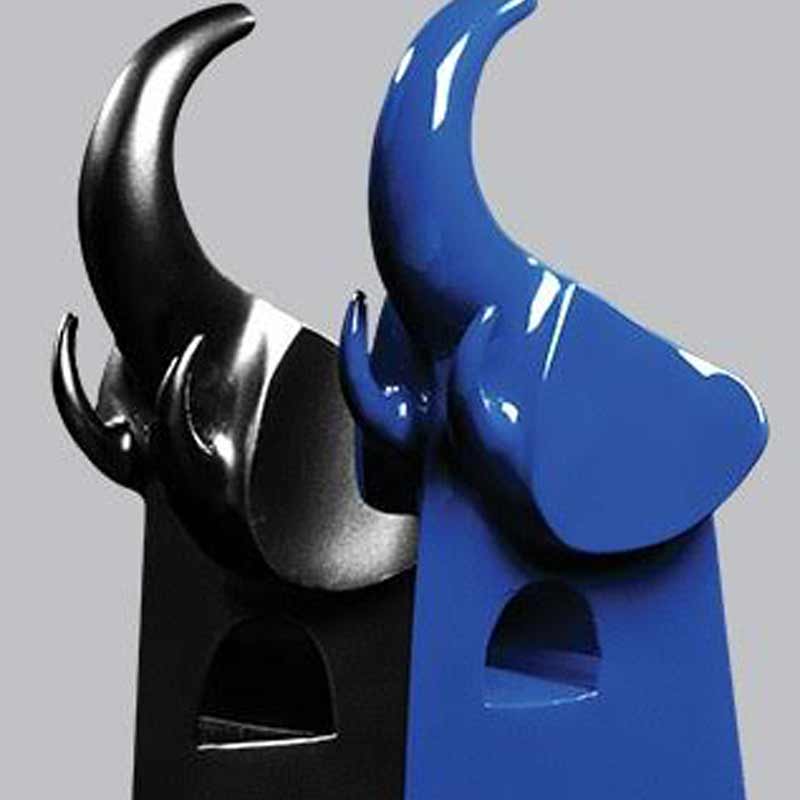
    MUMBAI:  Post the jury session from the 4th -7th May 2016, Kyoorius, in association with D&AD has announced the in-book winners for the Kyoorius Creative Awards 2016. Out of 1863 entries submitted, 164 entries have been announced as in-book nominations that qualify for the Baby Elephant and the Blue and Black Elephants are selected from these nominations. The winners of the Blue and Black Elephants will be announced on the Awards night – Friday 3rd June 2016.

    Kyoorius Awards is a Celebration of Creativity and winning a Kyoorius award is a highest creative achievement for the winner. Kyoorius rewards all great work in the Indian visual communications sphere and hence does not have a Gold, Silver & Bronze tier system – every great work will win a Blue Elephant and the Black Elephant goes to that outstanding work that has broken all grounds. The jury can decide to award multiple Blue Elephants in any category, and none in another based if entrees are not up to the mark.

    The complete list of Advertising Awards In-Book Winners can be found at:

    The complete list of Digital Awards In-Book Winners can be found at:

    The complete list of Media Awards In-Book Winners can be found at:

    The Kyoorius Creative Awards show will be held on Friday June 3, 2016 at Dome@NSCI in Mumbai and as always will be a spectacular show of creativity. The awards show are always attended by well over 1500 professionals including CEO’s, Marketing Directors, Brand Managers, Creative and Media gurus, etc.

    The Kyoorius Creative Awards are presented by Colors, powered by Hindustan Times and includes ABP News, Rishtey, Happy Finish & Kinetic as main partners.


  • Kyoorius announces In-Book Winners and Blue Elephant Nominees for the Kyoorius Creative Awards 2016

    Kyoorius announces In-Book Winners and Blue Elephant Nominees for the Kyoorius Creative Awards 2016

    MUMBAI:  Post the jury session from the 4th -7th May 2016, Kyoorius, in association with D&AD has announced the in-book winners for the Kyoorius Creative Awards 2016. Out of 1863 entries submitted, 164 entries have been announced as in-book nominations that qualify for the Baby Elephant and the Blue and Black Elephants are selected from these nominations. The winners of the Blue and Black Elephants will be announced on the Awards night – Friday 3rd June 2016.

    Kyoorius Awards is a Celebration of Creativity and winning a Kyoorius award is a highest creative achievement for the winner. Kyoorius rewards all great work in the Indian visual communications sphere and hence does not have a Gold, Silver & Bronze tier system – every great work will win a Blue Elephant and the Black Elephant goes to that outstanding work that has broken all grounds. The jury can decide to award multiple Blue Elephants in any category, and none in another based if entrees are not up to the mark.

    The complete list of Advertising Awards In-Book Winners can be found at:

    The complete list of Digital Awards In-Book Winners can be found at:

    The complete list of Media Awards In-Book Winners can be found at:

    The Kyoorius Creative Awards show will be held on Friday June 3, 2016 at Dome@NSCI in Mumbai and as always will be a spectacular show of creativity. The awards show are always attended by well over 1500 professionals including CEO’s, Marketing Directors, Brand Managers, Creative and Media gurus, etc.

    The Kyoorius Creative Awards are presented by Colors, powered by Hindustan Times and includes ABP News, Rishtey, Happy Finish & Kinetic as main partners.


  • Chat Bots, VR/AR, Drones; When marketing marries technology

    Chat Bots, VR/AR, Drones; When marketing marries technology

    MUMBAI:  From Tata Motors taking India on its first ever virtual drive using Google Cardboard, Facebook allowing brands to message users using chat bots, to drones covering live gig at concerts –the  last few months have been exciting in brand land.  By themselves these events maybe little pockets of wonder, but they also point towards a larger paradigm shift in the way products will be hawked, how methods to attract consumers have evolved and are evolving. 

    If marketers in the country haven’t been taking notes, they better catch up as technology is fast changing how consumers interact with brands just like a friend after marriage. On the one hand it poses countless possibilities for innovation, on the other, there’s an impending threat of becoming irrelevant. It’s either adapt, adopt or perish. “Brands can surely become the tissue between consumers and technology. We will see emergence of many technology led marketing solutions  more so because business are challenged to break open the walls and digitally transform,” points out triggerbridge co founder and future facing marketer S. Yesudas.

    The best part about these emerging technologies is that they give equal opportunities for brands, small and big to be firsts in many ways. Given the accessibility options available, there is a more democratic penetration of some of these technologies across the globe, putting India at an advantage in many cases.  “If you watch the trends that are making the waves in the marketing communities, some are happening faster in India while others will take time to penetrate here. For example mobile and smartphone based technologies will  no doubt see a more rapid boom in India just for the sheer utility and scale that the country presents,” explains Kyoorius founder Rajesh Kejriwal. According to him, while mobile and social media aren’t ‘new’ technologies, the way they are used to target and interact with consumers will see a sea change in the  upcoming recent years.

    To some marketers who love to dabble in technology wearable technologies like ‘smart watches’ are on top of the list of marketers, though they do admit that India hasn’t caught on to their full fervor as yet. Location based marketing that makes optimum use of geo tagging will be the next phenomenon in local and regional markets. “They are not just tech but a source of data, very precise and targeted data,” quips Kejriwal. This is at a time when brands are paying millions to get hold of data and analyse them.

    As per the inputs from creatives, agencies, planners, startups, techies, gadget freaks, and brand managers,  top emerging technologies that marketers should watch out for are —

    Read on:  

    Virtual Reality/ Augmented Reality: VR/AR seems to be the martech buzz word for 2016. It is evident from the number of technology and smartphone brands that have come out with their own headgears in the past few months — Facebook, HTC, Samsung Huawei just to name a few.  Globally several brands have awed their peers with a brilliant use of VR in marketing. India isn’t a late bloomer in this sphere and has churned out some awe inspiring work for the home market. Why use it? “Firstly, VR helps brands with a significant amount of credibility through immersive experience, which otherwise is not possible as effectively. Secondly it also allows to communicate the entire value chain with the customer, through multiple channels — be it retail, or post sale etc; from the factory to the showroom and then road,” says Happy Finish APAC CEO Ashish Limaye.

    Tata Motors initiated a virtual drive for its flagship car Tiago through a newspaper ad on the front page of a leading daily.  It mass distributed 2.3 million (23 lakh) branded Google Cardboards, digital campaign and print ads in The Times of India, across the highly potential automotive markets of Mumbai, Delhi/NCR and Bengaluru.


    Drones: While government restriction has given a limited exposure to drones in India, they are quite a craze in more mature markets like the US, South Asia and Europe. “Consumer drones  offer the ability to capture a unique perspective that previously required either a higher cost (helicopters), a more intense set-up and time (custom-made quadcopter or aerial rigs) or a mixture of both. Our drones create the right mix of affordability, stability and ease of use that allows small-to-medium-sized enterprises (as well as large ones) to create unique marketing campaigns based around this new perspective, at a cost effective alternative,” explains drone manufacturing giant  DJI’s director of Strategic Partnerships  Michael Perry.

    However, India is not alone in facing restrictions when it comes to a commercial field – the solution is that these platforms must be treated according to their weight classification, as a 2 kg quadcopter with minimal payload abilities should be governed by different rules as compared to a 10 kg quadcopter with a sizeable payload, shares Perry.

    Jaguar and DJI recently teamed up to showcase how drones can help change film car chase sequences and the future of such sequences. 


    Chat Bots: After disruption, convenience is the name of the game and that is exactly what chat bots are banking on. The recent announcement by Facebook last week, allowing brands to have their chat bots in the Facebook messenger has been a revolution of sorts, and brand owners in India have yet to get the feel of it. The biggest impact is expected in the service industry. There was a time when brands became apps, and now it’s time for them to become bots.

    So how are chat bots different? “Chat bots are a game changer because they are much simpler to use. Everyone is already on their messaging apps. If instead of having to go to a website, or an eCommerce site or download an app, consumers could simply access all their brands through their messengers, imagine how convenient it would be. Unlike AR and VR which need marketers to create an infrastructure to reach full potential, chat bots have a ready playing field,” shares cloud messaging platform Gupshup’s  co founder and CEO Beerud Sheth, while he was in India to create awareness on chat bots for brands. From ordering pizza to booking flights, nothing is impossible for these smart chat bots.

    3D Printing:  More than its utility in marketing, why brands and advertisers need to pay attention to the fast growing market for 3D printing and its quick evolution, is how it empowers consumers. With 3D printing becoming a household product, the entire manufacturing industry will see a drastic change. The rules of game will change for them and so will it for marketers who are promoting the products.

    “The beauty of 3D printing is that it will take advertising from computers and graphics into making into real physical products.  You customise the product and it will be immediately made for you. It will revolutionise advertising as none of the advertising has so far given us a product. Plus 3D printing will affect every pillar in the industry, like distribution, parts manufacturing, merchandising,” shares iPropect India MD Vivek Bhargava.


    Videos: India has seen a  huge boom in video consumption, which is only expected to grow bigger as the internet penetration expands and strengthens within the market. As per a Carat report  in 2016, “The continued  growth of digital is driven by mobile, online video and social media, increasingly becoming  more prevalent components of advertising investment.  Mobile continues to show the highest spend growth across all media in 2016, with a year-on- year estimated increase  at +37.9 per cent in 2016.

    Therefore videos will play a major role, especially live video streams. Facebook understands this well, and anticipates the trend before it has hit us by launching Facebook Live. It will open up new vistas for pushing one’s service and product. Infact, in the words of Facebook Creative Shop APAC head Fergus O’ Hare , “The dying breed of salesmen will find a renewed motivation with Facebook Live as they can make calls to consumers at specific relevant times of the day when they are most likely to buy the product. Brands can call you any time of the day when it matters the most.”


     Somewhere  down the line all these separate technological advancements will be connected, and what will connect them are Big Data and Internet Of Things.  That is why Big Data and The Internet of Things will revolutionise technology, marketing and human lifestyle even. Ai or artificial intelligence, which falls in the purview of the former, is also making ripples in the brand space.

    But Yesudas throws a note of caution for aspiring ‘martech’ users. Care needs to be taken about over dependency on technology or going overboard with it. “Brand owners need to understand digital transformation is not about technological gimmicks. They need to ensure humans are put before technology, using it only to accentuate human behaviour. Brands that will crack this code will lead the marketing charge in the digital era.

  • Chat Bots, VR/AR, Drones; When marketing marries technology

    Chat Bots, VR/AR, Drones; When marketing marries technology

    MUMBAI:  From Tata Motors taking India on its first ever virtual drive using Google Cardboard, Facebook allowing brands to message users using chat bots, to drones covering live gig at concerts –the  last few months have been exciting in brand land.  By themselves these events maybe little pockets of wonder, but they also point towards a larger paradigm shift in the way products will be hawked, how methods to attract consumers have evolved and are evolving. 

    If marketers in the country haven’t been taking notes, they better catch up as technology is fast changing how consumers interact with brands just like a friend after marriage. On the one hand it poses countless possibilities for innovation, on the other, there’s an impending threat of becoming irrelevant. It’s either adapt, adopt or perish. “Brands can surely become the tissue between consumers and technology. We will see emergence of many technology led marketing solutions  more so because business are challenged to break open the walls and digitally transform,” points out triggerbridge co founder and future facing marketer S. Yesudas.

    The best part about these emerging technologies is that they give equal opportunities for brands, small and big to be firsts in many ways. Given the accessibility options available, there is a more democratic penetration of some of these technologies across the globe, putting India at an advantage in many cases.  “If you watch the trends that are making the waves in the marketing communities, some are happening faster in India while others will take time to penetrate here. For example mobile and smartphone based technologies will  no doubt see a more rapid boom in India just for the sheer utility and scale that the country presents,” explains Kyoorius founder Rajesh Kejriwal. According to him, while mobile and social media aren’t ‘new’ technologies, the way they are used to target and interact with consumers will see a sea change in the  upcoming recent years.

    To some marketers who love to dabble in technology wearable technologies like ‘smart watches’ are on top of the list of marketers, though they do admit that India hasn’t caught on to their full fervor as yet. Location based marketing that makes optimum use of geo tagging will be the next phenomenon in local and regional markets. “They are not just tech but a source of data, very precise and targeted data,” quips Kejriwal. This is at a time when brands are paying millions to get hold of data and analyse them.

    As per the inputs from creatives, agencies, planners, startups, techies, gadget freaks, and brand managers,  top emerging technologies that marketers should watch out for are —

    Read on:  

    Virtual Reality/ Augmented Reality: VR/AR seems to be the martech buzz word for 2016. It is evident from the number of technology and smartphone brands that have come out with their own headgears in the past few months — Facebook, HTC, Samsung Huawei just to name a few.  Globally several brands have awed their peers with a brilliant use of VR in marketing. India isn’t a late bloomer in this sphere and has churned out some awe inspiring work for the home market. Why use it? “Firstly, VR helps brands with a significant amount of credibility through immersive experience, which otherwise is not possible as effectively. Secondly it also allows to communicate the entire value chain with the customer, through multiple channels — be it retail, or post sale etc; from the factory to the showroom and then road,” says Happy Finish APAC CEO Ashish Limaye.

    Tata Motors initiated a virtual drive for its flagship car Tiago through a newspaper ad on the front page of a leading daily.  It mass distributed 2.3 million (23 lakh) branded Google Cardboards, digital campaign and print ads in The Times of India, across the highly potential automotive markets of Mumbai, Delhi/NCR and Bengaluru.


    Drones: While government restriction has given a limited exposure to drones in India, they are quite a craze in more mature markets like the US, South Asia and Europe. “Consumer drones  offer the ability to capture a unique perspective that previously required either a higher cost (helicopters), a more intense set-up and time (custom-made quadcopter or aerial rigs) or a mixture of both. Our drones create the right mix of affordability, stability and ease of use that allows small-to-medium-sized enterprises (as well as large ones) to create unique marketing campaigns based around this new perspective, at a cost effective alternative,” explains drone manufacturing giant  DJI’s director of Strategic Partnerships  Michael Perry.

    However, India is not alone in facing restrictions when it comes to a commercial field – the solution is that these platforms must be treated according to their weight classification, as a 2 kg quadcopter with minimal payload abilities should be governed by different rules as compared to a 10 kg quadcopter with a sizeable payload, shares Perry.

    Jaguar and DJI recently teamed up to showcase how drones can help change film car chase sequences and the future of such sequences. 


    Chat Bots: After disruption, convenience is the name of the game and that is exactly what chat bots are banking on. The recent announcement by Facebook last week, allowing brands to have their chat bots in the Facebook messenger has been a revolution of sorts, and brand owners in India have yet to get the feel of it. The biggest impact is expected in the service industry. There was a time when brands became apps, and now it’s time for them to become bots.

    So how are chat bots different? “Chat bots are a game changer because they are much simpler to use. Everyone is already on their messaging apps. If instead of having to go to a website, or an eCommerce site or download an app, consumers could simply access all their brands through their messengers, imagine how convenient it would be. Unlike AR and VR which need marketers to create an infrastructure to reach full potential, chat bots have a ready playing field,” shares cloud messaging platform Gupshup’s  co founder and CEO Beerud Sheth, while he was in India to create awareness on chat bots for brands. From ordering pizza to booking flights, nothing is impossible for these smart chat bots.

    3D Printing:  More than its utility in marketing, why brands and advertisers need to pay attention to the fast growing market for 3D printing and its quick evolution, is how it empowers consumers. With 3D printing becoming a household product, the entire manufacturing industry will see a drastic change. The rules of game will change for them and so will it for marketers who are promoting the products.

    “The beauty of 3D printing is that it will take advertising from computers and graphics into making into real physical products.  You customise the product and it will be immediately made for you. It will revolutionise advertising as none of the advertising has so far given us a product. Plus 3D printing will affect every pillar in the industry, like distribution, parts manufacturing, merchandising,” shares iPropect India MD Vivek Bhargava.


    Videos: India has seen a  huge boom in video consumption, which is only expected to grow bigger as the internet penetration expands and strengthens within the market. As per a Carat report  in 2016, “The continued  growth of digital is driven by mobile, online video and social media, increasingly becoming  more prevalent components of advertising investment.  Mobile continues to show the highest spend growth across all media in 2016, with a year-on- year estimated increase  at +37.9 per cent in 2016.

    Therefore videos will play a major role, especially live video streams. Facebook understands this well, and anticipates the trend before it has hit us by launching Facebook Live. It will open up new vistas for pushing one’s service and product. Infact, in the words of Facebook Creative Shop APAC head Fergus O’ Hare , “The dying breed of salesmen will find a renewed motivation with Facebook Live as they can make calls to consumers at specific relevant times of the day when they are most likely to buy the product. Brands can call you any time of the day when it matters the most.”


     Somewhere  down the line all these separate technological advancements will be connected, and what will connect them are Big Data and Internet Of Things.  That is why Big Data and The Internet of Things will revolutionise technology, marketing and human lifestyle even. Ai or artificial intelligence, which falls in the purview of the former, is also making ripples in the brand space.

    But Yesudas throws a note of caution for aspiring ‘martech’ users. Care needs to be taken about over dependency on technology or going overboard with it. “Brand owners need to understand digital transformation is not about technological gimmicks. They need to ensure humans are put before technology, using it only to accentuate human behaviour. Brands that will crack this code will lead the marketing charge in the digital era.

  • Star India is one of the very few to get its design right: Kyoorius’ Rajesh Kejriwal

    Star India is one of the very few to get its design right: Kyoorius’ Rajesh Kejriwal

    At a time when content and disruption are mentioned in the same breath in every digitally charged summit, design often takes a backseat. It’s an open secret that several marketers, be they traditional or digital, neglect design. In fact, a couple of years ago the understanding of the subject or its importance in driving brands was practically not there.  Very little was done in the country to drive conversations around design and innovation.

    Things would have remained the same, were it not for Kyoorius, a one stop place that connects designers, brands, creatives and every stakeholder in between. Kyoorius founder and CEO Rajesh Kejriwal welcomed the change that his endeavour brought to the industry. Its flagship awards show, Kyoorius Creative Awards and design and innovation conference Kyoorius Designyatra have set benchmarks year after year. Now the Kyoorius Creative Awards is in its 3rd edition and has the likes of R. Balki, Kartik Sharma, and Fergus O’Hare on board as jury members, while Kyoorius Designyatra celebrated ten years during its last edition. Kyoorius has also expanded with a marketing and communication division with MELT, where it focuses on emerging technology and digital marketing.

    In a candid chat with indiantelevision.com’s Papri Das, Rajesh Kejriwal opens up on the state of design in the industry, what to expect from Kyoorius Creative Awards and MELT 2016 and how most of the media brands haven’t cracked the design code.

    Excerpts:

    Is there anything new that we can expect at MELT 2016?

    This year at MELT we will have 14 halls with parallel sessions. The content itself is massive compared to last year with almost 60 speakers on board. We don’t like to emulate the whole ‘panel’ system as that gives the audience an information overload with no real crux.

    We have reached out to GroupM, SAP, Kinetic and Happy Finish who we expected to participate in this year’s MELT in Delhi. Now that we have postponed MELT and we are likely to hold it in August, we are actually looking at two expo areas. One would be heavy on new  technology that might interest marketers such as Gear from Samsung etc., and the other would have the GroupMs’ and Genesis, etc., of the industry.

    Why was MELT 2016 postponed?

    In every event we do, we ensure that the content we put out is very strong. I have to hand it to the curation team that felt the content and line-up for MELT, which was scheduled earlier this year, didn’t match up to standards, and therefore we rescheduled it.

    What have been the game changers in the design and creative industry?

    Digital was no doubt the biggest game changer. From the Indian perspective, in the last five years, the major change has been the acceptance of design by corporate India as a strategic tool, not an aesthetic one.  It is not looked at with a fresh perspective by business leaders now. Consider this as an immense change in the mindset of people. This has led to designers being treated with a lot more respect and seriousness. Because it is only when you have good clients with big budgets can you work wonders for them. If you are paid peanuts there is only so much you can do.

    According to you, which brand in India has made the best use of design in recent times?

    In the FMCG sector, I would say Paperboat is a success story when it comes to brilliant use of design. Right from the material it uses for packaging, its layout and how it is branded, Paperbaot has paid attention to detail, not just in terms of looks, but what that look conveys to its consumers. I am glad to see a newcomer in the field understanding and using design creatively. Fastrack from Titan has always stayed ahead of the design curve. It has nailed it down perfectly well.

    Royal Enfield India is currently using design very strategically. Flipkart and Myntra too have done a good job. But these are all what I call the new Indian businesses.

    What about the media brands?

    When it comes to media and broadcaster channels, I feel all of them really need to redo their designs except for Star India. If you look at their packaging logo and interface from a visual perspective, Star has got it right. All the other broadcasters do not understand how important a cohesive language branding identity is. Design defines the DNA of a channel, and its identity. It surprises me that they don’t understand its importance, because some of these networks have global reach. One would expect them to see how international media use their design.

    If you look at the packaging, and everything, it doesn’t reflect the brand identity of the channels. If one were to take away all text and show the channel to us, I can tell which one Star is, but any other brand would be a hard guess, because the visual language is missing. It is sad because that is what binds the consumers to the brand. Being in a mass consumer industry, broadcasters should get their design right.

    There is a tendency amongst some media organisations to rebrand themselves, and while they are at it, they change it in parts and pieces. I would hear from them that they have changed their show packaging without changing their identity branding. I think that is the wrong way to go about it. Design can’t be done in bits and pieces.

    What according to you is going wrong with the design industry in India?

    Where most designs go wrong is when the company or CEO decides what design suits the company. Design isn’t an opinion, it’s a solution. The right design isn’t as per the CEO’s fancy, but as per the consumer needs.

    Let me tell you the difference between the old India and new India. For old India designers, you would go to them as a client and ask for a logo. They would show you a logo and tell you it’s the best for you as it was ‘fresh’. Has any client in the world has asked for a stale logo? It clearly means the designers created a good looking logo, and told a story to fit the logo with the company, whereas a good designer will find that story before designing the logo. A good designer will figure out the strategy, the positioning, the brand identity, the target group and manifest that into a design. New India does it the latter way. But there is still a lot of India stuck to the old ways.

    You initially were from the paper and printing industry. What made you take interest in the design and creative field?

    Predominantly we were paper merchants who would purchase paper manufactured in other markets, bring it to India, brand it and sell it here. One of the ways to fuel these purchases was to influence the decision makers, i. e., the creatives and designers. Designyatra was first thought of to reach out to our clients and start a design revolution in India.

    To fuel this design movement, we had to expose the industry prevalent in India to what was happening globally, and make them feel proud of being designers. To do away with the bureaucracy involved in the entire system, I decided to go with the non-profit format.  Suddenly from being a vendor to the industry I was their friend, so Designyatra and Kyoorius definitely helped my paper business.

    From being a promotional method to becoming the actual business; tell us how did Kyoorius evolve?

    It happened soon after the paper industry slid downhill, though it didn’t happen overnight. Gradually the entire set up changed. While being a business man it wasn’t too difficult for me, it was a difficult transition for Kyoorius. Earlier it acted as promotion for my paper business. Now when the model changed, Kyoorius had to be sustainable or profitable.

    When it really came down to making a difference in the industry, Kyoorius actually had to be profitable, not run up losses. It had to be actually profitable and use that profit to make a positive difference in the industry. So that transition from not caring whether it made money or not to making Kyoorius sustainable was the real challenge.

    How did you manage this transition?

    Prior to this realisation we didn’t have sponsors. When we decided to make it sustainable, one of the obvious means for any conference to be functional is to have a sponsor. So we looked for one. This wasn’t easy because no one believed in the design industry in 2008 and 2009. In those days if you did something in the advertising sphere, major broadcasters would easily come on board. But design was an offbeat road to travel on that only a small breed of people was interested in.

    We were lucky in 2011, we managed to get Zee to take cognizance of the fact that design was important for the industry and the country and that’s how it came on board. And since then, Zee has remained a partner for Kyoorius and signed on year after year. We also started looking at pricing the tickets right, something which we didn’t pay attention to earlier.

    Post transformation what is the current structure of Kyoorius now?

    Currently we have two sides to Kyoorius. One is the marketing and communication section where advertising, media and digital, social media and emerging technologies or MarTech is covered, and the second is the design and innovation side.

    These are the two broad headers under which we operate, mostly because if you have a capable team, you can’t have a single event a year to keep it occupied.

    What is your take on sponsorship for events?

    For the creative awards, we have Colors, HT, Rishtey Happy Finish and Kinetic. Apart from this we have supporting partners like Addikt.tv etc.

    If an award show has to sustainably exist for a long period of time, in an ideal scenario, 80 per cent of the revenue should come from the ticketed sales or entries in guest registration. In India it is actually the reverse. Sponsorship is between 70 to 80 per cent while the rest is maybe tickets or miscellaneous.

    In our case thankfully, we have struck a healthier ratio with 60 per cent from sponsorship and 40 per cent from ticket sales. I hope we can soon invert this ratio for Kyoorius Creative Awards, as we have done for Designyatra.

    MELT is a difficult IP when it comes to ticket sales as it will always be about partners. I can’t charge each person Rs 20,000, so the prices for MELT tickets will always be lower. Given the content we showcase in MELT, the budget can only be met through sponsors.

    Last year it was Rs 8,000, and this year we are planning to have another optional ticket without dinner included that will be sold for  much less. It’s for those newcomers in the industry or students who want to attend, but for whom budget is an issue.
  • Star India is one of the very few to get its design right: Kyoorius’ Rajesh Kejriwal

    Star India is one of the very few to get its design right: Kyoorius’ Rajesh Kejriwal

    At a time when content and disruption are mentioned in the same breath in every digitally charged summit, design often takes a backseat. It’s an open secret that several marketers, be they traditional or digital, neglect design. In fact, a couple of years ago the understanding of the subject or its importance in driving brands was practically not there.  Very little was done in the country to drive conversations around design and innovation.

    Things would have remained the same, were it not for Kyoorius, a one stop place that connects designers, brands, creatives and every stakeholder in between. Kyoorius founder and CEO Rajesh Kejriwal welcomed the change that his endeavour brought to the industry. Its flagship awards show, Kyoorius Creative Awards and design and innovation conference Kyoorius Designyatra have set benchmarks year after year. Now the Kyoorius Creative Awards is in its 3rd edition and has the likes of R. Balki, Kartik Sharma, and Fergus O’Hare on board as jury members, while Kyoorius Designyatra celebrated ten years during its last edition. Kyoorius has also expanded with a marketing and communication division with MELT, where it focuses on emerging technology and digital marketing.

    In a candid chat with indiantelevision.com’s Papri Das, Rajesh Kejriwal opens up on the state of design in the industry, what to expect from Kyoorius Creative Awards and MELT 2016 and how most of the media brands haven’t cracked the design code.

    Excerpts:

    Is there anything new that we can expect at MELT 2016?

    This year at MELT we will have 14 halls with parallel sessions. The content itself is massive compared to last year with almost 60 speakers on board. We don’t like to emulate the whole ‘panel’ system as that gives the audience an information overload with no real crux.

    We have reached out to GroupM, SAP, Kinetic and Happy Finish who we expected to participate in this year’s MELT in Delhi. Now that we have postponed MELT and we are likely to hold it in August, we are actually looking at two expo areas. One would be heavy on new  technology that might interest marketers such as Gear from Samsung etc., and the other would have the GroupMs’ and Genesis, etc., of the industry.

    Why was MELT 2016 postponed?

    In every event we do, we ensure that the content we put out is very strong. I have to hand it to the curation team that felt the content and line-up for MELT, which was scheduled earlier this year, didn’t match up to standards, and therefore we rescheduled it.

    What have been the game changers in the design and creative industry?

    Digital was no doubt the biggest game changer. From the Indian perspective, in the last five years, the major change has been the acceptance of design by corporate India as a strategic tool, not an aesthetic one.  It is not looked at with a fresh perspective by business leaders now. Consider this as an immense change in the mindset of people. This has led to designers being treated with a lot more respect and seriousness. Because it is only when you have good clients with big budgets can you work wonders for them. If you are paid peanuts there is only so much you can do.

    According to you, which brand in India has made the best use of design in recent times?

    In the FMCG sector, I would say Paperboat is a success story when it comes to brilliant use of design. Right from the material it uses for packaging, its layout and how it is branded, Paperbaot has paid attention to detail, not just in terms of looks, but what that look conveys to its consumers. I am glad to see a newcomer in the field understanding and using design creatively. Fastrack from Titan has always stayed ahead of the design curve. It has nailed it down perfectly well.

    Royal Enfield India is currently using design very strategically. Flipkart and Myntra too have done a good job. But these are all what I call the new Indian businesses.

    What about the media brands?

    When it comes to media and broadcaster channels, I feel all of them really need to redo their designs except for Star India. If you look at their packaging logo and interface from a visual perspective, Star has got it right. All the other broadcasters do not understand how important a cohesive language branding identity is. Design defines the DNA of a channel, and its identity. It surprises me that they don’t understand its importance, because some of these networks have global reach. One would expect them to see how international media use their design.

    If you look at the packaging, and everything, it doesn’t reflect the brand identity of the channels. If one were to take away all text and show the channel to us, I can tell which one Star is, but any other brand would be a hard guess, because the visual language is missing. It is sad because that is what binds the consumers to the brand. Being in a mass consumer industry, broadcasters should get their design right.

    There is a tendency amongst some media organisations to rebrand themselves, and while they are at it, they change it in parts and pieces. I would hear from them that they have changed their show packaging without changing their identity branding. I think that is the wrong way to go about it. Design can’t be done in bits and pieces.

    What according to you is going wrong with the design industry in India?

    Where most designs go wrong is when the company or CEO decides what design suits the company. Design isn’t an opinion, it’s a solution. The right design isn’t as per the CEO’s fancy, but as per the consumer needs.

    Let me tell you the difference between the old India and new India. For old India designers, you would go to them as a client and ask for a logo. They would show you a logo and tell you it’s the best for you as it was ‘fresh’. Has any client in the world has asked for a stale logo? It clearly means the designers created a good looking logo, and told a story to fit the logo with the company, whereas a good designer will find that story before designing the logo. A good designer will figure out the strategy, the positioning, the brand identity, the target group and manifest that into a design. New India does it the latter way. But there is still a lot of India stuck to the old ways.

    You initially were from the paper and printing industry. What made you take interest in the design and creative field?

    Predominantly we were paper merchants who would purchase paper manufactured in other markets, bring it to India, brand it and sell it here. One of the ways to fuel these purchases was to influence the decision makers, i. e., the creatives and designers. Designyatra was first thought of to reach out to our clients and start a design revolution in India.

    To fuel this design movement, we had to expose the industry prevalent in India to what was happening globally, and make them feel proud of being designers. To do away with the bureaucracy involved in the entire system, I decided to go with the non-profit format.  Suddenly from being a vendor to the industry I was their friend, so Designyatra and Kyoorius definitely helped my paper business.

    From being a promotional method to becoming the actual business; tell us how did Kyoorius evolve?

    It happened soon after the paper industry slid downhill, though it didn’t happen overnight. Gradually the entire set up changed. While being a business man it wasn’t too difficult for me, it was a difficult transition for Kyoorius. Earlier it acted as promotion for my paper business. Now when the model changed, Kyoorius had to be sustainable or profitable.

    When it really came down to making a difference in the industry, Kyoorius actually had to be profitable, not run up losses. It had to be actually profitable and use that profit to make a positive difference in the industry. So that transition from not caring whether it made money or not to making Kyoorius sustainable was the real challenge.

    How did you manage this transition?

    Prior to this realisation we didn’t have sponsors. When we decided to make it sustainable, one of the obvious means for any conference to be functional is to have a sponsor. So we looked for one. This wasn’t easy because no one believed in the design industry in 2008 and 2009. In those days if you did something in the advertising sphere, major broadcasters would easily come on board. But design was an offbeat road to travel on that only a small breed of people was interested in.

    We were lucky in 2011, we managed to get Zee to take cognizance of the fact that design was important for the industry and the country and that’s how it came on board. And since then, Zee has remained a partner for Kyoorius and signed on year after year. We also started looking at pricing the tickets right, something which we didn’t pay attention to earlier.

    Post transformation what is the current structure of Kyoorius now?

    Currently we have two sides to Kyoorius. One is the marketing and communication section where advertising, media and digital, social media and emerging technologies or MarTech is covered, and the second is the design and innovation side.

    These are the two broad headers under which we operate, mostly because if you have a capable team, you can’t have a single event a year to keep it occupied.

    What is your take on sponsorship for events?

    For the creative awards, we have Colors, HT, Rishtey Happy Finish and Kinetic. Apart from this we have supporting partners like Addikt.tv etc.

    If an award show has to sustainably exist for a long period of time, in an ideal scenario, 80 per cent of the revenue should come from the ticketed sales or entries in guest registration. In India it is actually the reverse. Sponsorship is between 70 to 80 per cent while the rest is maybe tickets or miscellaneous.

    In our case thankfully, we have struck a healthier ratio with 60 per cent from sponsorship and 40 per cent from ticket sales. I hope we can soon invert this ratio for Kyoorius Creative Awards, as we have done for Designyatra.

    MELT is a difficult IP when it comes to ticket sales as it will always be about partners. I can’t charge each person Rs 20,000, so the prices for MELT tickets will always be lower. Given the content we showcase in MELT, the budget can only be met through sponsors.

    Last year it was Rs 8,000, and this year we are planning to have another optional ticket without dinner included that will be sold for  much less. It’s for those newcomers in the industry or students who want to attend, but for whom budget is an issue.

  • Around 2000 delegates expected for Kyoorius’s Zee MELT 2016 marketing and advertising meet in August in Delhi

    Around 2000 delegates expected for Kyoorius’s Zee MELT 2016 marketing and advertising meet in August in Delhi

    MUMBAI: ZEE MELT 2016 – a festival bringing together advertising, digital, marketing, emerging technologies and the media & PR industry – is to be held in August in Delhi, bringing more than 2000 creative and marketing people to discuss, inspire and learn through sharing and interaction.

    The event had been planned earlier for March, but Kyoorius has now announced that it will be held on 26 and 27 August at Hotel Pullman & Novotel in the Aerocity in the capital.

    Aerocity is a commercial complex mainly housing hotels near Terminal Three of the Indira Gandhi International Airport.

    MELT is conceptualized by Kyoorius in partnership with Zee Entertainment, Hindustan Times, GroupM, and D&AD.

    Kyoorius founder and CEO Rajesh Kejriwal said, “We didn’t want to dilute the content that we had planned for our delegates at MELT. We are known for our focus on content and we want to ensure that we deliver on our promise. That is the reason why we rescheduled our event and went back to the speakers for fresh dates. We are now ready to engage and excite and hope to have a brilliant season of sharing and collaboration.”

    MELT 2016 will consist of a range of conferences, seminars, exhibitions, showcases, workshops and networking sessions for delegates from advertising, digital, media & PR, marketing and emerging technologies by industry experts, catering to all experience levels.

    The content for MELT 2016 is divided across four key pillars – Learning, Showcase and Gallery, Networking and Celebration. Each of these pillars will be driven by content partners and participating brands at MELT 2016.


  • Around 2000 delegates expected for Kyoorius’s Zee MELT 2016 marketing and advertising meet in August in Delhi

    Around 2000 delegates expected for Kyoorius’s Zee MELT 2016 marketing and advertising meet in August in Delhi

    MUMBAI: ZEE MELT 2016 – a festival bringing together advertising, digital, marketing, emerging technologies and the media & PR industry – is to be held in August in Delhi, bringing more than 2000 creative and marketing people to discuss, inspire and learn through sharing and interaction.

    The event had been planned earlier for March, but Kyoorius has now announced that it will be held on 26 and 27 August at Hotel Pullman & Novotel in the Aerocity in the capital.

    Aerocity is a commercial complex mainly housing hotels near Terminal Three of the Indira Gandhi International Airport.

    MELT is conceptualized by Kyoorius in partnership with Zee Entertainment, Hindustan Times, GroupM, and D&AD.

    Kyoorius founder and CEO Rajesh Kejriwal said, “We didn’t want to dilute the content that we had planned for our delegates at MELT. We are known for our focus on content and we want to ensure that we deliver on our promise. That is the reason why we rescheduled our event and went back to the speakers for fresh dates. We are now ready to engage and excite and hope to have a brilliant season of sharing and collaboration.”

    MELT 2016 will consist of a range of conferences, seminars, exhibitions, showcases, workshops and networking sessions for delegates from advertising, digital, media & PR, marketing and emerging technologies by industry experts, catering to all experience levels.

    The content for MELT 2016 is divided across four key pillars – Learning, Showcase and Gallery, Networking and Celebration. Each of these pillars will be driven by content partners and participating brands at MELT 2016.


  • Kyoorius introduces  Media Awards at Kyoorius Creative Awards 2016

    Kyoorius introduces Media Awards at Kyoorius Creative Awards 2016

    MUMBAI The Kyoorius Advertising and Digital Awards has been renamed Kyoorius Creative Awards with the addition of Media Awards this year. The awards will have three juries, Advertising, Media and Digital, in 2016.

    Kyoorius Creative Awards in association with D and AD will open for entries from Tuesday 15 March 2016 and close on 12 April 2016. Submission of physical entries for the awards will then remain open for a week. Kyoorius is calling for entries across a total of 15 categories and 135 sub-categories. The awards can be entered by any company or individual and is not restricted to agencies. Kyoorius will promote the awards across corporate, production houses and agencies – advertising, media, event, digital, etc

    Kyoorius, for the first time ever, introduced the concept of Open Jury – the jury sessions are open to the industry people to watch, learn, check and benefit from the discussions and display of entries. The Jury session will be held from 4 May to 7 May in Mumbai. In coordination with D&AD, the jury will be a mix of International (West and East) and local jurors. Like every year, the awards will uphold the zero-tolerance policy for scam ads.

    Kyoorius CEO and founder Rajesh Kejriwal said, ‘Awards are primarily to inspire and motivate the industry achievers and I am delighted to announce the inclusion of Media Awards and the renaming of the awards to Kyoorius Creative Awards. I am also happy with the response that we have always got for having a transparent open jury process and we shall continue to do so. I personally feel that many agencies have done brilliant work in the last year and hence I am expecting a lot more entries this year including participation of more agencies.’

    The Kyoorius Creative Awards show will be held on Friday June 3 2016 at The Dome, NSCI in Mumbai and as always will be a spectacular show of creativity. The awards show will be attended by well over 1,500 professionals including CEO’s, marketing directors, brand managers, creative and media gurus, etc.

    The Kyoorius Creative Awards are presented by Colors, powered by Hindustan Times and Rishtey and the other main partners include Happy Finish, Kinetic.

  • Kyoorius introduces  Media Awards at Kyoorius Creative Awards 2016

    Kyoorius introduces Media Awards at Kyoorius Creative Awards 2016

    MUMBAI The Kyoorius Advertising and Digital Awards has been renamed Kyoorius Creative Awards with the addition of Media Awards this year. The awards will have three juries, Advertising, Media and Digital, in 2016.

    Kyoorius Creative Awards in association with D and AD will open for entries from Tuesday 15 March 2016 and close on 12 April 2016. Submission of physical entries for the awards will then remain open for a week. Kyoorius is calling for entries across a total of 15 categories and 135 sub-categories. The awards can be entered by any company or individual and is not restricted to agencies. Kyoorius will promote the awards across corporate, production houses and agencies – advertising, media, event, digital, etc

    Kyoorius, for the first time ever, introduced the concept of Open Jury – the jury sessions are open to the industry people to watch, learn, check and benefit from the discussions and display of entries. The Jury session will be held from 4 May to 7 May in Mumbai. In coordination with D&AD, the jury will be a mix of International (West and East) and local jurors. Like every year, the awards will uphold the zero-tolerance policy for scam ads.

    Kyoorius CEO and founder Rajesh Kejriwal said, ‘Awards are primarily to inspire and motivate the industry achievers and I am delighted to announce the inclusion of Media Awards and the renaming of the awards to Kyoorius Creative Awards. I am also happy with the response that we have always got for having a transparent open jury process and we shall continue to do so. I personally feel that many agencies have done brilliant work in the last year and hence I am expecting a lot more entries this year including participation of more agencies.’

    The Kyoorius Creative Awards show will be held on Friday June 3 2016 at The Dome, NSCI in Mumbai and as always will be a spectacular show of creativity. The awards show will be attended by well over 1,500 professionals including CEO’s, marketing directors, brand managers, creative and media gurus, etc.

    The Kyoorius Creative Awards are presented by Colors, powered by Hindustan Times and Rishtey and the other main partners include Happy Finish, Kinetic.