Tag: Kyoorius Creative Awards

  • Wieden+Kennedy turns Kyoorius’ initiative into an industry wake-up call

    Wieden+Kennedy turns Kyoorius’ initiative into an industry wake-up call

    Mumbai: This year, Kyoorius Creative Awards has introduced a special initiative to empower younger, growing agencies. For the first time, participants whose entries don’t make it past the first round of judging have a special incentive – they will get back 50 per cent of their entry fee, per entry. This is also the year when newer kinds of participation are being encouraged, be it for regional or for pharma.

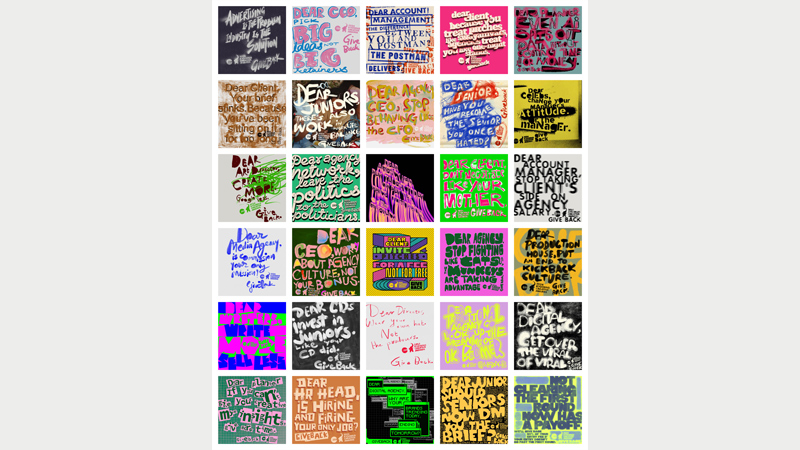
    Their creative partner, Wieden+Kennedy India, felt this was an apt opportunity to take this brief to the next level. They’ve taken Kyoorius’s initiative of ‘giving something back’ to an industry-level clarion call, urging every member from adland to give back more to the industry that has made them.

    “Kyoorius has grown beyond an award, it has become the industry’s voice, that’s why this year’s campaign isn’t just about the award, it’s about addressing the uncomfortable realities in advertising and igniting the change it needs.” Wieden+Kennedy India chief creative officer Santosh Padhi (Paddy).

    “When I heard of Paddy’s brainchild, ‘Give Back’, it struck a chord with me. I know the world of Indian advertising is going through its toughest challenges and if we all don’t take ownership of our problems, if we don’t introspect and evolve, then who will?” shared Kyoorius founder CEO Rajesh Kejriwal.

    W+K Mumbai ECD Yogesh Rijhwani added “Our creative team found a way to express each hard-hitting message through some stunning typography, which has become the visual voice of the campaign. We enjoyed the love, especially for craft, in the comments section of these posts.”

    The campaign started on 21 Feb and has had more than 30 posts since. The creatives will continue to be shared till the actual day of the event.

    W+K partnered with Nirvana’s Rajiv Rao for a funnier take on Give Back video, featuring prominent ad landers and marketing names.


    A post shared by kyoorius (@kyoorius)


  • Kyoorius Creative Awards 2018 sees O&M take away 2 black elephants

    Kyoorius Creative Awards 2018 sees O&M take away 2 black elephants

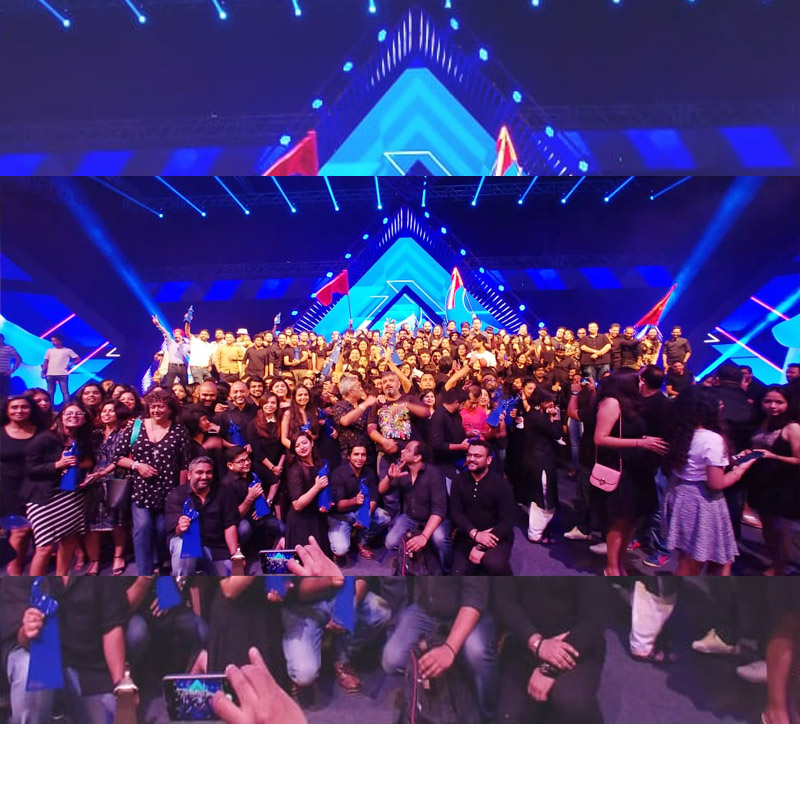
    MUMBAI: The fifth edition of the Kyoorius Creative Awards has just concluded with five black and 90 blue elephants handed out across advertising, media and digital categories.

    Amitabh Bachchan was the recipient of the Master of Creativity award for his immeasurable contribution in the advertising and marketing world of India. His presence has changed the way people look at brands today.

    The five black elephant winners were taken by four teams namely Ogilvy & Mather for #HoliNotHooliganism and Vodafone Sakshi, Early Man Films for The Story of Kaveri, FCB India Group for Sindoor Khela- No Conditions Apply, BBDO India for #FuelFor The RealFit. 

    The Power of Print award, an IP owned by the Times Group was seen presented to Curry Nation Brand Communication for its print campaign ‘Lifeline Question’.  Brave New World, Bangalore and FCB Interface were awarded the runner-up title for their campaigns ‘No’ and ‘Honarary Doctors’ respectively.

    The out-of-home advertising contest, Inoohvation, this year in association with Kinetic, saw participation from the brightest minds across creative communities in the country. Based on a brief set out by Honda, the contest was aimed at rejuvenating creativity by smart use of technology and storytelling techniques by creating an outdoor campaign. Creative Agency Studio Mars won the coveted title for its campaign ‘Will they see Blue’. While J. Walter Thompson and Locopopo bagged the runner-up titles for their campaigns ‘Interactive Digital Billboards’ and ‘Blue Skies For our Children’ respectively.

    Kyoorius founder and CEO Rajesh Kejriwal said, “We have some brilliant work put up by communication agencies this year and I personally would like to congratulate each one of them for their truly deserved win. It gives me immense happiness to announce that we received 20 per cent increase in entries this year and selecting the winners was indeed tough for our respected jury. But innate knowledge of our jurors in their respected domain has contributed immensely in ensuring fair, unbiased and credible selection process.”

    Complete list of blue winners

    CATEGORY CLIENT TITLE AGENCY/CITY  
    FC | 1802A: Cinematography For Film Advertising Jeep India Fables Of India 10 Films BLUE
    FA | 1608A: Ad / Promotional Films Produced Under Rs 10 Lakh Mankind Pharma Manforce #ShutThePhoneUp ADK-Fortune Communications BLUE
    FC | 1808A: Use Of Music For Film Advertising Jabong Jabong Spring Summer Runway 2018 Asylum Film BLUE
    DM | 2501: Integrated Digital Campaign PepsiCo India #ReleaseThePressure BBDO India BLUE
    ME | 2408: Use Of Integrated Media PepsiCo India #ReleaseThePressure BBDO India BLUE
    WA | 1511A: Writing For Film Advertising (TV) PepsiCo India #FuelForTheRealFit BBDO India BLUE 
    PSA | 2206: PSA – Integrated Media PepsiCo India #ReleaseThePressure BBDO India BLUE
    OA | 1102B: Ambient: Billboards & Travel Amar Tea Pvt Ltd Tea Society Black Swan Life Communications BLUE
    CA | 1302B: Photography For Advertising Amar Tea Pvt Ltd Tea Society Black Swan Life Communications BLUE
    SM | 2603A: Branded Social Post – Topical / Real Time Response Bunge India Pvt Ltd Gagan Cooking Oil – Diwali Bunge India Pvt Ltd BLUE
    DI | 2902: Innovative Use Of Mobile Technology Sense International India The Good Vibes Project Cheil Worldwide India BLUE
    DM | 2501: Integrated Digital Campaign Flipkart Internet Pvt Ltd Flipkart #PenguinDads Dentsu Webchutney BLUE
    DC | 2705B: Animation & Illustration For Digital Marketing (Social Media Posts) ScoopWhoop 30 Years of GIF Dentsu Webchutney BLUE
    SM | 2603B: Branded Social Post – Topical / Real Time Response ScoopWhoop 30 Years of GIF Dentsu Webchutney BLUE
    SM | 2604: Social Engagement – User-Generated Content Wildcraft India Pvt Ltd Wildcraft Wildlings Dentsu Webchutney BLUE
    ME | 2406: Use Of Mobile ScoopWhoop ScoopWhoop In-Flight App Dentsu Webchutney BLUE
    PSA | 2204A: PSA – Film Advertising Reforestindia.in The Story Of Kaveri Early Man Film BLUE
    FC | 1802A: Cinematography For Film Advertising Reforestindia.in The Story Of Kaveri Early Man Film BLUE
    FC | 1803A: Direction For Film Advertising Reforestindia.in The Story Of Kaveri Early Man Film BLUE 
    FC | 1804A: Editing For Film Advertising Reforestindia.in The Story Of Kaveri Early Man Film BLUE
    FC | 1805A: Production Design For Film Advertising Reforestindia.in The Story Of Kaveri Early Man Film BLUE
    FC | 1808A: Use Of Music For Film Advertising Reforestindia.in The Story Of Kaveri Early Man Film BLUE
    WA | 1502B: Writing For Poster Advertising Snapin – Duval Enterprises Coffee’s Perfect Partner Famous Innovations BLUE
    DMA | 2006: Direct Response – Ambient Livpure Water Purifiers Rivers In A Bottle Famous Innovations BLUE
    IM | 2303: Innovative Media Religare Health Insurance Don’t Eat The News Famous Innovations BLUE
    CFG | 2101: Advertising & Marketing Communications / Brand Livpure Water Purifiers Rivers In A Bottle Famous Innovations BLUE
    SM | 2608: Social Influencer Marketing – Multi Channel Times Of India Sindoor Khela – No Conditions Apply FCBIndia Group BLUE
    ME | 2405: Use Of Events Times Of India Sindoor Khela – No Conditions Apply FCBIndia Group BLUE
    ME | 2408: Use Of Integrated Media Times Of India Sindoor Khela – No Conditions Apply FCBIndia Group BLUE
    BC | 1905A: Live Experience Times Of India Sindoor Khela – No Conditions Apply FCBIndia Group BLUE
    DMA | 2000: Direct Integrated Campaign Times Of India Sindoor Khela – No Conditions Apply FCBIndia Group BLUE
    CFG | 2102: Advertising & Marketing Communications / Not For Profit Fruitbowl Digital Chal Rang De Fruitbowl Digital Media BLUE
    DM | 2504: Websites Tata Pravesh Doors of India Hungama Digital Services BLUE
    FC | 1801B: Animation For Film Advertising Bajaj Electricals Bajaj Electricals – Magic Of Light Hungry Films BLUE
    CA | 1304B: Digitally Enhanced Illustration For Advertising PN Gadgil & Sons Poster Ideas At Work Advertising BLUE
    DM | 2507: Digital Installations Google India Look Before You Leave Kinetic Advertising India BLUE
    DI | 2901: Innovative Use Of Technology Google India Google Maps : look before you leave Kinetic Advertising India BLUE
    ME | 2404: Use Of Outdoor Vodafone India Limited Vodafone Eco Pond – Good In Good Bye Kinetic Advertising India BLUE
    ME | 2405: Use Of Events The Times Of India Equal Streets Laqshya Live Experiences BLUE
    SM | 2605: Social Engagement – Community Building The Ammada Trust #GiveHer5 Law & Kenneth Saatchi & Saatchi BLUE
    FC | 1804A: Editing For Film Advertising Puma Puma – Run the Streets (India) Loudmouth Film BLUE
    DM | 2503A: Digital Branded Film Content & Entertainment Indian Association of Palliative Care (IAPC) Last Laugh Medulla WYP Network BLUE
    ME | 2403: Use Of Branded Content Indian Association of Palliative Care (IAPC) Last Laugh Medulla WYP Network BLUE
    FA | 1603: Ad / Promotional Film (61+ seconds) Indian Association of Palliative Care (IAPC) Last Laugh Medulla WYP Network BLUE
    BC | 1905A: Live Experience Indian Association of Palliative Care (IAPC) Last Laugh Medulla WYP Network BLUE
    IM | 2302: Use Of Experiential Marketing Indian Association of Palliative Care (IAPC) Last Laugh Medulla WYP Network BLUE
    DM | 2501: Integrated Digital Campaign PepsiCo India Breaking The Deafening Silence – #ReleaseThePressure Mindshare BLUE
    ME | 2403: Use Of Branded Content Cipla Health Ltd I Can You Can Mindshare BLUE
    FA | 1602: Ad / Promotional Film (31 – 60 seconds) Motilal Osawl Financial Services Think Equity. Think Motilal Oswal. Motilal Oswal Asset Management Company BLUE
    DM | 2501: Integrated Digital Campaign Reliance General Insurance #HoliNotHooliganism Ogilvy & Mather BLUE
    DM | 2503A: Digital Branded Film Content & Entertainment Mondelez – Bournvita Beverages The Exam Sale Ogilvy & Mather BLUE
    SM | 2603B: Branded Social Post – Topical / Real Time Response Mondelez International The Great IPL Phub Ogilvy & Mather BLUE
    DI | 2902: Innovative Use Of Mobile Technology Vodafone India Vodafone Sakhi Ogilvy & Mather BLUE 
    ME | 2404: Use Of Outdoor Unilever Hamam CCTV Hoardings Ogilvy & Mather BLUE
    ME | 2407: Use Of Technology Vodafone India Vodafone Sakhi Ogilvy & Mather BLUE
    ME | 2411: Use Of Direct Media ITC – Savlon Savlon ID Guard Ogilvy & Mather BLUE
    ME | 2415: Use Of Social Platforms Reliance General Insurance #HoliNotHooliganism Ogilvy & Mather BLUE
    ME | 2416: Use Of Interaction ITC – Savlon Savlon ID Guard Ogilvy & Mather BLUE
    ME | 2418: Use Of Digital Platforms Pidilite Industries Sticky Banner Ogilvy & Mather BLUE
    OA | 1103A: Ambient: Experiential & Installations The Akanksha Foundation Akanksha Placement Surprise Ogilvy & Mather BLUE
    OA | 1104B: Poster Advertising – Free Format Surnai Ibsen Festival Ogilvy & Mather BLUE
    CA | 1301B: Illustration For Advertising Surnai Ibsen Festival Ogilvy & Mather BLUE
    RSAC | 1403: Radio Advertising Campaigns Dixcy Scott 56 Inch Ka Seena Ogilvy & Mather BLUE
    RSAC | 1411B: Direction for Sonic Advertising (Including Radio) Dixcy Scott 56 Inch Ka Seena Ogilvy & Mather BLUE
    WA | 1511B: Writing For Film Advertising (TV) Tata Sky Acting Adda Ogilvy & Mather BLUE
    PSA | 2205A: PSA – Digital Media ICICI Lombard #IWillDriveYouHome Ogilvy & Mather BLUE
    PSA | 2205B: PSA – Digital Media Reliance General Insurance #HoliNotHooliganism Ogilvy & Mather BLUE
    BC | 1905A: Live Experience Mondelez – Bournvita Beverages The Exam Sale Ogilvy & Mather BLUE
    DMA | 2006: Direct Response – Ambient The Akanksha Foundation Akanksha Placement Surprise Ogilvy & Mather BLUE
    DMA | 2006: Direct Response – Ambient Vodafone India Vodafone Eco Pond Ogilvy & Mather BLUE
    DMA | 2006: Direct Response – Ambient ITC – Savlon Savlon ID Guard Ogilvy & Mather BLUE
    DMA | 2011: Direct Innovation Vodafone India Vodafone Sakhi Ogilvy & Mather BLUE 
    DMA | 2012: Direct Acquisition & Retention Vodafone India Vodafone Sakhi Ogilvy & Mather BLUE
    IM | 2301: Integrated Campaign Amazon India Amazon Chonkpur Cheetas Ogilvy & Mather BLUE
    CFG | 2101: Advertising & Marketing Communications / Brand Vodafone India Vodafone Sakhi Ogilvy & Mather BLUE
    CFG | 2101: Advertising & Marketing Communications / Brand Reliance General Insurance #HoliNotHooliganism Ogilvy & Mather BLUE
    DD | 2808: User Interface Design – Mobile Nexino Labs Private Limited Programming Hub – Mobile App ProCreator Solutions Private Limited BLUE
    FA | 1602: Ad / Promotional Film (31 – 60 seconds) Make My Trip Delhi Publicis Ambience BLUE
    FC | 1801A: Animation For Film Advertising Krok International Animated Film Festival Absolut Volga Studio Eeksaurus Productions BLUE
    DM | 2503B: Digital Branded Film Content & Entertainment Red Bull Doppelgangers Supari Studios BLUE
    OA | 1104B: Poster Advertising – Free Format Zoobar Pet Friendly Bar tbwaindia BLUE
    DMA | 2011: Direct Innovation Asha Ek Hope Foundation Blink to Speak tbwaindia BLUE
    CFG | 2101: Advertising & Marketing Communications / Brand Asha Ek Hope Foundation Blink to Speak tbwaindia BLUE
    FA | 1603: Ad / Promotional Film (61+ seconds) FDC India Limited Letters To My Son The Audacious Project BLUE
    SM | 2604: Social Engagement – User-Generated Content Netflix Life of a Narcos Fan – Rajkumar Rao The Glitch BLUE
    DI | 2901: Innovative Use Of Technology Saregama India Carvaan The Womb BLUE
    FA | 1603: Ad / Promotional Film (61+ seconds) Tinder Start Something Epic Tinder BLUE
    FC | 1810A: TV & Cinema Title Sequences Trigger Happy Entertainment Breathe Trigger Happy Entertainment BLUE
    DM | 2501: Integrated Digital Campaign Zee TV #ChangeHerNot Zee Enteprises Entertainment Ltd BLUE
    FA | 1603: Ad / Promotional Film (61+ seconds) Zee Entertainment Enterprises Limited Zee TV – Aaj Likhenge Kal Zee Enterprises Entertainment Ltd BLUE


  • KYOORIUS CREATIVE AWARDS ANNOUNCES ITS JURIES FOR ADVERTISING, DIGITAL AND MEDIA

    KYOORIUS CREATIVE AWARDS ANNOUNCES ITS JURIES FOR ADVERTISING, DIGITAL AND MEDIA

    MUMBAI: The Kyoorius Creative Awards is back in its 5th edition to recognize and award the best creative and innovative work in the advertising, digital and media industries. The entries will be open from 21st March 2018 to 23rd April 2018 across 20 main categories and 280 sub-categories. Advertising/digital agencies, brands, production houses, media houses, event management companies, freelancers, photographers, mobile agencies, corporates, NGOs or individuals can submit their entries. The Kyoorius Creative Awards night will be held on 1st June 2018 at The Dome, NSCI, Mumbai.

    The entries will be judged by four juries; two for advertising and one each for digital and media from 14th May – 16th May in Mumbai.

    The jury chairpersons are as follows:

    · Arun Iyer- Chairman & Chief Creative Officer, Lowe Lintas – Advertising

    · Santosh Padhi- Chief Creative Officer & Co-Founder, Taproot Denstu – Advertising

    · Torie Henderson – CEO, South East Asia & India, Omnicom Media Group Asia Pacific – Media

    · Kunal Jeswani- Chief Executive Officer, Ogilvy & Mather– Digital

    The confirmed Jurors so far are: Bobby Pawar – Chief Creative Officer and Managing Director South Asia, Publicis Worldwide, India, Deepa Geethakrishnan – National Creative Director (HUL), Lowe Lintas, Juhi Kalia – Head of Creative Shop India & Global Brands APAC, Facebook, Kainaz Karmakar – Chief Creative Officer – Ogilvy Mumbai, Ogilvy & Mather, Kartik Iyer – CEO, Happy McGarryBowen, Kyoko Yonezawa – Creative Technologist, Dentsu Inc., Neil Cooper – Group Creative Director, Publicis.Sapient, Pradyumna Chauhan –Creative Consultant, Preethi Mariappan – VP, Executive Creative Director Emerging Experiences, Publicis Sapient, Satbir Singh – Founder & Chief Creative Officer, Thinkstr, Sidharth Rao – CEO and Co-Founder, Dentsu Webchutney, Sumanto Chattopadhyay – Chairman & Chief Creative Officer, Soho Square, Ogilvy Group, India, Swati Bhattacharya – Chief Creative Officer , FCB Ulka and Tista Sen – National Creative Director & Senior Vice President, J. Walter Thompson India

    The bedrock of The Kyoorius Creative Awards has been the composition of the jury and the transparency of the jury process. With the 5th edition, Kyoorius Creative Awards will fortify its partnership with ‘The One Club For Creativity’. The jury chair for the awards is formed by leveraging One Club’s decades of expertise in the industry. The Awards will also incorporate One Club’s high-integrity judging process and proprietary back-end voting technology platform, to ensure credibility and fairness of The Award.”

    Speaking about the 5th edition Rajesh Kejriwal, Founder and CEO, Kyoorius said, “The jurors at The Kyoorius Creative Awards, with their innate knowledge and experience, will contribute to this vision of acknowledging the finest original and innovative work. We look forward to hosting an insightful and rewarding event that honours the best in advertising.”

    Among the many firsts globally, Kyoorius will continue with its tradition of hosting an ‘Open Jury Session,’ – the jury sessions will be open for the creative community and media professionals to attend and witness the session in process. Apart from making the entire process very transparent, the session will provide key takeaways and insights from the discussions and the entries displayed.

  • Star India is one of the very few to get its design right: Kyoorius’ Rajesh Kejriwal

    Star India is one of the very few to get its design right: Kyoorius’ Rajesh Kejriwal

    At a time when content and disruption are mentioned in the same breath in every digitally charged summit, design often takes a backseat. It’s an open secret that several marketers, be they traditional or digital, neglect design. In fact, a couple of years ago the understanding of the subject or its importance in driving brands was practically not there.  Very little was done in the country to drive conversations around design and innovation.

    Things would have remained the same, were it not for Kyoorius, a one stop place that connects designers, brands, creatives and every stakeholder in between. Kyoorius founder and CEO Rajesh Kejriwal welcomed the change that his endeavour brought to the industry. Its flagship awards show, Kyoorius Creative Awards and design and innovation conference Kyoorius Designyatra have set benchmarks year after year. Now the Kyoorius Creative Awards is in its 3rd edition and has the likes of R. Balki, Kartik Sharma, and Fergus O’Hare on board as jury members, while Kyoorius Designyatra celebrated ten years during its last edition. Kyoorius has also expanded with a marketing and communication division with MELT, where it focuses on emerging technology and digital marketing.

    In a candid chat with indiantelevision.com’s Papri Das, Rajesh Kejriwal opens up on the state of design in the industry, what to expect from Kyoorius Creative Awards and MELT 2016 and how most of the media brands haven’t cracked the design code.

    Excerpts:

    Is there anything new that we can expect at MELT 2016?

    This year at MELT we will have 14 halls with parallel sessions. The content itself is massive compared to last year with almost 60 speakers on board. We don’t like to emulate the whole ‘panel’ system as that gives the audience an information overload with no real crux.

    We have reached out to GroupM, SAP, Kinetic and Happy Finish who we expected to participate in this year’s MELT in Delhi. Now that we have postponed MELT and we are likely to hold it in August, we are actually looking at two expo areas. One would be heavy on new  technology that might interest marketers such as Gear from Samsung etc., and the other would have the GroupMs’ and Genesis, etc., of the industry.

    Why was MELT 2016 postponed?

    In every event we do, we ensure that the content we put out is very strong. I have to hand it to the curation team that felt the content and line-up for MELT, which was scheduled earlier this year, didn’t match up to standards, and therefore we rescheduled it.

    What have been the game changers in the design and creative industry?

    Digital was no doubt the biggest game changer. From the Indian perspective, in the last five years, the major change has been the acceptance of design by corporate India as a strategic tool, not an aesthetic one.  It is not looked at with a fresh perspective by business leaders now. Consider this as an immense change in the mindset of people. This has led to designers being treated with a lot more respect and seriousness. Because it is only when you have good clients with big budgets can you work wonders for them. If you are paid peanuts there is only so much you can do.

    According to you, which brand in India has made the best use of design in recent times?

    In the FMCG sector, I would say Paperboat is a success story when it comes to brilliant use of design. Right from the material it uses for packaging, its layout and how it is branded, Paperbaot has paid attention to detail, not just in terms of looks, but what that look conveys to its consumers. I am glad to see a newcomer in the field understanding and using design creatively. Fastrack from Titan has always stayed ahead of the design curve. It has nailed it down perfectly well.

    Royal Enfield India is currently using design very strategically. Flipkart and Myntra too have done a good job. But these are all what I call the new Indian businesses.

    What about the media brands?

    When it comes to media and broadcaster channels, I feel all of them really need to redo their designs except for Star India. If you look at their packaging logo and interface from a visual perspective, Star has got it right. All the other broadcasters do not understand how important a cohesive language branding identity is. Design defines the DNA of a channel, and its identity. It surprises me that they don’t understand its importance, because some of these networks have global reach. One would expect them to see how international media use their design.

    If you look at the packaging, and everything, it doesn’t reflect the brand identity of the channels. If one were to take away all text and show the channel to us, I can tell which one Star is, but any other brand would be a hard guess, because the visual language is missing. It is sad because that is what binds the consumers to the brand. Being in a mass consumer industry, broadcasters should get their design right.

    There is a tendency amongst some media organisations to rebrand themselves, and while they are at it, they change it in parts and pieces. I would hear from them that they have changed their show packaging without changing their identity branding. I think that is the wrong way to go about it. Design can’t be done in bits and pieces.

    What according to you is going wrong with the design industry in India?

    Where most designs go wrong is when the company or CEO decides what design suits the company. Design isn’t an opinion, it’s a solution. The right design isn’t as per the CEO’s fancy, but as per the consumer needs.

    Let me tell you the difference between the old India and new India. For old India designers, you would go to them as a client and ask for a logo. They would show you a logo and tell you it’s the best for you as it was ‘fresh’. Has any client in the world has asked for a stale logo? It clearly means the designers created a good looking logo, and told a story to fit the logo with the company, whereas a good designer will find that story before designing the logo. A good designer will figure out the strategy, the positioning, the brand identity, the target group and manifest that into a design. New India does it the latter way. But there is still a lot of India stuck to the old ways.

    You initially were from the paper and printing industry. What made you take interest in the design and creative field?

    Predominantly we were paper merchants who would purchase paper manufactured in other markets, bring it to India, brand it and sell it here. One of the ways to fuel these purchases was to influence the decision makers, i. e., the creatives and designers. Designyatra was first thought of to reach out to our clients and start a design revolution in India.

    To fuel this design movement, we had to expose the industry prevalent in India to what was happening globally, and make them feel proud of being designers. To do away with the bureaucracy involved in the entire system, I decided to go with the non-profit format.  Suddenly from being a vendor to the industry I was their friend, so Designyatra and Kyoorius definitely helped my paper business.

    From being a promotional method to becoming the actual business; tell us how did Kyoorius evolve?

    It happened soon after the paper industry slid downhill, though it didn’t happen overnight. Gradually the entire set up changed. While being a business man it wasn’t too difficult for me, it was a difficult transition for Kyoorius. Earlier it acted as promotion for my paper business. Now when the model changed, Kyoorius had to be sustainable or profitable.

    When it really came down to making a difference in the industry, Kyoorius actually had to be profitable, not run up losses. It had to be actually profitable and use that profit to make a positive difference in the industry. So that transition from not caring whether it made money or not to making Kyoorius sustainable was the real challenge.

    How did you manage this transition?

    Prior to this realisation we didn’t have sponsors. When we decided to make it sustainable, one of the obvious means for any conference to be functional is to have a sponsor. So we looked for one. This wasn’t easy because no one believed in the design industry in 2008 and 2009. In those days if you did something in the advertising sphere, major broadcasters would easily come on board. But design was an offbeat road to travel on that only a small breed of people was interested in.

    We were lucky in 2011, we managed to get Zee to take cognizance of the fact that design was important for the industry and the country and that’s how it came on board. And since then, Zee has remained a partner for Kyoorius and signed on year after year. We also started looking at pricing the tickets right, something which we didn’t pay attention to earlier.

    Post transformation what is the current structure of Kyoorius now?

    Currently we have two sides to Kyoorius. One is the marketing and communication section where advertising, media and digital, social media and emerging technologies or MarTech is covered, and the second is the design and innovation side.

    These are the two broad headers under which we operate, mostly because if you have a capable team, you can’t have a single event a year to keep it occupied.

    What is your take on sponsorship for events?

    For the creative awards, we have Colors, HT, Rishtey Happy Finish and Kinetic. Apart from this we have supporting partners like Addikt.tv etc.

    If an award show has to sustainably exist for a long period of time, in an ideal scenario, 80 per cent of the revenue should come from the ticketed sales or entries in guest registration. In India it is actually the reverse. Sponsorship is between 70 to 80 per cent while the rest is maybe tickets or miscellaneous.

    In our case thankfully, we have struck a healthier ratio with 60 per cent from sponsorship and 40 per cent from ticket sales. I hope we can soon invert this ratio for Kyoorius Creative Awards, as we have done for Designyatra.

    MELT is a difficult IP when it comes to ticket sales as it will always be about partners. I can’t charge each person Rs 20,000, so the prices for MELT tickets will always be lower. Given the content we showcase in MELT, the budget can only be met through sponsors.

    Last year it was Rs 8,000, and this year we are planning to have another optional ticket without dinner included that will be sold for  much less. It’s for those newcomers in the industry or students who want to attend, but for whom budget is an issue.

  • Star India is one of the very few to get its design right: Kyoorius’ Rajesh Kejriwal

    Star India is one of the very few to get its design right: Kyoorius’ Rajesh Kejriwal

    At a time when content and disruption are mentioned in the same breath in every digitally charged summit, design often takes a backseat. It’s an open secret that several marketers, be they traditional or digital, neglect design. In fact, a couple of years ago the understanding of the subject or its importance in driving brands was practically not there.  Very little was done in the country to drive conversations around design and innovation.

    Things would have remained the same, were it not for Kyoorius, a one stop place that connects designers, brands, creatives and every stakeholder in between. Kyoorius founder and CEO Rajesh Kejriwal welcomed the change that his endeavour brought to the industry. Its flagship awards show, Kyoorius Creative Awards and design and innovation conference Kyoorius Designyatra have set benchmarks year after year. Now the Kyoorius Creative Awards is in its 3rd edition and has the likes of R. Balki, Kartik Sharma, and Fergus O’Hare on board as jury members, while Kyoorius Designyatra celebrated ten years during its last edition. Kyoorius has also expanded with a marketing and communication division with MELT, where it focuses on emerging technology and digital marketing.

    In a candid chat with indiantelevision.com’s Papri Das, Rajesh Kejriwal opens up on the state of design in the industry, what to expect from Kyoorius Creative Awards and MELT 2016 and how most of the media brands haven’t cracked the design code.

    Excerpts:

    Is there anything new that we can expect at MELT 2016?

    This year at MELT we will have 14 halls with parallel sessions. The content itself is massive compared to last year with almost 60 speakers on board. We don’t like to emulate the whole ‘panel’ system as that gives the audience an information overload with no real crux.

    We have reached out to GroupM, SAP, Kinetic and Happy Finish who we expected to participate in this year’s MELT in Delhi. Now that we have postponed MELT and we are likely to hold it in August, we are actually looking at two expo areas. One would be heavy on new  technology that might interest marketers such as Gear from Samsung etc., and the other would have the GroupMs’ and Genesis, etc., of the industry.

    Why was MELT 2016 postponed?

    In every event we do, we ensure that the content we put out is very strong. I have to hand it to the curation team that felt the content and line-up for MELT, which was scheduled earlier this year, didn’t match up to standards, and therefore we rescheduled it.

    What have been the game changers in the design and creative industry?

    Digital was no doubt the biggest game changer. From the Indian perspective, in the last five years, the major change has been the acceptance of design by corporate India as a strategic tool, not an aesthetic one.  It is not looked at with a fresh perspective by business leaders now. Consider this as an immense change in the mindset of people. This has led to designers being treated with a lot more respect and seriousness. Because it is only when you have good clients with big budgets can you work wonders for them. If you are paid peanuts there is only so much you can do.

    According to you, which brand in India has made the best use of design in recent times?

    In the FMCG sector, I would say Paperboat is a success story when it comes to brilliant use of design. Right from the material it uses for packaging, its layout and how it is branded, Paperbaot has paid attention to detail, not just in terms of looks, but what that look conveys to its consumers. I am glad to see a newcomer in the field understanding and using design creatively. Fastrack from Titan has always stayed ahead of the design curve. It has nailed it down perfectly well.

    Royal Enfield India is currently using design very strategically. Flipkart and Myntra too have done a good job. But these are all what I call the new Indian businesses.

    What about the media brands?

    When it comes to media and broadcaster channels, I feel all of them really need to redo their designs except for Star India. If you look at their packaging logo and interface from a visual perspective, Star has got it right. All the other broadcasters do not understand how important a cohesive language branding identity is. Design defines the DNA of a channel, and its identity. It surprises me that they don’t understand its importance, because some of these networks have global reach. One would expect them to see how international media use their design.

    If you look at the packaging, and everything, it doesn’t reflect the brand identity of the channels. If one were to take away all text and show the channel to us, I can tell which one Star is, but any other brand would be a hard guess, because the visual language is missing. It is sad because that is what binds the consumers to the brand. Being in a mass consumer industry, broadcasters should get their design right.

    There is a tendency amongst some media organisations to rebrand themselves, and while they are at it, they change it in parts and pieces. I would hear from them that they have changed their show packaging without changing their identity branding. I think that is the wrong way to go about it. Design can’t be done in bits and pieces.

    What according to you is going wrong with the design industry in India?

    Where most designs go wrong is when the company or CEO decides what design suits the company. Design isn’t an opinion, it’s a solution. The right design isn’t as per the CEO’s fancy, but as per the consumer needs.

    Let me tell you the difference between the old India and new India. For old India designers, you would go to them as a client and ask for a logo. They would show you a logo and tell you it’s the best for you as it was ‘fresh’. Has any client in the world has asked for a stale logo? It clearly means the designers created a good looking logo, and told a story to fit the logo with the company, whereas a good designer will find that story before designing the logo. A good designer will figure out the strategy, the positioning, the brand identity, the target group and manifest that into a design. New India does it the latter way. But there is still a lot of India stuck to the old ways.

    You initially were from the paper and printing industry. What made you take interest in the design and creative field?

    Predominantly we were paper merchants who would purchase paper manufactured in other markets, bring it to India, brand it and sell it here. One of the ways to fuel these purchases was to influence the decision makers, i. e., the creatives and designers. Designyatra was first thought of to reach out to our clients and start a design revolution in India.

    To fuel this design movement, we had to expose the industry prevalent in India to what was happening globally, and make them feel proud of being designers. To do away with the bureaucracy involved in the entire system, I decided to go with the non-profit format.  Suddenly from being a vendor to the industry I was their friend, so Designyatra and Kyoorius definitely helped my paper business.

    From being a promotional method to becoming the actual business; tell us how did Kyoorius evolve?

    It happened soon after the paper industry slid downhill, though it didn’t happen overnight. Gradually the entire set up changed. While being a business man it wasn’t too difficult for me, it was a difficult transition for Kyoorius. Earlier it acted as promotion for my paper business. Now when the model changed, Kyoorius had to be sustainable or profitable.

    When it really came down to making a difference in the industry, Kyoorius actually had to be profitable, not run up losses. It had to be actually profitable and use that profit to make a positive difference in the industry. So that transition from not caring whether it made money or not to making Kyoorius sustainable was the real challenge.

    How did you manage this transition?

    Prior to this realisation we didn’t have sponsors. When we decided to make it sustainable, one of the obvious means for any conference to be functional is to have a sponsor. So we looked for one. This wasn’t easy because no one believed in the design industry in 2008 and 2009. In those days if you did something in the advertising sphere, major broadcasters would easily come on board. But design was an offbeat road to travel on that only a small breed of people was interested in.

    We were lucky in 2011, we managed to get Zee to take cognizance of the fact that design was important for the industry and the country and that’s how it came on board. And since then, Zee has remained a partner for Kyoorius and signed on year after year. We also started looking at pricing the tickets right, something which we didn’t pay attention to earlier.

    Post transformation what is the current structure of Kyoorius now?

    Currently we have two sides to Kyoorius. One is the marketing and communication section where advertising, media and digital, social media and emerging technologies or MarTech is covered, and the second is the design and innovation side.

    These are the two broad headers under which we operate, mostly because if you have a capable team, you can’t have a single event a year to keep it occupied.

    What is your take on sponsorship for events?

    For the creative awards, we have Colors, HT, Rishtey Happy Finish and Kinetic. Apart from this we have supporting partners like Addikt.tv etc.

    If an award show has to sustainably exist for a long period of time, in an ideal scenario, 80 per cent of the revenue should come from the ticketed sales or entries in guest registration. In India it is actually the reverse. Sponsorship is between 70 to 80 per cent while the rest is maybe tickets or miscellaneous.

    In our case thankfully, we have struck a healthier ratio with 60 per cent from sponsorship and 40 per cent from ticket sales. I hope we can soon invert this ratio for Kyoorius Creative Awards, as we have done for Designyatra.

    MELT is a difficult IP when it comes to ticket sales as it will always be about partners. I can’t charge each person Rs 20,000, so the prices for MELT tickets will always be lower. Given the content we showcase in MELT, the budget can only be met through sponsors.

    Last year it was Rs 8,000, and this year we are planning to have another optional ticket without dinner included that will be sold for  much less. It’s for those newcomers in the industry or students who want to attend, but for whom budget is an issue.