Tag: KVL Narayan Rao

  • IDOS 2014: News broadcasters still struggling to make money

    IDOS 2014: News broadcasters still struggling to make money

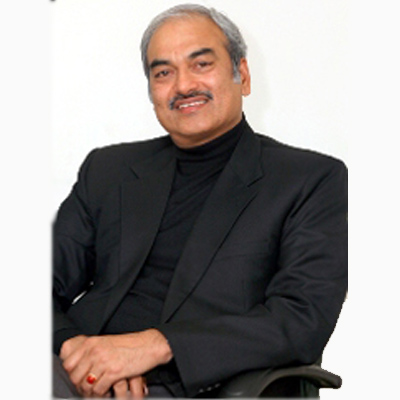
    GOA: The news television industry has been witnessing losses for several years now. To throw some light on what are the hurdles and what needs to be kept in mind while forming regulations, NDTV vice chairperson KVL Narayan Rao, Times Television Network MD and CEO MK Anand and BBC World News India COO Naveen Jhunjhunwala took the stage at IDOS 2014 for the session ‘News Television- a specialised beast’ that was moderated by Castle Media founder Vynsley Fernandes.


    The session took off with a keynote from industry veteran Rao, who spoke of the issues facing the most competitive news industry. “News has always been a high cost, low return industry and since 20 years, there has been an unholy dependence on advertising revenue in an environment that doesn’t seem to be changing,” he said while adding that one needs to consider the importance of news in such a landscape. “Not a single news operator in this country is making money,” he stressed.


    The recent extension to digitisation has also not gone down well with Rao, who just this week stepped down as the president of the News Broadcasters Association. “Digitisation was to finish by this year but has been extended till 2015 and 2016. To say the least, I am very disappointed with this decision,” he said.


    As far as regulations are concerned, he says that content should always be kept separate from carriage. “The business environment that we are operating in is one where we pay a large amount of money as carriage fees. For most news broadcasters, one third of operating cost goes as carriage fees while 90 per cent of revenue is generated from advertising and in some cases 100 per cent. All news broadcasters today pay a large amount as carriage fees and it is a terrible burden that we find impossible to bear,” said he. All the stakeholders must see the way the news channels operate and not look at regulations in isolation.


    News channels during primetime end up showing only panel discussions because of the lack of resources. The western countries have subscription revenue of up to 60 to 70 per cent. All these issues were meant to change after digitisation with subscription revenues kicking in and carriage fees eventually coming down. However, Rao hopes that the new government helmed by Narendra Modi would do all it can in its new ‘Digital India’ plan.


    He spoke of the statement by the Editors’ Guild regarding denial of access to journalists by government and increasing number of significant government authorities taking to social media to give information. He says that this serious issue needs to be addressed since news is not about press releases but rather about ‘ferreting information out’.


    Adding to the issues faced by the industry was Anand. He said that the last six months have seen a loss of collective bargaining due to the deaggregation paper by the Telecom Regulatory Authority of India (TRAI). “The paper has hit news broadcasters and unless one diversifies into entertainment, it is difficult to survive,” he said. In order to make money, the idea is generally to go heavy on branding and marketing and create an aura around the channel. The lopsided ad sales revenue also adds to the woes.


    Jhunjhunwala said that the BBC has been broadcasting news for decades and the technological advancements have allowed it to make it smoother and more cost effective.


    The ad cap has also hit them hard by restricting advertising air time to 12 minutes per hour. Here, the panel agreed that there are times when channels go live for hours without showing any ads and there is no provision to make up for the lost time. Fernandes questioned that in such a scenario, could there be alternative sources of revenue that can be put into use.  Rao said that now, to monetise news one needs to generate revenue through different streams such as sponsorships and associations. “But how can you not have subscriber revenue?” he questioned.


    Fernandes then questioned if there should be a limit on the number of channels that exist to which Rao said that the government should not curtail the number of channels because it is a free market. However, he feels the politicians and political parties should not be allowed to be in news.


    Anand said that the regulator could think about regulating carriage fees with some focus on news channels. He also pointed out that a decade ago, ad spots on news channels were sacrosanct but today it is being sold at one third the rate.


    Jhunjhunwala said that the government could look at raising the FDI limit on news to bring in more investment. There were talks of raising it to 49 per cent but no one has addressed the issue.


    Rao finally concluded by saying that though the digitisation deadline has been extended it will hopefully iron out things.

  • Digitisation extension 2015: MSOs, LMOs smile; broadcasters sigh

    Digitisation extension 2015: MSOs, LMOs smile; broadcasters sigh

    MUMBAI: It was a decision that most had been anticipating would be taken. But when it did come, it came as a bolt from the blue. Four months before cable TV digitisation had to be completed pan India, the government – through information and broadcasting (I&B) secretary Bimal Julka – announced to industry via indiantelevision.com that a decision had been taken to extend it to December 2015.


    (While this is what Julka has told us, certain sections in the industry have suggested that end-2015 is the analogue sunset date for phase III towns and villages; the date for phase IV regions may end up being December 2016.)


    Earlier this year, the previous UPA government’s Information and Broadcasting (I&B) Minister Manish Tewari had held a task force meet with all the stakeholders to state that digitisation was to go on as planned with phases III and IV being merged. The deadline was December 2014 to implement digitisation in digital addressable system (DAS) phase III and IV while simultaneously implementing billing in phase I and II, which was to have been done much earlier.


    However, the new advancement of the deadline by the current BJP government, comes across as a breather to the beleaguered and unprepared  cable TV industry that claims to be facing a shortage of funds to execute the seeding of 75 million boxes.


    The MSO and LCO fraternity is heaving a sigh of relief following the extension. Says Den Networks CEO SN Sharma: “After long, the government’s commitment is visible and there is clarity of date. For phase I and II we had built the tempo and campaign well in time and now with this announcement, things for phase III and IV will also fall in place. The government is also keen to push indigenous production of set top boxes which will bring out a 15 per cent reduction in prices. These next two phases constitute about 70 per cent of the cable TV base. We are now waiting for STB producers to tell us they can deliver the demand.”


    The new I&B Minister Prakash Javadekar has time and again reiterated the government’s intention to give a fillip to indigenously produced STBs.


    LCOs seem to be a happy lot. Says Maharashtra Cable Operators Foundation (MCOF) president Arvind Prabhoo, “This gives time for the last mile operator (LMO) to plan for a year and execute it as mandated by the Telecom Regulatory Authority of India. Our association will educate LMOs about the benefits of digitisation. We will be able to rope in more investors and manufacturers to come up with schemes for executing voluntary digitisation.”


    Digitisation in DAS I and II areas has also not yet been implemented in the way as had been envisaged. Billing and conditional access systems (CAS) have yet to take off in several DAS I and II towns.


    IMCL managing director and group CEO Tony D’silva feels that the extension does not make much of a difference if the government’s resolve is not strong enough. “Just by postponing or sticking to a date does not change the speed of digitisation. It has to be a much more detailed and flushed out action plan on how the MSO, LCO, broadcaster and the government will be brought together. It is great that they have clarified their position, now there needs to be an actionable plan by putting together a core committee,” he opines.


    However, the most unhappy of the lot are the broadcasters because it delays their dreams of getting higher subscription revenues from MSO, cable ops, and the subscriber by a year. Most feel that the one year delay will lead to everyone in the ecosystem slackening the pace, with delays hitting the process and spread of digitisation once again.


    Colors CEO Raj Nayak is of a similar opinion. Says he, “We were really looking forward to phase III and IV to be completed by December as after much delay and deliberation the sunset date was arrived at. Our business plans were geared accordingly. I am sure there must have been a good reason to postpone and a three month extension would have been understood, but postponement by one whole year is slightly disappointing.


    “Having said this we are glad that the digitisation process is on track and looking at it through a positive lens I am sure this would give the industry an opportunity to learn from the mistakes of phase I and II and hopefully put better systems and processes in place so that the respective stakeholders including the broadcasters get our fair share.”


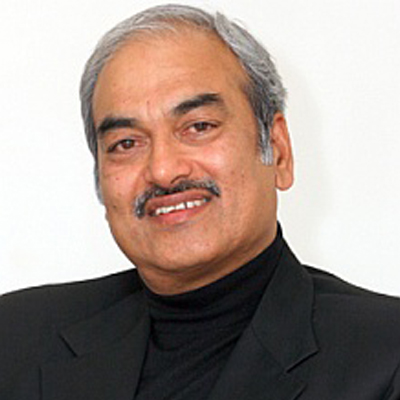
    News broadcasters are most pained by the excessive carriage fees that are being demanded of them, even as revenues continue to sag. News Broadcasters Association president and NDTV executive vice chairperson KVL Narayan Rao is disappointed with the extension. “Complete digitisation will bring transparency to TV broadcast distribution while delays will only affect that goal,” he states.


    Various reports predict different dates of completion of digitisation in India. Amongst the most recent ones brought out by Singapore-based Media Partners Asia (Indiantelevision.com’s partner for the annual pay TV gathering India Digital Operators Summit)  has stated that by 2017 only 70 per cent of the pay TV market in India will be digitised. 


    We, at indiantelevision.com, believe there are several other measures that could be put in place by the government (read I&B ministry), the regulator, and the industry:


    *For starters, changing the mindset of the cable TV ecosystem that digitisation and true pay TV is useful to all those in it, and not harmful, needs to be communicated effectively.


    *Second, the government could set up a digitisation transition fund, which helps educate, train and provide seed capital to and rewards cable TV operators who walk that path.


    * Third, it puts in place policing and penalising measures to cane those who don’t.


    *Fourth, they need to ensure that valid and correct subscriber information is collected by every cable TV operator or MSO and recorded in their SMS and possibly made available to the authorities.


    * Fifth, once this is done, ensure that a legitimate bill is issued to every subscriber.


    * Sixth, the ministry, the TRAI and the government could announce future-proof (at least for a three to four year period) technical specifications and standards for set top boxes, so that garbage zapper boxes are not dumped on India and on an unknowing and unsuspecting home viewer.


    * Seventh, leave pricing to the market place, rather than mandating 10-15 per cent price increases. Sure broadcasters want to increase subscription revenues, but they would not be so foolish so as to price their channels so high that they drive away consumers, and in the process their collections. Some might choose to have stiff price tags, but their business plans, obviously, will have factored that in, to have a smaller niche subscriber base. Does the government mandate how much a pair of Armani jeans can be priced at?


    * Let cable TV operators be drawn in to deliver broadband – provide them technology, assistance, funding – so that they can be one of the constituents who will help fulfil the Modi government’s grand plan to digitise the country.

    While there are many other measures that could be drawn up and while some may not approve of what we have prescribed, we have decided to stick our necks out and made some suggestions. We would love to hear different perspectives from our readers. Please feel free to let us and others in the industry know by posting your comments below.

  • NBA seeks remedy from new I&B Minister

    NBA seeks remedy from new I&B Minister

    MUMBAI: With the new Information and Broadcasting (I&B) Minister Prakash Javadekar taking charge of changing the way the Ministry works in the country, the entire media fraternity is keen to meet him and make him aware of the issues concerning them.


    The latest in the queue to meet the Minister is the News Broadcasters Association (NBA), a body that represents various national and regional news channels of the country. The group included NBA president and NDTV executive vice chairperson KVL Narayan Rao, vice president and MCCS CEO Ashok Venkatramani, India TV chairman Rajat Sharma, Zee Media group CEO Bhaskar Das and India Today group CEO Ashish Bagga.


    The main issues that were put forth were regarding carriage fees and the ad cap. “These are huge problem areas that need to be addressed because all news broadcasters are adversely affected. The minister has said that he would do whatever he can about our problems,” says a source.


    The NBA had challenged the ad cap regulation by the Telecom Regulatory Authority of India (TRAI) in TDSAT which was then taken to the Delhi High Court where it is currently pending trial. News broadcasters say that they have been severely affected due to carriage fees.

  • NBA condemns attack on journalists and camerapersons in Chennai

    NBA condemns attack on journalists and camerapersons in Chennai

    MUMBAI: The News Broadcasters Association (NBA) has condemned the attacked on Times Now and Headlines Today by the Dravida Munetra Kazhagam (DMK) cadre in Chennai on 18 May.


    Cameramen and journalists of the two channels were attacked while they were covering the news of DMK leader Stalin’s resignation. According to TV reports, cameras and video footages were damaged.  One cameraperson has also been admitted with severe injuries.


    NBA president KVL Narayan Rao called it a “cowardly attack meant to intimidate journalists carrying out their work in disseminating news and information, a service that is essential for any democratic society.” He urged Tamil Nadu chief minister J Jayalalithaa to ensure that journalists were allowed to perform their duties in a free and fearless manner.


    He also requested that the state authorities would take action against the culprit(s) to ensure such incidents are not repeated.

  • NDTV 24×7 appoints Soli Sorabjee as channel ombudsman

    NDTV 24×7 appoints Soli Sorabjee as channel ombudsman

    MUMBAI: The times aren’t doing so well for news channels; and to present the facts without any bias is of utmost importance to many.

    Hence, to constantly keep a check on its editorial NDTV 24X7 has appointed an ombudsman to regulate the content on the channel.

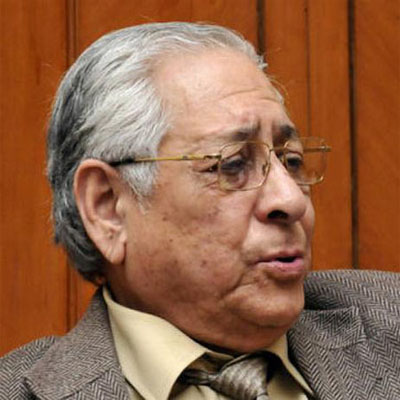
    Former attorney general of India Soli Sorabjee has agreed to come on board as an ombudsman who will provide independent perspective on the coverage of the channel as well as investigate into complaints by viewers. It is also a first such initiative by a news channel.

    NDTV editorial director and president of the Ethics Committee Sonia Singh said, “Every day, we in the media face new editorial challenges regarding journalistic boundaries and we are delighted that Sorabjee will, with his unchallenged integrity, be able to provide much needed insight and advice.”
        

    A new link has been created called www.ndtv.com/soli to address the issues. Speaking on his appointment NDTV Group vice chairperson KVL Narayan Rao said, “Soli Sorabjee is an independent, highly respected, highly regarded legal luminary, with years of experience in handling issues relating to freedom of expression and freedom of the press and censorship. We are delighted he has agreed to be the Ombudsman for NDTV.”

    As a jurist he has argued several cases of constitutional importance in HCs and SCs particularly relating to freedom of press, censorship etc.

    NDTV Group CEO and executive director Vikram Chandra added, “NDTV has always been committed to the highest standards of integrity and balance in its news coverage and we have now decided to take that one step further by appointing an independent Ombudsman who can adjudicate on any issues that may come up in the future.”

    We at indiantelevsion.com feel that Sorabjee with his experience may just be beneficial to the channel.

  • NDTV to set up subsidiary for convergence & tech biz; plans to enter e-commerce

    NDTV to set up subsidiary for convergence & tech biz; plans to enter e-commerce

    MUMBAI: News broadcaster New Delhi Television Ltd (NDTV) is setting up a new subsidiary where it will park its convergence and technology businesses.


    The company has also decided to enter into e-commerce business through its subsidiary, NDTV Worldwide.


    In the restructured form, NDTV Ltd will, thus, have four subsidiaries, each looking after a separate business. While NDTV News will take care of the news broadcasting business, NDTV Worldwide will be responsible for the media consultancy and e-commerce part. NDTV Network will constitute the lifestyle business and the fourth subsidiary will combine Convergence and NDTV Labs, which will manage the content delivery aspect of NDTV’s business.

        
    As part of an exercise to simplify the structure, NDTV Labs will get merged into NDTV Convergence. “This was the most natural step to take. Convergence is a growing business,” said NDTV Group vice-chairperson KVL Narayan Rao said.


    NDTV Convergence was set up to exploit the synergies between television, Internet and mobile and it also owns the website ndtv.com. NDTV Labs focuses on development of broadcast graphics systems.


    Asked if NDTV is merging the step-down subsidiaries for raising capital or bringing in an investor, Rao said, “This is not why it is being done. Convergence is self-funded.”


    For the year ended 31 March 2012, NDTV Convergence recorded a fivefold jump in net profit. Revenue rose by 60 per cent over the last fiscal year.


    NDTV WorldWide also turned profitable. Net profit doubled in the fiscal ended 31 March 2012, while revenue tripled over the year-ago period. NDTV, however, does not disclose the exact financials of these two outfits.

  • NDTV Q2 net loss widens as revenue slips

    NDTV Q2 net loss widens as revenue slips

    MUMBAI: NDTV has widened its second-quarter net loss from the news business as revenue has slipped, but forecasts a strong recovery in the three-month period running to December as advertising spends rise on account of a prosperous festive season.

    The company, which runs English and Hindi news channels NDTV 24X7 and NDTV India, has posted a net loss of Rs 342.7 million compared to a loss of Rs 118.5 million in the earlier year.

    Income from operations for the quarter under review slid to Rs 656.5 million, down 8.39 per cent as compared to the year-ago revenue of Rs 716.6 million.

    Operating loss (from operations before other income, interest and exceptional items) stood at Rs 298.3 million, as against Rs 75.8 million in the previous year.

    “It has been a bad quarter generally for everybody in the news business from a revenue perspective. In the earlier year, some stability had come into the market in the second quarter. But the good news is that there seems to be a strong recovery in the third quarter coinciding with the festive season,” says NDTV Group CEO KVL Narayan Rao.

    NDTV‘s standalone expenses rose 22.05 per cent to Rs 982 million, mainly due to distribution expense. “Overall, costs are under control. The quarter saw a rise mainly on account of distribution expense,” explains Rao.  
         
      Meanwhile on a consolidated basis, NDTV’s net loss narrowed to Rs 676.3 million, from Rs 855.9 million in the year-ago period. However, the consolidated results for the year-ago period include the results of operations of Turner General Entertainment Networks (formerly NDTV Imagine) and its subsidiaries in which NDTV Group had diluted its holding to a minority stake on 23 February 2010. Thus, the company clarified that consolidated results for the quarter ended 30 September 2010 are not comparable with the corresponding previous period.

    Income from operations was at Rs 784.8 million, down from Rs 1.43 billion, while total expenses reduced from Rs 2.12 billion to Rs 1.44 billion.
     

  • ‘NDTV is adequately funded to support its expansion’ : Narayan Rao – NDTV Group CEO KVL

    ‘NDTV is adequately funded to support its expansion’ : Narayan Rao – NDTV Group CEO KVL

     NDTV Ltd is on an expansion overdrive. In over a year, it has launched a slate of channels and moved beyond news into the lucrative Hindi general entertainment space.


    The company has attracted NBC Universal to pump in $150 million for an effective indirect holding of 26 per cent stake in NDTV Networks Plc. Further capital infusion of $120 million has come from a clutch of investors.


    NDTV’s stake in the joint venture company with Malaysia-based Astro has increased from 20 per cent to 30 per cent. The company has also launched NDTV Arabia to tap customised channels in international markets.


    Shepherding this growth has been NDTV Group CEO KVL Narayan Rao. In an interview with Indiantelevision.com’s Sibabrata Das, Rao chalks out the company’s expansion plans and the need for the group to consolidate its operations.


    Excerpts:

    Is NDTV floating a joint venture company with The Hindu Group to launch a Chennai city-centric channel?
    We are setting up a joint venture company with The Hindu Group where we will hold 51 per cent. The Hindu Group will have the balance 49 per cent and the JV will launch MetroNation Chennai in the next 3-4 months. Hindu is a reputed brand at the regional and national level. So we decided to have a content and commercial relationship. It was a natural gravitation towards each other.

    Will we see NDTV get into more such deals with print owners to tap regional markets?
    Regional news is not something on our radar. Our area of expertise is in English and Hindi language news. Our strategy is to do city-centric channels.

    Are the MetroNation channels being transferred to a subsidiary company called NDTV News Ltd?
    The intent is there to have MetroNation as a subsidiarised company. Since it has separate business requirements, we have got a chief executive officer for it. A distinct entity will bring in greater efficiencies.

    NDTV ended last fiscal with a consolidated loss of Rs 1.86 billion. When do we see a turnaround?
    We are in the stage of incubating various businesses. We have seen exponential growth over the last one year and have expanded into the non-news segment as well.


    We forayed into the Hindi general entertainment space with NDTV Imagine in January this year and have just launched Imagine Showbiz. We launched MetroNation in Delhi last year and it is doing well in terms of audience and reach. Now our focus will be to monetise this.


    We have already obtained licence for the World Cinema channel and will be launching it in the next couple of months. MetroNation in Mumbai will probably come up in the next fiscal. We have our plate full.

    Is NDTV spreading itself too thin?
    There are opportunities and media companies are exploiting this. There is, however, an expectation from the marketplace to grow the topline which is putting unnecessary pressure on several media firms. Nobody is given a chance to consolidate. We need to structure that expansion and build the management bandwidth.


    As for NDTV, we are adequately funded to support our expansion drives. We have have built the quality and ability to scale up. And in the news business, credibility is the only way to move forward.

    Regional news is not something on our radar. Our area of expertise is in English and Hindi language news. Our strategy is to do city-centric channels

    Will NDTV Networks Plc. raise money by listing on the Alternative Investment Market (AIM) of the London Stock Exchange?
    NDTV Networks has raised $120 million from a clutch of investors including $20 million from Velocity Interactive Group (earlier called ComVentures). This is the holding company for the verticals including NDTV Imagine Ltd, NDTV Lifestyle, NDTV Convergence, Labs and NGEN Media Services (50 per cent). We have decided that it is better to build the businesses rather than go for an initial listing.

    NBC Universal has the option to increase its stake from 26 per cent to 50 per cent. Will NDTV part with majority in its non-news company?
    NBC Universal has put in $150 million to subscribe to shares of our Dutch subsidiary company which will give it an effective indirect holding of 26 per cent in NDTV Networks. We will never part with control. The other investors are in NDTV Networks.

    Colors has made a strong debut. Will this affect the break even period of NDTV Imagine which reportedly has a funding support of $106 million?
    NDTV Imagine is well on track and is growing steadily. The funding is adequate to take it to EBITDA positive stage. I can’t talk about other GECs.

    While the trend in an entertainment bouquet is to have a GEC and a Hindi movie channel, NDTV Imagine Ltd has launched a niche channel in Showbiz through a joint venture partner. What is the holding structure and potential for this channel?
    NDTV Imagine Ltd will hold 51 per cent in the JV and the balance 49 per cent will be with Cinestar. It is a growing segment and has tremendous potential.


    The launch of a Hindi movie channel is also in the pipeline. We are already in the process of acquiring movies. We are also going to be present in film production.

    NDTV’s consolidated revenue was at Rs 3.66 billion for FY’08. What contributed to this 31 per cent jump in turnover over the year-ago period?
    NDTV 24X7 and NDTV Profit have seen strong growth. NDTV India’s revenues, however, are not growing at the same pace because of the editorial positioning it has opted to take.

    Isn’t there a temptation to take NDTV India the tabloid route as many Hindi channels have successfully done to grow audiences?
    Going the tabloid route is not our strength. That is not our USP. NDTV India is holding on to revenue because of quality. We believe in the long run, good news will prevail and more audiences will come in.

    How is the joint venture with Malaysia-based Astro faring?
    The venture has already launched channels in Indonesia and Malaysia. We were given 20 per cent stake against a fee that we were to charge Astro for our services. Our stake in the joint venture is going up to 30 per cent.

    NDTV Emerging Markets is a subsidiary company which launched NDTV Arabia. Are we going to see more such customised channels being launched in other countries through this company?
    NDTV Arabia will now break into local news bands. It is our first venture into the Middle East and Africa as a customised channel. Yes, NDTV Emerging Markets will launch more such channels in other international markets to provide local news content. It is part of our international expansion plan to reach out to new target audiences.
    NBC Universal’s investment of $150 million for 26 per cent stake in NDTV’s Dutch subsidiary company puts the valuation at Rs 24.2 billion. The market cap of NDTV Ltd, which includes the news channels as well, was marginally higher at Rs 24.5 bn (July-end). Since the true value is not captured, is this the reason why NDTV Ltd is planning to de-merge the company into “news related businesses” and “non news businesses?”
    The aim is to unlock shareholder value and to promote the focused growth of our various businesses. Consultants are working on this and we will evaluate various options after receiving their feedback.
  • NDTV announces three CEO appointments

    NDTV announces three CEO appointments

    MUMBAI: NDTV announced the appointment of three leaders to head the group’s new growth ventures.

    Vikram Chandra has been appointed as the CEO and managing director of NDTV Networks PLC, a 100% subsidiary incorporated in United Kingdom. Smeeta Chakrabarti will serve as the CEO of NDTV Lifestyle Ltd and Rahul Deshpande will take on the mandate of CEO of NDTV Labs ltd, the software and technology company.

    In his role as CEO of NDTV Networks, Chandra will be responsible for the group’s new business initiatives worldwide comprising entertainment, lifestyle, convergence, outsourcing, new channels set up in different countries and software/technology development. Chandra will report to the CEO of the NDTV Group KVL Narayan Rao and to the Board of Directors of NDTV Networks.

    Chandra has been leading the company’s growth initiatives for the past one year and has played a significant role in incubating several of these businesses. He has served as CEO of ndtv.com, the company’s internet and mobile content operations and as Managing Editor of NDTV Profit, the business news channel.Chandra will continue as an anchor and senior journalist on NDTV Profit.

    The group also announced the CEO of NDTV Lifestyle Ltd Smeeta Chakrabarti. NDTV Lifestyle will be responsible for launching new channels under the lifestyle genre.

    Smeeta has been with NDTV since its incorporation 18 years ago and will continue to carry out her group level responsibilities as head of operations for the NDTV Group.

    Rahul Deshpande has been appointed the CEO of NDTV Labs ltd. NDTV Labs will develop market and sell software and technology products and solutions created by in-house specialists that Deshpande will lead.

    Deshpande was earlier CTO of NDTV and has been heading engineering and IT for over 12 years.

    The group had announced the appointed of NDTV Group CEO KVL Narayan Rao earlier in the month.