Tag: KVL Narayan Rao

  • NDTV puts top management in place

    NDTV puts top management in place

    MUMBAI: There’s top management restructuring at the troubled news broadcaster NDTV group. The company has been at the receiving end with the income tax authorities for the past few years following “unjustifiable’ tax claims being imposed on it. And rumours have been abounding about its acquisition by other parties.  Late October , the Securities Exchange Board of India cleared them of charges related to delayed financial results disclosures at the end of financial year 2011-2012.

    The vacuum at the top – following the passing away of CEO KVL Naryan Rao – has been filled. The Prannoy Roy-Radhika Roy promoted company has moved NDTV Convergence Ltd CEO Suparna Singh to the corner office, managing the entire group as of 4 December 2017. The company’s website says that she ” as been with NDTV for 25 years and has the highest-level experience in all aspects of NDTV functions: editorial in both broadcast TV and internet, revenue and cost management. She has helped NDTV create and run a major new property in NDTV Convergence, which is internationally recognised. It is and has always been a profitable venture.”

    The group’s director finance and group CFO Saurav Banerjee has been elevated to co-CEO. According to the NDTV website, “as part of his role as Co-CEO, Saurav works closely with the CEO in looking at operations and oversees financial planning, taxation, legal and compliances. Widely respected across the financial world, Saurav has been involved in raising finances, capital restructuring, mergers & acquisitions and statutory compliances with more than a decade of service with the company.”

    Ravi Asawa is stepping into his shoes as group CFO, NDTV. Ravi has rich experience in corporate finance, mergers and acquisitions, treasury, corporate governance and financial processes across multiple knowledge domains like media, IT services, eCom and manufacturing industries. He is a finance professional with more than two decades of experience and has been the strategic backbone of the NDTV Group Finance team for more than nine years.

    The announcement was made to the Bombay stock exchange following the go-ahead at a board meeting earlier today.

    Also Read: http://www.indiantelevision.com/television/tv-channels/news-broadcasting/spicejets-ajay-singh-may-take-control-of-ndtv-170922

    http://www.indiantelevision.com/television/tv-channels/news-broadcasting/ndtv-profit-to-be-shut-down-to-move-business-finance-segments-on-ndtv-24×7-170602

    http://www.indiantelevision.com/television/tv-channels/people/ndtv-s-kvl-narayan-rao-passes-away-171120

    http://www.indiantelevision.com/television/tv-channels/people/obit-in-memory-of-kvl-narayan-rao-171121

    http://www.indiantelevision.com/television/tv-channels/news-broadcasting/ndtv-promoters-get-clean-by-sebi-chit-in-disclosure-case-171025


  • Obit: In memory of KVL Narayan Rao

    Obit: In memory of KVL Narayan Rao

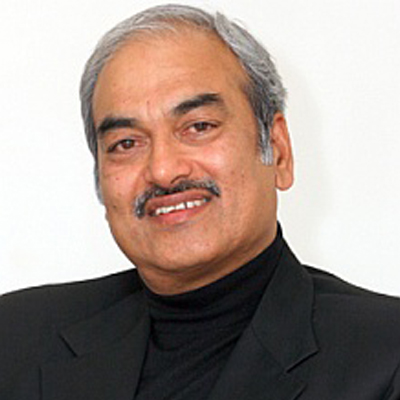
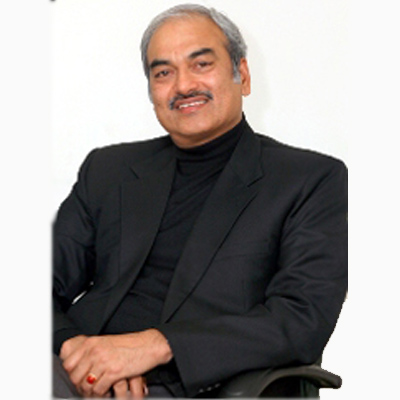
    NDTV group CEO and executive vice chairperson KVL Narayan Rao had been battling cancer grittily for at least a couple of years. And, at times, it looked like he was on the verge of conquering it, of getting the life-threatening ailment out of his system. But on the morning of 20 November 2017, his body, which had been ravaged and weakened by various treatments and the cancer itself, gave up.

    A message was sent out to the staff of NDTV by promoters Prannoy and Radhika Roy stating that the 63-year-old Narayan Rao was no more.

    Said the husband-wife duo in the message: “Narayan was the most wonderful human being—kindness was in his DNA, consideration for others was in his DNA, leadership was in his DNA, warmth and generosity were in his DNA, humour and fun were in his DNA and most of all, integrity and love was in his DNA.”

    “Narayan was our friend for over 30 years and we loved him like a brother. We learnt so much from Narayan and admired how he created a compassionate environment at NDTV and, in fact, everywhere he went, with everyone he met. Just as we loved him, there are hundreds of others like us for whom Narayan was very, very special. Seldom has a person been loved by so many and will be deeply missed by so many.”

    “Narayan was one of a kind. A towering personality in every way.”

    Indeed, for us at indiantelevision.com, dealing with the six-foot-plus Narayan was always a pleasure. He came across as a gentleman every time one spoke to him or met him. Not once in the many years of knowing him did we see him lose his cool. Whether it was a rookie journalist reaching out to him for his insights or his quotes on an issue or story. Or whether it was an experienced journo who called him, Narayan was always there. And, if not available, he was gracious enough to call back. He would always be open to provide a different perspective on any issue. He had the old English demeanor, the unflappable kind, the kind that saw him break into a smile no matter what the challenge or demand. Probably, his early days as a journalist gave him that empathy for scribes.

    He was also there when we invited the NDTV group to participate at our News Television Awards. In the early days of the awards, he would find resources to support our initiative financially as a partner. In the past few years, thanks to NDTV’s financial woes, he had asked to be excused. But he would be there to present awards to the winners who were decided by a jury of almost 100. Like he was there last year at our function in New Delhi when it looked like he had won against the dreaded C and he came back to run NDTV, following the stepping down of the then CEO Vikram Chandra.

    He was seen as this statesman-like professional who could lead. And be the voice of the industry despite the long standoff that NDTV was having with the income tax authorities, the enforcement directorate, and, some say, even the government. Hence, he served at least four terms as the News Broadcasters’ Association president and was executive vice-chairperson of the association at the time of his passing away. He was also associated with the IBF, the CII, and several other bodies.

    Narayan was always there for the Roys and the team at NDTV, for whom he stood up for with consistency. Appan Menon, Barkha Dutt, Rajdeep Sardesai, Arnab Goswami, Pankaj Pachauri, and Vikram Chandra–they all flowered as Narayan laid the environment, the culture at NDTV that allowed them to. The Roys were busy running the editorial while Narayan ran the company administratively and also helped build the organisation into a rather robust one. Until the empire struck back.

    Narayan was also at the forefront of bringing in change in TV viewership monitoring in the country. He took TAM and its parents to court in New York, claiming that their research was not representative of what was really happening in Indian TV homes. That and other actions from other broadcasters led to the shutting down of TAM, the creation of new regulations for TV viewership monitoring, and the setting up of BARC.

    Said the Roys in their note on the NDTV website: “We will miss you, Narayan. More than you can imagine. Everyone at NDTV will miss you. More than you can imagine. God bless you, Narayan.”

    Indeed, you will be missed Narayan. RIP!

  • NDTV to provide content to unique metro-rail media system, partners XTD

    MUMBAI: Premier television broadcaster NDTV is preparing to provide content to billboard-size digital TV screens installed in the Delhi Metro Rail network. NDTV, a leading news and infotainment network, is one of the first channels to launch innovative news and lifestyle channels.

    The NDTV content will be part of the demonstration of a cross-track digital video and information system being installed within the Delhi Metro Rail system by international transit technology company XTD Ltd. It is anticipated that beyond the demonstration the XTD screen system will be extended to broader sections of the Delhi Metro. XTD is a transit technology business that designs, creates and maintains the world’s leading metro-rail, digital cross-track media systems.

    A unique screen format has been created by XTD using NDTV’s award winning news content for the cross-track media demonstration. Content will alternate between Hindi and English and will be updated through each day. The layout of the screens will be unique and feature news, finance, sport, weather and entertainment updates.

    XTD’s digital cross-track media system is designed for metro rail and offers the world’s highest broadcast standards for media in metro rail environments. The system consists of large LED screens and high-fidelity sound capabilities that engage commuters with long and short form content including general news, sport, entertainment, business updates and weather.

    “The demonstration of the XTD systems in the Delhi Metro sees the introduction of a unique new media to India,” said NDTV Group CEO & executive vice-chairperson KVL Narayan Rao. “This is a most exciting opportunity to reach an audience with relevant and timely video and sound content. This audience is previously used to static images on train platforms, but the XTD systems transform the cross-track experience for commuters.”

    XTD CEO Steve Wildisen said, “We are excited to receive early interest from large and respected brands in India and we will focus on turning these leads into commercial opportunities. The XTD digital media systems are unique in the world and capable of transforming sections of metro rail stations into far more engaging environments for commuters and brands.”

  • Vikram Chandra steps down; KVL Narayan Rao is new NDTV group CEO

    Vikram Chandra steps down; KVL Narayan Rao is new NDTV group CEO

    MUMBAI: The rumours that were making rounds of Vikram Chandra stepping down from his post at NDTV have now been put to rest.

    The NDTV informed the Bombay Stock Exchange (BSE) that the company Board of Directors has approved the decision of Chandra to step down from the position of the group chief executive officer (CEO) and executive director of NDTV with immediate effect.

    Chandra was appointed the group CEO in 2011 for a term of three years which was further extended by another two years. Chandra has expressed the wish to return to full time journalism within NDTV and focus on the TV shows of the Group. Chandra will continue with the Company as Consulting Editor.

    The Board while accepting the decision of Chandra placed on record its appreciation of his valuable contribution as CEO. The Board on the recommendation of the Nomination and Remuneration Committee today approved that the executive vice-chairperson KVL Narayan Rao take over additional responsibilities as the Group CEO of NDTV with immediate effect.

    Rao has been associated with the Company for nearly 22 years in various capacities including Group CEO and has been a key factor in the creation of NDTV.

    Rao has served three terms as the president of the News Broadcasters Association (NBA). He has also been on the Board of Indian Broadcasting Foundation (IBF) and V ice President of the Commonwealth Broadcasting Association. He continues to be on the Board of both the NBA and the IBF.

    Rao is one of the most respected leaders of the news broadcasting fraternity where he has often played a critical role.

  • Vikram Chandra steps down; KVL Narayan Rao is new NDTV group CEO

    Vikram Chandra steps down; KVL Narayan Rao is new NDTV group CEO

    MUMBAI: The rumours that were making rounds of Vikram Chandra stepping down from his post at NDTV have now been put to rest.

    The NDTV informed the Bombay Stock Exchange (BSE) that the company Board of Directors has approved the decision of Chandra to step down from the position of the group chief executive officer (CEO) and executive director of NDTV with immediate effect.

    Chandra was appointed the group CEO in 2011 for a term of three years which was further extended by another two years. Chandra has expressed the wish to return to full time journalism within NDTV and focus on the TV shows of the Group. Chandra will continue with the Company as Consulting Editor.

    The Board while accepting the decision of Chandra placed on record its appreciation of his valuable contribution as CEO. The Board on the recommendation of the Nomination and Remuneration Committee today approved that the executive vice-chairperson KVL Narayan Rao take over additional responsibilities as the Group CEO of NDTV with immediate effect.

    Rao has been associated with the Company for nearly 22 years in various capacities including Group CEO and has been a key factor in the creation of NDTV.

    Rao has served three terms as the president of the News Broadcasters Association (NBA). He has also been on the Board of Indian Broadcasting Foundation (IBF) and V ice President of the Commonwealth Broadcasting Association. He continues to be on the Board of both the NBA and the IBF.

    Rao is one of the most respected leaders of the news broadcasting fraternity where he has often played a critical role.

  • Media fraternity welcomes GST; few pose doubts over implementation

    Media fraternity welcomes GST; few pose doubts over implementation

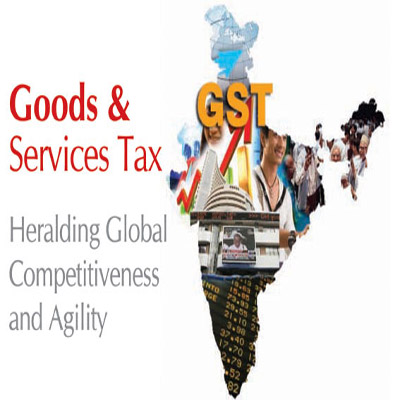
    MUMBAI: Amidst strong controversy, Arun Jaitley led finance ministry of India tabled the Goods and Service Tax (GST) in the parliament for further debate. GST is often termed as India’s most ambitious indirect tax reform plan by economists, which aims to stitch together a common market by dismantling fiscal barriers between states. It is a single national uniform tax levied across the country on all goods and services.


    The indirect tax system in India is currently mired in multi-layered taxes levied by the Central and State governments at different stages of the supply chain such as excise duty, central sales tax (CST), value added tax (VAT) and octroi tax, among others. In GST, all these will be subsumed under a single regime. 


    Even as the entire opposition party, led by Sonia Gandhi, posed a walk out from the Parliament in protest against the procedure and particulars of the amendment, Indiantelevision.com took the opportunity to seek reactions of the vanguards of the media, cable and Direct-to-Home (DTH) industries on GST. While industry stalwarts welcomed the thought behind GST unanimously, a few posed doubts over its successful implementation.


    Dish TV CEO RC Venkateish says, “It will be good for the DTH sector. At present we are victims of multiple taxation system where we pay various taxes in entertainment tax, service tax etc. With GST, it will all get rolled under one. If the GST is approved and rolled out, we will have a tax reduction of three to 3.5 per cent and hence it will be a good move for the sector.”


    Welcoming GST wholeheartedly, Videocon D2H CEO Anil Khera opines, “GST is a welcome move. It will help the DTH sector to prosper. DTH is the biggest victim of multiple taxation policy and GST will simplify that. The industry needs a uniform taxation system and the sooner it comes the better it is.”


    Explaining why GST is good for the economy in the long run, Times Network CEO MK Anand says, “GST brings uniformity and transparency and therefore better administration. However, in the short term, there are expected to be issues. Broadcasting will move from CST, which we believe will be lower than GST as we expect and that is going to put pressure on our pricing. The broadcast ecosystem at the bottom end has elements like consultants or local operators, who may try to push for absorbing into prices. The other thing is the state wise registration and filing of GST as against the current centralised filing. This is also an additional activity that we will now have to account for and so it increases costs to some extent.”


    GTPL Hathway COO Shaji Mathews supports the concept behind GST but has doubt on its successful implementation. He explains, “Taxation has been the biggest issue when it comes to digitisation. With digitisation, often only three stakeholders are associated namely: multi system operators (MSO), broadcasters and local cable operators (LCO). However in actuality, there are two more parties involved – the government and consumers. Government has been the major gainer so far from digitisation and they have been trying to shift the tax burden on to the consumer. However the consumer is not ready to take it and hence operators have been bearing the brunt of it all. With GST, the concern is over entertainment tax, which varies from state to state. No clear information is provided whether entertainment tax will be included in GST and if yes, then at what slab. So overall, while the thought behind GST is good, there are a lot of question that are still unanswered. Moreover, since the government hasn’t made any efforts to rationalise taxation, the implementation is something that remains to be observed closely. The problem is with the mechanism that the government follows, where they don’t consider the tax payers’ point of view while implementing an amendment.”


    Another senior official from the cable fraternity asserts, “GST has the potential to emerge as a blessing in disguise. As we proceed with digitisation, uniformity in taxation is the least that we can expect. It has been very harsh on us, as we operate across different states and at times we end up paying tax for an already taxed item, which is not something that we should be facing. Overall, I welcome GST and see it as an encouraging move though only time will unfold the real story.”


    NDTV executive vice chairperson KVL Narayan Rao adds, “Frankly, GST deals more with Goods and Service providers and doesn’t impact us directly but I consider it as a beneficial move. For example, if I have to set up a new studio at a new location, GST will help me as I won’t pay multiple taxes and hence it affects the pricing.”


    Backing GST, entrepreneur Ronnie Screwvala opines, “A business friendly environment had to be developed in India and taxation is a key element to that. With the Goods and Service Tax, service tax will come down to 16 per cent, which solves many problems. Hence GST is a firm step forward towards developing a business friendly scenario in India and it will surely help the country to ensure economic growth.”


    As per information available, the government is expected to rollout GST by April 2016.With absolute majority in the Lok Sabha, it will not be a challenge for the government to pass it through in the lower house. However the bigger obstacle will come from the Rajya Sabha as Jaitley and company will have to penetrate through a larger opposition. The entire business fraternity will keenly observe the next few days of proceedings in both houses of the Parliament.

  • Increase in FDI cap: a boon or a curse?

    Increase in FDI cap: a boon or a curse?

    MUMBAI: From a recent speech of Information and Broadcasting (I&B) Minister Arun Jaitley, speculation was drawn of a probable increase in foreign direct investment (FDI) cap from 26 per cent to 49 per cent. The current government has always been in favour of FDI and on numerous occasions stated FDI as one of the major aspects behind economic growth and reform. 


    The government has already taken steps towards increasing FDI in various departments, railway and defense being among them. Hence the speculation of increase in FDI cap in media may soon turn into reality.


    Foreign investment will certainly ensure development of channels, more employment and better quality, but will it in return take away editorial freedom? Will Indian media be a victim of foreign dictatorship or will it manage to keep its integrity alive despite foreign investment? Will we have Indian CEOs and reporters after the investment or will strategic affairs slip away from Indian entrepreneurs? A larger democratic debate on the issue is extremely important and Indiantelevision.com took the initiative to find the answers from media stalwarts.


    NDTV executive vice chairperson KVL Narayan Rao said, “On this FDI development my comments are personal remarks and not a point of view of the company. I welcome this increase whole heartedly as it will allow more investments and result to better service in terms of producing quality programmes. And the only difference we are having is added investment; we will continue to have Indian editor in chiefs, reporters and video journalists.”  


    On the speculated increase in FDI cap to 49 per cent, News Nation network CEO RK Arora said, “Increase in FDI will be extremely favourable, news industry needs to expand and the increase in FDI cap to 49 per cent will be a boon for us. Moreover we see increase in other departments so why not in this industry. If we are to match the standards with international content we need investments from foreign investors.” 


    For Arora, there is no harm in increasing FDI to 49 per cent “but the investment should not dictate the strategic affairs, and there shouldn’t be any interference in editorial freedom,” he added.


    Though the news industry is extremely positive about the possible increase, none of them are ready to compromise with strategic and editorial affairs. 


    Focus News managing editor Shailesh Kumar said, “If FDI is increased in news it would be a very good decision as most of the channels are going through a tough time and we need investment from other sources to rejuvenate the industry.”


    ABP News CEO Ashok Venkatramani is of the same opinion. “We (ABP News) are in total favour of the increase and I don’t see any possibilities of editorial or strategic affairs getting influenced due to any investment. If this actually happens then we will develop and grow big. Hence I am very happy that the point has been raised. We welcome the increase in FDI cap,” he said.


    No second thoughts came from any of channels; while they unanimously welcomed the increase in FDI cap to 49 per cent, they also held a firm grip on not compromising with editorial or strategic affairs. 


    Now it remains to be seen how things develop and whether the issue is debated at the top level. Considering the fact that the current government is concentrating on building an open market scenario to ensure economic growth and reform, speculations of a possible increase in FDI cap to 49 per cent can soon be a reality.

  • World TV Day: Industry barons go down the memory lane

    World TV Day: Industry barons go down the memory lane

    It was on 15 September 1959 when India officially experimented her tryst with the box that has been loved, loathed and equally criticized over the years.  But today, in its current avatar, the television set has seen a paramount shift, right from colour television being introduced in 1982 as India geared up for the Asian games to today’s 4K technology.

    Production values of various shows as well as the viewership experience have changed phenomenally.  As the world today celebrates World Television Day which was declared by the U.N in December 1996, indiantelevision.com speaks to some of India’s most notable names from the TV industry recalling some of their fondest memories of viewing television programmes.


    Prasar Bharati CEO Jawhar Sircar

    Television needs to look beyond its traditional ecosystem to embrace the opportunities offered by digital technology. The medium will die if it continues to grow in a linear fashion. TV began over electro-magnetic waves in 1959 and has grown through satellite to cover the entire country.

    While terrestrial TV has its own relevance, it will be quickly overtaken by new technologies including satellite and digital addressable systems.


    India Today Group consulting editor Rajdeep Sardesai

    For me my fondest memory was the coverage of the live elections in the years of 1995-1996. At that time, everyone would watch the national broadcaster Doordarshan as there were no private news channels. Covering the elections as a reporter along with journalist like Vinod Dua and Dr Pranoy Roy is a big part of those memories for me.


    NDTV executive vice chairperson KVL Narayan Rao

    Television today is more contemporary. Society has changed a little and what you have on air is reflective of that. The world has become a smaller place. There is more access now as compared to 25 years ago when the only window to international news was The Week That Was, produced by NDTV as one of the earliest private players. I remember serials like Buniyad, Humlog, Mahabharat and Ramayan. Some of the old ones were core of the heart serials and dealt with issues that were the reality of so many people of the country at that time such as post partition. The serials now have different production values.


    Sony Six business head Prasana Krishnan  

    Sports on television is growing rapidly and the Indian sports fan today has more access to viewing multiple properties than any other fan in the world and that too at an affordable cost. My fondest memory has to be this year’s FIFA World Cup Brazil as not only was it personally satisfying for me as a football fan but  a matter of pride to be carried on the channel. Every minute of the game on TV was engaging.


    Ten Sports CEO Rajesh Sethi

    Viewing television programmes is an enriching experience and is all about entertainment, entertainment and entertainment! Watching television especially sports is a great stress buster and allows me to relax. In fact watching sports on TV for me is all about celebration.


    Gasoline, founder and chief creative officer Anil Kakar

    From just two Doordarshan channels to over 800 channels today, television has come a long way. The good thing is, content continues to get more defined to suit niche audiences.  With the recent changes announced by the Star Network, viewers now have the choice of subscribing to specific channels on an a la carte basis. It will be interesting to see how this will go on to alter viewing patterns. In the long run, this might even lead to a shift of focus, largely from GECs to more diversified, niche content, as television gets more fragmented. Ultimately, as audiences, we will have even greater choice than we have today. Even with so many channels today, I would say the finest moments in television belong to the 90s. MTV and Channel V brought in a cultural change and attitudinal shift of sorts. Programmes such as Different Strokes, The Wonder Years, Mind Your Language and Star Trek were had to miss and are still hard to forget.

  • Carriage fee on a rise again?

    Carriage fee on a rise again?

    MUMBAI: Delayed digitisation of phase III and phase IV areas have marred the hopes of broadcasters, multi-system operators (MSOs) and the local cable operators (LCOs) alike. With implementation of digitisation in phase I and II, while broadcasters were enjoying the reduced carriage fees, MSOs were hoping for better on-ground collections with increasing transparency. But all this has taken a U-turn with the Ministry of Information and Broadcasting announcing 2016 as the year when India will be fully digitised.

    The MSOs who have invested heavily for digitising phase I and II markets are still waiting for reaping the benefits of it. And now even the broadcasters who saw some reduction in carriage fees (industry sources peg it between 10 per cent to 30 per cent) during the first two phases have gone back to basics.

    If one has to go by the Media Partners Asia (MPA) report, the cable TV industry has seen a 14 per cent jump in carriage fees. The reason for the jump in carriage fee could be many. Here are a few reasons which we understand could be playing a role in the changed carriage fee pattern:

    1)    Delayed digitisation: The MSOs have already invested heavily in phase I and II and have also borrowed money for phase III and IV markets. Now with the government announcing the final dates for digitisation as 2015 for phase III and 2016 for phase IV, MSOs fear that the LCOs will not increase their collections from the ground.

    2)    Low ARPUs: Even in phase I and II areas, the ARPU hasn’t gone up as expected by the MSOs. And so they haven’t been able to recover the money they had invested.

    3)     New channel launches: Broadcasters launching new channels need greater reach and visibility and so pay more in order to get carried by the platform and also to ensure that it is available to all the subscribers of the platform. This in turn sets a benchmark for the other players also.

    4)    Lack of transparency: Even though one of the aims of digitisation was bringing in transparency and addressability, both haven’t happened as yet. The cable operators have not been able to get the consumer application forms filled and thus, are still unaware of the choice of consumer. Also, there is still under declaration of consumers. 

    “This is true especially for news channels, niche channels and the new channels that have been recently launched. While the existing channels have not seen any hike in carriage fees, broadcasters that launched new channels in the different genres, right from GECs to regional to music and movies have seen a jump in carriage fees, which ranges from 15-25 per cent,” says a distribution head on condition of anonymity.

    Another source close to the development agrees and says, “Yes! The carriage fee for broadcasters launching new channels have gone up. This can be anywhere between 20-25 per cent, depending on the distribution strategy of the broadcaster and the visibility it is looking for.”

    Many in the industry blame the new channel launches for the increase in the carriage fee. “While for the news channels the carriage fee had seen a drop by 10-15 per cent, the new channels that are being launched every now and then, sets a different benchmark. Since broadcasters want better reach for their new channels, they pay huge sums as carriage fee to MSOs and this affects the news channels as well,” says a news broadcaster.

    Even at the recently concluded MIPCOM 2014, Colors CEO Raj Nayak during a panel discussion had stressed that there needs to be complete implementation of digitisation. “While in the phase I of digitisation, the carriage fees had come down by 20 per cent, it has now gone back to square one and this is a dangerous trend,” he had then said.

    Viacom18 group CEO Sudhanshu Vats feels no different. In his recent interaction with Indiantelevision.com he had said, “Carriage, rather than continually coming down, has begun to rise again in recent months.”

    According to India TV chairman and editor-in-chief Rajat Sharma, when digitisation kickstarted, news broadcasters expected consumers to get better quality channels and carriage fees to disappear. “For the MSOs, it is the carriage fee from the news channels that helps them sustain, since they pay the GECs huge sums for getting their programming on their platform,” opines Sharma.

    Unlike the expectations by many, carriage fees haven’t yet been abolished.  “When phase I of digitisation was implemented, carriage fees did come down in terms of what was being paid in the four metros. The national level MSOs saw the benefits of digitisation and passed on some of that benefit to broadcasters. However, with phase II, it hasn’t happened. On the contrary they are going up and extortionist demands are being made again. Perhaps because in other parts of the country the MSOs are in partnership with local or regional players who do not want to let go of carriage fees even though that was meant to be a natural outcome of digitisation,” informs NDTV executive vice chairperson KVL Narayan Rao.

    Rao further adds, “It is impossible for news broadcasters to withstand payment of high carriage fees. Other components of digitisation like buoyant and fair subscription revenues, have not kicked in either. Something needs to be done about these aspects immediately. Carriage fees in particular have to be rationalised.” Rao also pegs the carriage fee increase between 10-30 per cent.

    As for Focus Network group CEO Neeraj Sanan, carriage fee revenues for MSOs are likely to reduce. “However the carriage paid by a broadcaster to an MSO, will increase post first year of DAS due to aggregation at MSO level and the ever increasing number of channels,” he adds.

    Even the MSOs agree that the carriage fee has seen an upward trend. “This is true mostly for the new channel launches. Broadcasters want better reach for their new channels and are ready to pay more carriage fee for those channels. The new channels are seeing a hike in carriage fee by about 20-25 per cent,” concludes the MSO.

  • Industry touches base with family, this Diwali

    Industry touches base with family, this Diwali

    It is that time of the year again! Diwali, also known as the festival of lights, lives up to its name, filling every nook and corner of our streets with bright decorations and fireworks. Whether you talk about shimmery clothes, tasty food or wonderful traditions, one cannot deny the excitement associated with this festival. We buy gifts for ourselves and loved ones, feast on good food, visit our relatives and decorate homes with glowing lamps and rangoli. A festival that signifies the triumph of light over darkness and good over evil, the story behind Diwali has a strong base in Indian mythology. Diwali commemorates the return of Lord Shri Ram with his wife Sita and Lakshman from his 14 year long exile after killing the Ravana. In joyous celebration of his victory, the people of Ayodhya lit up tiny lamps at their homes, signifying positive energy. These days, people host a range of Diwali bashes to celebrate the occasion. A typical day normally starts with a Lakshmi puja, followed by visiting family and friends. Diwali is also an occasion for us to meet our loved ones, exchange gifts, socialise and bond.  The festival can also signify a chance for us to bring light into the lives of others. With all these meanings attached to this event, it is no wonder that Diwali is one of the most widely celebrated festivals in India and abroad. Likewise on this day, we found out how the media industry is celebrating Diwali. Take a look!

    Divya Radhakrishnan, Managing director, Helios Media

    “We are keeping an open house at my office today post 4 pm where friends, colleagues and families can come in to celebrate the occasion with us for some good food and alcohol.”


    JD Majethia, Actor-Director-Producer, Hats Off Productions

    “This year, there are lots of good things happening work wise. Our show Badi Door Se Aaye Hain just completed 100 episodes. Our viewers have given us so much love that even we want to give back the same kind of affection. We have prepared Diwali special episodes for the show. On a personal front, Diwali is very nostalgic for me. As I am a Gujarati, it signifies a new year for us. I just came back from a vacation with my family. And I intend to visit my relatives and celebrate Diwali with a bit of fireworks!”

    Karthik Lakshminarayan, COO, Madison Media

     “This Diwali, children from an orphanage have been invited to our office. Food and donations were collected as we want to spread happiness in their lives. At home, I will spend time with family and visit friends. I will avoid bursting crackers as I believe in an eco-friendly Diwali.”


    KVL Narayan Rao, executive vice chairperson, NDTV 

    “I would be having a small celebration at home with family and friends.”


    Navin Khemka, managing partner, north and east region, Maxis

     “At office, we had a puja followed by lunch with colleagues. On a personal front, I plan to spend the time with family and friends at home. A puja will be conducted at home and it will be an eco-friendly Diwali at my place.”


    Nisha Singhania, co-founder, Infectious

    “We are just having a quiet Diwali celebration. I am taking my office colleagues out for lunch at a vegetarian restaurant in Mahim.”


    Shantanu Gangane, marketing head-Movies Now, Times Television Network  

    “At work place, Diwali snacks and gifts are being distributed. I also plan to visit my weekend home with my family and friends. I want to spend quality time with my kids and teach them about the mythological characters pertaining to Diwali instead of just bursting fire crackers. I prefer a noise-free Diwali.”


    Sudhir Sharma, producer, Sunshine Productions

    “I will be going ‘party hopping’ to different Diwali events hosted by colleagues in the industry. Diwali means happiness. It is like a motivation to work harder for the upcoming year. This year will be different as I will not be going back to my parents’ house. Instead, I will be attending a lot of parties in Mumbai hosted by my fellow co actors and friends from the industry.”

    Yash Patnaik, producer, Beyond Dreams Entertainment  
    “I am in the midst of getting my office renovated. This year will be a working Diwali for my entire team.”


    Here’s wishing all our readers a very happy and prosperous Diwali from the entire team of Indiantelevision.com !