Tag: Kurush Grant

  • Self-regulation is fine, but there is a need for govt backing: Parida

    Self-regulation is fine, but there is a need for govt backing: Parida

    NEW DELHI: Even as it acknowledges the role of self-regulation in curbing misleading advertisements, the government feels there is a role for powerful execution backed by a government authority.


    Consumer Affairs Ministry joint secretary Manoj Parida said that the Advertising Standards Council of India (ASCI) should have ex-officio members as part of its consumer complaint council meetings.


    At the outset, Parida said an advertisement is one that ‘gives casual leave to human intelligence’. Addressing a round-table on the subject of misleading advertisements organised by the Federation of Indian Chambers of Commerce and Industry (FICCI), he said the biggest problem in India was the low rate of literacy which resulted in the average consumer falling for any promises made through advertisements.


    While he acknowledged the role of the ASCI, he said it was a ‘friendly organisation’ of a few business houses. He said this was why self-regulation had not worked very well. There is a need to create an army of ‘ad monitors’.


    Even the courts have suggested setting up of an inter-ministerial committee for the purpose of checking misleading advertisements, he noted. He said the newly-formed inter-ministerial monitoring committee which is being constituted with the sole aim of monitoring misleading advertisements for protecting consumers could serve as the missing executive arm to ASCI. The committee will monitor misleading advertisement and unfair trade practices and suggest steps accordingly, he added.


    He noted that one major lacuna in the Consumer Act was that it only gave judicial remedy and therefore many consumers did not complain as court processes take much longer and there is no consumer protection agency.


    He also said there was need to put more money into creating consumer awareness.


    Elaborating on the role of ASCI and its future plans, ASCI Chairman Partha Rakshit said the council had been working since 1985. Since the Information and Broadcasting Ministry had given it recognition for hearing complaints, any direction given by it through the ministry’s IMC also applied to non-members. The ASCI worked on the three principles of honesty, decency and fairness.


    It was also incorrect to say that it only worked through friends since its Consumer Complaint Committees (CCC) had members of the civil society as well and the complaints were therefore heard by laymen. There were two CCC meets every week, each having around 14 members.


    In any case, two-thirds of the advertisements that appeared in the media were given out by ASCI members, though he admitted that this may work out to just around ten per cent of the companies in the country. He claimed that there was 85 per cent compliance with ASCI directions. He stressed that ASCI does not always wait for complaints and also takes suo motu action and some ads are suspended even before telecast.


    He said the bulk of countries around the world worked through self-regulation and India was no exception. Its 350 members included advertisers, advertising agencies, media and consultants.


    He said there was need to obtain legal authority for enforcing compliance of ASCI decisions by the print media, since the Cable TV Networks Regulation Act 1995 took care of TV.


    ASCI plans to cover print and social media (in internet) more extensively and Google and Yahoo had already come on board. It is also launching an online training programme on ASCI regulations targeted at young copywriters, agency executives and product managers in manufacturing/service companies.


    Speaking on consumer rights and remedies with regard to misleading advertisements, Germany’s GIZ consumer policy & protection Ruth Anna Buettner said that misleading and unfair practices were a global phenomenon. She added that the purpose of regulation should be proper functioning of markets and protection of individual consumer, mainly his contractual rights. Worldwide there are two ways of enforcement, one via public authority the other via courts, both accompanied by self-regulation institutions.


    Deliberating on the regulatory framework for misleading advertisements, Aazmeen Kasad and Law Practice Consultant owner Aazeen Kasad  said that to keep a vigil on the increasing incidents of misleading advertisements, the Central Consumer Protection Council (CCPC), apex body for consumer protection in India, has recently decided to draft guidelines to safeguard consumer interest from false advertisements in the country and set up a sub-committee to suggest strategies to deal with celebrity endorsements.


    FICCI FMCG Committee chairman & ITC ED Kurush Grant said all stakeholders – the NGOs and consumer forums, industry, self-regulatory body and the government – had unanimously agreed to work towards similar solution of empowering self-regulation. FICCI would work closely with ASCI and the Ministry of Consumer Affairs to tackle the menace caused by misleading advertisements.

  • R V Rajan’s Handbook: A guide to rural marketing

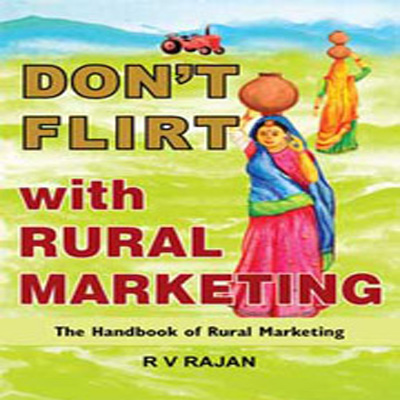
    R V Rajan’s Handbook: A guide to rural marketing

    MUMBAI: From being a Bombay boy to rural marketer specialist, RV Rajan has many stories to tell. The 72-year-old founder and former chairman of Anugrah Madison Advertising has written a new book – Don’t Flirt with Rural Marketing – or like he says “it’s my experience”.

    With around 40 years in the industry, the veteran says the research which went into writing the handbook is nothing but his experiences in the field. According to him, the income and aspirations of lower middle class and middle class is increasing, so no one can afford to ignore rural marketing. “It is from here that a lot of aspirations come from. And with brands offering almost 50 per cent of their products to this category, it is very important to focus on rural marketing,” he states.

    The TG for the book is marketers, MBA students as well as anyone who wants to know about the subject stresses R V Ranjan

    The chapters outlining the fourteen step approach include topics like Commitment from the top management, Choosing the right product, Understanding the mindset of the rural consumers, getting a dedicated task force, Developing focused communication strategy, Performance evaluation etc. The highlight of the book is the elaborate chapter on Below the Line Activities (BTL) which account for 80 per cent of the rural marketing efforts. In this chapter the author provides a detailed practical guide for any kind of road shows. “I have written the book in a very chatty and informal way so that it doesn’t read like a lecture. I want people to feel the experiences I went through,” he says while stating that the correct TG for the book is marketers, MBA students as well as anyone who wants to know about the subject.

    Another added feature is that many of the chapters are supported with appendices giving very useful contact details of individuals and institutions that provide support services to anyone interested in making a foray into rural marketing.

    When asked which are the companies which have paid attention to the field, he replies “HUL and ITC have been doing it for years now. But in the current scenario, the company which has created dominance in the rural market through its campaigns and initiatives is LG.”

    The book has a foreword by ITC executive director Kurush Grant who describes the book as the first usable manual for marketers. “Most serious marketing companies should make the book compulsory reading for all their marketing and rural sales teams”.

    According to the president of Rural Marketing Association of India and father of rural marketing Pradeep Kashyap, “The book is a must have for anyone involved in Rural Marketing because it has practical insights on Rural marketing which are invaluable for companies and agencies.”

    Rajan goes on to say that although rural marketing share has increased over the years and states like Punjab, Haryana among many others have gown fantastically one still needs to focus on it.

    The Rs 395 book which took around two years to write is published by Productivity & Quality Publishing (Chennai). The 130 page book is accompanied by a DVD containing video clips of some successful case studies of Anugrah Madison.

  • ITC’s Kurush Grant is new chairman of ISA

    MUMBAI: ITC Limited executive director Kurush Grant has been elected as the chairman of the Indian Society of Advertisers (ISA) at a meeting held on 11 September.

    ISA is the only national body of advertisers and its members from across industries contribute to over two-thirds of India‘s national non-governmental advertisement spends.

    The other office bearers of ISA are Bharat Bambawale (Bharti Airtel) is vice-chairman-north, N. Srikumar (IOCL) is vice chairman-west, Ajoy Chawla (Titan Industries) is vice chairman-south, Paulomi Dhawan (Landmarc Leisure) is honorary treasurer and Hemant Bakshi (HUL) is chairman of the media committee.

    The other members of the executive council are — Bharat V. Patel (Yes Bank), Rajiv Dube (Aditya Birla), Narendra Ambwani (Agro Tech Foods), Chandramouli Venkatesan, (Cadbury India), Sameer Satpathy (Marico Limited), Chandrasekar Radhakrishnan (Nestle India), R. Ramakrishnan (Polycab Wires), Brahm Vasudeva (Hawkins Cookers), Kainaz Gazder (Procter & Gamble Hygiene and Health Care), J. C. Chopra (Infogain India), Harish Bhat (Tata Global Beverages) and Anil Chugh (Wipro – Consumer Care and Lighting Division).

    Grant said he looked forward to next year being more interesting. He hoped the formation of BARC (Broadcast Audience Research Council) and other initiatives would be taken forward as appropriate and saw continuous opportunities for working together in the executive council and with ISA members.