Tag: Ku-band transponders

  • MIB: No DPO request for infra sharing, DTH ops’ transponder demand up

    NEW DELHI: Though there is a committed demand from DTH service providers for 68 more satellite transponders, Ministry of Information and Broadcasting (MIB) hasn’t yet received any proposal from any players to share amongst themselves satellite capacity or other distribution infrastructure.

    MIB minister M Venkaiah Naidu yesterday informed Parliament that DTH operators were presently using 104 Ku-band transponders, while there were additional needs as, according to Department of Space, demand for transponder capacity for DTH services has gone up with increase in introduction of high definition (HD) TV channels.

    The growth of usage of satellite transponders by DTH service providers in India, as listed out by MIB, over the last five years is as follows: March 2013 — 76; March 2014 — 77; March 2015 — 78; March 2016 — 87 March 2017 — 104.

    The Minister, acknowledging that sector regulator TRAI had given a set of recommendations on sharing of broadcasting infrastructure amongst players on a voluntary basis by tweaking certain rules, added that his ministry had not received any proposal from platform operators for sharing of satellite transponders and/or earth station facilities.

    The Telecom Regulatory Authority of India issued recommendations on sharing of infrastructure in television broadcasting distribution sector on 29 March 2017. These recommendations are available on TRAI’s website www.trai.gov.in.

    The objectives of these recommendations are to enable a policy environment for facilitating sharing of infrastructure in TV broadcasting distribution sector, on a voluntary basis. The sharing of the infrastructure is expected to enhance available distribution network capacities leading to reduction in capital and operative expenditure for the service providers, thereby bringing down the price of broadcasting services to subscribers.

    In addition, it would lower the entry barriers for new service providers and provide more space on broadcasting distribution networks for niche channels.

    India’s six private-sector DTH operators uplink signals of TV channels to different Indian and foreign satellites located at different orbital slots. Majority of the channels transmitted by operators are replicated across multiple platforms. This creates capacity constraints and also is a significant cost for each operator, thus making the service expensive, TRAI had observed while pushing for infrastructure sharing amongst distribution platforms.

    Hong Kong-based media industry advocacy group CASBAA in a report, issued in March 2016, had pointed that the DTH sector in India would grow in coming years as would demand for KU-band transponders and, while ISRO has been doing a commendable job, it’s unlikely to meet the market demands on Indian satellites, which will have to be provided for on foreign satellites.

    In the report, titled `Capacity crunch continues: Assessment of satellite transponders’ capacity for the Indian broadcast and broadband market’, CASBAA, amongst other things, had observed that to keep the vibrancy in the Indian broadcast sector alive, foreign transponder contracts need to be of longer durations (10–15 years) to allow Indian companies to leverage on cost economics and provide cost protection to DTH operators and allowing direct contracting for DTH operators to secure incremental capacity with existing satellite providers already authorized (by ITU and ISRO) to provide them service.

  • Eutelsat commences commercial service of 70B satellite

    Eutelsat commences commercial service of 70B satellite

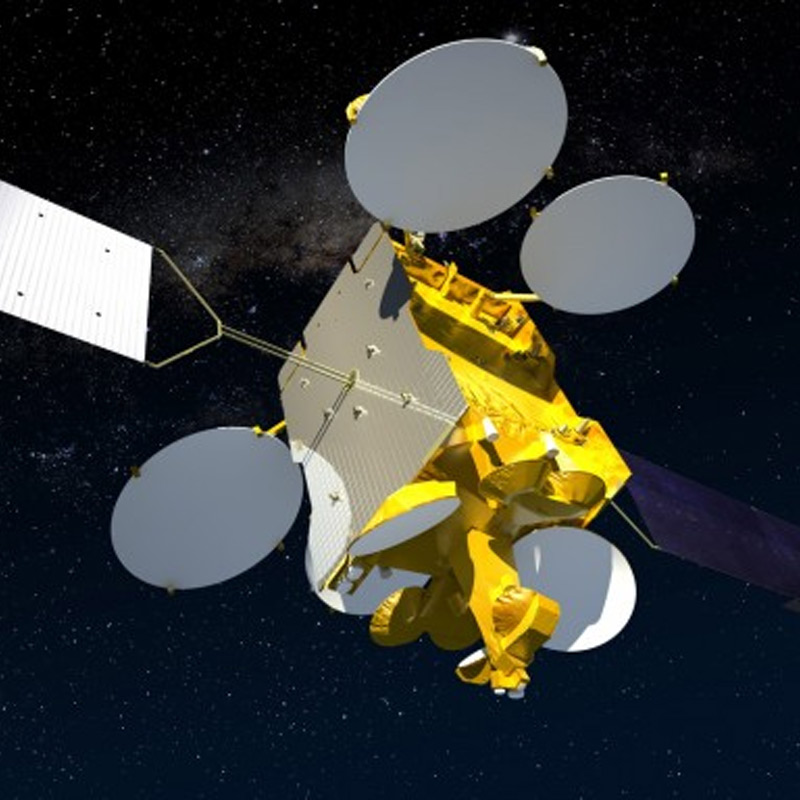
    MUMBAI: Eutelsat Communications said that it has commenced the commercial service of the Eutelsat 70B satellite at 70.5° East.

    The company transferred all the traffic from Eutelsat 70A satellite which was carried out overnight by Eutelsat‘s control centre, working in close collaboration with clients and providers of uplink services.

    Eutelsat 70B has been custom-designed to optimise resources at 70.5° East which has been occupied by a Eutelsat satellite since 2002 and is a point of reference for data services, broadband access, GSM backhauling and professional video exchanges.

    With high frequency reuse, four powerful beams with coverage of Europe, Africa, Asia and Australia are connected to 48 Ku-band transponders, more than doubling capacity at 70.5° East.

    The new satellite‘s entry into service releases Eutelsat 70A which will be redeployed to 25.5° East until the launch of Eutelsat 25B in the middle of 2013. Eutelsat 25A will be redeployed from 25.5° East to an alternative location.

  • Stage set for launch of Thaicom 5, Satmex 6 satellites

    Stage set for launch of Thaicom 5, Satmex 6 satellites

    MUMBAI: It is all systems go for the latest Ariane 5 mission carrying the Satmex 6 and Thaicom 5 satellites.

    Mission control in Kourou, French Guiana, has set the launch window for the Ariane 5 ECA and its two satellites early on Sunday, 28 May from 02:09 am to 02:54 am (Indian Standard Time).

    The rocket was cleared for launch following the successful completion of systems checks, after which Arianespace decided to start the final countdown for its mission.

    With the Thaicom 5 and Satmex 6 satellites on board, the Ariane 5 flight carries a combined payload weight totalling nearly 8,200 kg for its mission to geostationary transfer orbit.

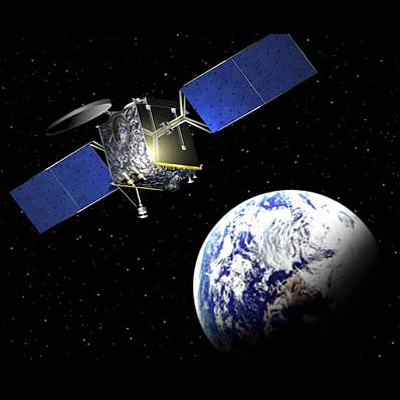
    Thaicom 5 carries a mixed payload of 14 Ku-band transponders and 25 C-band transponders will be located at an orbital position of 78.5 degrees east longitude.

    As the name suggests, Satmex 6 will have Mexico and North America under its footprint.