Tag: Ku band

  • Zee Media’s permission to transmit channels in Ku Band, revoked

    Zee Media’s permission to transmit channels in Ku Band, revoked

    Mumbai: The disgruntled TV networks couldn’t be any happier. In what seems to be a relief for most TV networks, an order passed by the Ministry of Information & Broadcasting (MIB) on 23 September, Zee Media’s authorisation to transmit 10 television channels available in Ku band on GSAT -15 satellite has been revoked. As noticed by MIB, the media conglomerate was gaining an unfair advantage over its competitors, as these channels were also accessible on DD Free Dish, the DTH platform of Doordarshan.

    Since quite some time, a lot of the TV networks had been vocal about the fact that Zee Media was reaping in undue advantage of having its channels being accessed on DD Free Dish. Infact, Prasar Bharati (PB) had also asked Indian TV viewership measurement body Barc to take necessary action against Zee Media regarding the same. But it was all in vain.

    Ten regional news channels of Zee Media namely Zee Hindustan, Zee Rajasthan, Zee Punjab Haryana Himachal, Zee Bihar Jharkhand, Zee Madhya Pradesh Chhattisgarh, Zee Uttar Pradesh Uttarakhand, Zee Salam, Zee 24 Kalak, Zee 24 Taas, and Zee Odisha (now Zee Delhi NCR Haryana) were permitted to operate on C-Band as per MIB’s permission, stated the recent order.

    The statement further mentioned, “Zee Media applied (in 2019) for permission to uplink the 10 channels simultaneously in Ku Band on GSAT -15 satellite from the teleport of Dish TV. The justification given by the applicant seeking uplinking on Ku-band was that many operators have desired to receive channels in the Ku-Band. These operators desire to receive only one of two channels of the Zee Media in many cases, and do not own or operate a C-Band receiving dish of 4 Meters (16 feet) due to their location in crowded locales where such installations are not possible. The applicant further mentioned that Ku-band allows smaller dish antennas for its application, hence installation is cheaper and easier and it incurs lesser terrestrial interference.”

    On the request of Zee Media, MIB had granted permission to the media giant in 2019 for uplinking of the channels simultaneously in Ku Band on GSAT 15 Satellite through the teleport of Dish TV. However, subsequently, it came to the notice of the Ministry that these 10 channels of Zee Media are getting available on DD Free Dish.

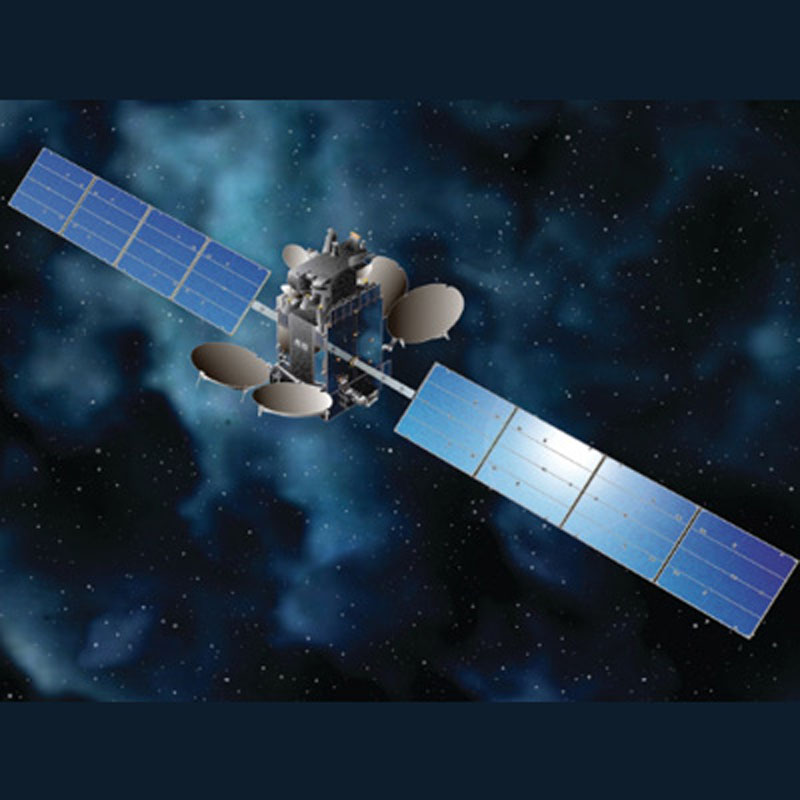
    On analysis of the dispute, it was noticed that the channels were getting available on DD Free Dish because of proximity and co-location of transponders of both DD Free Dish and Dish TV on the same satellite, that is GSAT 15 Satellite and non-encryption of the signals by both of them.

    “Due to availability of the channels of Zee Media on DD Free Dish, Zee Media was having a competitive advantage vis-a-vis other private broadcasters (who are not on Ku Band) and having a leverage of the large subscriber base of DD. The Ministry also received references from Prasar Bharati and many private broadcasters regarding this unfair advantage to Zee Media due to permission of simultaneous uplinking of 10 TV Channels on Ku-Band in addition to uplinking in C-Band,” the statement pointed out.

    Understanding that uplinking simultaneously to the two bands is prohibited, Zee Media stated that the situation had arisen due to colocation of DD Free Dish and Dish TV on the same satellite i.e. GSAT 15 Satellite and non-encryption of the signals by Prasar Bharti which is a violation of the DTH guidelines.

    “As per the Policy Guidelines for downlinking, the broadcasters should provide signals to Distribution Platform Operators (that is MSO/DTH/HITS/IPTV) only and are not supposed to reach consumers directly. Due to the permission granted by MIB (in 2019), channels of Zee Media are directly available to the consumers due to co-location. In this regard, Telecom Regulatory Authority of India (TRAI) has observed that a registered channel shall give its signals only to an authorized Distribution Platform Operator (DPO) (registered cable operator or DTH operator or Internet Protocol Television (IPTV) Service Provider or a HITS operator). However, because of the fact that the channels of Zee Media are unencrypted and are on Ku Band, they are being received by the subscribers of DD Free Dish directly and not through any DPO. Hence, this arrangement is in violation of the policy guidelines for downlinking of a TV channel.  In order to provide a level playing field to all the stakeholders in the TV channel industry, the decision for grant of permission to Zee Media for simultaneous uplinking of its 10 TV channels in Ku Band on GSAT- 15 Satellite through the teleport of Dish TV has been reviewed and withdrawn with immediate effect,” the statement said.

    For the record, the statement also made clear that Prasar Bharati is an autonomous body setup under the Prasar Bharati Act. Further, DD Free Dish has been set-up by Prasar Bharati with the approval of the Union Cabinet. The DTH Guidelines and the policy guidelines for uplinking and downlinking are applicable to only those TV Channels/distribution platforms for which any permission or license is granted by the Ministry of Information and Broadcasting. Since DD Free Dish is a special dispensation, approved by the Union Cabinet, these guidelines of MIB are not applicable to it.

  • GSat29, India’s communication satellite, launched

    GSat29, India’s communication satellite, launched

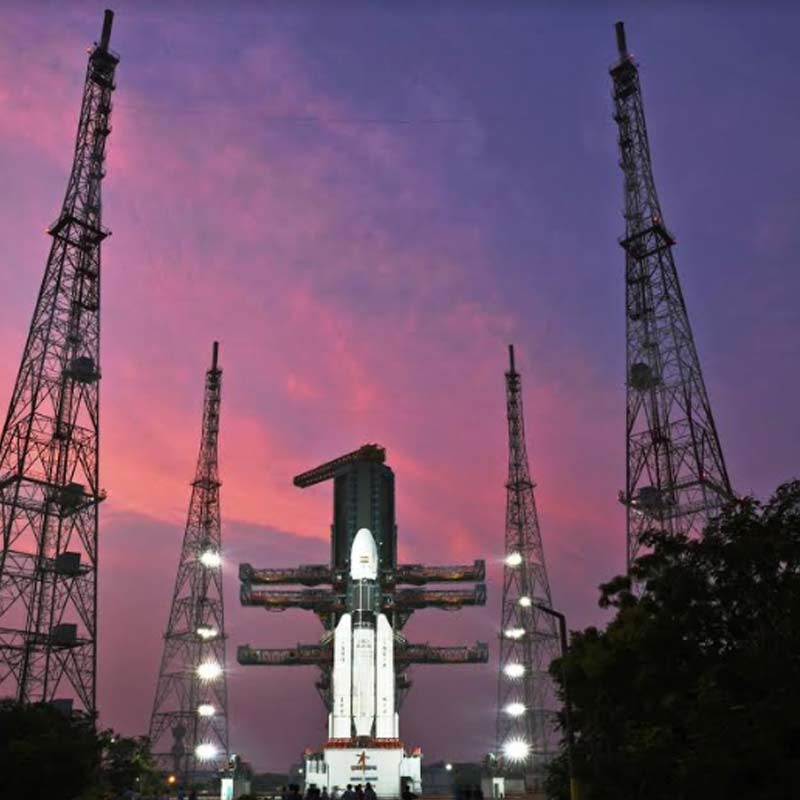
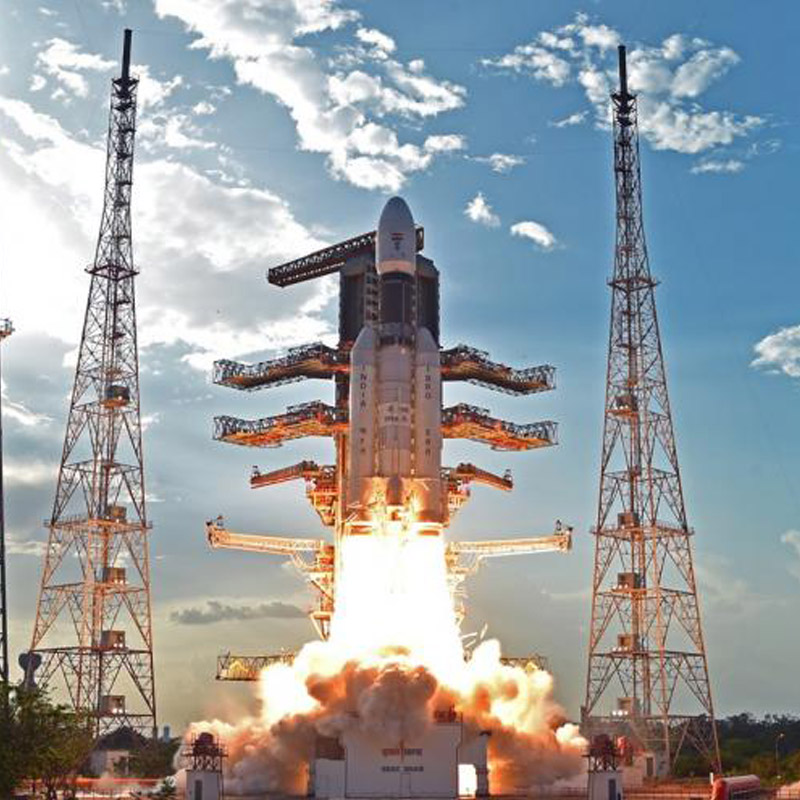
    MUMBAI: Precisely at 5.08 p.m. Wednesday the GSLV-Mk III rocket on its second developmental flight began its ascent with a strong deep growl that reverberated like a thunder roll breaking free from the second launch pad at the Satish Dhawan Space Centre (SDSC) in Sriharikota carrying communications satellite GSat29.

    The Indian space agency had flown a similar rocket on June 5, 2017, with GSAT-19 satellite. Prior to that ISRO had flown another rocket with 3.7-tonne dummy payload in 2014 to test its in-flight structural stability and aerodynamics, according to wire agency reports.

    According to Indian Space Research Organisation (ISRO), GSat29 with a life span of 10 years is a multi-beam satellite that carries Ka/Ku-band high throughput communication transponders intended to meet the communication requirements of users including those in remote areas.

    In addition, several new technologies such as Q/V-band payload, data transmission through optical communication link will be demonstrated. This will help in realising future advanced satellites, ISRO said.

    ISRO chairman K. Sivan said the launch was one of the “very important missions and a milestone” for India’s space programme.

    “This is GSLV-MkIII-D2 second developmental flight. It is going to launch very important and high throughput satellite GSAT-29. The satellite will be useful in Jammu and Kashmir and North East region for providing connectivity under the Centre’s Digital India programme”, Sivan was quoted by agencies as saying.

    According to the ISRO, the GSat29 satellite is intended to serve as a test bed for several new technologies. It is specifically designed to cater to communication requirements of users from remote areas of the country.

  • Did govt pressure nudge ABS-2 to shutter Indian TV channels on FTA DTH service?

    Did govt pressure nudge ABS-2 to shutter Indian TV channels on FTA DTH service?

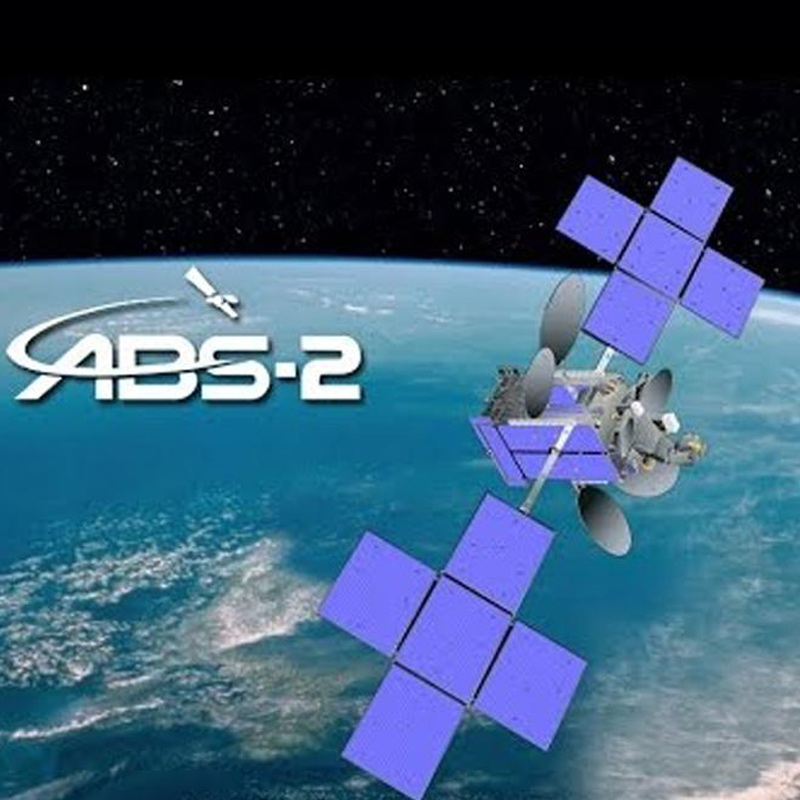
    NEW DELHI: ABS has closed the doors from 1 May 2018 on Indian TV channels that were using the ABS-2 satellite-beamed FTA Ku-band platform. Apparent reason: Indian government pressure on local TV channels to stop using the ‘unlicenced’ platform that discouraged payment of carriage fee to the satellite operator, which was the origin of the business.

    The Bermuda-registered satellite operator’s ABS-2 signals — hosting on its South Asian beam a Nepalese and a Bangladeshi DTH services licenced in their respective countries — have been spilling over into India and a mix of Indian, Nepalese and Bangladeshi TV channels were available to Indians as a FTA service that was accessed via some plain vanilla hardware (read set-top boxes and antennae) at a nominal cost.

    On being petitioned by Indian distribution platforms, Ministry of Information and Broadcasting (MIB) in 2017 had asked Department of Space (DoS) to block the “unauthorised” DTH or KU-band ABS-2 service on the grounds of possible threat to national security — an allegation that was refuted by ABS citing international laws of ITU.

    Finally, when ABS took the decision to shut the doors on the Indian TV channels, there were 90 of them, mostly beaming content in non-Hindi Indian languages. These channels were using the FTA Ku-band platform to reach not only Indian audiences in southern and eastern parts of India but, probably, also those in Nepal and Bangladesh for additional eyeballs. Eyeballs meant advertising revenue for these TV channels.

    ABS last year had refuted Indian government charges saying “natural spillover” of satellite signals into neighbouring countries, outside the service area of the countries offering licensed DTH services, but falling within the coverage area of the satellite, was in “full compliance” of ITU provisions.

    With ABS discontinuing the Indian TV channels, Reliance Big TV (sold by Anil Ambani’s Reliance Communications to new investors) FTA DTH service yet to fully bloom and Doordarshan’s FreeDish platform locked in a policy logjam, free to air platforms and low-cost television viewing for people in the Indian hinterland seem to have run into air turbulence.

    According to industry experts, Indian hardware companies had devised a way to have two LNBs (low-noise box) in one single DTH antenna that was capable of receiving both ABS-2 and DD FreeDish services, resulting in sizable popularity of these two platforms that were accessed via a low-cost hardware. This was unlike the full-fledged subscription-based DTH services made available by the likes of Tata Sky, Dish TV, Videocon d2h and Sun TV.

    Also Read :

    Block illegal DTH FTA, space dept told

    Could India blocking ABS’ FTA TV signals lead to breach of ITU norms?

    Boeing delivers ABS-2A to optimise video services, DTH

  • ISRO’s Gsat-11 sent back from space centre ahead of May-end launch

    ISRO’s Gsat-11 sent back from space centre ahead of May-end launch

    NEW DELHI: In what was being touted as probably the last Indian satellite launch by a foreign space agency, ISRO’s heavy-duty GSAT-11 communications satellite has been sent back to India for “unexplained” reasons from the Europe-based launch pad, according to a media report from Paris.

    “India’s GSAT-11 high-throughput satellite, which arrived at Europe’s Guiana Space Center spaceport on March 30 in preparation for launch on an Ariane 5 rocket, has been returned to India following unexplained issues encountered at the spaceport, industry officials said,” SpaceIntelReport.com tweeted on 23 April 2018, adding the satellite was to be launched late-May via Ariane 5 that was scheduled to carry some other birds, too, including the Azerspace-2/Intelsat-38 satellite.

    However, till the time of writing this report, no confirmation or any additional information was available from India’s space agency ISRO, which has very ably been charting the country’s space policy and the visions of policy-makers and space scientists.

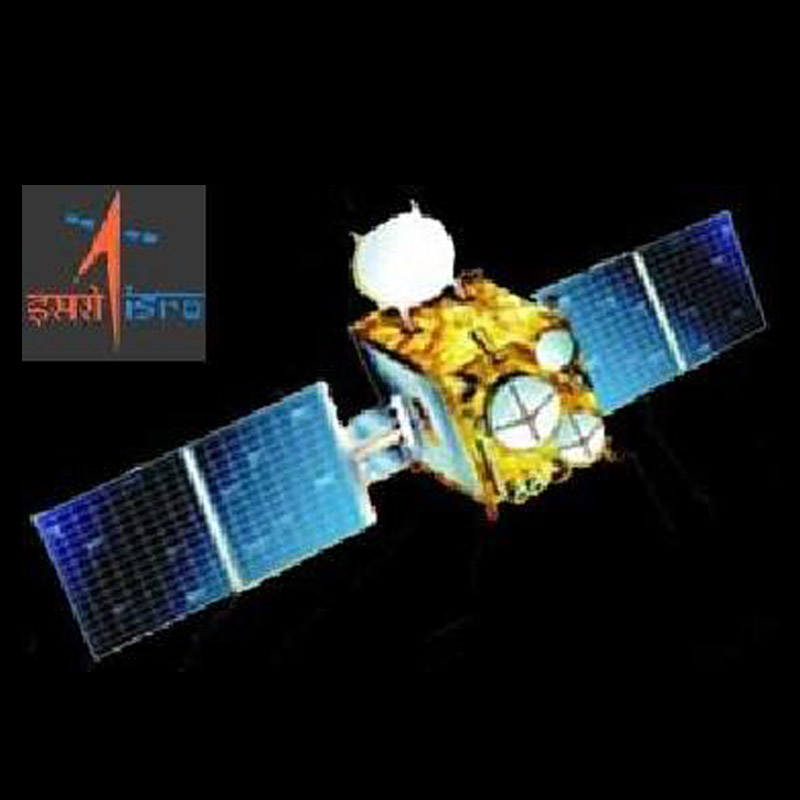
    GSAT-11, according to information put out by ISRO earlier, is a multi-beam high-throughput communications satellite operating in Ka and Ku bands employing a new bus. It provides 32 user beams in Ku band and eight gateway beams in Ka band, which would have gone a long way in strengthening India’s all-round communications, including TV and broadband services. The payload includes Ka x Ku band forward-link transponders and Ku x Ka band return-link transponders. According to Wikipedia, GSAT-11’s cost will be Rs 500 crore (Rs 5 billion).

    In a news report few days back, Times of India said that GSAT-11 was “so massive that each solar panel is over four metres long” and quoted ISRO chairman Dr K Sivan as saying that the heavy-duty Gsats would “provide high-bandwidth connectivity” of up to 100 gigabit per second and “high-speed internet connectivity in rural areas as well and help bridge the digital divide.”

  • ISRO to double annual satellite launch

    ISRO to double annual satellite launch

    NEW DELHI: The Indian Space Research Organisation (ISRO) plans to increase its satellite capacity by upping launches from next year to keep pace with demands from users and is also releasing request for proposals (RFP) for 30 satellites, top Indian government officials said. Five of these will be communication satellites catering to the TV and radio industry.

    According to ISRO chairman AS Kiran Kumar, who was speaking at a conference on the space industry eco-system here on Monday, the organisation would be doubling its launch frequency from 10 to approximately 20 in a year as the “space industry in India is significantly short of capacity” and behind “intended goals”.

    One of the aims was to increase transponder capacity to transmit more TV channels. Currently, 15 communication satellites are in orbit.

    He emphasised that with the increasing volumes, which are on offer by ISRO and other space agencies, it is an ideal opportunity for the industry to be a part of the global supply chain.

    “The world of space is rapidly changing with technological advancements and disruptive innovation. The key to success is to significantly reduce the cost of access to space in what will prove to be an immense opportunity for the Indian and global industries,” Kumar said.

    Pointing out that ISRO presently has 42 operational satellites and has set new benchmarks in lunar and Mars explorations, he said that in future the challenge will be to decrease the cost of access to space for optimal advantage of common people. Kumar added that India has demonstrated to the entire world its capabilities in satellite launch with comparative cost advantage compared to other foreign space agencies.

    While Kumar dwelt on efforts to augment satellite capacity, his colleague and ISRO Satellite Centre director Dr Annadurai announced, “RFP for 30 satellites will be released today (Monday)”, laying stress on the role of space technology in achieving sustainable development goals, disaster management and improving important governance objectives.

    Apart from other services, satellites are used by TV channels and telecoms service providers to beam their services to and fro from India. Though C-band satellite capacity is not so regulated, the KU-band capacity procurement on non-Indian satellites is restrictive. Indian direct to home operators at times have found it difficult to expand channel capacity in the absence of adequate KU-band transponders on Indian birds and long procedural delays encountered in acquiring capacity on foreign satellites – a scenario that has eased in recent times.

    ISRO has come a long way from setting up its first independent communication satellite of foreign origin in 1981 to becoming indigenous today.

    Japan Aerospace Exploration Agency (JAXA) president and Glavkosmos (Russia) deputy director-general also gave special addresses during the inaugural session reiterating their commitment to work with India in the space sector.

    The event, organised by FICCI, is being attended by key players and representatives from ISRO, the Indian space industry, Commerce Ministry’s DIPP, Ministry of External Affairs, Department of Space and international agencies from Japan, Russia, Singapore, USA, Germany, France and Thailand.

  • ISRO launches into space GSAT-9 & India’s S. Asian space diplomacy

    MUMBAI: Prime Minister Modi’s Rs 450 crore (Rs. 4,500 million) Asian space diplomacy took flight today with the launch of South Asia Satellite GSAT-9 by Indian Space and Research Organization (ISRO) on Friday. Pakistan is not participating in this initiative.

    The satellite, when it finally gets commissioned, would provide services specific to individual countries as per their own needs and priorities as also common services. Each country would be allocated one transponder each. The South Asian nations that would benefit from this Indian initiative include Afghanistan, Bangladesh, Bhutan, Maldives and Nepal.     

    The South Asia Satellite has 12-KU band transponders, which India’s neighbors can utilize to increase communications. However, the on-ground infrastructure for the usage of satellite capacity will have to be built by each respective country, though, according to an official government statement, India is willing to help them do that too.   

    According to a report in the Economic Times newspaper, each of the participating South Asian nation could benefit up to USD 1.5 billion over the 12-year lifespan of GSAT-9.

    The satellite will facilitate DTH television, VSAT links, tele-education, telemedicine and disaster management support. It will provide critical communication links in times of disasters such as earthquakes, cyclones, floods, and tsunamis.

    Congratulating ISRO for the development and launch of the satellite, PM Modi, while conferring with the heads of participating nations via video conference, said, “As governments, our most important task is to secure growth, development and peace for our people and communities. And, I am convinced that when we join hands and mutually share the fruits of knowledge, technology and growth, we can speed up our development and prosperity.” 

    The vehicle is designed to inject 2- 2.5 ton class of satellites into space. The overall length of GSLV-F09 is 49.1 m. GSLV-F09 was launched on May 5, 2017 from the Second Launch Pad (SLP) at Satish Dhawan Space Centre SHAR (SDSC SHAR), Sriharikota, the space port of India.

    GSLV-F09 vehicle configuration, including the CUS, is similar to the ones successfully flown during the previous three missions — GSLV-D5, D6 and F05 — in January 2014, August 2015 and September 2016, respectively. GSLV-D5 and D6 successfully placed two communication satellites, GSAT-14 and GSAT-6, while GSLV-F05 placed India’s weather satellite INSAT-3DR in the intended GTOs.
    Also Read:

    ISRO’s ‘South Asia Satellite’ to carry 12 ku-band transponders

    ISRO world record in 104-satellite launches on a single flight


  • TRAI seeks ideas on ease of doing b’cast business

    NEW DELHI: With the fast changing regulatory framework for the media and entertainment sector, which in India is one of the fastest growing sectors, the Telecom Regulatory Authority of India has embarked on a major exercise to find out easier ways of doing business and cause least harassment to entrepreneurs. In short, try to examine where all procedural delays can be shaved off and what all could be made redundant.

    It has now issued a pre-consultation paper on the ease of doing business in broadcasting, which comes just a few months after a similar paper on telecoms. In the new era of convergence, the two sectors are expected to complement each other.

    public://tr1.jpg

    TRAI, which has raised questions about all sectors in the electronic media, has asked stakeholders to respond with their comments by 8 May 2017.

    The Authority has on its own decided to go for a pre-consultation with the stakeholders on ease of doing business in the broadcasting sector, taking a cue from PM Modi-led government’s efforts to ease doing businesses in India. It hopes to review various policy issues related to the broadcasting sector with a view to create a conducive and business friendly environment in the sector and identify procedural bottlenecks that affect ease of doing business in the broadcasting sector and recommend measures for simplifying the rules, regulations and bring more transparency and clarity in policies/ framework of the broadcasting sector. 

    public://tr2.jpg

    The aim is also to remove entry barriers by laying down well defined and transparent procedures and processes thereby creating level playing field and competition in the sector and to facilitate innovation and technology adoption for providing better quality of services to the consumers to steer further growth of the sector by attracting investment through investor friendly policies 

    Subjects to be covered in the pre-consultation before a final consultation paper is issued are related to processes and procedures for obtaining permission/license/registration for the following broadcasting services and subsequent compliance connected with these permissions. The fields include:

    (a) Uplinking of TV channels 
    (b) Downlinking of TV channels 
    (c) Teleport services 
    (d) Direct-to-home services 
    (e) Private FM services 
    (f) Headend-in-the sky services 
    (g) Local Cable Operators 
    (h) Multi System Operators 
    (i) Community Radio Stations 

    The consultation will include allocation of broadcasting spectrum; clearance from Department of Space; WPC clearance for broadcasting services; SACFA Clearance Process; and Clearance from Network Operations Control Center (NOCC).

    For DTH, the issues include disaster Recovery Site for DTH Operator; and transmission of radio services over DTH platform.

    public://tr3.jpg

    Other issues are Right of Way for cable operators; Broadband through cable TV; Open sky policy for KU band; Rationalization of FDI policy in broadcasting sector, developing India as a teleport hub, Skilled manpower in broadcasting sector, and Indigenous manufacturing of broadcasting equipment.

    While the broadcasting sector so far has been replete with success, the Authority feels that this sector has immense potential to move on higher trajectory of growth if more conducive business environment could be created by simplifying existing provisions of policy framework related to broadcasting sector. It has also been noted that certain existing provisions may require a re-look in view of the technological changes that have taken place in the broadcasting sector.

    The Authority is of the view that the attractiveness of business proposition  is the prime mover and creates the potential for investments, but ease of doing business enables greater realization of this potential. Therefore, taking a cue from the Government’s efforts towards ease of doing business

  • ISRO stresses on indigenization; TRAI for Open Sky policy

    ISRO stresses on indigenization; TRAI for Open Sky policy

    NEW DELHI: Even as he advocated an Open Sky Policy for satellites usage, Telecom Regulatory Authority of India (TRAI) chairman R S Sharma said an early formulation of a satellite communication (satcom) policy was desirable if the goals of Digital India have to be achieved.

    On the other hand, Indian Space & Research Organisation (ISRO) agreed satellite services were crucial to the success of Prime Minister Narendra Modi’s dream of Digital India, but laid stress on indigenisation to become “self-reliant” over the next few years.

    Speaking at the ‘2nd International Summit ‘India Satcom – 2016’ on the theme of Broadband for all using NextGen Satellite Technologies, TRAI’s Sharma said connectivity was vital for a digital India and satellite can help in increase this connectivity.

    That was why, he said, TRAI is in favour of an Open Sky policy and had earlier too recommended on these lines in a report to the government.

    Sharma admitted that the internet connectivity in India was barely 15 per cent, though wireless connectivity was growing at a fast pace through smart-phones. There were only 20 million phones in the country but almost the entire country was connected through mobile phones, he said.

    Suggesting use of cable and digital television systems to enable delivery of broadband, the TRAI chairman admitted that certain “policy constraints have to be crossed.”

    He said if this is not done soon, then Digital India will not move forward much.

    Referring to Ka Band on satellites, Sharma said TRAI had issued a paper in this connection in April last year.  

    While Sharma pushed for a more liberalised satcom policy to realise the dream of Digital India faster, ISRO stressed on indigenisation for self-reliance without directly dwelling on an Open Sky policy.

    In a message read out in absentia, ISRO chairman and secretary in the Department of Space A S Kiran Kumar said there was need to hold full-fledged discussions on satellite services’ contribution to Digital India and also on formulation of a satcom policy.

    He stressed that ISRO was committed to an indigenous satellite system and added more (Indian) satellites were expected to be launched over the next few years to make the country self-dependent.

    ISRO has been criticised in the past on stifling the growth of Indian users of satellite services (like DTH and VSAT operators to name a few) owing to its inability to meet the demand with supply on INSAT, while mandating time-consuming processes for Indian customers to lease capacity on foreign satellites.

    Hong Kong-based Asian industry organisation CASBAA in a recent report had highlighted how stifling satellite policies were hampering a faster rollout of a digital India.

    Titled Capacity crunch continues: Assessment of satellite transponders’ capacity for the Indian broadcast and broadband market and released in March 2016, the CASBAA-PwC report had questioned the role of ISRO and Antrix (ISRO’s commercial arm) as a satellite operator, a research institute and an independent commercial entity.

    “The roles of a policymaker and enforcer should be assigned to independent entities,” The CASBAA-PwC report stated, indicating ISRO/Antrix present roles lead to conflict of interests.

  • ISRO stresses on indigenization; TRAI for Open Sky policy

    ISRO stresses on indigenization; TRAI for Open Sky policy

    NEW DELHI: Even as he advocated an Open Sky Policy for satellites usage, Telecom Regulatory Authority of India (TRAI) chairman R S Sharma said an early formulation of a satellite communication (satcom) policy was desirable if the goals of Digital India have to be achieved.

    On the other hand, Indian Space & Research Organisation (ISRO) agreed satellite services were crucial to the success of Prime Minister Narendra Modi’s dream of Digital India, but laid stress on indigenisation to become “self-reliant” over the next few years.

    Speaking at the ‘2nd International Summit ‘India Satcom – 2016’ on the theme of Broadband for all using NextGen Satellite Technologies, TRAI’s Sharma said connectivity was vital for a digital India and satellite can help in increase this connectivity.

    That was why, he said, TRAI is in favour of an Open Sky policy and had earlier too recommended on these lines in a report to the government.

    Sharma admitted that the internet connectivity in India was barely 15 per cent, though wireless connectivity was growing at a fast pace through smart-phones. There were only 20 million phones in the country but almost the entire country was connected through mobile phones, he said.

    Suggesting use of cable and digital television systems to enable delivery of broadband, the TRAI chairman admitted that certain “policy constraints have to be crossed.”

    He said if this is not done soon, then Digital India will not move forward much.

    Referring to Ka Band on satellites, Sharma said TRAI had issued a paper in this connection in April last year.  

    While Sharma pushed for a more liberalised satcom policy to realise the dream of Digital India faster, ISRO stressed on indigenisation for self-reliance without directly dwelling on an Open Sky policy.

    In a message read out in absentia, ISRO chairman and secretary in the Department of Space A S Kiran Kumar said there was need to hold full-fledged discussions on satellite services’ contribution to Digital India and also on formulation of a satcom policy.

    He stressed that ISRO was committed to an indigenous satellite system and added more (Indian) satellites were expected to be launched over the next few years to make the country self-dependent.

    ISRO has been criticised in the past on stifling the growth of Indian users of satellite services (like DTH and VSAT operators to name a few) owing to its inability to meet the demand with supply on INSAT, while mandating time-consuming processes for Indian customers to lease capacity on foreign satellites.

    Hong Kong-based Asian industry organisation CASBAA in a recent report had highlighted how stifling satellite policies were hampering a faster rollout of a digital India.

    Titled Capacity crunch continues: Assessment of satellite transponders’ capacity for the Indian broadcast and broadband market and released in March 2016, the CASBAA-PwC report had questioned the role of ISRO and Antrix (ISRO’s commercial arm) as a satellite operator, a research institute and an independent commercial entity.

    “The roles of a policymaker and enforcer should be assigned to independent entities,” The CASBAA-PwC report stated, indicating ISRO/Antrix present roles lead to conflict of interests.

  • DTH cos depend on foreign satellites due to Ku Band capacity shortage in Indian satellites

    DTH cos depend on foreign satellites due to Ku Band capacity shortage in Indian satellites

    NEW DELHI: Indian direct-to-home operators depend on foreign satellites due to shortage of Ku band transponders on Indian satellites.

    The Parliament was informed on 11 March that a total of 77.89 (36 MHz equivalent) Ku band transponders are used by Indian DTH operators for DTH services.


    Out of a total of 77.89 transponders, 19 transponders are in INSAT/GSAT satellites and 58.89 leased from foreign satellites. 

    The DTH service providers are using foreign satellites since sufficient capacity of Ku Band transponders is not available in INSAT/GSAT satellites, Minister of State in the Prime Minister’s Office Dr Jitendra Singh said. 

    The commercial, societal and defence service users have been using their allocated capacity as per their usage plan subject to receipt of regulatory approvals. 


    The allocation process is in progress for about 46 transponders (in C, Extended-C and Ku Bands), which are vacant at present. 


    Dr Singh had said recently that a total of six communication satelites – GSAT-15, GSAT-9, GSAT-6, GSAT-6A, GSAT-7A and GSAT-11 – are being developed indigenously as part of the XII Five Year Plan (2012-17).


    A total of 95 Ku-band (a part of K band) transponders onboard indigenous communication satellites are being utilised for various communication applications, he had told Parliament last month.