Tag: Krrish

  • Shahid Kapoor-starrer Rambo Rajkumar to release on 15 November

    Shahid Kapoor-starrer Rambo Rajkumar to release on 15 November

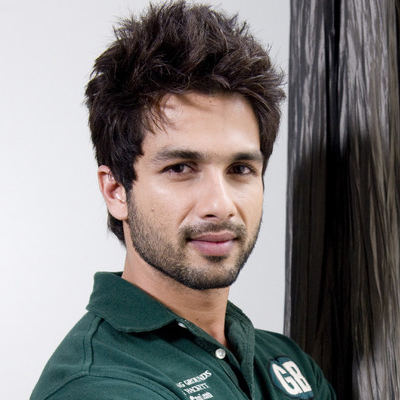
    MUMBAI: Prabhudeva‘s Shahid Kapoor starrer Rambo Rajkumar has been slated for release on 15 November, 2013. The film was earlier titled Namak.


    It will follow Rakesh Roshan‘s Hrithik Roshan-starrer Krrish 3 that will release during Diwali on 2 November.


    Rambo Rajkumar, as the name suggests, is an action film packed with Bollywood masala. The film is generating anticipation since it brings together Shahid and Sonakshi Sinha for the first time.


    It will be interesting to see this time whether Prabhu Deva continues his dream run at box office after Wanted and Rowdy Rathore especially when India‘s most loved superhero Krrish will be playing in cinemas.

  • Hrithik to co-direct Krrish sequel

    Hrithik to co-direct Krrish sequel

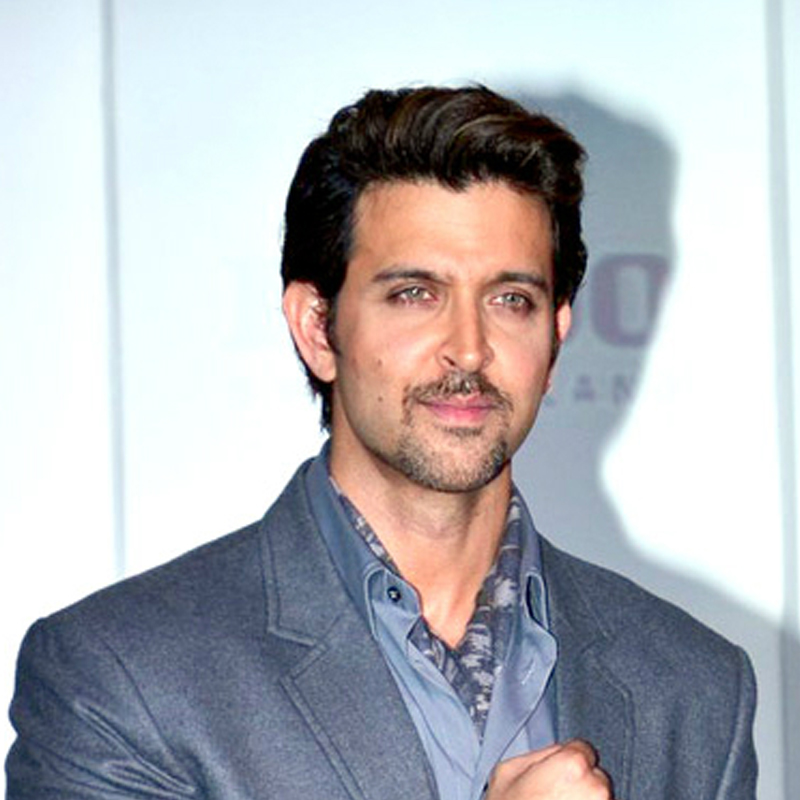
    MUMBAI: Hrithik Roshan will not only be the lead actor of Krrish‘s sequal, but he will also co-direct the film.

    The actor had started off his career in direction by assisting his father Rakesh Roshan in films like Koyla and Karan Arjun. And it would be after a gap of 14 years that he will assist him on the next Filmkraft venture.

    On the sets of the film that went on the floors on 1 December at the Filmistan Studios, Hrithik has been calling the shots and taking creative decisions alongside his father Rakesh Roshan.

    Hrithik will join the cast once the first schedule of the movie with Vivek Oberoi, Kangna Ranaut and Priyanka Chopra gets over. 

  • Lifebuoy and ‘Krrish’ star Hrithik Roshan entertain kids

    Lifebuoy and ‘Krrish’ star Hrithik Roshan entertain kids

    NEW DELHI: As part of their ongoing promotional campaign ‘Lifebuoy Main Bhi Krissh’, HLL brought together the movie’s super hero Hrithik Roshan to meet up with ten lucky contest winners. Lifebuoy had tied up with the movie Krrish, for joint promotion.

    The little stars had a fun filled evening playing games, painting cards for Hrithik, solving puzzles and interacting with the star. The kids also had an opportunity to be photographed with Hrithik and receive memorabilia from the Krrish hero.

    Talking about the promotional campaign, HLL marketing manager Punit Misra revealed that Lifebuoy stands for encouraging the hero within us. The germ of the idea began with the thought that super hero Krrish turns into a hero as soon as he puts on the mask, thus the synergy between Lifebuoy & the movie was born. Similarly, bathing with Lifebuoy would give the children unlimited protection against germs.

    The Krrish superhero Hrithik Roshan said that he was delighted with the successful response from the “Lifebuoy Main Bhi Krrish” promotion. He also thanked Lifebuoy for this unique opportunity to meet the little stars.

    Misra also added “The “Lifebuoy main bhi Krrish” promotion had an over whelming response, receiving more than thirty thousand entries, out of which ten lucky winners were chosen. The chosen winners were from different parts of India, as far as Amritsar, Vijayawada, Ahmedabad, Kolhapur etc, traveled to Mumbai from their respective locations to meet their favourite hero. We are over whelmed by the enthusiasm & response received by the kids that we received for this promotion.”


  • ‘80% of activity where brands are engaging themselves with films is in associative marketing’ : CEO Navin Shah

    ‘80% of activity where brands are engaging themselves with films is in associative marketing’ : CEO Navin Shah

    This year the Indian film industry has entered the spotlight with release after release that has caused a stir in the media. Amidst all this, there have also been several others contributing to the noise and much like ‘parasites’ seem to be clinging on to the fame! In short, brands are increasingly riding the tide of Bollywood, transforming this activity into a more organised format by investing ‘big monies’ towards it. This trend seems to be gaining ground in the Indian sub-continent with a whole host of advertisers jumping in the ‘brand-wagon’ of blockbusters including Krrish, Lage Raho Munnabhai, Don and the latest addition Dhoom 2.

    Highlighting the potential of this relatively new yet burgeoning industry, P9 Integrated CEO Navin Shah took some time out to speak with Indiantelevision.com’s Renelle Snelleksz.

    Excerpts:

    What are the various options available to advertisers when associating with a film?
    A product placement is only one aspect of what a brand can do with a film. In fact, product placement only forms 10 per cent of all the activity. Actually a lot happens outside the film, in what is popularly called associative marketing or co-promotion, where the film rides on the brand to get promoted and in turn the brand rides on the euphoria of the film.

    Firstly, there is no lag in the time period, like for Salaam-e-Ishq, which is releasing on 24 January, the planning can be done now. Secondly, even if there is a high integration of the creative of the brand footage and the film, it is only outside and is short lived. It is irrespective of the fate of the film, because you are doing an outside association you are assured of your ROI as it is media linked. The association can be amplified via other mediums like television, print, cinema hoardings.

    Therefore, 80 to 90 per cent of activity in which brands are engaging themselves with films is in associative marketing.

    Is it not a big risk that brands are taking with in film associations, especially if the movie doesn’t do well?
    If you look at it from purely a visibility perspective, while it is a risk, when you have product placement x amount of viewership is guaranteed. However, today there are a couple of more avenues where the brand is going to be seen, most importantly is satellite television because sooner or later the movie will be released on TV, not just once but at multiple times so in that case visibility is assured. In addition, in the Indian context, the home video segment is really growing so even the shelf life of the film is largely increased with the sale of DVDs. To that extent, the risk gets slightly amortized but in-film per se is a ‘high risk high return model’ because if it works then the returns can go as high as Rs 20 to 30 crores. Therefore, the marketer is always aware of the fact that he is pumping in on something that can give him a disproportionate return.

    Brand associations are then a viable option and filmmakers stand to gain as it not only provides additional revenue but also helps to market his film?
    In fact this is what most of the advertisers think. But if you look at it from a filmmaker’s perspective he makes a mutli-million rupee film, the brand monies are inconsequential in terms of its overall PNI. In this scheme of things. the brand actually rides on a Rs 15-40 crore project. It’s not only the producer that benefits from this activity. If done right it’s a win-win situation. In fact, for a client it’s a huge opportunity because in India films are such a big passion that if something works, the magic can help reap benefits for years to come.

    A classic example is ICICI and Baghban, that’s a four year old story while the shelf life of that can grow to be about 20 years as satellite TV keeps replaying it over and over again. Thus, it is a disproportionately skewed equation for the brand and if brands realise this they can use it to their advantage.

    How much are brands willing to spend on the medium?
    Worldwide there are brands, including automobile companies, glass manufactures, mobile phone companies that spend almost 20-30 per cent of their marketing budget on product placement, like for instance new versions of the Audi have been launched via films. In India, there are at least 40 brands that spend more than Rs 100 crores in a year.

    This year’s blockbuster Krrish is often sighted as a popular case study, but what happens when there are more than 10 brands incorporated in a film, in that case how does it prove to be a ‘clutter breaking’ approach?
    It’s not about whether there are four brands or 500 brands in a film. If the brand is shown in the right context, then I think there is place for even 100 brands where every brand will stand out in three hours. If you take the example of a Bond film, there are about 20 brands placements and each one gets its own glory so there is no question of ‘clutter’, it’s the context and the way you portray the brand.

    Among several brands in film, will a particular brand have to pay a greater premium for more visibility?
    It’s more about the idea and not about the show time measured in seconds that a brand came in. An example is a product placement I had done for Kodak in Hum Tum where it was as small as 10 seconds in which Saif remembers Rani getting married to Abhishek and the thought freezes as a photograph on which he scribbles “Maybe a perfect Kodak moment?” That in my mind is more than a brand trying to tout his product for 10 minutes in a film. So it’s not about one trying to outdo the other, everybody can be equally good as long as the idea behind the placement is imaginative.

    The biggest role to my mind is that of expectation management

    Who implements the placement in this set up? How does it work?
    It is the director’s prerogative, he is the final decision maker. One can however give inputs and suggestions.

    For an organization like P9 Integrated, what is their hand in the whole process?
    Firstly, we are match makers and secondly the biggest role to my mind is that of ‘expectation management’. The client may often think that by putting a certain amount of money he owns the film, while the filmmaker is any which way making a film on his terms, so P9 would ideally bring the two parties to a common platform and manage their expectations to start with, help the brand in ideating and help the producer in execution as expectation managers.

    Do several media agencies come to the table with different brands to be integrated in a film, or does one agency handle all the placements for a film?
    There have been instances where we have taken up the exclusive rights for the film and so we become a ‘toll gate’ so anybody in the market ranging from a media agency to a client will have to come to us. A case in point is the recently acquired exclusive rights for Salaam-e-Ishq for any co-promotional activity.

    Internationally, what is the scope of the market? What is being done in that space?
    Globally the industry is a three decade old business making it a mature market, today it is growing at a pace of 6-8 per cent, which would be almost 5 per cent of the overall advertising pie used on this medium. Growth will continue until it reaches a critical mass which it has not yet achieved.

    We have done several co-promotional marketing tie-ups in India for Hollywood movies including the work on Superman and Mother Dairy cheese, we had also done MI3 and Gabanna and likewise we are in talks with many films, one of the big films which is slated for December is Happy Feet on which we will be doing something interesting.

    What can we expect in the coming months?
    We have just finished working on an association for Kinetic for Apna Sapna Money Money. We also did Mentos and Jaaneman.

    There are three key films in the pipeline with a huge amount of stuff being done – for Guru, some mind blowing activity on our home production Traffic Signal which Madhur Bhandarkar is directing and of course Salaam-e-Ishq. In addition, we are also working in the regional market with Telegu films.

    What do you identify as being the way head for the industry in India?
    The future for this industry is that brands for a particular target audience and particular style and stature will require experts like us to be their entertainment AOR experts, not only for implementation but to play a complete advisory and consultancy role and give them a blue print of the strategy for the whole year of how entertainment will play a role in their brand.

    Secondly, there is some amount of measurement emerging in terms of effectiveness and impact. Companies like Media e2e are attempting to put in those measures into place.

    Measurement should become an integral part of the any project exercise so we should actually have a directional tool of getting a report card at the end of every activity to determine what worked and what didn’t work.

    Thirdly, we need to bring a lot more discipline into the whole business of branded entertainment. The biggest drawback is the lack of trained talent in this business. Additionally, there is a need to train even the professionals and the practitioners of marketing to talk of a common currency in terms of best practices, category knowledge, trends, ROI, economics and legal aspects of branded entertainment as it is an option that probably allows one to marry their passion with their career.

  • Star India to weave advertiser funded shows

    NEW DELHI: Having dominated the Indian satellite airwaves for over six years, Star India is rolling out more big ticket initiatives on the programming, marketing and new business fronts.

    And, like the legendary archer Arjuna, the company is only looking at the target: further domination of viewing space and upping its annual revenue, which has already seen a substantial jump (some say in the region of 20-30 per cent) in FY06 ended 30 June, beating industry growth rate.In FY07, with an eye on monetizing on-air popular properties, Star India has hit upon a plan, which it describes as advertiser funded shows.

    This would involve big advertisers getting a chance to have their products woven into the script and thus advertised by characters with whom millions of Indians identify — a bigger and refined version of in-film and in-serial placements of ads.

    This initiative will be kicked off from middle to end August beginning with Star Plus shows.
    “We are looking at long and strategic engagement with our clients as we don’t want to confine it to small incentives,” Star India president, ad sales and distribution, Paritosh Joshi pointed out, while explaining the rationale behind the advertiser funded shows.

    Though Joshi and marketing head Satya Raghavan were not ready to divulge further details on this, they admitted companies from various segments like automobiles, fast-moving consumer goods and telecommunication had evinced interest.

    This particular plan is most likely to be seen in channels like Star Plus, Channel [V], Star One and Star Vijay where the company has control over content creation.

    “In due course of time, our producers of shows will be informed of this move so that content can be intelligently scripted to have place for products,” Joshi said.

    As part of the gameplan for FY06, the Hindi blockbuster movies will be back on Star Plus with the charge being led by Aamir Khan-starrer neo-angst flick Rang De Basanti to coincide with India’s Independence Day on 15 August.

    The other big films include this year’s present biggest grosser Krrish, Bluffmaster, Taxi No. 9211, Amitabh bachchan-starrer Family, Chup Chup Ke and Prakash Jha’s take on the Bihar cottage industry called abduction-of-people-for-ransom Apaharan.

    After premiering on Star Plus, these movies will air on Star Gold, which, according to Raghavan, has established itself. Star Movies will bond with the best of thrills and frills via the entire series of Bond flicks.

    New shows on flagship channels Star Plus and Star One will include the epic Ramayan set in the future in Antariksh, Balaji’s Karam Apna Apna, Ektaa Kapoor-Smriti Irani joint production Thodi Si Zameen Thoda Sa Aasmaan, the adventures of an Indian Indiana Jones in Lucky, Balaji’s Kis Rishte Se and Sanjog.

    The approach for Star Plus for the coming year is simple: bring more stories with identifiable plots and characters that will hook the entire family and not any particular segment of the audience only.

    Then, of course, Star will roll out initiatives on the gaming and Internet front too to take interactivity a notch higher than what is presently seen on Star channels, says Raghavan.

  • ‘We will be a Rs 5 billion company by 2008’ : Atul Goel – E-City Ventures CEO

    ‘We will be a Rs 5 billion company by 2008’ : Atul Goel – E-City Ventures CEO

    His is a tale that is not just about multiplexes. E-City Investments and Holdings chief Atul Goel is hooking up a film exhibition, distribution and digital delivery business.

    At the centre of this game is the multiplex business. Fun Multiplex Pvt Ltd is on a massive scale up exercise, planning to ramp up from 23 screens to 150 by FY08 while acquiring 100 single screens to gain a pan-India presence.

    E-City Digital Cinemas will deliver movies to theatres via satellite as well as hard disk in a format that operates on low margins but is profitable. Being part of the Essel group, it will use the Essel Shyam facility at Noida near Delhi which is also utilised by Zee for uplinking its channels.

    Goel recently got IL&FS to invest Rs 1 billion for a 26 per cent stake in E-City Entertainment, the hived off entity that handles real estate development. His next big target: a combined turnover of Rs 5 billion by FY08.

    In conversation with Indiantelevision.com’s Sibabrata Das & Bijoy AK, Goel unveils the expansion plans he has chalked out for E-City.

    Excerpts:

    Why did you decide to hive off the multiplex and real estate businesses into separate companies?
    The best way to attract investors is to divide the two segments of business. They can enjoy their own valuations and investors. For instance, the investors in real estate may not necessarily want to take exposure in the multiplex business. We got Infrastructure Leasing & Financial Services Ltd (IL&FS) to pick up a 26 per cent stake in E-City Entertainment, which handles real estate development like setting up malls, for Rs 1 billion.

    Are you in the hunt for an investor in the multiplex business as well?
    Fun Multiplex Pvt. Ltd. still needs to scale up as we ended the last fiscal with a turnover of just Rs 450 million and a net profit of Rs 60 million. We are planning to pump in Rs 2.5 billion and have 150 screens by FY08. We have already put in Rs 300 million. We plan to raise money in a debt-equity ratio of 1.5:1. Our target in FY08 is to have a total income of Rs 2.5 billion and operating profit of Rs 720 million by FY08.

    What makes you project such a fast rate of growth in two years?
    The revenues will come mainly because of newer developments. We have 23 screens and are opening up three properties this month. We, in fact, will be adding 10 more screens by 15 August.

    Do you see revenue growth also coming from increase in ticket rates?
    Pricing power will continue to be more a movie-based strategy rather than a rate hike in tickets across the board. In case of Krrish, we increased the ticket rates. We will also see the emergence of differential pricing for off-time shows. We have, for instance, lowered the rates for early morning screenings.

    Multiplex operators are in a build up phase and Inox has even taken the acquisition route in Kolkata to enhance its pan-India presence. How are you planning to scale up your operations?
    We are also planning to take the inorganic route. We will be acquiring single screen theatres across the country. We aim to have 100 single screens by FY08. This will be in addition to the 150 multiplex screens we will have by then.

    The future trend could be special alliances between distributors and multiplex operators

    Multiplex operators have been made to pay more for premium film content by Yash Raj Films (YRF). When YRF asked for an increase in revenue share for the Aamir Khan blockbuster Fanaa, you took a hard stance. What made you compromise later?
    Initially, all the multiplex operators protested against the hike. But the unity didn’t stay and some of them went ahead to sign the new terms with YRF. Let me reiterate here that we were in a pure business deadlock and not a confrontation of any kind.

    Has YRF, with a lineup of Hindi blockbusters like Fanaa, Krrish and Kabhie Alvida Na Kehna, started a trend where film content distributors would push for higher revenue shares from multiplex operators?
    We are not in a position where we can take a hard stance against YRF. We have a business relationship going with them and are showing Krissh. The new terms are exceptional to YRF but with such high ratios, we can only break even. The future trend could be special alliances between distributors and multiplex operators.

    Are you in any such alliance with a big distributor?
    It is too early to carve out such relationships. In fact, we urge the distributors not to start hiking rates or getting into special relationships with certain multiplexes at this stage. The industry needs to scale up the infrastructure, there is an opportunity sitting out there. We should take measures that grow rather than kill the industry at this early stage.

    Have you taken a cautious approach in the film distribution business?
    E-City Films (ECF) has distributed Hindi movies like 36 China Town in Gujarat where we control 90 theatres. The market is fragmented and will take time to consolidate. Some companies are also acquiring some movies for distribution at unrealistic prices. We are cautious and have no plans to set up a film distribution outfit overseas. For international movies, our strategy is to distribute 10-12 a year. In the past, we have distributed Alexander (December 2004), One Dollar Curry (February 2005), Million Dollar Baby (March 2005) and Sahara (July 2005). Among ECF’s recently acquired movies are Astronaut Farmer, Babel, Miss Potter and Michael Clayton.

    Have you closed down your content syndication business?
    It is in a state of lull now, but we have revival plans.

    What are the expansion plans for E-City Entertainment after IL&FS has taken a stake in it?
    We are investing Rs 1 billion each for the Kanpur and Coimbatore properties. Lucknow will attract a further funding of Rs 250 million. We have already pumped in Rs 2.17 billion in developing four projects (Rs 600 million for Andheri in Mumbai, Rs 750 million in Lucknow, Rs 550 million in Ahmedabad and Rs 270 million in Chandigarh). We will have 10-15 properties by FY08. We expect our turnover to climb from Rs 210 million to Rs 800 million by then. As these are rental incomes, E-City Entertainment will always be a profitable venture.

    How are you funding these properties?
    We will be raising fresh equity. But we have not started talking with anybody yet.

    When is E-City Digital Cinemas starting satellite delivery of movies to cinema theatres?
    We plan to launch it by the end of this month. We will be using the uplinking facility of Essel Shyam at Noida near Delhi. Currently, the hard disk is physically distributed to the 22 theatres in Gujarat (we control 90 theatres there) which we have taken on long term hire basis. We are using Real Image’s encryption technology so that piracy is safeguarded. The movie is first converted into digital master using the telecine machine, after which it can be taken on to D5 tape or captured directly on the encoding server. After encryption and compression, the movie is uplinked to the satellite via transmission server and downloaded at the playout local server which is installed at the theatre. A digital projector is used for screening of the film. E-City Digital Cinemas will target A-class towns where the current net collections are over Rs 100,000 per week.

    How many theatres will have the digital system?
    We plan to digitise 500 screens by FY08. We have already acquired 30 cinemas including a few in Mumbai. The business operates on low margins and, on a turnover of Rs 300 million last fiscal, we have reached a break even situation. As we ramp up theatre acquisitions, we expect our revenues to touch Rs 2.5 billion by FY08.

    So will E-City Holdings go for an initial public offering (IPO) or will the different entities have separate listings?
    We haven’t decided anything yet. We have no IPO plans, as of now. But by FY08 the entire venture will be a Rs 5 billion company.

  • ‘Krrish’ strikes digital gold with UFO Moviez digital cinema screens

    ‘Krrish’ strikes digital gold with UFO Moviez digital cinema screens

    MUMBAI: UFO Moviez, the digital cinema network launched by Valuable Media Pvt Ltd. (an Apollo International subsidiary), announced the release of Krrish, the latest blockbuster starring Hrithik Roshan, directed and produced by Filmkraft Productions (India) Pvt. Ltd.

    Krrish went out on 87 UFO screens in the first week and 90 UFO screens in week two. These UFO screens account for 15 per cent of the total number of screens that the film opened with and also marks the biggest ever digital release of a Bollywood blockbuster on a single digital network platform.

    The movie has received one of the biggest openings in the history of Indian cinema – grossing close to Rs 700 million in its first week alone. Krrish opened at theatres across the world with 790 prints, 250 of them in overseas screens alone.

    Also, Krrish was released for global digital screening with 925 cinema screens exhibiting the film worldwide. Thus, the network has made its presence felt by accounting for 10 per cent of the total digital film screens in the world to exhibit Krrish since its release two weeks ago.

    UFO Moviez, spearheaded by founder directors Raaja Kanwar, Sanjay Gaikwad and Usman Fayaz, plans to create the largest chain of digital cinemas houses worldwide by 2007 in India. It is part of Group Apollo’s Media Initiative and was launched by the company’s chairman and managing director O S Kanwar and Yash Chopra in November 2005.

    Having initially set up 500 digital movie halls by August 2006 at an investment of Rs 800 million, UFO plans to scale it up progressively to 2000 cinema halls across the country at a total investment of Rs 3 billion.

    UFO International CEO Aditya Shastri said, “It is has been our privilege to be part of this success and bringing the latest in digital projection technology has surely been an advantage. We are proud of our association with Krrish and remain committed to ensuring pristine quality images with perpetual life with no compromise in quality. With Krrish’s trouble free shows under our belt, we can definitely stake our claim to a stable and rugged technology of digital viewing. The overall response towards digital cinema has been extremely positive and will be a constant source of motivation for us.”

  • Prasad EFX delivers VFX for Rakesh Roshan’s ‘Krrish’

    Prasad EFX delivers VFX for Rakesh Roshan’s ‘Krrish’

    MUMBAI: Prasad EFX, one of the largest Digital Post Production Studios in India, has executed more than 1200 VFX shots for the upcoming Hrithik Roshan starrer Krrish.

    The movie, produced and directed by Rakesh Roshan, is loaded with spectacular VFX and is all set to catapult Indian VFX to Hollywood standards, says the company in an official release.

    VFX Supervisors from Hollywood Craig Mumma and Marc Kolbe, worked with a team of more than 100 VFX specialists in Prasad EFX to come out with the VFX sequences.

    Prasad EFX senior team leader Himakumar says, “We have done very high end 3D modeling and animation including whole body scans. A lot of 3D models of cars, bikes, helicopter, birds and animals were created and animated to match live action footage. Fire sequences are always a challenge and we have used it to great effect in Krrish. Very complicated wire removals and compositing work were minutely executed, so were critical special effects that add intensity to images and action shots. A whole futuristic set was designed and implemented by the team at Prasad EFX in 3D.”

    Rakesh Roshan says, “Prasad EFX has exceeded my expectations because they’ve done a fantastic job – unbelievable! I was a bit tense as to whether it will be to the standard of Hollywood but I think they have lifted the status of the film to a very high level. It is not like Hollywood. It is Hollywood. I salute the entire EFX team.”

    Craig Mumma, who has to his credit films including Independence Day and Godzilla, says, “One of the reasons I was approached by Rakesh Roshan to work on Krrish was because we wanted to do some mind blowing, world standard VFX. We had to keep various things in mind, budgets, capability, infrastructure and so on. We looked at many studios and all our efforts pointed to Prasad EFX. I wanted to work with a company that will get involved with the project to a very deep level. EFX in my past couple of years of experience with other projects has delivered the goods well above my expectations.”

    Adds Craig, “Working with the people at Prasad EFX has been a great experience. They understand films, they understand VFX and that way I was able to get the most out of them. The VFX will be a trendsetter. We will see more of this happening in the future.”

    Prasad EFX also provided the Digital Intermediate service for Krrish. Senior line producer, DI, Rajiv Raghunathan says, “DI is catching on fast. Right now it is the big budget and special effects intensive movies that use this service. Once filmmakers understand the advantages of having a Digital Master at 2K/4K resolution, then only the full potential of DI will be realized. Digital Cinema, DVD masters, HD/Sd outputs, Mobile/PDA delivery, web and other future media can be served content from a single digital master resulting in consistency, cost & time savings and flexibility. Very soon DI will be part of the planning for all movies. One obvious change noticed in the past one year is that DI is being used more towards enhancing the look and feel of the film as opposed to correcting shooting flaws.”

    Prasad Film Labs made over 700 prints for Krrish for national and global distribution form the DI negatives, according to the official release.