Tag: Krishnan Rajagopalan

  • ATF 2016 discusses secret sauce for Asian OTT’s successes

    ATF 2016 discusses secret sauce for Asian OTT’s successes

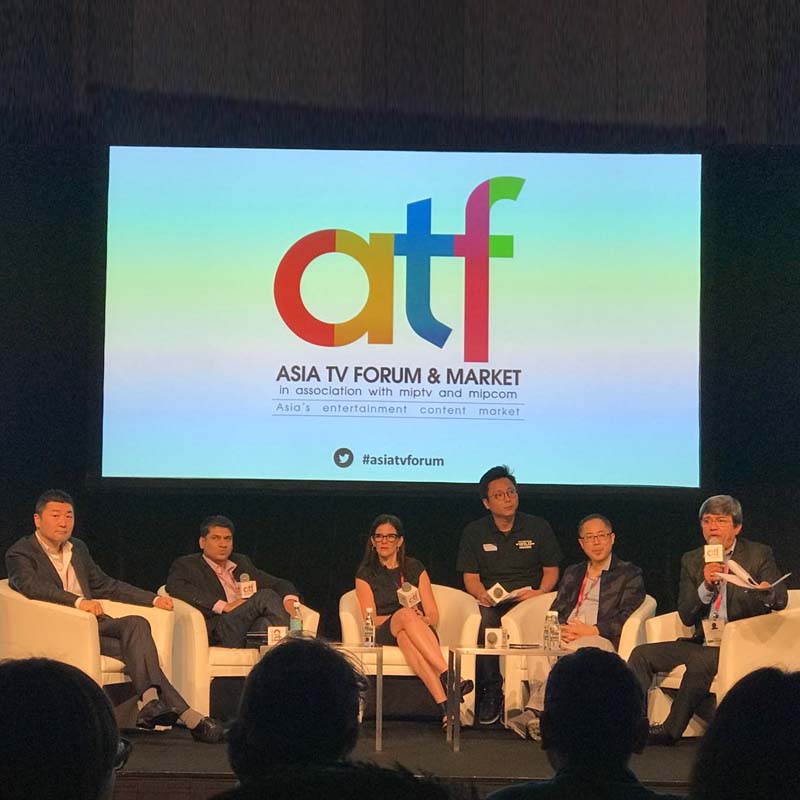
    SINGAPORE: The media and entertainment industry is known for its dynamic and unpredictable nature. With digital media taking an upward turn, over the top services are slowly making a mark and challenging traditional viewing methods. To address how effective are the various OTT models, the pre-ATF market conference on 6 December witnessed the session ‘View From Over The Top.’

    The discussion was led by IndianTelevision.com group founder, CEO and editor-in-chief Anil Wanvari, and covered the scope of the new content buyers in the online evolution and the success in re-aligning company strategies to meet new demands.

    The panelists consisted of an interesting bunch of execs whose services are as different as chalk and cheese: Hulu Japan (Japan), chief content officer, Kazufumi Nagasawa; Singapore-based Hooq co-founder and chief content officer, Krishnan Rajagopalan; LeTV (China), chief executive producer, Hao Fang; and US-based AwesomnessTV head of worldwide distribution, Rebecca Glashow.

    Wanvari set the ball rolling by questioning whether OTT as a business concept is a pipe dream or a reality. “OTT services have not really made a dent on viewing habits for a large part in Asian markets where television viewing is still rating high with consumers,” he stated. “Yet close to 100 or so OTT/VOD services have launched in various Asian nations. No one knows what the right business model is — Is it AVOD? Is it TVOD? Or, is it SVOD? Or is it a freemium model? Or is it a telco-bundled/TV set-bundled service? What is the pricing sweet spot? How much time will it take to build them into viable businesses? It looks like the OTT industry looks like what the cable and satellite TV industry did in the early nineties across Asia. The broadcasters were making losses and kept on bleeding for a decade or so. Will the same happen to OTT? And, what could help accelerate its fortunes better? Is it data costs? Or consumer education?”

    The panelists then went to on to talk about how they were each dealing with the market’s challenges. With China being the largest market in terms of mobile subscribers, LeTV took a strategic decision to bundle its streaming service platform with ‘Le’ mobile phones and in Hong Kong with its TVs. Consumers got LeTV free for varying periods as it was built into the price of the hardware.

    On the other hand, Hooq, being a comparatively young player in the market, Rajagopalan mentioned that the Asian audience is slowly getting used to the idea of paid services. Hooq has strong partnerships with telcos such as Singtel, Airtel, Vodafone, Globe Telecom, Telkomsel in different regions as it rolls out. Partnering with other companies has enabled Hooq to reach out to consumers who might be unaware of Hooq or don’t want to shell out money as it’s a SVOD service. Hooq launched in Singapore in end-November adding to Indonesia, Philippines, India and Thailand – countries in which it has been investing.

    AwesomnessTV follows a completely different approach; it perceives itself as a content creator for all the screens – TV, theatre, mobile, tablet – and its MCN strategy is totally a separate kettle of fish. Its advantage is that it has a strong millennial content focus on account of it strong digital talent. This has landed it deals with various platforms: Verizon for its Go90 mobile service; with ITV2 in the UK for which it is developing a millennial targeted commissioned programme block. A slate of feature films is also in the offing.

    And because its productions have a slew of digital stars it uses their online social media following to tease their fans and lure them to watch the content it creates for the other screens. Glashow said that she was in Asia to explore and evaluate opportunities and build partnerships to help it with its Asian foray. With enough money from its varied parents right from Verizon to Dreamworks Animation and Hearst Entertainment, it can afford to be ambitious for the continent as well.

    Hulu Japan – which is owned wholly by the broadcaster Nippon TV after Hulu exited a few years ago — follows the SVOD model, and has partnered with the Japanese major telco DoCoMo. As far as content is concerned, Nagasawa said that the OTT service has an international to domestic content ratio of 50:50. The service offers its users a smorgasbord of international top series as well as domestically produced content. Production budgets vary from 10,000 dollars to as much as a million dollars.

    Nagasawa said he has plans to make Hulu a one-stop-destination for consumers as the company plans to expand its linear streaming service to include transactional video on demand (TVoD) and electronic sell-through.

    Speaking about original content production, Hooq which recently released the trailer of its first original co-produced show ‘On The Job’ at ATF, Rajagopalan commented: “We have converted a movie into a TV series and are paying more than what goes into the production of a TV show as with multiple business models existing, content differentiation is the key to success. And that’s where the focus should be.”

    Stressing the same fact, Fang added, “While creating our content, we almost feel as if we are buying a building as it costs us around RMB four to five billion! We want to produce more original content but it is difficult.”

    When asked by Wanvari what kind of content and partners are the panelists looking for, Ramagopalan said that it all depends on how differentiated the content is. Glashow advised, “Before producing anything, know your audience and then reach out to them. For us, our client is the audience and so we take feedback from them and listen to what they want.” And, Fang revealed that LeTV is keeping an open mindset and is willing to participate with everyone.

  • ATF 2016 discusses secret sauce for Asian OTT’s successes

    ATF 2016 discusses secret sauce for Asian OTT’s successes

    SINGAPORE: The media and entertainment industry is known for its dynamic and unpredictable nature. With digital media taking an upward turn, over the top services are slowly making a mark and challenging traditional viewing methods. To address how effective are the various OTT models, the pre-ATF market conference on 6 December witnessed the session ‘View From Over The Top.’

    The discussion was led by IndianTelevision.com group founder, CEO and editor-in-chief Anil Wanvari, and covered the scope of the new content buyers in the online evolution and the success in re-aligning company strategies to meet new demands.

    The panelists consisted of an interesting bunch of execs whose services are as different as chalk and cheese: Hulu Japan (Japan), chief content officer, Kazufumi Nagasawa; Singapore-based Hooq co-founder and chief content officer, Krishnan Rajagopalan; LeTV (China), chief executive producer, Hao Fang; and US-based AwesomnessTV head of worldwide distribution, Rebecca Glashow.

    Wanvari set the ball rolling by questioning whether OTT as a business concept is a pipe dream or a reality. “OTT services have not really made a dent on viewing habits for a large part in Asian markets where television viewing is still rating high with consumers,” he stated. “Yet close to 100 or so OTT/VOD services have launched in various Asian nations. No one knows what the right business model is — Is it AVOD? Is it TVOD? Or, is it SVOD? Or is it a freemium model? Or is it a telco-bundled/TV set-bundled service? What is the pricing sweet spot? How much time will it take to build them into viable businesses? It looks like the OTT industry looks like what the cable and satellite TV industry did in the early nineties across Asia. The broadcasters were making losses and kept on bleeding for a decade or so. Will the same happen to OTT? And, what could help accelerate its fortunes better? Is it data costs? Or consumer education?”

    The panelists then went to on to talk about how they were each dealing with the market’s challenges. With China being the largest market in terms of mobile subscribers, LeTV took a strategic decision to bundle its streaming service platform with ‘Le’ mobile phones and in Hong Kong with its TVs. Consumers got LeTV free for varying periods as it was built into the price of the hardware.

    On the other hand, Hooq, being a comparatively young player in the market, Rajagopalan mentioned that the Asian audience is slowly getting used to the idea of paid services. Hooq has strong partnerships with telcos such as Singtel, Airtel, Vodafone, Globe Telecom, Telkomsel in different regions as it rolls out. Partnering with other companies has enabled Hooq to reach out to consumers who might be unaware of Hooq or don’t want to shell out money as it’s a SVOD service. Hooq launched in Singapore in end-November adding to Indonesia, Philippines, India and Thailand – countries in which it has been investing.

    AwesomnessTV follows a completely different approach; it perceives itself as a content creator for all the screens – TV, theatre, mobile, tablet – and its MCN strategy is totally a separate kettle of fish. Its advantage is that it has a strong millennial content focus on account of it strong digital talent. This has landed it deals with various platforms: Verizon for its Go90 mobile service; with ITV2 in the UK for which it is developing a millennial targeted commissioned programme block. A slate of feature films is also in the offing.

    And because its productions have a slew of digital stars it uses their online social media following to tease their fans and lure them to watch the content it creates for the other screens. Glashow said that she was in Asia to explore and evaluate opportunities and build partnerships to help it with its Asian foray. With enough money from its varied parents right from Verizon to Dreamworks Animation and Hearst Entertainment, it can afford to be ambitious for the continent as well.

    Hulu Japan – which is owned wholly by the broadcaster Nippon TV after Hulu exited a few years ago — follows the SVOD model, and has partnered with the Japanese major telco DoCoMo. As far as content is concerned, Nagasawa said that the OTT service has an international to domestic content ratio of 50:50. The service offers its users a smorgasbord of international top series as well as domestically produced content. Production budgets vary from 10,000 dollars to as much as a million dollars.

    Nagasawa said he has plans to make Hulu a one-stop-destination for consumers as the company plans to expand its linear streaming service to include transactional video on demand (TVoD) and electronic sell-through.

    Speaking about original content production, Hooq which recently released the trailer of its first original co-produced show ‘On The Job’ at ATF, Rajagopalan commented: “We have converted a movie into a TV series and are paying more than what goes into the production of a TV show as with multiple business models existing, content differentiation is the key to success. And that’s where the focus should be.”

    Stressing the same fact, Fang added, “While creating our content, we almost feel as if we are buying a building as it costs us around RMB four to five billion! We want to produce more original content but it is difficult.”

    When asked by Wanvari what kind of content and partners are the panelists looking for, Ramagopalan said that it all depends on how differentiated the content is. Glashow advised, “Before producing anything, know your audience and then reach out to them. For us, our client is the audience and so we take feedback from them and listen to what they want.” And, Fang revealed that LeTV is keeping an open mindset and is willing to participate with everyone.
  • ATF 2016 conference to tackle pragmatic concerns across digital business

    ATF 2016 conference to tackle pragmatic concerns across digital business

    MUMBAI: The Asia TV Forum & Market (ATF) 2016 has announced a new approach to its annual conference, taking place from 6 to 9 December 2016. Significant emphasis on strategy and investment is set as the milieu, where tactical financing and ventures into new domains are presented.

    C-Level Summit

    ATF’s C-Level Summit, focused on the digital space, will allow decision makers to discuss the very real issues of business today, as the industry is compelled to steer into the online world, a realm set to continue in its disruption of traditional content consumption and monetization.

    “ATF aims to provide a platform where attendees can tap on the brightest minds internationally, with topics tailored on the region. Each year, we place emphasis on gathering the most relevant and current industry leaders, so that delegates can obtain the keys to navigating today’s dynamic Asia content market, as they discover the latest trends and opportunities to leverage,” said Yeow Hui Leng, Senior Project Director of ATF and ScreenSingapore.

    The roster of significant speakers hold successes in their own right and represent the various pillars of the digital world, coupled with conventional giants who have made weighty partnerships in line with necessary pre-emptive adjustments, and natural aggregators who are looking at their own advantage to innovate and expand.

    C-suites from Southeast Asia’s noteworthy telcos, including Winston Damarillo, Chief Strategy Officer of PLDT Group and Prashant Gokarn, Chief New Business & Innovation Officer at PT Indosat Tbk, alongside other top management, will sit to have a discourse on their own OTT offerings, as they hold the combination lock to infrastructure and mobile partnerships.

    Chief Content Officers of digital native businesses, including Krishnan Rajagopalan, co-Founder of the Hooq Group and Kazufumi Nagasawa of Hulu Japan, along with Chris Erwin, Chief Operating Officer of Big Frame and Joanne Waage, Senior Vice President of Partnerships & Programming of Viki, Inc, will address ROI issues against a somewhat bearish landscape. CEOs, including Clifton Dawson, Founder and CEO of Greenlight VR, deliberate as content being king, will have to take on the daunting responsibility across various screens.

    The C-Level Summit will also highlight brand expansion opportunities in technology and new markets. Involving veterans in virtual reality and new digital studios (Multi-Channel Networks), the Summit will harness new facets of the digital business unseen at ATF in the past.

    Immerse in a new reality

    Continuing the mark from conference to market floor, virtual reality is played out as a new but vital piece that the industry is attempting to incorporate into individual manoeuvres. In the virtual realm, creativity will abound on the market floor like never before, as transmedia is presented at the VR Zone in the only worthwhile way it should; via an experiential method.

    The zone will be developed into a seminar-cum-workshop session, where some of the most avant-garde players in the VR space chat on exceptionally progressive productions within the cybernetic sphere. This is backed by an undeniable inroad of the content industry’s symbiotic relationship with the technology domain. The blending of creativity and technology has never been more pertinent, as ATF presents the likes of Okio Studio, Honkytonk, Innerspace VR, Silex Films, Dailymotion and AGAT Films, among other revolutionary ventures.

    More information about the conference and speakers is available at www.asiatvforum.com/en/programme.

    ATF is co-located with ScreenSingapore, and is part of the Singapore Media Festival (SMF).

  • ATF 2016 conference to tackle pragmatic concerns across digital business

    ATF 2016 conference to tackle pragmatic concerns across digital business

    MUMBAI: The Asia TV Forum & Market (ATF) 2016 has announced a new approach to its annual conference, taking place from 6 to 9 December 2016. Significant emphasis on strategy and investment is set as the milieu, where tactical financing and ventures into new domains are presented.

    C-Level Summit

    ATF’s C-Level Summit, focused on the digital space, will allow decision makers to discuss the very real issues of business today, as the industry is compelled to steer into the online world, a realm set to continue in its disruption of traditional content consumption and monetization.

    “ATF aims to provide a platform where attendees can tap on the brightest minds internationally, with topics tailored on the region. Each year, we place emphasis on gathering the most relevant and current industry leaders, so that delegates can obtain the keys to navigating today’s dynamic Asia content market, as they discover the latest trends and opportunities to leverage,” said Yeow Hui Leng, Senior Project Director of ATF and ScreenSingapore.

    The roster of significant speakers hold successes in their own right and represent the various pillars of the digital world, coupled with conventional giants who have made weighty partnerships in line with necessary pre-emptive adjustments, and natural aggregators who are looking at their own advantage to innovate and expand.

    C-suites from Southeast Asia’s noteworthy telcos, including Winston Damarillo, Chief Strategy Officer of PLDT Group and Prashant Gokarn, Chief New Business & Innovation Officer at PT Indosat Tbk, alongside other top management, will sit to have a discourse on their own OTT offerings, as they hold the combination lock to infrastructure and mobile partnerships.

    Chief Content Officers of digital native businesses, including Krishnan Rajagopalan, co-Founder of the Hooq Group and Kazufumi Nagasawa of Hulu Japan, along with Chris Erwin, Chief Operating Officer of Big Frame and Joanne Waage, Senior Vice President of Partnerships & Programming of Viki, Inc, will address ROI issues against a somewhat bearish landscape. CEOs, including Clifton Dawson, Founder and CEO of Greenlight VR, deliberate as content being king, will have to take on the daunting responsibility across various screens.

    The C-Level Summit will also highlight brand expansion opportunities in technology and new markets. Involving veterans in virtual reality and new digital studios (Multi-Channel Networks), the Summit will harness new facets of the digital business unseen at ATF in the past.

    Immerse in a new reality

    Continuing the mark from conference to market floor, virtual reality is played out as a new but vital piece that the industry is attempting to incorporate into individual manoeuvres. In the virtual realm, creativity will abound on the market floor like never before, as transmedia is presented at the VR Zone in the only worthwhile way it should; via an experiential method.

    The zone will be developed into a seminar-cum-workshop session, where some of the most avant-garde players in the VR space chat on exceptionally progressive productions within the cybernetic sphere. This is backed by an undeniable inroad of the content industry’s symbiotic relationship with the technology domain. The blending of creativity and technology has never been more pertinent, as ATF presents the likes of Okio Studio, Honkytonk, Innerspace VR, Silex Films, Dailymotion and AGAT Films, among other revolutionary ventures.

    More information about the conference and speakers is available at www.asiatvforum.com/en/programme.

    ATF is co-located with ScreenSingapore, and is part of the Singapore Media Festival (SMF).

  • HOOQ expands content offering; loads YRF movies on platform

    HOOQ expands content offering; loads YRF movies on platform

    MUMBAI: Video-on-demand service HOOQ, which launched in India earlier this year, has expanded its content offering by adding a host of movies from Yash Raj Films’ catalogue.


    These latest additions provide a significant boost to its extensive catalogue of Hollywood, regional and local movies and TV series.


    Iconic YRF movies from classics like Kaala Patthar, Kabhi Kabhie, Silsila to new films like Rocket Singh – Salesman of the Year and Kabul Express are now available on HOOQ.


    With the addition of these movies, HOOQ is now offering over 30,000 hours of Hollywood, Bollywood, regional and local content, further solidifying HOOQ’s vision to be the country’s largest and most premier subscription video-service to date. 


    Yash Raj Films vice president – digital Anand Gurnani said, “Yash Raj Films has always strived to bring the best cinematic entertainment experiences for the Indian audiences – be it through content or latest technologies.  With this association, we are giving the viewers an option to watch and relive their favourite YRF movies. As a platform HOOQ makes us confident that together we will be able to bring alive an exciting and satisfying experience for the users by giving them access to best quality content available at their fingertips.”


    HOOQ co-founder and chief content and distribution officer Krishnan Rajagopalan added, “We have received very encouraging feedback from both consumers and the trade regarding the service, and going forward will continue to add a range of International and Indian movies and TV series to meet the voracious entertainment appetite of the Indian users.”


    Some of the other movies from YRF, which users can find on HOOQ include Mujhse Fraaandship Karoge, Aaja Nachle, Ta Ra Rum Pum, Mashaal, Noorie, and Daag among others.

  • HOOQ targets tier I Indian cities as early adopters; plans original series

    HOOQ targets tier I Indian cities as early adopters; plans original series

    MUMBAI: Come June and India will witness its first subscription based video-on-demand platform HOOQ.


    As was reported earlier by Indiantelevision.com, the platform will compete with over the top (OTT) players like Hotstar and Ditto TV amongst others. As a major differentiating factor, HOOQ will be providing content that has not been available before to Indian consumers and intends to target tier I cities in the country as early adopters. However, the app will be available to all smart phone users nationally. The service also offers content for all age groups.


    The OTT player is in the Indian market for the long haul. With a view to gather substantial number of users in the coming years, HOOQ is also looking at starting its own original series, a la Netflix, which had launched its exclusive made-for-web series House of Cards.


    In a conversation with this website about its readiness to improve the platform, HOOQ India head Krishnan Rajagopalan said, “We are constantly going to be evolving the product and the content based on user feedback. This is very much a company philosophy and it’s really up to the user to give us feedback. The better feedback you give, the better the product will be.”


    When queried whether the Indian audience is ready for a particular genre, which has more traction Rajagopalan said, “We are going to have different categories. The app will have all Indian languages and feeds and by the time we launch it will be more Indianised. It will be much more relevant, have genres that matter, top action, top rom-com; we will have it all.”


    Talking about the Indian market, Rajagopalan said that since India was a fascinating market, there are bound to be challenges. “This is a first product in its category. I don’t think there is anybody doing what we are doing, which is to offer premium content that is not there on ad supported platforms. So we are spending a lot of money, tens of millions on marketing, content and technology. A major challenge is that there will be a lot of consumer education required in the early days and we clearly need to have the right content. We need to have the right distribution partnerships to make it as convenient to the consumer as possible. Not necessarily a challenge, but there are steps that we need to take before we become ubiquitous.”


    While the company has not yet chalked out its marketing strategy, plans are to take ‘Go To Market’ (GTM) marketing route when the service’s commercial launch takes place in June.


    Speaking about Warner Bros’ association with HOOQ, Warner Bros general manager N Muthuram said, “Singtel will have a strategic presence in the Indian market with their partnership with Airtel. While we are licensed to HOOQ, we also have other local partners and we have been providing content to others as well. The deal with HOOQ is to have access to all of the content that is relevant to the consumer.”


    As reported earlier, the platform will have 10,000 movies and series from Hollywood, Bollywood and regional content for just Rs 199 a month. HOOQ is a joint venture with Singtel, Sony Pictures Television and Warner Bros. It will provide content from international as well as local players and has already partnered with 60 local partners.