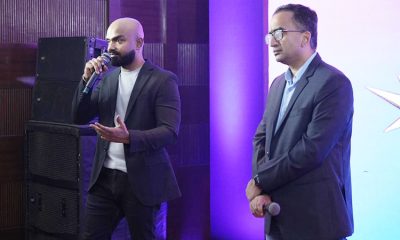
Tag: Krishnan Kutty

  • Orange Alert as Media Chiefs Call Time on Sour Regulation

    Orange Alert as Media Chiefs Call Time on Sour Regulation

    MUMBAI: When your brightest industry minds start comparing creativity to citrus fruit, you know the discussion’s got some zest. At FICCI FRAMES 2025, the session titled “Regulating the Orange Economy: Past, Present, and Future” turned into a spirited masterclass on what’s holding back India’s most vibrant export creativity itself.

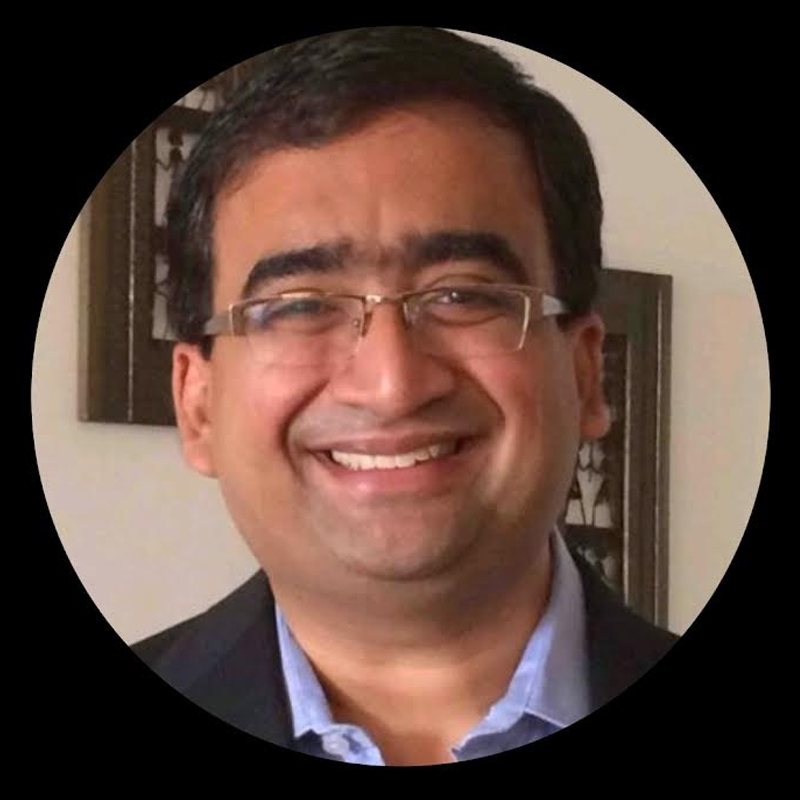
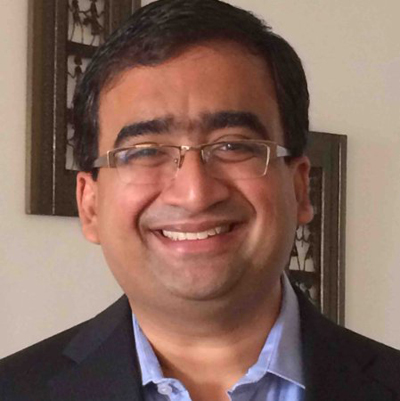
    Moderated by Koan Advisory’s Vivan Sharan, the panel brought together some of the sharpest voices in Indian broadcasting Avinash Pandey (CEO, Indian Broadcasting and Digital Foundation), Krishnan Kutty, head of cluster, Entertainment (South) – JioStar, Anil Malhotra (COO, Zee Media), and Yatin Gupta (COO, GTPL Hathway). Together, they dissected the bitter-sweet evolution of India’s media and entertainment (M&E) industry from its liberalisation glory days to today’s tangled web of red tape and regulation.

    Avinash Pandey kicked things off with a nostalgic rewind. “We were declared an industry in 1996, and for a brief while, we were actually treated like one,” he said dryly, drawing laughter from the crowd. He recounted how the early 2000s saw broadcasting boom as a sunrise sector driven by investment, private innovation, and minimal interference.

    “Then came a time when the government helped us grow,” he continued. “But today, every little aspect from pricing to packaging is regulated. We are living under a 2005 framework in a 2025 economy.”

    Pandey’s lament set the tone. The orange economy shorthand for industries fuelled by creativity and culture has turned ripe, but over-regulation, panelists warned, risks turning it sour.

    Krishnan Kutty of JioStar took the baton, calling for “a lighter hand and a smarter head” in policymaking. He drew a sharp comparison between legacy broadcasters and digital-first platforms. “Television is capped, controlled, and scrutinised. OTT platforms, meanwhile, stream what they want with almost no oversight,” he said.

    Kutty argued that the answer isn’t to regulate the new, but to liberate the old. “Over-prescription kills innovation. Consumers don’t need protection from choice they need access to more of it.” His words echoed across an audience that included broadcasters, policymakers, and streaming executives all trying to decode the new power balance between screens.

    Anil Malhotra from Zee Media added historical perspective and a dose of irony. “Cable TV arrived in India in 1985. It was regulated only in 1995. Broadcasting began in 2005, got regulated much later,” he said. “Regulation always comes late to the party and then overstays its welcome.”

    Malhotra argued that in a digital-first world, it makes no sense to hold traditional media hostage to older rulebooks. “If the government doesn’t regulate new tech like OTT and AI, it must deregulate the old. Otherwise, you’re penalising the legacy systems that built India’s media strength in the first place.”

    He also called for a “policy audit,” a comprehensive review of old broadcasting rules to identify those that have outlived their relevance. “We need regulation that enables, not restricts,” he stressed.

    GTPL Hathway’s Yatin Gupta brought the discussion closer to ground reality and homes still running on coaxial cables. “We’re the most regulated part of the media chain,” he said bluntly. “Every rate, every fee, every package is dictated. Yet, we’re expected to compete with digital platforms that face no such limits.”

    Gupta pointed out that India’s cable homes have dropped from 150 million a few years ago to around 100 million today, a staggering 30 per cent loss in a market still hungry for affordable entertainment. “We can’t evolve if we’re boxed in,” he added. “If the aim is to take India fully digital, we must support the legacy infrastructure that connects Bharat to the world.”

    He called for skill development, broadband integration, and hybrid models that let cable operators transform into full-fledged digital service providers. “If we don’t, we’ll end up with an uneven playing field and an excluded audience.”

    By the time Avinash Pandey took the mic again, his tone had sharpened. “Regulators talk about ‘orderly growth’,” he said with a knowing smile. “That’s a Soviet-era phrase. You can’t dictate how creativity grows, it defeats the very nature of innovation.”

    He urged policymakers to think of the media sector as a living organism, one that thrives on unpredictability. “Creativity doesn’t follow command-and-control models. It needs chaos, experimentation, and freedom to fail.”

    The audience broke into applause when he declared, “If you want free markets, let the market breathe.”

    Despite the fiery debate, the panel didn’t write television off. Far from it. “TV still delivers high-quality entertainment at the lowest cost per viewer,” Pandey noted. “There are over 100 million Indians yet to own a television. Growth is far from over but it will stall if innovation is strangled.”

    The panellists agreed that the future of India’s media sector lies in convergence television and digital not competing, but coexisting. With global streamers investing heavily in Indian stories and regional content booming across states, the creative economy stands at a crossroads.

    As the discussion wound down, what emerged was less of a gripe and more of a roadmap: deregulate the old, modernise the law, empower talent, and let creativity not bureaucracy set the tone.

    In a nation bursting with storytellers, artists, and innovators, the message was clear: the Orange Economy shouldn’t be juiced dry by rules made for an analogue age.

    If India truly wants to be a global creative powerhouse exporting not just IT services but imagination, it must give its creators the same freedom its coders enjoy. Or as one delegate quipped while leaving the hall, “You can’t make lemonade with red tape.”


  • Asianet strikes a floral chord with world’s first Poopaattu for Onam

    Asianet strikes a floral chord with world’s first Poopaattu for Onam

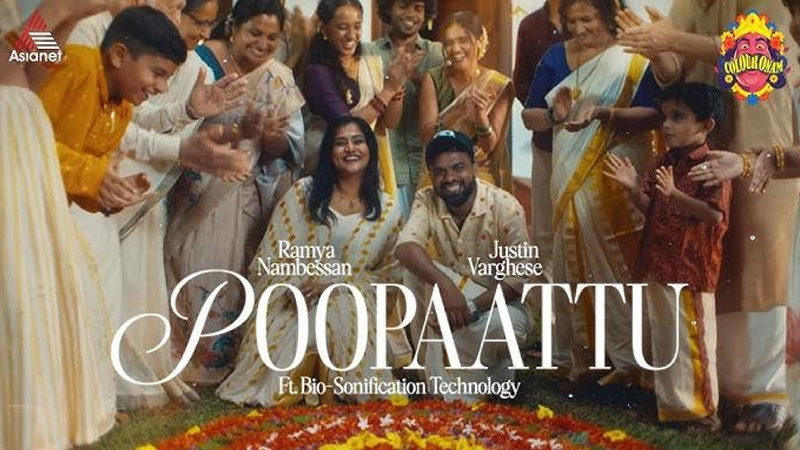
    MUMBAI: When flowers sing, Onam dances to a new tune. Asianet, Kerala’s top entertainment channel, has unveiled the world’s first Poopaattu (Flower Song), blending tradition with cutting-edge bio-sonification technology for its #Coloronam campaign.

    Created by music director Justin Varghese with vocals by singer-actor Remya Nambeesan, the track is no ordinary festive jingle, it’s a composition crafted from the natural vibrations of Onam flowers such as Thumba, Thechi, Chembarathi, and Shankupushpam. These subtle frequencies were captured, converted into notes, and layered into an original soundtrack that’s as scientific as it is soulful.

    The idea stems from the age-old Pookkalam (floral carpet) tradition, where each bloom held meaning Thumba symbolised sanctity, Mukutti prosperity, and Thechi devotion and strength. By turning these floral associations into music, Asianet hopes to revive cultural connections for modern audiences.

    “With Poopaattu, our aim was to show how cultural storytelling can be reimagined through innovation,” said JioStar head of cluster entertainment (South) Krishnan Kutty. “Onam is deeply emotional for our audiences in Kerala, and by combining tradition with technology, we’ve built a campaign that resonates locally while showcasing our ability to lead with fresh ideas.”

    The accompanying video mirrors the community spirit of Onam families and friends handpicking blossoms, weaving intricate Pookkalams, and celebrating togetherness with joy and generosity.

    For a festival rooted in colour, fragrance, and symbolism, Poopaattu adds a new sensory dimension: sound. By bridging heritage and innovation, Asianet is not just celebrating Onam but orchestrating it, one flower note at a time.

  • Bigg Boss Malayalam Season 7 records biggest season opening ever on JioHotstar

    Bigg Boss Malayalam Season 7 records biggest season opening ever on JioHotstar

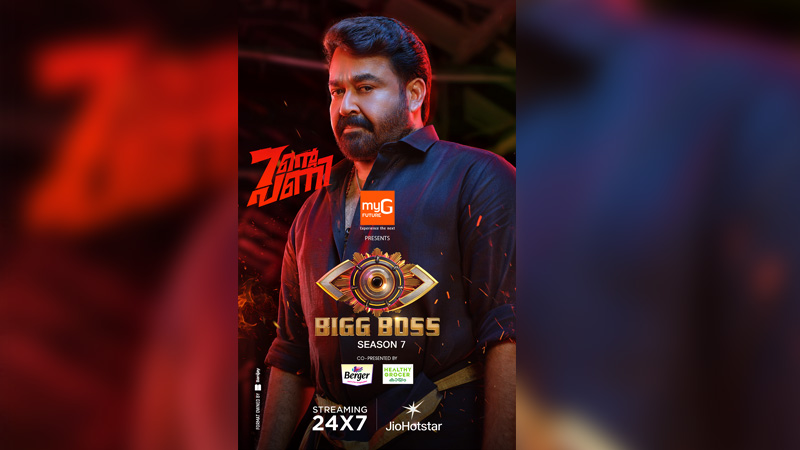
    MUMBAI: Bigg Boss Malayalam Season 7 has recorded a phenomenal opening on JioHotstar, setting the tone for a blockbuster season ahead. Hosted by the ever-charismatic Mohanlal, the launch weekend delivered high-octane drama, unmissable moments, and immersive interactive offerings that kept fans hooked. The season’s opening clocked an impressive 12.6 crore minutes of cumulative watch time—a remarkable 225 per cent surge over previous seasons.

    JioHotstar has elevated the Bigg Boss Malayalam S7 experience with a suite of interactive features including live chats, polls, and exclusive behind-the-scenes access, creating a truly immersive experience for the viewers. With the 24×7 live feed and dedicated Fanzone, fans can stay connected and participate in every moment. Interactive gamification has driven unprecedented audience participation, boosting the show’s reach—a testament to its enduring popularity and the platform’s reach.

    Commenting on the record-breaking start, JioStar head of cluster, entertainment (South) Krishnan Kutty said, “The opening success of the season is a clear indicator of how entertainment consumption is headed in India. The exponential growth of 210 per cent viewership compared to previous two seasons, underscores how audiences today seek deeper engagement, interactivity, and access beyond the main episode. The interactive features, especially Live Chat, have enriched the viewing experience, encouraging real-time participation and creating a vibrant community around the show doubling down on the reach/viewers compared to previous two years. We look forward to building on this momentum as the season progresses.”

    Connected TV contributed nearly 30 per cent of Bigg Boss Malayalam S7 opening watchtime – a 154 per cent surge over the previous two seasons highlighting a shift in audience preference toward immersive, large-screen viewing experiences.

    Bigg Boss Malayalam Season 7 is presented by MyG Digital; co-presented by Berger Paints and Healthy Grocer; co-powered by Sunrich Refined Sunflower Oil, and MYK Laticrete. Other sponsors include Regal Jewellers, Merino Laminates as Special Partners; Dazzler Etertna as Beauty Partner and Cera as Associate Sponsor.

  • APOS 2025: JioStar reboots Indian storytelling: bold themes, small-town creators, and a Gen Z gold rush

    APOS 2025: JioStar reboots Indian storytelling: bold themes, small-town creators, and a Gen Z gold rush

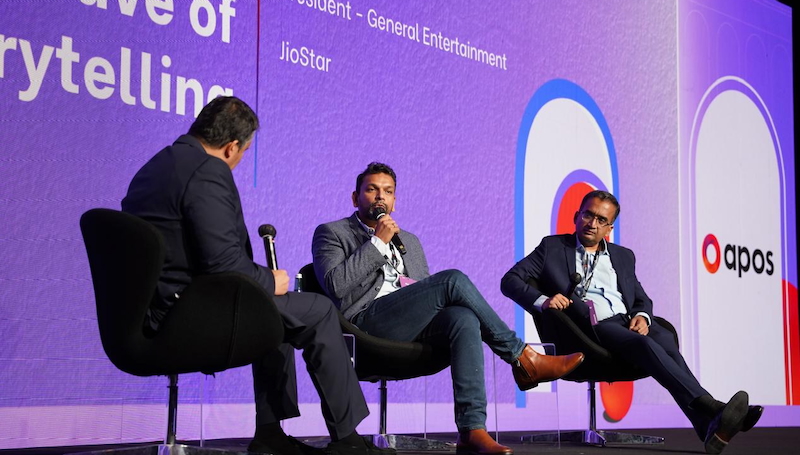
    Bali: India’s entertainment juggernaut JioStar is rewriting the playbook for streaming success. Speaking  on Day one with MPA founder & executive director Vivek Couto at the Asia Pacific Video Operators Summit (APOS) in Bali, president, general entertainment Alok Jain and head of cluster – entertainment (south) Krishnan Kutty laid out a turbocharged strategy rooted in youth, cultural authenticity, and fearless innovation.

    Kutty didn’t mince words. “Streamers haven’t done enough for Gen Z,” he said, announcing plans to ramp up youth programming in the south by seven to ten times. “Today’s boldness isn’t about spectacle — it’s about challenging societal norms. But we’re not in California. This has to be rooted in India.”

    Jain backed it up with numbers and narrative. Thukra Ke Mera Pyaar, a 19-episode romantic drama with 50-minute episodes and a debut director, shattered expectations. “The audience embraced it because it felt fresh, not because of familiar faces,” he said. “Innovation isn’t just a tactic — it’s our baseline.”

    The pair’s APOS session, titled Inside the next wave of Indian storytelling, was a no-holds-barred manifesto for resetting the country’s content economy. “We’re not here to gatekeep,” said Jain. “Today’s creators are format-agnostic — moving from Instagram Reels to primetime drama to long-form docu. We want to build a creative ecosystem where they grow across mediums.”

    Kutty spotlighted small-town storytellers as the engine of this shift. “We’re backing young creators from Tirunelveli to Kochi who bring lived-in authenticity. Eighty per cent of our Malayalam content consumption comes from outside Kerala. Great stories transcend language and geography — that’s our sweet spot.”

    The duo also called out industry dysfunction. “Streaming has broken the economic model,” Kutty said. 
    “Producers have become B2B vendors serving platforms, not audiences. Talent and production costs have soared. We need a reset.”

    On the theatrical front, Jain was blunt. “Three-hour films don’t cut it in an age of 15-second videos. People only show up at cinemas for something really worth their time. Theatres need to reinvent — on price, experience, everything.”

    India’s scale, youth and appetite for change were central to JioStar’s bullish outlook. With over 300M subscribers on JioHotstar and 800M viewers across its TV network, JioStar sits atop 320,000  hours of content in 22 languages. “The only common thread?” said Jain. “Emotional truth. That’s what travels.”

    From microdramas to macro themes like justice and aspiration, the message from JioStar is clear: in a country bursting with creators, languages, and formats, the only limit is imagination.

  • Pushpa 2 storms TV: Blockbuster to hit living rooms on JioStar network

    Pushpa 2 storms TV: Blockbuster to hit living rooms on JioStar network

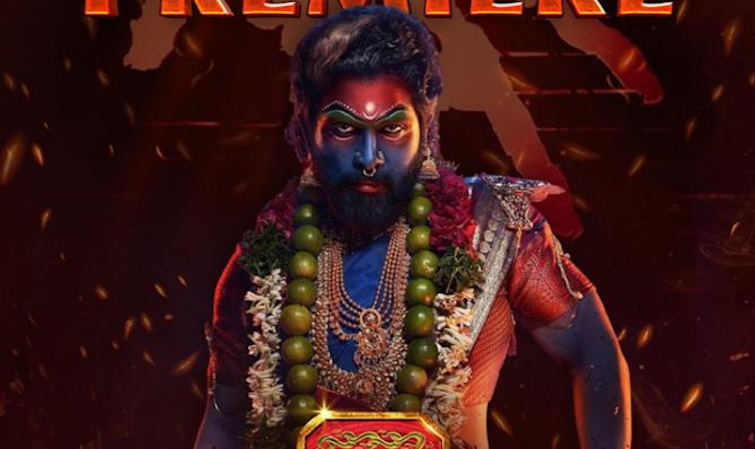
    MUMBAI: After smashing box office records with over Rs 1,800 crore in global earnings, Pushpa 2: The Rule is ready to rule the airwaves. The Allu Arjun starrer makes its grand television debut on JioStar network on 13 and 14 April, airing across Star Maa, Asianet, Colors Kannada and Star Vijay.

    To build up to the mega premiere, JioStar has unleashed The Pushpa 2 Experience—a full-throttle promotional blitz designed to grip audiences until 13 April. Expect an avalanche of behind-the-scenes action, star-studded chats and interactive fan-frenzy events. Plus, a weeklong marathon of Allu Arjun’s greatest hits to keep the adrenaline pumping.

    “We are committed to delivering the biggest and best entertainment experiences to our audiences and look forward to bringing the excitement of Pushpa 2: The Rule to our viewers’ living rooms. The television premiere of Pushpa 2: The Rule is more than just an event—it’s a nationwide celebration of a film that has redefined Indian cinema. Our extensive promotional campaign is an opportunity for viewers to not only watch the film but truly immerse themselves in the world of Pushpa,” said JioStar cluster head entertainment (south) Krishnan Kutty.

    JioStar is pulling out all stops. Prime-time favourites like Kiraak Boys Khiladi Girls, Aadivaaram with Star Maa Parivaaram, Maja Talkies and Star Singer will be infused with Pushpa 2 special segments, ensuring the film’s fever grips living rooms across the country.

    Produced by Mythri Movie Makers, Pushpa 2: The Rule has redefined Indian cinema with its scale, swagger and sheer box office muscle. Now, it’s coming home—bigger, bolder and louder than ever.

    Brace for the ultimate TV spectacle. Tune in to JioStar network and witness Pushpa 2 in all its glory.

  • Star elevates Krishnan Kutty to EVP and head of Tamil, Malayalam & Marathi biz for TV & OTT

    Star elevates Krishnan Kutty to EVP and head of Tamil, Malayalam & Marathi biz for TV & OTT

    Mumbai: Krishnan Kutty is named as executive vice president and head of Tamil, Malayalam and Marathi (TV and OTT) at Star and Disney India. He was previously the business head for Star Vijay.

    Kutty is an experienced media professional who has been in the industry for 22 years out of which 16 years were spent with Star TV Network. He previously had stints with Mindshare, NDTV and Hutch before joining Star in 2005 as vice president – research and on air. While he was heading Star India’s Tamil language business, he was responsible for growing market share by four times and revenues by three times in four years.  

    He completed his graduation from Narsee Monjee Institute of Management Studies (NMIMS) and his MBA in marketing from Indian School of Business.  

  • Kamal Haasan to host Bigg Boss’s debut on Tamil TV

    BENGALURU: Endemol Shine’s Big Brother format under its Indian sobriquet Bigg Boss is all set to make its Tamil television debut on Star India’s Tamil GEC Star Vijay on 18 June 2017. The host of the show will be Indian film icon Kamal Haasan. The format of the show will be the same as the Bigg Boss season 10 format that closed in end January this year on Network 18’s Hindi GEC channel Colors. The Kannada version’s season 4 which also closed in mid-January on Network 18’s Colors Kannada was quite successful.

    Sources at Star Vijay claim that the show on their channel will be on an even bigger scale than the Hindi version. They say that an exclusive and a massive house, bigger than the Hindi version, was being built at EVP World Theme Park in Chennai.

    “We are keen to leverage the uniqueness of the format , the reality appetite of Tamil audiences and a great host like Kamal Haasan, not only to drive ratings, but to put out cutting edge and innovative content,” said Vijay TV GM Krishnan Kutty.

    On his first foray into television, Haasan said, “When Vijay TV approached me to play host , I funnily quipped , who better than me right, all my life have been under a constant watch and have been judged on whatever I have done , public or private. But, now roles are reversed as I would stand with the audience and watch these celebrities in the house survive this ordeal.”

    Bigg Boss Tamil will air on weekdays (Monday to Friday) at 900 pm and between 830pm and 10pm on weekends. The show would see the coming together of 15 celebrities in a posh house with all the amenities but who are completely cut off from technology and the outside world for 100 days. The channel is filtering participants. It says that people from varied backgrounds are being spoken to and the reception has been enthusiastic, given Kamal Haasan is the host.

    Sources say that a massive marketing plan has been formulated with more than 400 outdoor sites, full page advertisements in all the leading English and Tamil dailies and weekly magazines and Radio Specials have been planned as well. Digital tie up has been firmed up with Facebook, Twitter and Google they aver.

    While details of sponsors and major advertisers were not available at the time of writing, the channel says that national advertisers who have experienced the euphoria of Bigg Boss Hindi are the primary movers. However, Chennai is a powerful and strong retail market and hence the local market will also be an active participant, they say.

  • Star India appoints Sridhar Balakrishnan as its head of distribution

    Star India appoints Sridhar Balakrishnan as its head of distribution

    MUMBAI: Star India has appointed former Marico chief operating officer for rest of South Asia, Middle East & Africa Sridhar Balakrishnan as its head of distribution.

    Balakrishnan replaces Krishnan Kutty, who has been made EVP and business head of the English cluster a few months back

    “Distribution has been a key priority for the organisation, and we have leveraged the growing penetration of TV to drive reach of our channels across the width and breadth of this country. As cable in India gets fully digitalised and consumers get access to an array of differentiated channels and services, the opportunity to unlock value in the distribution business is huge,” Star India MD Sanjay Gupta shared in an internal mail to employees.

    “It gives me great pleasure to welcome Sridhar Balakrishnan, who joins us as the head of distribution business. He will spearhead this agenda for Star.”

    An alumnus of XLRI Jamshedpur and BHU, Sridhar has spent most of his 22 years of work life with Marico and has handled a variety of roles across sales, trade marketing, business finance and supply chain. In his last role as COO for rest of South Asia, Middle East & Africa, he was responsible for Marico’s multi-geography business across the business units of Bangladesh, South Asia, Middle East and Africa.

  • Star India appoints Sridhar Balakrishnan as its head of distribution

    Star India appoints Sridhar Balakrishnan as its head of distribution

    MUMBAI: Star India has appointed former Marico chief operating officer for rest of South Asia, Middle East & Africa Sridhar Balakrishnan as its head of distribution.

    Balakrishnan replaces Krishnan Kutty, who has been made EVP and business head of the English cluster a few months back

    “Distribution has been a key priority for the organisation, and we have leveraged the growing penetration of TV to drive reach of our channels across the width and breadth of this country. As cable in India gets fully digitalised and consumers get access to an array of differentiated channels and services, the opportunity to unlock value in the distribution business is huge,” Star India MD Sanjay Gupta shared in an internal mail to employees.

    “It gives me great pleasure to welcome Sridhar Balakrishnan, who joins us as the head of distribution business. He will spearhead this agenda for Star.”

    An alumnus of XLRI Jamshedpur and BHU, Sridhar has spent most of his 22 years of work life with Marico and has handled a variety of roles across sales, trade marketing, business finance and supply chain. In his last role as COO for rest of South Asia, Middle East & Africa, he was responsible for Marico’s multi-geography business across the business units of Bangladesh, South Asia, Middle East and Africa.

  • Krishnan Kutty to take charge of Star’s English cluster by Jan-end

    Krishnan Kutty to take charge of Star’s English cluster by Jan-end

    MUMBAI: Star India distribution head Krishnan Kutty is all set to take charge of the network’s English channel cluster by the end of January.


    The development comes in the light of the fact that Star India business head – English cluster, Star Jalsha, Jalsha Movies, Channel V & Hindi GECs Kevin Vaz will no longer will be handling the English cluster. He will, however, continue to handle the other portfolios under him.


    A source close to the development informed Indiantelevision.com, “While Vaz will continue to head Star’s Bangla cluster, Hindi general entertainment channels, and Channel V, Kutty will oversee the English entertainment channels. He will take charge of the English cluster by the end of January 2016.”


    The channels that he will take charge of are Star World, Star World HD, Star World Premiere HD, FX, FX HD, Star Movies, Star Movies HD, Star Movies Action and Star Movies Select HD.


    Kutty joined the company as VP – research & on-air in 2005 and was then promoted to EVP of distribution in January 2009. He was made the head of distribution in April 2015.


    Prior to his stint with Star India, he has also worked with companies like GroupM, Vodafone and NDTV.