Tag: Krishna

  • &TV brings back family drama with a new show ‘Doosri Maa’

    &TV brings back family drama with a new show ‘Doosri Maa’

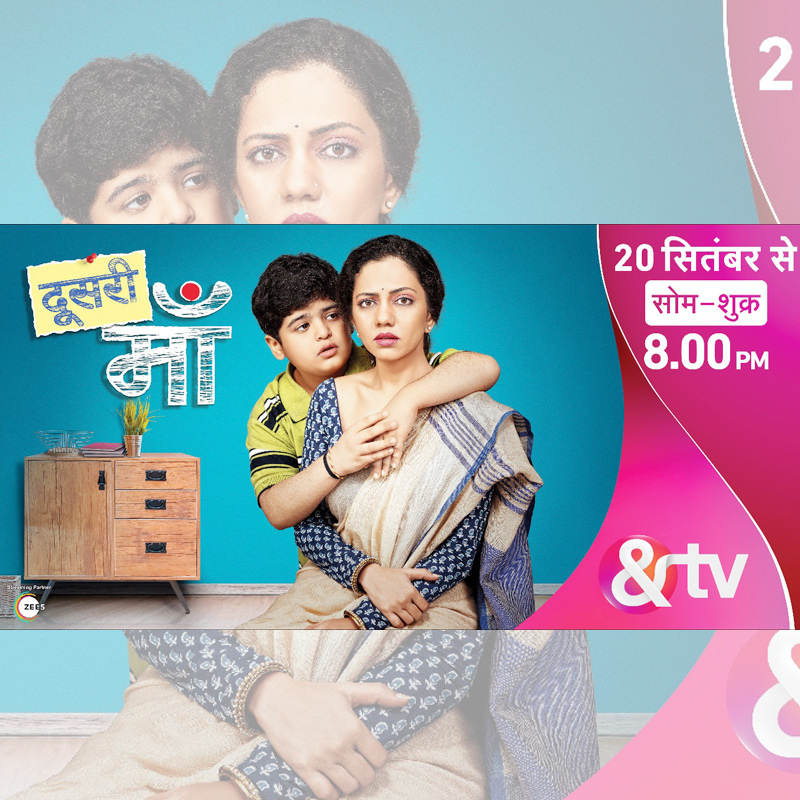
    Mumbai: &TV is all set to present its latest family drama Doosri Maa. The show will be produced by Zee Studios and co-produced by Imtiaz Punjabi.  

    The show will reintroduce the famous on-screen mother-son duo, Neha Joshi as Yashoda and Aayudh Bhanushali as Krishna, among other cast members. The show will premiere on 20 September at 8:00 p.m and will air Monday to Friday.

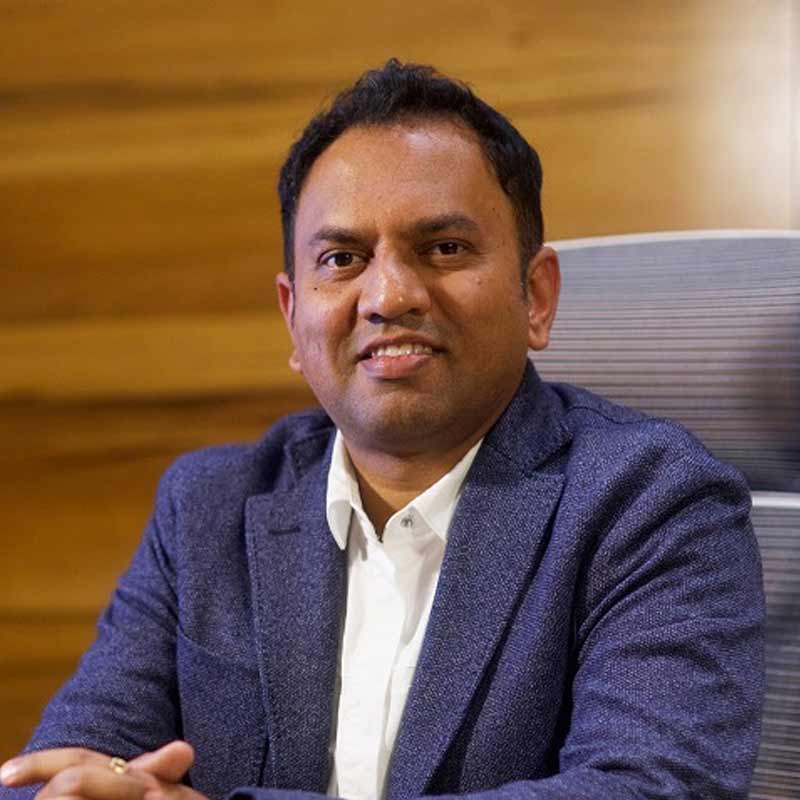
    &TV business head Vishnu Shankar said, “&TV is committed to telling human stories that connect deeply with our viewers, which is why we bring to you Doosri Maa. Mothers are the epitome of unconditional love and sacrifice and the bond between them and their child is unquestionable. But what happens when life throws a curveball? Our show Doosri Maa is a heart-tugging story of Yashoda’s struggle between her self-respect and maternal instincts, as she tries hard to accept her husband’s illegitimate young son. It is an emotional story of family, love, betrayal, and duty. We hope our viewers enjoy this new family drama and the phenomenal chemistry between Neha Joshi and Aayudh Bhanushali.”

    Doosri Maa is the story of a woman who lives in Uttar Pradesh with her husband, two daughters, and in-laws. When she and her husband unknowingly adopt his illegitimate child, their happy, peaceful family life comes to a halt. The show depicts Yashoda’s journey of coming to terms with her husband’s past as well as her conflicted, rocky relationship with her stepson.

    Zee Studios’ chief business officer Anshul Khullar, said “Doosri Maa is our most recent fiction offering produced by Zee Studios and co-produced by Imtiaz Punjabi. It is a family drama centred around our protagonist Yashoda, as she deals with her husband’s past and her conflicted relationship with her stepson, Krishna. The storyline beautifully depicts the dilemma of Yashoda – torn between the anguish of a wronged wife and compassion for the plight of Krishna, her stepson, who has lost his mother and is struggling for acceptance. We hope the audience will relate to this heart-warming story premiering on 20 September at 8:00 p.m on &TV.”

    Co-producer and Director Imtiaz Punjabi added, “Doosri Maa is a fascinating tale of a woman and a mother. The story, set in Uttar Pradesh, brings to life Yashoda and Krishna’s journey and the inherent drama will keep the audience engrossed in every scene. I am happy to be associated once again with &TV which has given viewers some of the most memorable shows. I previously loved working with Neha and Aayudh, and we are optimistic that we will create new magic with Doosri Maa.”

  • Chilaka’s roller coaster ride from engineering to animation

    Chilaka’s roller coaster ride from engineering to animation

    MUMBAI: Who would have thought that the person holding a master’s degree in computer science from a prestigious US University would commit to the lesser known field of animation and return to his homeland? And yet today, Rajiv Chilaka stands redeemed for a choice he made nearly 17 years ago.

    India’s most successful animation company was the entrepreneurial venture of this man who runs the show with his elder brother Srinivas. The founder and CEO of Green Gold animation, Chilaka moved over from engineering to studying animation at the Academy of Art University, San Francisco in 2000 after giving three gruelling years to a job as a software engineer.

    The inspiration came to him after watching his first animated film – The Jungle Book. It gave rise to a spree of movie and cartoon watching such as Spiderman, Tom and Jerry, etc. Chilaka knew he wasn’t a great artist so he took engineering as a career. The final switch came when, during one of his slow boring days as a librarian, he read Walt Disney’s book where he spoke of the power of entertaining kids and not considering money as a driving force. He decided that if not art, he could at least tell great stories.

    While studying his post graduate degree in the US, Chilaka applied to learn animation but without a scholarship, he had to cough up a whopping $20,000 as fees each semester. His brother refused to lend him money and advised him to finish his masters, work for a few years and give wings to his animation career. Chilaka was convinced.

    When Chilaka broke the news about setting up Green Gold Animation to his family, he instantly got the maternal support but not surprisingly, his father was adamantly against it. Needing his father’s blessings, Chilaka managed to persuade him with the business plan, which he himself felt was a pathetic one.

    He flew back to India and settled in with his parents in their new house, an option his father gave him understanding the difficulty he might face in finding his own accommodation and paying rent initially. With four to five employees, his journey began.

    If today India still lacks great animators, imagine the situation back in 2000. Chilaka says that they had to train everyone who joined. Everything was work, even if it was as simple as a business card or brochure. He even purchased a digital camera to look tech savvy. What he ensured was good quality work at a feasible budget leading to a happy client and no complaints. 
    The company came close to shutting nearly 25 times in the eight years in between. They had worries – expensive orders or unpaid dues and one by one dejected employees started moving out when he couldn’t pay them on time.
    The real tipping point came years later in 2008 when Chhota Bheem first got airtime on Pogo. Ten days before it went on air, Chilaka’s new office was gutted by a fire and a big potential investor developed cold feet while the lenders demanded their dues. “It was a brand new building which we built so luckily no one moved into it. We were going to move in three days later,” Chilaka says. Everything was damaged – the interior, centralised AC office and it was not just the loss of money but also of time and efforts. “But a lot of vendors supported and understood that we were in trouble. Turner didn’t panic and supported us instead,” he adds.

    Recently, Chilaka added another feather to his cap, with the newly launched service studio-Golden Robot Studio with Samir Jain, Chand, Ritesh and Abhishek. “Right now we have 120 team members and we have planned to add another 70-80 people in the team,” he reveals.

    The challenge now was to orient people to the new culture of being self-sufficient and creating original IPs. “It was also difficult for the employees to join a new startup company, but all the employees are happy working here and of course the brand name of Green Gold helped as everyone wanted to work for us,” says a joyful Chilaka.

    His latest home-grown IP shows include Kalari Kids, a show that rediscovers Kalaripayattu, a lost martial art form of Kerala. With the purpose to educate through entertainment, the animation studio is making an exclusive series for Amazon Prime. Green Gold also sealed a deal with Netflix to digitally broadcast Mighty Little Bheem—a spinoff of its popular character Chhota Bheem.

    The series created by Green Gold Animation are Vikram Betal in 2004, Bongo on DD National (2004–2006), Krishna on Cartoon Network (2006–2007), Krishna & Balram – Cartoon Network (2009), Chhota Bheem – Pogo TV (2008), Chorr Police – Disney XD (India) (2009–2012), Mighty Raju – Pogo TV (2011), Luv Kushh – Disney XD (India) (2012–2014), Discovery Kids (India) (2015-2016), Arjun: The Prince of Bali – Disney Channel India (2014–2016) and Kalari Kids.

    In 2018, Green Gold will premiere two theatrical releases – Chhota Bheem Kung Fu Dhamaka and a tentative title for a mythological movie—Mahiravana. Both films are likely to be launched during the summer. Chilaka refused to speak on the other shows which are still in pilot stage.

    For the torchbearer of Indian animation, we hope his pot of gold never runs out!

    Green Gold, Amazon Prime put Kerala martial art on the map
    Green Gold’s golden Mumbai launch

  • ‘Teenage audiences are hard fish to catch’ : Orion Ross- Turner Entertainment VP creative and original content

    ‘Teenage audiences are hard fish to catch’ : Orion Ross- Turner Entertainment VP creative and original content

    Turner is looking to take localisation efforts for its kids channels to the next level. It has announced a slew of five locally produced shows which will air on Pogo while two will be on Cartoon Network.

    Turner also wants to expand associations with more local production houses as the talent pool in India is huge.

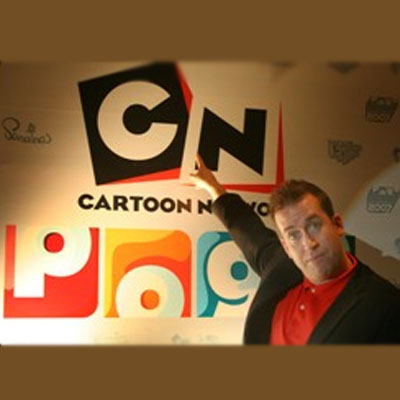
    Indiantelevision.com’s Ashwin Pinto caught up with Turner Entertainment VP creative and original content Orion Ross to find out more about Turner’s plans in India.

    Excerpts:

    The aim this year is to take local efforts to the next level. How is this being done?
    We are building on the successes that we have had over the past few years. We are trying to do more shows. We started in 2004 with 50 hours of original production on Pogo. We have built it steadily every year. Today we have reached critical mass where we are able to announce the launch of seven shows. This is an exciting milestone for us as what was a trickle earlier turned into a stream and then a flood.


    What is the ratio between international and locally produced content that you are looking at?
    It is important to have a strong variety. Krishna works as does Harry Potter. Tom and Jerry works as does M.A.D. I don’t want to talk about percentages but conceptually it is a mixture of both on the channels.

    We are putting Ben 10 into the premiere 6 pm slot on Cartoon Network. This is the after school must see TV slot. M.A.D. and Skatoony are on Sunday mornings.

    I don’t think that the number of hours is an important metric. What matters is what are the key destinations that people know your channel for? What are the flagships of your brand?

    Pogo has to have Harry Potter and M.A.D. These are the two pillars of the brand. Cartoon Network has to have Krishna and Ben 10.

    Could you shed light on the production values and budgets of these shows?
    I can’t talk about budgets. However, we probably spend more on M.A.D. than what channels might spend on a throwaway soap opera. This is because we want M.A.D. to be repeatable.

    It repeats really well. In the first season we found that the repeat episodes had more ratings than the premiere. So M.A.D. has built up its audience. We invested a lot into this production to ensure that each episode has a lot of content. It takes more time to shoot. It has to be well researched.

    Before every series we do a full workshop where we go and try out 20 theme ideas. We build all the stuff to see what it looks like. So before we go into production we make sure that it will actually work. Our per half hour cost is pretty high. Ben 10, for instance, is a combination of an international style with anime touches.

    Is Turner looking at taking a stake in an Indian production company?
    We are happy with how things are working out for us. We get to pick the right production company for a project. We want to start with the idea and then follow it wherever it takes us.

    There are some companies that are better suited to some ideas than to others. We like the flexibility of being able to pick a la carte.

    With which Indian production houses does Turner have tie ups with?
    Miditech has done a couple of shows with us including Galli Galli Sim Sim. We are working with Endemol India on the finale of the Pogo Amazing Kids Awards. Contiloe is doing Cumballa Investigation Agency. DJ Creations is doing Sunaaina for us.

    We are also really happy to be working with Siddhartha Basu and Synergy Adlabs on FAQ. For the science show they bring a lot of expertise to actually making educational science shows.

    Before you give the go ahead to a local concept, what are the key things you look for?
    We look for a show that has never been done before in a certain manner – something that is innovative and will connect with our audiences. We have a close relationship with our audience in terms of research and focus groups. We do a lot of studies like New Generations to try and really understand what kids do all day, and what is really important to them.

    We talk to mothers. We get a lot of mail. So we are informed by all of this. What we would do from a local concept point of view is that when someone comes to us with an idea, we ask is it right for the channels? Does it fit our brand? Is it positive, optimistic, of global standard, and off-centre?

    We want everything we make in India to be world class. M.A.D. is a show that can be comfortably compared to any kids show on any channel anywhere in the world. If we get a good idea, it turns into a creative development process. This is about finding the right writers, production company, right graphic designers if required, the right people to build game show mechanisms. Every show has a different kind of gestation process.

    You mentioned the importance of innovation. Could you give examples of this from the new slate?
    Cumballa Investigation Agency is a mystery whodunit show. There has not been a kids show like this one – five kids solving mysteries. People look at kids television and throw in a lot of magical stuff like magic lamps. They tend to have genies. While there is a place for that, the thing about our show is that it is more hard-hitting and naturalistic. An idea earlier one was that an alien would arrive.

    But we decided against doing X-Files kind of show. We are not going to do magic lamps, genies. This show takes kids and mystery solving more seriously.

    This doesn’t make it any less exciting. There are still these quirky stories that happen. While we like to have a lot of fun, Pogo takes its audience seriously. We never talk down to kids. We figure that it is better to treat kids a little bit older than they are – as opposed to the other way around.

    The worst thing you can do is talk to a 14-year-old like an eight year old. It is always better to err on the side of being too smart.

    As far as M.A.D. is concerned, people have been doing arts and crafts shows on children’s television for five decades. However, nobody has done it in the way that Rob has. He has brought a lot to the table in terms of his own take on things. Nobody has incorporated music, art and dance together. The idea that every show has a dance number is very Indian.

    M.A.D. is an Indian take on the format. It hasn’t been tried anywhere else in the world but it works well here. With Skatoony for the first time you have kids and cartoons in one show.

    Skatoony is a unique concept in that it fuses live action and animation. How does this work?
    We shoot the game show round first with the kids. It is pretty straightforward to work with from a production standpoint. It is real game play and the kids are competing. All the questions are written in advance. We have cartoons on the set. There is some post production work involved.

    Galli Galli Sim Sim looks to strike a balance between entertainment and education. Is this going to be an important focus area for you going forward?
    Yes! The second season has just kicked off. We are committed to the project for five years. It is an ambitious project about getting an educational message to pre-schoolers out onto as many platforms as possible. It is on Cartoon Network, Pogo, DD.

    We also have an outreach programme so that it even travels to places where people do not have television. It is a different project form your regular TV show. It is about benefiting all kids and making pre-schoolers better prepared for school and life.

    It is a challenge to reach all kids with one show. There are many diverse socio-economic backgrounds. But the thing about this show is that despite the gritty message, it is also a lot of fun. It has to be both educational and entertaining at the same time. Otherwise, neither mission works.

    Will locally produced shows also travel to other markets like the US?
    The format of M.A.D. can travel. Cumballa Investigation Agency is a format that can work really well. We will launch our local animation projects in the future. Those will also travel well overseas.

    Does localisation play an important role across Asia?
    Our focus is on animation in the other Asian markets. We are looking at doing Skatoony in other markets. It is a good way to get kids closer to the Cartoon Network brand. We have an animation development programme across Asia.

    So we are doing animation series in Thailand, Australia, Taiwan, Korea, Japan and Hong Kong. We focus on animation across the region as there is so much talent. We also feel that if there is a really funny guy in say Thailand who comes up with a cartoon, then it will travel really well. We have a lot of shows in the early development stages.

    How much of your revenue goes back into original productions?
    I cannot talk about numbers. However, original productions are not cheap to do. The money does not come out of some magic box. It is based on the expectation that it will drive our business.

    Are you also looking at making original films?
    We are looking at some long form projects on Pogo like having a movie-of-the-month kind of concept. We wouldn’t rule out making films.

    Our focus is on animation in the other Asian markets. It is a good way to get kids closer to the Cartoon Network brand. We have an animation development programme across Asia

    How do you see the kids genre evolving over the next couple of years in India?
    In India, the situation is acute in that kids are watching what grown ups watch. 85 per cent of kids viewing in the age group of 4-14 goes on to non kids channels. Obviously, the 15 per cent that we get can grow.

    As the market matures and with the different players in the kids market working together, we can grow the genre. That is why we welcome competition. Having investment and attention focussed on this sector not just by us but also by other players will benefit everybody in the long run.

    One challenge is that with youth channels now launching, the upper age of your audiences may migrate. How do you see things panning out?
    I know that one of these channels is planning to send their fans into space. 35 per cent of our audience is over 14 years of age. But our core audience is still 4-14 years. We think that teenage audiences are very hard to capture. They are constantly on the move. Music channels are finding out just how tough it is to capture this audience.

    Teens watch less television. They are more engaged with doing other activities. They socialise more. Their studies become more intense. They have less time for entertainment. So good luck to channels chasing this audience segment. They are very hard fish to catch. They will not necessarily sit and watch a linear network.

    What plans do you have to exploit new media platforms?
    As broadband penetration grows in the country, more content will become available online through streaming. Our on demand services will grow.

    We already have a number of mobile content deals. Short cartoons are a perfect packet for the mobile. Sending a fan a sentimental cartoon on his/her mobile is a great way to forge closer connect. It is important for us to get people to experience our brands in as many ways as possible.

    But it is not just high tech stuff. Our theme parks are coming up outside Delhi. This is another platform. With M.A.D. we have a publishing deal. Fans can get books and learn how Rob does all his stuff.


    When is the theme park coming up and are attractions modelled after characters and shows like what Disney is doing?
    The Pogo park is launching early next year. There will be attractions based on shows. Disney is the grand daddy of all theme parks. Our parks will be a little bit different, but fans will experience our brands up close and personal in this environment.