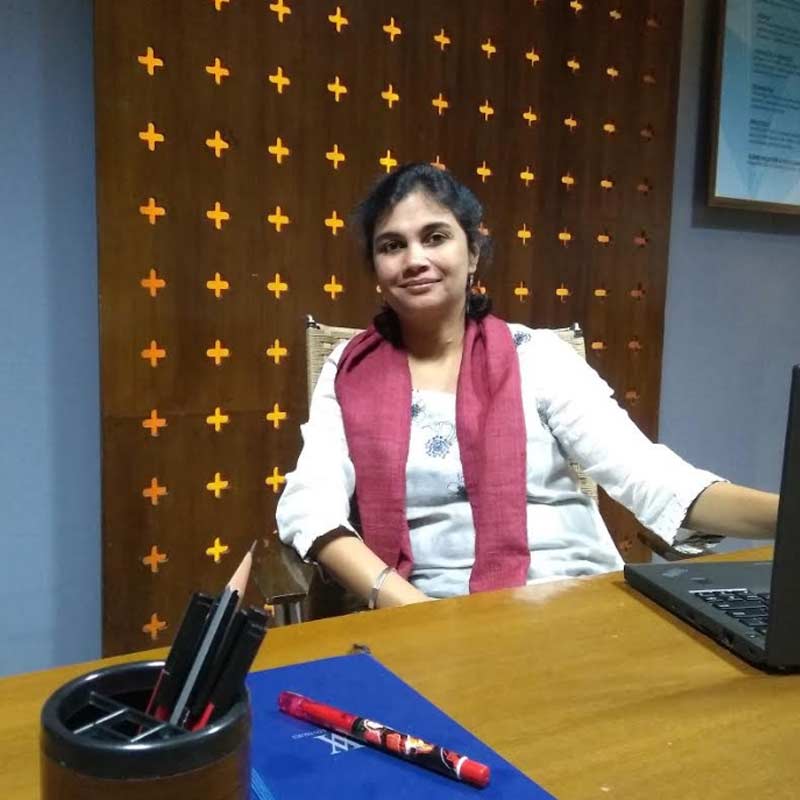
Tag: Kranti Gada

  • Curation brands the need of the hour in digital: Kranti Gada

    Curation brands the need of the hour in digital: Kranti Gada

    MUMBAI: From starting her career at an FMCG company to mastering the entertainment business, the journey of Shemaroo Entertainment Ltd’s (Shemaroo) chief operating officer, Kranti Gada, in the world of business is quite intriguing. One of the youngest COOs in the industry, Gada was elevated to the position in March this year after witnessing many a change within the company and the industry. She has been championing the ‘Go Digital’ initiative right from its nascent stage at the company.

    The beginning

    Gada started working with PepsiCo after finishing her course in marketing at NMIMS in 2004. She set her sights on working for an FMCG company and only applied to such companies during campus placement. It is at PepsiCo—while moving from shop to shop selling packets to travelling in unreserved compartments of trains and conducting various surveys—that she got to know customers’ mindset innately. The lessons learnt during these two years with the company have served her well.

    She believes that staying connected with customers is critical for any company, whether it is B2B or B2C. “If you are B2C, you have to be in contact with these customers. But if you are B2B2C like us, while our content may be sold to a network that is B2B, the ultimate group that the stakeholders are servicing are consumers. So, knowing what he likes or dislikes is really important,” Gada said in an interaction with indiantelevision.com.

    A new innings

    In 2006, due to unavoidable reasons, Gada returned to Mumbai. Even as she was returning, she got an offer from a leading FMCG company that she turned down 12 days prior to joining. The very same year, she joined Shemaroo, an unlikely move for a person “who was not a heavy consumer of entertainment content”. She got into the company at a time when it was in the midst of evaluating new areas to enter. Out of those new initiatives, the digital piece was the one on which Gada focused on since the beginning. Another area on which she kept a keen eye on was gaming, a very forward-looking initiative at that point.

    Unbeknownst to many, Shemaroo dabbled in the gaming sector for 1.5 to 2 years after one year of Gada’s joining. The initiative, however, did not take off as well as they thought. “We had a development studio. India had not come up with its own IPs still. We wanted to create IPs around our brands,” she said. Despite creating learnings for the future, success was elusive for the company in gaming.

    The digital push

    Being early in the digital piece, however, really paid off for Shemaroo. From early 2000, the company started buying digital rights in a bid to create a library. When it decided to go ahead with the mobile division, it already had a library of content to offer. While the company was largely associated with home videos in the 1990s, after the change in focus, Shemaroo reoriented its offerings by repurposing content for digital.

    At present, YouTube is a monetised platform for the company. It has teams actively curating content for more than 50 YouTube channels under the umbrella. The eternal appeal of classic Hindi songs helps FilmiGaane, one of its flagship channels, to add a million subscribers every 45 days.

    With the digital revolution, the Indian media landscape has changed dramatically in the last two years. While many content companies and broadcasters are coming up with OTT platforms, content curation remains a big challenge. While some of the OTT platforms have really niche content, several platforms are vying to become a “mini-YouTube”. Along with explosion of content creation, Gada feels that there is a real need for curation brands that understand consumers well.

    OTT plans

    “I would say that at Shemaroo we absolutely should do the curation piece for sure. But I would say that having your own OTT platform is little beyond just curation. There is the technology piece and the customer acquisition piece, which is very critical,” she commented when asked if Shemaroo had plans to get into the space.

    “We will definitely have our own technology platform; we will invest in it and build out a platform. It’s the consumer strategy that we are still figuring out,” Gada added. For a brand like Shemaroo, which has been in the content business for a long time, it would be relatively easy to leverage that customer understanding after years of tracking the market one would imagine.

    Areas of focus

    While digital is going to remain a focus area in the next few years, few other areas such as multi-genre and multi-language strategies in content will remain critical. The company has also been building up its devotional content in a big way. In the pursuit of creating a new offering, the company has created several documentaries in the form of travelogues. Moreover, to make consumers aware about its new initiatives, Shemaroo has new marketing strategies up its sleeve.

    After 12 years into her journey with the company and being an inseparable part of Shemaroo’s digital strategy, Gada, as the new COO, has come to terms with the demands of her position. Despite being young in age and experience, she is thankful to Shemaroo’s management for keeping the faith in her.

    Also Read:

    Shemaroo Entertainment announces two new appointments

    Shemaroo Entertainment Strengthens its Live Darshan Offerings
  • Shemaroo Entertainment Strengthens its Live Darshan Offerings
    Shemaroo Entertainment Strengthens its Live Darshan Offerings
    National, 27th April, 2018: Religious diversity has been a defining characteristic of Indians for centuries. It plays a central role in people’s daily life through its temple ceremonies, festivals, pilgrimages and family religious traditions. Shemaroo Entertainment, one of India’s leading content powerhouse has a strong focus on its devotional offering and provides live streaming of over ten of the most revered religious temples across India, every single day.

    Shemaroo recently acquired the live streaming rights for Shani Shignapur in Maharashtra and Ajmer Sharif in Rajasthan.  It will give the Indian devotees an opportunity to enjoy live darshan of these holy places from the comfort of their homes and even on the go.

    Shani Shingnapur, a prehistoric temple in West India situated at 84 kms from Aurangabad, Maharashtra is devoted to Lord Shani. On the other hand Ajmer Sharif Dargah of Khwaja Moinuddin Chishti is one of Rajasthan’s most popular landmarks. Lakhs of devotees of all religions from across the world visit it every year. 

    The live feed of these two temples will be telecast on all digital platforms including mobile, internet, satellite and DTH channels.

    Kranti Gada, Chief Operating Officer (COO), Shemaroo Entertainment Ltd shared, “In this fast paced life where we constantly lack the time, energy and the ability to frequently visit popular places of worship, we  see a growing demand for direct live feeds from temples. We understand the challenges of modern life and technology helps us overcome these. Keeping the spirit and understanding the needs of the consumer, we are powering content to provide virtual experience of deities to the devotees. We are quite delighted, that the management of Shani Shignapur and Ajmer Sharif have supported us in reaching out to their devotees”.

    Shemaroo Entertainment provides live feeds from various holy locations across the length and breadth of the country including, Karni Mata temple in Bikaner, Iskcon and Babulnath Temple in Mumbai amongst many others.

  • Shemaroo appoints Hiren Gada as CEO in leadership rejig

    Shemaroo appoints Hiren Gada as CEO in leadership rejig

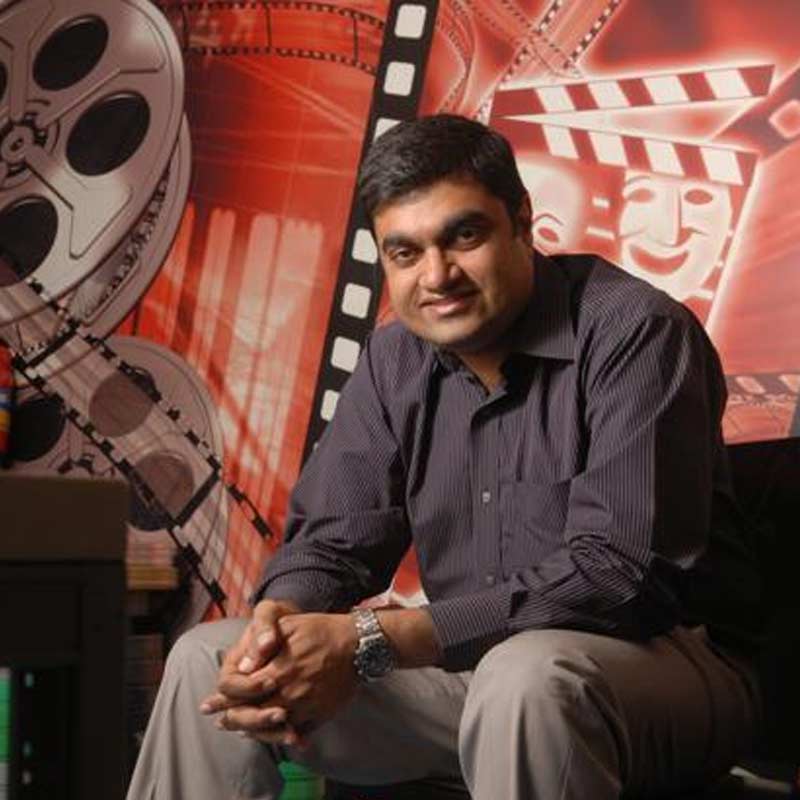
    MUMBAI: Gearing itself for the next phase of growth, Shemaroo Entertainment Ltd (Shemaroo) has restructured its top leadership making several timely appointments. 

    According to a release on the BSE website, the entertainment and content company has elevated Hiren Gada as the chief executive officer (CEO) in addition to his existing role as chief financial officer (CFO).

    Having spent time with various divisions within the company and leading the organisation to scale up and get listed, Gada will now take on the leadership role in addition to his original role as the CFO. In his new role as CEO and CFO, Gada will lead the company through its next phase of growth.

    Shemaroo has also promoted Kranti Gada to the role of chief operating officer (COO) of the company. Kranti Gada was involved in setting up the company’s mobile business and played a key role in the company’s early adoption of digital platforms. More recently she incubated the company’s expansion into the DTH segment. In her new role, Kranti will head the revenue function of the company to drive growth.

    Hiren Gada, who joined Shemaroo 15 years ago, has played a significant role in the transformation of the company from a family-run business to a professionally driven organisation in terms of systems, processes and best industry practices.

    Kranti Gada joined the family business at Shemaroo in 2006 after a successful stint in marketing at Pepsi Co. She helped set up Shemaroo’s mobile business and established the company as a leading mobile VAS player in the country.

    With a clear focus on strengthening the organisation for the next phase of development, Jai Maroo, director of the company, will now move from his current role of guiding the expansion of the digital media business to focus on organisational transformation and excellence.

    Raman Maroo and Atul Maru remain managing director and joint managing director of the company, respectively. The new leadership structure is effective immediately.

    Commenting on the restructuring, Shemaroo managing director Raman Maroo said, “Our endeavour has always been to build a future-ready organisation with distinct professional capabilities while retaining its entrepreneurial culture. We have done that with an emphasis on developing internal talent and marrying that by bringing in great talent from industry peers. We want to create a structure that will power us as we enter our next growth phase.”

  • Women media pros speak out about gender equality in the workplace

    Women media pros speak out about gender equality in the workplace

    MUMBAI:  Women’s Day commemorates the movement for women’s rights. First organised by The Socialist Party of America, the earliest women’s day observance, called National Woman’s Day, was held on 28 February 1909 in New York. 8 March was then suggested by the 1910 International Woman’s Conference and labeled International Woman’s Day.

    Over the past decade, a lot of brouhaha has been created about 8 March – Women’s Day – as a day to celebrate eves all over the world. Even as an increasing number of womenfolk are joining the workforce in India, the perception is that the shift to positions of power has happened for a handful only. Yes there are a few women achievers who have made it to the top rungs of corporations and they feature in flashy features in business magazines and newspapers but the number that has made it to the very top is limited.

    Therefore, Indiantelevision.com spoke to a few industry professionals who have made a mark in the Indian media industry on what Women’s Day means to them and about the status of Indian women in media and entertainment organisations and most of them were blunt that corporate India and especially media and entertainment companies have a lot of distance to cover on the issue of gender equality in the workplace. Read on:

    public://Anita Nayyar_CEO Havas Media Group India & South Asia.jpgAnita Nayyar, CEO India & South Asia  at Havas Media Group

    Women’s day is just another day that reminds me how lucky I am to be a woman and to be one among the many inspiring and accomplished women across the globe. Our (advertising agency’s) work reflects our thinking and mindset which further determines workplace equality. As an industry, we’ve come a long way since the #MeToo movement and with more campaigns like #LikeAGirl, #JaneWalker, #UnitedbyHalf we are surely and swiftly moving in the right direction, towards gender equality. Women, across the world, are expected to play a larger part in handling a household and taking care of their family. Long working hours especially in industries like advertising and media, become a hindrance and affect the overall work-life balance. Although our country boasts of a number of successful women entrepreneurs who have created successful business brands across the world, their journeys have not been easy. Women are still considered as a weaker section of society than men and given less importance.

    At workplaces, women need to first believe in themselves, participate more without hesitation and speak up for their rights. At an organisational level, companies should develop and implement comprehensive anti-discrimination policies, as a starting point. Such policies allow employers to make clear to its employees the types of behaviour that will not be tolerated in the workplace.

    public://anita_0.jpgAnita Kotwani, Leader of Client Leadership at Mindshare

    Why should the significance of women be restricted to a day? Her significance to me is “everyday” where she rises to the occasion and excels both personally and professionally. I think one makes a mark in any industry by the sheer outcome that you drive on the business.  At that time, it’s about results and not about gender bias. You deliver, you leave your mark. The only challenge that I faced in my career was how can I better my performance year on year such that I stand proud of my achievements?

    public://Soniya Kulkarni.jpgSoniya Kulkarni, Creative and Business Head for Formats and Productions at BBC Worldwide India

    The media industry is one of the industries where women have done relatively well as compared to many other industries. It requires lateral thinking, creativity, multitasking and democratic methods of operation, these are the things that most women have long proven to be excellent at. We have several instances of women who are leaders in production houses, programming, writers and designers. However, in the larger corporates you definitely see fewer women in senior and strategic positions.

    I don’t believe that women look for any special concessions at the workplace. We only expect to be treated equally, to be paid as much as our male counterparts are and given the same opportunities and the rest is on us to prove our best abilities.

    public://tata.jpgMegha Tata, Chief Operating Officer at BTVI

    Every day is a reminder to pause and reflect on the achievements of womenfolk around the world. There are many women employed in the media industry but I don’t see too many women as business heads or at the board level. It’s not about males dominating this industry, but there is something fundamentally wrong in the way we function of not making the environment more conducive for women to grow

    In this competitive atmosphere, striking a balance between your work and personal life is not an easy job for working women. A demanding career makes things even more difficult. Even as a mother I adjusted, not compromised in my life. There are times when a PTA meeting was more important than a business meeting and at times vice-versa. That’s the balancing you need to do, this can’t be taught but comes from within you, by your experiences, understanding and prioritising what is important at that moment.

    To ensure a healthy workplace for women, the industry needs to implement an egalitarian work culture, starting with equal opportunities and equal pay. There are some work roles that are less explored by women and organisations should encourage women to take forward such opportunities and support her on every possible step.

    public://Ms Leena Lele Dutta (1).jpgLeena Lele Dutta, Business Head at Sony Pictures Networks India for Kids Genre

    Why do we need to celebrate women for just for a day? I believe the key lies in being more gender neutral. I hope we have a day, in our near future, where women and men are both celebrated, free from prejudices where equality comes through in its true form. Indian media has a very healthy mix of both the genders. Women have been celebrated amongst all the sectors and business sectors especially have always enjoyed a strong presence of women professionals, and often in leadership roles. I believe the glass ceiling is cracked, but it’s yet to be broken.

    There is the adage that ‘she would get judged in whatsoever she does’ and that has been hammered in our minds since the start. Working women essay many roles; a mother, wife, daughter, boss and a team member. It is multi-dimensional, pressured, and unfortunately many succumb to the ‘choice’ they need to make. In my case, I have been blessed with an encouraging husband and family. They have been instrumental in calming my anxieties every time I’m faced at the crossroads of making the ‘choice’ – the decision; especially more so after the birth of my twin boys.

    public://rubeena.jpgRubeena Singh, CEO, iProspect India.

    If you go back in history, you will note that roots of Women’s Day lie in Russia where during the World War 1, where driven to despair by the long lines for food, women went on strike. Much later the UN declared 8 March as Women’s Day to celebrate women’s achievements throughout history and across nations. For me, the fact that we observe Women’s Day means that true gender equality is yet to be attained. In India, the media sector is one of the most gender diverse. Across content creation, marketing, creative, advertising women have been continuously making their mark. That said, at the senior and leadership levels we have a long way to go. 

    public://gada.jpgKranti Gada, SVP at Shemaroo Entertainment

    There are many women out there who know that it is not a level playing field for them and who in their own manner want to change it. Women’s day celebrates and recognises women, their solidarity and support for each other.  This is a day that celebrates their collective interests. I feel women have made some commendable progress in the media industry and continue to make a significant mark for themselves. We now see so many women behind the camera on television sets, in news channels and donning different hats in other creative fields. But what we can’t ignore is that, this industry has its own set of challenges. Media is a dynamic, 24X7 industry and has no fixed hours and day offs. A journalist can be summoned at any hour of the day if there is a news break. Films and television shoots almost always go beyond their twelve hours shift and wrap up into the wee hours of the day. 

    There is a high dose of uncertainty involved in this profession and it does become difficult for women to dabble with work, personal commitments and duties at home. It is up to us to decide whether we will ape the masculine or underline the feminine.

    public://ARCHANA-ANAND (1).jpgArchana Anand, EVP & Head of Digital at ZEE5 India 

    The fact that we need to call out and celebrate this gender with a specific day indicates that we still have some way to go before we claim true equality. Patricia Arquette in her Oscar acceptance speech last year spoke about the need for ‘equal wages’, cheered on by Meryl Streep and Jennifer Lopez. It is really intriguing that even today, women’s equality is being discussed and debated in hugely public forums of the first world. If Madonna and Meryl Streep feel the inequality strong enough to talk about it, that says a lot.

    People also assume that women will not be able to give their full potential as they have to balance work with usual life breaks; marriage, kids, home management, etc. Then there are often assumptions about women not being analytical enough. Women also have a higher EQ which is often underestimated, as is their ability to multi-task. Just stop seeing them as women and start seeing them as professionals, the way you would any man.