Tag: Kranti Gada

  • Day 2 of Goafest 2024 delivers strategies for adaptation and innovation

    Day 2 of Goafest 2024 delivers strategies for adaptation and innovation

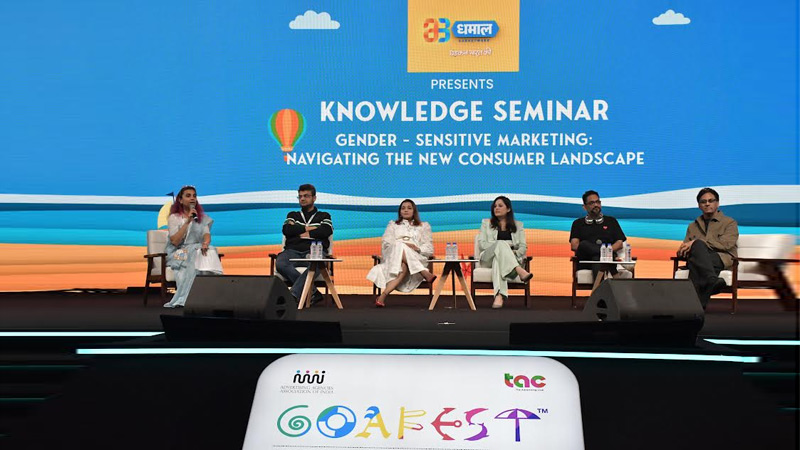
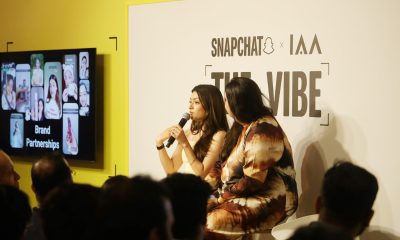
    Mumbai: Setting a powerful tone yet again, Day 2 of Goafest 2024 began with the first session hosted by Adhikari Brothers Networks – Dhamaal presents a Knowledge Seminar with Knowledge Partner IAA in collaboration with UNICEF called Gender-Sensitive Marketing: Navigating The New Consumer Landscape. Among the distinguished speakers were Chandni Shah, Chief Operating Officer of FCB Kinnect; Darshana Shah, Head of Marketing & Customer Experience at Aditya Birla Capital; Kailashnath Adhikari, Business Head of Sri Adhikari Brothers & Managing Director of GovernanceNow; Rajdeepak Das, Chief Creative Officer of Publicis Groupe South Asia & Chairman of Leo Burnett South Asia; and Ram Madhvani, Filmmaker, Producer, and Founder of Equinox Films and Ram Madhvani Films. Guiding the discussion was Kranti Gada, Management Committee Member of the India Chapter of the International Advertising Association and Founder of NeOwn.in.

    This thought-provoking session delved into the nuanced realm of gender-sensitive marketing, exploring strategies to navigate the ever-evolving consumer landscape. Chandni delved into the core issues within the education system and how the portrayal of men and women contributes to the lack of women in leadership roles. “Women can nurture women,” she emphasised, highlighting subconscious biases and the fact that men are often the primary decision-makers in households. She also advocated for conscious choices to address these issues. Subsequently, In answer to Kranti’s question on depiction, Ram discussed the Bechdel test, which measures the representation of women in film and other fiction. He mentions how important representation of women in fiction is also very poignant, “It’s rare to see women discussing anything other than men in many series and movies.”
    Rajdeepak, in his turn, spoke about the dramatic increase in female education rates, from 8.9 per cent in 1951 to 64 per cent in 2011 to 92.5 per cent in 2021! “What didn’t change in five to six decades has transformed in just one,” he remarked, suggesting that education and the creative industry could impact, accelerate, and enable women. Kailashnath, thereafter, pointed out the economic impact of gender inequality, stating, “According to a published report, several low to middle-income countries have lost over a trillion dollars because women weren’t empowered.” He also noted that 37 per cent of women globally lack internet access, adding, “Men have more facilities at their disposal than women, and that needs to change.”

    With a focus on inclusivity and understanding diverse perspectives, the speakers shed light on how brands can effectively connect with consumers in a way that respects and reflects their identities. Through insightful anecdotes and practical insights, the seminar provided a roadmap for brands to authentically engage with audiences, fostering deeper connections and driving meaningful impact in the marketplace.
    Thereafter, in a keynote address, Snap Inc. India managing director Pulkit Trivedi revealed how Snapchat emerged as the preferred platform for young India. Trivedi highlighted the platform’s unique features and engaging content, illustrating its resonance with the youthful demographic and its pivotal role in shaping digital culture. Pulkit revealed Snapchat’s approach to building a safe and creative space for its predominantly GenZ user base. With 75 per cent of its users hailing from this demographic, the app prioritised authenticity and fun, reflecting the generation’s carefree attitude towards online sharing. As the saying goes, “GenZ don’t feel the pressure of being judged.”

    Looking to the future, Snapchat will be investing in advanced engagement tools and will also look at the camera’s potential for advertisers while maintaining its commitment to user privacy and security. By deleting content by default and omitting likes and comments, the platform empowers users and safeguards their experiences. As the company declared through Pulkit, “We try giving power to our users.” By doing so, Snapchat cemented its position as a leader in the social media landscape, prioritising creativity, authenticity, and user well-being.

    Following this, the next session was presented by Sports18 & JioCinema, titled Media Agencies Panel – The Changing Expectations from a Media Client Leader, and the Challenges in Getting There, comprising prominent industry leaders. The esteemed panellists included Ajay Gupte, CEO of Wavemaker South Asia; Anita Kotwani, CEO of Media South Asia at Dentsu; Tanmay Mohanty, CEO of Publicis Media Services India; and Vaishali Verma, CEO of Initiative India. Guiding the discussion was Vikram Sakuja, Partner & Group CEO of Media & Out-of-Home at Madison Communications.

    In this revelationary session, the panel explored the evolving expectations placed on media client leaders and the challenges they face in meeting these demands. Through this conversation, key requisites for an effective client leader were explored, where Vaishali stressed that the requirements for a good client leader vary with each category and client. She emphasised the importance of identifying the nature of the business and then positioning a client leader whose skills and experience would be an asset to both the client and the brand. To this, Anita added, “A client leader needs to be obsessed with winning for the client and their profitability.” Moreover, Ajay brought attention to whether the client leader needs to be a single point of contact (SPOC). While acknowledging that much has changed in the industry, he noted that some fundamentals remain the same, such as the importance of understanding the client’s needs. He pointed out that change is a constant, and a client leader must evolve with market shifts and the information available, maintaining a client-centric approach.

    Through insightful dialogue and shared experiences, the discussion delved into the dynamic landscape of media agencies, offering perspectives on how leaders navigate industry shifts while striving for excellence. From adapting to emerging technologies to addressing changing consumer behaviours to having a client-centric attitude to display ownership and accountability, the session provided valuable insights into the strategies and approaches required to succeed in today’s fast-paced media environment.

    The third Knowledge Seminar titled, Trust or Bust: Thriving in the Digital World, was presented by Malayala Manorama with Knowledge Partner – ASCI, which brought together a distinguished panel of experts. Among them were Amit Doshi, Chief Marketing Officer at Britannia; Falguni Vasavada, Professor at MICA and Digital Creator; Paras Sharma, Director of Global Partnerships at Meta; and Sharan Hegde, Finance Content Creator and Co-founder and CEO of 1 per cent Club. Steering the conversation was Manisha Kapoor, CEO & secretary general of ASCI.

    In this informative and interesting session, the panel offered insights into navigating the idea of trust through the complexities of the digital landscape. Amit began by stating, “Trust between a consumer and a brand is now a two-way street.” He also emphasised the exponential importance of listening to the conversations in which a brand is involved. Additionally, in response to Manisha, Sharan stated that finance content creators play a crucial role in demystifying complex financial topics and offering accessible advice to consumers. He noted that financial scams have existed for ages and believes that the realm of content creation and digital following has only begun to address financial awareness. “Building trust is relatively easy, but once it’s lost, it can be gone forever due to one bad move or piece of news. Therefore, the focus should be on maintaining and nurturing that trust consistently,” he added.

    With discussions ranging from building trust in online platforms to leveraging digital innovations for business success, the session provided invaluable perspectives on how organisations can thrive amidst the challenges and opportunities presented by the digital age. Through shared experiences and expert analysis, attendees gained a deeper understanding of the evolving dynamics of trust and authenticity in the digital realm.

    The Fireside Chat by Viacom18 featured industry veterans, including Ankit Kapoor, Head of Marketing & International Business at Parle Agro; Mahesh Shetty, National Sales Head at Viacom18, and Navin Khemka, CEO of South Asia of Essence Mediacom. Conducting the conversation was Shibani Gharat, an accomplished Anchor and Associate Executive Producer. Mahesh discussed the evolution of Bigg Boss, highlighting how the show has expanded to include digital creators, thereby increasing its relevance. He emphasised the importance of catering to a diverse set of consumers and noted that the core principle of creating mass content remains unchanged. Over the past year, Mahesh’s team has merged television and digital divisions to better achieve their goal of reaching a broad audience.

    In response to a question about creating widespread brand love, Ankit underscored the necessity for marketing teams and brand managers to have a clear understanding of the role each medium plays. He pointed out that only with this clarity can brands successfully cultivate and maintain strong brand loyalty, saying, “Only through clarity are brands able to achieve what they set out to in terms of brand love.” In this insightful session, the panellists engaged in a candid discussion on navigating the evolving landscape of marketing and media, wherein consumers and the touchpoint – Television and Digital – are concerned.

    Day 2 of Goafest 2024 also kicked off with an enriching masterclass by WhatsApp on Agency Exclusive: Drive growth across the customer journey with WhatsApp, presented by Riddhika Sand. The session threw light on the WhatsApp Business platform and its features. Riddhika spoke about how Whatsapp Business is designed to supercharge customer journeys. “Today around 1 billion people are using messaging business and 90.4% of online adults in India message with business at least once a week”, said Riddhika Sand.

    Thereafter, Ujaya Shakya enlightened the attendees with an intriguing masterclass on Unlocking Market Potential: Open your eyes to Nepal, presented by Outreach Nepal. Shakya began by asking the audience, “What does Nepal mean to you?” Through this, he highlighted the features of today’s Nepal – a vibrant, heterogeneous country, with famous personalities such as fashion designer Prabal Gurung. He said, “Today’s Nepal shows promising signs of growth, with immense market potential. Out of a population of 30 million, 72% are of working age, indicating a rise in the middle-income bracket. Major companies like Hyundai, Samsung, and all major Indian FMCGs are all investing in Nepal.”

    Shakya further added that from the perspective of marketing, the Nepali youth is a major target. The reason for the success of several Nepali brands today was the right positioning and marketing towards the youth. By displaying several examples, Shakya spoke of the most successful strategies used: achieving Nepalisation, using Nepali actors, creating relatable stories, and using cultural connections. Brands such as Mountain Dew, Centerfruit, Coca-Cola, Ncell, and Pepsi have all benefited from these strategies. Shakya concluded by asking the audience, “What does Nepal mean to all of you after this session?” The responses displayed that this masterclass effectively enlightened them on Nepal’s burgeoning market potential.

    Thereafter, the D&AD masterclass, presented by Lisa Evans and Paul Drake titled Unlocking Award Winning Ideas, gave valuable insights into the art of visualising innovative ideas. Drake discussed the importance of nurturing new talent through initiatives like D&AD New Blood and D&AD Shift, which provide opportunities for self-taught creatives. He also mentioned the Creative Leaders Program, partnering with companies like Adidas and Heinz to foster innovation. He noted, “The aim is to open doors for new talent and help them shine in the creative industry.”

    On crafting excellence, Lisa Evans explained the idea-execution-relevance triad for impactful work and introduced the unique categorization of creative work using the D&AD pencils (Wood, Graphite, Yellow, White, and Black) for categorising creative excellence. She outlined a hierarchy from destructive to legendary work. The case studies presented by them showcased brands such as ‘We Are Warriors’, ‘Jersey Pay’, ‘Proudly Second Best (IKEA)’ as fresh, innovative and contagious ideas. Evans and Drake also highlighted the Five P’s approach—understanding the problem, generating possibilities, choosing what to push, building a prototype, and making a pitch which was exemplified through a brainstorming session with Heinz and subsequent team presentations.

    Next, Amazon miniTV held a masterclass on Brand Integration. Vijay Iyer, Director, Amazon Ads India and Amogh Dusad, Head of Content, Amazon miniTV led the session. The masterclass highlighted the growth in free video viewership in India and the effectiveness of brand integrations on video streaming services like miniTV in driving advertising impact. It provided an overview of various integration formats, amplification approaches, and performance metrics, which make miniTV a suitable proposition for marketers looking to reach and engage Indian consumers through relevant video content.

    The first half of Goafest 2024 Day 2 was wrapped up with an informative masterclass on Hall of Flame – The Olympics Masterclass by Sports18 and JioCinema, presented by Chandan Roy. The masterclass provided a unique perspective on the world of the Olympics and sports. Chandan shed light on the birth of the Olympics, its viewership, and its broader significance. He explained that the Olympics reflect the political and economic strength of a country and serve as a source of national pride, with people desiring their country to win regardless of the sport. Chandan emphasised, ‘The Olympics is a force for good’. He also discussed India’s aspiration to host the Olympics in the future. Chandan mentioned that as a platform, they are striving to bring the Olympics to a larger audience. To support this effort, they have created a show called ‘Get Set Goal’, hosted by Dinesh Karthik. Given that the majority of India’s sports audience consists of cricket lovers, the vision behind this show is to leverage cricket to spread awareness about the Olympics.


  • IAA hosts Voice of Change session on gender sensitisation at Goafest 2024

    IAA hosts Voice of Change session on gender sensitisation at Goafest 2024

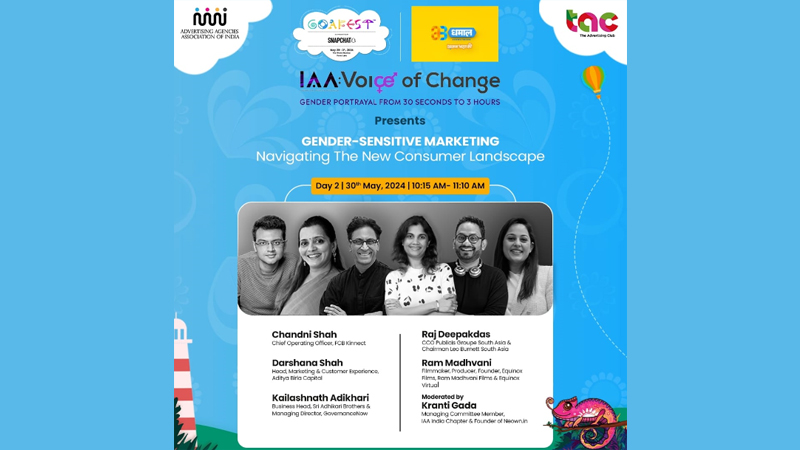
    Mumbai: The India chapter of the International Advertising Association (IAA), with UNICEF as the knowledge partner, is set to host a knowledge session on Gender Sensitisation in Advertising and Media on 30th May at 10:15 a.m. at the Goafest 2024 in Westin Mumbai Powai Lake. The theme is “Gender-Sensitive Marketing: Navigating the New Consumer Landscape.” Industry leaders will discuss the importance of dismantling stereotypes and promoting diverse & inclusive gender depiction in advertising and media.

    The knowledge session at Goafest, India’s biggest advertising festival, co-hosted by the Advertising Agencies Association of India and The Advertising Club, aligns with the theme “The Age of Adaptability.” It addresses the intersection of evolving consumer mindsets with the need for a gender-positive approach in advertising communications. Industry veterans, Rajdeepak Das (CCO, Publicis Groupe SA), Chandni Shah (COO, FCB Kinnect), Ram Madhvani (Ad and film director/producer), Darshana Shah (Head of Marketing & Customer Experience, Aditya Birla Capital), and Kailashnath Adhikari (Business Head, Sri Adhikari Brothers Group) will share their insights on this critical issue in a panel discussion moderated by Kranti Gada (managing committee member, IAA India Chapter & founder of Neown.in).  

    For more information/ registration:  www.goafest.com

    Speaking about the initiative, IAA India Chapter president Avinash Pandey commented, “As a leading industry body, the IAA is committed to champion the cause of diverse and inclusive gender portrayal in advertising & communication. The IAA: Voice of Change movement creates awareness and empowers stakeholders across the industry on inclusive gender representation in media. At this knowledge session, we are honoured to collaborate with Goafest 2024, where visionary personalities will unite to drive this crucial initiative at an industry level.”

    IAA Women Empowerment Committee chairperson Nina Elavia Jaipuria said, “There is a collective cultural shift towards a more gender-equitable and inclusive society. As creators of narratives with the ability to shape and influence societal perceptions, the industry must recognize their roles in breaking biases and challenging stereotypes. The IAA Voice of Change knowledge session at Goafest 2024 will empower content creators towards a more progressive and inclusive gender portrayal in content across the spectrum”

    IAA Women Empowerment Committee immediate past president IAA India Chapter & co-chair Megha Tata, said “IAA VOC has been a gratifying journey ever since it started around 4 years ago. It has grown to become a movement and to see all the key stakeholders of our industry actively participating in this dialogue makes me very hopeful of the real impact this can make in our social fabric.”

    Voice of Change, an IAA initiative focused on Diversity, Inclusion and Equity with UNICEF as the knowledge partner, started as a behaviour change communication initiative aimed at addressing the skewed portrayal of gender in advertising and communication. Through the years it has become the definitive forum to inform and sensitize the Indian advertising and media industry on equitable and inclusive gender depiction spanning the entire creative spectrum, from a 30 sec TVC to a 3-hour movie and everything in between. IAA is committed to sensitizing creative minds and industry forces to drive significant change through nationwide summits, conferences, and workshops with leading communication agencies and brand custodians.

  • Janak Sarda, Kranti Gada, Soumen Santara honoured at IAA World Congress Penang

    Janak Sarda, Kranti Gada, Soumen Santara honoured at IAA World Congress Penang

    Mumbai: The IAA World Congress in Penang Malaysia got off to a rousing start with sustainability as the theme of the first day.

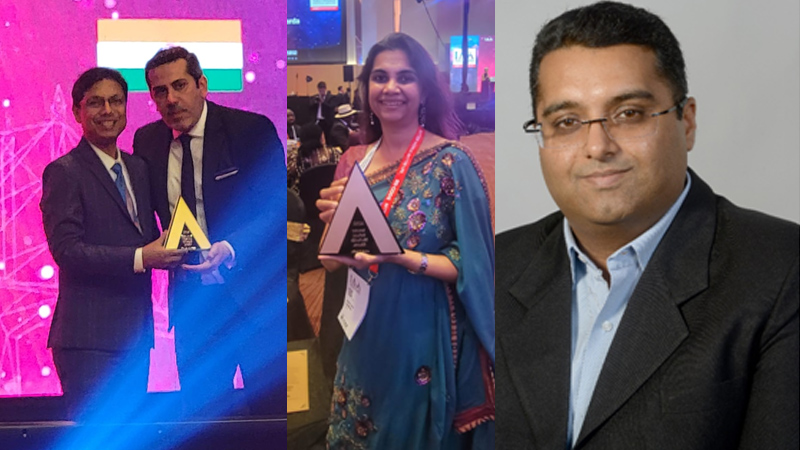
    Three members of the IAA India Chapter were honoured with special awards at the opening gala dinner.

    Janak Sarda was conferred the Global Champion award as a recognition of his contribution to the IAA global activities.

    Kranti Gada won the Young Leaders Award for the best contribution to the Young Professional movement among all the chapters of the IAA.

    Soumen Santara won the best Executive Director Award for the efficient role he has played in coordinating the many activities of the India Chapter.

    IAA India Chapter president Avinash Pandey said, “It is a proud day for India when so many of our colleagues are recognised as among the best in the IAA global environment. It is because of them that we are able to contribute so positively to the Marcom industry.”

  • Shemaroo Entertainment appoints A Chakravarty as COO; K Gada becomes president- new business opportunities

    Shemaroo Entertainment appoints A Chakravarty as COO; K Gada becomes president- new business opportunities

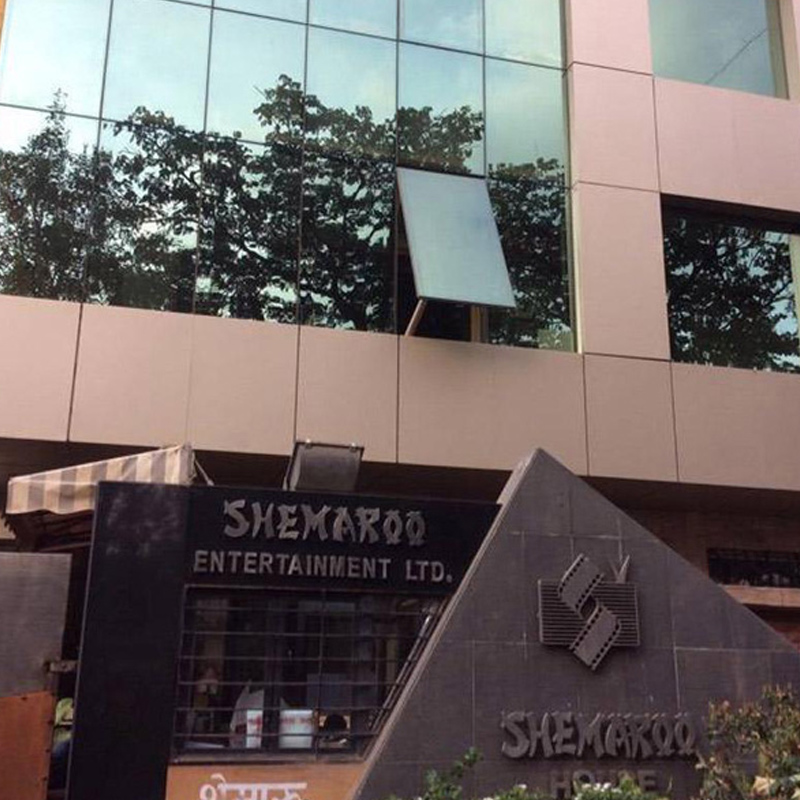
    Mumbai: Shemaroo Entertainment has appointed Arghya Chakravarty as chief operating officer. Kranti Gada has been named president-new business opportunities.

    Chakravarty will be spearheading the overall business operations of Shemaroo and will work with CEO Hiren Gada and the senior management team to implement the strategic vision and values of the firm. His primary focus will be to scale and steer Shemaroo’s numerous business verticals.

    Chakravarty’s previous stint was with Disney Star where he was EVP – ad sales, entertainment business. In a career spanning close to three decades, he has held various leadership positions in different sectors across a gamut of reputed organisations like Times Innovative Media, PepsiCo, and Asian Paints.

    Moreover, Gada in her role as the COO was instrumental in transforming the organisation from a B2B entity to a successful B2C brand. Under her able leadership, the organisation has launched various initiatives such as a robust broadcast network, an OTT platform, and several digital initiatives. She will now pass on the baton to Arghya. As president of new business opportunities, Kranti will focus on her passion and strengths to identify & build new business opportunities for the organisation.

    Shemaroo Entertainment’s CEO Hiren Gada said, “In the last four years, Kranti and I have laid the foundation to build a strong, scalable, and professionally run organisation. I firmly believe that Arghya with his proven track record, expertise, and extensive experience is an ideal fit to attain Shemaroo’s ambitions. I welcome him to the Shemaroo family and wish him all the best.”

    Shemaroo Entertainment president-new business opportunities Kranti Gada said, “We are thrilled to have Arghya join us at this juncture as we are celebrating 60 years of Shemaroo. Aligned with our vision, he brings with him deep domain expertise and he can steer our company’s growth exponentially. With his three decades of experience with leading brands, I am confident that Arghya will help us scale new heights with a strong focus on B2C initiatives while staying true to our vision and core values.”

    “I am excited to come on board with Shemaroo, which has been a household name for entertainment in India for 60 years,” said Chakravarty. “I have been watching Shemaroo for the past few years and have been a great admirer of the way Hiren, Kranti, and the team have reinvented the businesses. They have kept the brand relevant to meet the modern consumer’s tastes and moods. I look forward to further build and expand the business across platforms to create even more compelling value for the brand and our loyal consumers.”

    Chakravarty completed his Bachelors in Electronics and Communication from Birla Institute of Technology Mesra, which was followed by a Post-Graduation in Marketing Management from IIM-Calcutta.

  • FTA audiences’ loyalty is more towards slots than programmes: Shemaroo’s Kranti Gada

    FTA audiences’ loyalty is more towards slots than programmes: Shemaroo’s Kranti Gada

    Mumbai: Shemaroo Entertainment forayed into the broadcast business in 2020 with Free-To-Air (FTA) channels Shemaroo MarathiBana and Shemaroo TV. The latter began its Originals journey in February 2021 with the crime show “Jurm Aur Jazbaat” hosted by one of television’s biggest stars, Ronit Roy. Around that time, the channel was enjoying a successful run with a cumulative reach of 43.89 million (as per Barc data) and an average of 71.18 million gross impressions per week.

    Despite taking off to a good start, the show had to be called off due to the onslaught of the Covid-19 second wave. But its short and successful run gave the company an insight into the popularity of the crime genre among its audience, and this became the motivation behind its second Original titled “Crime World,” launched earlier this month.

    In a freewheeling chat with IndianTelevision.com, Shemaroo Entertainment chief operating officer Kranti Gada shares more about the new show and its USP as well the nuances of the FTA audience. On the sidelines of the show launch, we also discuss ShemarooMe’s one-year journey of building the Gujarati entertainment ecosystem.

    Quasi-news or entertainment

    While “Jurm Aur Jazbaar” was instrumental in building Shemaroo TV’s viewership for the crime genre, the team realised that in order to have a loyal audience it had to offer something different. This led to the idea of dropping the anchor-led format for “Crime World.”

    “Channels across the board are doing anchor-led crime shows where the narration is highly sensationalised, and often quasi-news. But ultimately we are a GEC, not a news or infotainment channel. We have to entertain and engage the audience simultaneously. Today, the world over, a lot of crime is actually being done like drama. With this understanding of crime as another genre of entertainment we went ahead with the no-anchor format,” explains Gada.

    Shemaroo TV has two crime slots – afternoon and late night. To keep them running when “Jurm Aur Jazbaar” went off air, the channel had to get content from various sources. “We learnt a lot from the way those shows were crafted, and the way audiences responded to them, and that is how ‘Crime World’ happened,” Gada shares. 

    The show has been conceptualised by Shemaroo TV’s in-house team.

    The quirks and perks of FTA

    As a non-network player, Shemaroo took the FTA route to garner reach for the channel. Gada, however, maintains that consumers watch a channel not because it is free or pay, but depending on how compelling the content is. It was hence crucial for Shemaroo TV to offer at par content to its audience, and being a challenger brand helped. “We knew we had to innovate to grow. While it would have been very difficult for an established channel to take a punt at a new format or show, as a challenger brand we could experiment and afford to take a few risks. In this case it seems to have paid off,” she says.

    Both Shemaroo TV and Shemaroo MarathiBana have been experimenting to bring differentiated content to their viewers. Apart from crime, the brand has strengthened itself in the mythological genre which operates in the early morning slot.

    Gada shares that establishing clear programming slots has proven an effective strategy for the channel. “We observed that the FTA audience does a certain amount of binge viewing. Unlike the urban/pay audience their loyalty is towards particular slots, not programmes, and hence the restlessness on the remote is less. What this means is they are around for a significant chunk of time, during which if you feed them good content they will stick. This is why we operate in chunks of time instead of half-hour slots.” she elaborates.

    Growing the OTT-verse

    Starting out with ‘how many people can I get on my platform,’ the focus of the OTTs has shifted today to having more consumers sampling, liking, and eventually paying the brand for its content, points out Gada. Players acknowledge the need to reach out to as many people for building a base and to understand consumer behaviour, choices, and the ideal mix of content, product, and pricing.

    To this end, ShemarooMe has been leveraging its content-as-a-solution to build a partner ecosystem of brands across BFSI, telecom, e-commerce, hospitality, ISPs, FMCG, and travel industries.

    “Even though there has been an explosion in the consumption of digital services across categories, all these platforms have a common problem of the customer coming to them only for a certain need. Therefore, the frequency of engagement in many cases such as travel is as low as once or twice a month,” states Gada, adding, “The solution to this problem lies in servicing a recurring or daily need and entertainment is one of them. The partner platform grows its engagement, and by virtue of integrating with it, the consumer watches my content on my web platform. While these users may/will eventually subscribe to my content, in the meantime someone else who wants to engage them pays me for it.”

    The Gujarati content push

    In spite of its rich literary and cultural legacy, Gujarat remains a predominantly Hindi entertainment-consuming market, primarily due to a lack of Gujarati content. Having identified this opportunity, ShemarooMe began working on building the Gujarati entertainment ecosystem last year. 2021 marked the launch of the platform’s first Original in Gujarati. It hasn’t forayed into Hindi Originals yet. Right from Gujarati web series to day-and-date releases, to plays and bringing in old blockbusters whose digital rights were not getting monetised, the brand has been experimenting with it all.

    Gada is particularly proud of the Deven Bhojani starter “Yamraj Calling.” She describes the ‘heartwarming drama with a hint of comedy’ as a diversion from the usual crime and violence which forms a major chunk of OTT content. Hopeful of seeing more such family/mass content on OTT, she adds, “More than 10 per cent of our consumption of ShemarooMe happens on smart TV. The number is higher in the international markets. While OTT will be eventually going the TV/family viewing way, even if we’re not, we ought to be mindful of what we are feeding the audience.”

    She concludes the interaction by talking about ShemarooMe’s strategy of reaching out to the Gujarati diaspora in the US through humanitarian initiatives and local events, communities, influencers as well as local programming. The brand’s locally produced series “The Great American Gujju Show” is hugely popular in the community.

    “While Gujaratis in the US want to stay connected to their roots, they also want to hear about the local influencers and leaders who have played a big role in the upliftment of the community in the States. These are the kind of nuances we are trying to understand and tap into,” notes Gada.

  • ShemarooMe partners with Celcom to entertain audiences in Malaysia enabled by Apigate

    ShemarooMe partners with Celcom to entertain audiences in Malaysia enabled by Apigate

    MUMBAI: ShemarooMe, the OTT platform from the house of Shemaroo Entertainment today announced its partnership with Malaysia’s leading telecom player – Celcom Axiata Berhad (Celcom) which is enabled by Apigate, a leading global content monetization ecosystem. This partnership comes in line with ShemarooMe expanding its geographies in 150 countries which further strengthens ShemarooMe’s foothold in Malaysia by expanding its presence in South East Asia, at the same time enhancing the telecom operator’s consumer experience.  

    Through this collaboration, Celcom subscribers can get access to ShemarooMe’s vast content library of multi-genre, multi-regional content. The offerings include Bollywood Premiere, Bollywood Classic, Regional, Devotional, Kids and Comedy content. Furthermore, the video streaming platform will be soon adding the most loved genre Bollywood – Indonesia Bahasa dubs along with Bengali and Nepali movies to its content catalogue. 

    Commenting on the association, Ms. Kranti Gada, COO, Shemaroo Entertainment Ltd. said, “Shemaroo has always aimed at entertaining the asli fans of Bollywood across the world. This expansion is in line with the platform being available in 150 countries to satiate the Indian masala entertainment needs of one and all. Bollywood content holds a special place in the hearts of Malaysian audiences and our association with Celcom will help strengthen our foothold in that market. We enter the market with our promise of wholesome entertainment where the audiences can get access to a wide variety of Bollywood, Regional and Devotional content and thus build a deeper engagement with consumers in the country.”

    Sharing his thoughts on the association, APIgate APAC senior vice president  Raja Mansukhani said, “Apigate has been at the forefront of catering to the ever growing demand for digital entertainment services and we are happy to announce our association with ShemarooMe that will enable Malaysian audiences’ to access a wide variety of live and on-demand entertainment content on mobile devices.”

    With this partnership, ShemarooMe is expanding its presence in the South East Asian market and further strengthening its global presence. The video streaming platform exists in more than 150 countries, including Canada, UK, Europe, Australia, New Zealand, Singapore, the Middle East and North Africa.

  • Convergence, consolidation & collaboration to fuel growth of cable, broadcast & OTT sectors

    Convergence, consolidation & collaboration to fuel growth of cable, broadcast & OTT sectors

    MUMBAI: In 2019, the Indian cable, broadcast and OTT industry witnessed many fundamental changes from digital dynamics to behavioural change of broadcasters moving from B2B to B2C model to industry stakeholders adjusting to the new tariff order (NTO). Indiantelevision.com’s VBS 2019 provided a platform to the industry experts to discuss and address the key issues faced them. Industry doyens revealed that convergence, consolidation and collaboration are the three 'C's to fuel the growth of the industry.

    VBS 2019’s panel discussions on ‘Transforming the sector to fuel growth’ included Elara Capital VP-research analyst Karan Taurani, Shemaroo Entertainment chief operating officer Kranti Gada, BBC Global News South Asia distribution head Sunil Joshi, PwC India partner and leader- media, entertainment Raman Kalra along with moderator SBICAP Securities equity research head Rajiv Sharma.

    Sharma set the tone of the discussion by briefing the audience on the major issues faced by the industry's stakeholders like cable, DTH, broadcasters, OTT, consumers and regulators in 2019.

    Kalra said, “We have been talking about convergence for a very long time and consolidation will keep on happening if we are willing to provide relevancy to the consumer. In the entertainment media space it is important to find a model which is relevant at scale. But how do you make relevant at scale? The relevancy for scale will trigger the consolidation because it leverages number on the financial statements and on the balance sheets of the company. It brings about so many synergies to the business models to run profitable, long term and sustainable business.”

    Taurani shared his view on consolidation in the cable space. He said, “Firstly it is important to highlight that business dynamics are changing completely. Broadcasters have been used to the B2B model since inception but now we are moving to B2C kind of a model. Basically everyone is well aware that if we really want to move to next level on digital, scalability is a very big factor and OTT platforms just offering about 10, 15, 20 movies will not help. So, to achieve that scale we need to invest in content. Apart from driving the partnership with other DTH cos or MSOs, achieving the scale on the digital part is needed. So I think it would take some more for them to understand the market and move to the next level.”

    Gada believes it is a great time for the media industry. With the emergence of OTT, the industry has added one and a half hours of screen time on digital front along with the television screen. Therefore the engagement of the end consumer with the content or with media or films has increased multifold.

    Gada says, “With deep-pocketed players cost goes haywire because short-term profitability is not their outlook, maybe their content is not their mainstay investment. It is sometimes just for consumer stickiness."

    Joshi said that convergence is the mantra of the day. “We have broadcasters, DTH, cable, OTT, consumers and a regulator who are the stakeholders of the value chain. If we look at post NTO and market dynamics, OTT is being discussed so widely because of its crispness and on-point approach to the consumers. Most of the broadcasters have direct consumer reach on their OTT to take care of and keep the stickiness on the linear also both compliments.”

    “Going forward, television needs to learn from OTT on what is been offered. So that on a quality level, both competes and at the operational level both collaborate. We have seen the collaboration of distribution platform and OTT because of their synergy and potential to exploit the potential consumers. Though they are competing at some level they are collaborating as well,” added Joshi.

    The panellists also elaborated on the digital monetisation model. They believe that there are three ways to monetise on digital platforms. The first is the business model, second is consumer centricity and third is the experience. Consumer centricity focuses on investing in knowing consumers. The second point of experience focuses on delivering the right experience. With respect to the business model, one has to experiment with multiple business models.

    The panellists also dwelled on the importance of the subscription model as AVOD does not lead to profitability because of the delivery cost, customer acquisition cost etc.  

    Stating an example of TataSky's binge initiative, Gada urged MSOs to become digital distributors and come up with aggregated and discounted offering for the consumer and make it convenient for those who are struggling with five to eight OTT apps. Gada asked MSOs to apply similar principles they used to offer TV channels to come up with bouquets of digital channels.

    The panel also highlighted the surge in term of telcos spending towards OTT. The new emerging game-changers today are e-commerce, smart TV and VMC.

    Sixty per cent of the money on digital advertising spent between Facebook and Google network. But now that is changing and the share is moving more towards OTT. The panel discussion ended on a positive note expecting that share of digital advertising will be 20-30 per cent whereas video advertising will be 40 per cent plus.

  • Shemaroo projects 25-30% digital business growth in FY 2020

    Shemaroo projects 25-30% digital business growth in FY 2020

    MUMBAI: Content powerhouse Shemaroo started its initiatives for digital business comparatively earlier than many other traditional media companies in India. The company has now stepped up its new media segment which is almost 30 per cent of the overall business with the launch of ShemarooMe. Shemaroo is taking a slow but steady approach and does not intend to go head-to-head with giants like Amazon and Netflix.

    Talking to investors in a conference call after posting Q3 results, Shemaroo Entertainment Ltd CEO Hiren Gada said that the new OTT business has been built at a significantly low capex model making it sustainable. According to him, India being a highly heterogeneous market leaves the opportunity for even late entrants. Despite some segments being covered by existing players, a significant chunk of potential segments are still open.

    “We looked into our own content pie and saw that there are few segments where we have a significant offering and strong market position in terms of either being number one, two or three in terms of content or share of viewership etc., and we looked at actually how we can leverage those opportunities to create the connect. ShemarooMe is the short consumer connect bit that we are looking to do,” Gada said. The core strategy is to establish the new OTT platform as the best option for consumers in its core categories.

    However, it won’t get into web series since Shemaroo holds a steady ground in nonfiction content like classic films, devotional etc., which it believes is a better value add to its core.

    Moreover, Shemaroo Entertainment Ltd COO Kranti Gada expects TV-friendly content catalogue to see good consumption since initial tests on YouTube proved favourable. ShemarooMe has a large number of popular Bollywood movies on the platform and Hiren Gada thinks digital will have movies as a significant consuming category.

    Although Shemaroo is witnessing significant growth in YouTube channels viewership, the revenue from the segment has been flattish due to several reasons. But the management is optimistic as digital ad spend is headed up and expected to keep growing at a certain rate. Shemaroo CEO thinks YouTube being the largest video platform will capture a good share of that growth.

    “What is heartening more than anything else is the fact that there are core consumption and viewer habit formation of coming to the platform, consuming, interacting, seeking out content and engaging with it,” he added.

    Hiren Gada projects that the overall digital pie of the company will see a 25 to 30 per cent growth in FY 2020 as the industry level growth is between 20-25 per cent. Shemaroo has always aspired 5 per cent higher than the sector. Hence if the industry grows at a higher pace, he seems confident that Shemaroo’s digital business will grow faster.

    On being asked about the company’s debt reduction plan, Hiren Gada said, “We are hoping that now with ShemarooMe and hopefully with a better YouTube growth, those trends should continue in the direction that we all are expecting and overall on the debt front even this quarter there has been a slight marginal reduction. So the debt is at a broad level the content requirement for on a so content acquisition versus monetisation so all the acquisition is being funded by internal accruals from monetisation at this point in time.”

  • India’s OTT content market expected to touch Rs 1420 cr by 2020

    India’s OTT content market expected to touch Rs 1420 cr by 2020

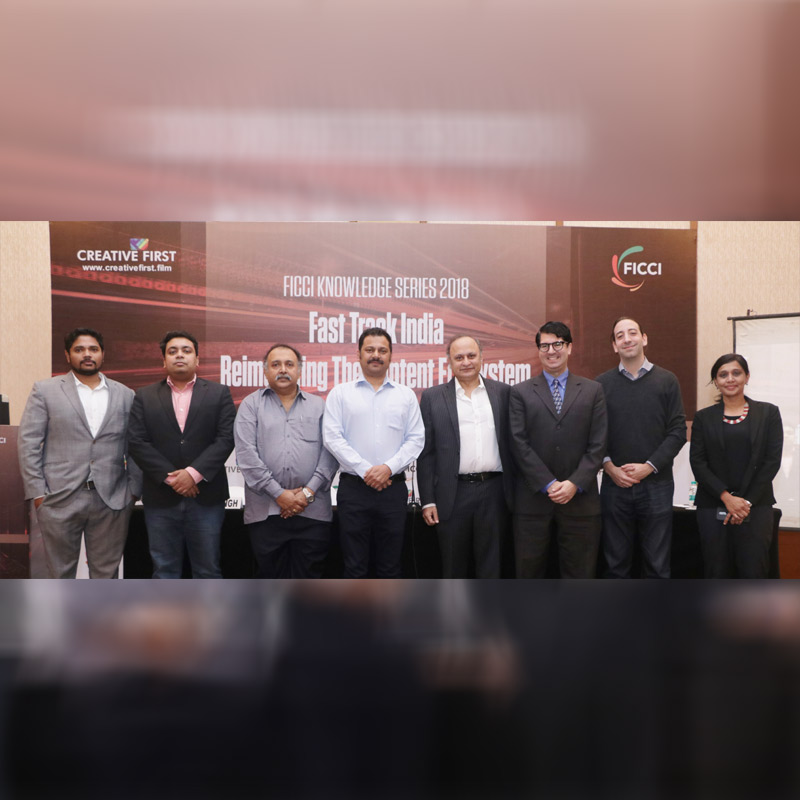
    MUMBAI: The Indian OTT content market is expected to grow at a CAGR of 26 per cent and touch Rs 1420 crore by 2020, as per the ‘2018 Fast Track India: Reimaging the Content Ecosystem’ forum. In 2017, the market was estimated to be Rs 710 crore.

    The 2018 Fast Track India: Reimaging the Content Ecosystem is a knowledge series forum by the Federation of Indian Chambers of Commerce (FICCI).

    At the inaugural address, Maharashtra government secretary & director general, information & public relations and special inspector general of police, cyber Brijesh Singh said, “India has a rich cultural history and a vibrant content industry. The time is right for digital content players to showcase India’s soft power through homegrown stories that connect with a global audience. Sectoral regulations and policies will create new opportunities for the domestic industry in addition to boosting innovation and growth.”

    Disinformation and integrity of the data ecosystem have raised several questions for the industry and for regulators globally. The heavy dependence on data-based innovation and regulatory responses to privacy challenges, further raise policy questions for India. As governments and market participants seek to devise appropriate accountability and liability frameworks for global media platforms, isolated policy decisions can be detrimental to projected growth outcomes.

    On liability regimes evolving globally for intermediary platforms, MPA VP and regional legal counsel, Asia Pacific Michael Schlesinger said, “India stands on the verge of a bright digital future, one in which creators, consumers and intermediaries all function symbiotically in a healthy internet ecosystem. Still, unique challenges like online piracy must be addressed. Thankfully, India is starting to ensure appropriate rules of the road, including site blocking to reduce piracy traffic, an infringing website list to choke ad revenues, and domain seizures by the Maharashtra cyber unit to keep the internet ecosystem in India more honest. Steps like these should accompany others to ensure all players including internet platforms are more accountable.”

    Speaking in a panel on online content regulation, Eros International Media Ltd group general counsel Aamod Gupte said, “While we have been discussing the need for self regulation of content by OTT players, in a sense we may have missed the bus. With the institution of the Digital Communications Regulator of India (DCRAI), there is possible regulatory oversight for digital content and that is something we need to watch out for. This is not just a name change but clear policy change.” 

    India is on track to becoming the second largest video-viewing audience globally; it is expected to reach 500 million by 2020 from 250 million in 2017.

    On the ‘Video Market: Harnessing Innovations and Partnerships’ panel, Shemaroo Entertainment Ltd COO Kranti Gada said, “As digital video consumption goes mass and the market gets more and more crowded, audiences will compel us to innovate and this may not be just limited to technology and content but also in collaborations and partnerships. While we at Shemaroo sit on premium content and years of consumer insights, we are of the philosophy that collaborations and partnerships eventually make businesses sustainable and scalable.”

    “Viewers have demanded a world of technology innovation where content lives on multiple screens, the exciting task for creators is to now tell innovative stories. We need to weave plots and characters that, as never before, live across traditional media, digital media, and social media,” said TV and virtual reality producer Jonathan Dotan.

  • Kranti Gada Wins the Prestigious Young Leaders Award at Business World Disrupt 40 under 40 Ceremony

    Kranti Gada Wins the Prestigious Young Leaders Award at Business World Disrupt 40 under 40 Ceremony

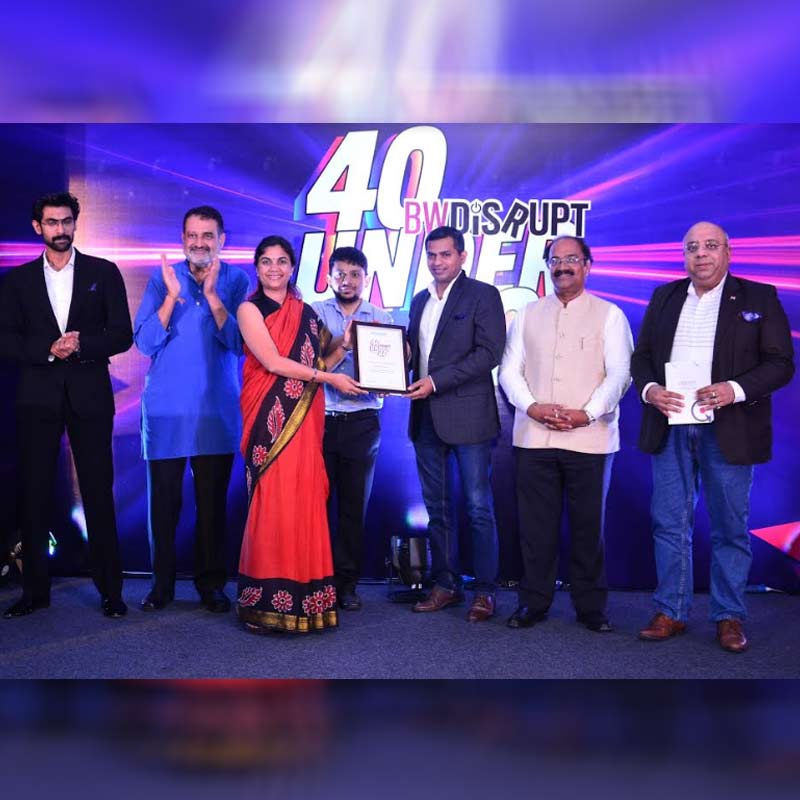
    MUMBAI: Kranti Gada, Chief Operating Officer at Shemaroo Entertainment Limited, has been recognised as one of the young leaders at the recently concluded BW (Business World) Disrupt 40 under 40 ceremony. This award emerged to be a clear acknowledgment of Kranti’s path breaking efforts towards introduction and implementation of the digital eco-system at Shemaroo Entertainment.

    Kranti’s successful journey with Shemaroo could be characterised as a spirited and innovative venture that has always kept the company ahead of the curve. She pioneered a new business outlook for Shemaroo by collaborating with new age media and bringing in revolutionary changes like tying up with telecom partners at a time when the industry was nascent. Under her guidance, the company’s USP of providing quality content was amplified over non-broadcast avenues like YouTube, DTH etc. Kranti Gada has been a visionary and a guiding light throughout her journey at Shemaroo.

    Speaking on the occasion, Anurag Batra, Chairman & Editor-in-chief, Business World, said, “Kranti represents the entrepreneurial energy of young professionals and leaders who are truly breaking the glass ceiling and creating role models for others to follow”.

    Commenting on the victory, Kranti Gada, Chief Operating Officer, Shemaroo Entertainment Limited, said, “It’s a true honour to be recognised for my efforts by a platform as prestigious as BW Disrupt 40 under 40, that scouts the innovative streak in businesses. Being a part of an ever- changing, fast-paced and dynamic industry like the entertainment industry, it is important to always have the constant support and involvement of the team. I thank my team for always being there and contributing to my personal growth and happiness.”

    BW Disrupt 40 under 40, organised by BW Disrupt is an exclusive platform for entrepreneurs that closely monitors Indian corporate ecosystem and analyses the Business & Economy. This time the jury panel was headed by Mr. T. V. Mohandas Pai, Chairman, Manipal Global Education.