Tag: KPMG India

  • Yezdi Nagporewalla to lead KPMG India for second term

    Yezdi Nagporewalla to lead KPMG India for second term

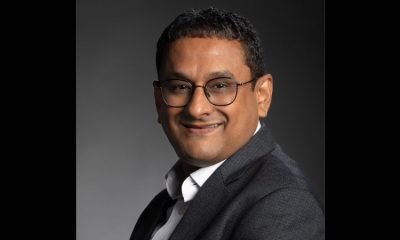
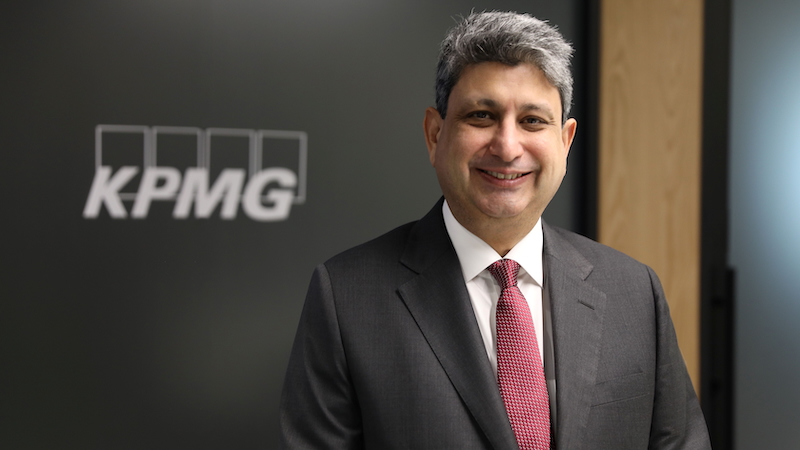
    MUMBAI: : KPMG in India has reappointed Yezdi Nagporewalla as chief executive officer for a second three-year term starting February 2027, signalling the firm’s commitment to strategic continuity and aggressive market focus.

    The extension comes on the back of a strong growth run under Nagporewalla’s leadership, marked by robust client engagement, sharper governance, and a culture of integrity-driven performance. His current term, which ends in early 2027, will be followed immediately by the renewed stint.

    “It’s been our privilege to have Yezdi lead the India firm over the past three years,” said KPMG India  non-executive chairman Ajay Mehra,. “His ability to build trust and strengthen relationships with clients and people has been crucial. His insights will help scale the firm to a brighter future.”

    “It is both my honour and privilege to have been re-appointed as the CEO, and I look forward to inspiring confidence and empowering change among our clients and colleagues,” Nagporewalla said. “My focus will be to continue sharpening the firm’s client focus, integrating innovative approaches, deepening expertise and enhancing our culture to unlock value for our clients. Over the past years, we have built trust among our stakeholders with a clear emphasis on ethics and quality which will remain our core. As a firm, we aim to realise the vision of being the ‘clear choice’ and ‘making the difference’ for our clients, people and public at large. We will double down on our focus towards both – nation building and our firm’s growth.”

    Under his stewardship, the firm has significantly expanded its partner and director base, attracted top talent from rivals, and clocked strong performance metrics. With the India market evolving at pace, the decision underscores the board’s confidence in Nagporewalla’s vision to make KPMG the “clear choice” for clients and stakeholders.

  • FICCI-KPMG report: Rural India fuels digital consumption; FTA channels gain prominence

    MUMBAI: The ‘Bharat’ story strengthened with expansion of rural measurement in TV and 4G data price wars deepened digital consumption, which were spurred further by mobile Internet and smartphone penetration. While print and films segments were supported by growing demand from the regional markets, demonization affected advertising revenues even as consolidation in the Indian media and entertainment (M&E) industry gained momentum.

    These were amongst some of the key highlights of year 2016 as enumerated in the FICCI-KPMG Media & Entertainment Industry Report 2017 unveiled yesterday at FICCI Frames 2017.

    Amongst the other highlights were roll out of 4G services, government and private initiatives around public Wi-Fi, greater emphasis on broadband rollout by MSOs and wide ranging impact of government policies and initiatives that had inflicted some short-to-medium term damage (demonization and confusion over GST implementation) on the industry as growth in annual advertising spends got slashed by about 1.5-2.5 per cent. However the report said that the industry is expected to be a net beneficiary of GST, primarily due to availability of input credits across the board and subsuming of entertainment tax within the GST.

    According to the report, the Indian media and entertainment industry in 2016 was able to sustain a healthy growth on the back of strong economic fundamentals and steady growth in domestic consumption, coupled with growing contribution of rural markets across key segments.  These factors aided the industry to grow at 9.1 per cent on the back of advertising growth of 11.2 per cent, despite demonetization shaving off 150 to 250 basis points in terms of growth across all sub-segments at the end of the year.

    The big story in 2016 has been the evolution of FTA channels after expansion by BARC India of rural measurement in the television segment, coupled with the impact of the 4G rollout and the resulting price wars. Both these factors have resulted in media consumption penetrating deeper into India, resulting in a realignment of strategy by media companies and advertisers alike.

    Compared to 2016, the industry is projected to grow at a faster pace of 14 per cent over the period of 2017-21 with advertising revenues expected to increase at a CAGR of 15.3 per cent. The year 2017 is likely to witness a marginally slower rate of 13.1 per cent as the economy recovers from the lingering effects of demonetization and initial uncertainties arising from GST implementation.

    Commenting on the industry’s performance and way forward, FICCI M&E Committee chairman and chairman & CEO of Star India Uday Shankar said, “The industry has gulped down the bitter pill of demonetization trusting its long-term benefits and yet is set to bounce back to a steady growth, thanks to strong fundamentals.”

    He added that building solid infrastructure and continued government support will help the industry reach the “tremendous potential” it holds for employment and creating socio-economic value for the country, while a commitment towards a “quick transition to digitization” will ensure growth for all stakeholders.

    Girish Menon, director, media and entertainment, KPMG India, stated that 2016 was a “mixed bag” for the industry with digital media making its way to the centre stage rapidly from being just an additional medium. While it is compelling existing players to rethink their business models, he added, “The long-term factors driving the future growth are expected to remain positive with growing rural demand, increasing digital access and consumption and the expected culmination of the digitisation process of television distribution over the next two to three years.”

    Some of the key highlights of the FICCI-KPMG report are as follows:

    Television

    The TV industry clocked a slower growth in 2016 at 8.5 per cent, attributed to tepid growth of 7 per cent in subscription revenues and a lower than estimated 11 per cent growth in advertising revenues.

    A key theme in 2016 was the emergence of FTA channels as a key focus area following the expansion in rural measurement by BARC India and the resultant increased interest by both broadcasters and advertisers. Additionally, strong performance of sports properties and increased spending for the launch of 4G by telecom operators helped alleviate some of the pressure. The industry is expected to grow at a CAGR of 14.7 per cent over the next five years with advertising and subscription revenues projected to grow at 14.4 per cent and 14.8 per cent, respectively.

    The projections remain robust due to strong economic fundamentals, rising domestic consumption and growing contribution of rural markets, coupled with the delayed but eventual completion of digitization rollout.

    Digital advertising

    Continuing to ride on a high growth trajectory with a 28 per cent growth in 2016, digital advertising has captured 15 per cent share in the overall advertising revenues, with a minor hiccup due to demonetization. 4G rollouts and the resultant data price wars are providing further impetus to the growth as digital consumption and habits are becoming more mainstream. It is projected to grow at a CAGR of 31 per cent to reach INR 294.5 billion by 2021, contributing 27.3 per cent to the total advertising revenues. Advancement in infrastructure, evolving audience measurement technology, leading to better content and lowering data costs, will drive user habits towards greater digital consumption, driving tremendous growth for the industry.

    Animation and Visual Effects (VFX)

    The industry grew at 16.4 per cent, driven majorly by a 31 per cent growth in VFX due to increase in outsourcing work, growing use of VFX in domestic film productions and increase in demand for domestic animated content on television. The industry is estimated to grow at a CAGR of 17.2 per cent over 2017–21.

    Out of Home (OOH)

    The industry registered a slowdown in growth rate at 7 per cent majorly due to adverse impact of demonetization. OOH is projected to grow at a CAGR of 11.8 per cent primarily driven by development of regional airports, privatisation of railway stations, growth in smart cities, setting up of business and industrial centers and growing focus on digital OOH.

    Radio

    Radio recorded a 14.6 per cent growth led by volume enhancements in smaller cities, partial roll out of batch 1 stations and a marginal increase in effective advertising rates. However, weak uptake in batch 2 auctions of FM radio Phase 3 and delays in the rollout of majority of batch 1 stations, coupled with adverse impact of demonetization, dampened the overall sentiment. Nevertheless, it is expected to be the fastest growing amongst the traditional mediums at a CAGR of 16.1 per cent, arising from operationalisation of new stations in both existing and new cities, introduction of new genres and radio transitioning into a reach medium.

    Print

    The revenue growth rates of print continued to witness a slowdown at 7 per cent in 2016, as English newspapers remained under pressure. Regional language papers demonstrated strong growth, but were adversely affected by demonetization given their high dependence on local advertisers. Print is expected to grow at 7.3 per cent, largely driven by continued growth in readership in Indian languages markets and advertisers’ confidence in the medium, especially in the tier II and tier-III cities. Rise in digital content consumption poses a long-term risk to the industry.

    Films

    Films grew at a crawling pace of 3 per cent in 2016. The segment was impacted by decline in core revenue streams of domestic theatricals and satellite rights, augmented by poor box-office performance of Bollywood and Tamil films. Expansion of overseas markets, increase of depth in regional content and rise in acquisitions of digital content by over-the-top platforms are expected to be the future growth drivers that would help the segment bounce back at a forecasted CAGR of 7.7 per cent. However, factors such as dwindling screen count and inconsistent content quality could prove to be limiting factors.

    ALSO READ:

    FICCI-KPMG report projects TV sector to reach Rs 1166 bn by 2021

  • FICCI Frames: Don’t ignore the numbers; investment experts tell filmmakers

    FICCI Frames: Don’t ignore the numbers; investment experts tell filmmakers

    MUMBAI: A panel discussion on Making the Impossible Possible: Dating and Investor and Getting Funded,’ on the second day of the FICCI Frames 2015 saw the participants focussing on the key value drivers that investors look at.


    The discussion, moderated by KPMG India Transactions and Restructuring director Girish Menon centred on finding money to release small, medium and regional cinema at a profit. The participants were NASSCOM co-founder and past chairman Saurabh Srivastava, Indian Angels Network CEO Padmaja Ruparel, Zodius Capital MD Gautam Patel, Blume Ventures Sanjay Nath and Idyabooster founder Nandini Mansinghka.  


    Srivastava spoke about how the success of investment in technology can be replicated in entertainment. “It’s all about venture capital,” he said.


    Today, the manner in which we communicate or travel, or even access healthcare and education has changed dramatically from a few years ago. This change has happened “because we found a way to finance innovation,” said Srivastava.


    The old paradigm of low risk funding does not apply to innovative technology, which is high risk. So new investment models that fund several innovations at a time with high annualised returns came into the market and that made Google, Facebook and Twitter possible. That hasn’t happened with movies because the dynamics of the investment structure are flawed. “The success rate is low because if you have a scenario where you cannot take it to enough people, then a movie that could make money will not, and people will not take risks,” Srivastava added. In his opinion, this will change with the new technology that will disrupt how movies are made, distributed, and what screens they are made for.


    Ruparel shared her experience of two decades in the entrepreneur ecosystem. When she started, angel investment did not have the foothold that it has today. Start-ups today get a lot of backing. The work was hard, but it has brought them success. What worked for them was leveraging the expertise of “like minded people with different domain expertise to bring complementary strength.” They brought in huge value and created a mechanism where start-ups were able to thrive. “Dropping costs and new technology are enabling content to get aggressive, which is what angels and venture capitalists look for. The good thing is that entertainment has its own chutzpah,” she added.


    Nath agreed that the investment climate has matured with the new disruptive technology. Highlighting the challenges, he said that there is a gap between media and entertainment executives and venture capitalists. E-commerce, on the other hand, is more investor friendly. “Companies are easier to evaluate because of the transactions. Content companies haven’t got funded because of monetization,” said Nath.


    Getting around monetisation will be a huge factor, he felt. He also saw a similarity in the movie or entertainment business and venture capitalism. Both are a ‘hits’ business. They talk to almost the same crowd, but there is a chasm in the way investors think, because the objective of investment is to make money.


    Mansinghka described her work as looking for a way “to reduce the entry barrier for people to invest in creative projects.” According to her, the challenges are that funding levels are higher, production houses are unwilling to experiment, and there is a differential in the primary objective of producers and investors. “When you go and pitch for money, you have to talk about numbers.” Without a change of mindset, investors will not come on board. She also felt that mere passion is not enough. “There has to be a business person who knows how to run this as a business that makes money,” she said.


    Echoing the same thoughts, Srivastava said, “The risk-reward scenario needs to make sense.” Investors are willing to take risks; those investments that succeed should bring in good returns. “Position yourself as a savvy filmmaker. Don’t look at 10 million, see what you can do for one or two million,” he advised.