Tag: Kotak Securities

  • Kotak banks on dentsu X for fresh media strategy across all platforms

    Kotak banks on dentsu X for fresh media strategy across all platforms

    MUMBAI: When Kotak Mahindra Group went shopping for a new media partner, Dentsu X India cashed in. After a tightly contested multi-agency pitch, the banking and financial services giant has handed over its integrated media mandate to Dentsu X, which will service the account from its Mumbai office.

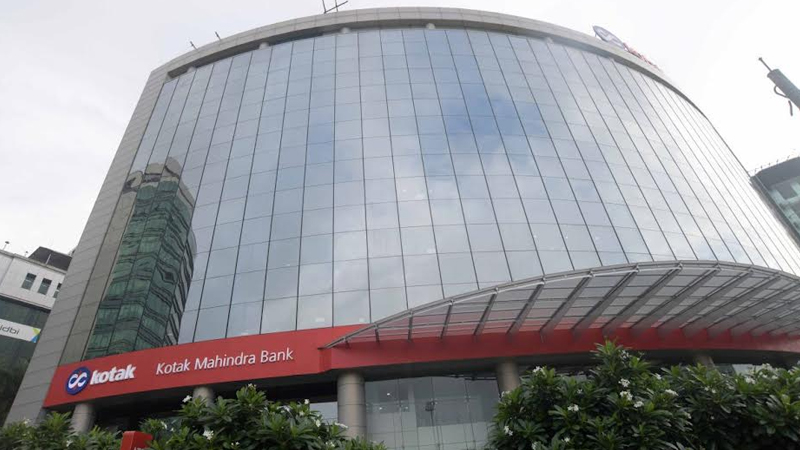
    The win is no small deal Dentsu X will now drive the full-funnel media strategy for all of Kotak’s key businesses, including Kotak Mahindra Bank, Kotak Mutual Fund, Kotak Securities, and Kotak Life Insurance. The scope spans the big four channels television, print, radio, and digital branding ensuring the bank’s message cuts across audiences, platforms, and generations.

    Known for blending tech, culture, and data to reimagine customer experiences, Dentsu X promises to deliver “outcome-driven solutions” that accelerate Kotak’s marketing and business ambitions. With India’s banking sector doubling down on digital transformation, the collaboration aims to make finance not just accessible, but engaging for the country’s increasingly aspirational consumer base.

    Dentsu X India CEO Sujata Dwibedy, called the mandate a “strong testament” to the agency’s agility and integrated offering: “We are truly honoured to partner with a legacy brand like Kotak Mahindra Group. Our future-facing approach will help drive stronger visibility, engagement, and impact across platforms.”

    For Kotak, it’s more than just a media deal, it’s about banking on storytelling that resonates in an always-on, attention-fractured world.

  • Kotak Securities unveils Tez – a Kotak Neo ad campaign

    Kotak Securities unveils Tez – a Kotak Neo ad campaign

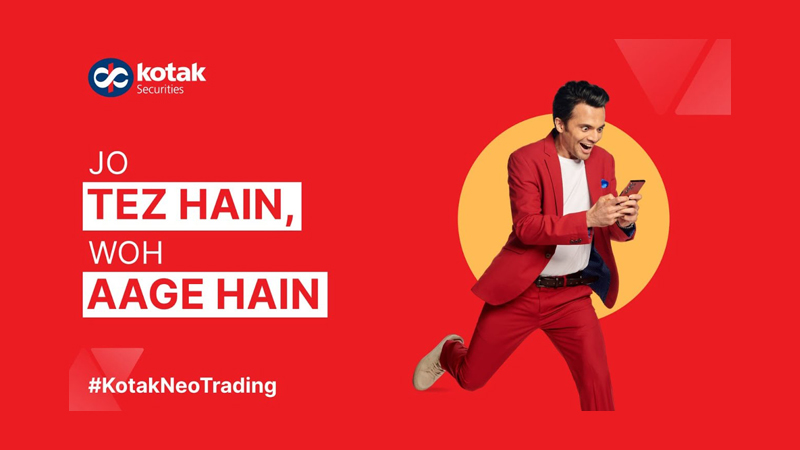
    Mumbai: Kotak Securities has launched an exciting new ad campaign for Kotak Neo, titled Tez, aimed at the fast, smart, and intelligent investor who enjoys trading on the go. This campaign celebrates the growing community of Tez investors passionate about investing and actively contributing to India’s transformation from a nation of savers to a nation of investors.

    “Tez is a step towards staying connected with today’s smart, informed investors and traders who prefer a fast-paced life. The campaign focuses on these Tez investors who like to stay ahead using Kotak Neo for a seamless investment experience,” said Kotak Securities Ltd CMO Iti Mehrotra. She added, “At Kotak Securities, it has been our continuous endeavour to create better solutions for our customers. We have designed Kotak Neo with an intuitive investment interface that combines investment-friendly features with competitive pricing plans for both youth and traders, powered by  research and insights.”

    Kotak Neo is a technology-first online trading and investing app that is speed-intensive, perfectly aligning with the fast-paced lives of today’s investors. The ad campaign highlights the accessibility and power of choices that the app delivers to enhance the overall trading experience of its users.

    Cartwheel Creative Consultancy founder and creative director, Ramki Desiraju said, “The campaign, in an entertaining way, shows how truly tez people are great at ‘Neo-trading’ and not just shopping,  gaming, or streaming, helping them stay ahead in life. The Tez campaign leverages the brand’s trusted legacy and combines it with the user-friendly technology of the Kotak Neo app. It positions Kotak  Securities as the ideal partner for traders and investors seeking a fast, convenient, and empowering  trading experience.”

  • Asian Games: Indian women’s cricket team’s victory echoes across brands

    Asian Games: Indian women’s cricket team’s victory echoes across brands

    Mumbai: The Indian women’s cricket team achieved historic success, securing their first-ever gold medal at the Asian Games by defeating Sri Lanka Women in the final. This remarkable victory marked India’s second gold medal at the 2023 Asian Games in Hangzhou, the People’s Republic of China.

    Here’s how brands, companies, and platforms celebrated the victory.

    Muthoot


    Nick India

    Kotak Securities


    Cordelia


    Croma


    Dream11


    Star Gold


  • Ganesh Chaturthi: Branding with a blessing

    Ganesh Chaturthi: Branding with a blessing

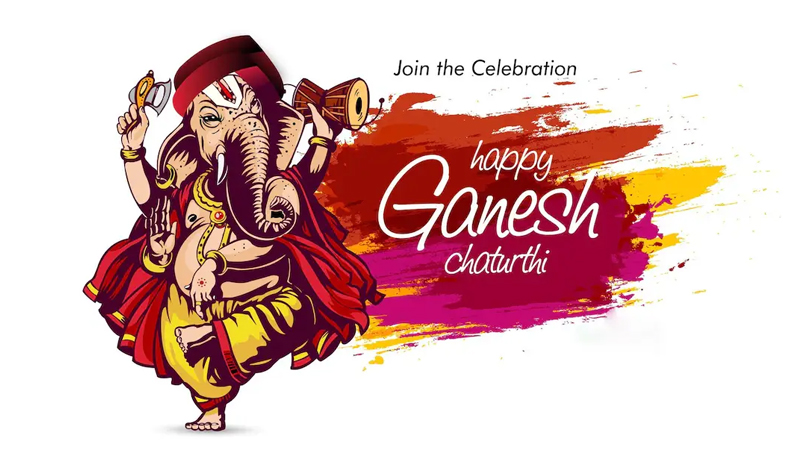
    Mumbai: Ganesh Chaturthi, one of the most celebrated festivals in India, is characterised by elaborate processions, colorful decorations, and the installation of intricately crafted Ganesha idols in homes and public places.

    Brands have recognised the cultural significance and widespread enthusiasm surrounding Ganesh Chaturthi, and they are leveraging this grand occasion in various ways.

    DBS Bank


    BN Group


    A post shared by BN Group (@thebngroup)


    Tata Steel


    A post shared by Tata Steel (@tatasteelltd)


    Godrej Interio


    Kotak Securities


    Me n Moms


    Mee Mee


    Muthoot Finance

    The Belgian Waffle Co.


    Disney+ Hotstar

    Nick Jr

  • Kotak Securities partners with DAN Data Sciences & Dentsu Webchutney to reinvent Customer Acquisition

    Kotak Securities partners with DAN Data Sciences & Dentsu Webchutney to reinvent Customer Acquisition

    MUMBAI: Dentsu Aegis Network’s (DAN) Data Sciences division has collaborated with Dentsu Webchutney to reinvent ‘Customer Acquisition’ for Kotak Securities. The teams have developed MarTech solutions to reach out to potential consumers with DAN Sync. For the record, DAN Sync is a proprietary custom solution built to link CRM with online marketing endeavours.  

    The consumer journey is no longer linear. While a lot of the journey is completed offline, the online signals are not strong enough. Meanwhile, acquisition of a new prospect has become increasingly expensive, especially in the cluttered BFSI space.

    “The better one is able to harness the intelligence of data mines, the better the end numbers look,” believes Kotak Securities EVP and head marketing, products and customer service Jaimit Doshi,

    Dentsu Webchutney director media Nishant Malsisaria identifies the problem. He says, “For Kotak Securities’ Trading account offerings, performance campaigns ran on multiple channels online. However, optimization was possible only for first level leads since a large part of the final conversion is done through offline call centers. The resultant marketing strategy assumed focus on high acquisition rates with lesser control over quality leads, since reverse transfer of marketing intelligence was not happening then.”

    With Facebook being one of the key platforms of the acquisition strategy, the task at hand for Dentsu Webchutney was to narrow the acquisition funnel by reaching out to the closest prospects for conversion.

    Explaining the strategy, chief data officer (South Asia), Dentsu Aegis Network and CEO DAN programmatic Gautam Mehra says, “The problem with the traditional form of digital advertising is that intelligence built offline is not passed back to inform online strategies. Using a custom built product such as DAN Sync that was created to transfer offline learnings for online optimizations, we deployed the globally renowned DAN Data Labs Product Suite – that uses best in class machine learning algorithms – over the hashed data from the client’s CRM to deliver a new benchmark for the industry.”

    “Although expected, the results were astounding enough for augmenting the client’s confidence. The tool performed magnificently well, improving the lead to account open ratio by 500%,” adds Mehra.

  • Guest Column: Innovation in the business news channel space in terms of coverage

    Guest Column: Innovation in the business news channel space in terms of coverage

    Business news genre has come a long way in the last 20 years of its existence in India and so has the business news coverage. It all started with covering stock markets and related news. However, I believe, there is business interest involved at the heart of almost every major event around the world. Be it a country deciding to invade another country or why the center of world cricket has shifted to England to Asia. In fact, most of these events impact stock markets, businesses and economies in some or the other way.

    I see business news covering the business aspect of all of these in a more holistic way and not restricting itself to coverage of stock markets only. I also think that since many of us need to know about personal finance management, business news channels can educate masses about personal finance management as well and make us understand the basics of investing in stock markets. BTVI has a show called Financial Planner to address this concern. We also have a feature show called Aspire that covers business aspects of luxury, lifestyle and entertainment.

    With important state elections coming and upcoming national election in India, we have upped the ante of our political coverage. In a vibrant and buoyant economy like ours, journalistic activism is critical and important. Knowing so, we have firmed up our investigative journalism over the last one year.

    This holistic approach has yielded positive results for us as we lead the English business news genre post market hours and on weekends with viewership share of 41 per cent each.

    Scope of a comparatively new news channel in the business genre.

    At present, the entire business news genre depends heavily on stock market related content which remains largely the same on all channels. Though the content post market hours (4 pm onwards on Monday to Friday) and on weekends can differ, from the viewership, revenue and brand perception perspective, the market hours programming (8 am to 4 pm on Monday to Friday) is the key to success in this genre in its current format.

    Besides, in the last couple of years, English business news genre has shrunk at all India level with average weekly viewership going down from 1009 GVTs in 2017 to 956 GVTs in 2018.  Even in terms of ad volumes, the FCT consumption has dropped by 15 per cent from 2017 to this year.

    Considering all the factors mentioned above, I don’t see a scope of a new news TV channel in the English business genre space. However, regional is a completely different and interesting proposition to evaluate.

     How can a business news channel increase its reach & viewership

    Well, there are traditional ways of ensuring OTS levels through distribution and marketing activities. But that’s not a sustainable way to function. The idea is for content and brands to reach out to the right TG. Why should that outreach be focussed on or limited to television platform? Why not on emerging digital platforms? In my opinion, expansion of digital footprints by existing brands is a way forward to increase the brand’s reach and awareness and translate part of that increased reach into television viewership.

    For example: BTVI is now available on with its LIVE streaming Not only on Hotstar, Jio TV, Yupp TV  but also on trading apps like that of Axis Direct, Kotak Securities, IIFL Markets and HDFC Securities. This is the relevant audience and we have seen a huge upside on impressions by reaching to our audience through these platforms.

    Source for all viewership data points: BARC India, TG:22+MalesAB, Market:6MegaCities+Guj1mn+, Period: Wk30-33 2018

    (The author is the COO of BTVI. The views expressed are personal and Indiantelevision.com may not subscribe to them)

  • Kotak Securities uses cups to promote its latest offering

    Kotak Securities uses cups to promote its latest offering

    MUMBAI: Kotak Securities, the stock broking arm of Kotak Mahindra Bank Limited, is the new addition in the list of brands that has opted for a distinct marketing strategy by tying up with advertising start-up CupShup which is known for its popular technique of converting tea and coffee cups in to a platform for brands to get visibility amongst its target audience.

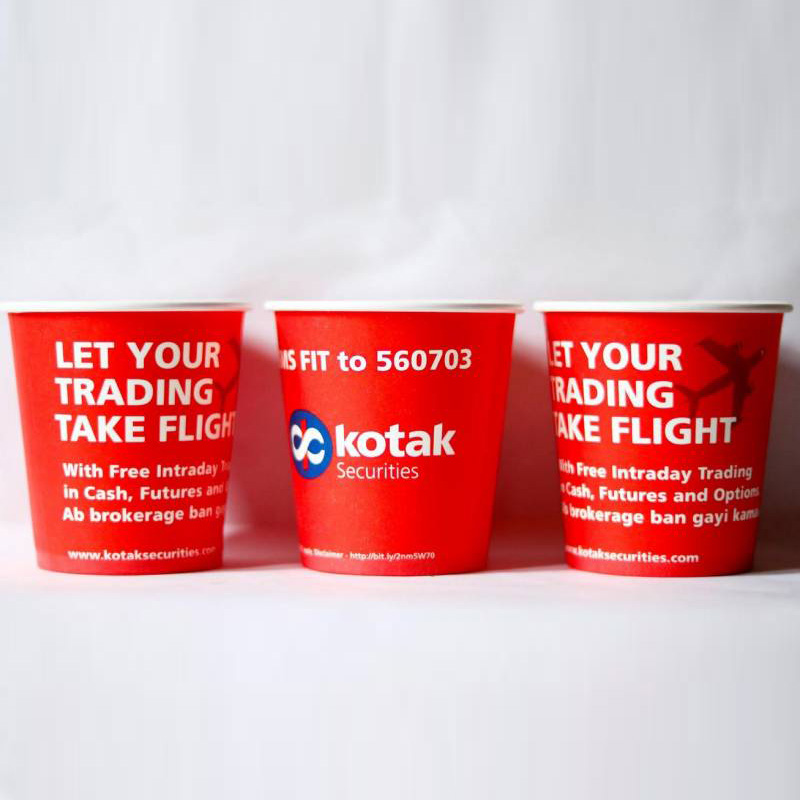
    Kotak Securities is promoting its recently launched product – Free IntraDay Trading where CupShup has chosen Indigo Airlines as one of the spots to execute the campaign. Free IntraDay Trading allows self directed investors to do intra-day trading without paying any brokerage.

    Apart from Indigo Airlines, the offline campaign is being executed across 500 corporates and 1,500 tea stalls in 12 Indian cities – Mumbai, Delhi NCR, Bengaluru, Hyderabad, Pune, Chennai, Kolkata, Indore, Jaipur, Ahmedabad, Baroda and Surat.

    For the campaign, the company used more than 55 lakh cups made out of water-based ink and biodegradable recyclable paper, with an aim to make the audiences have 5-7 minutes clutter free exposure to the product. This step was adopted considering high possibility of discussions that may generate among the people taking tea breaks.

    Kotak Securities EVP and head of marketing Jaimit Doshi says, “We wanted to get immediate attention of our target audience. Through geo-targeting we identified locations where our customers were based. We reached out to them specifically in those cities and areas. What better way to target people than our product popping up during tea breaks which also gives people another investment topic to talk about?”

    CupShup co-founder Sanil Jain adds, “I am glad that in an era where digital marketing is ruling various industries, we are able to get brands to market their product in an efficient as well as in an effective way. Cupshup’s marketing concept is sure to create an impression with customers who can receive their daily dose of information on what brands are doing in the current scenario. Kotak Securities is a valuable client to us and we hope that this campaign results in giving the brand the desired outcome.”

    Besides the primary activity, CupShup is also running activations with 100 Corporates by setting up a Kotak Securities booth where Relationship Managers will educate the employees about their products.


  • Kotak Securities opts for chai-time to promote its recently launched Free Intraday Trading’ via CupShup

    Kotak Securities opts for chai-time to promote its recently launched Free Intraday Trading’ via CupShup

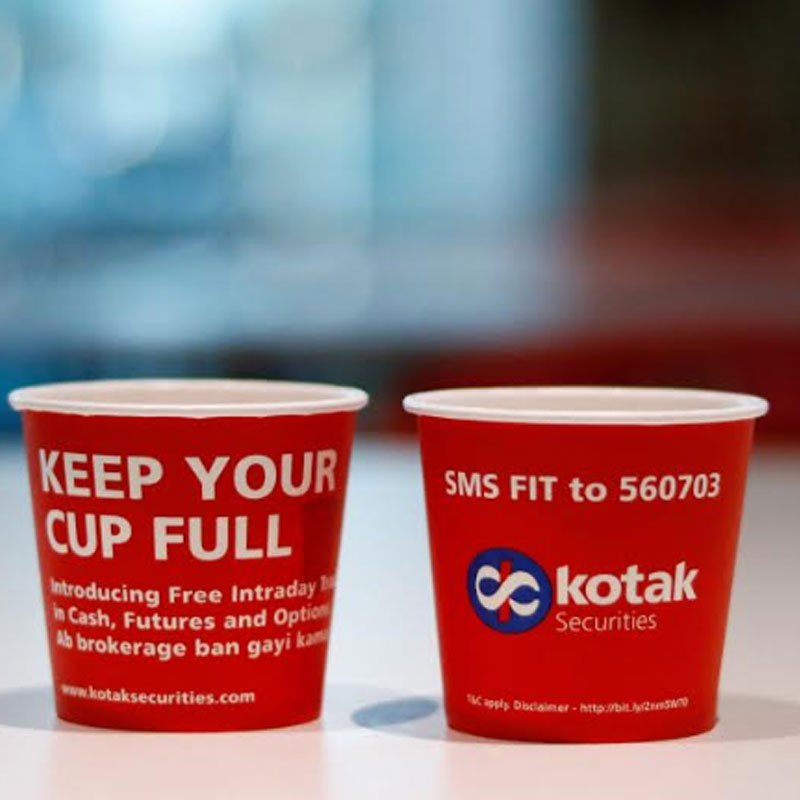
    MUMBAI: Kotak Securities, the stock broking arm of Kotak Mahindra Bank Limited, is the new addition in the list of brands that has opted for a distinct marketing strategy by tying up with advertising start-up CupShup which is known for its popular technique of converting tea and coffee cups in to a platform for brands to get visibility amongst its target audience. Kotak Securities is promoting its recently launched product – Free IntraDay Trading where CupShup has chosen Indigo Airlines as one of the spots to execute the campaign. Free IntraDay Trading allows self directed investors to do intra-day trading without paying any brokerage.

    Apart from Indigo Airlines, the offline campaign is being executed across 500 corporates and 1,500 tea stalls in 12 Indian cities namely Mumbai, Delhi NCR, Bengaluru, Hyderabad, Pune, Chennai, Kolkata, Indore, Jaipur, Ahmedabad, Baroda and Surat. The campaign began on 7th May and will be on till 7th June. More than 55 lakh cups made out of water-based ink and biodegradable recyclable paper have been used with an aim to make the audiences have 5 – 7 minutes clutter free exposure to the product. This step was adopted considering high possibility of discussions that may generate among the people taking tea breaks.

    · No. of Corporates activated: 500: 15 Lakh Cups 

    · No. of Tea Stalls activated: 1,500: 18 Lakh Cups

    · Indigo Airlines: Pan India: 22.5 Lakh Cups

    Kotak Securities, EVP & Head – Marketing, Jaimit Doshi said, “We wanted to get immediate attention of our target audience. Through geo-targeting we identified locations where our customers were based. We reached out to them specifically in those cities and areas. What better way to target people than our product popping up during tea breaks which also gives people another investment topic to talk about?”

    Commenting on the start-up’s tie-up with Kotak Securities, Mr. Sanil Jain, Co-Founder, CupShup said, “I am glad that in an era where digital marketing is ruling various industries, we are able to get brands to market their product in an efficient as well as in an effective way. Cupshup’s unique marketing concept is sure to create an impression with customers who can receive their daily dose of information on what brands are doing in the current scenario. Kotak Securities is a valuable client to us and we hope that this campaign results in giving the brand the desired outcome.”

    Besides the primary activity, CupShup is also running activations with 100 Corporates by setting up a Kotak Securities booth where Relationship Managers will educate the employees about their products.

  • On-board entertainment, SMS alerts, Wi-Fi on cards with tech friendly Rail Budget 2015

    On-board entertainment, SMS alerts, Wi-Fi on cards with tech friendly Rail Budget 2015

    KOLKATA: In a 70-minute consumer-focused speech that carried the distinct imprint of Prime Minister Narendra Modi, Indian Railways Minister Suresh Prabhu on Thursday presented a slew of measures that introduced mobile friendly facilities for passengers.


    While presenting his first maiden Budget, the minister in Lok Sabha proposed to offer on-board entertainment facilities in the railways on similar lines as provided by some aircrafts. Initially, this on-board entertainment facility would be extended on select Shatabdi trains on a license fee basis.


    Additionally, SMS alert services to inform passengers of delay and departure timings for trains is also on the cards. “SMS alert to be introduced for train timings,” said the minister.


    In order to give passengers more accessibility and connectivity at stations, the minister also proposed that Wi-Fi would to be made available at 400 railway stations. It should be noted that recently the Delhi railway station got Wi-Fi connected.


    Not only this, the government also plans to develop a mobile application to address complaints of people.


    Commenting on the mobile alerts, free Wi-Fi and technology friendly Budget, experts said that these applications would be particularly useful in locations where fog season means inevitable delays up to 24 hours and cancellations. “A prior SMS alert system will help ensure that travelers do not end up waiting at the station only to find out that their train has been cancelled. Now people will not mind to travelling by trains,” said an expert.


    It should be noted that Prabhu did not talk about the application in details or how the app will help in dealing with passengers’ complaints.


    The minister also announced that charging facilities for mobile phones would be extended in all trains and stations. “Mobile charging stations will be introduced in general class coaches,” he said.


    Additionally, in order to make ticketing more passenger friendly the Budget also proposed “operation five minutes” for issuing unreserved tickets, hot buttons, coin vending machines, concessional e-tickets for differently-abled travelers, for booking tickets a multi-lingual e-portal will be developed. “Passenger travelling unreserved can procure a ticket within five minutes,” he said.


    Prabhu also stated that the government aims to create a multilingual e-ticketing system, which will be encouraging for those might not be comfortable in English.


    The Railways is further drawing up comprehensive policy to tap latent advertising potential.


    Lastly, a good-Internet linked initiative that was announced was that food can be ordered from the IRCTC website at the time of booking. The minister said that, “E-catering has been introduced on some trains on experimental basis, depending on the response, it will be extended.”


    Highlights


    • The key themes of the Railway Budget were in line with Prime Minister Narendra Modi’s initiatives – Swachch Bharat Mission, Make in India and Digital India.

    • SMS alert to be introduced for train timings

    • Wi-Fi to be available at 400 railway stations

    • On-board entertainment facility could be extended on Shatabdi trains

    • Mobile charging stations will be introduced general class coaches

    • Passenger travelling unreserved can procure a ticket within five minutes

    • Mobile application to address complaints of people is also being developed

    • Hand-held devices for ticket checkers for moving towards paperless ticketing

    • Drawing up comprehensive policy to tap latent advertising potential


    Railway Budget 2015, according to Prime Minister Narendra Modi, is a forward looking, futuristic and passenger centric budget, combining a clear vision and a definite plan to achieve it.


    “This is a watershed moment for Railways, marking a paradigm shift from discussing coaches and trains to comprehensive railway reform. I am particularly delighted that for the first time, there is a concrete vision for technology upgradation and modernisation of the Railways. The Railway Budget lays out a clear roadmap to make the Railways the key driver of India`s economic growth, playing a key role in India`s progress. Railway Budget 2015 stands out for its focus on the common man, putting speed, scale, service and safety, all on one track,” the Prime Minister said.


    Reacting to the maiden railway budget, Kotak Securities head-private client group research Dipen Shah said, “The first railway budget of Suresh Prabhu sets a vision for Indian railways, striving to make it the prime mover of the economy, once again.”


    The prime focus of the minister is in enhancing its operations, targeting operating ratio at 88.5 per cent for FY16 from 91.8 per cent in FY15. “Budget carves out various resource mobilisation routes, moving away from budgetary supports. He has proposed to part-finance the ambitious five-year investment plan of Rs 8.56trn through funds from foreign institutions, pension funds, states, PSUs and PPPs both in form of equity and debt through SPVs. Focus is more on implementation and improving the service quality rather than on big bang announcements. Focus is also on commercial viability as much as it is on social welfare. We believe that, efficient execution of these initiatives will indeed improve the passenger revenues while also attracting more freight traffic to railways,” he added.


    According to Shah, while change in freight fares seems cosmetic in nature, no change in passenger fare is welcome move, since fuel cost has come down significantly over the period.


    The markets have likely been disappointed by the absence of several big announcements relating to the dedicated freight corridors or other capex programmes as well as finer details on FDI / PPP financing. “However, the focus on effective implementation, improving the operating ratio as well as on new initiatives bodes well for the railways in the long term. We expect the focus on deficit as well as reforms to be reflected in the Union Budget, and we will watch out for the same,” concluded Shah.

  • ‘Media and entertainment sector has lost a whopping Rs 640 billion of market value since last year’ : Sadanand Shetty – Kotak Securities vice president

    ‘Media and entertainment sector has lost a whopping Rs 640 billion of market value since last year’ : Sadanand Shetty – Kotak Securities vice president

    Media and entertainment companies have been riding the market boom to expand and fund their diversified ventures. But the tide has turned against them and they are faced with a scarce capital situation.

    Being in the equitties market for over 14 years, Kotak Securities vice president Sadanand Shetty knows best how rough the path is going to be for media companies to tide over the slowdown phase. Managing money on behalf of investors, he is one of the few fund managers to have caught early the trends across verticals within the media and entertainment sector.

    In an interview with Sibabrata Das, Shetty talks candidly about the massive erosion of values media companies have seen over the last one year and how grim the real world is for most of them.

    Excerpts:

    Aren’t these companies seeing a massive skid in valuations?
    The media and entertainment sector has lost a whopping Rs 640 billion of market value since last year due to the global economic meltdown. There is a massive collateral damage to the wealth of media owners. Valuation corrections for most of these companies are far greater than the broad market.

    Most media companies fall under mid cap and small cap categories. These categories have lost much more in stock value than the large cap companies. September ’08 has been the worst quarter in recent times for most media companies that are part of the broad-based BSE 500 Indices. The profits of aggregate listed companies are down by 60 per cent for the said quarter, including losses of new Hindi GECs (general entertainment channels). Slowdown in revenue and rising costs have hit earnings.

    The market has not even spared large companies like Zee Entertainment Enterprises Ltd and Sun TV Network Ltd; they together have lost market value of close to around Rs 160 billion (as of 10 January 2009 over the year ago period). The broadcasting space has alone lost market value of nearly Rs 280 billion. Economic slowdown in general has impacted the advertising revenues of the sector. Subscription revenues, to some extend, provide the much needed cushion to falling profitability of the broadcasting companies.

    Why were media valuations so unrealistic?
    Being emerging businesses, the Indian media and entertainment companies commanded higher valuations. Most media companies have demonstrated robust sales, expanding margins and rapid growth in profits in recent times. The stock market rewards high growth with high valuations. A favourable equity market has also helped companies to raise large funds and command these valuations.

    Weren’t companies stretching themselves too thin in a market hype situation?
    Still, I wouldn’t call these moves as mistakes. Expansions were planned in a growth environment, which now, though, is hitting the speed breakers. But certainly in some cases large capacities have been created ahead of demand curve and investors are suffering in those ventures.

    The industry also witnessed entry of new players with other objectives. For some it was pure market capitalisation as easy money poured into the sector. Investors – foreign and local – have jumped the gun and funded some of the unviable projects. Shortsighted foray into ‘new media’ business verticals that some companies have ventured into will be hard hit.

    What are the lessons to be learnt from this?
    This is the first true slowdown that the industry is witnessing today. It would be interesting to see how managements of the media companies respond to the situation. In general, business plans built on easy liquidity do not sustain for long. Vision, commitment and excellent execution do. Media, like any other services business, is people driven. Backing the right talent with appropriate incentives will yield large gains.

    ‘Economic slowdown will force companies to focus on few verticals. They will have to maintain their market share without burning too much cash

    Have media companies become dependent on foreign capital?
    Global media companies except perhaps News Corp. were late to react to opportunities in India. But today almost all the top studios of the world have their presence in India across different media verticals. Favourable economic growth and rapid rise of domestic companies have compelled the global media giants to look at India. For some of these companies, Indian operations have started contributing majorly to their profits in the Asian region.

    We are also witnessing rapid rise in FDI (foreign direct investments) and portfolio investments in media companies. You, after all, can’t ignore the second fastest growing economy of the world. India is also in a sweet spot today because of its huge youth population.

    What are the challenges the Indian media companies face due to slowdown?
    Slowing ad spend, increase in operating costs (specially distribution), and tight liquidity will impact the industry in the medium term. The sector will also have to grapple with excess inventories that have been created in the last few years. Most importantly, economic slowdown will force companies to rethink on their expansion plans and focus on few verticals. Companies will have to maintain their market share without burning too much cash in the process.
    The process of consolidation will also accelerate. I expect incumbents with sound financials to take advantage of the current dismal valuations to further their business interests. Venture capital and private equity participation can’t also be ruled out. We have already seen certain GECs feel the heat. Consolidation in regional markets is also happening and expansion plans have been put on hold in some cases.

    Overall, the economic slowdown will impact the growth plans of most of the companies. Priorities have shifted to consolidating the existing businesses; expansion can wait.

    It is testing time for media companies. There will be no better time to demonstrate the strength of their respective market/channel shares as we expect ad spend to consolidate towards the top.

    TV content companies have suffered for long due to their fractured business model. Lack of revenue visibility and pricing power have impacted them. There is also lack of long term relationship between content and broadcasting companies

    Will news channels have a free fall as they operate in a highly cluttered environment?
    News channels in India have grown significantly over the last few years. But for most companies, it has not significantly added to their profitability due to high operating costs (including distribution). Lack of robust subscription revenues have also impacted the bottom lines of many of these companies. Noise value has gone up due to entry of players with other objectives. We have witnessed the entry of so many non-serious players in the market that I think most of them will fold up in the next two years.

    Only few news channels with strong brand equity and distribution network would be able to make reasonable profits. Companies with strong balance sheets will survive. Rest all will fade away.

    What do you think of the television content companies?
    TV content companies have suffered for long due to their fractured business model. Lack of revenue visibility and pricing power have impacted them. There is also lack of long term relationship between content and broadcasting (who own the IPR) companies. The benefit of new distribution platforms has not reached most of these companies.

    Unless there is substantial change in the current business model, I do not see real scalability coming to companies. TV content companies also suffer from fragmentation. Having said that, this year has been particularly good for content companies as some of the dominant incumbent players have witnessed loss of market. New players have emerged and done well. I expect few credible players to emerge in the future.

    Do you find the cable industry attractive?
    Institutional investors have shown interest in the sector in recent times. Investments have flown into the large incumbents and fledging entrepreneurial-led companies. Investors are betting on eventual consolidation and digitalization of last mile to unlock huge value in the sector. Investors seem to be willing to wait for the interim painful process to unlock long term value. We expect increased investments will go into infrastructure creation and customer acquisition.